
The Understory Festival
A Living Magazine
May 28–30, 2026 · Washington National Cathedral
What follows is a collage we have prepared for you to wander through before you choose your breakouts. They unfold in three movements: “A Time to Build” on Friday afternoon (2:00–3:30); “Explore & Encounter” (Friday, 4:00–5:00); and “After the Overstory” (Saturday, 9:45–10:45). Some sessions invite argument and debate; others still us into attention, encounter, and craft. Follow the threads that pull on you as you read, and trust that the whole will reveal itself as you move through these three days in the company of strangers, turned friends.
Badge pickup begins at 4:00 PM at the Garth Portico on the northwest side of Washington National Cathedral. Easily accessible via rideshare drop-off at the main roundabout or by parking at the Washington National Cathedral Garage (Atlantic Parking), 3101 Wisconsin Ave NW, Washington, DC 20016.
The festival opens with concurrent receptions across the Cathedral grounds — the Women’s Porch, the Garth Courtyard, the South Apse, and the 7th Floor — anchored by jazz from the Paul Cornish Trio. A time to greet, gather, and find your footing before the evening turns inward.
The festival opens in the Cathedral nave on Thursday evening with music, silence, and the question awakening the Understory: What, pray tell, is struggling to be born in our time? What follows is a kind of consecration moving between generations, geographies, and ways of seeing — a sequence of voices held together by the Cathedral’s chamber, threaded by light and shadow.

A Laity Lodge Order of Prayer, Psalm Recitation, and Song
Guide: Steven Purcell
A morning office in the spirit of Laity Lodge: the psalms recited, the day named, the body of the room joined in song before the work of the festival begins.
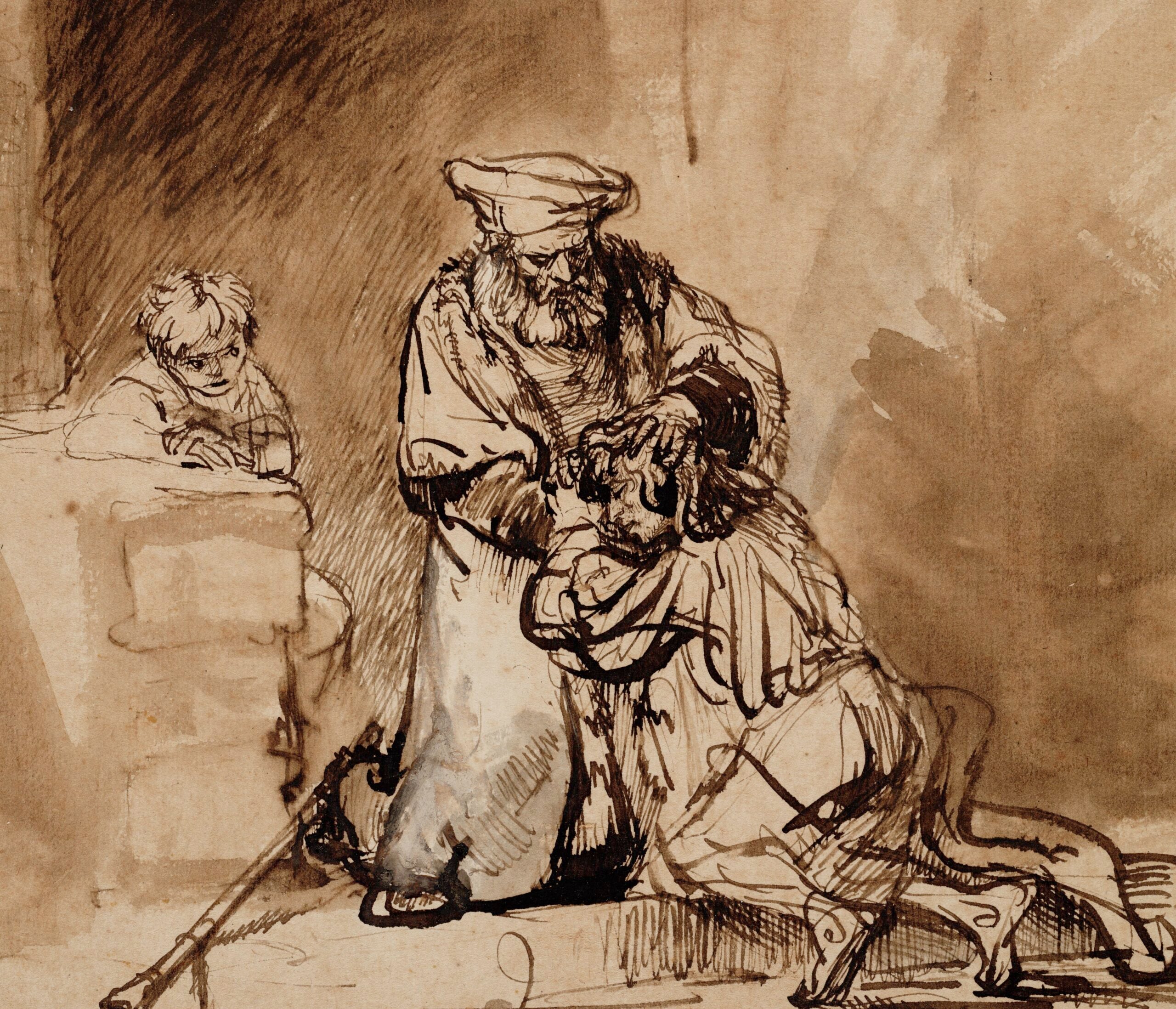
Visio Divina via Rembrandt and Rubens
Guide: Irena Dragaš Jansen
A guided practice of slow, prayerful seeing: two of the great painters of a divided age serve as our teachers in attention, contradiction, and the eye that searches for grace.
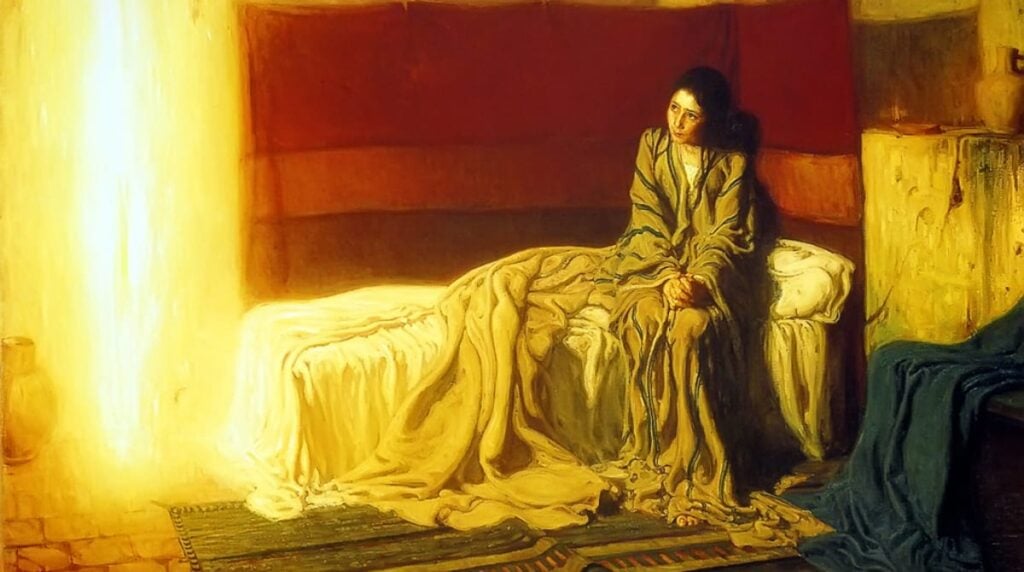
A Meditation on Mary
Guide: Margarita Mooney Clayton
A meditation on the woman whose “yes” opens the Christian story — and who has been, across centuries and traditions, a teacher in dependence, courage, and the quiet labor of bearing what is given.
Friday morning gathers the room back into the nave to take up the keystone question of the festival’s Christian humanist frame: what does it mean to be a human person, and what does the answer ask of us?
- 10:30 AM–11:00 AM · Coffee Break
Two longtime friends and public thinkers step to two podiums to argue, without a moderator, the question that sits underneath much of what the festival is testing: is this an hour for repair and renewal of what we have, or for something more like a re-founding? The premise being stress-tested is Comment‘s own — that this is a time to build — and the debate is offered in a spirit of in-house honesty about whether what we are putting forward is sufficient to the depth of the moment.
Served by BreadCoin, to be enjoyed in Walker Court and on the West Lawn.
Friday, 2:00–3:30 PM · A Time to Build: Breakout Sessions
Beginning at the foundations, literally and figuratively. Each session is organized around one animating question: How now shall we build?
Chaired by April Lawson and Mónica Guzmán
At a moment when national identity is being claimed by competing visions of belonging, this town-hall-style debate asks the question underneath the headlines: What holds a country together, and who gets to say? The conversation draws on a rich tradition of argument — from classic defenses of nationhood as a spiritual and cultural inheritance to warnings that rootedness can curdle into exclusion; from communitarian visions of the self shaped by particular places and loyalties to cosmopolitan challenges that ask whether love of home must mean suspicion of the stranger. Participants will wrestle with whether deep roots and open arms are truly at odds, or whether that binary is itself a failure of moral imagination. The format is a facilitated parliamentary debate: anyone in the room may take the mic.
Hosted by Notre Dame’s Institute for Ethics and the Common Good
Artificial intelligence is no longer a future prospect. It is remaking work, warfare, medicine, and education in real time. Autonomous agents now act with diminishing human oversight, frontier models exhibit behaviors their own creators didn’t anticipate, and the capital pouring into AI infrastructure dwarfs the Apollo program and the Interstate Highway System combined. But for all this momentum, the deepest question remains unanswered: What, if anything, is irreducibly human? And who gets to decide?
Most of today’s AI ethics conversation hovers around what Notre Dame philosopher Meghan Sullivan calls “the ethical floor”: safety, transparency, fairness. Essential, but nowhere near sufficient for a technology this powerful. This panel takes up the harder ground above the floor — the question of personhood itself, including the genuinely open question of whether the systems we are now building may, in some meaningful sense, be persons too. Meghan introduces the DELTA framework — dignity, embodiment, love, transcendence, and agency — as one faith-informed lens, rooted in the Christian tradition but designed to be legible beyond it. From there, four interlocutors from divergent disciplines press the question from their own angles: a researcher building frontier AI systems, a theologian, a philosopher of technology, and an artist. After a morning exploring the imago Dei through art, history, and theology, expect serious dialogue, real disagreement, and a refusal to let the technical and the moral be divorced.
Hosted by ChristianStory
Throughout Christian history, the most radical claims about human dignity have come from minority voices within the tradition itself — from Gregory of Nyssa to Las Casas to Bonhoeffer — even as the tradition’s dominant currents often contradicted them. So how is a minority report more true than the actual currents of history? What does it mean that the epistemology of Christian revelation does not follow majority rule? And can the classical expressions of imaging God — reason, creativity, freedom — be retrieved as central to what it means to be human without reducing dignity to capacity? A specially commissioned fifteen-minute film created by ChristianStory will be followed by a conversation exploring what this “mystery anthropology” demands of us now — in a culture fluent in the language of human rights yet unable to say what a human being actually is.
Hosted by Rebecca Vachon and Leonie Herx
Medical assistance in dying is expanding across the West. Palliative care is underfunded. And modern medicine has spent a century training its practitioners to see the patient as a machine with broken parts — what physician Brewer Eberly has called “the great unsouling of the patient.” This session sits at the intersection of all three pressures, asking what happens to a culture that has lost the language for suffering, the patience for dying, and the theological nerve to insist that death is not the final word. The conversation draws upon Cardus’s research into Canada’s MAID regime, on efforts to recover the medieval Christian tradition of the ars moriendi — the art of dying well — and on the frontline witness of chaplains who accompany the dying in our most acute care settings.
Hosted by David Lapp
Immigration debates tend to oscillate between abstract policy positions and individual stories conscripted by either side. This community forum tries a different path, opening with personal testimony: What is at the heart of this issue for you, and what experience formed that conviction? Then the room pivots from story to remedy: What values are we trying to protect, and what policies might actually move us forward? The format draws on the tradition of structured civic dialogue, and the goal is not consensus but honest encounter — and a replicable forum model participants can carry back into their own communities.
Hosted by Rev. David M. Bailey · With the Rev. Dr. Charlie Dates, the Rev. Dr. Walter Kim, the Rt. Rev. Mariann Edgar Budde, and John Carr
The word “evangelical” is as contested as it has ever been. A bishop’s prayer at an inauguration becomes a national flashpoint. Catholic leaders emerge as a voice of public conscience on immigration and war. And in the Black Church, the pulpit has always carried political weight that white Protestantism is only now beginning to reckon with. This ecumenical panel — representing the Black Church, evangelical Protestantism, the Episcopal tradition, and Catholic social teaching — brings four traditions into direct, substantive engagement: not to flatten their differences but to surface where they converge and where they diverge on the weight and responsibility of public theological speech. The question is at once urgent and practical: How does a pastor distinguish biblical conviction from cultural conditioning? How does the church speak to power without becoming its chaplain, and refuse quietism without becoming partisan? Held on the West Balcony overlooking the Nave, steps from where one of these very conversations became a national controversy in January of 2025, the room itself is part of the conversation.
A Conversation between Luke Burgis and Angela Duckworth
How does a person become real in an age of social contagion? Luke Burgis has spent years mapping how mimetic desire pulls us into borrowed identities, tribal scripts, and the performance of belief, and how a “solid self” can be forged through differentiation, courage, and communion. Angela Duckworth approaches the same territory from the other side: How do the people, places, and situations around us bring out capacities we didn’t know we had, or bury them? This is not a panel but a genuine exchange between two thinkers whose work converges on a question the festival has been circling all day: What does it actually take to become a person of depth and discernment in a culture that rewards surfaces and indiscriminate crowds? Held in a room where Frederick Buechner once held literary salons with pastors and fellow writers, this is a fireside conversation in the truest sense.
Hosted by Shirley Hoogstra
Colleges and universities, churches, schools and non-profit institutions are not only centers of knowledge production; they are formative communities that shape the habits, aspirations, and moral imagination of generations. Institutional leaders—pastors, presidents, provosts, and senior administrators—occupy a unique role in stewarding these communities amid immense pressures: financial strain, political polarization, shifting student expectations, and questions about the very purpose of educational institutions. Drawing on the vision articulated in the Comment Manifesto this session explores what it might mean to lead institutions with a renewed sense of cultural and moral responsibility. If universities, schools and churches are part of the “understory” of society—quietly shaping the soil from which future leadership and culture grow—then institutional leadership becomes a form of stewardship. This conversation invites leaders to reflect on how institutional strategy, campus culture, and public engagement might embody a richer understanding of the educator’s role in sustaining a flourishing society.
Hosted by Angela Weszely
Few issues have calcified the categories of American public life more thoroughly than abortion. “Pro-life” and “pro-choice” have become tribal markers as much as moral positions, and Christians who feel the inadequacy of both labels often simply go quiet. This interactive workshop asks what becomes possible when we step outside the political frame entirely: examining the assumptions, cultural narratives, and moral reflexes that shape how Christians engage this question before anyone reaches for legislation or slogans. The format is intentionally intimate: a brief theological framing followed by guided conversation designed to evoke honest complexity rather than rehearse familiar positions.
Minneapolis has been tending a particular kind of civic soil for decades. Beginning in the 1980s, congregations across the Twin Cities and across denominational lines built sustained networks of welcome and care for Central Americans fleeing civil war, then for successive waves of newcomers from Somalia, Southeast Asia, and beyond. That fabric, tended again in the summer of 2020, held when crisis came this past January. This session explores what happens when community renewal meets crisis, pairing stories from Minneapolis with decades of evidence from intentional neighboring movements elsewhere, where sustained local investment has measurably reduced crime, improved health outcomes, and rebuilt civic trust. The conversation presses the most important question: Can what emerges organically in moments of crisis be cultivated deliberately?
Hosted by Pancho Argüelles and Richard Yale
When the first responders leave and the cameras move on, what remains is the long, unglamorous labor of learning to live again in a place that has had its former life decimated. Two practitioners who have stayed inside that labor convene this workshop: the Rev. Richard Yale, who has been shepherding Paradise, California through the nearly eight years since the Camp Fire burned 19,000 structures to the ground and displaced a community; and Pancho Argüelles, longtime director of Houston’s Living Hope Wheelchair Association and now with The Praxis Project, who has spent his working life alongside communities for whom the question of what gets rebuilt and who gets forgotten has never been abstract. Between them they carry the pastor’s sustained presence and the organizer’s acompañamiento — the practice of walking with — and a shared conviction that the questions worth asking after disaster are rarely the ones our mainstream policy literature is structured to answer. Each will arrive with a top-ten list of hard-won learnings — what to do, what to avoid, and where faith and community have proved decisive in the long aftermath. Time will be built in for participants to surface the questions they carry from their own contexts before the conversation moves outside for further small-group discussion. What does repair look like on a timescale measured in decades rather than news cycles? Who belongs to the rebuilt place, and on whose terms? And how do we build systems of repair that honor the dignity of the people living through catastrophe, not just the urgency of the crisis?
Hosted by Scott Cooper and Gregg Petersmeyer
The very idea of national service is fighting for survival. AmeriCorps is funded but under siege. The political constituency that once made service bipartisan has fragmented, and the conversations about a bigger vision have circled the same rooms for decades without maturing into action. And yet: labor markets are in upheaval, young Americans are hungrier for shared purpose than at any point in recent memory, and the question of what citizenship actually requires of the body, not just the ballot, has never been more urgent. This session gathers unlikely allies to ask whether the current disruptions might create an opening that decades of advocacy never could. The goal is not a policy seminar but fresh oxygen: the beginning of a post-partisan coalition willing to carry the idea forward.
Hosted by Fuller Theological Seminary
The work of holding relationships, accountability, and trust under institutional pressure is one of the most consequential — and least systematically taught — competencies in leadership today. The Christian tradition has long named peacemakers as bearers of a particular vocation; this session asks what it would mean to treat that vocation as a craft, with the rigor and formation we bring to any other core leadership skill. Moving past inspiration toward equipping, the conversation will explore practical tools for conflict, accountability, truth-telling, and durable relationships in high-stakes institutional settings. The question underneath: What does it mean to treat peacebuilding not as a niche specialty but as a core leadership competency, as fundamental as organizational culture or strategic vision?
Hosted by Irena Dragaš Jansen
During a particularly unsettling time in history, at the intersection of ripples created by the Protestant Reformation and the Catholic Church Reform, these artists forged a way to create and collaborate across divisions and amidst imposed boundaries, focusing the viewer’s eye on the Ancient of Days. Can we learn from them about what it takes to resist the antagonism of polarization, work within and outside institutions, accept our human limitations, and embrace hope?
Lecture by Alec Ryrie
Who is the most potent moral figure in our culture — the one human symbol by which we know good from evil? A century ago, historian Alec Ryrie argues, the answer would have been Jesus Christ. For most of the past eighty years, it has been Adolf Hitler. In this lecture, Ryrie will trace the moral consensus built atop that defining trauma, a consensus that has held longer than its makers could have imagined and is now, audibly, fraying. What might come next? What virtues will this century require that anti-Nazi values cannot supply on their own?
Hosted by Arrabon · At Kerry James Marshall's "Now and Forever" windows
A guided practice of Visio Divina at the windows that recently replaced Confederate iconography in the Cathedral with a vision of justice and healing. Slow seeing as a form of reckoning, and reconciliation as spiritual formation rather than public performance.
Led by Dr. Terri Lynn Simpson and Amanda Iglesias
A guided pilgrimage through the Cathedral’s history and iconography, inside and out. Friday’s tours explore the grounds and gardens of the Cathedral, meditating on timeless tales of creation, creativity and connectedness. On Saturday we move into the building to experience it not as a museum but as a living liturgy to be read in each window and carving, a meditation on what stories a community chooses to enshrine. In all tours special attention will be given to the Cathedral’s west front and Frederick Hart’s controversial facade.
Hosted by Gregory Thompson
Gregory Thompson is a writer, chef, creative director, and captain of Comment’s Welcome Table column. His life’s work circles a single question: How can the church embrace its vocation to build longer tables instead of higher walls? This workshop is intimate and participatory: come prepared to discuss hospitality, to prepare food together, and, of course, to partake of something lovely. This session is limited to twelve participants.
Friday, 4:00–5:00 PM · Explore and Encounter
A curated expanse of experiences that form people not primarily through argument but through attention, humility, and discovery.
A guided walk through Olmsted Woods and the Pilgrim Way
If the festival borrows its name from a forester’s world, this session steps into it. For forty years Richard Ubbens has tended the real understory as Toronto’s Director of Forestry, later Director of Parks, and now Director of Conservation Parks and Lands at the Toronto and Region Conservation Authority, whose jurisdiction stewards the watersheds and green spaces of roughly five million people. Come walk with him through Olmsted Woods and the Pilgrim Way for an hour of practiced attention to what is alive beneath our feet: the root networks and memory of the forest, the microclimate it holds, the biodiversity slowest to reveal itself to those who are not looking. Be ready to be surprised by what a lifetime of looking closely at trees might teach a people learning, again, how to see.
Curated by Esther Mun
Come make something with your hands in Esther Mun’s “Gather Sessions,” three concurrent art practices led by three artists. Participants sign up for one of three intimate, hands-on sessions: Modern Kintsugi (the Japanese art of mending broken things with gold), Avatar Painting (self-portraiture through symbol) and Mark Making. Each is a quiet pedagogy of encounter, a chance to slow down, pay attention, and create alongside strangers. No experience required. The only prerequisite is willingness to sit with imperfection.
Hosted by Lisa Shirk
A wave of attention seems to be cresting around the mystics of the ages: how they prayed and how they saw, how they loved and let themselves be wounded. This session begins with a painting installed especially for the Understory, which participants will encounter in quiet and conversation with its artist. From there, testimony, and a question pointed at your own life: what might a ritual of communal contemplation and action look like in your neighborhood?
Hosted by David M. Bailey, Roberta Ahmanson, Makoto Fujimura, and Haejin Fujimura
The institutions that once made serious artistic work possible have largely thinned, fragmented, or given way to the logic of the market. What rises in their place, and on what foundations, is one of the more consequential cultural questions of our moment, and one the artists, patrons, and institution-builders gathered for this session have been working out in practice for years. The questions on the table are concrete: What did patrons in earlier eras believe they were responsible for — not only in funding works of art, but in shaping the worlds people lived inside? Where has art or patronage become transactional in ways that quietly diminish people and places? What kinds of people is our current system forming, and what does it actually require — of trust, risk, and time, on both sides of the relationship — to move from transaction to stewardship? And what world becomes possible when artists, patrons, and communities give themselves not to consuming or even funding beauty, but to cultivating it?
Hosted by Porter’s Gate
If you’ve ever dreamed of a seat at Nashville’s Bluebird Cafe, imagine something even rarer: Porter’s Gate musicians gathered in the round in the Cathedral’s most unusual room — a circular, womb-like chapel in the crypt with a grand piano and acoustics built for prayer — to jam, improvise, and co-write. Watch the creative process unfold in real time. Taste what happens when the theology of worship meets the mystery of how sound shapes both mind and soul. Audience members will be witnesses and, at moments, collaborators.
Led by Eric Liu and Oskar Eustis · In the contemplative circle of Olmsted Woods
Grief is not only private. Communities grieve too: the loss of shared meaning, the collapse of trust, the slow erosion of the places and institutions that once held us. Eric Liu, the civic evangelist who founded Citizen University, and Oskar Eustis, who runs the Public Theater and has spent a career insisting that democracy requires rehearsal, lead a small group through the connection between personal loss and civic renewal. In the contemplative circle of the Cathedral’s old-growth Olmsted Woods, the question is whether lament can become the soil of something new.
Hosted by Steve Lawson
It may be that the defining condition of late modernity is not acceleration itself but what acceleration destroys: resonance — the experience of being addressed by the world and able to respond, of feeling that our work, our relationships, and even our suffering actually land somewhere. This session asks what those conditions actually look like in practice, drawing on the quiet genius of practitioners who have already built their answer: teams running urban ministries whose staff rhythms of devotion and discernment make it possible to answer the phone at 2:00 a.m.; designers of modern rules of life for people who will never live inside monastery walls; and theologians pressing the case that resonance is not a lifestyle preference but the church’s deepest offering. What daily, weekly, and seasonal rhythms can restore resonance — not as retreat from the world but as preparation to enter it with the full capacity to be changed by what we find there?
Hosted by Doug Sikkema
Small magazines have often been the seedbeds of cultural change: the places where language gets tested, arguments get sharpened, and communities of thought take root before they flower in the wider culture. But the tradition is older and more urgent than even its practitioners sometimes remember. From the Republic of Letters to eighteenth-century coffeehouses to the little magazines of the Harlem Renaissance and the postwar period, this is a lineage of people who believed that writing for each other, in public, was how human beings did their best thinking. In a moment when AI can generate passable essays on demand, the question is no longer just whether small magazines can survive but whether the kind of human intellectual community they represent will survive. This session gathers editors and writers from across the magazine ecosystem for a shared conversation: How do publications like ours speak a shared language in our own accents? Continues informally into the 5:00 happy hour.
Hosted by Dan Cardinali and Sam Kimbriel
Beneath Hildreth Meière’s mosaic of the risen Christ, the title names a genuine question, not a settled one: can humanism sustain itself without transcendent roots, or does the dignity of the person require a story larger than the human? A salon to press the question with the seriousness it deserves.
Hosted by Leah Libresco Sargeant, Mary Ellen Mitchell, and Sara Hendren
A culture bent on mastery has little patience for vulnerability, yet every human life begins and ends in dependence. In her new book The Dignity of Dependence: A Feminist Manifesto, Leah Libresco Sargeant argues that mutual need is not the shadow of human life but its very shape — that flourishing requires webs of dependence rather than the corrosive ideal of the person-as-strongest-alone, and that we are “lovable even when we can’t pay back the love we receive.” Mary Ellen Mitchell, co-founder and co-director of Lydia’s House — a Catholic Worker home for women and children in Cincinnati — has spent more than a decade embodying that claim in brick and practice: a community that treats congregate living not as a deficiency to be outgrown but as a formation in mutuality, and that has come to see America’s romance with the single-family home as a quiet catechesis in fear, affluence, and exclusion. Alongside Sara Hendren’s design-and-disability lens and the sociologist Hartmut Rosa’s work on the limits of human control, this session asks what it means to receive new life, new limitation, and new need in a world that treats control as the highest virtue — and whether interdependence is a problem to be solved or a gift to be received.
Hosted by Christopher Domig and Mark Lewis
A workshop for anyone called into challenging rooms: bridge builders, mediators, facilitators, and those asked to show up when trust is fragile and stories carry real weight. Through guided conversation and shared theatrical practice, participants will explore what it means to value a story before judging it, to speak with honesty and responsibility, and to hold the tension of the room without resolving it prematurely.
Hosted by Brandon Vaidyanathan
Sociologist Brandon Vaidyanathan has spent the past several years investigating where beauty shows up in domains we rarely think of in aesthetic terms: in scientific laboratories, office buildings, and the ordinary rhythms of vocation. What becomes possible when we try to name exactly where it shows up, and try to trace why? This is a workshop inviting you to reflect aloud with others on the ways in which beauty moves or fails to move in your organization and vocation. Held on the Women’s Porch in the golden hour, the session is a chance to take the festival’s questions about building and calling and test them against the texture of our actual days.
Hosted by Chine McDonald
Motherhood is often framed as private, domestic, even invisible — and yet it is one of the most profoundly political and world-shaping experiences we have. As Hannah Arendt suggested in her idea of natality, each birth represents not only a new life, but the possibility of a new beginning for the world itself. In an age marked by declining birth rates, shifting ideas of nationhood, and deep global instability, what does it mean to bring new life into being? How do mothers participate in the making of citizens, cultures, and futures; and how are they shaped, constrained, or overlooked by the political and economic orders around them? This panel brings together leading thinkers to reimagine motherhood at the intersection of philosophy, theology, and public life — a rich and searching discussion on motherhood as a site of renewal, risk, and responsibility in a fragile world.
Directed by Jen McShane, in conversation with Rita Radostitz
Inside a prison sewing room, a group of incarcerated men design, cut, stitch, and bind personalized quilts for children in foster care, matching bright colors, sports teams, and favorite animals to each child’s interests. What unfolds is more than a craft project. The Quilters quietly reveals the dignity, tenderness, and moral imagination that can persist in even the most restrictive environments. As the men work, learning precision, patience, and collaboration, they reflect on their own lives, regrets, and hopes. A post-screening conversation asks what justice looks like when it begins not with punishment but with tenderness, and what our systems might learn from men who, given needle and thread, chose to make something for a child they would never meet.
Led by Dr. Terri Lynn Simpson and Amanda Iglesias
A guided pilgrimage through the Cathedral’s history and iconography, inside and out. Friday’s tours explore the grounds and gardens of the Cathedral, meditating on timeless tales of creation, creativity and connectedness. On Saturday we move into the building to experience it not as a museum but as a living liturgy to be read in each window and carving, a meditation on what stories a community chooses to enshrine. In all tours special attention will be given to the Cathedral’s west front and Frederick Hart’s controversial facade.
This festival is built on the conviction that the deep-roots-versus-open-arms binary, however cleanly it may be sorting our politics at present, is as much a failure of imagination as it is a dishonest reflection on the texture of those people and places that have most powerfully formed us. The dominant story right now tells us we must choose: either thick belonging, particular inheritance, and the texture of a tradition that knows its own; or hospitality, openness, but a loss of particularity, roots, and moral conviction. Each side accuses the other of betraying something essential. But the deepest sources of the Christian tradition refuse the trade. So let’s probe together: What are the inheritances worth nurturing and passing on to the next generation? What would it take for the thick we’s of theological traditions, cultural inheritances, formation in a particular political tradition, and more to actually embody the both/and in the lived reality of institutional practice? And where do our open-armed we’s tend to thin out into nothing-in-particular, while our deeply rooted we’s tend to harden into closed systems?
Friday Evening, 5:00-11:30 PM
For general attendees, enjoy free time or grab dinner with a few new and old friends at the many restaurants within a 15-minute walk or quick cab ride. This is not a formal Understory event, and we encourage groups to self-gather and go a little deeper in conversation.
For patrons, breakout leaders, and speakers, an optional, informal Comment Supper is being offered. To attend, please select this from your breakout options.
The festival’s high point opens to a broader public on Friday evening, co-hosted with the Washington National Cathedral. The night unfolds as a journey of a variety show — beauty giving way to testimony, testimony to silence, silence to joy — emceed by composer Stephen Michael Newby. Over the Rhine opens, Johnnyswim closes, and in between you’ll experience music that crosses jazz, classical, and the otherworldly sounds of tuned glass; testimony from lives given to the work of love in the ashes of its opposite; moments of dramatic performance and contemplation; and a dialogue on faith, suffering, and the search for language adequate to our days. More details here.
Hosted by Krista Tippett and Krish Kandiah · Cathedral Crypt
A late-night show in the lower reaches of the Cathedral, designed in the Graham Norton tradition: two hosts on a sofa, three or four festival speakers at a time, a house band nearby, a glass of whiskey if you want one, and the kind of conversation people only have once it’s late and the sleeves are rolled up. The Understory’s voices return underground, unguarded and convivial. If the adrenaline’s rolling, join us!
A Laity Lodge Order of Prayer, Psalm Recitation, and Song
Guide: Steven Purcell
A morning office in the spirit of Laity Lodge: the psalms recited, the day named, the body of the room joined in song before the work of the festival begins.
Visio Divina via Rembrandt and Rubens
Guide: Irena Dragaš Jansen
A guided practice of slow, prayerful seeing: two of the great painters of a divided age serve as our teachers in attention, contradiction, and the eye that searches for grace.
A Meditation on Mary
Guide: Margarita Mooney Clayton
A meditation on the woman whose “yes” opens the Christian story — and who has been, across centuries and traditions, a teacher in dependence, courage, and the quiet labor of bearing what is given.
Cathedral Nave
Saturday morning enters a different register. The festival gathers back into the nave for a sermon and music, a moment of preaching and song that takes up Bonhoeffer’s question from the prison cell — Who is Christ for us today? — and offers it back to the room from the deepest currents of the Black Church preaching tradition. With Charlie Dates and Kevin Bond.
Saturday, 9:45–10:45 AM · After the Overstory
Final breakout sessions.
A lot is running thin in our public life: the vocabulary, but also the imagination behind that vocabulary, the institutional forms that once carried it, and the moral confidence to say what we are for. What comes next is being written in scattered places. This session draws those streams into one room — not so much to settle them as to set them propulsively toward a new unity. What would a renewed Christian humanism, in genuine conversation with its most serious interlocutors, actually build?
Hosted by Amber Lapp and Chris Griswold
The gulf between working people and “the elites” is arguably one of America’s most consequential divides and the subject of endless discussion. But what can people of good will actually do about it? What role should working people have in American public life? This conversation will include working people and DC-based professionals thinking together about these issues. The goal is not diagnosis but discernment: Do you feel like you are a full participant in a shared American project? If not, what would have to happen in order to feel that way?
Moderated by Cherie Harder
How does cultural and moral renewal actually happen? One school argues for critical mass — that movements only achieve change when enough people are mobilized to tip institutions, policies, and norms. Another argues, with John Paul Lederach, for critical yeast — that what changes a culture is rarely the size of a coalition but the quality and placement of small, leavening minorities operating in the right relationships at the right moments. The distinction is not academic. It shapes how funders deploy capital, how organizers build, how pastors imagine their congregations, and how every person of conviction decides where to spend their finite life. Held beneath Hildreth Meière’s mosaic of the risen Christ, the session unfolds as a relay: pair after pair of thinkers will take the two chairs, each duo making the case afresh — one for scale, one for leaven — until the question has been pressed from many angles by many minds. All those who attend should leave with a sharper heuristic for the discernment within their own work and aspirations to social change.
Hosted by Redefining Classics
What happens to a culture when its formative texts shrink to fit the comfort of the powerful? This session explores the urgent work of recovering and enlarging the canon, not as a culture-war project, but as a practice of becoming more fully human. Drawing on the classical tradition, Charlotte Mason pedagogy, and the experience of historically black colleges, the conversation asks what it means to read widely, deeply, and across difference as a discipline of moral formation.
A conversation between Krista Tippett and Elizabeth Oldfield
Two women who have built shows that became sanctuaries for millions of people, and yet who come at the work from quite different angles and traditions, sit together for the first time. Krista Tippett (On Being) and Elizabeth Oldfield (The Sacred) have each spent years learning what it costs to listen in public, to hold space for complexity in a culture that rewards certainty, and to make faith legible in a world that has largely stopped trying. This conversation between peers reflects on the festival itself and looks forward into the question that animates it: What does it take to hold space for others in a deafening age, and what does it do to the person who tries?
Hosted by Tim Soerens, Mack McCarter, Krish Kandiah and Emily Harkins
What if the church rediscovered its purpose by going outside its walls before gathering within them? This session explores congregations that have reclaimed mission as their center of gravity, emphasizing service, hospitality, and neighborhood presence over institutional maintenance. The conversation draws on the Catholic Worker tradition (What if every church had a house of hospitality? What if every Christian home had a Christ room?) alongside contemporary experiments in missional community. The question beneath: Is the church’s current impotence a crisis of strategy, or a crisis of imagination?
Hosted by Shirley Hoogstra
Friday’s larger session asked what scholarship owes the common good. This smaller Saturday conversation turns the question toward the people who actually run the institutions. College and university leaders occupy a unique and lonely role: stewarding formative communities amid financial strain, political polarization, and deepening questions about the very purpose of higher education. If the academy is part of society’s understory — quietly shaping the soil from which future leadership and culture grow — then institutional stewardship goes far deeper than budgets and enrollment numbers. This session reflects honestly on how strategy, campus culture, and public engagement might serve the long-term health of a flourishing society, not only its short-term demands.
What does Christian humanism invite, specifically and practically, in your domain of work, family, and civic contribution? After three days of shared listening, this final session is a chance to bring the Comment Manifesto into contact with your own institutional and vocational context, in unhurried conversation with others laboring at similar coordinates. Think coffee and picnic blankets. On arrival, participants will be sorted into small groups, each anchored by a host from Comment’s contributing editor board and podcast network. How do you characterize “the understory” you’ve heard across these days, and what would you name as the overstory, or overstories, of our common life? Where do the Manifesto’s convictions cut against the grain of your actual work? What would it cost to take them seriously? Bring what’s stirred you across these days, and the people you find yourself among.
Directed by Sara Hendren (23 minutes)
Simple Machine, 2025, is a 23-minute essay documentary: part portrait of an architect, and part meditation on the beauty and challenges of classical mechanics in the ingenious tools of our everyday lives. The film reframes assistive technologies in the adapted wood shop of one man, setting his story against the history of post-war prosthetics, industrial manufacturing, and the irreducible complexity of life with machines.
Hosted by Tara Isabella Burton
Tara Isabella Burton will lead a one-hour writing workshop on the beautiful and the sublime, drawing from the course she teaches at the Catholic University of America. Through guided journaling, short readings, and shared response, participants will explore the difference between what soothes and what overwhelms, what consoles and what undoes — and what each demands of the writer who attempts to render it. No prior writing experience required; bring a notebook and a willingness to look closely at what beauty actually does.
Captain: David Kim · In Olmsted Woods
In the rush of our days, it is easy to lose our perceptual capacity to see what is actually present — and with it, the imaginative capacity to envision what could be. Held in the contemplative circle of Olmsted Woods, this session moves through a series of sensory exercises designed to quiet the analytical mind and reawaken the kind of deep, receptive attention from which generative vision emerges. Participants will leave not with a strategic plan but with a clearer sense of what they are being invited to see, build, and offer to our common life.
Hosted by Michael Van Pelt, CEO of Cardus
The machinery by which power moves has rarely shifted as fast as it is now. Capital outruns governance. Networks displace institutions. Technology concentrates decision-making in fewer hands while distributing surveillance to all. The strategic and moral terrain on which a CEO, a board member, or a founder operates today bears almost no resemblance to the one that shaped American business institutions even fifteen years ago. This session gathers a small group of leaders who have spent their working lives inside the actual mechanics of capital, enterprise, and governance for a public conversation about where capital is accumulating now, what the new technologies of influence are doing to firms and communities, and what those building inside the marketplace must learn — fast — about an operating environment whose rules are being rewritten in real time.
Hosted by John Wood Jr.
Civilizations cohere around stories, and ours are visibly fraying. The scripts on offer to replace them feel exhausted on arrival: a nostalgic return to a golden age, a revolutionary undoing of all that is, a nihilistic drift into technology and the self. They differ in everything but their shared ache: the sense that we no longer belong to one another. What would it take to weave a new story, one true enough to bind us, generous enough to hold us, rooted enough to outlast the noise? John Wood Jr. opens with his “Omni-American” vision of a national identity remade. What follows is a chorus: festival participants offering brief accounts of where they sense a new story is taking shape, what it costs to live, and what it asks of the room.
Led by Dr. Terri Lynn Simpson and Amanda Iglesias
A guided pilgrimage through the Cathedral’s history and iconography, inside and out. Friday’s tours explore the grounds and gardens of the Cathedral, meditating on timeless tales of creation, creativity and connectedness. On Saturday we move into the building to experience it not as a museum but as a living liturgy to be read in each window and carving, a meditation on what stories a community chooses to enshrine. In all tours special attention will be given to the Cathedral’s west front and Frederick Hart’s controversial facade.
Hosted by Marsh and Tuula Moyle
For more than three decades, Marsh and Tuula Moyle have worked at the foundations of moral imagination — first in Eastern Europe in the 1970s and 1980s, smuggling literature across borders under communism, and, in the wake of communism’s collapse, founding eight publishing houses. They now work alongside L’Abri at the English study centre, where students arrive shaped by a flattened naturalism and bored by the categories they were given. The Café Now and Not Yet is the form the Moyles have refined for that work: small groups gather around a single question — “What would change if everyone in our town committed to keeping one of the commandments?” — to awaken the moral imagination and to understand what it means that God, who is good, calls us, as humans now, to take on his Eternal life, which is not primarily a length of life but a quality of life.
Saturday Closing
Chaired by Eric Motley · Cathedral Nave
The festival closes around four long tables set down the length of the nave: a meal that gathers contributors, registrants, and the city of Washington into one shared act of feasting, reflecting, and celebration.
- 12:30 PM · Peal Bells: The Understory Rings Out into the World