





Wayfaring with friends and brothers in search of the holy.




In an extremely polarized political landscape, how do we learn to change our minds? What happens when someone dedicates their entire career to the Christian Right and then has a moment of repentance? Join us as we talk with Rob Schenck, author of Costly Grace, who offers his perspective on the religious Right and the religious Left and what we often get wrong about the other side.
Matthew Kaemingk:
Today, we have a special guest, Pastor Rob Schenck. Rob has been an activist and pastor and Christian thought leader in faith and politics for decades now. He began, as we will discuss his story in depth, but began really on the Christian right and now finds himself going through a major transformation in terms of how he thinks about the connections between faith and politics and the commands for justice.
He is an author. He has told his story of his religious journey in a memoir, a book called Costly Grace: An Evangelical Minister’s Rediscovery of Faith, Hope and Love, which has been published by Harper Collins. His essays on the intersection of religion and justice and public life have been published by the Religion News Service, USA Today, Time Magazine, Chicago Tribune, Washington Post, and the New York Times, among many other, national journals and outlets. But most recently, Pastor, first of all, thank you so much for coming.
Rob Schenck:
Thank you for the invitation.
Matthew Kaemingk:
Absolutely. Most recently, Rob, you’ve been in the news for your presence and story in Minnesota amidst all the ICE protests and the story going on there. And we want to dive into your deeper story, but I wonder if we might just start just talking about Minnesota and what you saw and experienced there … and specifically, Shadi and I are very interested in this intersection between faith and politics and how different people bring those things together. So yeah, I wonder if you might paint a picture for us of what you witnessed there in Minnesota.
Rob Schenck:
Yeah. Well, again, thank you both for the invitation to have the conversation. I’ve watched you guys a couple of times and appreciate the depth of your explorations of different subjects, so I hope I can match that. What I saw in Minneapolis were really two things that stand out. One was this eruption of nonviolent, mostly courteous, but relentless democracy. The voices of the people, the exercise of civil society was so impressive. It was deeply moving at times to see what people were willing to do in double-digit negative temperatures.
I have maybe once in my life experienced cold like that. It was negative 20, negative 40. And to see thousands and thousands of not just hardened activists. In fact, I would say they were in a tiny minority, but ordinary folks, I literally watched them kind of almost tumble out of their front doors and down their steps, off their porches and out of their cars and into this magnificent manifestation. It was really something beautiful. And then later to see how effective that was, made it even more meaningful. So I saw that.
The other thing I saw was an exercise of, I want to use the word religiosity, but it’s so often used as a pejorative. So maybe I’ll say faith, spirituality. And again, can I be real candid with you guys? Is this kind of one of those relaxed-
Shadi Hamid:
Yes, please. We love that.
Rob Schenck:
… podcasts. I generally think of the kind of descendants of Scandinavian Christians as being kind of very quiet, reserved-
Matthew Kaemingk:
Boring.
Rob Schenck:
I have to be very careful because I married one.
Matthew Kaemingk:
I mean, Minnesota Lutherans are not the most explosive Christians in the world or colorful, we’ll say.
Rob Schenck:
There, you’ve got it.
Matthew Kaemingk:
They have a lighter hue in their skin tone as well. Yeah.
Rob Schenck:
That’s it. That’s it. And so I’ll confess, I had a stereotypical view of who the majority of Christians of every kind would be in Minnesota. And to see these folks energized and selflessly giving of themselves with such passion and coming out at night for vigils, again, in sub-zero temperatures, it was just stunning. So to see this kind of exercise of a robust religious faith built around the ethic of love, lots of love talk, lots of demonstrations of love. Love of God, love of neighbor, love of community, love of the stranger.
Matthew Kaemingk:
Yeah. Help us see in terms of what would you say, coming from the ground, was there any difference between how the mainstream media covered the event and the role of faith within these sorts of events and what you actually saw on the ground in terms of the role of faith in these protests?
Shadi Hamid:
And one thing to add to that, I think as someone who didn’t dive as deeply into the specifics on the ground, I mean, my basic perception was that the protests would have been largely secular in orientation, that there wouldn’t have been a kind of massive Christian presence, but it seems like I’m probably wrong on that, just because I’ve read some of your reflections on your time there, but that was my initial sense that this was largely secular.
Rob Schenck:
I would say they were maybe largely secular in one sense, but there was a pronounced presence of religious folk who were identified as such. There was certainly a lot of clergy there. I responded to a call that went out to clergy all over the country, and I expected when I arrived in Minneapolis to find maybe 40 or 50 fellow clergy, there were over a thousand and they kept coming. We were encouraged to dress in vestments.
So most of us had at least a stole, the kind of ribbon around the neck that indicated we were clergy. And it was overwhelmingly Christian. And of that, Matthew, note down the Lutherans that you referred to, because of course Minnesota is Lutheran land, but many denominations. And we had Muslim, we had Buddhist. We had a large number of Unitarians, some of whom would identify as Christian, but many who would not. So I think there was at least one Hindu community leader who was with us.
So it was a variety. The religious leaders and religious demonstrators were an engine inside that giant movement. Their signs, their language, their songs, their chanting, prayers were a very, very important driving force within the movement there.
Shadi Hamid:
So your experience in Minneapolis, I think it’s sort of the conclusion to a longer story of transformation. As we alluded to earlier, you have a background in the Christian right. You were actually a key figure in the Christian right. And even if we can use the term in Christian nationalism before we really knew it as such. And this was your life. There were some key milestones along the way where you started to question your own commitments and whether you were on the right path.
And it seems to me that Minneapolis is the kind of destination. This is the kind of the natural outcome of a long process. I think your history and background is fascinating because I think it is rare to really encounter someone who was so influential on the religious right and now seems to be recanting or repenting and trying to go in a very different direction. So can you maybe tell us a little bit about the role that you played on the Christian right and when you started to encounter doubts that what you were doing was reflective of true Christianity, if we can use that term.
Rob Schenck:
Yeah. In fact, I like to use that term these days because I really do feel like I’ve returned to the original Christian gospel, to what Christianity originally was, wherever you want to pin that, but pretty early on, and certainly to the person of Jesus, the model of Jesus. And that’s what originally drew me to Christianity. I was raised in a nominally Jewish home. We were culturally Jewish, although that was even complicated by the fact that my mother had converted to Judaism to marry my father.
But we were raised with a cultural identity with Judaism, but not terribly religious. And because of my parents’ experience themselves, they raised four children just to go out and explore religion for ourselves. I encountered evangelical Christianity in a little country church, and it was after hearing the story of Jesus and his preaching in the sermon on the mount where he blesses the poor and the peacemakers and those in the margins of society who are lonely and bereft.
And that attracted me to Christianity. And I would make my public profession of faith under the care of a pastor who I didn’t know then, but was a closeted gay man. And that became very important to me much later in life, but that was how I was formed as a young Christian. And then as the years went on, I described my spiritual journey in three conversions, the first to the Jesus of the Sermon on the Mount. The second came in the 1980s after I had been to what we call seminaries in my wing of evangelicalism, we call them Bible colleges.
And I went to Bible college and I was prepared for ministry and later ordained. And it doesn’t sound terribly modest, but I was a favored son in the movement and I kind of rocketed to the top, and by my late 20s was sitting at the table of national evangelical leadership. I was literally on the front row when Ronald Reagan became the first sitting president to address a body of evangelical leaders, and I was smitten. And I described that as my second conversion to what I now know as Ronald Reagan Republican religion, which is distinctly different than Christianity.
And I embraced it enthusiastically and I would rise again to the top of the leadership strata within that new religio-political movement that would prepare the way for what we now know as the Trump presidency, but then came a time 30 years later. I spent 30 years, almost 35 years in that movement. And I eventually found my way to Washington DC where I operated out of a headquarters building and I would brag that we were one minute from the Supreme Court, three minutes from the Capitol, 10 minutes from the White House.
We were right in the center of the action, and I used that platform for 25 years from that post. And 33 years-ish into this, I started experiencing a crisis of confidence in what I was doing. And I was beginning to see the damage that was done by me, by my colleagues, by allies, and started quietly at first, exploring a new path, which would lead me to a third conversion.
Matthew Kaemingk:
What were the years when those doubts started to creep in, just to orient us?
Rob Schenck:
Well, somewhere around 2010-
Matthew Kaemingk:
Okay.
Rob Schenck:
I started asking myself some deep questions internally, examining my own interior life with the help of a therapist, which I can’t recommend more intensely because it was an enormous help to me. And by the way, I started out working with quite a conservative evangelical therapist who helped me get to yet another stage of my journey. So it was about 2010. Then, I took a leave of absence from my work. I pursued a late in life doctorate, looking at the behavior of the evangelical churches in Germany during the rise of national socialism and the Hitler dictatorship.
And it was a revelation, call it, an epiphany, something, an awakening, as I was sitting in this dusty basement library in a tiny little Lutheran seminary reading about the Evangelical Church of Germany and how, for example, it not only was complicit in the horrors of what would become the Third Reich, but from the pulpits in 1933 declared Adolf Hitler and the Nazi Party, a gift and miracle from God, sent to return Germany to greatness.
Matthew Kaemingk:
Yeah. Now, I know that you’ve done some work on Bonhoeffer in that research and there is a conservative evangelical who’s written a book on Bonhoeffer, Eric Metaxas. Yeah, and so his story up until 2010 is quite similar to yours, and yet the two of you took Bonhoeffer in two different directions. And I’m curious what kind of reflections or responses you have to the Bonhoeffer of Eric Metaxas and the Bonhoeffer that is sort of lifted up by the Christian right.
It seems that when we tell the story of Germany and who the good guys are and the bad guys are, we sort of flip sides here. So yeah, I’m curious how you interpret what Metaxas does with Bonhoeffer.
Shadi Hamid:
And maybe just say a little bit about Bonhoeffer for our listeners who may not be super familiar.
Matthew Kaemingk:
Yeah. So real quick, Dietrich Bonhoeffer was a Christian pastor who resisted Hitler and resisted the rise of Christian fascism in Germany. So Eric Metaxas sees Bonhoeffer as a conservative resisting the fascism of the left, whereas Rob sees the other side.
Rob Schenck:
Yeah. And of course, Bonhoeffer was brilliant. He did his second dissertation in the German institutions of the 1930s, when he was 24 years old. And he was, I would argue, one of the most brilliant moral philosopher ethicists within the Christian setting, certainly of the 20th century. And when Eric came out with his biography of Dietrich Bonhoeffer, I complimented him, I told him it was probably one of the greatest tellings of the Bonhoeffer story. Years later, I would tell him it was the worst telling.
And the reason being because first of all, if you only know the story of Dietrich Bonhoeffer as many Christians do across the spectrum, from conservative to progressive, and he’s equally admired. He’s admired on the right, largely because he courageously stood up against the Nazi girnie and he was martyred for it. He was murdered at age 39 at Flossenbürg concentration camp just weeks before it was liberated by the Allies. So there’s quite a tragic story there, but he’s admired as a martyr.
But if that … I tell people, if that’s all you know about Dietrich Bonhoeffer, if you’ve never read his magnum opus ethics, you don’t know Bonhoeffer at all. And Bonhoeffer was an expansive liberal of a type, certainly had a very broad appreciation for what constituted true religion, for example, and was a Christian humanist of the highest order. He celebrated humanity in all of its forms. So where the conservative world that I occupied for most of my adult life was very narrow, Bonhoeffer’s world was expansive.
I do think that Metaxas helped to introduce my old world to Bonhoeffer. Now I try to take them deeper than Eric’s superficial treatment and somewhat fictional treatment, but to get into Bonhoeffer is very helpful, I think, for people in my old world.
Matthew Kaemingk:
One of the things we think, Shadi and I think a lot about is how do people change their minds? And I wonder if you might talk us through why is it so hard as someone who has changed their mind on faith and politics, what was hard for you about giving up your identity on the right and making that shift to the left? And why is it so hard for us to change our minds on these kinds of things?
Rob Schenck:
There may be general answers to that and then very particular ones for American evangelicals, white American evangelicals, because the way we, white American evangelicals are formed is very much around the concept of Jesus lordship. We talk about, for example, faith begins when you accept Jesus Christ as your Lord and Savior. And I can’t count the number of sermons I preached over a 40 plus year preaching career, on the theme of Jesus as master, commander, boss.
And what do you do with a boss, a commander? You obey. You do what you’re told. So if Jesus is interpreted to you in a certain way and his words are interpreted in a certain way, you simply obey. You obey that. And if you don’t obey, then you’re guilty of not just disobedience, but all the terms we would use, we’re actually essentially siding with the devil, with Satan, because how dare you question God? You don’t question anything because to question the representatives of Christ, and those are the preachers and the evangelists and the leaders of movements.
And if you question them, then you’re guilty of rebellion. That’s really where it goes. And there’s a scriptural text that says that rebellion is as the sin of witchcraft. Well, witchcraft is associated with devil worship. So who wants to be associated with the devil? So you don’t question because questioning authority, religious authority in particular is a form of rebellion. Rebellion is a form of Satanism. So just stay away from that. Just don’t even raise the question. Do what you are told. Think the way you are told to think.
So it becomes very difficult for a white evangelical to say, “Oh, I’m not sure if that’s right. I better interrogate that a little bit. I better explore that. I better ask some questions because you’re actually toying with your salvation.” So that’s one dimension to it. The other is that evangelical faith in particular, but this might apply to other forms of Christianity is very individualistic. It’s me and God. We would often say that. I’ve said it many times in my life. It’s me and God, me and Jesus.
There’s no intermediary, no mediating personality or authority between us. And if I think this is God’s will, well, I better stick with that because it’s quite embarrassing to admit that I was wrong discerning the will or the intention of God. So I’m going to defend that position because in a way, it’s defending my own pride. All of these are the antithesis of what I know to be Christian virtues now. In fact, pride is a vice, not a virtue.
Matthew Kaemingk:
And so I’m curious, on the other side, now sort of inhabiting the Christian left, it may … I wonder if you recognize any similarities on the Christian left that the left has to struggle with on these kinds of issues.
Rob Schenck:
Yes.
Matthew Kaemingk:
Did you go through kind of a romantic period on the Christian left where you thought, “Oh, this is amazing and now that honeymoon is over-”
Rob Schenck:
Absolutely did.
Matthew Kaemingk:
Because I think many people think of the Christian right and the Christian left as just utterly different, but I wonder if there’s some similarities there.
Rob Schenck:
Yeah, sure. Well, for example, I thought everybody on the left must love Barack Obama. Boy, did I discover quickly that that wasn’t true? Some of them called him an other colored George Bush, the ones who were anti-militants, for example. I was shocked. I was absolutely shocked by that. There can also be a kind of self-righteous scold, the kind of bony finger poke. You have to speak a certain way, act a certain way, certainly never joke a certain way.
And I was surprised to find that because I did idealize the left at first. It was going to be my place of refuge. And then I thought … and I discovered, darn, we’re all made of the same. We’re all cut from the same court of humanity here. We’re all doing the same thing. So yes, there are secular fundamentalists I’ve discovered. There are religious left fundamentalists, just like there were religious right fundamentalists. But to me, I haven’t found that as much disaffecting or disillusioning as I have found it reinforcing of the concept that we’re all of the same human species.
We all have the same proclivities, right, left, center. I’ve traveled through some ethnically based religious communities where I find, wow, there’s quite a bit of stereotyping, prejudice. Even racism of a certain strain embedded in some ethnic minorities and so forth. And I’ve come to the conclusion this demonstrates how much we are the same rather than different.
Shadi Hamid:
If we are cut from the same chord and we have those kind of fundamental similarities, then isn’t there a risk of looking at the Christian right in a very negative way and demonizing them? Then now that you’re on the other side, you look back at your past and you want to disinherit it, you want to renounce your past when actually just as there are bad people on the Christian right, there’s also good, well-intentioned people who maybe have been led somewhat astray, but at their core are still trying to do God’s work in their own particular way.
I mean, I think about folks who are very focused on the pro-life aspect of it. Maybe they don’t like Donald Trump in other ways, but on this particular thing, Donald Trump has delivered, one might argue. I’m just curious, because something must have appealed to you about the religious right in the first place. You can’t look back and say it was all wrong or all bad. Are you still able to look back and see the positives?
Rob Schenck:
Very much so. And it’s the way I relate to people. For example, on social media, I have a lot of folks from my old path, if you will, on my social media pages. And first, I engage them with great respect and love because I do love them and I continue to love them. I have a deep bond with them. And one of the stories I love to tell is that one of the couples who funded me for at least 25 years in the work I was doing, and they were one of my principal funding sources.
These were philanthropists on the right, both politically and religiously. And I like to tell people, these folks who helped me build the superstructure of what became, before we used the term, Christian nationalist presence in Washington DC, were the same couple I met on the southern border, literally on the southern border, as they were cooking meals three times a day for a church full of principally Mexican-American pastors, many of whom everyone knew were undocumented.
They were not legal immigrants in the United States, but they were leading communities, Spanish-speaking communities in the United States. And here they were the same couple, unabashed, utter supporters of MAGA and of Donald Trump, who were in a tiny little kitchen in the back of a little tiny ramshackle church building on the Mexican-American border, and they’re cooking meals three times a day, and serving these pastors with their own hands.
Matthew Kaemingk:
Rob, this relates to a general question Shadi and I have been wrestling with in terms of evangelicals being really the leaders in terms of giving and volunteering and supporting refugees who come into the United States, many of whom are Muslims. If you are a Muslim refugee coming to the United States, historically speaking, chances are that the people who house, clothe, support you and help you get you a job are going to be evangelicals, and yet, evangelicals, statistically speaking, are the most Islamophobic group in America.
And so Shadi has been trying to get my explanation on why this is. And perhaps you might help us out on this, Rob. So what’s going on there with these MAGA evangelical voters who are deeply generous in terms of charity and then on questions of basic justice, seem to be pretty tough-minded?
Rob Schenck:
Yeah. I’m not sure I have the complete answer to that. It’s quite the phenomenon to examine and probably worthy of more than one PhD. I think a few things are at work there. One is there is an impulse towards generosity within American evangelical culture, broadly speaking. There’s an impulse to generosity and to a certain kind of hospitality. I do think there’s the introduction of a problem with this, and that is that there’s not necessarily a nefarious.
Because again, the great Greatest gift that an evangelical can give to anyone is the hope of salvation in Jesus Christ. That’s a gift. That’s seen as an act of love because who wants anyone to spend eternity in hell?
Shadi Hamid:
And are you still conservative on that score, on the question of salvation that accepting Jesus Christ as your Lord and savior is the kind of path to salvation, or has your move to the left also maybe softened that stance, would just be curious since you brought it up?
Rob Schenck:
Well, thank you for asking. I still very much believe that Jesus’ sacrifice was the means for the salvation of our souls. But how that is affected in the soul of another individual, I can’t say. I don’t know. I used to think I knew. In fact, I was quite scientific about it. I knew precisely how it worked. And then I realized, no, I don’t. First of all, I have no power, no capacity to save anyone myself, to save anybody’s soul.
And I do think some Christians are confused about that. Some evangelical Christians believe that they are responsible literally for the salvation of others. And that if they fail in that regard, God will hold that against them. So that’s no longer part of my understanding of the encounter between God, human souls, and the divine. That’s in another realm that I’m not knowledgeable about or have no access to. So I remain Orthodox in one sense and unorthodox in another.
Matthew Kaemingk:
I think what we’re hearing from you, Rob, on the evangelicals with Muslim refugees is perhaps a primary motivator why they would care for Muslim refugees, get them a home, get them a job, is the ultimate hope to share the love of Jesus with them and to have some role in a conversion story for them. Is that what I sense from you?
Rob Schenck:
Yeah. And the only reason I’m a little hesitant in how to answer that is because I’m not even sure that a lot of evangelical Christians understand that about themselves. They’ll say, “Oh my goodness, no. I mean, you’re kind to people because they’re people and they have needs and we’re there to meet their needs.” But there’s a kind of quiet sub-motivation that I hope this person is open to the gospel, to the Christian message, to accepting Christ because I have loved them and cared for them. So it’s not an end in itself.
That’s a penultimate and there’s an ultimate objective there. So there’s that. Now, I will say that the policies and practices of this administration towards Muslims and refugees and other immigrants is creating a crisis within the white American Evangelical Church. I’m watching it and right now, it’s raging and people are arguing with one another and they are expressing doubt. And even for the first time, I’m seeing some people who have never dared criticize Donald Trump.
They won’t quite criticize him, but they’ll say, “The DHS, Christian Home, they’re not doing right here. We have to be careful how people are treated.” So it’s raising some doubt and concern. I wouldn’t call it yet a fracture within the MAGA base for the Republican Party or for Donald Trump, but the discontent is rising.
Matthew Kaemingk:
In your sort of conversion to the left, I was surprised that you said 2010 was the time where you started to change your mind because I don’t think of that as a time of upheaval for the Republican Party, like I think of 2016. Were there things going on within the Republican Party? Could you feel the Republican Party shifting in any significant way around 2010 that played a role in your doubts about conservatism?
Rob Schenck:
Well, 2010 was the year I started my doctoral research on Dietrich Bonhoeffer and the Evangelical Church in Germany. That was part of it for me. Then a year later in 2011, I would attend the 80th birthday party of one of the luminaries in American evangelicalism, and that’s the late Pat Robertson, the founder of the Christian Broadcasting Network, who had a huge influence on me, on my generation of up and coming evangelical leaders in the 1980s, 1990s. And when I got to his big birthday bash in Washington, every name in American Evangelical celebritism was present in the room, about 500 guests.
And they all had a television show, a radio show, a bestselling book, a megachurch, mega ministry, whatever. I mean, we were all movers and shakers in that room. And Pat Robertson’s guest of honor for his own birthday celebration was none other than Donald Trump. And I was so shocked and I leaned over to a couple of colleague friends of mine and I said, “Can somebody explain why Donald Trump is here?” When I was in Bible college, Donald Trump was held up as the perfect example of what it meant to live not a Christian life, to live other than a Christian life.
And he was used as a sermon example over and over again, of what it meant to live a life contrary to the teachings of Jesus. So why was he here at a televangelist’s birthday bash with all these other evangelical luminaries? Well, somebody explained it to me. A very well-known personality in the white evangelical world leaned over to me and said, “They’re both members of the Billionaires Club. Pat just sold the family channel to ABC Network, and he’s a billionaire now. They’re billionaires. They understand each other.”
And Pat was helping Trump work the room and connect with this crowd of influencers. And this is, what, two, three years before Trump would announce his candidacy for president. So that troubled me deeply. And all of this was slow for me because I was dismantling not just my own interior formation as a Christian, as a minister, as a religious figure, but it also meant I was looking at possibly dismantling the organization. I had spent 35 years building.
I had 50,000 donors spread across the United States. I had institutional partnerships, denominational partnerships. I had lots of high level contacts in Washington. And I knew if I speak my mind at heart on this stuff, all of that is at risk. And I don’t mind telling you, it was very hard to face that eventually when I did change my mind. It took me another few years to actually begin that dismantling process because I was even afraid of legal consequences.
Shadi Hamid:
I alluded to this earlier. I just wanted to push you a little bit on the abortion question because I feel like this is, at least to me as an outsider, the strongest case that folks on the right have for staying in Donald Trump’s camp is that they did get something that was very important to them from a religious perspective. I mean, the mainstream kind of Christian evangelical position on abortion is a strong one. And I think that to be evangelical is in part to be pro-life.
And if you do see abortion as tantamount to murder, then doing as much as you can to prevent that outcome seems wholly justifiable. And I’m curious, how do you view that now? I mean, do you still see that as a strong argument for folks to stay on the Christian right or are you somewhat dismissive of that?
Rob Schenck:
No, I don’t. One of the principal reasons is because in many ways, taking down Roe v. Wade was really window dressing in one sense. And I say that for a couple of reasons. One is because this administration has continued to facilitate access to abortion primarily through the medicinal form, morning after pills or however you want to characterize them. There’s still access to that, but it goes to what I call the evangelical Faustian bargain, which troubled me all through my years in leadership in the pro-life arena.
And that was when we literally sat as a … We had a bevy of pro-life leaders sitting at a table with Republican political operatives in Washington, literally inside the United States Capitol. When one of these Republican operatives said to us, “Look, you’re going to get the end of Roe v. Wade from us. We’re going to deliver that for you. That’s a deliverable. We’re going to make that happen. Now to make that happen, you got to work with us. It was this crude.”
The language was very close to this. “You’re going to have to take the whole package. Okay? You’re going to help us on our economic policies, on our social policies, but we’re going to work with you on your pro-life policies, and that’s why we’re going to help each other.” It was that crude, and that deal was struck with literal handshakes at that meeting. And that bothered me for a long time. I would eventually acquiesce and give it up because I had to go along to get along.
But I think there’s an argument to be made that if you defend the unborn child, but you place the born child at risk, you have nullified your claim to being pro-life. It’s a little bit too much of a hackney phrase now to say you’re pro birth. I don’t like those cheesy bumper sticker slogans. I think they cheapen the argument, but it’s kind of something like that. You are for the preservation of a pre-born child, but you are also fostering policies that place born children at great peril and risk.
So in a way, it cancels it out. If you want to be pro-life, I have a lot of good to say about the Catholic Church on this point. My own identical twin brother happens to be a Roman Catholic priest, and that’s a whole story I can’t tell you in this podcast, but we talk a lot about this and how for core Catholic social teaching, it extends all the way through life. And that’s critical. That is not true for most American evangelicals. They don’t have that full lifespan concept of being pro-life. So that’s been a problem all along for me.
Shadi Hamid:
Yeah. And what about the claim, which I think also has some legitimacy to it, that the left, even if it’s preferable to the right, is still inhospitable to religion and public religiosity. There’s a sense that a lot of Christians have, as you know, that they are embattled in a secular culture and that they’re losing ground to secularization and that making common cause with the Christian right or Donald Trump or whoever else is the only way to stem the tide of this overwhelming secularization.
Because I do think it is fair to say that if you are in major urban centers and primarily hanging out with people who are Democrats or liberals, there isn’t a lot of understanding of faith. There is a kind of dismissiveness towards people who wear their faiths on their sleeves, if you will. So what do you make of that? Does that help us to understand a little bit better why some people are so afraid of the left?
Matthew Kaemingk:
So Shadi, maybe give them a little context for your own discomfort with the Democratic Party as a Muslim.
Shadi Hamid:
Yeah. Yeah. I mean, I just think that the Democratic Party, even as it accepts religious minorities like Muslims, it ethnicizes them. We’re members of the Democratic Coalition because we’re a minority group, because we’re disadvantaged. It’s not because people are appreciating our theology or theological distinctiveness. In fact, we’re asked to suppress our theological distinctiveness in order to get along with the broader coalition.
So in other words, leaders of the Democratic Party will say effectively, “We accept you Muslims, but in return, don’t say too much about LGBTQ rights. If you have strong theological objections to gay marriage, keep those to yourself.” That would just be one example.
Rob Schenck:
Yeah, exactly. And I think much to the detriment of the Democratic Party and its coalition. And I do think when I … I’m sorry, gentlemen, but I tend to revert back to my old parlance, my old way of speaking. And I used to say, when I got saved, meaning when I became a Christian believer in my late teens, virtually every evangelical I knew was a Democrat. They were all Democrats. I cast my first vote for president for Jimmy Carter and why? I had become a Christian at 16.
At 18, I could cast my first vote for president and there was no option because Jimmy Carter exemplified Christian virtues to me. He was the closest to Jesus I could find in a politician. So I said, “I’m voting for him.” And everybody I knew voted for Jimmy Carter, the Democratic candidate that year in ’76, that started to change when the Democratic Party became inhospitable to Christian believers. One could argue whether we misperceive that or not, but it was definitely our perception. So that was very much, I think, to the detriment of the Democratic Party and remains so today.
Matthew Kaemingk:
What do you think the Democratic Party needs to do in terms of over the next 10 years, in terms of its hospitality towards faith, what practical actions do you think or changes does the Democratic Party need to make? I mean, it’s as much, as they would … America is still a very religious country, and if you don’t have any sort of religious grammar, it’s going to be really hard to win nationwide elections. So I’m wondering, what do you think the Democratic Party needs to do on that front?
Rob Schenck:
Well, one is show some respect. Just show some respect. Not everybody embraces religion out of cynicism and contempt. It’s very sincere. It’s in so many cases sincerely good. And you make a great point. One of the episodes in my work on the religious right that I do not regret is a lecture I would give frequently in the capital to various groups of lawmakers and others, where I would argue America is an overwhelmingly religious culture.
One could argue we have one of the most vibrant religious cultures on earth. The world is a very religious place and it’s only becoming more religious. Maybe that isn’t reflected in church attendance or it’s compliment in other religious expressions, but it definitely remains vibrantly spiritual. So let’s get with it here. I remember a time when state department employees would tell me that diplomats got a total of 45 minutes of instruction on the religion of the countries they were serving in, 45 minutes.
You couldn’t cover the religious implications of most countries in 45 days. So that’s a real poverty that is persistent on the left and has to change.
Matthew Kaemingk:
Yeah. So the last question here, and man, thank you so much for being with us. I am curious, now with your experience, spending time with the Christian left, I am curious of your thoughts and your hopes for the future of the Christian left in the United States. There have been many obituaries written about the Christian left in America, perhaps too early, but I am curious of your hopes and your thoughts and maybe your points of recommendation for the Christian left to revive itself in the coming years. What is the Christian left going to have to do?
Shadi Hamid:
Maybe I’ll just add to that very quickly is, at some level, I would think that the Christian left would be bigger and more powerful because when I think about Jesus’ message, I think about something that lends itself quite well to a message of compassion and respect for the poor and the destitute, the weak over the strong, the last over the first and so forth, but it doesn’t seem to translate into the … So it seems paradoxical that despite that part of the sermon of the mount.
Which would lend itself very well to a kind of radical critique of capitalism, let’s say, or the Republican Party’s approach to power over everything else, it still hasn’t gained traction in the way we would’ve expected. The Christian left is really weak. People don’t seem to find it appealing.
Matthew Kaemingk:
Yeah. So why is it weak and what does it need to do? What does it need to change about how it’s working to actually become a more vibrant part of American public life?
Rob Schenck:
Well, it may be too shy when it comes to absolutes. I remember debating somebody way back in my right wing days and my opponent said, “You may think so, but there’s no such thing as moral absolutes.” And I responded and I would use it later. I would say, “Are you absolutely certain of that?”
Matthew Kaemingk:
You crushed it.
Rob Schenck:
The point is just, at the same time, there are no moral absolutes. There are very definitely absolutely moral absolutes. It is always wrong to kill an innocent person for no reason other than your own impulses and drives. It’s always wrong to exploit a weaker person in order to strengthen a more powerful person. That’s always wrong and absolutely wrong. And we shouldn’t be afraid of asserting absolutes. You can challenge me. And for me, I changed my opinion on some of my absolutes.
Matthew Kaemingk:
But the Christian left needs a moral backbone.
Rob Schenck:
Yes. Maybe I would say there’s a difference between certainty and certitude. At least I make a distinction between the two. And I think there needs to be a greater certainty about the mission and the ethics and the benefit of all those things on the left, but there also needs to be an admission that a lot of what we do is not good and injures people and excludes people. So at the same time, we’re welcoming, we’re also excluding.
Let’s say that and deal with it and maybe even repent of it. And these are powerful terms, and I think they’re powerful for a reason. So there’s that. I do think the left needs to moderate somewhat. The way I see that proving to be effective is there’s a kind of new church culture that’s just now arising in America. It has something to do with the millions of young evangelicals who are abandoning the faith of their parents, and they’re leaving the churches by the millions, but they identify as spiritual and they’re still looking for a spiritual home.
And they do find it in churches like, for example, Hill City Church in Richmond, Virginia that’s welcoming, very warm. They create a safe space for doubters and people who have experienced religious trauma, but they are still very firm in their belief system and young people find them appealing and they’re growing. I do see that in some legacy, what I call legacy churches on the left, Episcopal churches, some Presbyterian churches, some Methodist churches, but they tend to be moderate of a sort and they’re a little more balanced.
So I think all those things have to come to bear, but I do believe we’re going to see a resurgence of what I call mainstream legacy churches, the old denominations that I knew as liberals. We call them liberals. Progressives seemed to be too much of a compliment. We meant them as a majority. We were insulting them. They were liberal churches, but I think many of them are liberal in the best ways. And I think they will see a resurgence. I saw it in Minneapolis and not on a small scale, on a grand scale.
In fact, I went into a church you would typically think was one of these forgotten, tired, old, liberal mainline denominations, and it was packed. And why was it packed? This will be a choke up for me. It was wall to wall. And the reason it was is because the people were responding to the death of Alex Pretti who had been killed by ICE agents earlier that day, that very day. And I’m sure that church hadn’t seen an SRO crowd in eons, but they were out that night and they came and I did talk with a couple of people who said, “I’m not a member here. I don’t attend church.”
“I’m not religious, but I had to come because this church is doing so much for us in this time.” And I think people are going to find a home in these spaces again.
Matthew Kaemingk:
Rob, thank you so much. Thank you for, gosh, sharing your witness from your time in Minneapolis. And thank you more for letting us into your story and your own experience of multiple conversions. I know it’s not easy to be vulnerable and to say, “Oh goodness, I’ve had to change my mind.” So gosh, we’re really grateful to you for coming on the show.
Shadi Hamid:
Yeah, thanks so much.
Rob Schenck:
Thank you both. And thanks for the good work you do, and thanks for your zealotry.
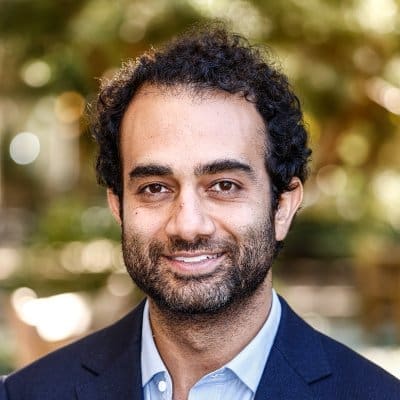
Shadi Hamid is a columnist at The Washington Post and Senior Fellow at the Alwaleed Center for Muslim-Christian Understanding at the Edmund A. Walsh School of Foreign Service at Georgetown University.
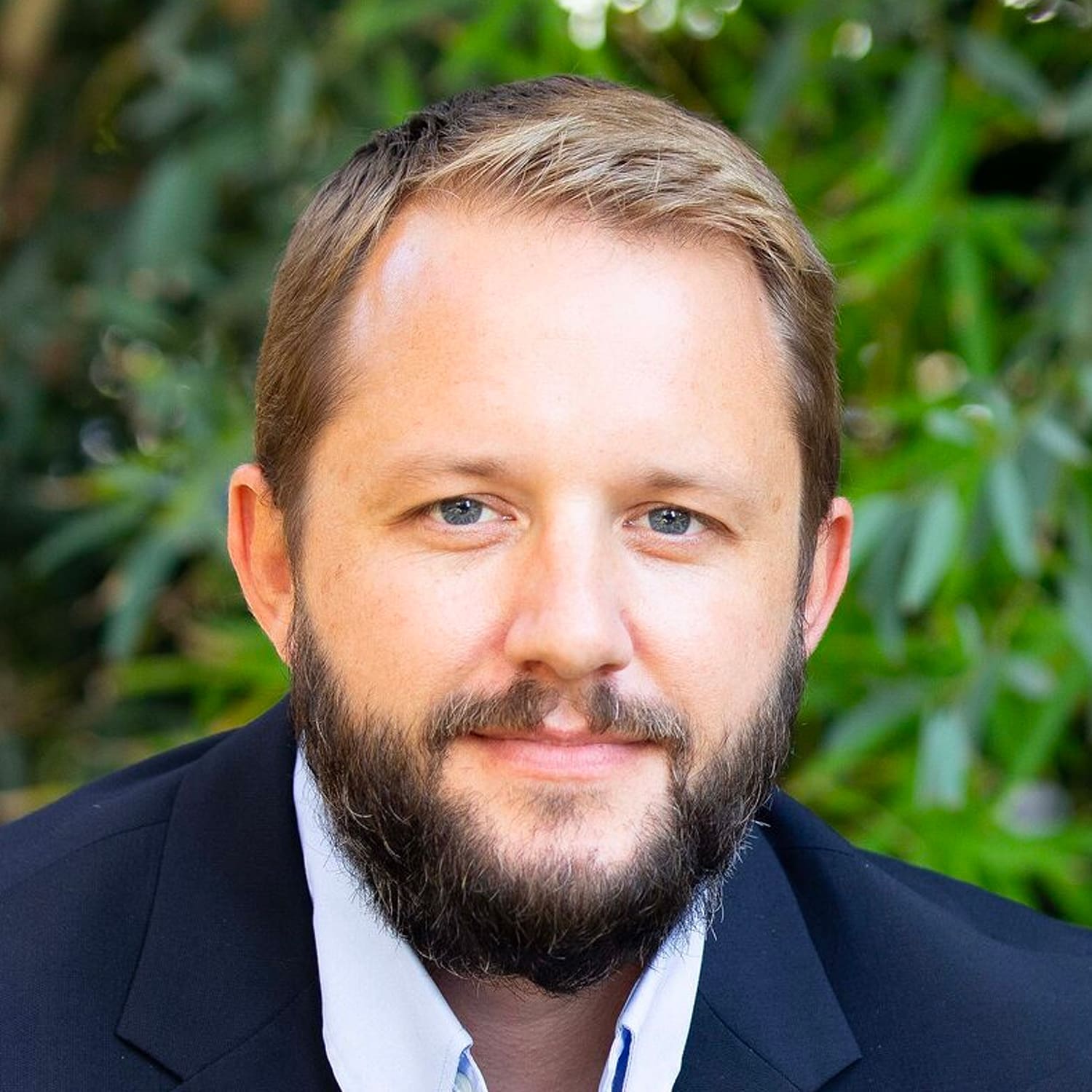
Matthew Kaemingk is Professor of Public Theology at Theological University Utrecht and Senior Fellow at the Center for Public Justice. He also co-directs the Templeton Pluralism Fellowship.
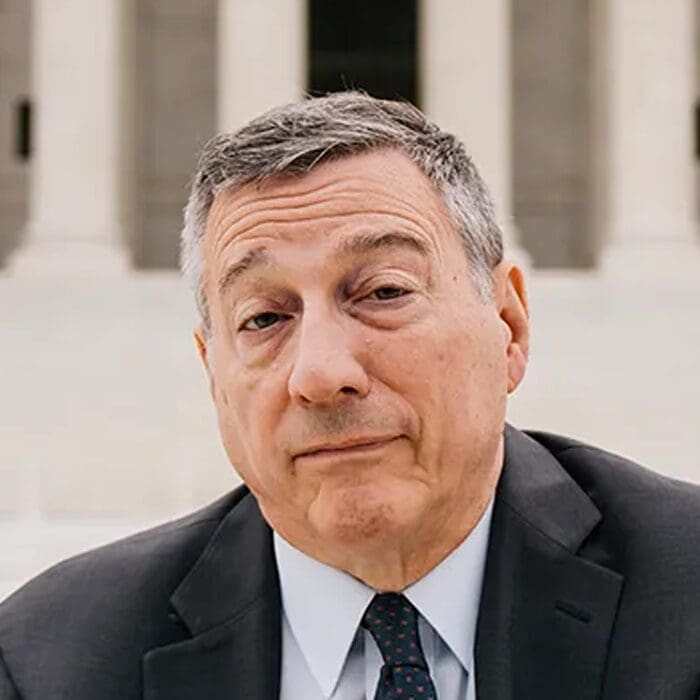
Rev. Rob Schenck is an ordained evangelical minister, public theologian, and the author of Costly Grace: An Evangelical Minister’s Rediscovery of Faith, Hope, and Love (HarperCollins, 2018).
Love the show? Help others find it by reviewing it on your favourite podcast app. We also welcome your ideas and feedback. Email us at zealots@comment.org. Thanks for your support.
Wayfaring with friends and brothers in search of the holy.
SITE DESIGN AND DEVELOPMENT BY POLYMATH