





The Menu, The Bear, and a choice.




Whether we know it or not, economics shapes almost every part of our lives – where we live, whether we can afford children, how much time we have with the people we love, and even the choices we think are available to us. But most of us rarely stop to ask what economics is actually for.
In this episode, Elizabeth Oldfield sits down with economist and Works in Progress editor Sam Bowman for a conversation that goes far beyond markets, GDP and public policy. Together we explore freedom, human flourishing, progress, and the surprising moral questions that sit beneath economic thinking.
Elizabeth Oldfield: Hello and welcome to The Sacred, a podcast from the think tank Theos, in partnership with Comment magazine.
Hear me out. I am wondering if the most powerful forces shaping and changing our world are not, in fact, the revolutionaries, the obvious ideologues, the powerful storytellers, the great campaigners, but in fact the people in the background, making small, pragmatic changes to economics and technology and policy. And if we’re not trying to understand the principles and the values that are driving the people that are making those policies, then we are probably missing the trick.
This is why I was so delighted to speak to Sam Bowman. Sam is one of the leading thinkers on economic and technology policy in the UK, and we really went deep into what his values are, what he thinks the better world is.
Sam Bowman: We have built a lot of policy-making around this idea that what you can measure is what matters. And people are like, “Well, hey, no, that’s not true — you’re not measuring loads of things I care about, so, hey, screw you.” And unless we realise that people have demanded those vetoes for good reasons, then we won’t fix the vetocracy problem. We won’t get anything built. We won’t have this kind of progress that I think we could have.
Elizabeth Oldfield: I had loads of questions. It provoked many, many thoughts, which I speak about a little bit in some reflections at the end. But for now, I really hope you enjoy listening.
I’m going to ask you to reflect on this strange, unusual question about what is sacred to you. I’d love it to take you into your values and principles, but you can really reject it. You can take it in another direction. You can answer it however you like. What came up for you?
Sam Bowman: Sure. So when I started to think about this, my first instinct was to say, well, nothing is sacred to me. You know, I’m an atheist. I think that there is a very interesting question as to what does morality mean in a universe without God? And I kind of thought, okay, well, we can talk about that.
And then I started to think, okay, fine, but I don’t actually think that’s very useful. Like, I actually think that morality — although I think that morality in that very objective, from-the-point-of-view-of-the-universe sense is important and can be useful — I think on a day-to-day basis doesn’t tell you very much. It doesn’t tell you about how to live your life. It doesn’t tell you about, mostly, how to interact with other people. Even if you subscribe, as I do, to a kind of utilitarian calculus, you can’t actually do utilitarian calculations. If you try to do that, you are already losing. You’re already backing yourself into a corner.
So where I have kind of ended up is believing in a kind of a two-track. There is this very abstract sense of, from the point of view of the universe, what state of the universe is better, A or B? And that’s kind of where I think moral philosophy can be helpful.
Elizabeth Oldfield: Can I just very briefly highlight “from the point of view of the universe”? Can we come back to it? Carry on.
Sam Bowman: Yep. So from the point of view of the universe — and I do think that’s important, and I do think that’s interesting, and I used to think that that was much more useful and much more of a kind of guide to life than I do now. I have come to the view that really the more interesting questions are on a day-to-day basis. What are the kind of rules of thumb that we should follow? What are the kind of norms that we should observe? And what’s the thing kind of locally, what’s the thing in our day-to-day lives that we think is good, or that we think kind of pursuing that leads to really good outcomes by the much more cold, objective standard of what the universe wants or what kind of moral philosophy demands?
And for that, what I think is sacred, or what I’ve kind of ended up thinking is sacred, is people being able to do what they want, and kind of live the lives that they want to live. And I think that leads you to… the reason I believe that is that, because I don’t think there is an objective… I think any kind of objective good is very, very, very neutral. You know, I think it’s very, very, very… it doesn’t tell you very much. It can tell you that, you know, a universe where there are a million kind of happy things getting what they want is better than a universe with a million unhappy things not getting what they want. But it doesn’t tell you very much about, like, what should the tax rate be, or, you know, should we have laws that stop people from reading certain books or not.
And where I’ve ended up is thinking that, in terms of the actions that we should take, what we’re trying to do is give people the resources that they need to live life and the protections that they need to live their lives as they think is best. And that — I mean, that is in fact where a lot of utilitarian philosophers end up, right? Most utilitarians tend to be quite liberal because they share this sense of neutrality, that we can’t really impose values on other people because that doesn’t come from anywhere. But on a kind of day-to-day basis, I don’t think utilitarianism tells you that much. It just tells you, like, this state of the universe is better than this state of the universe.
So for me, ultimately, what is sacred is people being able to live their lives as they want to live them. And the challenge for people who are interested in making the world better is both: how do you give people the resources that they need to do that? So this is not just “get out of the way and let nature take its course.” It’s very much like, how do we make sure people are wealthy enough? How do you make sure people, if they are facing barriers in their lives to do what they want, how do you remove those barriers as much as you can? But also, this is about non-interventionism in terms of what they do with the resources you give them.
Elizabeth Oldfield: Is kind of freedom of choice a fair shorthand summary?
Sam Bowman: Yeah, I think so. I think that where I have always differed with most classical liberals — and even though I share very classical liberal political views in lots of areas, not all by any means, but in lots — where I think classical liberals often ended up getting it wrong was in thinking that, you know, so-called negative freedom was the thing that matters. Freedom just from constraint by other people. Freedom from other people pushing you around, which is very important. But if you’re stuck down a hole, it doesn’t matter that you have freedom from other people pushing you around. You need a ladder to get out of the hole.
And I think once you recognise, or once you accept, that that is just as important — people’s ability to live the life that they want to live — then it changes a bit, in some areas, what you think. I mean, it can slightly change emphasis. I think in some ways it changes enormously. You know, it makes you much, much more friendly to redistributive tax and welfare policies and things like that. It makes you, I think, much more interested in scientific progress, technological progress, because those things are so enabling of people. I mean, in the grand sweep of history, technology, more than anything, is the thing that has — and science, more than anything, are the things that have — given people the resources they need to live their lives.
And in my mind, it’s a much more enjoyable and rich way to think about how to make the world better, because you don’t just have to focus on narrow public policy issues. You can also say, hey, it’s really, really important and interesting that we’ve developed vaccines against, you know, malaria. Like, that’s really interesting and really important. And what can we do as a society or as a state to support that kind of work? Which to me is quite exciting, and gets you back to this point of, ultimately, that is still about giving people the resources they need to live the lives that they want to live.
Elizabeth Oldfield: Yeah, that’s really helpful for me, because I was always reading and thinking about your work — it was really clear that you do think there is such a thing as a better world. You do think there is such a thing as progress, which I was struggling to square with this “there is no objective good,” you know. And I think what I’m hearing is, progress, or a better world, is where more people have freedom of choice.
Do you then — forgive me, this is possibly naive, as someone coming from, I think, a different perspective, although I’m very confused about it all — if you were able to enable a world where people were not constrained in their choices, and they had enough money and science and technology to make their choices, and then they chose things that were, for most of us, we would think they’re actively harmful, or just depressing, or ugly, or brutal, does that still feel like that would have been the right thing to do?
Sam Bowman: Yes. There is a question about, if you’re talking to harm — assuming you mean harmful to themselves…
Elizabeth Oldfield: Harmful to themselves and others.
Sam Bowman: I have a very deep commitment to our interdependence and our interconnection, so I don’t think you can separate those two things. Okay, so it depends on how much harm there is to others. You know, you’re hosting a party and playing music until 2 a.m. once a year. That’s like — if I’m your neighbour, that’s kind of harmful to me, but that’s just life. And I think that’s kind of being a human, is to put up with that kind of thing. If you’re doing a party every single night, then the calculus changes a bit.
You know, to get to what I think you’re really talking about, though — or, you know, what to me I start to think about, at least, is like, when people are doing things in a very short-termist way, like taking heroin, or like, you know, watching TikTok all day or something like that. I think that I would probably judge them to not be doing what they themselves would say is in their interest. I think they would say… I think a lot of the time people struggle with short-term versus long-term. All of us do. You know, I certainly do. So I don’t mean other people. I mean, like, we all do. And I think that that means that people often end up doing things that, if they could really commit not to doing them, they would commit not to doing them.
Lots of people would say, if you could block TikTok reliably on my phone for more than 20 minutes a day, then I would like that. But there isn’t a way for them to do that at the moment. Or at least it’s not reliable.
Elizabeth Oldfield: Because they have so much free choice, Sam. You’ve given them so much free choice.
Sam Bowman: But there I would say, actually, the true free choice is being able to commit themselves. What they lack there — and I don’t think this is really a policy problem for adults, I think this is probably something like a technological problem, actually — but what they lack is the ability to commit to something that they really want. There’s like a missing solution that they would really like. There, like, Ozempic and Mounjaro, the weight-loss drugs, are basically a commitment device against the short-termism of feeding your cravings. You know, they basically, by removing your cravings, they allow you to have the thing that you really want, which is a much healthier body and better eating habits, at least in my opinion. And I think almost everybody who has used those is very glad that they exist and is much better off that they exist.
To me, there is — I mean, there’s a policy question of, like, how do you enable that kind of… yeah, how do you allow people to make good long-term decisions and not fall into the trap of what they themselves would be judged to be bad short-term decisions? But I wouldn’t say… if they would step back and say, “No, you know what, I actually do want to spend my life playing video games” — now, I would find that a pretty miserable life. I like video games, by the way. I also like TikTok. But I certainly wouldn’t impose something on them per se.
I think that where it becomes very interesting is when we don’t have a technological solution, but we do think that people would love it if there was some kind of solution. So, for example, I’m pretty libertarian on smoking. But I think you can make a pretty strong case that most people who are smokers would rather not be smokers and are suffering from this kind of short-termist decision problem. And in the absence of a way of people kind of committing not to being smokers, is there a public policy role for smoking bans and things like that, so that they don’t fall into the situation? Ultimately, I think, in that case, no — in that case, I’m not convinced by that. But I don’t think it would be… I mean, I think there’s a good argument for that. There’s a good case that you could make for that.
Elizabeth Oldfield: Yeah, interesting. Let’s come back to this, because that, in a bit — in my language, the kind of character and virtue bit, they’re like, what kind of humans are we becoming is the ball game, and my frustration is we spend all the time on the rest of the stuff. But first I want to understand kind of where you’ve come from, how you’ve come to hold these things dear, if not sacred. So can you tell me a bit about your childhood? What were the formative ideas in there?
Sam Bowman: So I was pretty — I still am pretty — close to my parents. Both my parents were very interested in philosophy. I, you know, was reading books of philosophy and kind of political theory fairly young.
Elizabeth Oldfield: Reading John Stuart Mill at 12? Like a highly popular teenager, I imagine?
Sam Bowman: I didn’t bring it into school with me.
Elizabeth Oldfield: You had a secret nerd life.
Sam Bowman: My nerd life wasn’t secret, but there are different levels to the game. I found that very interesting and very persuasive. I still find it’s pretty persuasive. I don’t think it’s a kind of magic solution to every question, but it definitely spoke to me in a way that lots of other things I’ve read since haven’t.
Elizabeth Oldfield: Could you just pause and say, what was it, as you were reading those economics texts and philosophers? What was the draw? What was it making you feel?
Sam Bowman: The draw was, and is, in a world… if you don’t start from a premise of a single objective truth, if you don’t start from a premise — or maybe I should say a single detailed objective truth. I think if you believe in an organised religion, if you believe in God, then it isn’t just like a single neutral, you know, “oh, you should be good.” It’s pretty detailed about what being good is, right? People have very rich disagreements about what that is, but they’re not saying, you know, the Bible just says “just be nice, smile at people” or whatever, or “maximise utility.” The Bible says much more than “maximise utility.” And so if you don’t have that, then really the challenge, kind of ethically or morally, is like, is there anything, right? The question is, is there anything?
Elizabeth Oldfield: I’m so sorry to interrupt you. Forgive me. It’s because I really want to understand as I go. Were your parents atheists?
Sam Bowman: Oh, yeah, yeah. So I was brought up by very kind of strong atheists. I wouldn’t say rabid atheists. My mother grew up — my mother is a lesbian and grew up in Catholic Ireland and, you know, in a pretty conservative background, so has had very, I think, bad experiences with the Catholic Church. And so she has a strong feeling that, you know, the Catholic Church and organised religion can be very bad for people. I haven’t had any of those experiences. I grew up very parallel to that. Went to a multi-denominational primary school, which was very unusual in Ireland at the time, and a Protestant secondary school, which was very kind of hands-off in terms of the religion, which a lot of Church of Ireland schools are. And my dad was kind of an atheist, but, you know, not ultra-strong about it. And I think that I have always, from them, had a strong sense that being good is important, and that this sort of basically liberal conception of what’s good is like how they saw the world, and — you know, not surprising that I have adopted or taken a lot of that from them. I think I’d probably…
Elizabeth Oldfield: I’m really sorry to do this again. If you had to summarise what they, in short form, what being good meant to them — what do you think it meant?
Sam Bowman: I think being good, to them, means similar to what it does to me, which is letting people live the lives they want to live, and making sure that people culturally and socially have the space to live the lives that they want to live as well. If your background is — and, again, my background is not Catholic Ireland; you know, I grew up in Ireland, but the Ireland of the 90s was very different to the Ireland of the 70s and 80s — and if you grew up in the Ireland of the 70s and 80s, your main… the thing that was stultifying to you, if you found that there was something stultifying to you, was not the state, really. To some extent it was, like — condoms were only legalised in 1985, but, yeah. But maybe I owe my existence to that, so I don’t know. I don’t know. But it was a culture of conformity and a culture of deference, to some extent, to certain figures. Not a general culture of deference. I don’t think many people would say Ireland has a general culture of deference. But for a lot of the 20th century, there was a culture of deference to religion, to the Catholic Church, and that meant that there was a deep scepticism and hostility to other ways of life and other ideas of what’s good.
And Ireland has changed significantly. I mean, most people are familiar with the last 30 years of — not most people, but probably most people listening will have an idea of what’s happened in Ireland over the last 30 years, in large part as a reaction, I think, to that. I think there’s a very widely shared view that Ireland was in a very, very bad place up until the early 90s. But I think they probably have had a more culturally informed view of those kinds of constraints, whereas for me it’s always been much more about resources and wealth and, you know, do you actually have the money and do you have the opportunities that you need to do what you want to do? Which makes me actually much more like Anglo, right? Like, most people in the UK, in Britain, and in the United States have not been coming from this kind of background, so they have focused much more on economic constraints to people’s abilities. And, as a child of the internet — you know, I was using the internet from like eight years old — I have read a lot of, and I grew up reading a lot of, American and British thinkers and writing. So a lot of my influence, a lot of what has influenced me, has come from that, not from the Ireland of 1995.
Elizabeth Oldfield: Yeah, it’s a really helpful piece of the puzzle for me, because whenever I meet people for whom individual freedom matters — people who have more libertarian leanings, or these classical liberal leanings — there is often, not always, when it is kind of central to their sense of what the good is, something in the archaeology around having actually experienced the absence of that. Whether that’s having been brought up into communism, other forms of authoritarianism — things that feel like a very different formation than our generation, and what it’s like in Britain, where freedom of choice is a kind of table stakes, right? It feels like the background, and therefore I’m less motivated by it. But I’m really aware that it’s partially because I haven’t experienced what it’s like to be constrained.
Sam Bowman: I think then my version of that is probably — you know, we weren’t rich growing up, and in many ways we were pretty financially insecure growing up. And having experienced a lot of the chaos and the — you know, when, from a pretty young age, worrying about money as a kid — you know, that’s something that I have always thought, like, people shouldn’t have that, right? Like, people shouldn’t have that fear of, like, where are they going to live, or what’s going to happen if their parents can’t make the rent, or whatever, right? That’s a… and I, you know, I’m not a utopian. Like, I understand that those constraints are real, but I think as much as possible we should try to remove them, or we should try to minimise them.
I think where I would disagree — there are probably a lot of people who are much more to the left who have a very similar view — and I think, like, really the interesting questions are empirical questions. They’re not actually about “is it okay to do this,” or “is this a thing that’s worth pursuing.” I think, yeah, absolutely, it’s a thing worth pursuing. I think the question is, like, what are the best means to pursue it? Yeah, how do we protect people from that kind of precarity? How do we actually get that outcome? And that’s where I think a lot of people who I end up disagreeing with, even though I have actually pretty similar goals to them — my claim would be that there are much better tools to achieve the things that they want than the ones that they’re focused on.
Elizabeth Oldfield: I would like to know: who do you want to be becoming? When you think of the kind of man you want to be, who is that?
Sam Bowman: I would like, more than anything, I would like to have a happy and stable and safe-feeling family. And I have been slightly surprised by how much I feel like a kind of family man, having had kids. You know, I had never expected to feel like that would be as central to my life as it does. I knew that having kids would, like, dominate my life time-wise. But what I have found is that, having had now — we have two kids now, we just had our second — and what I found is that that’s the thing that resolves questions for me on a personal level. Like, when I’m trying to make a decision, the question is, what’s best for — most of all, my kids, but also my wife? And that’s a really useful thing to know. It’s a really useful thing to have that. It’s very clarifying.
Elizabeth Oldfield: Yeah, it’s clarifying, exactly.
Sam Bowman: With that… you know, that’s, like, ground-level need. Above that is a feeling of changing the world, of changing a universe in a way that is better than it was when I came to it. Doesn’t have to be a really big way. You know, I’m not expecting to — I’m not expecting to have, like, statues. I don’t want… I’m not looking for anything like that. But one of the things I actually like about — maybe we’ll talk about this later — but what I actually like about doing kind of public policy type stuff is that small changes can have a really big effect. Small changes can affect a lot of people. And even if they only affect them in a small way, that’s still a really, really big thing that you’ve done. And having left a small mark like that in a positive way would make me feel like I had done something good with my life. And so those are the kind of things. So I would like to be a person who has meaningfully changed other people’s lives in a good way.
I think the third thing is — and maybe this is kind of slightly more personal, or kind of slightly more just about me as a person — is, like, I have learned that I really love learning and developing new understandings and, like, hobbies, right? Something I basically believe now is that most people over-index on, like, the extensive margin of life. They over-index on, like, travel.
Elizabeth Oldfield: I don’t know what that means. Okay, sorry.
Sam Bowman: Okay, sorry. So, they — I think, I certainly have. I don’t want to make kind of sweeping generalisations about other people, but I think culturally we talk a lot about broadening your horizons, right? Travelling, going somewhere, meeting new people, blah blah blah blah. I believe, and I have found, that I actually get more pleasure and I have a greater richness of life from deepening my understanding of things that I already encounter or have. So, like, trivial things, but — like, I basically decided to get into football about six or seven years ago. And it went from a thing that I would occasionally watch a match and have a football team, to, like, I actually follow this. I actually read about it. I talk to people about it. I have opinions about it. And it’s given me this, like, extra layer of texture. It’s not a huge layer, right? It’s football. But an extra layer of texture. It’s given me, like, more things to talk to people about. It’s given me — like, when I go around town, I see, “Oh, like, that person’s got a Liverpool badge in his car,” and, oh, now that sort of added — yeah, that sort of added an extra thing. Or, you know, you can get into, like, food, or, like, coffee, or wine, or whatever. All these things are, like, individually really trivial. I’m not saying I get any major meaning out of drinking coffee or making coffee, but, like, the lore that comes with all these things is fun and interesting.
And to me, it’s this idea of adding layers of texture to your life by taking things that are kind of mundane — not taking everything more seriously, but just enjoying the richness that is present in things that seem quite mundane, or that you kind of take for granted. So it’s like developing more and more deep, lore-based understandings of things in life. To me, that’s something that I — you know, I consciously now will, like, try to find a new hobby or a new thing to get into, and I find it really rewarding. So that’s a person that — that’s the kind of person I like to be and I want to be more of.
Elizabeth Oldfield: I don’t think that’s trivial at all. I think a lot about attention. My kind of foundational things are relationships, relationality, and attention as, like, the things that make us who we are. And to be someone who is actively and intentionally turning your attention to things that are interesting and beautiful and fun — that feels morally really serious, but not in a, like, “make your life serious” way. In a fun way.
Sam Bowman: Yeah, yeah. It’s — yeah, it’s — and as I say, like, the word “texture” is what it’s like.
Elizabeth Oldfield: Beautiful way of putting it.
Sam Bowman: I think it’s — I think, yeah, and it’s really, it’s really given me a really good sense of understanding myself. I don’t know that this is actually true of everybody else. I just know that this is true of me. And so, you know, I am probably less inclined to go on holiday for the weekend somewhere than I am to, like, find a place in the city that I live in and, like, “hey, why don’t we go and check out this cathedral, or why don’t we go and see this park that we’ve never seen before?” And just sort of get… getting that really deep focus — “focus” is a nice word — of it, I find, has just been really, really rewarding. Yeah.
Elizabeth Oldfield: What three words would you like people to be able to use about you at your funeral?
Sam Bowman: I’m going to choose — so I’ll choose three words that don’t encapsulate… I’m not going to try and encapsulate myself or anything, but they are kind of features of myself that I hope that other people see in me. So one is vision. And what I mean by that is, I think that I am good at seeing a very big picture, and I like to be the person who is thinking about a very big picture and thinking about how that relates to, like, what do we do now? I think that kind of telescopic ability to go sort of from big to small is really, really important to me, and I hope people see that in me and value that in me.
One is, I think, probably resourceful. Again, this isn’t — I don’t want this going on my tombstone — but I would be happy if people saw me as a person who did good things and was kind of pragmatic and resourceful with the things that I had. I think that kind of, that, like, way of working, a way of acting and being able to be kind of pragmatic — “pragmatic” was, like, another word that I considered for that, but I think “resourceful” is a slightly nicer one. “Pragmatic” feels a bit like damning with fake praise. Maybe “resourceful” does as well. But it’s that kind of being able to do things that are, like, good or cool with the tools you’ve got. To me, that’s, like, fun. That’s really, really fun.
And then the final word is — it’s difficult to choose a good word for this, but — encouraging. So something that I like to do, and I like about myself, is that I think I am very good at motivating or inspiring other people to do things that they wouldn’t have done otherwise. I often think of myself as, like — I’m not really the best director of a film, and I’m definitely not the best actor or anything, but I probably would be a good film producer, because I’m good at making things happen. I’m good at getting people and saying, “You know what, you’re really good at this and you should do this, because if you don’t, nobody will. And I know it feels like somebody else will do this, and I know it feels kind of scary, but you should do this.” And I do that a lot, and I think that mostly people are kind of glad if they’ve done that and kind of taken that kind of leap. So it’s that kind of — yeah, there isn’t really a word that isn’t a bit naff, like “inspiring,” or, you know, “exhilarant” or something like that. But “motivating” or something like that, just to — it goes to the vision thing as well. It’s like, you kind of have to be an entrepreneur in your life. You have to be willing to take stupid risks, in a hopefully non-stupid way. But, like, you just — every so often you just have to take a dumb, stupid risk, because I think we all overestimate how risky everything is. Like, I think we have a kind of systematically… everybody is systematically risk-averse, and overrates the downsides of things and underrates the upsides of things. And so it often can take a person from the outside saying, “You should just do it. Don’t worry about it. It will work out. It’ll be fine. You should do it.” To give you that kind of nudge. And I hope that people think of me, or would remember me, in that way. Yeah. I hope they’d also think of me as a good person and a person they liked, obviously. But I’m trying to think of what are the features of myself that are kind of different, that you wouldn’t say about another good person that you liked.
Elizabeth Oldfield: Thank you for taking that question so seriously. That’s really helpful and illuminating. I love this job, because I spend so much time in someone’s head, and then I meet them, and it’s like the particularity of the person emerging is one of my favourite things.
So, I had a question — I don’t think this follows, but as you were talking, I was like, are economists and policy people basically the film producers of society? And we can talk about that if you like. But I guess my question is: why economics? Why is this the route that you have found kind of most fruitful and resourceful for going about this work of trying to leave the world a slightly better place? Why this discipline?
Sam Bowman: The honest answer is that I just find it interesting and enjoyable. I always roll my eyes at people who — I like them — which are effective altruists, right? I like effective altruists. People may or may not be familiar with them, but they have a very economistic view about it. Their idea is you should choose the most high-priority problem in the world, and you should figure out the kind of highest-impact way to solve that, and so on. And they’re very smart people, and they’re very, I think, interesting, and I like them a lot. Where I disagree is: you shouldn’t choose the most important thing. You should choose the thing that you like doing the most that has some importance to it. Because you will fail if you do something just because you have written a big list and you’ve said “this is priority area A,” but you just don’t find it that interesting. You won’t do it.
So the main reason — the honest answer — is I just find it very interesting. I think the objective, if I’m trying to justify that objectively, it’s… there are really, really, really significant constraints on what we can do as individuals, as a society, as mankind, as a human race. The constraints are largely about how much stuff have we got, and what can we do with the stuff that we’ve got. Those are economic constraints. And so we are faced all the time, as individuals, as businesses, whatever, with trade-offs. We always have to make decisions about, do we deploy these resources here or do we deploy the resources there? This includes time, right? This includes our time.
One of the things that people focus on is, like, what is the correct answer to each of those trade-off problems? Should we deploy resources on vaccinating children against measles, or should we deploy the resources on reducing carbon emissions, right? That’s a very interesting and very important question. But another question is, how do we give ourselves more resources? How do we reduce the constraint? And I think that we can do a lot better on that question than we are doing. I think we could give ourselves much, much more by way of resources, so those questions bind less. We are faced with fewer — still, we will always be faced with trade-offs, but we’re faced with less unpleasant trade-offs, and we have more good things that we can do.
So to me, an economist’s job is not actually giving you that much in terms of the first question. They can sometimes help. They can tell you, how cost-effective would this be versus this, blah blah blah. What’s the return on investment here? Yeah. But really what’s exciting to me about economics is, what are the changes we could make that just give us more resources? And when I say resources, I obviously mostly mean money, but I also mean time. I mean people being able to do more than one thing with their lives.
Elizabeth Oldfield: More productive.
Sam Bowman: Yeah, being more productive, exactly. So I definitely don’t mean, like, oil harvested from the planet. Like, I don’t just mean physical resources. I mean the ability to do more with less.
Elizabeth Oldfield: Some of my priors are about — when you talk about, we just need to build the pot, like, the best way to reduce the challenges of deciding how we distribute resources is more. And this “more,” more resources — my sense is, as it’s primarily delivered by the market, is that its expansionist tendencies have all these really damaging unintended outcomes. What’s really helpful about having prepped for this interview is, like, it has forced me to go, what do you think about it? It’s, like, half-thought-through. I’ve never given economics, like, much thought, but I have given my understanding of what being human is a lot of thought, and what a good life looks like a lot of thought. And insofar as having enough money and time helps us invest in our relationships, great. But it often feels to me like the project of “more,” of growing the pot of resources, actively undermines the unmeasurable, difficult-to-describe, inner, intangible things that actually make life worth living. How — kind of — does that just sound naive?
Sam Bowman: No, no, no. I think that sounds like the core challenge of the sort of thing I’m interested in. So there’s a view that is described as laissez-faire, which is like, “let anything go, just let it rip.” That is not my view, for the most part. And I might use housing and cities as an example here. I don’t think that a laissez-faire approach to cities is a good approach. Just let anyone build anything. Let anyone build anything anywhere, right? One reason is that what you build affects the people around you, right? If you build a skyscraper in the middle of a suburb, almost all the people around you don’t want that. Another reason…
Elizabeth Oldfield: Happening in Peckham right now.
Sam Bowman: Well, I actually support that development. But another related feature of that is, if everybody could have agreed from the beginning, “this is going to be a place where we don’t build skyscrapers,” when they were buying the property, they would have done that, right? So it goes back to this point we were talking about earlier, about commitment mechanisms. You know, a lot of the problem, a lot of the challenge in what we’re doing — actually, people don’t… no person actually wants a free-for-all, or very few people, except for, like, real ideological people, who I like, actually, but, you know, very, very hardcore ideological-type people. Most people want some controls in the area that they live in. Like, they move to an area — they don’t just move into a house, right? They move into a neighbourhood. And the interesting, and I think, like, very exciting question and challenge is, how do you give them that control, but in a way that means that they can feel the costs and the benefits of the…?
I think what we’ve got in cities is a very one-way thing, where you basically can just veto anything, but you don’t benefit from new developments near you, and you don’t really feel the cost of the vetoes. The people who don’t get to live in the city are the ones who feel the cost. You can already afford to live there.
Elizabeth Oldfield: You can already afford to live there.
Sam Bowman: Or maybe you can’t afford to live there, but blocking this thing doesn’t really benefit you in any way. So why would I make my life slightly worse by having this tower near me when I get nothing from that? The challenge — and I think this is a really interesting question. There is, by the way, no single answer to this. I think this is, to me, a really exciting frontier in policy: how do you create mechanisms to allow people to make decisions about their lives collectively that factor in the costs and the benefits of their decisions, but allow them to make the decisions? So that we’re not looking for the Treasury or some committee of experts to say, “Well, you know, actually the utils, the kind of pleasure benefited by, or created by, this tower is 100, and the displeasure is 50, so we’re going to build it.” It would be much better if the people who were experiencing the decision were the ones who could decide, and had stood to gain from it if they said yes, and, by not getting the benefits, to lose from it by saying no, so they can weigh up those things.
So to me, it’s like, yes, those things are really, really, really important. Yes, it’s super, super important to get past this idea that money, and the stuff that we can measure, is what matters. No decent economist believes that, by the way. Economists realise that welfare, well-being, is what they care about. Money is, like, a proxy sometimes for that, but doesn’t factor in loads of things, doesn’t factor in externalities — the kind of external costs and effects of what you do. And to me, the interesting question is, like, where can we have better decision-making mechanisms that do allow people who make those decisions to, like, weigh up? Because the individual people making the decisions are not thinking just about money. They’re thinking about everything, right? They’re thinking about the infant schools, and, yeah, families, and, yeah, the feel and the look of the neighbourhoods.
And I think that’s, like, basically the interesting question, because my kind of thesis about, like, why have so many Western developed countries sort of ground to a halt — like, this idea of vetocracy, where loads of people have vetoes, but, like, it’s basically, you veto and you just can’t overcome those vetoes — I think it’s because we have built a lot of policy-making around this idea that what you can measure is what matters. And people are like, “Well, hey, no, that’s not true. You’re not measuring loads of things I care about, so, hey, screw you. Screw you, I’m gonna…” Yeah, I’m gonna demand a veto, and I’m gonna use the veto, because you’re going to make my life worse. And unless we realise that people have demanded those vetoes for good reasons, and we say, “Okay, well, how do we allow them to protect the things that they care about?” — then we won’t fix the vetocracy problem. We won’t get anything built. We won’t have this kind of progress that I think we could have.
Elizabeth Oldfield: Okay. I think it would be really helpful — one, just another question. Do you still describe yourself as a neoliberal?
Sam Bowman: Sometimes.
Elizabeth Oldfield: Okay. So could you say — in as clear language as you can, for economic dunces like me — what is that? And insofar as you think it’s a good thing, why is it a good thing?
Sam Bowman: I think that — so I would describe a neoliberal as somebody who thinks that lightly regulated markets tend to be the best for producing wealth, but they’re not always very good at distributing wealth. And so there is a role for the state, a very important role for the state, in two things. One, doing regulation right. So light regulation doesn’t mean no regulation. Zero regulation is catastrophic. But too much, or bad, regulation — rather than it being about lots or less, it’s more a question of good or bad regulation. Bad regulation is obviously pretty bad as well. So a neoliberal thinks you should try to do good regulation of markets, and I have my own spin on what that looks like. And so the “liberal” bit in “neoliberalism” is about creating freedom for markets — not absolute freedom, but more freedom. And also to do redistribution, from wealthy, lucky people to less wealthy, unlucky people.
Elizabeth Oldfield: So this is the bit that I think I — in your work, I was like, “oh, I don’t get it” — because you’ve described moving from being a libertarian, which is basically free-for-all, like, because freedom is the highest good, any constraint is a problem. Although I’ve never actually… to the idea —
Sam Bowman: Like, my views haven’t really changed that much over time. It’s just my way of describing it. Yeah, I used to call myself a bleeding-heart libertarian, which was, like, a kind of term that was used.
Elizabeth Oldfield: So that’s very helpful. That makes sense to me. To this term “neoliberal,” which a lot of us, I think, are like — we know in some cycles it’s a boo word, that neoliberals are the bad guys.
Sam Bowman: That’s kind of the point, by the way. That’s kind of why we use that word.
Elizabeth Oldfield: So say more. Like, why is being the bad guys a good thing?
Sam Bowman: Well, there’s a great tradition — suffragette, Tory — of reappropriating terms of political abuse for your own ends, right? So it’s kind of partly just sort of fun. At the time, which was about 10 years ago now, about 2016, there was a lot of talk about the evils of neoliberalism. So part of it is kind of leaning into that. Really, though, it’s to say — I was really sick of libertarians saying, “You’re not a real libertarian, because you believe in redistribution, and you believe in some…” They care about people living in poverty. A lot of libertarians do care about that as well, but, as I do, they have kind of different empirical beliefs about what the best way to help them is. But really it was to say, these are some values that I hold. I don’t care what word is used. I’m happy to adopt this boo word. Call me anything you want. Call me a demon, if you like, right? I’ll call myself a demon, if that’s the word that you want. Let’s just be clear about what that means. And as long as it’s clear that this is what I think, then we’re good. So it was largely about that.
And ultimately, to me, the extra thing that I have added, in my mind, since talking about neoliberalism, say, 10 years ago, is a sense of open-mindedness and pragmatism. And I think pragmatism, when you come from an ideological background, when you have a pretty clear set of beliefs about what the world should look like and how to fix it and how to make it better — as long as you are willing to be pragmatic about that, and adapt your views, then you can do a lot. It’s when you’re inflexible that you are in big trouble. And I like to think I’m pretty pragmatic. The things I now focus on, the things I have concluded are the most important, are not best thought of via the kind of lens of “is it neoliberal or not?” Like, housing abundance, doing science better, doing a few other kind of things around public services, infrastructure, stuff like that — it’s just not the most relevant thing about them, that it’s neoliberal. It’s more about really local decision-making. It’s more about elimination of vetoes and replacing vetoes with collective decision-making.
Elizabeth Oldfield: So helpful. I come into all these conversations with, like, a set of two-dimensional models of people, and also ideas. And then I’m like, oh, as always, it’s just, like, lots of it falls apart. And that combo in you — of, you have quite a clear vision of what a better world looks like, or at least what would help humans choose their own version of “better” more. The Works in Progress thing is a better world — you’re wanting to make progress towards something good. But compared to someone like George Monbiot, the thing you said about resourcefulness, the pragmatist in you is like, actually, we can do quite a lot with changing policy, changing the systems around us. And I think a lot about how people come to their political intuitions, and I think so much of it does map onto personality, right? Like, if you have a real pragmatic bent, and you like fixing things and making things slightly better, you might end up more in that camp. If you’re more of a “turn everything upside down” type, you end up in other places.
Sam Bowman: Totally. I’m very happy to say that, because I often think that the real difference between me and many other people who are in the game that I’m in is a sort of revolutionary mindset — not necessarily, like, a French revolutionary mindset, but, yeah, not necessarily cutting people’s heads off, but, like, the whole system has to change, versus… I think of myself as, like, an ultra-marginalist. Like, the thing that excites me most is — yeah, the thing that excites me most is, is there a single line of a law that we could change that would, like, suddenly transform, like — that would just overnight give people, like — that it would cut out the problem? Like, can we do a kind of surgical, scalpel-like fixing of a problem?
And because I really — actually, Adam Smith, who is a, you know, brilliant philosopher, as well as the father of economics — my favourite line of his is, “There’s a great deal of ruin in a nation.” And what he meant by that… he was responding to somebody who said, you know, “We’ve lost the colonies” — this was in kind of the 1770s — “at this rate, the nation will be ruined.” And his response was, “There’s a great deal of ruin in a nation,” which is like, “cool your engines, don’t worry.” Like, there’s a lot — a lot goes wrong all the time — and being comfortable with that and aware of that, I think, makes it much easier to be a pragmatist, because you can say, we’re not trying to fix everything, we’re trying to fix the most important things that we can. And that might give us a bit of momentum to fix other things as well.
Elizabeth Oldfield: Thank you. So I’m going to try and encapsulate what is, like, thousands of books have been written about, and I know there are huge debates on, so bear with me a second. But as I was thinking about neoliberalism, but also this kind of premise of almost all economics — not all economics, but most economics — that growth is good, that we increase the size of the pot, I bring to it two questions. And bear in mind, I’m starting with values that were grounded in philosophy and theology, and then trying to figure out what that means for what I think about economics.
But one is the importance of limits, and my sense that eternal growth seems illogical — that we will run out of everything. And we are running out of things. And there’s something about the rapacious and extractive way that it often shows up that scares the crap out of me, as someone who wants my children to live on a liveable planet.
Sam Bowman: Me too.
Elizabeth Oldfield: Yeah. And I know that. So I’ve been seeing this new work, and I’m being like, how do you navigate this? And then the second thing is this. I don’t think wealth is good for people. I’ve realised — I’m getting more confident saying that. Like, it’s because I’m a Christian, and it’s also because I’m observing the way that when we have enough money to not need each other, that’s what we do. We move away from each other. We move into our own separate houses, and housing demand goes up, rather than living in independent family groups, or, like, us living in a random commune. Like, our inability to be together is often exacerbated by wealth. And it’s not — therefore, this is when I hear myself, I’m like, “Everyone should be poor and live in hovels” — with everyone I’ve ever met, but… oh God, this is the least coherent question of all time, I’m so sorry. But I think what our flourishing relies on is our interdependence, and this drive for ever more wealth drives us apart, and it’s bad for us. So if you could just answer those two enormous questions — it’s 30 seconds — is that okay?
Sam Bowman: All right. So, first one — no, first one, I think, is very important — which is, for most of the time when people talk about growth in that sense, “the limits to growth” and things like that, they mean extractive growth. They mean growth that comes from extracting resources from the ground, or from the environment, and more and more things like that. For almost all frontier developed countries, developed economies, growth is about using a given amount of resources better. That’s what technology is. Technology is doing more with less. The technological breakthroughs that you make are saying, we have these minerals, we know that these minerals are there, we’re not discovering new minerals for the most part. AI does require more electricity, and so those physical constraints do matter — although, I mean, we can get onto that in a second. But, like, AI, for example, it isn’t being driven by a resource windfall. It isn’t being driven by, like, “we’ve discovered a huge vein of cobalt or oil.” Those things are important inputs to it, but really what we’ve done is taken things we already had, and we’re just learning to use them better.
Elizabeth Oldfield: It’s driving emissions up faster, though, right? Am I imagining that?
Sam Bowman: It depends on the electricity. I think, yes, because it’s primarily using gas. I don’t think there’s anything inevitable about that. I think that, personally, I think nuclear power is the solution, because AI needs 24/7, really constant, really reliable electricity, and nuclear power is a zero-carbon way of giving that. Gas is the sort of short-term option, and that is what’s being used. So there are elements of resource extraction to that, but the vast majority of… it isn’t that we had a big gas windfall, and that’s what’s given us AI. We had this gas already. It’s that we weren’t using it in nearly as efficient a way as we are using it now. We are able to take resources we were using for X and now use them for, in this case, artificial intelligence. I’m just using this as an example.
Elizabeth Oldfield: No, it’s helpful for me — this idea that growth is not just stripping everything from a place and moving on, as humans have been so good at. There might be a vision of growth which is, we don’t need ever more and more and more and more stuff.
Sam Bowman: I would say it’s even the opposite of that, because what we see is, as countries get richer, people — for very obvious and good reasons — demand better environmental protections. They demand gardens and parks and cleaner air. Britain today is a much cleaner and much, much better place, in environmental terms, than it was 150 years ago or 100 years ago. It’s much better for people to live in. There’s more nature in our cities. People are outraged by things that they used to take for granted, in terms of water pollution, in terms of protecting wildlife, and a lot of people want to rewild parts of the country. We are getting to a point where we are wealthy enough that we can afford to have those kinds of things.
And this is a general trend. This is a thing that we see across history, and across recent — you know, the last 100 years of history — and across the world, which is: it’s when countries are in that middle, industrialising period, where they are really — where it is physical-resources-intensive — that it’s very, very dirty. It’s environmental catastrophes. And, by the way, if I was in that situation, that would be what I would want. If I lived in Cambodia, or if I lived in Central Asia, I would prefer for my kids to have clothes and, you know, clean drinking water, and medicine, and, you know, schooling. And I would not be happy about air that was choking them, and things like that. Like, all those — you know, those are brutal trade-offs. And to me, the value of growth that we have in the West, and what I would like for more countries to have, is to not be bound by those trade-offs so much. You don’t have to choose between clean air and your kid being able to go to school. You get to have the choice that we have, which is, hey, you know what, we can not quite have it all, but we can have a much, much more abundant sense of environmental protection, without kind of sacrificing… making major sacrifices in our life. So, to me, growth is ultimately — it’s doing more with less, once you are a developed country.
And then, on whether wealth actually makes us happier — to some extent, that’s a very, like, privileged question to ask. I’m not saying that that makes it a bad question, but I do think that there is an important… something that I worry about a lot is, I look at the United States. It’s a much wealthier country than almost anywhere in Europe, much wealthier than the UK. I wouldn’t say that the people there seem much happier. In many ways, they seem unhappier. I think that a lot of the stuff that’s going on on a national level — and that’s obviously affecting the world — comes from people feeling very distant from each other, people not really having a lot of face-to-face interactions with people who are different to them, in a kind of intellectual sense, who, you know, have different backgrounds, different ideas about that. And it definitely makes me worry, right? I think it’s definitely a really, really good challenge to the sort of abundance view, that, like, what matters is making the pot bigger, and then, like, things will organise themselves.
On the other hand, compare the life of a teacher married to a police officer, or a nurse, in the US, to one in the UK, and the Americans will have a much, much more comfortable and a much, much more secure life. People in those types of jobs are much better paid, for the most part, in the US, and over their careers they will have much, much more — they’ll be able to put savings away, they’ll be able to advance within that career path, and not basically feel like they might have to leave to provide for their families. Whereas in the UK, people in those kinds of positions are often in really, really, really difficult financial positions — they’re very precarious financial positions for their entire lives.
So, although I think it is true that, especially at kind of high ends of wealth, it’s not always the case that people know how to spend that in a way that will make them happy, right? Or, you know — I’m not even saying that spending money does make you happy. But I think that, for, like, the bottom 70% of people, or the bottom 80% of people, those people in the UK have much more precarious lives than they should. And they are largely precarious because they don’t have the money, the income, that they need. The cost of living for them is too high. They have to make really hard choices about when to turn the heating on over the winter, things like that. Those, to me, are table stakes. We can definitely argue about whether — would somebody be that much happier on £200,000 a year than on £100,000 a year? Don’t know. Maybe, maybe not. Would they be happier on £70,000 versus £35,000? Yes. I think 100% yes. Not because the money makes them happier, but because the lack of money makes them unhappy. Because not being able to — not knowing that they’ll be able to give their kids what they want, not knowing that they will be able to live in the place that they want to live, and that they can put on the heating whenever they want to put it on — like, that is something that affects way too many people in every country.
You know, there are many people in that situation in the US, where there are fewer of them. And for any level — if you compare people in the middle in the US to people in the middle in the UK, the people in America are in a much, much better financial position. That’s true for everybody except the bottom 10%. The bottom 10% in the US are worse off than the bottom 10% in Europe and in the UK, because they have a worse safety net, exactly. So that’s kind of one part where, like, I think we should remember how precarious and how frightening life is for way too many people. The median person, the person at the middle, in the UK, is living a very, very difficult life, because they don’t know how secure they are financially, they don’t have very much in savings, and they don’t know what will happen to them if they lose their job. And making sure that they are not in that position is table stakes, in my opinion.
But the second point is that I think that there are lots of other things that come in. Like, we’ve talked a lot about kind of money, because I’ve talked about money, right? I’ve talked about resources. But, like, once we start to talk about the things — the actual real things that we’re talking about — like, housing is the really big one for me. To me, fixing housing is the overriding — like, nothing matters more in Britain than fixing housing, because so much of our lives are determined by where we live. And housing is not just the most expensive thing that most people pay for in their lives. It also determines what jobs they can get. It determines who they live around. It determines how safe they feel, what schools their kids can go to, and so on. And to me, abundant housing isn’t just “you will spend less money on your house.” You might be able to live closer to your parents, so your kids can see their grandparents more. You might be able to live closer to your friends, so that you can have more kind of allo-parenting-type relationships with people — you can babysit for each other. If you get a once-in-a-lifetime job offer somewhere, you could say, yeah, you know what, I can actually move there, and I can actually take that, and it won’t necessarily uproot my kids, because — you know, we can split our lives as well. I actually don’t know exactly how that would work. But it’s giving people more control and more power to determine the things that really matter — non-financial things that are affected by the cost of, and the availability of, housing.
You know, something that we don’t really measure in economic terms, but clearly matters a lot — matters a lot to me — is commuting time. You know, I choose to live much more centrally than I would otherwise, because I hate — I don’t actually hate commuting, I kind of don’t mind commuting. What I hate is missing my son’s bedtime. Like, what I really hate more than anything is if he’s gone to bed before I’ve been able to say, you know, do his bath, read him a story, whatever. I really hate that. And so it’s incredibly important to me to be able to live close enough that I can leave work at a reasonable time and still see him before his bedtime. And I’m lucky that I can make that decision. A lot of people do not get to make that decision. A lot of people just have to not see their kids before they go to bed, and that’s a huge cost. It’s not a financial cost, but it’s a huge human cost.
And I think that’s the sort of thing that we should remember when we’re talking about… I have been talking about very, very high-level resources, like money, blah blah blah. But really what matters is: can you run the heating all winter, as high as you want it to be, without harming the planet and without spending hundreds of pounds a month on gas? Can you make the decision to live near your parents, if that makes sense, and have your kids see their grandparents, and have that not bankrupt you? Can you live within commuting distance of where you work? Can you live near your friends? All those things — those are, to me, the really, really important things that often get left out of discussions about housing. But those are what matter about housing. When people are looking for a place to live, those are the questions that they’re trying to answer. It’s more about, what are the options people have available to them? Can we expand the options that people have available to them? That’s what I’m really thinking about.
Elizabeth Oldfield: Which comes all the way back to giving people the freedom to choose the lifestyle.
Sam Bowman: Exactly.
Elizabeth Oldfield: Sam Bowman, we could have talked for another hour, but I am going to honour your time and say thank you so much for speaking to me on The Sacred.
Sam Bowman: Thank you for having me. It’s been great.
Elizabeth Oldfield: I think that I have never really done a conversation like that, in front of a camera, that tries to weave together values and moral philosophy with direct, real-world questions. What does that mean? What does that change about how you think the world should be? And I really liked that.
I really saw someone in Sam who is just likeable and thoughtful. And honestly — it maybe shouldn’t have been, but this was a bit of a surprise. Because there is something about the narrative around people who hold some of Sam’s positions — although, as I always realise, it’s more complicated than I thought it was — but particularly people who call themselves neoliberals, kind of people who are on the right, or the centre-right, economically. And Sam’s someone who’d talk about himself as a fan of Margaret Thatcher, right? A fan of Liz Truss. That, certainly in some parts of the worlds I move in, those kind of people are talked about really as, like, the enemy. But that all fell away, as it is prone to do when you really listen to people.
The final reason that a conversation in particular is valuable is that you are challenged, or you are sort of put into intellectual positions on the spot, that you wouldn’t be if there wasn’t somebody there talking with you. You know, if it was just you writing, or if it was just you talking to the camera, you get to decide the terms of discussion, and you get to decide what you touch or what you don’t. But when it’s a conversation, the other person can decide that, or can kind of shape that as well. And that means that you often end up thinking about things in new ways, or you often end up talking about things that you haven’t, you know, fully formed your thoughts on. So you are kind of thinking in real time, which is both enjoyable to do and hopefully enjoyable to listen to.
What I was left with was this fact that, if I did agree with Sam on the starting points — if I thought that more stuff and more space, more resources, was really going to help people live the kind of lives they want to live — then I’d want him running stuff, right? I’d want his pragmatic and his dedicated and his optimistic and his detail-oriented way of being in the world, his kind of sensible, centrist approach, his at-least-seemingly non-ideological approach, to have his hands on the levers. There is something about that quite grown-up-seeming approach that — even though I don’t agree with his premises and where he’s trying to take us to — I want to honour those gifts, and the way he’s thought about his values, and how he’s trying to use them. Lots that I’m left thinking about.

Elizabeth Oldfield is the host of The Sacred podcast, former director of Theos, and the author of Fully Alive: Tending to the Soul in Turbulent Times.
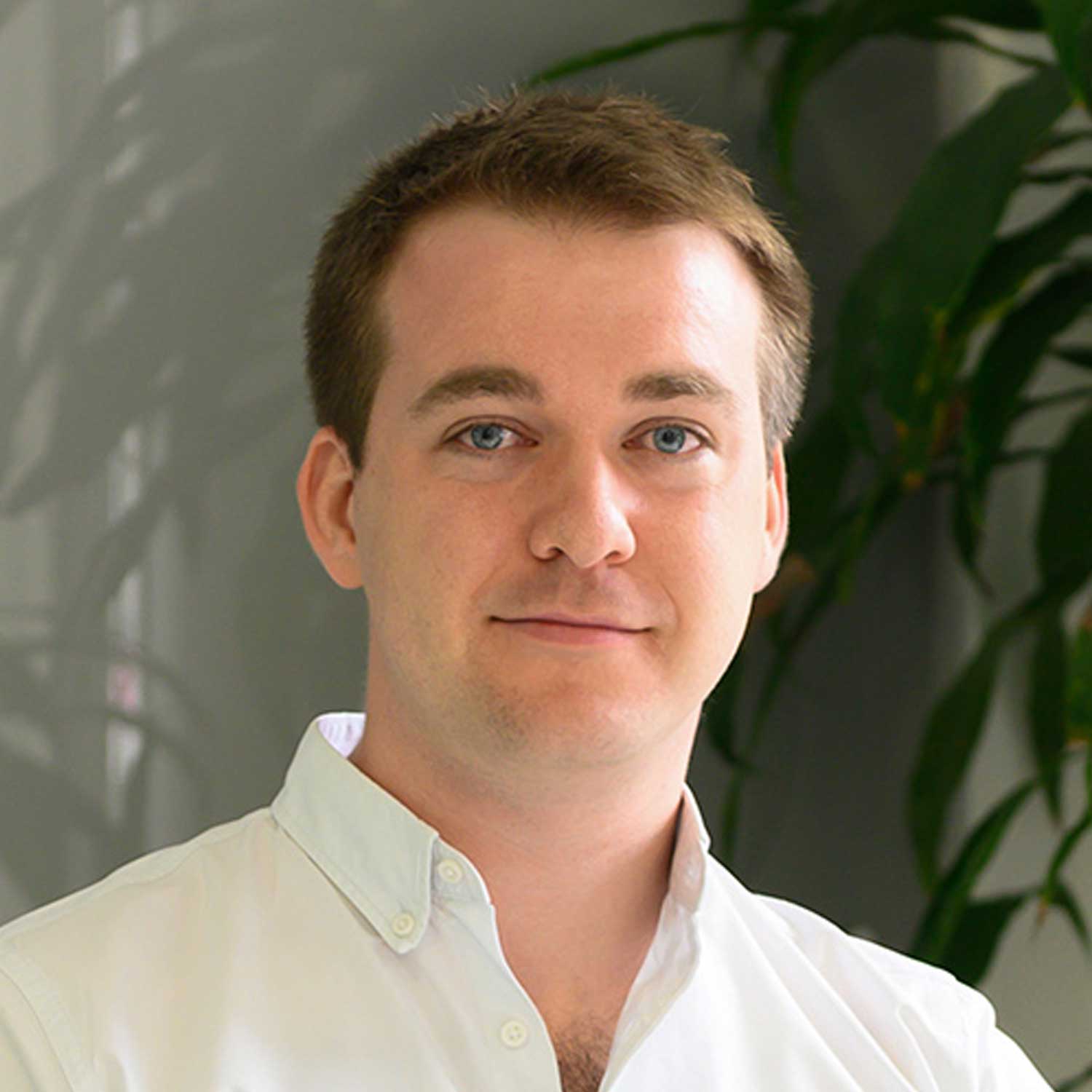
Sam Bowman is an economist and head of publishing at Stripe, editor-in-chief of Works in Progress, and editor at Stripe Press.
Love the show? Help others find it by reviewing it on your favourite podcast app. We also welcome your ideas and feedback. Email us at podcasts@comment.org. Thanks for your support.