L
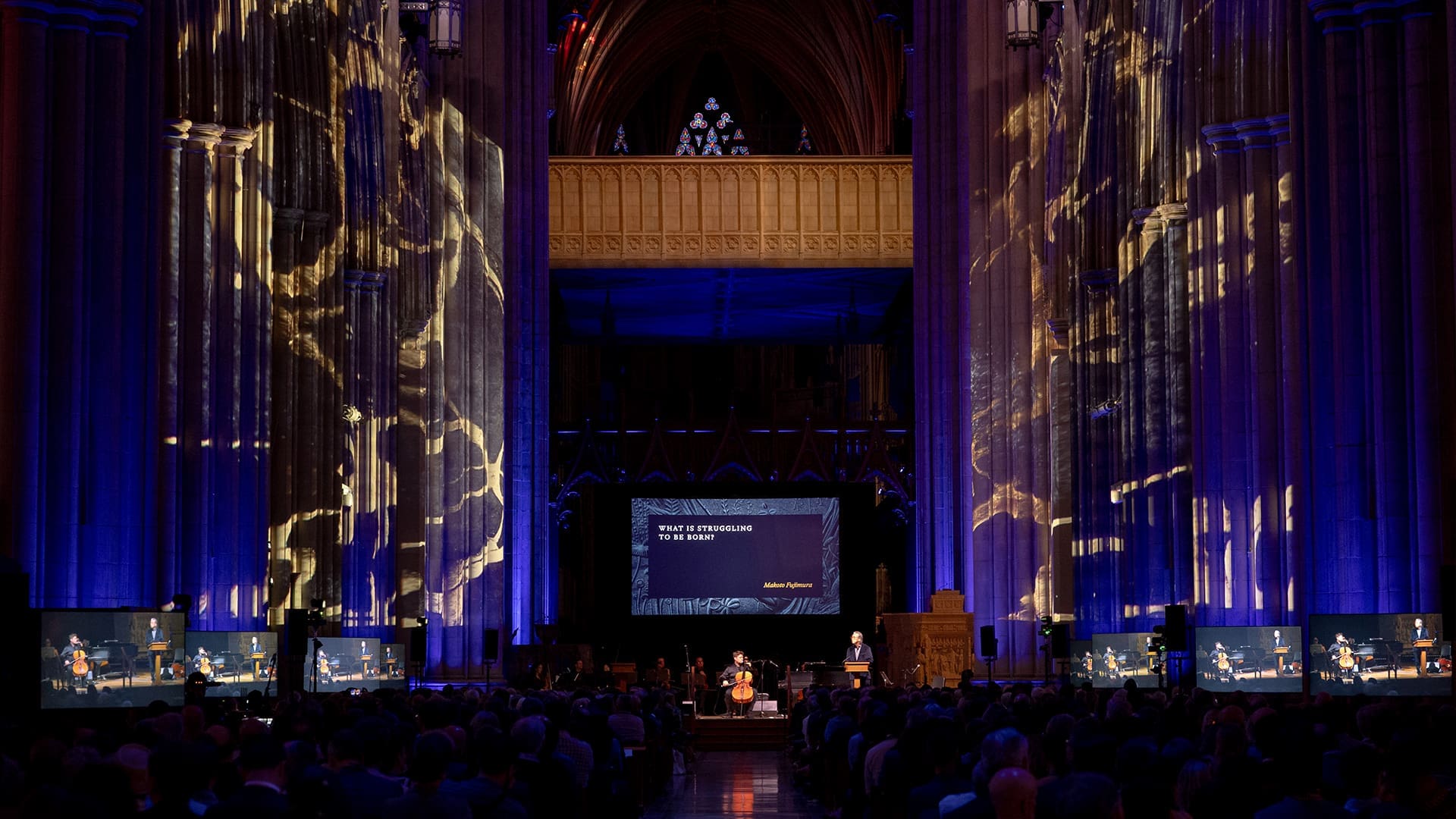
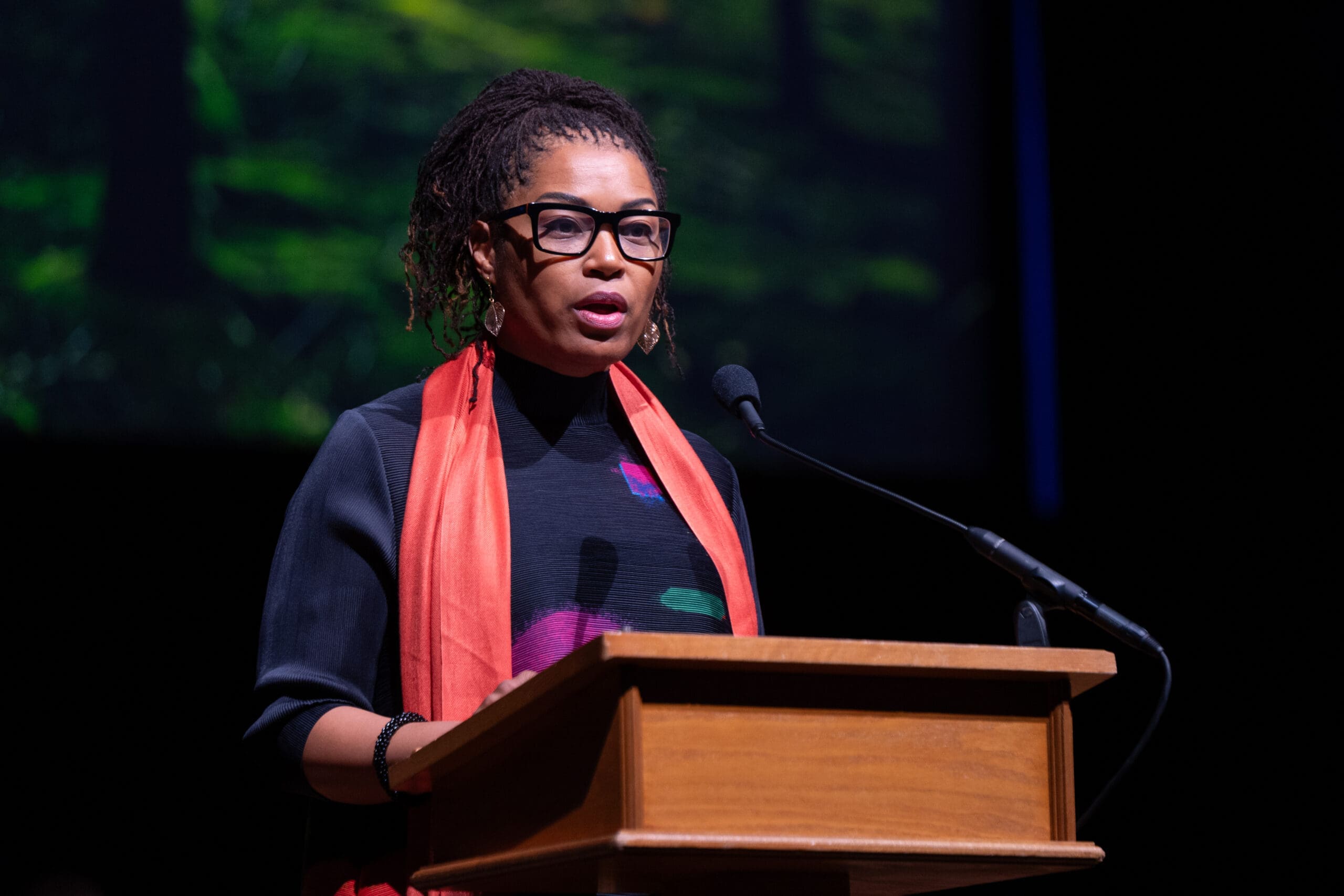
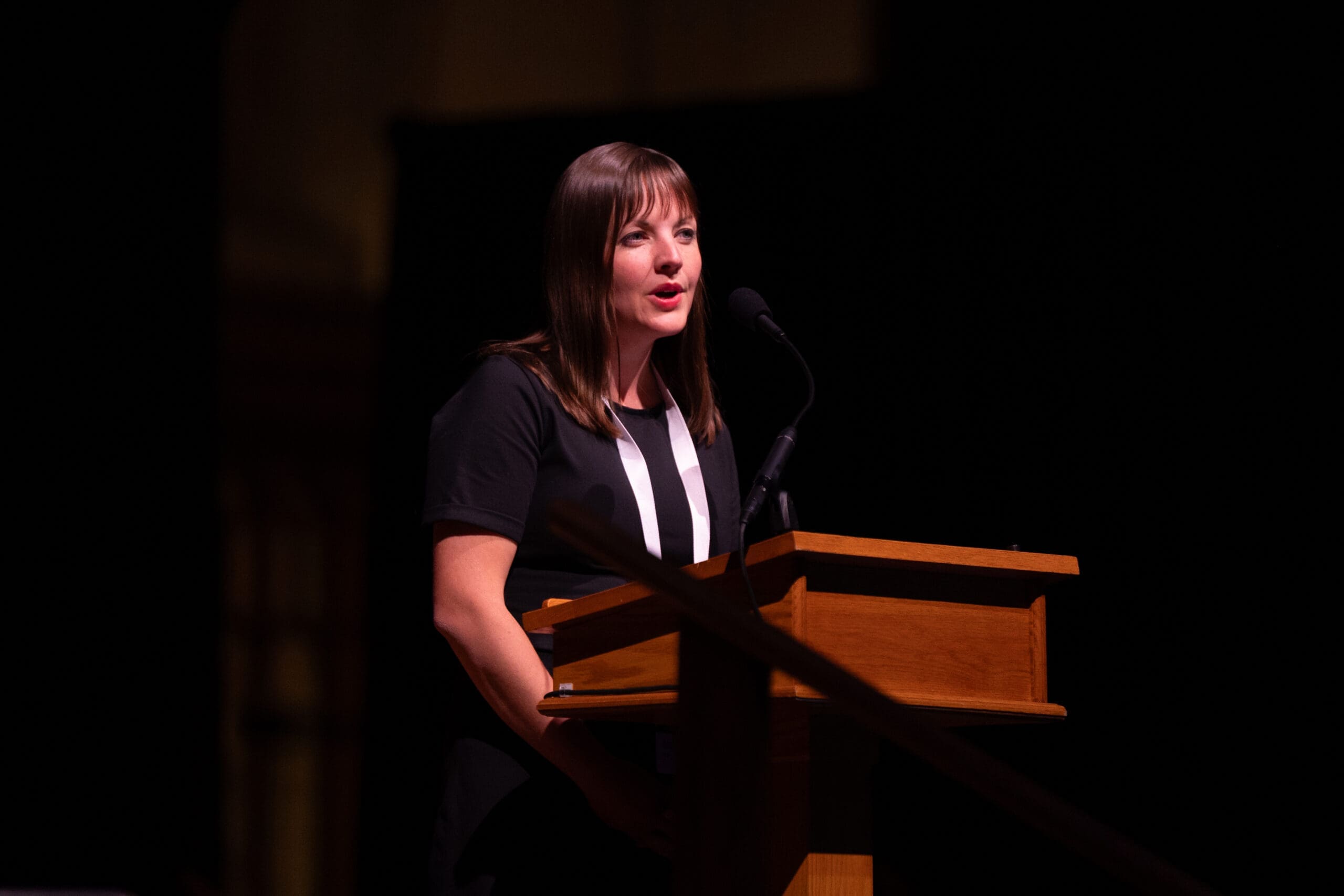
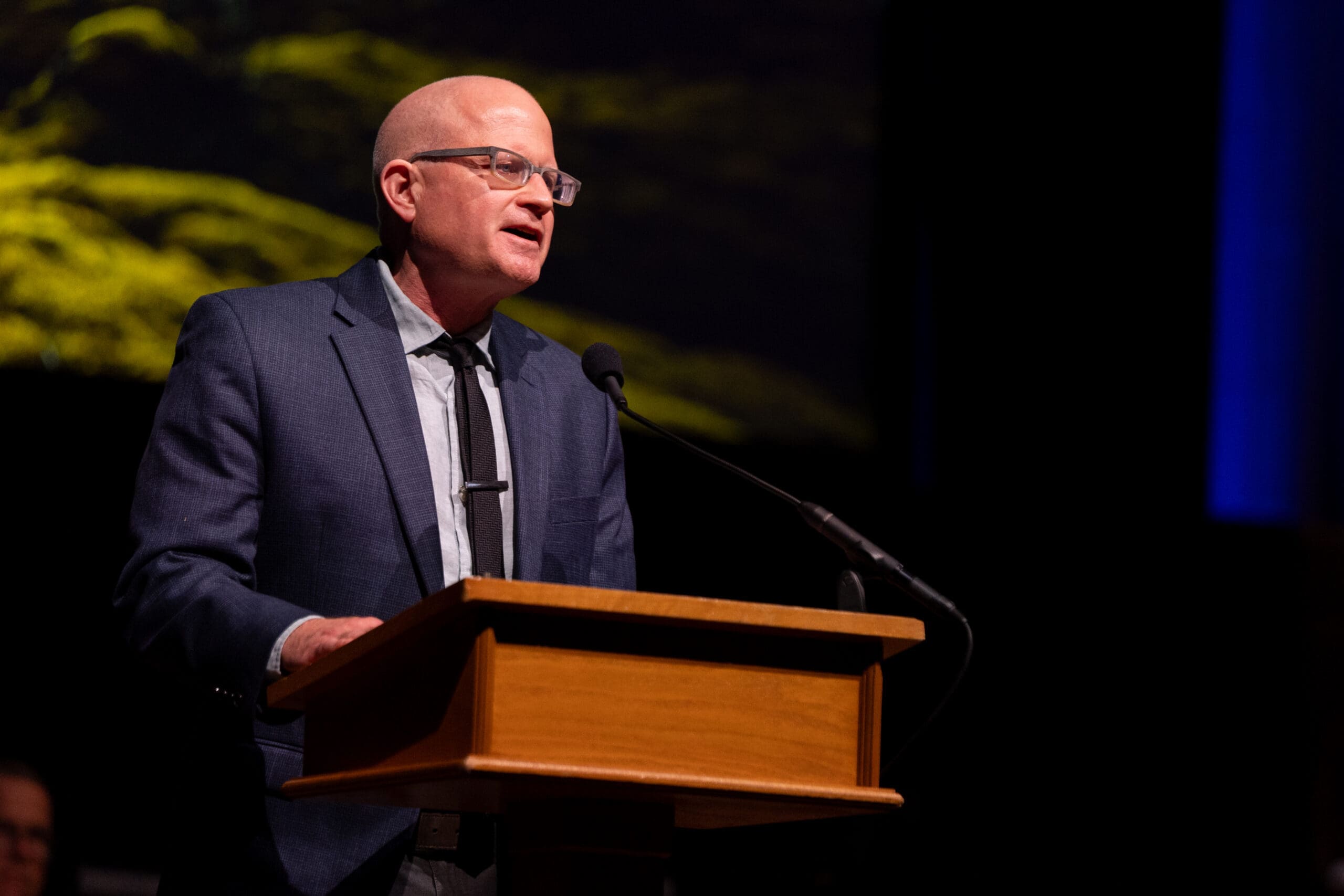
If this issue has asked what happens when we loosen our grip on the illusion of mastery, the opening night of Comment’s Understory festival asked what comes next. In a turbulent era that resists any one diagnosis, what is struggling to be born? Few thinkers have explored that question more expansively than Father Tomáš Halík, the Czech priest and theologian who ministered for decades in the underground church under communism. He had hoped to join us in the Cathedral nave, but when mounting geopolitical instability kept him in Prague this spring, he sent this provocation instead: a filmed overture, delivered from Fortna, a monastery of the Discalced Carmelites. Four voices then rose in response from the United States, each receiving the question through the lens of their own vocation: painter Makoto Fujimura, philanthropic leader Romanita Hairston, writer and cross-class bridge-builder Amber Lapp, and poet Christian Wiman. Threaded between them that night was the cello of the Slovak musician Jozef Lupták.
—The Editors
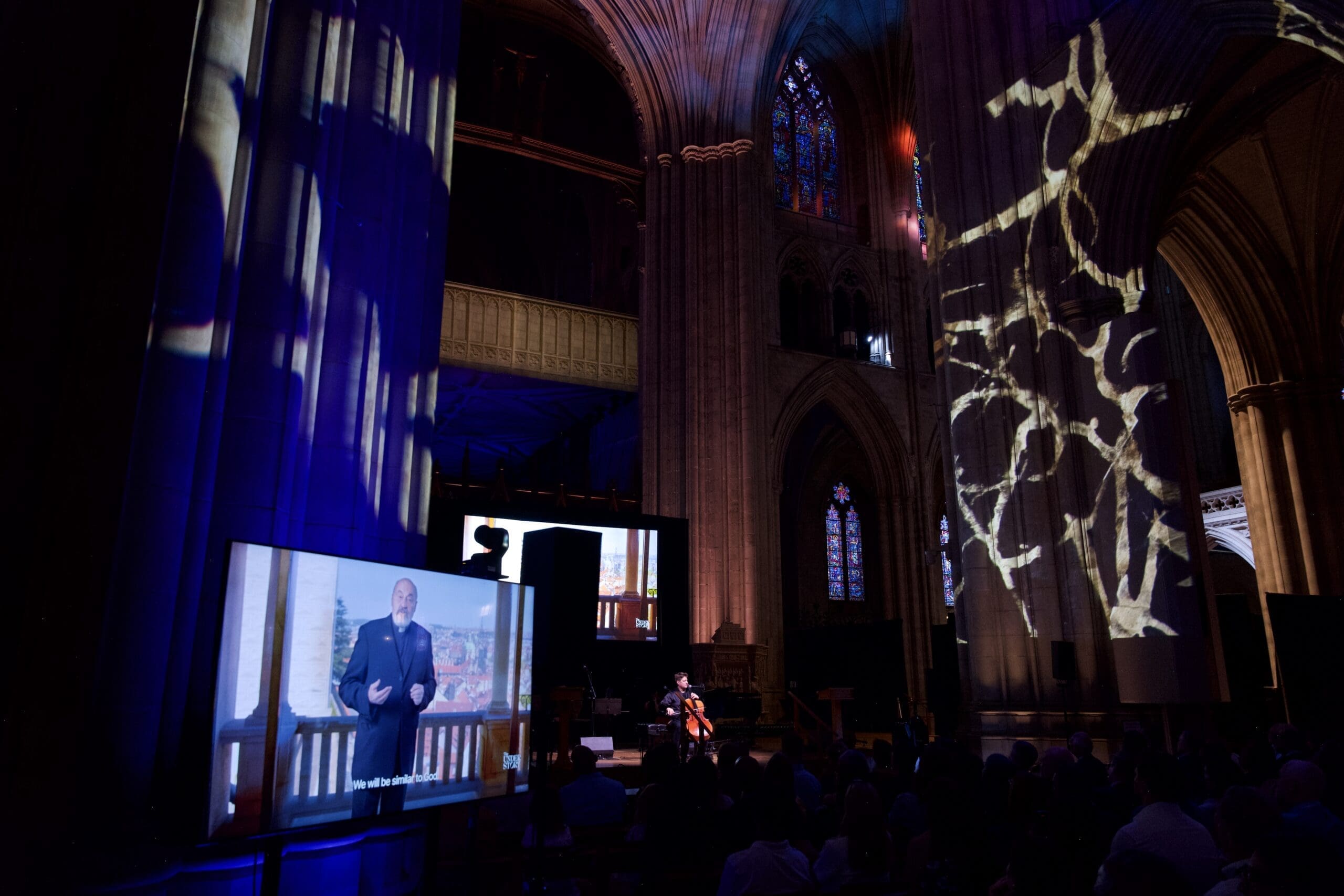
asks, “What is struggling to be born?” recorded in Prague prior to the Understory festival; on cello at the Understory festival in May 2026.
PRIEST & THEOLOGIAN
Ladies and gentlemen, dear festival participants, greetings from Prague.
When I meet with my American friends, they ask me a sophisticated metaphysical question: How are you? Inspired by the apostle Paul’s speech at the Areopagus, I respond: I see that you Americans are a philosophical people. You immediately ask about what matters most—my way of being. You challenge me to do what we should all do: reflect on how we are.
When Moses asked God about his identity, God replied, I am who I am. Medieval theology interpreted this phrase as God’s self-definition: I am a pure, eternal, perfect being. None of us humans can say the same—I am who I am. Our existence, our way of being, is a process of constant becoming. Throughout history, humanity has had the intuition that we are more than we currently are, and that we carry within us the promise of something that transcends our present mode of existence. The Bible says we are already God’s children, but what we will be has yet to be revealed—we will be similar to God.
There are two completely different ways to be like God. The first is known from the book of Genesis: When people wanted to be more than the image and likeness of the absolute being, and grasped for the full knowledge and the other attributes of the Absolute, they realized only their nakedness. Jesus presents a different way of being like God. It is to be like the God who causes the sun to shine and the rain to fall on the just and unjust alike. This is not achieved by seizing unlimited power but by showing unlimited love, solidarity, and empathy.
Today we live in a world where destructive bombs fall on the good and the evil, the just and the unjust. We live in a world full of pain. It is difficult to distinguish the pain of dying from the birth pangs of something struggling to be born. Jesus’s parable of the grain connects death and birth: unless a grain of wheat falls into the earth and dies, it remains alone—but if it dies, it bears much fruit.
This parable may be the key to understanding the mystery of Christianity: the resurrection. The gospel presents the Easter story, which is full of cruelty and injustice, yet it presents that story as having an open ending. The message of the resurrection is not a cheap, happy ending to the Easter drama. The resurrection is not a restoration of the past. It is a mystery of radical transformation. The message of the empty tomb calls us not to seek Jesus in the past, among the dead, but to recognize him as the one who comes to us throughout history in many new and surprising forms. He comes to us as an unknown stranger, as he did to the disciples on the road to Emmaus. He proves his identity through his wounds, as he did to the apostle Thomas. And when believers lock themselves away from the outside world because of fear, he passes through the locked doors.
Only at the last judgment will Jesus reveal his identity in his least ones. Christ lives within the realm of the church’s faith and witness. Yet, especially today, when many forms of the church’s witness have lost their credibility and clarity, it is necessary to perceive Christ who also comes from outside, in many anonymous forms.
I understand the fundamental mystery of our faith—creation, incarnation, the cross, and the resurrection—as complementary ongoing processes: incarnatio continua, passio continua, and resurrectio continua. We can understand the mystery of the incarnation as the dynamic growth of Christ’s presence within human history, culture, and society. The paschal mystery tells us that this process is not merely linear progress and continuous growth. It is a drama that includes dark nights in history and in our lives. It includes crisis and discontinuity, and the decline of existing forms. Throughout the paschal mystery, the process of incarnation is transformed and deepened.
We cannot naively equate growth in the history of Christ with the visible growth of the church—its growth in members, cultural influence, or political power. Jesus’s kingdom is not of this world of power and influence. A grain that does not undergo transformation through death cannot fulfill its mission. Without the cross, there is no resurrection. Many external forms must die away so that the inner dynamics of life and growth may be released, so the seed may bear fruit. What is too narrow and self-centred in our minds, hearts, cultures, and religions must not stifle what is struggling to be born.
When forms stifle content and foundation, a reformation must take place. Throughout history, the church has been called back to its depths—by Francis of Assisi, by the Reformers, by the Second Vatican Council, and in our own time by voices like Pope Francis, who has named synodality as the task of the third millennium. I’m convinced that this call can inspire not only the Catholic Church but also the entire human family and the future of our planet, which is in danger today.
We are witnessing attempts to exploit Christianity politically, as a weapon in culture wars. However, Christianity can and should play a different role in today’s crisis. For a long time, we understood religion as religio in the sense of the verb religare—meaning “to reunite”—as an integrative force in society. However, Christianity has lost this integrative role in our culture of radical plurality. Today, a renewed Christianity can be a religion in a different sense: in the sense of the verb relegere—to read again, to read anew. In a world overwhelmed by information and threatened by overly rapid and superficial perception and judgment, we must develop a capacity for a deeper, more contemplative approach to reality.
Pathological ideologies such as nationalism, fundamentalism, and populism seek to fetishize and idolize themselves while demonizing others. This spiritual blindness increases chaos and ignites destructive conflicts around the world. We need a new hermeneutics—a culture of new reading, listening, and discernment. We must listen more deeply and attentively to the many voices of Holy Scripture and tradition, as well as to the signs of the times through which God continues to speak to us.
We stand in a moment when much is dying and something is struggling to be born. The question I leave with you, with the voices who will follow me tonight, and with all of you gathered in this nave: What is struggling to be born? Not what we wish to preserve, not what we fear to lose. But what new things are already pressing through the soil of our crisis, our failures, our dark nights? What is struggling to be born in the church, in our democracies, in the human heart?
I do not presume to answer. I only ask that we stay with this question long enough for it to do its work in us.
RESPONSES
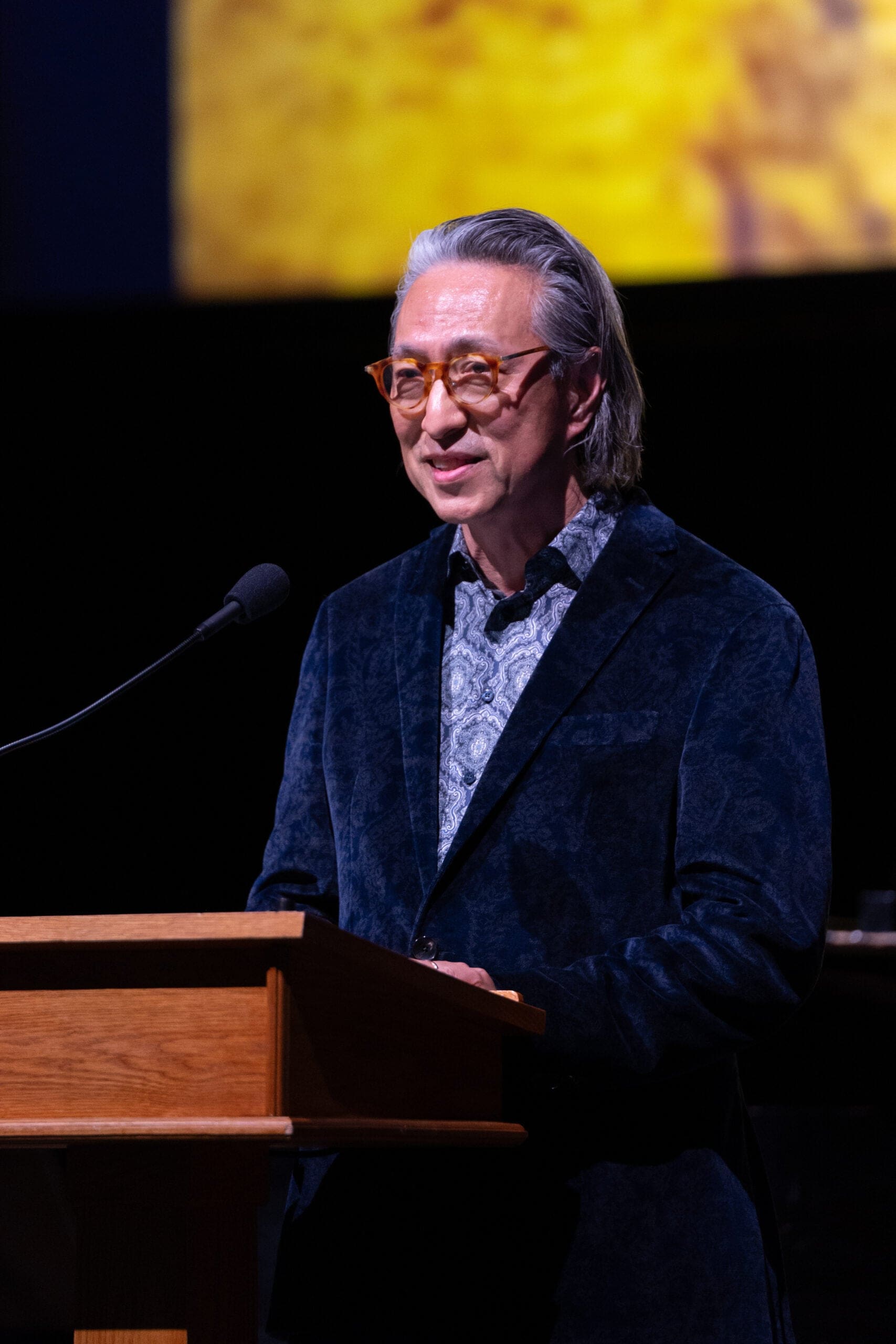
ARTIST
A friend once told me: If you want to understand something, you have to be willing to stand under it. We might say here that in order to tell the understory, we also need to stand under the story.
But what is that story? We may think that it is the story of our times—of what is being revealed, the dark and sinister forces and our complicity. We have a culture that does not understand, but we overstand, standing over with derision and judgment. Ours is a generational struggle to push back against forces of darkness that lurk under all powers and principalities. We risk much by doing so. In a culture of culture wars and the breakdown of language, communication, and communities, the rubble of hubris stands over us, haunting us and taunting us.
Yes, it has been a humbling experience to be forced to stand under, and to be crushed and pepper-sprayed by the oppression and violations rendered to us. Yet there is a greater story than the one so visibly wounding. This story rises above, redeems, restores, and heals. And it is that voice of the good Shepherd that brings the ancient broken fissures into a new golden healing.
We stand here in the National Cathedral today—not perhaps yet able to understand, but to simply stand together. Not as people of false hope concocted by the false prophets of our time. We are people of despair and desperation, singing together our lament—but singing with the prophet Jeremiah in his lamentation: Great is thy faithfulness. We stand knowing that this bell tolls for us, calling us out. And we have been given in our breath a song, yet in our brightest of abysses.
The future will tell us whether we have indeed been faithful to this hour—not to patch up the fraying old wineskin, but to become, improbably, a new wineskin. Not as how we were, but how we will be.
My art form uses Nihonga materials—traditional Japanese mineral-pigment painting technique brought into contemporary expression. It is an art of slow layering and pulverization. Minerals are pulverized to become prismatic layers of paint. The surface is often over one hundred layers. It is quite literally broken beauty.
We need to recall today, and to behold, a treasured Liberty Bell—a bell that remains silent because it has a crack running through it. That is the reality of our experiment of liberal democracy. We are fragile. And we are vulnerable. But rather than rush to fix the crack, now is the time of beholding.
Behold, an acorn.
Behold, wounds.
It is in his wounds we are healed. And it is in our weaknesses that God’s strength is made perfect.
So let us, through our pains, paint together a vista of the new—to see beyond the angst and the anxieties of our time. Compose a human song that we may together come to sing. Go out to cultivate a garden of beauty and take good care of our land and our culture. Carry the stenches and burdens of the darkest slums of our marginalized existence, of our children’s trafficked bodies. Sinews and dry bones stand to call the breath of our hopes, and have the Spirit be poured into the very crevices of darkness, so that the devastated wasteland can be transformed, transfigured into an oasis of abundance.
See, in the darkened holes of betrayals and broken promises, a candlelight of someone’s prayers. Refract the light in the pews and the bus stops and the corridors of underground tubes. Offer your tender light of life, so that the future generations can see their prismatic dreams in them.
May that be the new beginning of our understory: to cast an impossible rainbow upon stormy seas into this cathedral of hope, a rainbow for the fallen world, a prismatic broken beauty that God chooses to stand under—and a salvific arc and gate for our homecoming.
PHILANTHROPIC LEADER
In 1960, half of all the jobs in America required real physical labour. Today, less than 20 percent do. In 1960, fewer than 8 percent of Americans held a college degree, and today nearly 40 percent do. We handed physical labour over to machines—aspects of farming, factory work, the long day’s labour of the body—and we reorganized civilization around the mind. We built universities, we credentialed work, we rewarded intelligence, analysis, articulation. Now, with the advance of artificial intelligence, machines are proving capable of forms of cognitive work we are only beginning to understand. They can seemingly write, reason, diagnose, design, predict, persuade.
The concerns are very real, and they are consequential. And in five minutes, I will not do them justice, so I will not solve all your AI problems tonight. Job displacement, the concentration of power, the erosion of judgment, and the impact of progress are all real, and they do deserve sober, sustained reckoning. But beneath all of them, I feel a more familiar, older, and quieter anxiety. We were not as afraid of losing physical labour—but the loss of cognitive labour seems to feel different. Because somewhere, quietly, we have come to believe that cognition does not define what we do. It defines who we are and the value of those around us. That fear of loss is not a technological problem. It is ideological, and it is theological. And it is not complete. The human person is body and mind, but we are also hearts that feel, a will that desires, a spirit that longs. Each is a gift, and none is the whole.
And so what I want to vulnerably offer tonight is this: I believe what is struggling to be born is twins. Congratulations—you’ve got two babies. A new humanity and a new kind of institutional life. They cannot survive apart. A humanity not defined by physical strength or cognitive output, but constituted by love-infused belonging—beloved before useful. And institutions to match that new humanity: powered not by the power we have abandoned but converted fully to service of others over self, not absent of self. Shaped by love as a foundational ontological conviction of life, disciplined by listening, trustworthy because institutions remember they exist for persons, not the other way around.
The new person cannot flourish inside institutions or a society that measures worth by usefulness alone. The new institution cannot be built by persons who are still defined only by what they produce through physical or cognitive labour or fiscal output.
Because here’s what I’ve come to see, if I take this analogy a little bit further. These twins—these babies of ours, the new person and the new institution—have cords around their neck. Before I was married, the Lord gave me the name of my first son. The name itself felt like a promise for him: who he could be and what he might become. When I laboured to birth him, I pushed for almost a day—there are people in here who know what I’m talking about. When he came, his cord was wrapped around his neck. He was not breathing. There was blood. And amid the panic, I held the promise. And we waited for the breath that would tell us that the promise would hold. The prior twenty-four hours were cast in a new light by the reality that as I was pushing, the umbilical cord was pulling, chastening every breath.
This is where I believe we are. The new humanity is coming and has come. The new institutional life is coming and has come. It is now and not yet, continually being born. It is not stillborn—but forces are pushing and forces are pulling, and the breath is not yet free.
I see two cords most clearly. The first is our instinct to take our worth, and the worth of others, from what we produce. We have not yet learned how to be valuable apart from being useful. The second is fear—the internal fear of identities still uncertain of themselves, and the external fear-stoked world around us: the rhetoric that insists the new humanity is naive, the new institutional life impossible. Fear is the cord that tightens when something new tries to draw breath.
It would be untoward of me not to mention the role of love and loyalty, but time does not permit a deeper dive. They are the work of the Spirit. The Spirit’s power is the power of connection. There is an understory of connection that is not fuelled by the name tags we wear, the jobs we hold, and the things we can do—of truly seeing one another, of knowing one another, not merely doing things together. And so the twins are reaching for this: not an idea, not agreement, not even understanding—that ancient, inexplicable moment when one person, one community that is whole and present, is truly met by another: understood in the mind, known in the heart, chosen by the will, and seen in the spirit. That is not manufactured—it is received. And I believe it is the most ordinary miracle of the Spirit, the very thing that love, when it becomes structural and institutionalized, tries to protect.
So tonight, as we are here in the cathedral, in this hour, in the three days ahead, I hope what we are is a people willing to be more than useful, willing to be human—willing, like the doctors and nurses who gathered around my son by the grace of God, to help the twins draw breath.
WRITER
In 2010, my husband David and I moved from New York City to a working-class town in Ohio, not far from where I grew up. We moved there because we were researching the marriage gap—the way that family trends were bifurcating across class lines. We interviewed 115 young adults, and we went into these interviews most interested in marriage beliefs. But we came out shaken by stories of trauma, of a capricious economy that treated workers as disposable, of what people described to us as their trust issues.
Over time, the people we interviewed became neighbours and friends, and we started to understand more. I remember once getting a call in the middle of the night from a friend of mine, Stephanie, a single mother living in subsidized housing. She was in the midst of an emotional crisis, and she said to me: I’m just such a screw-up. She felt interiorly hollowed out, worthless, and like everything she touched turned to ash, no matter how hard she worked, no matter how hard she tried. I came to realize that this was not an uncommon feeling. So many people were battling it, fighting their demons, as they described it. It made me wonder how many of our social troubles are downstream from people doubting their dignity, feeling badly about themselves.
It seemed to my husband David and me that the antidote to alienation was solidarity and a reclaiming of social respect for working people as fellow citizens who genuinely have so much to contribute. We saw the way that participation made people light up, but we also noticed the obstacles to organizing and the frequency with which people said no, or said yes but then didn’t show. To be sure, economic and scheduling challenges were a huge part of this. But I’ll never forget when a friend of mine—whom I had invited to about a dozen discussion groups we were hosting at our house, and every time she said, “I have to work”—finally took me aside and said: “Amber, I really appreciate the invitation, but the truth is I have intense social anxiety and I just can’t be in a group of people.”
Now, since that time, I’ve ceased to be surprised when someone confides in me that this is the reason for their own lack of participation. I could give many examples, the most recent is this one: I was getting to know a neighbour who is very interested in politics and gardening. We were becoming friends. And I told her one day that she would be an amazing village councillor and asked whether she’d considered running before. She said that she would love to, but she suffers from anxiety attacks that are seemingly random and debilitating. And she said that our house was one of the few places she would go. It caught me by surprise, because she’s a wonderful social person with so many gifts. Just what is this?
People seem to agree that whatever it is, it’s made worse by the feeling that we are living on a vast digital prairie. Some days, the loneliness of relationships tended to mostly via these disembodied forms of communication can make even me feel like I’m living among ghosts.
So, if this is where we find ourselves—this is what I see. On the one hand, people of goodwill working for nonprofits and institutions and wanting to do good. And then, on the other, people who are alienated and squatting on a kind of institutional no man’s land. They may be unaware of these institutions, or aware but skeptical, uncertain whether they will actually belong. Like my friend who asked me, before I came here—trying to control the anger that was shaking her voice—do you honestly think that the people in DC are willing to listen?
If civil society is that stratum between the person and the state that exists to mediate between the two, it seems to me that there’s this other layer here: the space between the individual and civil-society institutions themselves. And it is in this space, this institutional no man’s land, where I see something struggling mightily to be born—mediating relationships, pathways to participation, micro-institutions, if you will. And I see this most vividly in the recovery world and the proliferation of small-scale institutions built to respond to addiction. This struck me when I was at the graduation of a dear friend who is celebrating a sobriety milestone. The ceremony was held in a nondescript meeting room, but the testimonies were anything but nondescript. The room was diverse, though not self-consciously so, an eclectic group brought together by a shared suffering. And the counsellors leading the group were people who’d themselves once been in the place of the graduates. Many of the graduates had been burned by other institutions—but this place was accessible to them and in its very scrappiness was able to earn the trust won by authentic accompaniment over time.
It seems to me like this is the level where real innovation could occur. It will likely be less formal and more personal, basic, and ordinary—and therefore may be difficult to raise money for. An emphasis on depth, not breadth. Not crafted primarily for the donor class, but actually for and with and by the working class. This will cost something of all of us. For those of us do-gooders, it means ceding control and recognizing that a strong root system is the only way to sustain scale. For us screw-ups, it means not closing the door on hope—because it is my strong sense that it is actually the screw-ups, though too easily dismissed, whose hard-won insight we now most need.
POET
And I was alive in the blizzard of the blossoming pear,
Myself I stood in the storm of the bird-cherry tree.
It was all leaflife and starshower, unerring, self-shattering
power,
And it was all aimed at me.
What is this dire delight flowering fleeing always earth?
What is being? What is truth?
Blossoms rupture and rapture the air,
All hover and hammer,
Time intensified and time intolerable, sweetness raveling rot.
It is now. It is not.
That poem is by Osip Mandelstam, who died in 1938. It was one of his very last poems—it might even have been his last poem—and he knew what was ahead of him. Mandelstam was one of the millions whose death Stalin ordered. Just one.
Every generation tends to think that their own time is distinct . . . usually worse. Our visceral fears outweigh those of past people whose terrors are reduced to mere words. How many times has the end of the world come and gone by now? Even Jesus predicted it. But then, Jesus was very human.
What is struggling to be born? Nothing new. Or at least nothing completely new. Vincent van Gogh once wrote that life is not linear, going from birth to death, but round. It was creating art that led him to that revelation. And it was a revelation.
Quantum physics is so weird. Matter that springs into being only when it’s observed. Particles that once entangled are forever linked together no matter the distance or time. It’s as if reality were a constant storm of creation that we freeze only by seeing. It is now. It is not.
All of this matters for how we understand consciousness. If the world seems to respond to our attention, maybe that’s because the world is addressed to us—every one of us. And maybe consciousness is not something we possess, but something that we share with the rest of reality. It’s not a new idea. “All things are full of gods,” said Thales, six hundred years before the birth of Jesus. “Mind is in all things,” said Heraclitus around the same time. Meister Eckhart pulled the two together in the thirteenth century: “The eye with which I see God is the eye with which God sees me.”
I believe we’ve entered a time in which the preservation of individual consciousness will be the great battle. It is essential to preserve individual consciousness if any feeling for—and healing of—collective consciousness is to occur. When the plane’s cabin pressure plunges, you have to put on your own mask first, or you will be no help or hope to others.
What is struggling to be born? I am. You are. And Heraclitus. And Thales. And Meister Eckhart. And Jesus Christ. And—
—I was alive in the blizzard of the blossoming pear,
Myself I stood in the storm of the bird-cherry tree.
It was all leaflife and starshower, unerring, self-shattering
power,
And it was all aimed at me.
What is this dire delight flowering fleeing always earth?
What is being? What is truth?
Blossoms rupture and rapture the air,
All hover and hammer,
Time intensified and time intolerable, sweetness raveling rot.
It is now. It is not.
Amen.