





Who best holds the legacy of the great writer and farmer?





Immigration debates tend to oscillate between abstract policy positions and individual stories conscripted by either side. This panel, inspired and moderated by Braver Angels’ principles of structured civil dialogue, charts a new path toward finding common ground.
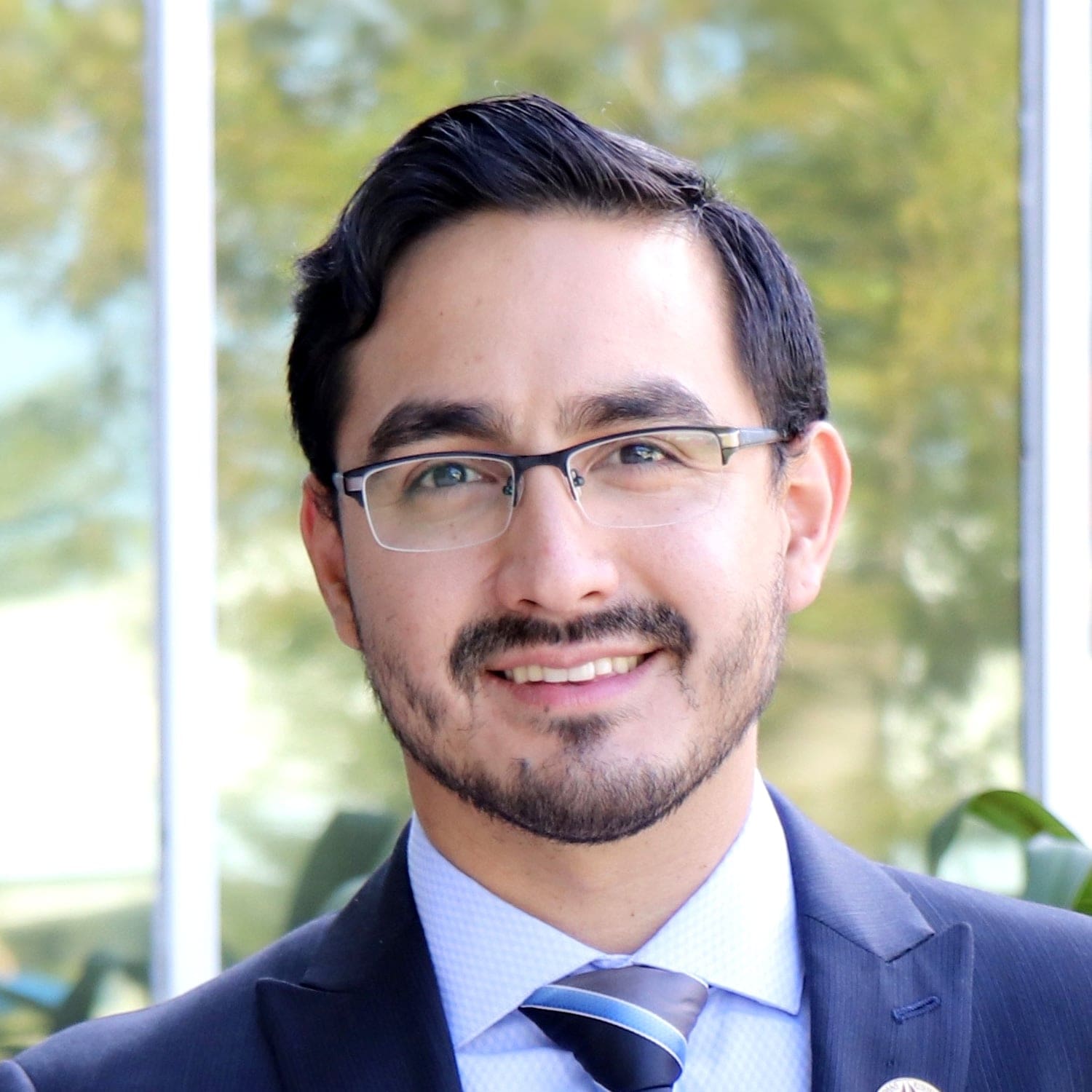
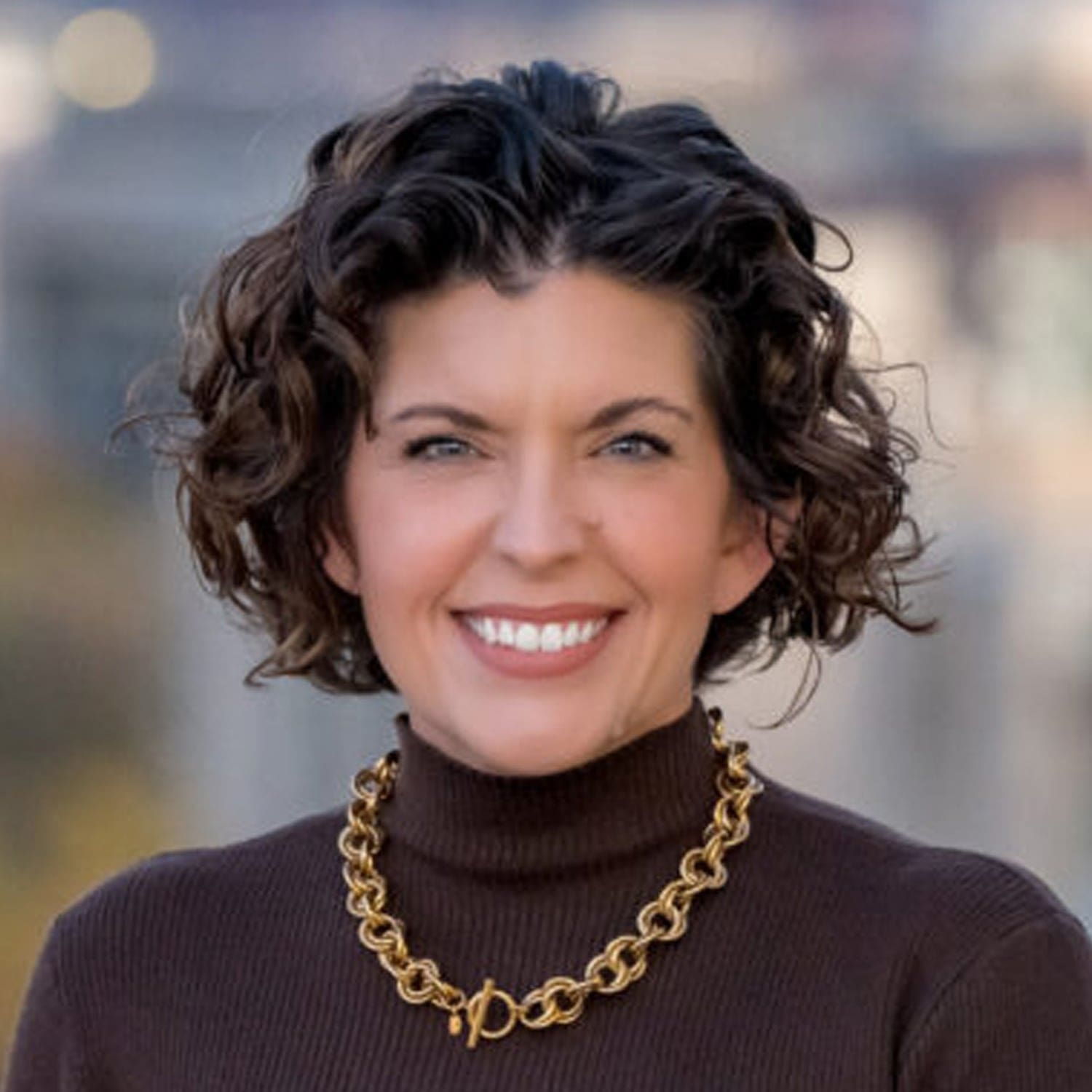
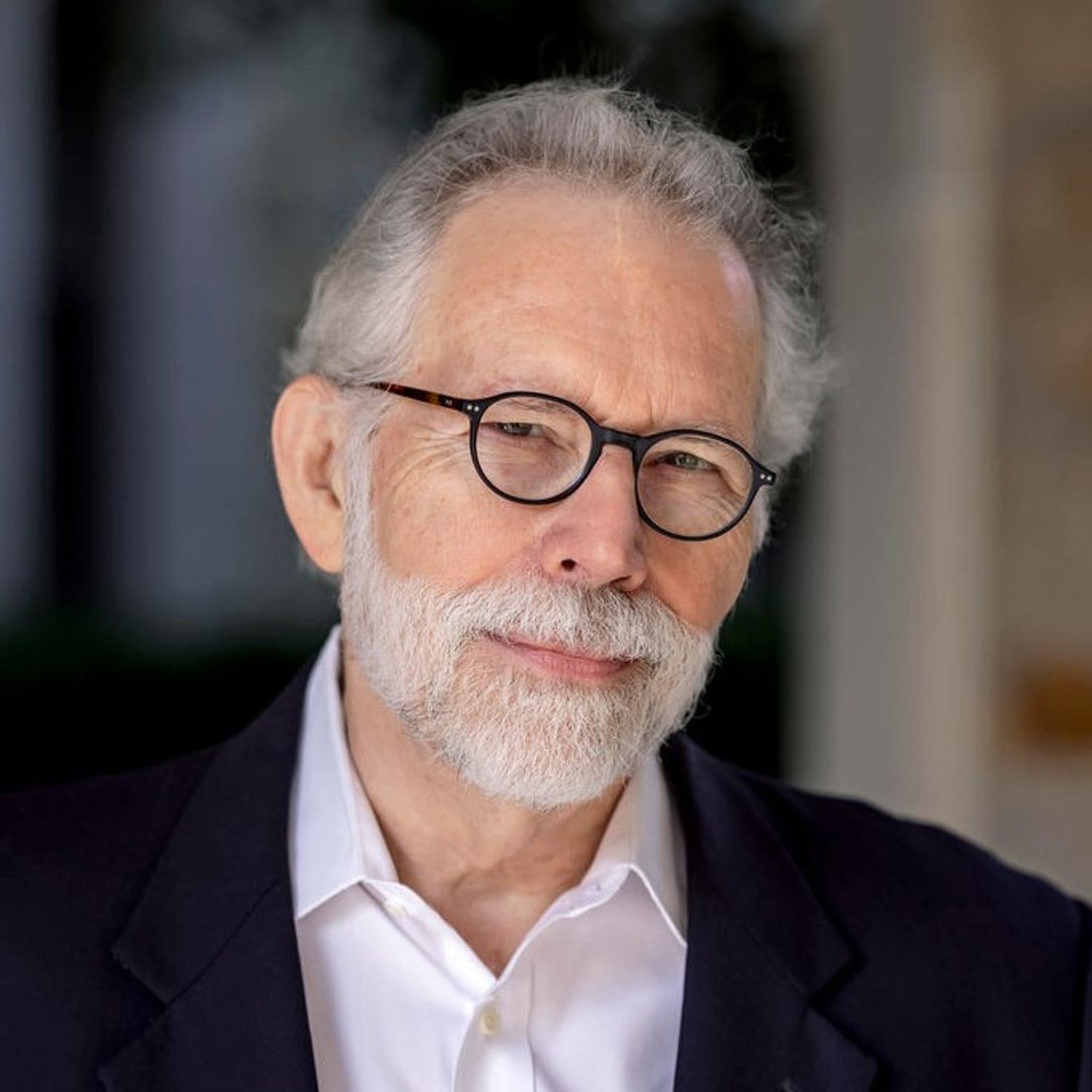
Braver Angels cofounder David Lapp moderates four panelists: Diego Sánchez, an immigration lawyer, formerly undocumented for fourteen years and now a US citizen; Jennie Murray, president and CEO of the National Immigration Forum; Jim Robb, vice president of alliances and activism for NumbersUSA; and Peter Skerry, professor of political science at Boston College, who chairs Braver Angels’ Immigration Policy Roundtable.
The panelists address a wide range of current issues in immigration policy, including the sequence of legalization, the asylum backlog, employers’ use of E-Verify to confirm legal employment status, and legal status for longtime undocumented contributors to the US economy. They also consider scarcity versus abundance and the cost of sentimentalizing immigration, asking, “Who is my neighbour?”
This panel was recorded on day two of the 2026 Understory festival in the Saint Joseph of Arimathea Chapel at the Washington National Cathedral.
Tiffany Thompson: Welcome to The Understory podcast. I’m Tiffany Thompson, the executive editor of Comment magazine. Immigration debates tend to oscillate between abstract policy positions and individual stories conscripted by either side. This panel, inspired and moderated by Braver Angels’ principles of structured civil dialogue, charts a new path toward finding common ground, asking each panelist: What is at the heart of this issue for you? And what experience formed that conviction? What values are we trying to protect? And what policies might actually move us forward?
Following the ground rules of expressing one’s own views and seeking to understand rather than convince, Braver Angels cofounder David Lapp moderates this four-person panel featuring Diego Sánchez, an immigration lawyer formerly undocumented for fourteen years and former DACA recipient and now US citizen; Jennie Murray, president and CEO of the National Immigration Forum; Jim Robb, the vice president of alliances and activism for NumbersUSA and author of Political Migrants: Hispanic Voters on the Move; and finally, Peter Skerry, professor of political science at Boston College. He chairs Braver Angels’ Immigration Policy Roundtable, the group that inspired and helped to organize this breakout panel.
Grounding the conversation at the heart of their individual experiences, motivations, and convictions, the panelists address a wide range of current issues in immigration policy, including the sequence of legalization, the asylum backlog, employers’ use of E-Verify to confirm legal employment status, and legal status for longtime undocumented contributors to the US economy. They also consider the demands of radical hospitality in the Christian tradition, scarcity versus abundance, the cost of sentimentalizing immigration, and ask, “Who is my neighbor?”
This panel was recorded on day two of the 2026 Understory festival in the Saint Joseph of Arimathea Chapel at the Washington National Cathedral.
David Lapp: Welcome. My name is David Lapp, cofounder of Braver Angels. One of our signature initiatives is the Citizens Commission on Immigration, which has been, for about a year and a half, bringing together people from all across the ideological spectrum to better understand each other and also to see what agreement we can find on immigration. This has been happening at the local level, at the grassroots, bringing together ordinary people. And here in DC, bringing together people like we have here with us today. And so our four panelists here today have been a part of something called the Immigration Policy Roundtable, which is this group convened by Braver Angels that brings together about twenty-four ideologically diverse leaders who work on immigration and who many times in the past have been working against each other and are now getting to know one another and seeing what agreement we can find.
All four of our panelists know each other from that work and from previously. And what we’re going to do is we’re first going to have a conversation with the panelists about what’s at the heart of the issue for them and what are some policies that they favor and what they’ve been learning from listening to each other and getting to know each other. And then we’ll have a time at the end for Q&A for the panelists. Our goals here are to better understand the perspectives and experiences of people who differ on immigration, to identify any common ground among people who differ on immigration, and to learn something that might be helpful to others in our nation. We’re here to understand others and to explain our views, not to convince anyone to change their mind. We each speak for ourselves and not try to speak for or represent any outside group. So we’re speaking for ourselves. And we practice respectful communication, bringing our best selves to a difficult conversation. So this is just kind of standard fare for Braver Angels discussions.
So without further ado, let’s get into it. We have with us—I’ll go right down the row. They can tell you more about themselves. Diego Sánchez is the vice president of policy and strategy at the Presidents’ Alliance on Higher Education and Immigration. Jennie Murray is president and CEO of the National Immigration Forum. Jim Robb is vice president of alliances at NumbersUSA. And Peter Skerry is professor of political science at Boston College and chairman of the Immigration Policy Roundtable, that Braver Angels–convened group that I mentioned.
Let’s start with you, Diego. What is at the heart of the immigration issue for you, and what’s an experience or relationship that has informed your thinking about this?
Diego Sánchez: Yeah, I’m happy to start. Thank you, David. Hi, everyone. It’s great to be with you today. Just got here, and I’m like so many people—how many hundreds of people are in here? But it’s great to be here with you, as David said. My name is Diego. I’ve been working with this fine group of people for almost two years now on this initiative to find common ground, advance civil discourse on a very difficult issue.
And this issue is very personal to me. Formerly undocumented—I was undocumented for fourteen years. I had DACA for a while, Deferred Action for Childhood Arrivals, which is a program that allowed individuals who came to the country at a young age, attended school here, et cetera, to acquire some sort of temporary work permit under the Obama administration in 2012. Benefited from the program, and then eventually I adjusted my status and became a legal permanent resident, and now I’m a US citizen. So that’s what’s at the heart of the issue for me.
Growing up undocumented—came to the US when I was nine years old. Went to high school, when I found out that I was undocumented, and then pursued higher ed in the state of Florida. That’s where I grew up. And got involved on the issue of immigration. Started my advocacy around a bill that is called the Dream Act that some of you may be familiar with. That’s how I started my advocacy in the community organizing, activism—2009 now, about sixteen, seventeen years ago. And ever since then, I’ve gotten—became a lawyer, practiced for a couple of years, and then came back into the policy space after I realized that I couldn’t represent asylum seekers and other immigrants in detention. It just wasn’t for me. It was too close to the heart, and you can’t help everybody. You can’t fix everything. And so I decided to come back into the policy space.
And another thing that I would share is something very recent. Got married two years ago. My wife is from Argentina, and I lived in Argentina for a couple of years. During the pandemic, I was living in a small town in Georgia. Everything shut down. I was like, “What am I doing here by myself?” And so I was doing court hearings virtually. So I’m like, “I can basically do these from anywhere.” And so I decided to go to Argentina, see my grandparents, who are older now. I wanted to spend some time with them. And the three months that I was supposed to be there ended up, you know, converting into almost two years. And so during those two years, I met my wife. Long story short, got married. Our process was delayed by over a year. And so we got married in 2014, filed for a green card, a visa for her to be able to come to the US. The process was supposed to be approved at the end of 2024. The USCIS estimates basically said that we had four weeks left in the process. And then we had the new administration come in, and my process went backwards again in an additional eighteen months.
So anyway, that was— You know, another thing that’s very at the heart of the issue for me. She’s here now, thankfully, a year and some change after she was originally supposed to be here. And so, you know, we were doing long distance for almost two years. And anyway—
But I mean, and the other thing that I would add, David—I mean, one of the top issues at the Presidents’ Alliance—we’re a coalition of university presidents—one of the top issues that is top of mind for us is those of undocumented students, immigrant students, TPS holders, et cetera. There’s about half a million undocumented students in higher ed today, 25 to 27 percent of which are DACA recipients. So the majority of them are not eligible for DACA and will not be eligible for DACA, including the high school students nowadays. They won’t qualify for DACA, right? And so the Dream Act is one of the bills that we continue to push for. Whether that’s something that is viable in a Congress like ours and a political environment like ours remains to be seen. But I’ll leave it there. I know my four minutes are up. Thank you, David.
David Lapp: Jim, what is at the heart of the immigration issue for you?
Jim Robb: So I grew up in Texas, and I grew up in West Texas. My father was a Methodist clergyman. And not everyone knows that West Texas was not settled by Europeans until after the Civil War, because the Comanches were all-powerful there, and that’s a big, interesting history. But eventually—eventually America grabbed that land. And because of this, there was no history of slavery in West Texas. So I was not raised in a slave zone or former slave zone.
And so—but my parents got a small inheritance around 1970, and they put a down payment on a farm in extreme northeast Texas, where they were raised themselves. And every summer I was dispatched for two months to work on the farm from the time I was thirteen. And so that was a really different culture, because it was a former slave zone. And one of my early and most profound social insights was I saw in front of my father’s farm, or within a mile, a line of about twenty or thirty basically shacks occupied by African Americans. And I’m thinking, “Why are they here? There’s no jobs. There’s no entertainment. There’s nothing. Why would anyone live out here who’s not, like, working a farm?” Because they weren’t farm workers either. And the neighbors said, “Oh, don’t you know, these are the people whose ancestors were slaves on the farms right here, like the farm your father has now.” And this was, like, really extremely shocking to me.
And then I developed this thought. I said, “You know what? It’s like ten years after the Civil Rights Act was passed, but we really haven’t actually made that much progress in an economic way.” So I always had this eye on this thing about the disparity and how do we actually bring economic justice to people who were mistreated here for hundreds of years.
But I also had fairly close ties to Hispanic this and that. For example, deep travel in Mexico, in South America, because of family connections and this and that. But I was concerned that the big wave of immigration that we were starting to see in the late ’80s and the ’90s was crowding out Black economic advancement just by filling a lot of the jobs that these people formerly had. So that was—that’s where I started in this, in the movement that I’m in. And I work for something called NumbersUSA. And so my slogan is “First, do no harm,” right? So, I mean, it’s a big national economy. A lot of things can happen. We’re not actually for—I mean, we’re for immigration, just maybe not quite the same way and not quite as much. But it’s with this—I mean, the average—the median Black household net worth is only 6 percent of that of white families to this day. So it’s a serious disparity. But there’s lots going on, too. This is only a portion of the things. But this is what I brought to this study.
David Lapp: Jennie, over to you.
Jennie Murray: Thank you. Thank you, Mr. Jim. So I’m the president and CEO of the National Immigration Forum, and so obviously my work is centrally connected to immigration. But for me personally, I come from both a birth family of immigrants and then a chosen family—my husband’s also an immigrant. And those experiences were very different. I had an undocumented grandparent, and I had a high-skilled—or as we label these people; they’re just individuals with different journeys—but a husband coming with advanced degrees. And so I’ve seen all different parts of the system also with my loved ones and have learned about that. And so I’m passionate about perfecting what I think needs to be perfected about the system.
But really what’s in it, and why I’m here with these folks here and now, is coming from my faith. Being a Christian, I was studying ethics at a Southern Baptist college in Tennessee called Union University. And I went on an immersion trip. I thought I was going to help a church plant in Matamoros, Mexico. That is not what I was going to do, or at least not what God had for me. I ended up living in a trash dump with a bunch of squatters, folks who had come all the way from Honduras, had this dream, tried to get into the US, and were trying to make this journey. I didn’t really understand that part of the journey, because my family had come a different way. And so I literally was looking at a physical border, looking at people living in a trash dump. And the woman that I had just met that was living in that dump was pregnant and had a child with Down syndrome. And somebody said, “These are Christian students, and they’ve come here, and they’re going to be with you for a few months.” And the woman exclaimed, “You’re Christian?” She said, “You have to pray for this baby.” And she grabbed my hand, put it on her stomach. And that is why I’m in this work. Because I didn’t understand: Would our God be the one that would draw a line? Where is the limit to who is my neighbor? How do I start to unpack that as a Christian? How do I unpack that as an American? And really starting to understand those issues. So that’s why I’m in this today.
We have a big program with hundreds of thousands of leaders called Bibles, Badges and Business. That’s faith, law enforcement, and business leaders who we work together to try to come up with commonsense solutions that support Americans and our future. Thank you for having me.
David Lapp: And Peter, what’s at the heart of the immigration issue for you?
Peter Skerry: Okay, thank you, David. Yes, I’m Peter Skerry. I teach political science at Boston College and have been involved in research and writing about immigration for quite some time. I’m going to focus on the second part of this question: What is an experience or relationship that has informed your thinking about this issue? And for me, it’s my grandmother.
I come from an Irish Catholic family in Boston. And my grandmother arrived on the docks of East Boston when she was twelve years old, sometime at the end of the nineteenth century. And she had a very hard life and made everyone around her quite miserable. My grandmother is not one of my favorite people. And I say that because usually when people talk about immigration, I hear about grandmothers and how wonderful they are. And I don’t deny that. But it speaks to how this issue is emotional and gets sentimentalized.
Like I said, my grandmother had a difficult life and made life very difficult for her fourteen children, most of which survived infancy, but some didn’t. And really, like I said, made life miserable for her children and grandchildren. That’s my own personal history. But it just speaks to the fact that while most of you, I suspect, have grandmothers who are more likable than mine, we ought not to sentimentalize this issue. Obviously, that’s part of it. Many—most Americans have ties to immigrants. But at some point, at some level, there are more fundamental policy issues at stake, and we ought to be mindful of not oversentimentalizing it.
David Lapp: And Peter, if you would address the first part of it: For you, what’s at the heart of the immigration issue?
Peter Skerry: Gee, I thought I just said that. We ought not to sentimentalize it.
David Lapp: Very good. What are some policies or remedies that you favor to improve our immigration system? And let’s start with you, Jim.
Jim Robb: Wow. Low-hanging fruit. I’m obsessed with low-hanging fruit—ask these folks I’m sitting next to. I think the thing that could improve the situation if only one thing were done, which I’m not advocating one thing being done, would be the E-Verify system being made mandatory for every US employer.
David Lapp: Why? And Jim, just say a word about E-Verify for those of us who may not be as much in the know.
Jim Robb: Thank you. That’s how insular, I guess, I am. E-Verify is an existing government system. It’s been on the books for thirty years. And it’s—about half of all new hires in America go through the system. So, you know, when you get a new job, you go through one of two processes to get a job, because everybody in America has to have some evidence that they’re legally permitted to have the job, right? They’re authorized. So one process, you show some documentation, like a US passport or a Social Security card, and they take it down at the employer’s. The problem with that is there’s a lot of fraud. There’s a ton of fraud, and so a lot of people aren’t authorized. They want to go to that employer because it’s really no bar when there’s fraud at work.
But the other process was set up by the government thirty years ago, and it uses a number of existing databases, and it tries to determine—so it’s this website, and you show the same documentation to the person in HR who’s got to clear you. And instead of writing it down on a form, they just type it into the website. And the government says, “Okay, this person looks like they actually are the owner of this Social Security number, and all is good. They’re authorized to work in the United States.” So it’s—Barack Obama years ago made that mandatory for all government contractors. And because big businesses like to use it, because it keeps them out of any trouble with the government, about half of all new hires now use E-Verify. And by and large, people who are not authorized to work in the United States do not work at those companies.
David Lapp: Jim, if you could just say a word about why is E-Verify important to you?
Jim Robb: Because it’s the kinder, gentler answer to forced deportations. So it’s like—well, so the government has laws of who’s allowed to be in this country and who’s not. And if the government decides to enforce those laws vigorously, there’s kind of two choices. One is you use kind of like a soft approach and just make jobs harder to get for people who are not authorized. And that would slowly, over time, induce people to go home or find it harder to get jobs. E-Verify, by the way—it’s illegal to E-Verify people who already have a job. So it would not be revolutionary. It would be evolutionary. And if you don’t, you could do the approach like we’re using now, which is try to send the paddy wagons out and try to grab people. And it’s horrible. And it separates people. And it’s traumatic. And it’s really, really unpopular. So better to use the softer, gentler approach of E-Verify. And most people like E-Verify. It’s very, very popular. But it’s been hard to get it made mandatory. That’s it.
David Lapp: Jennie, some policies or remedies you favor to improve our immigration system.
Jennie Murray: I would love to see longtime contributors be able to stay in the country. So we have around nine to twelve million, probably, longtime contributors who have been here over ten years. They’re living, they’re working, they’re paying taxes, because their employers are paying the taxes on their behalf, and they are contributing those taxes from their paycheck. They’re paying taxes. They have US-born children, many of them, and about ten million of them don’t have any kind of felony or don’t have a criminal record. So I think that it would be really great right now for our country to think about the contributions of those individuals.
It is—the number one way that the US church is growing right now is the diversity of the immigrant population. It’s a really large percentage are Catholic and a really—percentage are evangelical. And both of those faith communities are growing because of these longtime contributors as well. And they’re really important parts of our communities. And so I think American businesses also very much need this. In fact, I’m in and out of meetings with the administration and members of Congress constantly with the nation’s largest businesses and their CEOs, who are constantly saying, “You cannot decimate my workforce. You cannot remove these vendors that we have. This would put our community and our economy to a halt.” And so I think there’s a lot of Americans—in fact, polls tell us 80 percent of Americans believe that, you know, yes, violent criminals should be removed, but those who have been longtime contributors, we should find a way to be able to keep them as a part of the fabric of our country.
And then we think about what the future of immigration looks like as a country, which I very much agree needs to be overhauled. But who are the here-and-now folks that are contributing? And can we find a way to be able to get them to be right with the law and be able to stay and be protected?
David Lapp: Just briefly, Jennie, what do you think about the future? What do you think in general terms our immigration policy should look like?
Jennie Murray: Oh, you’re really throwing a bomb in the center. I like it. So I’m a child of an economist. My dad and his buddies started MetLife Bank. I’m going to show my hand in that I absolutely believe that there’s a big inanimate object and a different person in the middle of the story that is the global economy of the US and our GDP. And I don’t think any of us enjoy the life we enjoy in the US without having an economy that generates that. So this whole adage of “I want my kids to do better than me. I want to always have incredible customer service. I want housing. I want the bells and whistles. I want the freedom. I want the safety. I want these things.” These things all come because we have the largest economy. And for us to protect that—we will always, regardless of what we do, we will always attract talent. We will always attract people that want to come here and be a part of that economy. And we need them.
So before Trump came back into office—let’s just go pre-Biden. Let’s not get into any political wars. Pre-Biden, the healthy number of immigrants coming every year across all of the visas—work and humanitarian and family visas—was about one million a year. We still had major, major, major labor needs, even at that level. So while I don’t think we need to just expand the number of immigrants we have at a rapid rate, I do think we need to take a really hard look at this economy, what it needs, who are the people that are already in our country, and how do we make sure that we can both meet the needs of people here and those that we do need to add, so that we can continue to live the life that we call American, especially at this 250th anniversary.
David Lapp: Thank you, Jennie. Peter.
Peter Skerry: Well, I don’t know that this is the most important policy to put forward, but it’s one I’ll put forward in the context of this panel to promote some conversation and reflection. And that is teaching immigrants English. I have never met an immigrant—or with very few exceptions—that isn’t inclined, doesn’t want to learn English. I’ve met plenty who struggle to learn English and don’t get very much help doing it. I’ve spent some time looking at ESL programs and have been very impressed by the ardor and enthusiasm with which people teach it, and the enthusiasm with which many immigrants come to it. But they aren’t very successful, for a lot of complicated reasons. Immigrants are busy. They are raising kids. They have two, three jobs. And the programs aren’t structured very well. And we don’t promote them enough.
I consider this pretty low-hanging fruit. This ought to be something that we can put more effort into, emphasize its importance, and make much more effective. And that would benefit immigrants. At the same time, it would gratify and make many Americans who are anxious about the cultural changes that inevitably accompany mass immigration of the sort we’ve been experiencing—would make many of them feel much more comfortable and not feel like immigrants are challenging their culture in some fundamental way, for example, their language. So that’s what I would put forward.
David Lapp: Diego.
Diego Sánchez: Yeah, as someone who has a wife who’s doing ESL classes now—she started at Carlos Rosario recently. She’s like, “It’s not intensive enough.” And so she enrolled at Prince George’s Community College.
And the point I want to make there is that I share many things that my colleagues have said—I pretty much agree with. I’ll use the example of the integration, assimilation that Peter raised to say that if we want the immigrants who are here in the country to be able to do that, we need to provide them with a path to citizenship at some point. And so that’s point number one, for folks that Jennie mentioned, because there’s a big debate of whether we provide them with some sort of nonimmigrant status, some sort of temporary work permit, whatever we want to call it. But I do believe that in order for us to accomplish—to fully integrate and have and support these individuals to assimilate into our country, into our culture—we need to be able to provide them the opportunity to become a US citizen.
Number two, I do agree with Jim’s point about E-Verify. I think where I would just make an emphasis on the sequencing of that. I would agree with that, that we need some sort of employment verification system, but that needs to go hand in hand with some sort of legalization provision. Just thinking about the different classes, right? And I think, Jim—I don’t remember the words you used. You said something about self-deportation mechanism. What word did you use? Don’t remember the words, but it was that it would make it kinder, gentler. It would make people be discouraged after a time and return home. We’re really talking about people who are coming more recently as well. And I don’t disagree with that. I do think we need an orderly country.
I think part of the reason why we have this very negative debate, the polarization that we have, is because of the lack of coordination—the lack of coordination by the prior administration. There was chaos at the border. I don’t think anybody can deny that. As an immigrant, I’m not afraid to say that, right? And so I think that the reason why we have this political debate and the reason why it’s so nasty is partly because of the prior administration.
Another thing I’ll raise is we need to modify the entire system—not only for legalizing folks who have been here for a long time, Dreamers, E-Verify, et cetera, but also the asylum system. Just to give you an example, we have over four million cases in the asylum court backlogged right now. We don’t have enough judges. We don’t have enough asylum officers. And so that is something that it’s going to be at the center of the debate no matter what, right? Because we can’t think about fixing the system—E-Verify, legalization, right, et cetera—without thinking about the asylum process. How do we make it smoother, et cetera? And we do need those decisions right now. Asylum decisions are taking, what, seven, eight, nine years for asylum cases to be decided. And that system just doesn’t work, right? And so when we’re thinking about all these different components, we really have to keep all of those different components in mind, not to mention the border security, not to mention interior enforcement. So it’s pretty complex.
David Lapp: And Jim, let me just ask you now—Diego, you started going there and talking about some areas of agreement that you have with what you’ve heard. Jim, I wonder, from what Diego just said or anyone else, particularly those who are kind of on the other side ideologically from you, where in this conversation, and from other conversations you’ve been having, have you been able to find some agreement?
Jim Robb: Well, I find myself agreeing with a lot of the things that my colleagues say. So, you know, I don’t really think of them from the other side anymore. People use that terminology. But we’re all on the American side, right? And it’s like the situation with immigration is not what people think. For example, I mean, I wrote a book about Hispanic voting trends, and I plan to write another one about Hispanic assimilation. [Inaudible] Americans were born in this country, and another eight million have gained their citizenship, like Diego. So it’s like we’re really talking about a citizen population already. If we concentrate so much about those individuals who are not a part of that, it’s like you lose the focus. It’s just like, this is not an alien population, right? And so we don’t want to talk ourselves into making Hispanics the other, right? It’s like, no, they’re part of us.
David Lapp: But Jim, just to put an exclamation point on it—is it fair to say that you—back up for a minute. You have been working in the kind of restrictionist, conservative restrictionist space for decades, about thirty years. And then you’re sitting next to Diego at a meeting. Why were you sitting next to Diego, and why have you spent the last two years talking to Diego and Jennie?
Jim Robb: Right. So I’m glad you asked me that, because we get on these little fine points and technical points, but it kind of misses the point. The real point—the real point is I call myself a political street fighter. I’ve been fighting about immigration for thirty years, for the reasons I’ve told you—that I don’t want to disadvantage certain Americans who are already having trouble. But that was not the totality of my opinions and worldview. And mostly I just got tired of fighting, because I said at the very first meeting, when Braver Angels called us together, I said, “So the good news for me is that I can stop any bill that you guys want to put through. But the bad news for me—but the bad news for me is you can stop any bill I want to put through.” So we’re at a stage of mutually assured destruction on legislation, and I’m tired of it, because our laws are just getting more and more ancient and nonworking.
The real word we need to be using is modernization. Because we’re just—I mean, in thirty years, the system that was really badly out of date thirty years ago is now, like, ancient. And so these distortions, like millions of people waiting for a hearing—it’s all because of policy updates that have not been made, because we can’t get along even well enough to do stuff that we agree on.
It drives me crazy in American politics, especially in Washington, and especially in Congress, that parties—so if there is a bill that the Republicans put forth, just on any matter—and I’m not talking about immigration, some technical matter—they put a Republican, introduce it, Republicans get behind it, but they don’t quite finish, get across the finish line, but the Republicans really want it. The next Congress, a Democrat on this kind of whatever this technical matter is may introduce the bill and gets a lot of Democrat support. Now all the Republicans are voting against it—every single one, just like the Democrats voted against it when it was a Republican. It’s the same bill. It’s the same idea. I mean, how stupid is this?
David Lapp: So you’re tired of polarization on immigration and other issues.
Jim Robb: I’m so tired of artificial—fighting about artificial issues. We have enough real disagreements. It’s going to take all of our vigor, all of our commitment to find it. Because this stuff in immigration takes real trade-offs.
David Lapp: Jim, I want to get to Jennie.
Jim Robb: Yeah, you got to my passion, though.
David Lapp: Exactly. Jennie, what have you learned from talking to your colleagues who see things differently from you? Where have you found common ground?
Jennie Murray: Well, lots of places, actually. I think there’s actually just—there’s much more that we agree on than that we disagree on. And that’s kind of even some of the more restrictionist voices that we often get together with. I think there’s a lot we agree on. I guess today—just today’s comments, if I just think about that. Well, one, I didn’t realize that Peter and I should be talking about English language learning. I’m very passionate about that. So now we’ll have a sidebar there.
But number two, we live in such a big economy. We have a really big set of resources and a lot of brilliance in this country. We can walk and chew gum. So I very much agree with Jim that I do not want people to be left behind, to fall further behind, and to be left out of the system in any way. And I think we can both build pathways for newcomers and existing Americans, native-born and foreign-born, to be here together. We can do it. I’ve seen it done in so many great ways. There’s incredible state-level models. We’ve had federal moments that have been kind of shining moments. And we can continue to build that. If we can generate AI, if we can pass a CHIPS Act, if we can build railroads and, you know, all these amazing things, I think that we have in us to solve these issues together.
And what I really like about what Jim said is the problem has been is that we have not been trying to solve it together as a country. We’ve been thinking about this population, that population, this labor need, that labor need. But honestly, what we need is a great set of folks that come from different perspectives and different issue areas to come together and say, “We’re going to solve these complex things together.”
And I just want to say one last word about that, because we are at a bit of a Christian conference. So I feel that this fear over scarcity is becoming a really big problem, not only in our political mindset. In the US, we have resources. We can do this. We can solve this. We’re large enough to do that. But also in the church, we are being told that theologically there’s a scarcity. And I just really want to take this moment to say that I think that is the problem, because fear is really powerful. And I think actually we have a lot of opportunity.
David Lapp: Peter, you have been working on immigration for decades as well, and across the ideological spectrum. At one point you were working for the American Enterprise Institute, conservative-leaning think tank. And then you went to go work for Brookings, a more center-left think tank. And while you have your own immigration perspective, you also are friends with people from one side to the other. So I guess from all those years—and this is not your first rodeo bringing together people who differ on immigration—so where do you see we are in terms of the prospects of working to address some of our immigration challenges? And what have you learned from listening to your colleagues and working on this initiative?
Peter Skerry: Well, what I’ve learned—and I hope what I’m about to say doesn’t cause it to be unlearned—is that, my view, people—there’s a lot of fear out there, and there’s a lot of concern about immigration that is much too emotional, often irrational, but is not without some real grounding. And at the same time, is not without some response to framings of the issue that are genuinely disturbing to a lot of people, although maybe not to be taken completely seriously.
What on earth do I mean? Well, what I have in mind is that for most of the time that I have been involved in immigration issues—and I exclude my fellow panelists and virtually all of my colleagues on the roundtable—immigration has been defined primarily, not exclusively, primarily as an issue involving Hispanics. They are the major, dominant, number-wise immigration group. In the post-1960s era in which I emerged, in which we all live now—although things are changing—Hispanics have defined themselves as a racial minority group. A racial minority group that is not so different from African Americans. That is to say, like African Americans, Hispanics have deserved and needed—because this is all changing now—affirmative action, have deserved and needed the Voting Rights Act. And—as I say, that’s coming undone right now, for better or worse.
But my point is that that has sent a very particular message to large numbers of Americans who are already anxious about all the changes that come with immigration. What it has told them is that “We’re another racial minority group. We’re not just a simple immigration group. We’re not like the Irish or the Italians or the Poles or whatever other group. We’re something like a racial minority group similar to African Americans, who have fundamental claims against American society for having historically discriminated against us.”
I would maintain that the reality is much more complicated—which, despite historical episodes where one can find and point to episodes where Hispanics, Mexicans in particular, have been mistreated—that fundamentally Hispanics are an immigrant group who are fundamentally different from African Americans. I think the statistics that Jim is pointing out points that out. They’re making gains that African Americans are not. And we have to be mindful of that—that African Americans are being surpassed in many cases by Hispanics. And that’s not good for African Americans, and it’s not good for the rest of us. And at the same time, we should be reminded that the claims that Hispanic leaders have made as a racial minority group that deserves special treatment of the sort that we have begrudgingly afforded African Americans is problematic. And I think my colleagues on the roundtable—I think they’ve moved past that perspective. I could be wrong.
David Lapp: Diego, do you want to respond to that?
Diego Sánchez: I don’t completely disagree, Peter, but I think the politics is what’s nasty, and politics is what’s using the fear to divide us and divide all these communities. It’s constantly being done by both parties. Constantly. So I won’t say it’s a Republican issue or a Democratic issue. It’s being done all over the country—in local elections, statewide elections, federal office—using fear to divide. Two, three days ago, there was a Twitter post by the White House that had resemblance of aliens in the lawn somewhere. And I’m not sure exactly what they were wanting to portray, right? But they were using fear. It’s like, who are these foreigners coming from—what, another planet? So I don’t necessarily disagree with Peter. I think it’s important to keep that in mind. But I think about the political theater, and I agree somewhat, Peter, when you say that we need to take the emotions out of it. But politics is emotional.
I got a chance to meet with Donald Trump in 2013. After I graduated college, it was part of a campaign that we were doing with other Dreamers to meet with conservatives, Tea Party folks, evangelicals. We were going around the country sharing our stories and getting to understand what people’s concerns were about the issues, et cetera. And he was pretty friendly to us. He ended up telling us, “You’ve convinced me,” right? “I have all these Hispanic workers in my hotels,” et cetera, this and that. This is 2013. Right after the Senate—the Gang of Eight bill was passed in the Senate, the bill that I was fighting for, Jim was fighting against, as I’m sure. Sorry about that.
But what I mean is that the same thing—2013, we got a chance to work with Trey Gowdy, Jim, very conservative Republican from South Carolina, who was by then heading the SAFE Act. I don’t want to assume, but I don’t know how incorrect it would be to say that NumbersUSA was not involved in the SAFE Act. But Trey Gowdy—we got a chance to really build a relationship with him, to a point where he told us point-blank, like, “This is not going to go anywhere. Don’t worry about it.” Why? Because we got a chance to meet face-to-face, be genuine with one another, and speak to each other as individuals. Not as an advocate, not as a politician, not as folks that come from different backgrounds, et cetera. And it’s so powerful to be able to do that. But I think when it comes to the politics is where it gets nasty. Because behind closed doors, a lot of us look at each other and we say, “All right, we agree on these things. But how are we going to get the politics to agree to us?”
Audience Member: Hi, my name is Brijan. I grew up here in the United States, been here since I was four years old. I’m a refugee of Honduras. And as of this past year, I’m now undocumented. And so I grew up coming to DC every year, practically. Love DC. This is the first year that I’ve been here since this current administration, since I’ve become undocumented. So as I’m before you, there’s nothing protecting me, even though I grew up right here. I went to elementary school, middle school, high school, community college graduate, currently attending Purdue University, studying law. And so the heart for me is that this is personal. This is my life.
I am a ten-year banker. I work for JPMorgan Chase, Wells Fargo. I was an investment manager, licensed investment manager. I managed three hundred million assets under management for nonprofits, trusts, and universities across the country up until September 8 of this past year, where, unfortunately, I’ve become undocumented and had to lose my job.
The biggest policy or remedy for me would be the Dream Act. It’s been introduced many times over the last decade, different iterations. It recently just got reintroduced by Senator Durbin and a Republican—I’m not entirely sure who the Republican is—but it is a bipartisan bill. And that would be what would solve my issue. It’s for DACA. I was a TPS recipient from Honduras. And yeah, I’m just kind of managing my life day to day now at this point, trying to survive. But that’s at the center of this. Thank you.
David Lapp: Thank you. Thank you for sharing your experience. Would love to hear from somebody else.
Audience Member: Yeah, thank you. I don’t want to just move on to the next question without acknowledging what you’re going through. And thank you for having the courage to share that with all of us. That puts up a real picture into the realities of this very harmful administration.
My name is Janet. I’m Mexican American. And for many years, I worked on immigration. I no longer work on immigration at this point; I work on other issues. But I think to answer your question, what is at the heart of the immigration issue for me, I think is moving away from the transactionality of the economic question of immigration—and what can we take from labor, and how many nurses do we need, which I think this panel—I feel like we haven’t moved from that question—and to bring in the editor-in-chief of the magazine: What is human? Like, we haven’t talked about that, and it’s just—we’re missing the point here. And I think that, for me specifically, is: How much is worth a human life, and what does it mean in terms of the immigration detention system that we’re experiencing right now, when people are dying? Like, how much are we worth to say collectively, as a group of humans, regardless of party or are you left or right, like, this shouldn’t be happening? And so for me, it’s about the dignity and the holiness of people who are in detention right now and dying as we speak. So for me, it’s about that. Are we human enough to fight for?
David Lapp: Thank you. And let’s go to the gentleman in the front.
Connor Wood: I’m Connor Wood. I’m from Boston. I’m originally from Colorado. I’m going to bring a different perspective. Not that—I love the point that—I forgot your name—Janet, that you just made about the need to focus on the human, because I heard a lot of economic language. And the economy is important, but a country has an economy. It is not an economy. A country is more than an economy.
And I come from the position of not—of being, having a lot of ancestors who are sort of pioneers out West and things like that. So there’s a—there is a culture. What I—my—the word that’s at the core of what I’m interested in here is roots. And as—I hate to use this phrase, but as an old American, somebody who’s—I don’t have any immigrants in my tree going back for probably five generations—it’s hard to express that we actually do have a culture, and that the formation and the expansion and the rooting of the United States as that story is a really big part of who we are as a kind of culture. And I don’t hear that story expressed, except occasional snide comments by our vice president.
What I would most want to see is not necessarily huge policy. What I want to see is more focus on roots, on the story of what it means to belong to a place. Because if the folk songs that you grew up with start getting drowned out by songs that come from a different place, no matter how good those songs are, you start to feel rootless and homeless. So that’s not to say I don’t want immigration, or for people who have been harmed to find the right solution to that. I just mean, can we please pay attention to the question of roots and continuity across generations as we worry about those questions? Thanks.
David Lapp: Thank you. Yes, let’s go—Willem in the front here.
Willem de Ruijter: Hi, everyone. I’m Willem de Ruijter. I was born in the Netherlands. I lived in Canada. I currently live outside of Pittsburgh. First on an H-1B, I’m on a green card. I’m very fortunate for how quickly I moved—I heard your story about your wife—and how quickly I was able to move through the system. Third-generation immigrant, as in grandparents moved across the ocean, parents moved back across the ocean, then back across the ocean.
I think part of my story is that in many of my most difficult times of my life, including after my father passed away, I encountered a lot of— We were very involved with refugee work in the Netherlands. And my father passing away seemed like a very small item of concern compared to some of the stories that I heard at that point. And I think what I have learned, while not being an expert, but having to navigate some minor, minor immigration challenges and having family move and thinking a lot actually about the question about roots as well—like, where are my roots now? None of the homes I’ve lived in are available to me. But I think what I’ve discovered, and it’s part of the— Every time I’ve encountered a new place, I often get the question, “What’s the best country you’ve lived in?” And I get the question, but I don’t find it a helpful question. Because every time I’ve encountered a new place, I’ve encountered new people. And I think I’ve encountered a little bit more of the imago Dei. And God gets bigger as I meet more people. And I think that’s at the heart of this issue for me. I don’t know how that translates into immigration policy—I think that’s your jobs—but that is at the heart of it for me.
David Lapp: Okay, one more. Yes, the woman in the second row there.
Audience Member: Thank you. I’d just love to build on what Willem just said. And I hope Nancy doesn’t mind if I speak for her too. But she and I both talked about how, as Christians, we so value the opportunity to extend radical hospitality that we feel like that’s really central to our faith. And following on what Willem said, how deeply our lives have been enriched by people we’ve encountered from other countries and within our own country, with refugees, with immigrants. I’ve lived overseas, where I’ve been the minority in a foreign country, and been so moved by the hospitality I’ve received. And I don’t think that’s counter to roots. I think you can have both. You can have a sense of rootedness and then, from your sense of rootedness, be able to extend hospitality. I’d love to think that there’s a spiritual vision that could encompass both. And maybe it is the imago Dei—I probably just massacred that pronunciation—that Willem was just talking about. Thank you.
David Lapp: Okay, let’s move now to any questions you have for our panelists. Any questions? Yes, in the back there.
Audience Member: It’s a real quick question. It’s just regarding the Dream Act. There’s an economic, a humanitarian, an administrative case to be made for passing the new iteration of the Dream Act proposed by Senator Durbin. So my question to you all is just: What incentives—or what would stop the Dream Act being passed this Congress before the midterms?
Diego Sánchez: I think the politics is just so complicated. Yes, Trump has made pretty friendly remarks towards Dreamers in the past. When he says, “You convinced me,” and “Is he a friend of Dreamers?”—I like to believe him. But the actions that we’re seeing by the administration, the people around him, tell me a different story. And so I think the folks that are running the administration—I don’t think that they would be supportive of something like the Dream Act. And that’s just one. It’s just the politics. I think a bunch of—both sides of the aisle. Murkowski—Senator Murkowski from Alaska is the other senator who joined Senator Durbin after Senator Lindsey Graham decided to no longer cosponsor it, after cosponsoring for many years. And that’s because of the politics, right? Because of how polarized everything has gotten. And so, I mean, I don’t want that to—I wouldn’t want that to be my answer to you, but unfortunately, it’s just the politics. And a Dream Act—a standalone Dream Act just wouldn’t go anywhere, right? You would have to attach it to some sort of some other provision regarding border security, interior enforcement, et cetera.
So—but I think what you’re asking is a solution for Dreamers. So I think what we’re answering is the Dream Act. But I think—and I would love to hear—I’m going to put you on the spot, but I’d love to hear from Jim and others. And Peter.
Jennie Murray: I think that there is an appetite across the board politically, and still with the administration, to do something. And I agree with you that the actions are not in line, but to do something for Dreamers—there’s still that appetite there. So I do think that it would have to be packaged. I don’t think it’s a clean Dream Act at all. That’s not the vehicle. But I do think there’s appetite.
Jim Robb: DACA recipients, especially, which is a narrower group—to have an amnesty for them has polled very high for many years. Not that many people are against it, actually. But all these things—it’s like E-Verify, which I spoke for, and a few other policies—they all have big constituencies. But here’s the thing: unlike so much that Congress works on, which are like bills that there are really no trade-offs necessary—it’s like, you know, when they vote money on something, Congress loves to vote money, right? It’s like nobody’s paying for it the next hundred years. We just print more money. It’s like, that’s what they do. But this stuff, it’s real trade-offs. It’s hard to do. There are losers on everything on immigration. So every provision is like—oh, it’s like not—if there was a DACA amnesty, it’s not like there wouldn’t be losers from that, because there would be. But it’s like, it’s not what people, you know, look at at the time. It’s not what they would concentrate on. But every—all these policies, obviously E-Verify, there’d be losers. It’s like, these are complicated things, real trade-offs. So to answer your question, the way that gets done is by putting it with a bunch of other stuff in a balance that everyone’s getting something they really want, but everyone gets a haircut at the same time.
David Lapp: Let’s go to—who else has a question? Yes, right here in the second row.
Audience Member: Hi, my question is for Jim. You had said about, like, your dream is to have E-Verify be passed. But then, as Jennie pointed out, there’s the undocumented workers that are paying taxes, are supporting tons and tons of the economy, and also contributing lots and lots of money in taxes. So what is your plan, then? Once these people—as you said, I believe it was voluntary to report, is what you said—I mean, what then? What happens to the businesses then? What happens to the tax base then? What is your solution then? Because unemployment is really low anyways. It’s not like they’re taking jobs that other people can fill. I mean, what’s the plan after that?
Jim Robb: Right. Well, I mean, it’s thrown around fairly glibly that the biggest economic theme in American history is the supposed shortage of workers. There were very few people besides the Indians who were not clamoring to join our economy. Besides that, there were— The biggest theme in American economic history is more workers, more workers. At some point—you know, we are the third-largest population in the world. Since NumbersUSA was founded thirty years ago, we’ve gained seventy million people in the population. We’re not a small place. Do we need more people? Well, fewer men, especially in America, have participated in the workforce every year for sixty years. It’s a complicated picture.
There’s an appetite to help long-term residents who contribute, as Jennie says. There’s an appetite to do that, but it’s going to take some hard trades. Will there be dislocation? Of course. But I did point out that in E-Verify, if you have a payroll job now, if it were made mandatory for every US employer tomorrow, those people would not be verified. It’s illegal to do so under the law as it is now. So I think that’s what we should do, because nobody wants revolutionary change, because revolutions are usually bloody and awful. But evolutionary change—everyone agrees that we need an all-legal workforce. That’s our goal. That’s the goal of everyone in the room, probably. And it’s the goal of us. It’s how we get there.
Audience Member: Just one quick follow: Jennie, that the people that have been here for—you know, the ten million people that are here—that there should be some path to citizenship for them? Is that what you’re saying, then?
Jim Robb: I kind of have to watch what I say. But if we can—there is an appetite to help as many as we can, if we could get the right agreements, et cetera. So what my main concern is, is not to help people who illegally entered. That cannot be my main concern. I have to be concerned about the workers who have almost nobody speaking for them—neither political party, nor labor unions, nor anyone really speaking for—because we’ve got the disparity in wages and capital has never been higher in American history than it is right now.
David Lapp: So I would suggest that the two of you should talk a little bit more afterwards. Let’s get one more question in. Yes.
Audience Member: To the gentleman closest to you: You mentioned that more Hispanic people have more opportunities than African Americans. But I’m wondering what you base that on, because in places like California, where I am born and raised, or in Florida, Arizona, that may be true, but don’t necessarily see that being true in the South, the Midwest, and other places like that. So I’m just interested in how you came to your conclusion. Thank you.
David Lapp: Good question. And then I do want to say—one minute response, and then I do want to get the question from you right there as well.
Peter Skerry: Well, I have a simple, straightforward answer that won’t be very satisfying. But the evidence in all statistical bodies is quite clear that from generation to generation, Hispanics are making progress of a sort that you don’t see having happened intergenerationally for African Americans. You may be comparing Hispanic immigrants who arrived three months ago with African Americans who have lived here for generations, and maybe in specific examples like that, obviously, what I said doesn’t apply. But if you look at cohort to cohort over time, I don’t think there’s any dispute that Hispanics are making gains that we have not seen develop intergenerationally for African Americans.
David Lapp: And then the young man in the third row there. Last question.
Audience Member: Hi, this is kind of connected to what she was asking. Professor, so you talked about the differences in history between, like, African Americans and Hispanic Americans and types of discrimination and how it kind of affected them. How does that fit with, like, a lot of, like, the 1930s history of, like, forced repatriation and, like— of citizens? How does that factor into your analysis of that issue?
Peter Skerry: Well, first of all, this is unpleasant history. There’s no doubt about it. But the simple fact is that having been forced to come here as slaves, and having been enslaved in the United States for centuries, and having been subjected to the kinds of regimes that Black slaves from Africa have endured have not had the impact—anything like that impact—on Hispanics. Which isn’t to say Hispanics or Mexicans haven’t endured difficulties, injustices of the sort that you’re talking about. But there’s some basic history here, borne out by the statistics, that an immigrant group like Hispanics, however much they have been mistreated—and I suspect I’m more mindful of those episodes than even you are—aren’t—are not equivalent to having been enslaved for generations and being read out of the Constitution.
Audience Member: What is the purpose of this sort of game of, like, picking between, like, “Okay, which group has endured more or less discrimination,” when the state’s goal should be to provide for all of them?
Peter Skerry: It’s not a game, I must insist.
Audience Member: I apologize.
Peter Skerry: No, I get the spirit of your question. It’s a good question. Well, the point is, one reason why so many Americans are so riled up against immigrants, and Hispanics specifically, is that they’ve been told that here we have another group that has been discriminated against historically as a racial minority that is going to need the kinds of extraordinary programs that we have begrudgingly afforded African Americans. And I’m suggesting to you—I’m arguing with you—that’s a recipe for the kind of pushback we’ve had in the United States, and that we’re reaping the rewards of, if that’s the wrong way to put it, now. Especially given the fact that that history is inaccurate. And especially given the fact that you look at the trajectory of Hispanics today, and it’s much, much different—much, much better than that of African Americans.
David Lapp: We’re going to have to leave that there, but I suggest the two of you might have some further conversation afterwards. Jennie, you wanted to jump in on this, and then we’re going to go to checkout.
Jennie Murray: This is a thirty-second addition to that. I would just say this is why earlier I was trying to suggest a paradigm shift, right? So this panel—many of you brought up good, important things. So we weren’t here to talk about all aspects of immigration. We weren’t here to cover everything. There’s a lot of wonderful points that people brought up. We were here to just talk about: What’s the political dynamic? How do we get past it? Is there any way we could solve it? And how do we agree on—is there anything we agree on? So that’s what today’s panel was about. And if you came in late and you’re like, “This doesn’t feel exhaustive,” it wasn’t meant to be.
But the dynamic change—to your point, sir, this is why I was suggesting that paradigm shift of, while we do have folks that are being disadvantaged, for sure. So what I would like to do is flip the script on the conversation and talk about: What do we want this to look like in the future? How do we work together on making sure that we are able to solve these things together? Because we do have resources and we are able to think out of that scarcity mindset, flip it to an abundance mindset and try to solve this together. So I hope that helps you, if you think about the debate and maybe challenge yourself and say, “Well, how do I then flip that? If I don’t like the paradigm being presented, how do I flip that?”
David Lapp: All right. We are going to have to leave the conversation there. I just want to hear a quick checkout from our panelists: What are you taking away from our conversation today, in just a couple words? Let’s start with Diego.
Diego Sánchez: A couple words. It’s an emotional issue, clearly. And it’s a human issue, as we’ve heard in the room. We can’t ignore that. But I like to believe, as Jennie said, there’s appetite for more. And I like to believe that regardless of where you are in the political spectrum, I like to believe that folks want to come and to find some sort of common ground. At least that’s the sense that I got in the room.
David Lapp: That was more than a couple of words, but we’ll let that slip. Peter, and then Jennie.
Peter Skerry: Well, I think our group is really on to something, but I think there’s some unaddressed questions, as evidenced by the response to some of my remarks.
David Lapp: Jennie, and then Jim.
Jennie Murray: Commitment and energy to keep solving the puzzle.
Jim Robb: People are really dug in on immigration, right? Especially people who concentrate on it a lot or work on it a lot. Being able to come to common ground is made very difficult, because anytime someone sees us trying to come to common ground, they say, “No, you are not allowed to say that.” We all hear that all the time, right? “This is not— You are straying from orthodoxy, my friend.” And so we have to have the room to be able to come together.
David Lapp: All right. And I just want to express appreciation for our conversation today. And thank you to all of you who shared your perspectives and experiences as well. And I want to say that this is a model that you’re welcome to take into your own community. This is a Braver Angels event that can happen. Thank you, everyone.


The Understory festival is a civic and spiritual gathering to rehumanize our common life in a time of cultural fragility. Love the podcast? Help others find it by reviewing it on your favourite podcast app. We also welcome your ideas and feedback. Email us at podcasts@comment.org. Thanks for your support.
Who best holds the legacy of the great writer and farmer?
SITE DESIGN AND DEVELOPMENT BY POLYMATH