


Who best holds the legacy of the great writer and farmer?






Leah Libresco Sargeant and Hadia Mubarak join Matt and Shadi to discuss what feminism looks like within their respective commitments to Catholicism and Islam. Libresco, an author and speaker and atheist-to-Catholic convert, argues for the consistency of women’s dignity and the Catholic faith, even while pushing back against some of the assumptions of “secular” feminism. Mubarak, associate professor of religion at Queens University of Charlotte, likewise asserts that the core of Islam is equitable, not patriarchal, between the sexes. Toward the end of the episode, Matt and Shadi take a step back to allow Libresco and Mubarak to explore their similarities and differences.
Matthew Kaemingk: All right, friends. Well, welcome back. When Shadi and I were thinking about this fall series, one of the questions or thoughts that we’ve been wanting to have a conversation about was the relationship between secular forms of feminism and more religiously informed approaches to feminism. And being men, we thought it wise to bring in some non-male experts on this kind of conversation. And we’re very grateful for their willingness to jump into a sort of experimental conversation on distinct Islamic and Christian approaches to feminism—or just perhaps maybe the term feminism is not the term we want to be using. But Christian and Muslim reflections on what it means to be women in the modern world is really a conversation we’ve been wanting to have. And we’ve got some excellent guests here to help us pick through this.
First off, we have Leah Sargeant, who’s the author of this brand-new, excellent book, The Dignity of Dependence. She’s been writing and thinking about issues of feminism and women within Christianity for many years and is a respected author and thinker. And Leah, we’re really grateful to have you. We’ll offer you a moment to sort of talk a little bit about your story here in a second. But Shadi, I thought maybe you could introduce Hadia for us.
Shadi Hamid: Yeah, we also have Hadia Mubarak. She’s actually, I think, our first repeat guest.
Matthew Kaemingk: Yeah, back by popular demand.
Shadi Hamid: Indeed. She is an associate professor of religion at Queens University of Charlotte. She specializes in modern and classical Quranic exegesis, Islamic feminism, and gender reform in the Muslim world. When we had her on last time, we were talking about her 2022 book, which is titled Rebellious Wives, Neglectful Husbands: Controversies in Modern Qurʾanic Commentaries, which was published by Oxford University Press. Really highly recommend that book. It was a fascinating read, and I still think about it a couple years down the road. We’ll include a link to that episode in the show notes and also to both of their books for listeners and viewers who want to read more.
Matthew Kaemingk: So why don’t we just start off just a little bit with your stories and what brought you into these questions about the relationship between women, faith, and the modern world. So we’ll get all into your ideas in a moment, but just tell us a little bit about your own stories of how you entered into these questions.
Leah Libresco Sargeant: Sure. Well, I appreciate that you kind of framed this as, what do we learn from secular feminism? What are the different strains of religious feminism? Because I’ve been on both sides of that question. I grew up as an atheist in Long Island in a non-religious household. And I was raised in what I would say was a pretty solidly second-wave feminist household. So I would say a lot of my early perspectives on feminism were linked to resisting injustice—were kind of defensive feminism. How do you make space for women to exist in the world in the face of unjust burdens? And when I went to college, through a long series of arguments, I eventually became Catholic. And I would still define myself as a feminist, though some of my questions about justice have different answers now.
Matthew Kaemingk: That’s wonderful. And Hadia, how about you and your own story?
Hadia Mubarak: Yeah, so, you know, I grew up in a very unique Muslim community in the South, in the Bible Belt, of all places, in Panama City, Florida. And I didn’t realize how unique my community was until I went to college at Florida State University and discovered a very different kind of Muslim community there. In my community, women prayed behind the men but in the same space. There was no barrier between the men and women. Women not only voted, obviously, but they ran for elections. They were nominated. The president of our mosque, the Bay County Islamic Society, where I grew up, was a woman at one point—an Egyptian American, Iman Elkadi, who was a pioneer in North America in so many ways, she and her husband. And I grew up around very powerful, strong Muslim women who never conceded faith and feminism as two separate pursuits. Perhaps they didn’t use the word feminism, but everything about them, in my opinion, was feminist.
And it was a shock to me when I left my community at the age of eighteen to go to college and realize that a lot of Muslims in other places—not just places of the world, but places in America—actually have a very different way of practising Islam and how the gender dynamics play out. So I would say that kind of really led me to a path of, like, eventually really wanting to understand what were the reasons behind such discrepancies.
Matthew Kaemingk: Okay, so Leah, I’d love to have a whole conversation just about your conversion from atheism to Catholicism. I’m curious of a more detailed look specifically at maybe your—you might not like this label—but your conversion from a secular form of feminism to a more Catholic-informed or Christian-informed understanding of feminism. What was kind of going on there in your story and your thinking about these things?
Leah Libresco Sargeant: Well, maybe it helps to start with how I define feminism, because the definition I hold is one I think worked both for me as a secular feminist and now as a Catholic feminist. Feminism is a very messy movement with a lot of people who don’t all agree with each other. And I think if you had a plebiscite right now among feminists about whether I get to be part of the movement, I would probably not win that vote because I’m pro-life, though I think I have a role here. And that’s because I define feminism as the group of people or the movement animated by the question of what it means to be just to women as women, rather than as generic human beings or defective men. I think that’s the question that brings us all to the table. And we come up with different answers to that question. But that’s why we’re here, why we think it’s meaningful to have a women’s movement.
So for me, I think the biggest shift was I had, you know, some questions or some ways I explored that question as an atheist that were about addressing what’s unfair to women about women’s bodies and about trying to resolve that problem in our bodies, not in society. That comes up particularly strongly in advocacy for abortion. Ruth Bader Ginsburg, before Roe v. Wade was ever decided, when she was working on abortion advocacy, she thought privacy was a pretty weak grounds constitutionally to try and establish a right to abortion. And it wasn’t her preferred play. As history has shown us, it didn’t actually prove as durable as advocates hoped. She thought the stronger claim was equal protection grounds—that women, to be equal citizens, needed to be able to move through the world without added burdens on them. Not a privacy claim—an equal citizenship claim.
And her view was that if men are free to walk away from a baby, which they can do—now you’re on my gloss, not hers, right?—but it just takes cowardice to do it. Women don’t have a similar freedom to walk away. It requires an intervention. It requires chemicals. It requires scalpels. It requires aspirators. And she saw the role of the law as restoring that same freedom to walk away to women. And without that, it would be hard to see women as treated as equal. I think descriptively she was correct, that it is hard for women to be treated as interchangeable with men without this similar freedom, I would say now, of vice. And when I was an atheist feminist and a pro-choice feminist, I was pretty sympathetic to, I just don’t think women will or can be treated fairly as women when pregnancy divides us from men.
As a Catholic, I’ve changed my mind on several fronts. First, on the reality of the baby in the womb, which really puts something different on the other side of that question. But I’ve also really changed my mind in terms of what it means for women—that if you do accept that difference between the sexes necessarily implies subordination or a diminished sex, then you can’t ultimately say it’s good to be a woman. It’s kind of a temporary evil to be a woman that we ameliorate as best we can through abortion, through other tools, to try and restore women to the natural human state of being men. And that’s part of what I reject, for the woman’s sake as much as for the baby’s.
Matthew Kaemingk: That’s wonderful. I’ll switch over here to Hadia here in a second. But The Dignity of Dependence—I’d love for you to speak to that, because that seems to me to be a more Christian understanding of what it means to be human, right? To depend on one another, as opposed to a more modern Enlightenment view that female flourishing is being independent of constraint. Could you just talk a little bit about that as well?
Leah Libresco Sargeant: Well, it’s a little funny, because when I was, you know, coming with my book proposal, every word in the proposal that was not a definite or indefinite article or a conjunction, like, was alienating to someone. You know, The Dignity of Dependence: A Feminist Manifesto. And actually the word that my agent thought would be, like, too Catholic for some publishers wasn’t dependence. It was dignity. He said, you know, people are onto you. Like, people won’t pick it up. You know, they know it’s Catholic. I’m like, I actually think a lot of people are concerned with human dignity, even if we sometimes disagree about what it entails. No, like, it’s a shibboleth now. I appreciated his advice, because it’s his job to tell me what’s a sticking point for editors or readers. I stuck with the word because it was important to me.
But I would say the idea of dependence both has just a brute reality for all of us. A big part of my claim is that no one is autonomous. There’s only, like, temporary illusions of autonomy, and people worry, I’m going to lose my autonomy. Kind of my good news and bad news is, you’re not going to lose your autonomy. You never had autonomy. This is not a way that human persons exist in the world. As we come into life as a baby in the womb, we’re deeply dependent. For almost all of us, as we die, we’re deeply dependent, and all the middle is dappled through with dependence. And that’s kind of the secular case, that this is the pattern of human life. If you make an idol of autonomy, you cast most of human life as kind of a tragic failure to live up to this unrealistic demand.
The distinctively Christian claim that goes beyond what’s accessible without the religious backing is that—in the secular frame, you could say, like, okay, maybe parts of my life are not marked by autonomy. Maybe even the majority of my life is not marked by autonomy. But aren’t the autonomous bits the best parts? If you picture a twenty-four-year-old guy, he’s strong. He’s an athlete. He still plays pickup basketball with his friends. His knees don’t bother him. His parents are in good health. He’s not married, has no kids. No one depends on him. His body is sufficient to his duties. He’s got a job. He pays his own rent. Isn’t he autonomous? And isn’t that what we all want for ourselves for as long as we can have it?
And the Christian claim is, absolutely he’s not autonomous. He’s young. He’s strong. He’s healthy. He’s able to cover his budget, but he’s completely dependent on God for his creation, for his conservation in existence, and for his salvation. So even at our periods of greatest strength in the eyes of the world, what we are at our core is creatures who live relationally to someone stronger than us, who saves us out of love and not because we can recompense him in our own way. So the Christian claim is, yeah, even on your best day, you are not and have never been autonomous. And the world in which you did live by your own strengths would be the tragic world.
Matthew Kaemingk: Okay, Hadia.
Shadi Hamid: It’s good.
Matthew Kaemingk: We got a little sermon there. I just loved it. I was in church there. That was good. Sorry, go ahead.
Shadi Hamid: So maybe, Hadia, we can just maybe get a better sense of how you define feminism and why you see yourself as an Islamic feminist or a Muslim feminist. I don’t know to what extent you kind of emphasize that identification. But I think for some listeners, that might seem like a bit of an oxymoron—that, you know, to be Islamic means to not be feminist in some way—where I think a lot of your work tries to reconcile these concepts, or to actually go further and say that it’s precisely because of your Islam that you have what might be called, you know, certain feminist perspectives, or—
Hadia Mubarak: You know, first of all, just to piggyback on something Leah just mentioned, I think while I absolutely agree with this notion that we are—within the world as it exists—not autonomous human beings. We are placed within families from the moment we are born, and the structure of our societies—we’re very interdependent. At the same time, I would say that the Quran really emphasizes the moral agency of the human being. And when it comes down to what Islam is actually about, it’s about the realm of everyday choices we need to make. The notion that, you know, human beings are endowed with something that’s very beautiful called free will. And I know that’s something that’s very, you know—it’s contentious. Like, to what extent do we really have free will? But if we read the Quran closely, it’s very clear that we are all moral agents, whether you’re male or female, whatever your race, whatever your gender, whether you believe in God or don’t believe in God. And I think there’s a certain empowerment to that, right? That I could do whatever I want to do. I can believe whatever I want to believe. I can disbelieve in God. I can believe in God. And that agency is a God-given agency.
And with that, you know, I see—first of all, I will say I embrace the term feminism, although I completely understand why some Muslims are very uncomfortable with that word. And I would say a lot of it has to go back to the way colonizers and the colonial enterprise, if you will, appropriated feminism and appropriated feminist discourse to sort of morally legitimate the colonial project. I think that historical context is really, really important for listeners to recognize—sort of the tension that exists in the Muslim world with feminism. Although I will say feminism existed from the very beginning—
Matthew Kaemingk: Can you actually, just for our listeners’ sake, could you give us, like, a really practical example of how the West would use feminism as an excuse to do something terrible within the Islamic world?
Hadia Mubarak: Yeah, thanks for that question, because in fact, you know, for Lord Cromer, also known as Evelyn Baring—I mean, his name was Evelyn Baring, but known as Lord Cromer, who was the primary British consul of Egypt—he basically saw Islam’s treatment of women as a litmus test of whether or not this religion is compatible with modernity, as to whether they can allow Egyptians to self-rule. And it was really interesting how he just conflated so many identities. Like, he would refer—he wrote a two-volume book called Modern Egypt. And, you know, he—so he used this idea that Islam supposedly degrades women, is what he says, as to why they needed Western civilization to come and intervene and kind of save them, if you will.
We see the same kind of discourses from the French in Algeria. And there was a French military colonel who wrote something—I think the title of his article, which was published after his life, was called La Femme arabe, you know, the Arab female, if you will. And again, that was seen as, like, the litmus test as to, you know, can these people be assimilated into the West? And we continue to see that discourse today. You know, literally when there were bombs dropping on Iran and a girls’ school was hit—right, tragically hit, and young girls, Iranian girls, lost their lives—we saw that kind of rhetoric again, where people said, well, yeah, it’s worth it because we’re liberating them from the oppression of their societies, even if they have to lose their lives.
And so I would just caution against, you know—for Muslims, especially for those of us who do embrace the term feminism, how do we embrace it in a way that does not play into these power dynamics? How do we build a feminism that is authentic to our own beliefs, our own priorities, our own cultural norms, if you will? And I think that’s what Islamic feminism was about when it emerged. Some say it emerged in the 1990s. I find that the first scholar to use the term Islamic feminism is Lois Lamya al-Faruqi, who in the late seventies used this framework of Islamic feminism, saying, look, Muslim women need to be able to determine for themselves what their feminism looks like, rather than have Western standards of feminism imposed on them and projected on them as to what feminism and what empowerment looks like.
So that’s actually the reason I found a place, I guess, I would say, within the scholarly community, because I felt that, yes, my feminism does not look like—you know, some people will just look at me, look at my hijab and say, there’s no way you can be a feminist. You know, that headscarf oppresses you. Right. And I would just say that I think as a moral agent, I should be able to determine what feminism looks like for me as a Muslim American woman.
Matthew Kaemingk: Next question here is regarding worship and prayer. Leah, you’re part of the Catholic Church, in which only men are priests and there is sort of a gender hierarchy within the church. There’s mosques in which women and men pray in different places and maybe sort of an architectural hierarchy within those worship spaces. I wonder if you might talk just a little bit about moving between liturgical spaces of division and perhaps hierarchy and public spaces of a more sort of equality, and how you engage those kinds of dynamics in your own religious communities.
Hadia Mubarak: So this is obviously a tension, because I think for many of us who believe that Islam at its heart is an egalitarian religion and is a religion that empowers and liberates women, I think we see a dissonance between what Muslim communities practise and what the teachings of Islam represent. I think that tension has been there early on, and I find precursors to my feminist advocacy from the female companions of Prophet Muhammad—someone like Umm Salama, to whom he was married. She was a widow when he married her. And she was someone who—we have so many stories from her in the exegetical tradition, which is my area of specialization, you know, Quranic exegesis. And where she basically says, why are women not being addressed in the Quran? Why does it seem to me that the Quran is addressing men, right? And here she was—she’s seen as a standard of female piety in the Muslim tradition, if you will. And yet she has the guts to go and question the Prophet directly and say, why does it seem like that God is talking to men in the Quran, right?
And then, according to our exegetical tradition, there’s an entire verse, which is verse 33:35, that is revealed to the Prophet in affirmation of her concern, saying, no, this is a divine discourse that addresses men and women equally. I don’t have the verse memorized or pulled up in front of me, else I would read it. It’s a beautiful verse, and it describes, you know, the believing men and the believing women, the men who pray and the women who pray, the men who fast and the women who fast. And it’s all these attributes or indicators of piety that are non-gendered, but it shows that men and women have equal capacity to live up to those—to live up to what it means to be a pious human being.
And so what I want to make clear to listeners and viewers is that this is not a modern notion, this notion that we are seeking empowerment within our religious tradition. This goes back to the very, very beginning. And so we’ve lost that. I believe we’ve lost that, and there’s a need to recover it. Some of us within our mosques and Muslim communities who are advocating for women’s rights are looked upon as if we are trying to bring in something new and foreign and, quote-unquote, Western to our communities. Whereas we are actually trying to recover the egalitarian impulse that was there from the very beginning, the egalitarian impulse that is so clear within the Quran itself.
I’ve reached a point now, Matthew, like in my mid-thirties—in my mid-forties, sorry—that I just have no tolerance anymore for people who want to impose their own patriarchal cultural understanding on Islam. I don’t have patience or tolerance for that anymore. And I’ve, unfortunately, I will say, have gotten a little bit more aggressive about it when I find myself in those communities where that happens, where I feel relegated to secondary status or where my voice is not heard. I just go up there and I say, what’s going on? Why don’t you have women on your board? You know, why are you living in the Stone Ages? And then I feel kind of bad afterwards for being aggressive about it instead of just inviting them to dialogue. But that’s where I find myself now.
Shadi Hamid: Well, how do you—one might say that your perspective is the minority one in the broader Muslim community, especially outside of America—that the vast majority of Muslims in the Middle East would not be feminists, or be opposed to feminist ideas, and would have oftentimes patriarchal conceptions of gender relations. And I think, you know, many Muslims would affirm that the classical tradition is or even should be patriarchal—that that’s precisely what it’s meant to be. And, you know, you’re expressing your frustration that you have to deal with these people and you have to kind of push back and kind of offer a differing interpretation. But if it is so clear in the Quran that the Quran lends itself to egalitarian readings, one might ask why those egalitarian readings are not predominant among Muslims. And I guess the argument then would be, Islam is in some sense what Muslims do. And we can kind of idealize all we want and make arguments about what Islam should be. But what about what Islam is as it’s practised by real-life Muslims? What would you say to that?
Hadia Mubarak: Well, first of all, in terms of, you know, whether my perspective is a minority perspective or not, I think we’d have to kind of lean in on some data or polling. And what I found from the Gallup polling that was done a while back on, I believe it was thirty-five-plus Muslim-majority countries—they, I think on one hand, yes, I don’t think a majority of Muslims would necessarily ascribe to feminism or self-identify as feminist. At the same time, when we think of certain ideas that I would say feminism captures, I think we do find a majority of Muslims who do subscribe to those ideas—this notion that women should be eligible to work for any job for which she’s qualified, or that women have certain inalienable rights. We do find that the polling supports a majority of people, even in Muslim-majority countries, do believe that in some notion of gender equality, right—that they should be able to vote. And I don’t have the data there.
But I think you’re also right to point out that the Quran has been interpreted by some in patriarchal ways. What my book pushes against, though, is this monolithic idea that the entire classical exegetical tradition is patriarchal. What I found—and I think that idea is basically, you know, mentioned often without substantively engaging with Quranic exegesis. Maybe one reason is because of the language barrier, because a lot of them haven’t been translated into English or other languages. But what I found in my research is that we can find egalitarian interpretations early on. And even these verses that I would say have been weaponized against Muslim women—and they’re, like, two or three specific verses out of over 6,000 verses, right, that get selectively leveraged to try to say, you know, men have some sort of superiority over women or whatnot—even those verses, if we go back to the earlier classical tradition, we tend to find more egalitarian interpretations of those verses.
And what I found is, when we study how these interpretations have evolved historically, we find that they—more patriarchal interpretations peak around the twelfth, fourteenth century. And then in the modern period, there are more egalitarian interpretations again. But again, I would say those egalitarian interpretations in, like, the nineteenth, twentieth centuries actually more closely align with earlier ninth-, tenth-century, even eighth-century interpretations by someone like the Prophet’s own cousin, Abdullah ibn Abbas. He’s someone I always like to quote.
Shadi Hamid: Nice. Okay, so Leah, the Catholic Church and women. Let’s talk about the Catholic Church and women and how you navigate that.
Leah Libresco Sargeant: This was obviously a pretty natural question for folks when I converted. They said, well, you know, how could you convert to a religion that won’t let women be priests? And I’ll be honest, this was not a major bar for me in becoming Catholic. And the reason is pretty straightforward. What I would say to folks is, like, look, you know, you think that the Catholic Church doesn’t allow women to be priests, but I think we actually have a different disagreement here. I don’t think, for the most part, that my non-Catholic friends believe the Catholic Church has priests in the sense we argue we have priests. The Catholic Church says that the men who are consecrated as priests can take bread and wine and, with God’s help, transubstantiate into the actual body and blood of Christ. And if you don’t believe that’s what the priest is doing, then you don’t really believe that the Catholic Church isn’t permitting women to become priests, because you don’t believe the priest is doing that. You believe the Catholic Church doesn’t permit women to pretend to be priests in the way the men pretend to be priests.
But it’s kind of like saying, like, why does your church only allow male unicorns? I’m like, well, do you think unicorns exist? They’re like, no, absolutely not. I’m like, well, okay, let’s start with that question. Is it possible for anyone of any sex to do this? Because if not, the key mistake the church is making is not, should it ordain women, but why is it pretending to eat Jesus—is the actual problem. If I could trust the church on God has become man and has given his flesh to us, and human persons of any gender—but in this case men—are allowed to make that sacrifice present in a real way every Sunday and at every Mass, I can trust it on who is permitted to do that.
And beyond that, you know, there is a certain beauty I find to the complementarity between the sexes here. There are moments in both Catholic feminism and secular feminism where I’ll hear people talk about, you know, well, the incredible thing, the distinctive thing that’s true of women and only women, is only women can bring new life into the world through our bodies. And that is true. And it’s a tremendous gift and a tremendous mystery. And then people kind of, like, rhapsodize about this for a while, rightly so. And they go, and men can help, which is lovely. But you kind of notice how there’s a gap in a lot of the secular world, and sometimes the other parts of it too, of—this is this extraordinary thing where new life comes to be through your body, not just by your own actions, not something you can force to happen, something you can leave yourself open to happening, but happens through a power that goes beyond you. And it happens to women. What is there for men? And to me, as a Catholic, the priesthood is the complementary answer to that. That it is through the priesthood—
Shadi Hamid: I mean, this might be just a little bit of a basic question, but, you know, what is the actual stated reason for why women can’t be priests?
Leah Libresco Sargeant: There are a number of reasons. There are some historical appeals to when Christ instituted the priesthood among his apostles—even though he deeply valued the women who followed him too, that we have women who are talked about as equal to the apostles as evangelists—he did not make any women part of the Twelve. They’re not part of what he does at the Last Supper, where he teaches them what will become the Mass. So there’s a historical appeal of, here’s what he did. There’s no sense of Christ excluding women from being his followers, or even excelling the men in virtue, and yet this was set aside for them.
And then there are reasons that kind of go to, what is a priest? You know, the priest stands in the place of Christ in what is in the Mass through several lenses, like both a sacrifice and a marital feast. And because it’s marital between Christ and the church, the man takes the man’s part. The church is the woman’s part. So you can kind of see many different ways people talk about the reasoning through each of these dimensions.
Shadi Hamid: But one could argue that those two stated reasons are, at least to a modern ear, sound a little bit patriarchal. It does sound like there’s a bit of a hierarchy there.
Leah Libresco Sargeant: Not all difference is diminishing to the person on the other side of the asymmetry. I think it’s totally reasonable that folks who have seen women excluded without sufficient reason in place after place do not give the Catholic Church the benefit of the doubt. I do think, again, the first problem here is, are there priests at all, or just men pretending to be priests? And then once you go through, is it something a person can do, or is it something that is specifically given as a gift by God? Then you have to go deeper into the question of, well, what does God mean by giving this gift?
Matthew Kaemingk: Yeah. Okay. I would like to do a little thought experiment. I would love for the two of you to imagine something for me. There is a large secular feminist conference going on, right? And these secular feminists have said, you know what? We’ve been demonizing religion for a long time as this oppressive thing for women. But you know what? Maybe we should hear from a few Muslim feminists and a few Christian feminists. So we are going to invite Hadia and Leah to come and speak to us about Muslim and Christian approaches to feminism.
So you receive this invitation. And I imagine after, you know, oh, my goodness, it’s a wonderful honorarium—it’s very generous, I’m happy about this—I would imagine a number of emotions would come up for you of, I’m going to go and speak to these secular feminists. I would love to hear what would excite you about the opportunity to share and to engage and have conversations with these secular feminists. And then I would also like to hear what you would be anxious about, or why you might not want to go, or what would not be fun about it. So first off, what would be exciting to you about engaging your more secular sisters in this conversation?
Leah Libresco Sargeant: I mean, this is something I’m always excited to do. My book is published as part of Notre Dame’s press series on Catholic Ideas for a Secular World, and it’s meant to be a bridge-building book. My goal is always, when I’m talking to someone I disagree with, is to be really attentive of what fragment of the truth they have a strong grasp on and to celebrate that together and then try and offer the fullness of truth. So I want to start from where we share and then try and build out.
In my book, a lot of what I’m doing is really going through example after example in the beginning of the book of places where women’s asymmetries with men are covered up or denied to our detriment because we’re worried they’re a threat to our equality. And that’s going through issues like, you know, how high should the basketball hoop be in the WNBA? Are you trying to make it equal in the sense of it’s equally ten feet, or equal in the sense of equally hard to dunk on for men and women? Going through how women are excluded from clinical trials and get medicines that aren’t as well suited to their body, and kind of going through example after example where I think we’re mostly totally in accord and saying, here’s one case where we try and where we can’t look at the differences between men and women, where we’re afraid they’ll threaten women’s claim to equality, and then women wind up shortchanged. Here’s another. Here’s another. And then here’s abortion, which is a case where we’re terrified of acknowledging the asymmetries between men and women, and then we try and make the asymmetry go away—in this case with a significant cost to women and to her child, where the child bears the cost.
So that’s usually my goal. I told some folks I didn’t put this in the proposal because I think it would not be persuasive to all editors. But my goal in giving this kind of talk, in writing the book, is I want people to feel intrigued and lightly nauseated or queasy. Maybe nauseated is too strong, but we do disagree on big things. I want people to go, okay, well, how can Leah be right about three things and wrong on this fourth thing? What does she see connecting them that I disagree with? How can I frame my rejection—what is stirring in me in response to it? And then we have a conversation.
I guess the other bit is, whenever I give a talk, people are like, you can have an hour, and I’m like, and then maybe ten minutes for questions. I would like thirty minutes for talking and thirty minutes for questions.
Matthew Kaemingk: Okay. But be honest, Leah. Now, the negative side. So you’re a joyful bridge builder with these secular feminists.
Leah Libresco Sargeant: I’m also a joyful pugilist.
Matthew Kaemingk: So what would be frustrating for you in joining?
Leah Libresco Sargeant: There’s not much that is frustrating. So I gave a talk while I was doing a book tour where the student newspaper ran an op-ed from the Women’s, Gender, and Sexuality department saying I should be uninvited, shouldn’t be on campus. And what I was most grateful for is that I could see none of the op-ed writers came to my talk, but a number of the students who were strongly skeptical and sympathetic to the professors did. They listened. They asked pointed questions. I could tell they were there because they were making upset faces while I was talking. I thought that was such a sign of respect—that they disagreed with me, they showed up, they were annoyed, and then they asked pointed questions and heard my responses. That is a tremendous gift and tremendous generosity. And anyone who is open to disagreeing with me and hearing me out and asking their good-faith questions, I’m nothing but grateful for. Going into that kind of thing, I do a lot of prayer—prayer for the Holy Spirit to guide me, prayer for the people to be brave enough to bring the heart of their disagreement to our conversation. And when they do that, I’m profoundly grateful.
Matthew Kaemingk: How about you? What would excite you about speaking to a group of secular feminists? And what would make you anxious or nervous or frustrated?
Hadia Mubarak: Yeah. First of all, Leah, I think that’s so beautiful, what you just mentioned. And I would completely agree with you. I invite and welcome the opportunity, in fact, to engage with people who think differently than I do, whether that’s, you know, across religions or across orientations—ideological, political orientations—or whatnot.
I just want to mention, even though, you know, this is not directly related to your question, I was recently at a Board of Commissioners meeting in Mooresville where there were some Christians who had come and were initially opposed to the building of a mosque. And one beautiful thing that happened at the end of that meeting—after some of us spoke, I as a Muslim and others spoke, advocating for our religious freedom, who were from different faith groups—a Christian man who initially had refused to engage with me had been sitting right in front of me. I shook his hand, and he—he had just—he refused to look at me or talk to me at the beginning. He actually came to me at the end, and we had a good five-minute conversation. And he said, I have no hatred for you in my heart. And he said, I’m Christian. I would love for you to become Christian, but I would never force my faith on you. And I said, I feel the same way. I have nothing but love in my heart for you. And we talked about how I read the Bible on BibleGateway.com, and he was so happy to hear that I, as a Muslim, am willing to read the Bible, and he said he would be willing to read the Quran.
So in general, I just think there’s so much more to gain than to lose in having those real, genuine conversations with people who disagree with you. And so if I were to be invited to a feminist conference, I would welcome the opportunity, because I think there’s so much more that unites us than divides us, because we ultimately want to remove barriers of inclusion. We want to remove structural problems that marginalize groups.
And I also want to say that my understanding of feminism is a lot more encompassing than it just being about women. I think it’s about looking at our society and having an honest assessment of our society to ask ourselves, who is being excluded, who is being marginalized, and how can we bring them in? And this is something Jessa Crispin talks about. And, you know, she’s obviously very secular feminist. But I agree with her on so many of her points, where she says, you know, if feminism is just about women having a seat at the table, then we’re doing our own excluding. We’re doing our own patriarchy. And I think we’re at a point in our nation where feminism has to not just be about women, but looking at all the groups who are being marginalized and disadvantaged by our policies, and actually removing those systemic barriers. So that’s where I think I, as a Muslim feminist, and other secular feminists would find so much to work on together.
Shadi Hamid: What if you were invited to a conference that was primarily made up of Muslim conservatives, and primarily men, and you were brought in as maybe the kind of lone voice, or one of maybe a couple voices, offering a kind of contrast? I mean, have you found yourself in those spaces where you have to sort of persuade conservative Muslim men about your positions? I mean, how do you find that? Is that an experience, one that you think is productive, or is it just frustrating in the end?
Hadia Mubarak: It really depends where and, you know—it depends where and who, right? So I will say I found myself in places like Saudi Arabia, Mecca and Medina, the two holy sites, where I don’t know if it would be worth engaging, right? But still I do. And I’ll just give you an example. The last time I was there in 2022—it was December 2022—it was a small delegation of people from Northern Virginia who were travelling with a prominent Muslim imam, Muslim American imam, Imam Mohamed Magid from Northern Virginia. And we all knew—we were all together. We all had, like, our headsets on so that we can hear him as he took us through this tour of the old city.
But once he entered the cemetery—probably the most important cemetery in the entire Muslim world, which is called al-Baqi. And this is a cemetery that’s personal for me, because my grandfather is buried there. My own paternal grandfather is there. And Saudi Arabia, because of its adoption of Wahhabi Islam, refuses to allow women to cemeteries. So what happened—we knew at that point that once he walked in, that the women would have to be left behind. And he said, keep your headsets on; try to stay as close to the cemetery as you can, to the gates of the cemetery, so you can hear me. So he starts to walk off, and all the men walk in with him into the cemetery. And we just stand there trying to—now we can’t hear things as clearly on our headsets—trying to listen.
And a guard comes up to us, a Saudi guard. And then also a random person who decides he also didn’t like the sight of women in front of the cemetery. And he starts to tell us that we need to leave and we can’t stand there. And I said, no, we’re not leaving. We have every right to be here. And then in Arabic, he said—then the man who intervened comes and says this word in Arabic. And he says that it’s haram—like, it’s forbidden for you guys to stand here.
And I just said to him, I said, I want you to think about something. If this was truly sharia, which is what you’re saying—this is sort of a reflection of divine law—then why is Saudi Arabia the only Muslim country that denies women the right to visit cemeteries? There’s no other Muslim country in the world. I will never forget the look the guard gave me—that he was actually genuinely confused. I will never forget the look of confusion on his face. And I want to believe that for a moment I was able to make him, like, think. But then quickly he says, well, it doesn’t matter. You guys have to leave anyway. You can’t stay in here. I don’t know if—I don’t remember if we, like—I think we may have moved just a few feet over.
And the other women came up to me from our delegation. They said, that was so brave of you. That was so brave. And I was like, no, there’s nothing brave about what I did. This is our God-given right as Muslim women, to be treated with dignity and to be able to visit the cemeteries. The prayer that we say when we visit cemeteries—we know it because a woman asked the Prophet, what do we say when we visit the deceased? And he gave her that prayer. So at the end of the day, you know, when we fight back against religious patriarchy, as women or as men, we’re doing it for the service of everybody. I think we’re doing it for the service of all Muslims, because they are now having a more authentic understanding of the tradition, in my opinion, in my assessment. And I will say in my academic assessment, too, right? So it’s not just an opinion.
Matthew Kaemingk: All right, so Shadi and I have been peppering the two of you with some questions, and here I think it’s time for the men to step out of the way. And I’d love to just provide the two of you with some space to, you know, just ask each other questions. You’re kind of working in sort of parallel conversations, but separately, right? So, yeah, what would you two want to ask each other?
Hadia Mubarak: So Leah, I’m curious, do you embrace the term feminism? How do you identify yourself?
Leah Libresco Sargeant: I do. I do identify publicly as a feminist, which I get complaints about some of the time. I usually say, to put my cards on the table, I’m a little outside of mainstream feminism—both so people know what to expect from me, and so that folks who are squarely in the mainstream at least know I acknowledge that we have a disagreement between us. But I think feminism is the name of the table where we all gather to have these fights. And I think they’re good questions to ask. I want to be part of this conversation. I view myself as someone who’s profoundly benefited by being an inheritor of this tradition. What about you? How do you think about the term?
Hadia Mubarak: Yeah, I mean, I—so I understand that there is also a lot at stake in the Muslim community if I very publicly say, oh, I’m a feminist, right? And so when I do embrace the term, I always have to add a lot of disclaimers or add the definition, and also recognize that I understand why for some Muslim women they prefer, like, the title of—you know, now there’s this new wave of Muslima theology or Muslima theologian, where they recognize the power dynamics that maybe Western discourses imposed on feminism in general. And so I understand, you know, I understand it. But I think if we define it on our own terms, I’m willing to embrace it.
I had a second question for you, which is, I hear, like, you’re a very devoted Catholic, right? And so are there parts of your tradition that you feel, like, give you pause, or that you kind of struggle with? Or is it just very easy for you to reconcile between, like, your feminism and your faith?
Leah Libresco Sargeant: I mean, I think the parts I struggle most with are not sinning—you know, not so much a philosophical or theological objection. You know, it’s the very straightforward thing of, sometimes my kids are frustrating and I have to keep my temper or not be resentful, and I don’t always do it. Sometimes I’m involved in—I work in DC on public policy, you know, and sometimes I want to beat people more than I want to be united to them. And I keep a little card of Mary, Undoer of Knots, in my purse all the time that my husband gave me. And I keep a prayer on my phone that’s specifically for being angry. But, you know, most of the friction comes from me not wanting to do the right thing, not me having a, like, deep principled objection to what the church is asking me to do in this moment.
Hadia Mubarak: That’s beautiful, because I realize—
Leah Libresco Sargeant: It’s not beautiful. It’s bad. It’s bad. If I just had philosophical objections, but was being obedient and holy and generous in my life, that would be much better.
Hadia Mubarak: I can definitely identify with what you’re saying, because it’s about the ethics. It’s about the behaviour, and how do we show up in the world as human beings—not just, like, as minds and thoughts and ideas, but, like, how do we actually show up in our behaviour? I’m also a mother. So I agree with you that I think, you know, in terms of the spiritual practices of Islam, I think motherhood is where they really—it’s, like, the place to, like, okay, let’s see how much you’ve worked on yourself. Like, here’s your toddler, like, breaking ten eggs in the living room and saying he built a volcano, right? And how are you going to respond to that?
Leah Libresco Sargeant: Yeah, there’s something I love in an essay Ross Douthat wrote for Plough magazine called “The Case for One More Child,” where he says, you know, there is a universal call in the Catholic Church to holiness. There is a universal call to death to self. And there are different ways of pursuing that vocation. And we look at some as kind of more extreme or more obvious in how people pursue this, particularly in consecrated life. When you take vows, you give up the possibility of marriage, you live in community, you live according to a rule outside yourself. People look at it and go, like, that’s a very hard way of living. Those people are obviously dying to self.
And Ross says, as a dad, he thinks about parenthood as being kind of the most common invitation to live beyond your own plans and beyond your own desires and to be more open to God’s will. It’s not the only route that’s open to people, that he thinks—you know, if I were not a dad, like, who would drag me out of bed at three in the morning? You know, some people have committed their lives to getting up and praying in the middle of the night, all in community. I’m not doing that. You know, the people who do that for me are my kids. The people who force me to grow beyond my own desires and my own plans are my kids. And I think for all of us, you know, that challenge is what allows us to live, you know, in relationship with God—to truly believe and live that his ways are better than our ways, that his plans are better than our plans, that in my tradition, that we leave room for the Holy Spirit to better what we would will for ourselves and leave us—I like Charles Taylor’s language—like, permeable to other people rather than buffered from them.
Hadia Mubarak: Yeah. I mean, I also—I feel like I’m asking you a lot of questions, so I’m sorry, Matthew and Shadi, if I’m taking your role. But I also—I’m curious, because for, you know, as a Catholic feminist, as you identify yourself, recognizing the uniqueness and individuality of women—do you struggle at all with, you know—I guess I’ll say, like, sometimes, just to speak a little bit about myself, like, I, on one hand, celebrate, you know, like, the femininity of women and the uniqueness of who we are, and not feeling like we need to be—we need to be like men. At the same time, something I struggle with that I feel like I still hear in a lot of circles I’m in is this, like, notion that, oh, well, women have these characteristics or these traits, and men have these traits. Like, women are more nourishing and compassionate and emotional—like, all sorts of, like, very, very, like, broad generalizations—and men are more logical. And I still—I hear that kind of language a lot. And I wonder if you also kind of struggle with, like, how do we—yes, we’re embracing our femininity and things that are unique to us, but we also don’t want to confine ourselves to these boxes and labels that people put on us.
Leah Libresco Sargeant: This is great, because it leads in well to the question I was going to ask you, which is, you know, for me, a lot of this is—it’s really helpful to answer this against the tradition of the wide range of women and wide range of men who the church has recognized as saints. That I think both—the Catholic Church has the gift of recognizing our sexed nature as part of our embodied nature. So I don’t have to wake up in the morning and say, well, I’m not putting on lipstick today. I haven’t shaved my legs. Am I a woman today? And the answer is yes. A woman is what I am. I can be more or less virtuous, but I can’t really be more or less woman day to day. A woman is who I am. It’s part of my body. My body is me. My body is not something I’m sloughing off. Christians believe our bodies will be raised in the Last Judgment. I think that gives a kind of security to how you think through these issues.
Within that, there’s still been a lot of discussion through the traditions of the church and among different traditions of Christianity about, well, what do male and female excellence look like? There’s a religious sister, Sister Prudence Allen, who’s written really beautifully on this and contrasts kind of a couple models of, like, pure hierarchy—there are people who are better, men, and people who are worse, women. You get that very directly from Aristotle. You’ll see some folks who kind of will do a, like, womanist—no, actually, there are women who are better and men who are worse. And if there are all women world leaders, there would be no more wars, because women are free from anger or competitiveness. It’s factually obviously untrue.
And then she kind of goes through kind of the subtler things. And she talks a lot about—and I think this is particularly common in Protestant Christianity; there are definitely Catholics who fall into it—fractional complementarity, where it’s kind of as though God has divided the good things of the world between men and women. And then, as you say, like, talk about, like, women are better at nurturing, men are better at strength. And these are—you kind of move further and further apart as you become more and more yourself.
And the great relief is, again, looking at the examples of the saints, you can find women who led the armies of France, as Joan of Arc did. You can find women who were homemakers and businesswomen, like Zélie Martin, the sainted mother of St. Thérèse. You can find men who led others, who did exactly the kind of leaderly things you think are typical of men. You can find a lot of them. But you can find saints like St. Rafael Arnáiz Barón, who was a Trappist monk, who never got to take his final vows because he was too sick. And his whole life was lived in this kind of yearning passivity that we might think is more typical of women, or more archetypical of women, depending on how you think. But it was God’s path to holiness for him.
And Sister Prudence Allen talks about this as integral complementarity—that men and women are both made for each other, that men and women have this both gap between them and this ability to close the gap, particularly through marriage, and then also that this is mirrored in the love of Christ for the church, that is distinct among the sexes, but the pattern it takes is not two halves coming together, and that neither men nor women are incomplete without each other. And therefore, my question back to you is a little bit of, what do you think about the asymmetry between men and women—about talking about what it means to be a good man, a good woman, and to make a good marriage across that gap?
Hadia Mubarak: Yeah, I mean, I think your discussion about sainthood was really interesting to me, because we have a similar notion of wilaya, of kind of sainthood, you can call it, or also divine protection, divine strength, which is also equally accessible to men and women. And so a lot of what you said also really resonated with me, because, you know, I remember there was this attorney—he’s a Muslim attorney, you know, in the United States—who was like, hey, I’m writing a book and I want to include an excerpt from you, and I want you to tell me about gender roles in the Quran. I just, like, really struggle. I’m like, what is—you know, people use these terms and I don’t know what they mean by them. And I can’t help but think of, like, the Prophet himself, Prophet Muhammad, who is described as having, you know, washed his own clothes and baked his own bread. And his own wife describes him as someone who was in the service of his family, right?
And so I know that some of these people who are like, oh, yeah, we want to talk about gender roles—what they really think is that I’m going to come and say, yeah, like, women are supposed to be, like, domesticated, and men are supposed to be, like, the breadwinners, or all this—you know, excuse my language—like, nonsense that’s really not supported by anything scriptural or prophetic, and a lot of it just really culturally based. And I think a lot of it is just a reaction against, you know—against feminism, maybe, you know.
And so what I sent him was very different, I think, than what he expected. But what I emphasized was the fact that the Quran gives us a range—a spectrum—of moral behaviour that’s non-gendered. And so we do have the female figures who were the most beautiful human beings to ever walk on this earth, who is actually the blessed mother of Jesus. Mary is described as chosen above all women. And she’s mentioned as chosen twice in the same verse, which I believe is verse 3:45. You know, in fact, they say that word is mentioned twice because she was chosen in two ways. She was chosen, first of all, as a child to serve in the temple because she was so pure. And then she was chosen a second time to deliver the miracle of Jesus’s birth as a virgin woman.
And then you have on the other end of this moral spectrum, you know, women in the Quran who are described as evil—you know, maybe not quite as—maybe not the word evil, but they’re described as corrupt, and they give us the opposite of what piety looks like, you know. And they are, in fact, the wife of Lot and the wife of Noah. And so that story looks very different, and the retelling of those biblical narratives looks very different in the Quran. But—and then you have, like, women in between, you know, who kind of, like, maybe don’t start out so great, and then, like, they potentially atone for themselves, like Potiphar’s wife, Zuleika, is one of those women introduced in this way, who some believe she kind of atones. And so I guess I’m not, like, fully answering your question. But yeah, I do think—I don’t know if I would call it asymmetry as much as difference. Like, sexual difference, in my opinion, does not mean inequality. I think it’s just what it is.
Leah Libresco Sargeant: Well, I’m actually curious, Hadia, if you’re comfortable with difference but not asymmetry, how do you see those words as pointing to different things? How can things be different but not asymmetrical?
Hadia Mubarak: Well, I think I would want to know what you mean when you say asymmetry, right? Because does that imply some level of—are there any implications of equality or inferiority in asymmetry? I think I’m just maybe trying to understand how you define that term.
Leah Libresco Sargeant: Yeah, I think you can have profound asymmetry while being equal in dignity. And I think of asymmetry as partly about the non-interchangeability between men and women. That again—kind of return to where we were earlier—only women can bear children. In my tradition, only men can transubstantiate the Eucharist. That there are things where, even as you’ll hear people say, like, oh, my husband is my best friend—which is great—but there is something about this male-female relationship that is different than just friends—we are buddies, we are, like, two people who are the same. You aren’t quite two people who are the same. There are some big gaps between you. And how do you respond to these asymmetries and make them part of what’s valuable about your relationship, rather than an awkwardness you’re trying to get around?
You know, I think you can see a non-gendered approach to asymmetry that is equal in dignity but imposes real differences when you see just the way people approach a friend with a significant physical difference. You know, a friend in a wheelchair, and people are like, oh, my friend is in a wheelchair. They have equal dignity. Does that mean I should kind of ignore the wheelchair as hard as I can? You know, never acknowledge it. Try—do I scrunch down? Do I stand up? Whatever I do that draws attention to the asymmetry is in some sense wounding the dignity of my friend. And that’s a real mistake. It limits your ability to kind of meet your friend’s needs where they are. It kind of limits your ability to notice that there are differences here in what you can do and what you need. How do you respond in justice to difference?
Hadia Mubarak: I mean, one thing I want to say is—so, and I completely appreciate it, and I thank you for that, you know, clarification. I think I would still feel a little bit maybe uncomfortable with myself using that term. I think I would just see it as difference. And I think differences go beyond gender, right? Like, just individual difference—as you mentioned, you know, our bodies. There’s able-bodied, you know, there’s cultural differences, ethnic differences, there’s differences in races and colours and how we appear and show up in the world, right? I mean, you and I are both women, but as we walk out of our doors in this country, in this time, in this political climate, we’re not—we’re not equal, right? So, yeah, we can call it asymmetry, or we can, you know—I think see it as difference, which is maybe just the way I would kind of embrace it.
Because I just think, you know, when it comes to men—I guess my concern would be about essentializing what difference means for men and women. And I think it’s very, very individualistic. Like, my husband, for example, is a very different kind of male than, you know, than other men. So I think I just worry about, like, essentializing what that difference is for men and women. But I do agree with you. Like, there are differences. And even in our religious traditions, like, what does that actually mean, right? If I’m not leading the prayer for other men, does that mean I’m less than, right? But I can do other things that are, I think, even more important than leading the prayer.
Leah Libresco Sargeant: I think it’s a helpful clarification, because I am pretty comfortable with the phrase asymmetry, because I want the freedom to treat gender as essential to who we are—that our sexed nature is core to who we are, but that that doesn’t impose degradation on each other, but that there is really room to say this is—you know, this is one of the things that Christians expect is preserved in heaven: that we are embodied, that our bodies are raised, that some things that are earthly, like marriage, are not the same in heaven as they are on earth, that there are no marriages formed, and yet people are men and women before God, equal in dignity. And there are other parts of our life that we’re not as sure are essential in heaven. There’s really no biblical guarantee that being an American, specifically, is something that’s preserved in the eternal way and the way our embodied sexed nature is.
Shadi Hamid: That’s interesting. Okay, it’s just really wonderful listening to you both, so really kind of appreciate this exchange. As we kind of wrap up, I did want to push you on—well, it probably says something about me that this is something that I wonder about. But Leah, you alluded to the fact earlier that part of being religious is about submitting to God’s will and subsuming our own desires. And obviously it’s an important part of Islam as well, that ultimately we have to give in to what God wills and wants of us. What—you know, I wonder sometimes, well, we don’t know what will happen on the Day of Judgment. And it’s possible that God would be like, hey, how do you—you know, I appreciate that you were, like, religious and practising, but your whole Islamic feminism thing was wrong. And actually, like, patriarchy was the way I intended things to be. And I think that you were influenced by liberal and modern ideas that were actually taking you further away from Islam. And I can imagine a similar scenario on the Catholic side. I mean, what if it turned out that God was patriarchal? I mean, is that plausible? And what would that mean for your own commitments?
Leah Libresco Sargeant: It depends a little on what we’re defining as patriarchal, but I want to know and love God as he is. And I think kind of one of the best vivid versions of the story you’re telling here is—I read this as an atheist—C. S. Lewis’s The Great Divorce, which is all people kind of on the boundary between heaven and hell, or purgatory, as he’s kind of framing it. But for each of them, there’s something they don’t want to lay down in order to love God. There’s something they want to hold on to more than they want to know God. And many of them are things that are not bad in themselves. They’re only bad when placed above him. A mother who wants to be in heaven purely to see her son. And they say, you have to desire God more than your son. You can’t desire God only as a means to an end of seeing your son. And Lewis is showing us a natural love that is occluding a higher duty, even as the love itself is good. It’s just not good when it’s taken as the highest love.
And so I kind of think about that, especially my intellectual or theological things, which is, I don’t want to have anything that is not true that I love more than the truth. And this is true for me as an atheist. It helped me come into the church. And there are prayers, kind of, I return to that are about, you know, if I’m in error, give me the courage to set it down. You know, let me not become attached to anything more than attached to what’s true.
Hadia Mubarak: You know, Shadi, to answer your question, I think so. So, okay, on one hand, Muslims’ conception of salvation is such that no one can be certain of their eternal salvation, right? So this is something that’s very different than Christianity, in the sense that we assume the best of God, and we continue to struggle until the very end and do our best, with also the absolute conviction that God is most merciful and most just, but that it’s ultimately, like, God’s mercy that would allow us to have any human being to enter his eternal gardens. It’s nothing we actually do. It’s something that we actually believe. It’s just an ultimate manifestation of his mercy as our creator.
But I also think, about the other part you mentioned—but that wouldn’t be plausible. That scenario wouldn’t be plausible, because my conception of God, as you know, and the way God describes himself in the Quran—in Arabic, it’s—well, he says, I have prescribed mercy upon myself, that God has obliged himself to be merciful. And, you know, the 113 chapters of the Quran out of 114 begin with the basmala, which is basically, in the name of God, the most merciful, the most compassionate. And I think it’s a reminder to us, to readers of the Quran, of the infinite mercy and compassion of God that can’t be measured to anything else.
And so—but I also agree with things that Leah mentioned, such as that, you know, whether we’re male or female, what we want to struggle with is kind of freeing our hearts of anything but God. And that is a spiritual struggle. So regardless of our conceptions of salvation, the conceptions of God, that that’s a real struggle we all, as human beings on this earth, on this earthly realm, will share, right, as people, whether we’re Catholic or Muslim—that we want to free our hearts of anything but God, such that, you know, Leah, to your point, like, yes, we have these other loves, but that none would eclipse our love for God. That’s, like, the centremost reality in our lives.
And I would say that that’s the only reason I continue to struggle wearing hijab. Like, I will walk out of my door and I know that I will face certain challenges, you know—that I will hear certain things that are going to be very emotionally painful and hurtful. But—and I could simply take off my hijab and not have to hear any of it. Like, it is that easy. But then I have to ask myself, am I going to be placing others above God in my own heart?
Matthew Kaemingk: Yeah. Last question for you two. Thank you both so much for this conversation. My last question is a final word for young women of faith who are listening. You know, Leah, what would you have to say to young Catholic women about what God says they are and what God wants for them? And the same for you, Hadia. What would you have to say for young Muslim women about who God says they are and what God wants for them? What would be just your sort of parting word for young Muslim women?
Leah Libresco Sargeant: I think the most basic thing is that God has raised you to be his daughter through Christ. That when you look at your life, when you look at yourself, when you look at your own strengths, it’s always important to understand you are not playing solely within the limits of your body, of your intellect, of your heart—that God infuses grace, and that we are all, men and women, called to be profligate. We’re called to be foolish in the eyes of the world, because we’re empowered to take greater risks out of love than you can take from a stance of atheism, where you’re only working with your own resources.
And then when you look at the examples of the saints, you see many people who kind of had extraordinary lives that are remembered, and many people who were spectacular failures by every standard of the world. And none of that is relevant to you. You have no guarantee, when you follow God’s will, whether you will succeed or fail in the eyes of the world. You are simply called to love the person in front of you, to form your conscience, and to seek to know and love and do the will of God. And I think that’s very freeing. It doesn’t say, to be a good woman, you need to climb into this narrow box. It does say God may be calling you to willingly lay down your life. God may be calling you to expose yourself to violence. God may be calling you to a life of hard service. God may be calling you to a very, very boring life, an ordinary life where you do little things with great love and you become a saint, but your sainthood is memorable to no one, because simply you did every task before you generously. You don’t know. You just need to make each next right choice reliant on him.
Hadia Mubarak: So, you know, when I think of what the Quran says about us as human beings, it very rarely describes us in gender terms. It describes us through our moral potential and who we can be. And I also think of the emphasis—it’s in chapter 19, which is a chapter of Mary—it reminds us that on the Day of Judgment, we will come as individuals. We stand as individuals. And I think that moral agency—that irrespective of the families we come from, and some people, you know, the challenges they come with, the trauma they may have faced throughout their lives, irrespective of the communities you come from and the conditions of those communities, the conditions that you struggle with—now, we ultimately all bear responsibility for our individual choices. And I think that that’s very empowering, that we don’t always have to be in reactive mode. We don’t always have to be responding.
I’m thinking a lot about that today because of the anti-Muslim bigotry I am experiencing in my own life, in my own community—that I have to remind myself that I don’t have to harbour any hatred in my heart, that I can free my heart and protect my heart from the hatred I’m witnessing around me. But that’s not easy. It’s easier said than done, right? And so I have to continuously spiritually struggle with myself to remind myself that I don’t have to succumb to this. I don’t have to respond. I don’t have to reciprocate. I can move beyond this and above this. And in fact, when we look at the prophets—the biblical prophets in the Quran and Prophet Muhammad—that’s what they exemplify to all of us, that we can rise above the conditions in which we find ourselves. And the only way to do it, I believe, is through that connection with the divine and remembering that we belong to him and that we will return to him.
Matthew Kaemingk: Amen. Yeah. Thank you both for this incredible conversation. Listeners, we’re going to be including links to their fantastic books on faith, women, and justice. You can find those things in the show description. But yeah, thank you both for leading us in this way. And we really appreciate it. And who knows, maybe Hadia needs to come back on number three here. So Leah’s got to do some catching up.
Hadia Mubarak: I would love to. I would love to. I really enjoyed this conversation. And Leah, it was such a pleasure to speak with you. And I hope we meet in person one day.
Leah Libresco Sargeant: I would love that. Thank you guys so much.
Shadi Hamid: Thank you. Thanks so much.
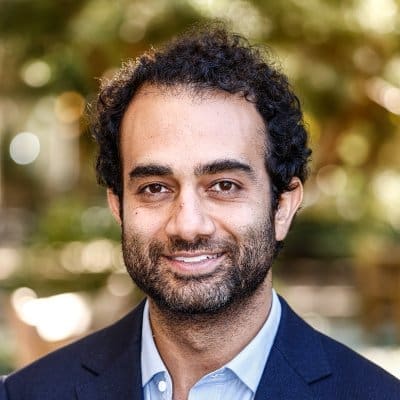
Shadi Hamid is a columnist at The Washington Post and Senior Fellow at the Alwaleed Center for Muslim-Christian Understanding at the Edmund A. Walsh School of Foreign Service at Georgetown University.
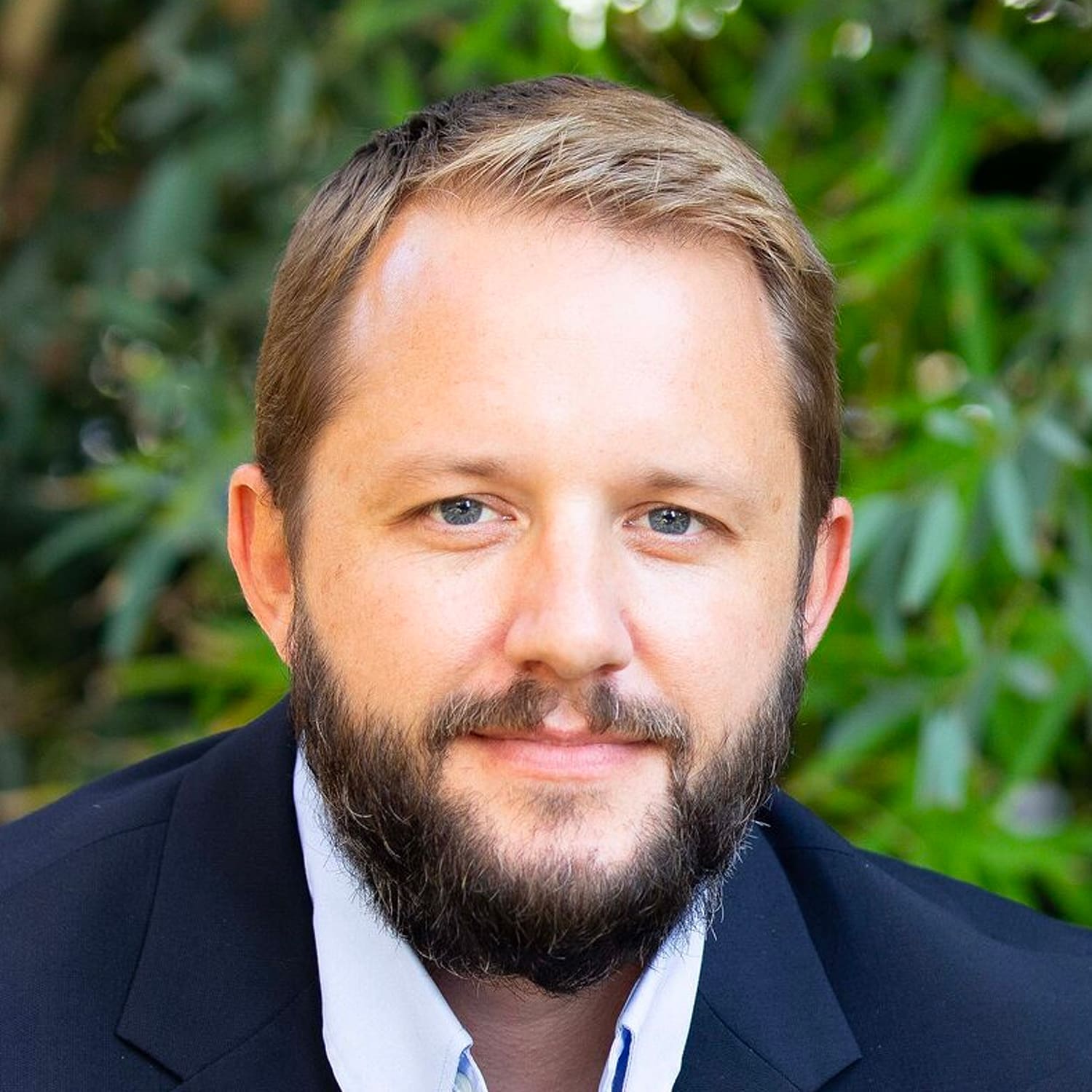
Matthew Kaemingk is Professor of Public Theology at Theological University Utrecht and Senior Fellow at the Center for Public Justice. He also co-directs the Templeton Pluralism Fellowship.
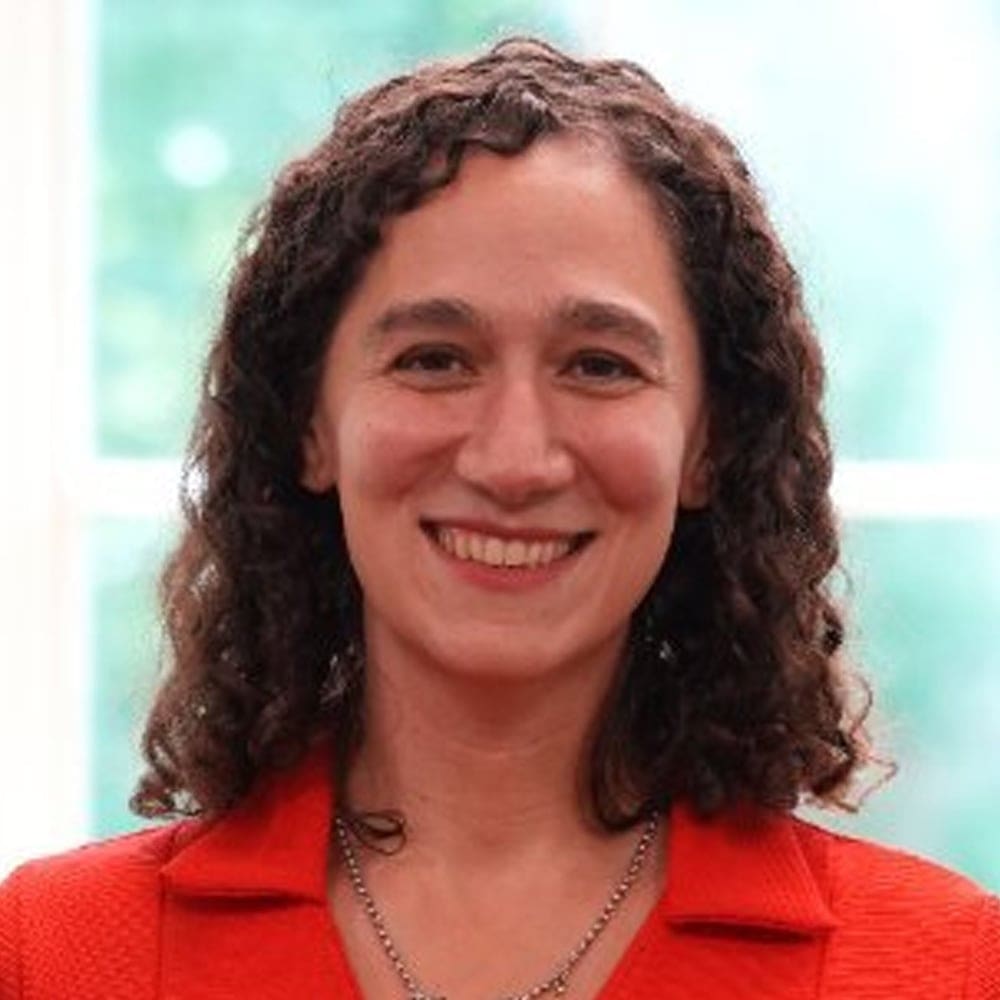
Leah Libresco Sargeant is the author of The Dignity of Dependence: A Feminist Manifesto (University of Notre Dame Press) and runs Other Feminisms, a Substack on advocating for women as women.
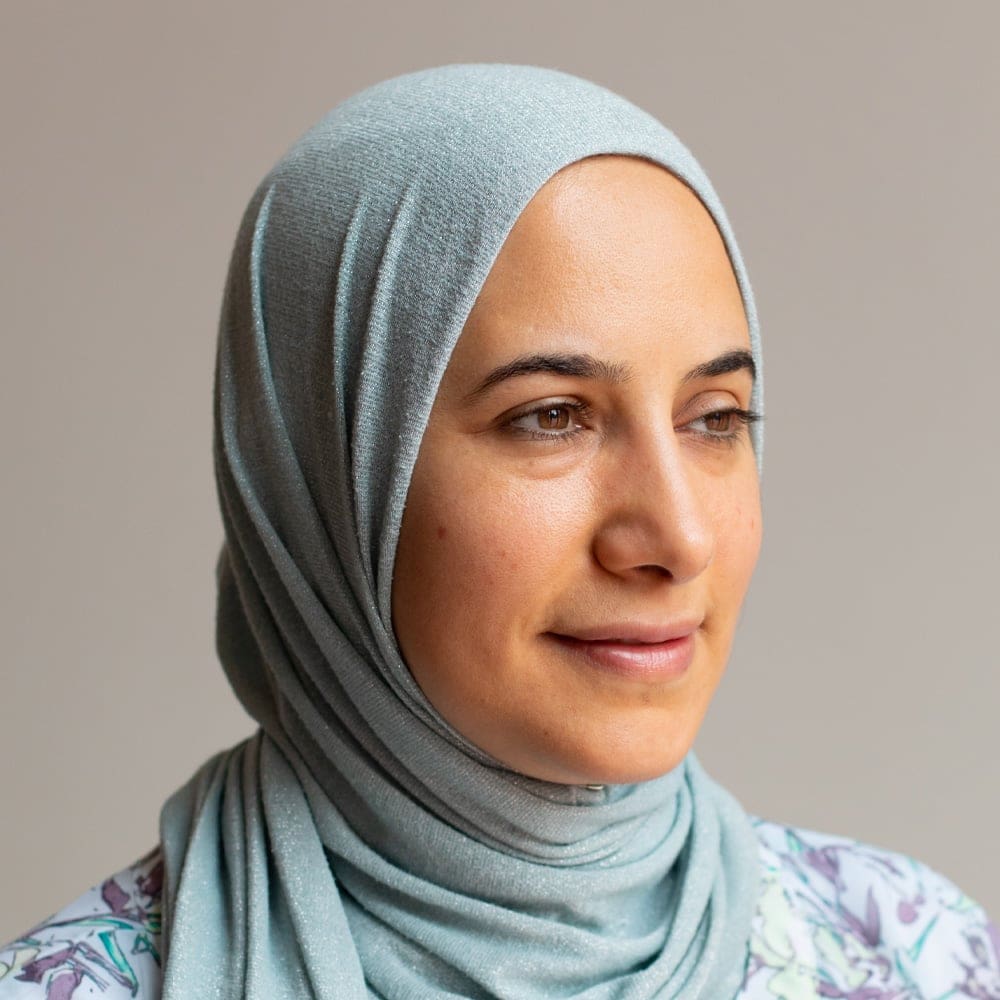
Hadia Mubarak is associate professor of religion at Queens University of Charlotte and the author of Rebellious Wives, Neglectful Husbands: Controversies in Modern Qurʾanic Commentaries (Oxford University Press).
Love the show? Help others find it by reviewing it on your favourite podcast app. We also welcome your ideas and feedback. Email us at zealots@comment.org. Thanks for your support.
Who best holds the legacy of the great writer and farmer?
SITE DESIGN AND DEVELOPMENT BY POLYMATH