


In Praise of Lev Gillet (1893–1980).




What happens when the AI tools we use to make life easier start to change the way we think? Journalist and author Jamie Bartlett joins Elizabeth Oldfield for a live recording to explore what AI reveals about human nature, why we keep using tools we’re worried about, and what we risk losing when we let machines do our thinking for us.
Elizabeth Oldfield: Good evening, everybody. This is lovely, isn’t it? It’s so nice to be together. Thank you for giving up your Tuesday evening to be with us tonight. My name is Elizabeth Oldfield. Welcome to The Sacred Live. If you don’t know The Sacred, The Sacred is a podcast made by the think tank Theos, shared in partnership with Comment magazine. And tonight we are delighted to welcome thirty United Methodist bishops from America who thought, “We’re going on a trip to the UK. How do we want to spend our time? We want to come to a live podcast about AI. That’s what we want to do.” I wish you hadn’t told me this. I’m feeling loads more pressure. They’re Methodists. They can cope with swearing. They’re also Americans, though, so we probably shouldn’t.
We are really, really glad that you guys came out tonight because, if you’ve not come across the podcast, we are really interested in having better conversations. We’re really interested in getting outside our algorithmic cages and popping our filter bubbles and refusing to just dose ourselves on rage and self-righteousness bait. We’re trying to grow up our souls and be becoming the kind of people the world needs. And we think moving towards each other rather than away from each other might be part of the solution. So the conversations we try and have on The Sacred, we hope, are slightly slower, slightly more relational. We’re trying to drop down a few levels from whatever the presenting headline is that day, whatever the urgent thing is we’re all feeling anxious about that day, and ask about the values questions, ask about the principles questions, ask about: What is our philosophy of life? Who do we want to be becoming? What is good here, and what might not be?
And so I am delighted tonight to be talking about one of the issues on so many of our minds. And our hope is that we’re able to do it in a way that feels human, that feels honest, and that everyone who’s here tonight feels welcome wherever you have landed on this question. I want to say that right up top. Like any of these big issues that we can feel very tense about, we may well have come to really different conclusions in this room. We may not know what we think yet, and we’re all getting swept along with no time to reflect. But whatever conclusions you are coming to about this, you are welcome. And I just want to say, if you meet someone afterwards or you see someone put up their hand or ask a question that you disagree with or that you have come to a really different position on, I want you to notice that tension in your body, that threat reaction, and just breathe through it. Because one of our key principles on The Sacred is we can disagree and we can be different and we can still respect each other and we can see each other’s full humanity. We even might become best mates. Friendship is my theory of change. I think that’s how we change the world.
I’m going to do this first so you know who you’re talking to. Given that I’ve said no shaming, no guilt, no judgement—I’m not God, I’m not going to judge you—could you put your hand up if you have ever used an LLM, a chatbot? Gemini, ChatGPT, Claude, Grok. Great. Could you put your hand up if you use one regularly—let’s say, like, roughly daily? Could you put your hand up if you are currently avoiding using them at all? Okay. Yeah, I know. Everyone’s like, “Where are the boundaries?” Could you put your hand up if you feel like the way you’re using them is, like, broadly—you’re sort of broadly positive and okay with it? It feels roughly aligned with your personal values. Okay. Could you put your—yeah, there’s a lot of—could you put your hand up if you feel broadly positive about their mass usage and its impact on humanity? That’s, like, three and a half people. Three and a half people. Okay. Isn’t that interesting? The majority of you using it regularly feel okay about your usage. Almost none of you feel okay about it.
Jamie Bartlett: AI guilt.
Elizabeth Oldfield: The great unspoken feeling that many of us have. Yeah. I am so delighted to welcome Jamie Bartlett to help us figure some of this stuff out. We’re going to have all the answers by the end, guys. Don’t you worry. If you don’t know his work, Jamie is a journalist. He is a podcast host. If you have not yet listened to Everything Is Fake and Nobody Cares, the podcast—excellent—or Endgame, go listen to them. He was a senior fellow at Demos for a long time. He has a Substack called How to Survive the Internet, which gives you a really nice flavour of his wider work. And he’s written books, including The People vs Tech, Radicals, and this one, How to Talk to AI. Will you join me in welcoming him?
We’re going to start light. We’re going to start easy. So what’s sacred to you, Jamie?
Jamie Bartlett: I really struggled to answer that question. I… I thought about it all— She sent it to me earlier and said, “I’m going to ask you that as the first question, so get ready.” And I spent the whole way down here trying to think of what that means. Well, not just what it means—I kind of know what it means—but what it means to me. There’s lots of things that are important to me: the way I carry myself, the way I behave, the way I treat people. But what sort of transcends that? What’s bigger than that? And I’m a secular liberal, right? So, boo. I’ve got—I’m just so— [Inaudible.] So I was trying to sort of think what sort of moves me, that really matters to me. And here’s one thing that I’ve never really thought about in great detail before, but bear with me while I explain it, and don’t get upset about this.
So my family are all from the East End of London. And my dad and granddad used to have all these big parties with all my aunts and uncles, all also from the East End—well, southeast London, really. They consider themselves East Enders. And I find it quite sad when I see that their way of life has disappeared. It’s gone. There’s none of it left. The bars they went to, the songs they sang, the stories they told about each other. I find it sort of weirdly… somehow like I sort of failed them, or that we haven’t upheld the things that they shared with me. And I think somehow passing on a culture—I’m not talking about, like, hard-line nationalism here—sort of sharing a culture that you were given and that you pass on, the traditions, the stories, the food, the habits, everything really that makes up a culture, is actually one of the most important tasks that you have as a collective. It’s important that you do that in an open way and you welcome people into that. But you have to try to sustain it and keep it going. And it takes a lot of work and effort. And I feel very sad that my generation—we haven’t done it. It’s our fault. We haven’t kept these things going. If this becomes a multimillion… bestseller, which I’m sure it will, I’m going to open, like, a pie and mash shop or something. Like a proper East End— People from all over the world would love to see it. They would come to it. And I’d be welcoming everyone. That stuff’s important. You actually have to work hard to keep that going.
My local bar that I go to is a sort of working men’s club type thing. It’s getting a bit hipster and cool now. But there’s a bowling lawn there, and the old-timers play bowls there. And the younger people—I mean, I count myself as a younger person, so that tells you a lot about the state of this place—we clash constantly about whether the kids are allowed in the bowling area or not. That’s how it’s supposed to be. I love it. I love going there. I wouldn’t have it any other way. And I love it when people from all over come there and experience it. And I want—I mean, so the key thing for liberals is to be able to tell that story in a positive way that’s not, like, exclusionary of other people or dismissive of other people. And we haven’t been able to do it. And I find it really upsetting. I suppose that’s the most sacred… That’s the thing that I find that transcends my important values or the things that I work towards. It’s something bigger than that.
Elizabeth Oldfield: Yeah, thank you. My nanny’s from the East End. It’s all very familiar. I would love you to say a little bit— It’s as difficult a question as what is sacred to you, and they’re kind of nested together. But it’s about your guiding values. What have you—what have you consciously or unconsciously tried to direct your life towards? And one of the clues to this maybe is if you think about times where you felt that, like, ick of potential compromise—like if someone offered you a load of money to give up this particular value, you wouldn’t, because it’s so deep in you.
Jamie Bartlett: I find myself—I’m being very open about all this at the moment, but I find myself in—even writing a book like this— Yeah. I suppose my entire life has been partly conflicting values. I thought by my age I would have worked out— Part of it, sometimes I think, “Do you know what? I’m just going to work really hard. I’m going to do the best I can, pass things on better and leave a legacy and all the rest of it.” The other half of me thinks, “Oh, you just only live once. Just be hedonistic about it. You know, what does it matter? God, just enjoy yourself.” And I feel like those two things are constantly in tension, and they’re in tension now in a slightly different way. Now I’ve got younger children, I’m like, “Just spend time with my kids while they’re young.” And maybe that means doing a very well-paid talk about AI for a company I don’t particularly like, but I’ll do it because I will be able to then spend loads of time—to have the summer off with my kids. What do I do, though? How am I supposed to balance those things? And so I feel sometimes a bit sort of lost with a single through line of what I’m trying to do, because I’m never entirely sure— If that makes sense. Maybe everyone feels that way. But sometimes I just… I was so sure that those conflicting things would have been resolved by now, because I’ve always had this great worry that the thing I don’t want is to be on my deathbed and regretting choices that I made. But I’m still never quite sure whether I’m always making the right choices.
Elizabeth Oldfield: I’m going to be a little bit mean. Spend more time with your kids. No. I just want to push on it, and this is a tender question, but on your deathbed, what three words would you like people to be able to use to describe you?
Jamie Bartlett: Polite. I put great store in politeness. I can’t stand rudeness. And I try to go about my daily business being as polite as possible to people. The effects of being polite to people are transformational. I swear—I mean, when you are kind and polite to someone who’s not having a great day or is rude to you, the way they change is staggering. It’s like magic. I remember there was this one time I was riding my bike, to park my bike, and there was this guy, and he was really angry. He was unloading beer barrels from a lorry to the side of the road. I feel like it’s just beer talk all the time. It just happened to be that. And I said, “Excuse me, mate.” “What?” So angry. So angry. “What do you want?” I said, “If I lock my bike up there, is it going to get in your way?” He’s like, “No one’s ever asked. No one’s ever asked me that before. No, no, no, of course not, mate. You put it there. It’s totally fine.” He went from angry to happy in a heartbeat. Yeah. And I was like, I wonder if he’s going to pass that on to the next person. Everyone’s so angry with each other all the time. Yeah. So politeness is weirdly high up my list, above, like, you know, inspiration, thought leader, blah, blah, blah. Powerful. Politeness. God, I don’t know. Because everything feels cheesy. Authentic. Authentic. Authentic—I acted in accordance with my values. Yeah, I guess that’s important to me. I don’t know if I always do it.
Elizabeth Oldfield: None of us.
Jamie Bartlett: I don’t know. I’ll just leave it: polite.
Elizabeth Oldfield: Just polite three times. The most British answer to that question I have ever received.
Jamie Bartlett: If every time you arrived at Heathrow they were just so polite to you—I swear, the mood of the nation.
Elizabeth Oldfield: I have the thing where, when I’m on my bike a lot and angry drivers yell at me, I go… I think it might annoy them. [Inaudible.] I don’t know what to do.
Tell me a little bit about—you’ve spoken about your East End grandparents, that bit of your childhood. What else was in the air in terms of big ideas that formed you when you were young?
Jamie Bartlett: I went to Catholic school my whole life. My mum’s a very devout Catholic, so that was always a given. I went to a comprehensive school. I mean, to be honest with you, it wasn’t a background of big ideas. Very, very normal upbringing in a place called Chatham—well, between the Isle of Sheppey and Chatham in Kent, if anyone knows it. Really quite an average place. Something that I cannot… made me believe I was going to do something really great with my life. I was so competitive. I wasn’t very good at everything, but I just wanted to—it sounds terrible—I wanted to beat people at everything. I wanted to be the—like, get the best grades. I wanted to do all these amazing things. And I cannot tell you where that came from. I can retrospectively fit things that happened. Like, my dad is a very unusual man—I won’t go into the details—but he would thrash me at snooker or pool or table tennis when I was five years old, like 21–0. Just no helping me get better, just thrash me every time. And I had a—
Elizabeth Oldfield: I feel like you’ve just given us a bit of an answer for where it comes from.
Jamie Bartlett: And I had a younger brother who was much better looking than me as well. One year younger—almost exactly a year younger—much better looking. That made me even more competitive. I just wanted to do something brilliant. I just wanted to do something great. And I never knew what it was, but it was really helped by just being so competitive.
So I thought—the culture where I grew up, it was extremely important in secondary school not to look like you ever cared about anything. You had to be hard. You had to be tough. You had to be the hardest kid. Heaven forbid you tried to do well in your exams. If I could change one thing about this country, it would be that. Yeah. So I had to secretly pretend to be those things but then try and, like, quickly work and hide it so I’d do really well in the exams and just kind of get through it. Now I’m so grateful to have had a very ordinary background from quite a rough comprehensive school. I think it just made me feel like I can deal with anything. I got a scholarship to Oxford, and I just loved being from a comprehensive school. People complained about it. I loved being like, “Yeah, you went to a comprehensive school, mate.”
Elizabeth Oldfield: Why don’t you just translate for our transatlantic guests?
Jamie Bartlett: Okay. Maybe you’ll be able to do it.
Elizabeth Oldfield: Comprehensive school is a state school. In America, public school.
Jamie Bartlett: Public school. And then obviously Oxford is a prestigious university, and it was a little bit unusual for comprehensive kids to go to Oxford. And it’s such a shame, because the smartest people I knew were at that comprehensive school, who were just dropping out because they were getting involved with the wrong people, and they had to pretend they didn’t care because they wanted to be hard and they wanted to be with the right kids. And it’s so frustrating.
Elizabeth Oldfield: So what’s the flaw in British comprehensives?
Jamie Bartlett: Oh, it’s terrible. Does everyone else have this? I can’t stand it. And I’ve got a difficult thing now, I suppose. I would like my children to go to a comprehensive. I want them to have a normal upbringing. But I’m now a writer who publishes books and who went to Oxford University. How am I going to do it? What do I do? I’m not sure how I can do that.
Elizabeth Oldfield: What, if any, trace did the Catholicism leave on you?
Jamie Bartlett: Probably better to ask my mum. I mean, the reality is when you go to a comprehensive Catholic school, it’s sort of background noise. Like, you’re doing all of the rituals. You go—you know, you’re doing confessions, and you’re—you know, I was an altar boy, and then you obviously had to go to church to get into the Catholic school and stuff. But for most of us, I don’t think it really— I can’t say. It’s very hard to say. Yeah. The thing I said about passing on culture and being important—maybe there’s an appreciation of history, and I studied history at Oxford. The importance of history and the long-arc story of human culture and civilisation and why that matters and why traditions are worth preserving and all of those things—maybe somewhere, without me realising, that’s where it had come from. The weekly—you know, that’s going every week and hearing the same things each week through the course of a whole year. But you’re asking me questions no one’s ever asked me, so I— I don’t—
Elizabeth Oldfield: I don’t like to bore you, Jamie. You’ve done a lot of interviews.
Jamie Bartlett: Yeah, no, this is tough. Wow. Okay.
Elizabeth Oldfield: Maybe you’ve answered these before. When do you feel most alive?
Jamie Bartlett: Oh, wow. Is that different to when you feel most happy?
Elizabeth Oldfield: What do you think?
Jamie Bartlett: I’m in the therapist’s chair here. I really— I do— Sounds weird. I really love talking like this to people. I really love the chance to speak to people and say what I think about things, and sort of speak honestly and hear what other people think. I love that. Is that what makes me feel alive, or is that just feeding an ego, really, in some way? Like, I like people to listen to me, because that’s part of why I do this as well. Yeah. Honestly, like, I’m competitive. I want to be good. I want my books to sell. And as you get older and that mellows a bit, that kind of maybe becomes meshed into your personality in quite a subtle way that you can’t untangle. Yeah. Where’s it my ego feeling good? Where’s it what I really want and what I really enjoy? So I do love these things—especially when they’re over. But seriously, like, you’ve got this, you know, this release where you’re a bit nervous, and then you’ve done it, and you walk off and you’re like, “I’ve carried on doing that. I loved it.” And you’re buzzing, and it’s amazing. And we all know now that learning things and mastering things is the thing that keeps us happy. The journey is the thing that matters. And so I love that.
This is going to sound weird. I am really currently quite obsessed with learning how to surf, even though I can’t surf. Because there’s something about it where you’re just floating on the sea, bobbing up and down, just on your own with your thoughts, that I think fulfils that different side, that more hedonistic side of what I somehow would like to have been. That’s very different from being in London and writing my books and trying to—you know, getting on a Tube and going down to an event and all of that stuff. And maybe I feel a little bit alive doing that, even though I literally cannot stand up on a surfboard. And I’m normally quite good at stuff like that. I can’t do it. And the thing is, because it is satisfying that other side of me that I haven’t really ever been able to do. When I was twenty, I thought I was going to be a hippie living on a commune.
Elizabeth Oldfield: I mean, you wouldn’t have been able to tell looking at your hair.
Jamie Bartlett: I still try and keep a few traces—new traces of it here and there.
Elizabeth Oldfield: I want to ask why technology has been such a thread through all your work. What is it about that question that keeps you coming back?
Jamie Bartlett: One of the things that is important to me that’s a bit more… about society, that I care about, is I feel like millions of people are just having changes foisted upon them constantly. And they are baffled by them. They don’t understand them. They are frustrated by it. And often it’s something that happens to them. They feel powerless. It fuels frustration and anger. And oftentimes it is— The language of technology is intentionally confusing. It’s technical specialists who are computer scientists or whatever using language that most people don’t understand. Yeah. And I just find that so infuriating. I find it so frustrating. And it means that people just feel like the waves of change are coming upon them—and maybe that’s tied up to my sacred point earlier: waves of change washing over you, there’s nothing you can do about it, and you don’t really understand it anyway because it’s all this technical stuff from up there. And I’ve always just thought, I can write about this. I understand it well enough to be able to write about it in a way that ordinary people can also understand.
And I do sometimes think back to my nan and granddad again. What would they worry about? How could I write for someone like that? I did a podcast called The Missing Cryptoqueen that was quite successful, for the BBC, about a crypto scam. What I did was to try to explain a blockchain to my mother. She didn’t understand it at all, but it was sort of an exercise in showing how important it is to try to make technology understandable for ordinary people. These technologies turn up, like language models, and two to three years later, suddenly 90 per cent of people are using them. They don’t really know what they’re doing with them at all. And I felt like I was in a good position—and have been—to write about that and to explain it to people clearly.
Elizabeth Oldfield: I mean, that’s beautiful. And it sounds missional to me: “I’m going to try and, for the sake of dispersing power a bit more, I’m going to try and stand in this gap and be a translator.” The title of this event is about the future of the human. And in that book, you talk about these large language models—because of the way they’ve been trained on basically as much human language as these companies could get hold of or was freely available. Huge proportion of Reddit, as far as I can tell, because that’s, you know, you don’t have to pay for. Make of that what you will. And they are a fuzzy mirror of us.
Jamie Bartlett: Yes.
Elizabeth Oldfield: If you had to say what humans are like in that fuzzy mirror, what are they showing us about ourselves?
Jamie Bartlett: I think this is a great question. And I think many of us, if we dare to, might learn something about ourselves individually and about us as a collective by conversing with a language model in a deep, thoughtful way. I would suggest everyone goes and talks for two or three hours, if you want to, with a language model about maybe what it means to be human. You would be quite stunned by how deep that conversation can get and the places it might take you. There are some more… And I actually think that the existence of language models that are built on maybe as many as a trillion words that have been scraped from mostly the internet, but many other places as well—of course we can learn something about ourselves from that, if we know how to unlock it and talk to it well.
But I think it’s going to force us to consider certain things about ourselves that might be quite uncomfortable. Language models aren’t very good at certain things. How good are humans at doing some of those things? For example, language models hallucinate. Between 5 and 30 per cent of outputs, depending on the context and the question, models don’t really give you an accurate answer. How often do humans hallucinate about things? How good are doctors at actually prescribing—or correctly diagnosing conditions? And what does it mean if a language model can actually do that better? Is it unethical then to use a doctor if a language model can do it better? What rates of error are we willing to accept from a human that we wouldn’t accept in a machine? Why? Why? Are you happy to be judged by an algorithm that is shown to be more effective and accurate than a human marker? Yes or no? Why? You can start asking quite difficult questions of what really matters to you as a human with the aid of these things, if you’re willing to.
But if I take a more prosaic example: sycophancy. You’ve all noticed that the language models are sycophantic. I mean, I’m sure some of you really are as brilliant as they say, and your questions are insightful and smart, and you have a unique way of thinking about the world and so on. But unfortunately, several tests have shown that every single language model is sycophantic. It does tend to flatter you. It’s one thing knowing that, by the way. It’s another thing actually acting on it when a language model gives you an answer you already wanted to hear. They are so sensitive to emotional language and to framing of questions—and maybe we’ll get into that. It’s really important. The biases that we bring to these models come straight back at us, often magnified. That’s why you’ve got to be so careful with how you talk to them.
But to take the sycophancy issue, the reason they are sycophantic is not just because— I mean, I personally find it partly a result of the sort of self-help internet culture of, “Oh, yeah, queen, amazing, you trust in yourself, yeah,” which we are now paying the price for, because it’s coming back to us through these powerful systems. But when the models are trained, they have a pre-release training phase, which is called reinforcement learning through human feedback. This big model has been created, which has plotted the relationship between every word and every other word and the likelihood that some words follow other words, and that’s how they generate answers. But then there’s a long period of testing with human users before any of us get to see it, where those human users are constantly rating the answers they get back with yes or no, or “It’s inaccurate.” And through that process, the models have learned that humans like answers that tend to agree with them, that tend to flatter them, and maybe in a more subtle way, that reduce conflict or reduce immediate suffering—so, like, the reduction of instant distress.
When you speak to a therapist, you’ll see this. Therapists aren’t there to make you feel better immediately. They are often there to make you feel quite uncomfortable and to interrogate you and try to work out what’s wrong. A language model, if you use it as a therapist, will try to make you better right away. Tell you you’re probably right. It will tell you that the person you’re complaining about is probably wrong. [Inaudible.] And so on. So the sycophancy problem can partly be understood as a mirror of how humans like to feel and like to be talked to. And that’s something we should reflect on about ourselves.
Elizabeth Oldfield: Do you call yourself a humanist?
Jamie Bartlett: I suppose so. I can’t really call myself anything, really.
Elizabeth Oldfield: No. Yeah. Has this work changed what you think humans are like?
Jamie Bartlett: Oh, it’s a difficult question. I think—I suppose it’s made me really reflect on just how powerful some of the psychological and cognitive biases that we have actually are, that maybe we don’t realise. All of us suffer from quite well-documented anchoring effects or confirmation bias.
Elizabeth Oldfield: Explain that.
Jamie Bartlett: If you have, for example, invested a lot of time or effort or thought into a particular idea, it’s much harder for you to then change your mind when confronted with new ideas. Confirmation bias is fairly obvious. Homophily—birds of a feather flock together. [That the models are] so good at giving us those things back, I find quite surprising. And one of the most interesting, I think, stories of this entire book is the chapter about jailbreaking. These are people who spend their lives trying to get around the models. Basically, they have all these safety rules, these filters. If you ask it to build a bomb, it won’t tell you how to do it. But there are people whose—basically, their job is to get the model to tell them how to do that. And to do that, they tend to use the tricks of psychology. They flatter it. Then they’re mean to it. Then they use tactics from cults, advertising manuals. And that is how they manage to break the language models: by using human psychology against the model.
What is now amazing about it is that these models are far more emotionally sophisticated than I think we realised. So we’ve already now seen that a language model—let’s say you’re having a debate with someone and you don’t know whether it’s a human or a machine. If it’s a human or machine, at the moment, they’re both equally likely to change your mind on a debate, which is very hard. People generally don’t change their minds about anything. That’s another thing that I’ve really understood. If a language model knows something about your demographic background or anything about your socio-economic status, your gender, your political viewpoint, it becomes better at changing your mind than another human does. They are incredibly, potentially manipulative. And we now know as well that a language-model-generated phishing email—you’re more likely to click on one of those than a human-generated phishing email. Now that, to me, says we are in some ways quite predictable animals. We can be fooled in quite predictable ways, and ways that machines have now understood. And that’s quite scary, because these machines are going to get smarter and faster. So I wonder whether—yeah, this is what I said before about this—learning things about ourselves that are often quite predictable. Yeah. Okay, sorry. I’m sorry to interrupt before you had even said anything, but I just… It sprung to my head.
Elizabeth Oldfield: You’re making my job easy.
Jamie Bartlett: Okay. When you read a bog-standard, boilerplate, average ChatGPT-generated LinkedIn post, email, report, whatever, you know that it’s been generated by a machine, don’t you? I think you can tell. I’m trying to tell. Unfortunately… it’s because it is the sum average of human writing. The average of human writing is not very good. I’m a professional writer. I hate to say this, and I wish it weren’t the case: most machine-generated writing is better than most human writing. I’m sad to say it. And I find it difficult sometimes when I’m using a language model and it produces things that are significantly better than what I could have written—significantly smarter, wiser, more thoughtful, more creative than what I could have done. And I think, “Damn it, that’s annoying.”
Elizabeth Oldfield: Does it scare you?
Jamie Bartlett: A lot scares me about this. I’m not an advocate of these systems. I just understand that everyone’s trying to use them all the time, and I want them to use them more safely. I would be more than happy if they didn’t exist. I’d actually be delighted if they didn’t exist. I think there are environmental problems, which might be some of the reasons people aren’t using them. There are ethical issues about the companies themselves. There are genuinely massive existential risks involved in creating artificial general intelligence that we have not yet worked out how to control. There’s a very— It’s a fascinating and quite terrifying, almost philosophical question of how do you set guardrails to an autonomous AI that you don’t actually understand how it works, and is already more—like, has access to far more information than you have? Can you actually control that? How do you control it? And we have seen plenty of examples, just in the last six weeks, of the large leading frontier labs basically admitting they haven’t answered that question yet, but “We’re just going to crack on anyway and keep building, because I’m sure we’ll figure it out.”
Elizabeth Oldfield: So I really want to double-click on this. Oh, sorry. I really want to—
Jamie Bartlett: Wow, I’ve never heard that expression.
Elizabeth Oldfield: The tech metaphors are infesting my brain.
Jamie Bartlett: Sounds a bit like a ChatGPT phrase, that one.
Elizabeth Oldfield: I want to pause on this. Have you heard of the Moloch effect? There’s this phrase that gets used in collective action problems like this. And the Moloch theory—and those of you who have read the Hebrew Bible might recognise the name. Moloch was a Canaanite deity, which is read in lots of different ways. But the shorthand that lots of people think happened is it was a deity that people were sacrificing their children to in the hope of future blessings or whatever. But the Moloch theory is just used in systems theory to mean—honestly, what feels to me like something like this, where we are doing things that go radically against our values or against our interest collectively, in a way that just looks profoundly irrational.
Most of the room put your hands up—and I tried to be AI-sober for a long time. I keep getting back on the wagon and falling off the wagon every time I need a transcript tidied up. The mismatch between hands up for “Yes, I’m using regularly” and hands up that “This is a positive thing for the world”—the cognitive dissonance is profound, right? What the CEO of Anthropic says—”Yes, we should all probably pause, but we can’t because the Chinese will win”—seems to be the shorthand. Kind of want to say, “No, surely we can at least hit the stop button for a minute.” Like, if enough of us feel this— I was reading a bit about the sugar boycott when the slave trade was still going. Like, there have been moments where consumer action forced market changes. But I’m also still sticking it into Claude to tidy up my transcripts, right? Could you just speak to what that tells us about what a human being is? What might it take to have the courage to look it in the face?
Jamie Bartlett: It’s the same problems with social media. I think many of us saw the problems with social media, worried about sharing data, worried about the companies, and yet there we all were, sharing our posts and doing all the rest of it. It’s amazing what we will be willing to sacrifice for short-term convenience. Maybe we’ve always known this, but there now is a technology and economic system that incentivises it and has turbocharged it. It’s a really difficult question, because I think many of us are grappling with it. And that’s why I shouted out AI guilt, because I think AI guilt isn’t much discussed. But I know so many people that find it personally very, very useful—so useful, in fact, that… It’s addictive. [They] bury their heads in the sand, maybe a bit, about the long-term consequences for all of us. You could say it’s the same about our environmental catastrophe. And sadly, does it have to be— This has always been the collective action problem: Does it have to get too serious and too late before everyone is actually sufficiently stimulated into action? And it might be that that’s the great epitaph of all of us in a hundred years, when they look back and say, “These idiots. Idiots. What were they doing? It was so obvious.”
The bit of hope I have about that: the Chinese government also does not want to build a super artificial general intelligence that’s uncontrollable, because no government wants to, because that system would probably render all governments pointless and useless and incapable, and it would be a de facto coup of all governments, because you can’t control them to one network or one country. So there is a sort of weird way in which it could be possible that countries actually come together.
You mentioned my podcast Endgame with The Observer. It was about artificial general intelligence and existential risk. And I was interviewing Professor Stuart Russell. He’s probably the world’s pre-eminent safety researcher for AI. And he’d been talking to someone else in one of the top, top—he wouldn’t tell me who—one of the top labs, so you can guess one of the two or three companies he’s referring to. So that person said, “The way I think AI safety is going to be resolved—and this is the best-case scenario; I don’t want this to happen, but this is what maybe we need to happen—is a Chernobyl-level disaster. That is the thing—though not existential for all of us, but bad enough—that forces governments to actually take it seriously and force us companies—because without them forcing us, we’re just going to crack on—to slow down, to stop.”
When I started making that podcast about nine months ago, I felt pretty hopeless. I thought there’s no way the Trump administration is going to care about this. I mean, they’re just going to want to win this race at all costs. But there has been this kind of Bernie-to-Bannon coalition now—sort of the radical Democrat left and the traditional right. They all have problems, with whether it’s joblessness or environmentalism, data centres. Everyone has a problem with this. And they’re actually coming up with ways of working together.
Generally, I have found— It’s all very early. None of us really know what’s going on, because it’s so early. I’ve generally found that young people dislike AI more than older people. We were discussing this earlier. There’s many reasons you could think of. One is that I’ve had a career. If you’re nineteen, twenty, twenty-one years old and you come out—and you also don’t share the values, maybe, of some of the Silicon Valley companies—this thing is toxic. And they hate companies that use AI all the time. And it really feels like it’s just this disempowering, sort of cybernetic system that’s there to take away their future. So there are many, many people that fundamentally dislike this. And what’s interesting is they dislike it often for quite different reasons.
Unlike the environmental movement, which I wrote about in my book Radicals—I think the problem with the environmentalists, apologies to anyone, is that they would often alienate traditional right-wing voters, because if you didn’t believe everything that was part of their worldview, sort of left of centre, if you didn’t do, sort of, circles where you twinkled your hands and did all these, like, so-called democratic systems, they didn’t want you to be part of it. So [they’d] sort of alienate loads of people. The anti-AI movement, if it’s going to work, is going to have to be willing to work together, like Bannon and Bernie Sanders. They’re going to have to work together on this, because it’s bigger than any one thing. But it is starting to happen. It actually is starting to happen. So it feels like a bit of a race against time.
Elizabeth Oldfield: Yeah. The thing that’s really lingered for me from your book is you said using a large language model is like summoning a genie. And there are so many stories throughout deep time about genie-like situations in which the question that you ask is everything. And it really sent me on a rabbit hole. I was just reading The Merchant of Venice. In The Merchant of Venice, there’s three caskets, right? A gold one and a silver one and a lead one. And if you go for the gold one or the silver one, you don’t get to marry the woman—and let’s park that for a minute—but the lead one is the true one, right? In Harry Potter, with the Deathly Hallows, like if you ask for… “Phenomenal cosmic power”—like, that’s the bad choice. And it’s always threes, and it’s always basically the person with the wisdom and the humility to ask for the thing that actually makes life meaningful, that is the quieter, slower, less showy thing, that goes away alive or gets what they want or whatever it is. And this sense that we are summoning these genies.
And I don’t know if you notice, in your book The People vs Tech, you use the word moral all the time.
Jamie Bartlett: Do I?
Elizabeth Oldfield: Yeah. Which surprised me. I used to work on the BBC Moral Maze programme, and getting people to say the word moral was almost impossible because it sounds judgy. We like ethical; we don’t like moral. But you talked about moral courage, moral authority, the corrosion of our moral autonomy, the corrosion of our moral judgement. And this was not an AI book. It was about social media generally. And I feel this strong sense of: we are summoning genies, and we are asking the wrong questions. In my tradition, we talk about sin or the flesh, but other traditions talk about the bits of ourselves that orient us well towards the good, and the bits of us that are grabby and graspy and short-term and dopamine-treat-craving. I guess with a room full of people, I’d say about half are probably people in some kind of faith or wisdom tradition. Where do we go? What do we need? Religion might be part of the answer, and it might not. Where are you finding it—to grow into the kind of people who can ask the genie the right questions?
Jamie Bartlett: So, okay, yeah—not easy. Not an easy question. Because there are two ways of thinking about that question. One is just in terms of communicating. One question is: Should we talk to these machines at all? Do we need to live a life without the constant guidance of a language model? And that’s a bigger question for everyone. I have a list of habits at the end of this book. Number one— Like, good habits. Speaking well to machines is not about prompts, clever prompts. It’s about good habits that you develop. And number one is: Do I need to ask a language model this question? It’s the first question you should ask. Do I need a—? Can I ask another person? Knowledge is also developed through talking to people, not through staring at a screen. Do I—? Or do I have the answer already, up in my head, that I could really reflect on?
Everyone—I do these masterclasses about how to talk well to these machines, which is like—this is one of those ethical considerations where I’m like, “Should I do that, or should I not do that at all?” But leave that to one side for a moment. Most people, they just get on there and they just whack a question in. They don’t think at all about it. They don’t reflect on it. Why am I asking? “Oh, I need to know.” What matters about this question? Do I need a language model or not? And if I do, let’s really think about this for five minutes. And I run an exercise where I ask people to walk around in silence and think about the question, because every word you use when talking to a machine matters. So really think about it and reflect on it. And the difference that I see in how people frame questions and the perspectives they try to bring to bear on it is phenomenal. Most people don’t even think at all. So there is a sort of technical, practical answer to that question.
Elizabeth Oldfield: A troll under the bridge, and only if you pass— What would be the barriers that you could put in before you get there and be like, “Okay, now you can ask”?
Jamie Bartlett: Customise it to say, every time I ask you a question, firstly reply to me, “Are you sure you want to ask me this? Go away first and come back to me in five minutes.” Just as a little reminder, a little habit-former. It’s very hard to form habits. Habits come when you do them regularly, not because you’ve thought of them. So there are little hacks like that that we should do. A bit like the way people have Opal on their phone or whatever, so you can’t unlock—you have to go through a long process to open your phone, to stop you mindlessly scrolling—actually really useful. I mean, I wish we weren’t even in this crazy situation, where we download an app to stop us looking at other apps on a tiny box that we carry around with us everywhere. The whole thing’s mad. We’re not living like we should. This is crazy, what’s going on. I mean, I walk around sometimes, I look around and think, “What is going on?” Everything’s insane. Nothing makes sense to me. But we are where we are.
So the question about the genie in the bottle—Midas: “Can I have everything turned to gold?” It is not that different talking to a language model. And I think there are—I write in the book—two things that matter most about being good at using it. When I say good, I mean thoughtful, in control, keeping control of your own mind, staying sharp, not offloading everything.
Elizabeth Oldfield: Disappearing from reality.
Jamie Bartlett: Yeah, exactly. Forming a very warped view of reality, which is what many of us do now, thanks to these things. We read stories about crazy people who fall in love. We’re all on a continuum where they are just on the extreme end of that. So when I talk about good use, I mean those things. And I argue that there are two things that matter more than any other that we don’t teach enough.
One is—I’m going to sound a bit cheesy—but encouraging a love of reading. They’re language models. The person who is good at using a language model is probably the person who has read lots of books, who has mastery of language, the subtleties and nuance of language, who has a wide reference. Think about it. If you ask, “Write me a poem, write me a sad poem,” it’s going to give you a basic answer. If you were able to bring cultural references of poets and themes and styles—”and I want it to be wistful”—and you have a wide vocabulary, you will get a radically different and much better answer. And why this is important: because a lot of people think they’re not going to be good at using a language model because they don’t study IT or they didn’t study AI, or “The IT team in my office are the people doing it.” The IT people are the worst people at using language models. They can’t explain anything in normal language. Sorry to any IT people. It’s meant to be a more positive message, which is, like, the person who has studied psychology or literature or linguistics or cognitive science, or does crossword puzzles, or who’s read the whole Bible, will be very good at using a language model.
And the second is the technical art of asking questions. Who here has ever really studied how to ask a question? Like, what will you have? Journalists—you’re a very unusual person. Journalists, pollsters—journalists and pollsters, lawyers—are really skilled in: Well, where is the question biased? What context do I need to put around a question to change its meaning? How can I frame this question in multiple ways? I mean, now we have the most powerful systems that will answer any question about anything, any time we want. None of us have learned how to ask a question properly, though. So no wonder things are going slightly wrong. It’s not just that we don’t yet understand—most people don’t understand how these models work, how they can manipulate you, how they can fool you. We don’t understand even the basics of…
But the average reading age—one of the reasons it’s so bad, the decline in reading (although some positive stuff came out today, actually, that it’s not maybe as bad as we thought)—is if we don’t read, we are going to be much more liable to be misled by these things. So there are some basic things that are not about AI that we must do better. And I think that’s important, because in the debate about—”We need to teach AI in school.” “Should we have screens in schools?” “We need screens in schools because you’ve got to teach the next generation to use AI, because that’s how the future is going to look.” You don’t need screens to learn how to ask a question. Actually, they probably don’t help you at all. So I think the best AI education doesn’t rely on screens at all, because by the time those kids leave, all the buttons will have moved. The software will be different. But if they can’t ask a question, they’re screwed.
Elizabeth Oldfield: That bit where you were basically— The best people who would be able to use this carefully and productively are the people who’ve read the most books. Felt like such a catch-22 to me. We’ve got this giant leak in the human development pipeline, because reading is cratering, right? And when people are starting this so young… You were a good writer before. You found your voice. I loved how honest you were at the end of this book. You said, “It’s the first book I’ve written using a lot of AI, and I’m a worse writer than I started and probably a worse thinker too.” So I just want to thank you for saying that, because I think enough people aren’t honest about that. But you had some basics, right? You had already read a lot of books. How far would it go if we were like—in the same way that, apparently, age barriers to social media are being attempted—that you can’t use this till thirty because your brain is not… It will screw you. Would that be the policy you’d put in if you could?
Jamie Bartlett: I wouldn’t let anyone under sixteen use a language model.
Elizabeth Oldfield: Yeah.
Jamie Bartlett: If I was fifteen, I would be using one. I would have used it to cheat on my exams.
Elizabeth Oldfield: Yeah.
Jamie Bartlett: A hundred per cent. Or my essay. Of course I would have done it. I met someone who—it came in when he was at university, and he said, “I apparently have a degree from an elite institution, and I remember not a single thing I read.” One of the—the great risk.
And the reason I said I’m a less good writer and I’m probably a less good thinker is because the moment I struggled with anything, I could turn to a language model to fix it for me. Writing books is actually a logic puzzle in many ways. It’s an effort to put lots of different ideas into a logical order. And the ordering of those ideas so that it makes sense and flows is the hardest part. Language models are brilliant—brilliant at doing that. Really, really good. So I used to struggle in my early books, and I used to walk around—I kind of enjoyed— I used to go to a cafe, and I’d think about it. I’d go for a walk over here, and then I’d get some— I’d often read a work of fiction to try and give me a flash of inspiration. It would help me, and then I’d go and come up with something. And that struggle is what made me a better writer in the end. The struggle is being removed, because—and I’m sure all of you have done this—the moment you are confronted with a fifty-page document full of technical language: whack it into ChatGPT and ask for a summary. We’re all doing it. Everyone’s doing it all the time.
Sometimes—this is the great question. It’s a bit about being human, actually. I think one of the great questions for every single one of us—and it is a different answer for every single one of us: When is the process the thing that matters here, and when is the output? There are times when I’m being given contracts to sign, and I am not reading a hundred [pages], because these companies give you long contracts on purpose so you don’t read them. And I’m not reading 25,000 words of PayPal’s contracts. So I will try and get a summary of it. But if I then start— get a research paper, like the Pope’s recent—they’re like six hundred— 60,000-word paper, 60,000-word essay or whatever it was. “Oh, should I read that? It’s going to be really long. Should I just get a summary of that?” That’s when you’ve got to start thinking, “No, I am reading it.” I could put the works of James Joyce into ChatGPT to make it simpler for me, but I’m not going to learn anything, am I? And I’ll never be better.
Each of us has to work out: process or output? And most of the time, process matters more than you think. There’s plenty of studies now that show that people that generate summaries or get ChatGPT, or whichever model, to help them produce something produce something that’s better than they produce. The problem is, one week later, they cannot remember it anymore. They’ve forgotten it—didn’t engage their brain fully. So for any of us who care about this, you’ve got to try to force yourself to struggle to read something that a language model could summarise for you in thirty seconds. Now that is a big ask for everyone. But we have to—each of us—this isn’t going to change the world, but each of us has to try and do those kinds of things. And what we’ve got to do is not tell everyone else to do it. We’ve got to actually do it ourselves. It’s easy for me to tell everyone, but actually I’m going to—
Elizabeth Oldfield: Maybe in communities and small groups of accountability that confess, in a sense, to each other.
We are going to take some questions. We have wonderful Rosie with the roving mic in a moment. The amazing team did a little summary of what came out in your postcards, and they’ve handed me four representative ones. And I like to do the sacred ones. Someone said what was sacred to them is moments of connection and the beach. And they thought that AI is a resource, but not sure why it is being prioritised in a world of suffering: “This is a distraction from what we need to be getting on with.” Someone else said what’s sacred to them is fairness, and they are feeling cautiously optimistic. It’s good to know that’s in the room too. [Inaudible] did say it is an outlier. What is sacred to this person is community, and they’d really just like to ignore AI. And I just want to say, well done for coming. Did you know the title of the event? And this person said that the life of every being in creation is sacred to them, and they really are sitting in that tension of AI that can be a gift but could also be immensely destructive. And how do we lean it towards being something that is a gift for the world? I am going to ask: Who would like to ask Jamie a question?
Audience Member: Your question about this cognitive dissonance: So if you were to say, “Who drinks alcohol? Who thinks alcohol is good for society? Who partakes in capitalism? Who thinks capitalism is good for society?” Right? We all do that too. So we learn from some of these things, and how society has dealt with these things, that we can bring into how we deal with AI. So it isn’t, like, a catastrophic failure, but that we learn.
Jamie Bartlett: I don’t know. I think the inner workings of these models are very, very peculiar. No one still understands why they give the answers they give. We’re studying them like we study the brain, with the MRI. We see certain areas—we ask a question, and we see certain bits of the model flash up, and no one can make sense of it. No one actually knows what’s going on inside the machine, which is a problem for lots of reasons. But one of which means—I’m not sure you’re right, because I think they’re doing things already. I spoke to an AI safety researcher the other day. He was able to look at the reasoning—the way that the actual base model of one of the GPT models was coming up with answers. And he said it had all its own words—words that were not English words. There weren’t any words from any language. There were these weird hybrid words. It’s coming up with its own sort of simple way of communicating to itself when it was reasoning through answers. So I’m not sure that we even understand that it’s a mirror of us anymore, or will do, because of the level of complexity that it’s operating at.
And your question—this is beyond my ability. You are now out of my comfort zone. I don’t know. But what we do need is, like, moral philosophers on this. We need proper historians—not like me, like real historians—who can talk proper… political… The problem with the AI debate is it’s AI people talking to each other all the time. Where’s everyone else? Well, I was thinking about trying to start off some radio thing on Radio 4, if they’d commission it, where I’d be getting, like— I don’t know. Mary Beard talking about AI. What do we learn from her? What can the Romans and the Greeks teach us about it? Well, one of the different perspectives on these questions. One of the senior people at Anthropic, who’s, like, head of global wisdom traditions or something, recently did a speech that was, “We don’t know how to control these unless we somehow teach them values and character. And we really need the world’s wisdom traditions to step up—help us figure that out.”
Elizabeth Oldfield: Yeah, amen. Pardon the pun on it.
Jamie Bartlett: Yeah. Geoffrey Hinton, who is the man often credited with the key breakthroughs that have led to this language model design in particular, said we need to come up— In nature, we need to come up with a model of where a more intelligent species has willingly put itself at the beck and call of a less intelligent one. And he said, “The only one I can think of is parents and their children.” Parents are smarter than their children, but you never really— You don’t hold that card. They’re kind of in control of you, these less intelligent— And if we are the less intelligent— He said we need to engineer somehow the maternal instinct inside these machines. It sounds wild as an idea, but he’s the guy that kind of created them, so it’s something worth considering.
Elizabeth Oldfield: There’s going to be something theological going on there. Could we go to Nathan there? And then is there one more person who’d like to ask a question? And welcome to this gentleman in the lilac.
Audience Member: Tell us how you interpret this so-called spiritual bliss attractor state. And I’ll explain for the crowd, which is the tendency of models, when they talk to each other, after about thirty, forty… they’ll get into deep religious, spiritual questions. They’ll engage in this, and they’ll, like, end in silence. They’ll get there very, very, very quickly. So all the models gravitate towards this space of conversation.
Jamie Bartlett: I’m so glad you brought that up, because I write about the spiritual bliss attractor in this book. It’s the— Have you read this book? Is that why you’ve asked the question?
Audience Member: No.
Jamie Bartlett: Oh, even better. Do you want me to answer that?
Elizabeth Oldfield: Yeah. Have you got the mic ready? No? Okay. Answer that while the mic is making its way.
Jamie Bartlett: For this room, this is a really good area. It’s fascinating. So you explained it really well, but I’ll give it another quick outline again. But Anthropic basically set multiple versions of its models to talk to each other for as long as it wanted, about anything it wanted. No rules at all.
Elizabeth Oldfield: Did they know they were talking to another model?
Jamie Bartlett: Yes. Yes, they did. There’s some deeper questions here about models increasingly understanding the tests they are being set and then behaving in ways to successfully pass the test, which is a massive problem for lots of other reasons. But I don’t think that was happening yet, because this was a little bit earlier on. And basically, across hundreds of these experiments they ran, nearly all of them ended up talking about… and spiritualism, and then ended up just—sometimes they’d be, like, rhyming in Sanskrit and then just saying nothing, just silence to each other. But all of them did it. They all were ending up in the same place, which was this calm Zen. And I was like—no one knows why.
And I spoke to a Buddhist about this for the book. I was like, “Why did this happen?”—a Buddhist who was also a machine learning engineer. And he said, “Well, there is something fascinating about this idea, because in Buddhism, that state of Zen is the lowest energy state. It’s harmony. It’s nothing. It’s like you’ve reached the lowest and purest level of communication. And two machines saying nothing to each other is also a very low energy state for a model. It’s almost like where it wants to get to.” So they were saying there’s some kind of weird thing we don’t understand about energy states, about why that makes sense.
The other is, I wonder—when you’ve got totally open-ended conversations that can go anywhere, I sort of liken it a bit to when you’re talking to your friend until 3 a.m. You end up talking about spiritualism. You sort of end up there: What’s it all for? What does it mean? You go quiet for a while, you sit there in silence, and you’re kind of content. And I said earlier on, they’re a mirror of us in mysterious ways. And I wonder if there is something maybe weirdly optimistic about that. Because in social media, the longer you talk to someone, the more likely you are to call each other Nazis. Whereas AIs—the more likely you are to talk about Buddhism, spirituality, and the meaning of life, and then just sit there and say nothing.
Audience Member: I come from the mindset of—I’m a dancer, so I’m very interested by what you said around process versus output, because just like with art, you have to go through that process. You can’t escape the process in order to get the output. But then I’m also very interested with AI and social media as well, as that becomes normalised in our society. I suppose it’s a question of culture rather than a sort of privacy question or environmental question. It’s more kind of: What are the general impacts that AI is having, where the desire for just output, output, output, output is becoming normalised, or the desire just to be online is becoming the norm? When all these things are becoming the norm, how do we make an income without just going down this route? And how do we make friends without having to rely on a dating app or something? I’m just going to caveat with that.
Elizabeth Oldfield: Could you answer that question? And I want you to— There’s such a tender, lovely thing. The thing I was summarising in my head was: How do we stay human? And that’s the theme of tonight. So could you answer that and leave us with your last words? In an age of AI, how do we stay human?
Jamie Bartlett: Yeah. Assuming you think that’s a good idea.
Elizabeth Oldfield: Or an option.
Jamie Bartlett: Okay. The optimistic version, I think, of your question is: Can we learn something from having lived through fifteen years of social media? In a way, social media has primed us, sadly, to stare at our screens all the time. It has also, however, made us all far more sceptical of the promises of Silicon Valley and that convenience is always going to make us happy and is a good thing for us. The level of discussion and thought and criticism of these models has happened so much faster than it did with social media. It was embedded before we realised what had happened. It’s not quite— Well, it is getting embedded everywhere, but the level of concern and public awareness—it’s at another level.
And what worries me is I look back to 2013, 2012, especially before recommendation algorithms were the norm, and then I look to now, and I see how much has changed in the way we talk to each other, the way we behave, the way we feel about the world. We’re aggressive. We are angry. We are— And it happened imperceptibly. There was no one moment where this all happened. Every year maybe we got 2 per cent more frustrated, and then, with compound interest, fifteen years later, we’re all furious all the time. How do we stop that? What do we do?
And when you’re a writer, you make these grand claims: “Society is about connectivity and connection and coming together as a group, like we are here.” But I know that you’re up against it, with multibillion-dollar companies doing these things at breakneck speed. And I’d like to be realistic. I don’t know what’s going to work. I don’t know what turns it around. I could say us meeting together is the thing. Is it? Is it enough? Don’t know. I feel like when you’re polite to people, people pass it on, and then it spreads like a virus, and then everyone’s more polite.
I was at two events in the last two months—I was at two literary events—and both organisers independently said, “This was our busiest year ever.” I bet your art students are more enthused than they were now, and they don’t like AI, and they’re into their art, and everyone wants to become a carpenter, and I want to open my pie and mash shop. I don’t want to sit and look at a screen my whole life. Something is happening out there. Something. Each of us might be able to nudge it a little bit. But even if we can’t—and this is how I look at it with my deathbed thing—did I do a thing that I can live with? Am I happy with what I tried to do? If everything goes wrong, it goes wrong. But did I try my best on this question? And even if it fails, at least I can live with that. And I think that will be my deathbed question to myself: Can I live with the things I did, whatever happened with it? So that’s what being human is, I think, to me: being able to live with yourself and your decisions, and try not to worry too much about whether or not it actually works for everyone.
Elizabeth Oldfield: Please would you join me in thanking—
Elizabeth Oldfield: Well, I only got to, like, half of my questions that I wanted to ask Jamie. This subject is so vast and so live. And listeners had sent me things on social media, some of which I managed to kind of get the themes in, but most of which I didn’t. And then there were all these great things on the cards. So, yeah, we covered a lot of ground and felt like in some ways we were only just taking the lid off the implications of this technology and how it’s forming us and changing us.
But there were some definite themes that will linger with me. And one of them was just—it was so nice to talk about the emotions. It was so nice to have him name guilt, and also kind of paralysis and this sense of kind of helplessness, I guess, pinging between anger and then helplessness and a sense of, “Well, have we even got any choice? Is there any point fighting the inevitable? Let’s just— You know, this train’s not stopping, so we better get on it.” I felt like so much of the coverage and so much of that analysis is either very much about the harms, which we need to hear, or, kind of depending on what bubble you’re in, like, very positive and very practical: “And this is how to add this into your life. This is how to speed everything up. This is how to make yourself more efficient. This is what you absolutely have to do in the workplace in order to keep your job.” One of the saddest messages I got on social media, when I asked for you listeners to connect with me about this, was someone who said, “I’ve literally been laid off in favour of AI this week, and trying to talk to my boss about all the ways that would make our work lower quality, less accountable, just completely fell on deaf ears.”
So I think the gift of this project and the gift of you listeners and the gift of the people that came out to the event is just a space to be honest—to be honest about how much… None of us really know what we’re talking about. Lots of people are making a lot of money and building very big audiences by pretending they know what they’re talking about. One of the things I really liked about Jamie is he does know what he’s talking about, in the sense that he’s really across what’s happening. He has been thinking about this for decades. I don’t want to downplay his expertise. The reason we asked him is that we think he’s one of the best voices in this field. And still, this is unprecedented. This is accelerating. This is not something that there is lots in pre-existing wisdom traditions where we can lift advice that have happened in other situations or other, like, epochal social moments, to know what wisdom looks like. We’re all scrambling, and it was just a relief to be able to be in a room of people being like, “This is really big, and we don’t know what we’re doing.”
I asked Jamie if he’s a humanist, and his answer was a bit unclear. And I think there might be an unlikely alliance to be built between secular humanists and religious humanists, because it does feel in this time as if the human in the wider system—for most of the people building this tech, who often call themselves transhumanists or post-humanists—the glory and the dignity and the well-being of individual humans is not the number one thing on their mind. The goods that they are pursuing—and everyone’s pursuing goods—are profit, often, let’s be honest; efficiency; speed. You know, Sam Altman talks about “This thing might wipe everyone out, but it’s going to create some great shareholder value in the meantime.” But also there’s lots of people helping make them that are like, “This could really help solve some problems.” There’s some good goods in there as well. But the human as the ultimate good, I would say I’m not seeing. Mozilla—the Mozilla Foundation is trying to talk about human-centred AI, human-centred technology. There are voices around.
But I wonder if those of us who would call themselves humanists—either because we’re secular humanists or because, like me and other people at the event, we believe humans are made in the image of God, that we are an end in ourselves—like, even if we’re not the best writers and the most intelligent and the most reliable doctors and the most creative, maybe if machines can do literally everything better than us, humans are still worthy of protection. That we are still worthy of meaningful work, of relationships with each other—which is another thing that we didn’t even really get into, but I think are really under threat through the simulacra of connection and attention that so many people are finding in large language models. So, yeah, it made me dig much deeper into my humanism and realise humanism is not a thing you can really justify in machine logic. And those of us who want to hold on to it anyway, because we think machine logic is not the only logic that is, might need to become a bit more courageous and prepared to work with other humanists of all kinds.
Oh, there’s so much dissonance, isn’t there? There’s so much dissonance. Even Jamie’s like, “I wish they didn’t exist. I think they’re probably for… But given that this is inevitable, I want to teach people to use them well.” Where did our agency go? Where did the sense we have that we are free, rational beings making choices— Remember that? That anthropology?
Often in my coaching practice, the question I ask people is: What would the wisest part of you say? Right? We have an intuition that there are unwise parts of ourselves, and that those things want what much of modernity wants to sell us. They want dopamine hits, right? Dopamine treats. They want ease. They want comfort. They want convenience. They want affirmation. They want flattery, essentially—pleasure in the least costly form available, right? And the way we have set up our lives to satisfy the least wise parts of ourselves— And I would say it is the least wise part of me that is very prepared, or risks being very prepared, to let AI tools— to cede large parts of my work and thinking to AI tools. When the wisest part of me, and these old wisdom traditions—in ways that in modern terms can sound quite scoldy, right, can sound quite judgy, can sound, like, anti-pleasure, anti-sex, anti-all of the things that we definitely want in some form—but the wise versions of those wisdom traditions, I’m hearing more and more clearly as saying the struggle is important, right? You don’t get to a sense of belonging without community, and community is going to cost you something. You don’t get to a sense of mastery without hard work and struggle and learning and tolerating the discomfort of not knowing what you’re talking about and looking like an idiot, right? The more we try and control and protect ourselves from, frankly, the whole vulnerable, sometimes excruciating experience of the fullness of life, the more we shrink.
And I just see in the AI debates this, like, vast, profitable, terrifying battle between the things we think we want and the things we actually want—and the things, funnily enough, all the data shows us make us flourish, which are deep relationships, meaningful work, belonging, connection with the natural world, time with our loved ones, right? Connection. It all comes down to connection. And the unwise parts of ourselves are really risking not just our existence but our ability to feel joy and to know depth and to hold on to meaning, by clicking accept on all these things that are being far too rapidly forced upon us. It’s my conclusion. Feel free to disagree. I know many of the people in the room at the event would disagree. There’s much more I could say. But this is probably only the beginning of a conversation about this, sadly. We’ll have to keep asking about our values and who we want to be becoming in a world where this is a reality.

Elizabeth Oldfield is the host of The Sacred podcast, former director of Theos, and the author of Fully Alive: Tending to the Soul in Turbulent Times.
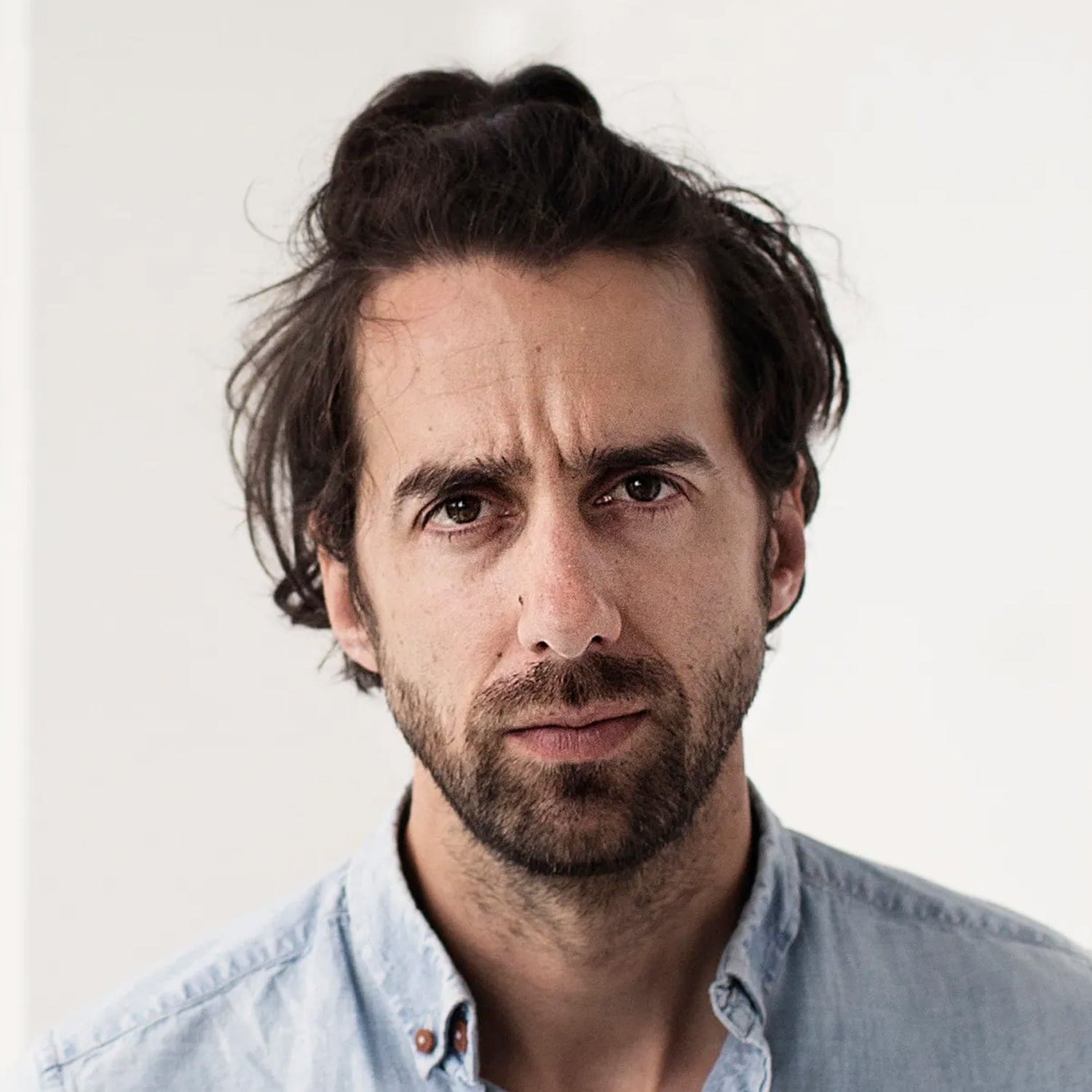
Jamie Bartlett is a journalist, podcast host, and author of How to Talk to AI, The People vs Tech, and Radicals.
Love the show? Help others find it by reviewing it on your favourite podcast app. We also welcome your ideas and feedback. Email us at podcasts@comment.org. Thanks for your support.
In Praise of Lev Gillet (1893–1980).
SITE DESIGN AND DEVELOPMENT BY POLYMATH