


In Praise of Lev Gillet (1893–1980).



What would it mean to fear rightly—to both fear God and “fear not,” to both validate the terror that fits with traumatic events and quell the fright and learn to regulate? For Kutter Callaway, there are deep theological and psychological opportunities available in the horror film genre. To some, that might seem rather inconsistent. But in his new book, Be Afraid: What Horror Reveals About Facing the Darkness, Callaway makes the case that Christians need to be able to face and integrate the undeniable horrors that haunt us.
In this conversation with Mark Labberton, Callaway reflects on why the Christian life might be more about discipling fear than eliminating it, how the best horror films can help people integrate trauma rather than defeat it, and why our deepest dread may be of living as vulnerable creatures more than of death itself.
They compare Mark’s deliberate encounters with severe poverty around the world, reconsider the terrifying elements of the Christmas narrative, open up the dark and neglected corners of Scripture, and ask whether horror trivializes the powers and principalities or exposes how we are implicated in them.
Mark Labberton: I’m so thankful for an opportunity to have Dr. Kutter Callaway as our guest on Conversing today. Not only because he’s a very insightful, creative, and interesting voice, but specifically because of a book he’s recently written, which will be the focus of our conversation, called Be Afraid: What Horror Reveals About Facing the Darkness. For Halloween week, when this is going to be released, it just seems all too apropos that the two should come together.
Dr. Callaway—Kutter—is the William K. Brehm Chair of Worship, Theology, and the Arts at Fuller Theological Seminary, where he is also the associate dean of the Center for Advanced Theological Studies and associate professor of theology and culture. He’s actively engaged in so many different topics that connect theology and culture, particularly film, television, and online media. But to give you a sense of the range of his thinking, let me give you a few of his other titles. One is entitled Techno-Sapiens in a Networked Era: Becoming Digital Neighbors. Another is The Aesthetics of Atheism: Theology and Imagination in Contemporary Culture. And yet another is Deep Focus: Film and Theology in Dialogue.
Kutter Callaway, what a gift it is to have you today on Conversing.
Kutter Callaway: Well, thank you for having me. It’s a gift to be here.
Mark Labberton: You know, you and I have known one another for a number of years through our time together at the same time at Fuller. And I just often admired the provocative personality, the eccentricities, the brilliance and insight, the explosion of ideas and passions. And one of those along the way I’ve known has been the topic of the book we’re going to discuss, about fear.
I want to just start by saying that I am in the category of those who do not go to horror films. And I feel as though I have quite a lot of fear that I can just cope with and excite myself at all times. I think your book makes some really interesting arguments for horror films, for people specifically like me. And so I want to come to that in a moment.
Let’s frame this conversation under the title of Be Afraid. Under the rubric, 365 times in the Bible—one for every day—it says basically “fear not” or “do not be afraid.” So knowing that, as you do, of course, along comes Kutter, who writes a book called Be Afraid. So let’s just start by placing what you’re saying in light of what you understand to be this drumbeat of the Bible about “do not be afraid.” What does that mean to you in the Bible? And then we’ll come to the book itself.
Kutter Callaway: Yeah, it’s good. So two things. One is there is this interesting—even the “fear not” thing, it’s not true. So it’s closer to seventy to a hundred times, not 300 or 600 times, which is interesting, that in our sort of discourse about fear in the Bible, that it’s become this thing. That’s like a common—like, just a commonly held thing. It’s 365 times, right? And so one of the discoveries I made along the way was that actually it’s way less than that. Still significant, though, right? That that’s a part of it.
And as I kind of, you know, sort of secondarily went into that part of Scripture and looking at where and when that’s even said, I found it pretty interesting that it’s almost always in a situation where you, of course, should be afraid, like, because a terrifying thing is happening. And what the command is, is far less “do not have fear,” but rather, “This is a very fear-inducing situation, but you can trust the person who’s here, the person who’s delivering the message. I’m not the one you should be afraid of, even though obviously this is a very fearful thing,” right? And so the whole thing of, like, “fear not” to say that humans ought not to fear is a little bit, I think, of a misinterpretation of all those things.
But there’s also—I went into this project more with the passage of, like, “perfect love casts out fear.” That, in fact, that should be the goal, the object, the telos of any way that we grapple with our fears. And partly, I think, maybe my provocative nature, but partly just my own kind of exposure therapy that was this book—somewhere along the way, I also was like, “But, you know, there’s also a really strong undercurrent of Scripture that is ‘fear of the Lord is the beginning of wisdom.'” And as I started kind of putting all these sort of pieces together, navigating my own just personal fears and anxieties, my own hesitations with the horror genre itself, and what I was experiencing as I started consuming more and more of it, was thinking through—
I thought going into this project—and we can talk more about the origin of it or whatnot—but I thought I would eventually sort of eliminate fear, meaning the more I expose myself, the more I would just go, “Oh, it’s a silly trope,” or “I’m not—it doesn’t scare me anymore.” That has not happened. And so it’s—I haven’t overcome or eliminated fear. I haven’t cast out fear. But in this interesting way, I’ve helped myself, maybe others, disciple my fears in a way that actually, I think, directs them more toward the one in whom all our hopes and fears are met—and, you know, “in thee tonight,” that sort of phrase.
And I think the most charitable, positive way I can think about it is that the command of “fear not” is not so much “eliminate, overcome, you know, get rid of fear in your life.” It’s rather, where are you actually directing those fears? And how do you go about in your life discipling them in a way that you could rightly say they’re not exploited and misdirected and leveraged towards some other end, but are actually pointed in a direction that can be transformative?
Mark Labberton: So in that sense, there’s something both strengthening potentially to our discipleship and strengthening to our own psychological mental health to discipline fear in the way that you’re describing. And part of the purpose of the book is to try to provoke that and explore how that can occur. So, what you mentioned a moment ago—the origins of the book. Talk us through that. Where did it all start for you?
Kutter Callaway: Yeah, so I—you know, I’m a classic—like, I’m Dug the dog in Up, right? So I go, “Oh, squirrel! Squirrel!” right? So things catch my interest. And in the last ten to fifteen years, the kind of two things that I’ve been interested in—one is, like, a theological engagement with contemporary popular culture, usually film, television, that sort of thing. The other is this sort of side project that people laugh at, that I’ve got multiple degrees in psychological science. So the way—my joke is—and now, I’m not a clinician. I’m not a therapist. I experiment, though. I, like, study humans, and I go, “That’s because I find humans fascinating, but I don’t want to help them.”
That’s not really true. I want to help them in a different way. And so those two overlapping things have brought me to go, like, it’s kind of a theological, psychological engagement with the visions, the stories, the narratives that shape our collective and individual imaginations. That sounds great, right?
Okay, well, a number of years ago, I met a handful of different people here in LA—you throw a rock, you hit ten people in the industry—and a number of them were making horror movies or TV shows. And then a significant number of those were Christians, people who were doing it as faith. I mean, they weren’t necessarily—they’re not, quote unquote, “Christian filmmakers,” but they are Christian artists who are making horror films and would, to a person, tell me that it’s like, “This is the most theological genre that exists. And part of the reason I’m in it is because of that.” I’m like, “Okay, well, you know.” I’m still pretty hesitant. You know, they give me nightmares, keep me up at night. But I had that in the back of my mind.
And then COVID hit. And what’s interesting about COVID is, coming out of the lockdowns, if anybody remembers, like, the theatres—the actual theatres—were almost bankrupt. They couldn’t get audiences to come. And it was a few, like, tentpole horror films that actually saved most of the major theatres, which is fascinating to say, by then—you know, that was a very fear-inducing time. And it makes me a little—well, just even think about it. And some of that fear had to do with gathering humans together—what might happen if we get together. And they weren’t compelled to go see—like, Christopher Nolan had a major movie that came out in, like, ’21, Tenet. Nobody saw it in the movie theatres, right? But there was something about getting together with other humans in real time and space to be scared together that was compelling. And that, I was like, “Ooh, that’s interesting.”
And then since then, the share of horror in the box office has just grown incrementally to where now it’s close to, like, 20 percent of all ticket sales are horror. I was at the risk of losing my expertise card—to say my expertise is the theology and psychology of contemporary North American media, and I’m going to, what, ignore 20 percent of what everyone is watching? I just felt—like, I felt like a fraud. And so I said, “Okay, I got to figure out what’s up with this,” because I personally struggle with it. But so many seem to—well, some actually enjoy it. Some do it sort of white-knuckling. They wouldn’t say “enjoy,” but they do it anyway. It’s important to them. And I just, as sort of, like, an anthropologist, said, “I’m going to do a deep dive and just see what this is about.”
And I’ll also confess, you know, as they say, all research is me-search. And so I also thought it would be an interesting way for me to really kind of explore, in some ways, why am I so affected by a scary movie? And why does that sort of ripple out into these other underlying fears that I have in my life? Because it seems like they’re actually activating something that’s live already. And so it was a little bit of a, you know, personal self-discovery—my Eat Pray Love tour of the horror genre, right? And that’s how the book emerged.
Mark Labberton: Wow. So as you were doing this, what were some of the big surprises along the way? I mean, there must have been times when there were breakthroughs or reorientations that occurred.
Kutter Callaway: Well, I’d say one sort of just general one—and again, you go, “How did you not see that?” You know, it seems so silly, but I’ll admit it. I’m fine to be seen as dumb or whatever. But there’s multiple genres within horror, right? Of course there are. And my writing it off was really a writing off of an entire constellation of types of films, really on the basis of a very small kind of horror. And so that—you know, sort of like, “Well, duh, there’s different kinds.” But I discovered even my own personal sort of sensibilities—what does or doesn’t scare me—it really is dependent upon the very particular film, filmmaker, subgenre, et cetera.
But I also found that that’s actually the case for a lot of people. Even—you know, I went to South by Southwest, and all I did was go to the midnight screenings of their horror stuff. And so I stood in line with the uber fans, right, and would just talk to them, like, you know. And I found really interesting, even there, these people that are up at 2:00 a.m. in Austin watching this—they didn’t like certain subgenres. Like, “Oh, I love this supernatural stuff, but do not—I will not watch a slasher.” And I’m like, “Oh, okay.” So that made me realize there’s quite a bit of a plurality of the different kinds of, I think, fears and anxieties people have, the different kinds of narratives that draw them in. And then to say, like, I’m going to start, both as a film critic but then as a Christian, thinking far more sort of particularly about these, in a way that my sort of generic approach—it was a—what do you call it? A rough instrument, right? A blunt instrument. So that was one.
The other, I think, maybe aha for me—they sort of go hand in glove—but especially more recently, in the last, say, five to ten years, a lot of what I would call the best of horror is really engaging in both individual and inherited trauma. The narratives themselves tap into it, and/or it’s a thing that exists prior to the narrative proper but, like, haunts the whole thing. And the amount of—and sometimes, like, let’s say it’s a supernatural horror, even the supernaturalism is sort of, like, embodies this kind of trauma and gives it shape and form in a different way than some others. But it’s really fascinating to me to go, “Ooh, these artists and these audiences are, I think, in some ways, desperately searching for some space to, like, navigate the trauma of their lives.” That something about seeing that on screen, something about being there is—I don’t even say cathartic, but it’s—maybe that’s part of it, but it’s more just, maybe, integrative.
And when I say integrative, there’s one film that really stuck out, and this was before I actually committed to do the exposure therapy. I was at Sundance a number of years ago, and I should have known better, but you don’t get much of a description of those films because they’re brand new. And I went and saw this movie called The Babadook. And it was terrifying. And I didn’t know it was going to be a horror movie, but it was. But the interesting thing about that movie—Australian female filmmaker—and it’s really an exploration of this woman’s trauma that is haunting her. And the Babadook is like a boogeyman kind of a figure. And rather than defeat it, rather than, you know, be consumed by whatever—the film ends, in part because her son, you know, like, calls attention to how the trauma is affecting her and him, right? It’s, like, intergenerational. It’s fascinating. She basically learns to live with it by having it in her basement. And it’s still there. It’s still haunting her. But rather than terrorizing her, she’s, like, integrated it into her life.
And I was like, “What am I watching?” First off, I was scared to death. But it gave me, like, this vision of—back to that discipling our fears. Rarely can we eliminate the trauma. Rarely can we eliminate the effects of that. But there are ways we can live with it, and not even make sense of it, but, yeah, integrate it, as if it’s the monster under our basement that we almost nurture, in a sense. And that was—I did not expect that at all.
Mark Labberton: So it’s almost like keep your enemies close.
Kutter Callaway: Yeah, yeah, yeah, yeah.
Mark Labberton: I think one of the things that’s so fascinating about the book, which I really appreciated being able to read—and I did imagine you in either theatres or in your own home watching countless numbers of films that are cited in the book. But I just kept thinking, you know, one of the most remarkable things about human beings is our self-conscious vulnerability. It’s not just our vulnerability. There’s no part of the natural world which isn’t in some way vulnerable. We have an acute vulnerability, but we also have an acute self-consciousness about our vulnerability in a way that—at least I’m not aware—that it lives in quite the same space for the rest of the animal world.
So I’m just curious. There’s things about horror that name what is. There’s things about horror that create what isn’t, but actually almost enlarge and intensify that sense of vulnerability. There’s things in horror that end up awakening dreams and ideas that a person who might already carry fears hasn’t even imagined. And now they have a whole universe of additional fears that have now been introduced. I’m just curious if you can comment on vulnerability and this exposure therapy that you’re describing, and how horror can become, in that sense, quasi-therapeutic or quasi-influential in a really constructive way.
Kutter Callaway: Yeah. You know, I don’t know if this is an orthodox Christian response, so who knows. But maybe it is. I think it actually is. And I’ll, you know, post hoc justify it if it sounds weird. But the fact is we simply are fragile, vulnerable creatures who are, like—human life is terminal. And a lot of psych research has gone into—whether it’s, like, terror management theory or whatever—that, like, most of our psychologizing or thinking or reflection is designed as a self-preservation technique, which requires us to kind of avoid the fact of how deeply vulnerable we really are. And so, you know, that we aren’t at risk of dying at every moment of every day. When I get in my car, I don’t have a 25 percent chance of somebody hitting, you know.
And so there’s something about what it means to be human that we both can be self-conscious, but because that idea is so paralyzing, we actually have to build in mechanisms to avoid it altogether. And there’s good and bad for that, right? Like, we would be paralyzed if we thought about it all the time. At the same time, we run the risk. And I would say, then, when you add to that, let’s say, a Christian perspective, which rightly says, right, we have a God who cares for the vulnerable, who protects us, a God who is somehow working all these things out for our good, whatever that means, you know—and there’s a tendency, I think, to, in that, quite quickly get to, “Ah, then there’s nothing to worry about,” right? When, in fact, there are all sorts of evils and traumas and, like—that we really are vulnerable.
And so I think when it comes to vulnerability—and this was, I do think, part of my own personal hesitation with horror, is that is always how it made me feel. Like, it put me in a situation where I couldn’t deny that, in fact, at any moment, something could happen, whatever. Now, you can conjure up all sorts of things, and that gets—it’s a whole sort of reverse thing. But that moment of going, what does it mean to actually be vulnerable? What does it mean to know that you could lose your life? You could have something violent happen to you. You know, you could—all these things could happen. What then do you do with that?
And I think that’s the best of horror, but not by itself—we can maybe talk about that. Like, just the movie itself doesn’t necessarily do that. But for me, it’s going, how do I then become curious about why I do or don’t resist that? What is it about when I’m made aware of that intense vulnerability? Why do I run away from it? Why do I revel in it? What is happening in me that that’s going on? Often the case is I ignore it or I just laugh it off or I run away from it. And sitting with it and thinking through, what does that mean? And then what do I do next, right? Okay, given that vulnerability, what’s the next step? I think that’s what gets missed, whether it’s in Christian circles or just psychological circles. And it’s why, for me, having some intentional time—now, it doesn’t have to be in a horror film, but having some intentional time to go, when and where do I reflect on my vulnerability and my vulnerabilities and how I might navigate those?
So I don’t know if that’s quite answering your question, but it does—you know, most people say horror is about death, right? Like, “Oh, I’m afraid of death.” Yes, but actually, I think we’re afraid of living as vulnerable creatures before it is that we’re afraid of death. Death’s, like, an outcome of one of those vulnerabilities, but I don’t think that’s the driving fear. It’s the “Hmm, I’m not as secure as I thought I was.”
Mark Labberton: So for you personally, having your hesitancies about horror and being attracted to it both—is that not fair?
Kutter Callaway: I think that was true. It’s one of these—you know, you’re like, “Oh,” looking through—you’re flipping me off.
Mark Labberton: Exactly. Then you have your hyperexposure. What were—besides the intellectual breakthroughs, what were the emotional impacts or influences or experiences that you would describe came out of this?
Kutter Callaway: So one kind of—well, there may be a couple of things. One, I walked away going—this is a silly answer—I’m still as creeped out by dolls as I’ve ever been. And actually, just yesterday or the day before, my younger sister—she had this classic story when she was little. She’s at a gymnastics class, and a friend of hers just told her about this movie called Child’s Play. And she never saw it, but it terrified her. And she was forever terrified of Chucky. Well, just yesterday she texted—I mean, she’s a forty-five-year-old woman, and she’s a nurse and does ER nursing. Like, she’s seen all sorts of crazy things. But she was sick at home, and she’s like—and she saw Chucky or whatever, Child’s Play. She’s like, “I’m going to watch it. I’m not going to let that, you know—” And so she texted her whole family, like, “I finally did it.” And she’s like, “And I laughed the whole time because it’s such a ridiculous movie,” right? But her whole life has, you know, kept it. And I was like, “Well, good for you. I’m still terrified of Chucky.” You know, that’s okay.
So, right, and acknowledging that—whether childish or not—that’s in me. That’s, like, a part of me. There’s something that is there. Like I said, I haven’t overcome it. I don’t know if I could, like, rationally articulate, “Here’s the intellectual reason why.” But, you know, that’s there.
The other thing, though—and I didn’t—this became sort of one of those, like, rabbit trails. And for anyone who knows the name or has seen the film—so Scott Derrickson has become a friend. You’ve had him, I think, on Conversing, too. He did a film early on—his major breakthrough was The Exorcism of Emily Rose, which was based on a real-life story of a woman named, I think, Anneliese Michel. And his telling of it is about sort of his dark night of the soul of doing the research for that movie, right? And I’m like, “Wow, really?” I’m like, “Hmm, I don’t think it would affect me like that. Why don’t I do it?” So, like, I went in, and I just, like, listened to all of the audio files. I did all this stuff. And at the same time, I went and got connected to the main exorcist that is on another podcast—for people interested—called The Exorcist Files, and wanted to interview him. I was, like, on the verge of going, like, “Hey, would you allow me to sit, be a fly on the wall for your next exorcism?” Like, all this—like, I was—it was deep. I went deep.
I wasn’t allowed, first off. You’re not allowed to just be a spectator, so that makes sense. But it was at that point where I, like, kind of realized—and I think my wife even said something about how this was affecting me—and it became more than just me going, watching horror movies. It was me sort of, like, deep diving into these, like, actual evils in the world, and the—I want to say the, like, the human cost that I was exposing myself to that really did affect me. I think now, with some space, I’ve sort of—my head is now above the clouds a little bit. But I’ll even acknowledge, like, it, like, emotionally, spiritually, like, got to me in a way that I wasn’t anticipating and hadn’t prepared for. I think it made the overall experience better, like, the sort of depth of that. It was pretty profound, but it definitely affected me emotionally.
What I don’t know—of course, my wife thinks it’s just because of the movies I’m watching. I’m like, “No, no, no, it’s not just the movie.” I almost kind of come back and go, like, now when I just watch a movie, I’m like, “Oh, this doesn’t compare anything to the, you know, to the real world,” which is somewhat true, right? Like, it’s somewhat true. And so my emotional response is, like, there are some horrors in the world that—it’s like things are not as they ought to be. And I don’t know if I’m always in proximity to those things in a way that allows me to appreciate their depth.
One example—they just announced it’s not going to happen, thank God—but that we were going to broadcast an execution of somebody. I’m going, there’s no world, real or imagined, where that could be good for anyone. That it costs us something to be exposed to that, and you can’t intellectualize it. You can’t—it just, it affects you at the core of who you are, and you don’t walk away the same person. And so I think that’s not—and it’s not related to necessarily the films, but it is to that underlying, like, human condition that I was exposing myself to. And, yeah, made me really, I think, have a lot more sympathy, empathy for those—for example, for first responders, who encounter things on a daily basis, and the kind of emotional burden they bear is something that most of us laypeople just don’t ever have that exposure to.
Mark Labberton: Right, right. Well, I think those are very helpful and rich insights, Kutter, actually, because I do think that, for example, in your comment about “I just didn’t—I wasn’t—I hadn’t prepared myself for the impact of this exposure,” I’m wondering how much that’s true compared to, “No, it’s just that the experience was so much more intense than I imagined that it is as though I was not prepared.” I was prepared at one level. It just turned out to be a whole lot more demanding or upsetting.
Kutter Callaway: Yeah, I think that’s probably right, because it’s like anything that’s a sort of—what I might call a limit experience, where—I mean, you could go something of, like, becoming a parent is a limit experience. You could read all the books you want. You could prepare yourself rightly. You’re not prepared. You’re just not prepared. No one is. But also, on the flip side, there’s no preparation for a parent losing a child, right? Like, that’s—there is no preparation that will allow you for it not to just completely lay waste to who you are. Like, that’s a—and so I think that’s right as well. And then in the aftermath, you go, “Oh, I wasn’t prepared.” But you’re like, “What could you have done? What could you have done?”
Mark Labberton: Yeah, that’s really interesting. Yeah, I think that’s right. I know that at one stage I was having opportunities to travel to a whole variety of different places in the world, and one of the things that I deliberately did was to find in these contexts somebody who could be a—I’m trying to think what the right word would be—the kind of guide, I suppose, who could take me to some of the worst poverty in that particular region of the world. And it meant that in Asia and Africa and Latin America and places in the United States and so forth, that I was really—to be in this same way that we’ve been talking about—sort of hyperexposed. And I’ve often asked myself, what was I doing when I was doing that? It was partly that I knew that I didn’t live in those circumstances and that I wanted to at least—just in that superficial sense of trying to be a careful, meaningful, thoughtful observer, at least—not with a screen in front of me, but with nothing in front of me except the story of the person or the community that I was coming to see, and have interpreted to me by the person I was with.
And it became—as I was reading your book, I was reminded of these experiences, because for me, those were experiences of exposure to real human horror, where the circumstances have also been normed. I mean, not walking around saying, “I’m living in horror,” but by any normal human standard of some kind of generic sense of well-being, their circumstances were horrific. That would certainly be the right way of putting it. And I do think it really altered me in a very, very important way. So I’m wondering, when you hear that description, if that is a parallel to this exposure through horror films.
Kutter Callaway: I would say yes. I don’t—as you said, the sort of mediated version, of course, is different. But, you know, interesting about human psychology—it is different, we all know. At the same time, in many ways, the emotional, psychological experiences to yourself, like, you can’t tell the difference. Like, you’re scared, you’re just scared. When you’re, you know, affected, you’re just affected, right? And so, I think, yes.
The interesting thing, I guess, that I would wonder—maybe it’d be a question for you—from that: so you have some intentionality. You go toward it. So that’s one thing. If you had just sort of unintentionally happened upon these different locales, it’d be interesting to know what differences that would make. But then afterwards, in terms of, like, the community of wisdom that you are involved in—and one thing I’ve kind of learned is, because of how affecting that is, I am inadequate by myself to know how to—what to do then, right? Like, in response to that. And so I actually need—and I would say this with film in particular, but then any others—of, like, now I need people in my life that are aware of what I’m doing, aware of how this is going, and helping me kind of shape and respond. How can I be respondable toward this as the gift that it is, right? Like, it is a gift that can be squandered, can be misunderstood.
And so I think there’s a lot of parallel there. It is the—you know, like, what’s the reverse—worst-case version of what you’re describing is the way that, you know, now, like, US missions work talks about—what is it?—it’s like poverty porn or something like that, where you get something sort of a fraudulent version of the empathy or the whatever, and really you’ve just now exploited this group of people for your own sense. And I think that’s what I always fear about myself—that a fear, right?—that I’m going to do that. And, like, it’s like—and so it’d be interesting to know how you avoided that. Was there a—were there a group of people or something else that you did to kind of manage or navigate the aftereffects of that exposure?
Mark Labberton: Yeah, there were. Part of it was having this guide that I would find that would be a wise interpreter of what was going on—both helping me to see the horror even more clearly, because he—he or she, usually he—was fully aware of what was the depth of what was really going on, that might not even be visible even when you think you’re paying attention to it. You’re really not seeing.
I was very aware of not wanting to be a voyeur. I was not trying to capture it or to use it in some way, like I wanted to exploit it for the sake of telling a story or something like that. It was more about, I want my heart and mind to be affected by a graphic, real exposure to the reality of human need. I mean, I remember the very first time landing in an airport in India and suddenly images that were extremely familiar to me, because we all grew up with these images of begging children. In this case, it was suddenly like, no, these are actually very specific real children that are standing right in front of me in this moment. And they’re caught up in circumstances that they have no control over.
I think that was the other thing. I was very aware that part of my own privilege was that I was in control of what I was being exposed to—which technically is also true of a viewer of horror. I mean, you can get up and turn it off or walk out of the theatre or whatever you want to do, if it’s just either too much or undesirable to you. But in this case, it was more that I could manage my exposure by asking further questions. And if the guide really took me at my word, then the experience was much more difficult than if he or she thought I was sort of meaning it, but not really meaning it.
And so there were times when there were images and stories that emerged for me that have affected my whole life that I have almost never talked about. And which—I mean, I wouldn’t mind talking about them, but I think in my own heart, one of the reasons why I don’t tend to talk about them is that I don’t want to exploit this. This was, like, a moment of raw human exposure for a person that I did not know, in circumstances that they couldn’t control, and that I don’t need to, quote, “make anything of,” except that it has helped me live more humanly.
So I guess maybe coming toward the end of the book, you make some really, really interesting observations about the way that horror can help us embrace our humanity. That’s through the book, but it certainly comes to the fore toward the end—and toward the presence of the Christian gospel in a world of genuine terror and fear, where there are really serious dangers. I wonder if you could just take us toward those—some of those reflections.
Kutter Callaway: Well, you know, spoiler alert: the book ends in Christmas, which you’re like, “Wait, what?” And part of the reason I did that is, one, me just—you know, kind of like with any of these experiences, you then have this different lens through which you see all of the world, but then in particular Scripture, for me. And I found it interesting that in this—you know, culturally, in Western culture, we have, you know, like, A Christmas Carol is a ghost story, right? It’s one of the classic Christmas tales, and, like, “Well, wait, that’s—” And he’s really haunted. Like, these are hauntings. This is terrible. You know, why is this a Christmas story? Yes.
And so I kind of spin out from there of, you know, even something we would think of as joyful and, you know, whatever—Advent and all this sort of stuff—is shot through. And, in fact, the conditions upon which it happened are the horrors of reality—the horrors of political, you know, power in the worst kind of ways, religious sort of blasphemies, supernatural possessions and oppression, violence, horrible violence that kind of culminates in, you know, a man brutalized on a mass execution device at the hands of the state. All the things you would imagine are horror are right there. And even Christmas begins with, like, the slaughter of children. And it’s like, what is happening that now we have—you know, we light our candles and we go to our Advent services, and that’s, you know—the darkness, we’ll see the light. Okay.
And I should say the light does come. Like, that happens. Easter happens. But as I kind of went back to say, man, if the God of the Christian tradition is, in fact, the God around which all of reality turns, it’s interesting to me that the crux, literally, of that story is possibly one of the most horrific things that we could imagine. And then as you start using that as a lens to look at the rest of Scripture, all of a sudden you go, “Wow, these are some dark, violent, chaotic texts that we’re called not just to know about, that they happened, but to meditate on, to reflect on, as God’s Word to us.” And if that’s the case, it’s back to, why would you go watch a horror film? Why would you choose that? You know, like, what’s happening?
But, in fact, that same sort of—to your point—privilege of control is what we exert over that text. I don’t know any lectionary—now, I don’t—I’m a Baptist, so we don’t even know what a lectionary is. But whether it’s a lectionary or a selective text, like, how many sermons on Judges do we have? Not a lot, right? And we start conveniently overlooking, sort of justifying, ignoring entirely this corpus of texts that I think speak directly to the anxieties, the fears, the traumas, the chaos that people, including ourselves, are encountering every day.
—consciously anxious when I drop my kids off at school, because I could get the call that there’s been a shooting; that I have to worry about ecological disaster here in LA. You know, like, we’re at the two-year anniversary of the worst forest fire—you know, that I—like, these are things that are just daily occurrences. That—back to—I’m part of a nation now that is going to broadcast executions. Like, what world are we living in? Well, we’re living in this broken, bent, out-of-shape world that our Scripture speaks to.
And if we can’t—I think, and by “we,” I mean if Christians can’t allow the text to breathe in that way, I just think it’s a huge missed opportunity, because, Christian or not, people are desperate for those. And that’s where I go—I don’t want to read too much into it, but there’s a reason people are consuming more horror than ever before. And we have—if you—and I keep saying this on any interview or anything. It’s like, if you want a story, if you want a God that has seen and experienced the depths of your trauma and your horror and your chaos, boy, have I got a story for you. And that’s kind of my pitch, I think, to other Christians who might read this and have hesitations, but also to a hurting world, of saying, man, we’ve got a really great horror story here. And it’s one, like, you probably haven’t ever read before.
Mark Labberton: Right. No, I think one of the compelling things about the book is the way that you are bringing these various themes together, and so deliberately, of course, exposing the violence of the Bible and the things that happen inside the Scriptures, which often, as you say, get sidelined or ignored altogether. I’m curious, in fact, in that vein, how has the book so far been received? What are you learning? What are surprises? Whatever it might be.
Kutter Callaway: Well, so you can imagine the book like this: it has, like, a target audience. And most people would think, “Oh, it’s for horror fans,” right? Like, “Oh, it’s that niche.” And it is. Like, I really do hope people who enjoy it—there’s a bit of a, what I would call—and I find myself—you probably do, too, as well—but in scenarios where people are asking for permission. Like, they, for some reason, think because I have this title of professional theologian that what I think matters. But, you know. And this would be artists, like Christian artists, maybe just Christian fans. And it’s like they’re kind of going, “Oh, I really enjoy this, and I get a lot out of it. And am I allowed to?” And I’m kind of going, “Okay.” For them, permission granted, you know, under these conditions. Here you go.
But the other audience that I at least hoped for was essentially my mom. My mom is a lovely woman, you know, getting almost eighty, would never watch any of these movies ever. She loves her son and is really open to, like, who her son is, and, like, going, like, “I want to understand him and what makes him tick,” and even other people like me. And I wanted to be able to write—and she listened to the podcast upon which the book is based. And there are times where she’s like, “I can’t even—” and we did this on purpose; we made it sound scary also. And she’s like, “I can’t go there. Can’t do it. Sorry. But I’m still interested in what you have to say.”
That group of people—they’re the hardest to get to, like, crack the book open. But once they do, the response has been really, like, surprising. I think “surprising” is the word. Maybe moving. I’ve been really moved by it, because it’s not just, like, “Oh, see, there’s some value in horror. Like, these horror fans aren’t a bunch of nut jobs” or something like that. But usually it’s—and I think the reason is because there’s not a lot of space in Christian circles to really talk about the fears that drive most of our life. And this just happens to be an occasion or an opportunity. And a lot of these people go in going, like—and actually, I had one person, she’s like, “I invited you on because I wanted to argue with you about your book, and I hadn’t read it yet.” You know, like, I’m like, “No, this is not—” you know. And she’s like, “But then I read the book, and I think it’s great.” And, you know, and their stories are all really about the way that it kind of, like, touched them personally. And that’s something I hadn’t really anticipated—that it would connect with people on that.
I do think—maybe this is good or bad—back to the vulnerability thing, I think one of the reasons it’s generated that response—and I don’t know if you caught some of those moments—but I ended up probably being way more vulnerable as an author in this book than probably most of any of my other books, which are all mostly academic, you know. And I’m—you know, there’s tons of problems. Like, “You’re oversharing, Kutter,” you know, like, that’s not—but I do think part of the result of me going through that, and having that sense of vulnerability, like, thrust on me over and over and over, I think left me in a space where it’s like, I think I owe it to the reader, to myself, to whatever, to kind of be honest in terms of where I’m at with respect to this. And I think that’s what might be resonating with people more than the horror genre or anything else. It’s, how can we actually talk about our real fears, and how we may or may not find those fears brought up into this larger story of what God’s doing in the world? And so that’s been really great. I’ve really appreciated it.
Mark Labberton: I’m not surprised to hear that, actually, because I do think one of the things that is strong about the book is that, if the theme really is how to become more human—which is at least one way of describing the book’s purpose—if you had not been present as a human, and instead just had been present, for example, as a scholar or as an aficionado of a certain film genre, without actually having yourself in the story, it wouldn’t seem real. It would be two-dimensional. But I think what you say about yourself and the way it integrates is because that is how people are going to read this book. It’s naturally going to raise questions, issues, triggers, whatever, that even either drives them toward horror or away from horror, but in any case is grounded in an acknowledgement of human fear. And that is a topic that is evergreen in our lives and in the world. And we happen to live in an era that I happen to think could well be thought of historically as the era of fear, because it is so thickly present and pervasively present. So I think this idea of increasing film sales is not surprising to me, because it’s so palpably present to begin with. And then to have this exposure and venting in a certain way—catharsis, whatever it is you say it might be.
Kutter, I think this book is really a gift. And let me just close with one theological question, which is, you know, there will be people who will read this book who will feel as though you are deliberately exposing yourself to what the Scriptures would call powers and principalities, and that you may be trivializing them, or that horror trivializes them. How do you respond to that?
Kutter Callaway: I would say that some horror does. And I don’t want to, like, pretend—or I’m not even defending it, right? Like, some just blatantly does. And that’s similar to—like, I at least try, as best I can with cultural criticism, to be consistent. And so I go—as it is with horror, so it is with romantic comedies or biopics or whatever, you know. Like, yeah, some, like, treats relationship as, like, superficial to the point of, like, it’s a distortion. And having that populate our imagination might not actually be good for you, right? And the same can be said for horror. So there is that sort of subsection.
However, I think there are—I mean, the classic horror film of, you know, Friedkin’s The Exorcist is a really great example of this. That movie takes evil seriously. That movie takes powers and principalities quite seriously, and in doing so actually charts a Christian response to it in a way that is deeply terrifying and deeply compelling, and about as on-the-nose of a Christian sort of gospel proclamation as you could imagine. And so there are films like that that I think actually take it seriously. And, you know, some of my story before, of following the rabbit trail to where—what are the real-world examples that these stories were based off of—I think suggests that it isn’t being flippant or superficial with it, but it’s actually taking it very seriously.
I would also say that—kind of to your point of having the guide, you know, walk you through and say, “If you were here by yourself, you would see maybe a certain set of horrors. But as your guide, I’m going to open your eyes to what’s really terrifying about this.” And I think if it’s working best, the book will do that for folks.
And specifically as it concerns powers and principalities, some of the best horror—the ones I’m most drawn to—do a couple of things. One is they name the monster or the threat or the whatever that’s, you know, threatening the people or the things. A lot of times—I don’t want to say always, but many times—that monster is not something that is just born into the world, but it was created. It is the result, the symptom, of a disease that’s prior to it and actually quite invisible, because it exists in the structures of power that create the conditions for our life and then also actually generate those monstrosities. And that’s—I mean, the best horror does that. It calls attention.
I mean, a very easy one, if people want to dip their toe into the genre, is the series Stranger Things. And I think it does this excellently, where you have a bunch of young kids who think they’re beating or trying to defeat this creature called the Demogorgon. And it turns out, actually, it is the creation or the product of technological sort of overreach, government overreach, parental—you know, like, all the institutions that should be protecting and caring about these kids are actually the powers and principalities that are overreaching, you know, trying to accumulate more and more power, and in doing so create these monsters. So hopefully the book—and when you go into sort of the films that are dealing with powers and principalities—the best horror does that.
The best horror also—and this is where I think it’s even more important—takes it seriously insofar as it doesn’t let us off the hook as the viewer. Any sort of literature—I think most stories, most media, from a theological perspective, when they fail theologically, it’s actually downstream from an artistic failure first. And I think the most artistically credible and worthy horror films, or any films, are those that present us with evil as a real thing, but they actually almost always implicate us in the evil. And they don’t let us so clearly go, “Oh, if we just destroyed those people over there doing bad, evil things, everything would be good.” It actually invites us into recognizing, like, “Oh, we’re a part of those powers and principalities. I have generated this sort of monstrous—I, too, become the monster.” And so for me, when it works at best—again, there’s plenty of examples where it doesn’t—it invites us to reflect on not just how we’re dealing with these powers and principalities, but the ways that we are co-opted in the service of them. And often we need to sort of, like, disrupt or upend that system if we actually want to do something about the evil in the story or our own lives.
Mark Labberton: Yes. Kutter, I think you are a gift. You’re a gift to me. You’re a gift to Fuller. You’re a gift to the world. I think this book is another example of why. So I just really commend it to listeners, and I hope that they will explore the book. Their choice about whether they’re going to explore horror or not is entirely, of course, a different matter. But it’s a tremendously good read, and I found it very valuable. So thank you so much for this time and for the careful work that you did in bringing it to pass. Thanks, Kutter.
Kutter Callaway: Thank you.

Mark Labberton hosts the Conversing podcast and is the Clifford L. Penner Presidential Chair Emeritus and Professor Emeritus of Preaching at Fuller Seminary.
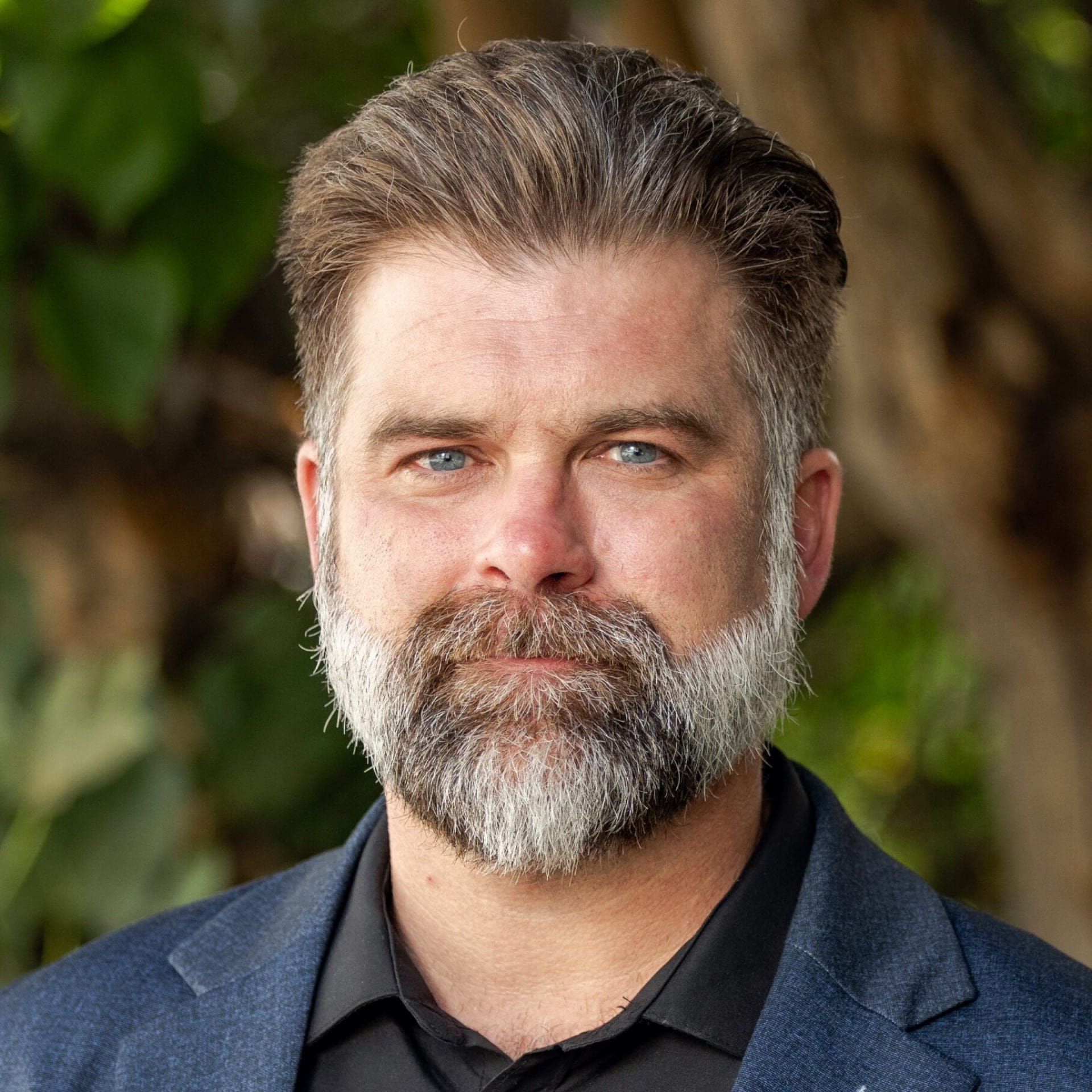
Kutter Callaway is the William K. Brehm Chair of Worship, Theology, and the Arts and associate dean of the Center for Advanced Theological Studies at Fuller Theological Seminary, and the author of Be Afraid: What Horror Reveals About Facing the Darkness.
Love the show? Help others find it by reviewing it on your favourite podcast app. We also welcome your ideas and feedback. Email us at conversing@comment.org. Thanks for your support.
In Praise of Lev Gillet (1893–1980).
SITE DESIGN AND DEVELOPMENT BY POLYMATH