


The Russian roots of Silicon Valley’s vision for biological immortality.


In our current economic reality, capital outruns governance. Networks displace institutions. Technology concentrates decision-making in fewer hands while distributing surveillance to all. If power is something to steward and not only to check, what would it mean to wield it for human flourishing rather than extraction?
Cardus CEO Michael Van Pelt moderates two leaders who have spent their careers inside the machinery of capital. Romanita Hairston, born in a small Arkansas town, now leads the M.J. Murdock Charitable Trust, sitting where capital accumulates and where it is given away. Kristine Braden joined Citigroup the same week she became a Christian and spent three decades in global banking abroad, eventually leading Citi across Europe. Told early on that a Christian couldn’t be a banker, she answered: “Wouldn’t you rather your banker be a Christian?”
Together, the panel weighs courtesy bias and the rings of power, wealth concentrated among a few thousand billionaires, the speed of networked change, and whether a corporation can be a place where people are allowed to be human.
Recorded in St. Joseph of Arimathea Chapel at the Understory festival.
Tiffany Thompson: I’m Tiffany Thompson, Comment‘s executive editor and producer of the Understory Festival. Perhaps power requires such great responsibility because its machinery can so easily shift from creativity to destruction. And the cultural machinery by which power moves has rarely shifted this fast. Capital outruns governance, networks displace institutions, and technology concentrates decision-making in fewer hands while distributing surveillance to all. The strategic and moral terrain on which a CEO, a board member, or a founder operates today has dramatically shifted from even a decade ago. So what does grounded and wise leadership look like in this world? And if power isn’t something only to check, but steward, what does it mean to wield power for human flourishing rather than extraction?
Recorded in St. Joseph’s Chapel, this conversation was moderated by Michael Van Pelt, president and CEO of Cardus, and features two leaders who have spent their careers inside the machinery of capital. Romanita Hairston was born in a small town in Arkansas and now leads the M.J. Murdock Charitable Trust. She sits where capital accumulates and where it is given away. And she describes this moment as a grocery store you cannot get out of. Capital funds technology, technology builds networks, and the networks harvest our attention and sell it back as capital. Kristine Braden joined Citigroup the same week she became a Christian and spent the next twenty-five years in the halls of global banking, eventually leading Citi across Europe. Told early on that she couldn’t reconcile Christian faith with a career in finance, she answered, “Wouldn’t you rather your banker be a Christian?” Together, the three leaders probe difficult and demanding questions about the accumulation of power among the few, the impact of technology on communities, and how to steward power without succumbing to corruption.
Michael Van Pelt: My name is Michael Van Pelt. I’m the chief executive of— I know many of us kind of think about power-shifting machinery in traditional, very traditional ways. The tension between capital and labor would be a pretty standard way of looking at this. The tensions between the nation-state and maybe the international order would be another one. Anne is suggesting that that’s all up for grabs right now. And what we’ve done is we’ve collected two very powerful women who are really used to being in positions of power and utilizing and stewarding power. And I’m delighted to be part of that conversation this morning.
We’re going to give both— Romanita Hairston from the Murdock Charitable Trust. Romanita has both a background in the tech world at Microsoft and in the philanthropic space, which is also a more recent—well, not maybe a more recent. The whole patronage world is a very, very old world, but a very kind of interesting understanding of the nature of power and the machinery of power. And Kristine Braden comes to us from the CEO of Citibank in Europe and who spent much of her career building the banking sector. So, fascinating kind of discussions and ways of perceiving and understanding the shifting machinery of power.
I’m going to ask Romanita and Kristine just to kind of tell their story and frame their understanding of power in their story, and then let’s build some landscape here. Let’s diagnose. Let’s kind of get an understanding of what actually is shifting. Where is the locus of power moving, and where might it be moving in the future? Obviously, AI being kind of the elephant in the room on this to some degree. And then maybe we’ll kind of start exploring, is there actually a normative play here? Is there a balance-of-power conversation that we might want to have? And then maybe we can move it into the more human kind of question. Kristine, how do you steward that when you’re gifted that responsibility? And Romanita, when you’re gifted that responsibility, actually, how do you steward it from a human perspective? Because that takes another road. And then we’ll kind of open it up into conversation.
So Romanita, why don’t you start and just tell us your story and kind of then build into kind of your understanding of today’s sense of this power-shifting machinery and how that plays out in your own vocation as well.
Romanita Hairston: Well, probably the first thing I’ll say as I tell my story is I’m going to try to frame it from the context of what I might call power centers, the things that shape, if we fundamentally think that power is what moves.
The first power center in my life is I was born in the South in a small town called Eudora, Arkansas. And the power of ancestry is one of the first. So I live in the streams of the Alexanders, the Kings, the Verses, and the Kincaids. And that’s a power that shaped who I am and how I’ve come to be in the world. I could tell you a lot about them, but we don’t have that much time.
The second is we moved to Seattle when I was at the end of my freshman year of high school, which is when everyone wants to move and leave all their friends from a small town in the South. And we moved from one place that was pretty much—I was in a school that was all African American with one, two Caucasian students—to a school that was pretty much all Caucasian. And there were like five African Americans in my class. And then there was another sort of power center, right? The power centers of small towns and rural places are really different than the power centers of urban communities. The power centers of schools that are transforming and changing as people who are different try to figure out how to engage. And the first time I heard the N-word said, having come from the South, which shocked many of my Northern friends. The power dynamics of language as a person who had quite the country drawl in terms of the way I spoke—y’all and all those things—in the midst of a place where that accent was not inhabited.
I am the wife of Yorn and the mom of Isaiah, Jordan, and Kennedy. And the numbers work that direction. One husband and three children. They don’t work the other way. And I have been leading the trust for four years. And I will just say, my background spans twenty years at World Vision, leading their domestic work in the US, and then technology at Microsoft, leading global technical skilling, and five years leading the trust.
And in my work at the trust, I sit at the intersection of two flows of capital. One is $2 billion in assets that we manage with twenty-four managers. And because we were one of the first foundations to go into venture, we sit in some of what you might call the most significant funds in the world, the places where money is truly accumulating and capital is moving. Simultaneously, we do about $100 million in grants a year to about six hundred organizations, large and small. And so we see where that capital has accumulated. It’s being distributed.
And as a leader of global technical skilling at Microsoft for five years, I sat on the inside of technology and watched what that capital was trying to enable across every solution set that Microsoft was delivering as it tried to empower the world to not just be tech competent and capable, but to be technologically intense across seven solution sets for the global customer, partner, staff, and educational ecosystem.
And so when we talk about power, I think there’s a number of things that are on the table. We’re going to have a chance to get into that. But I would say my relationship with power starts with the fact that we all have it, that we all mobilize it, and that the things that we see on our landscape are not disconnected from the things that we see in our lives, that there is a theory for how we wield and think about power. And I hope we’re going to get into that as we talk more.
And that too, when we talk about power in this particular session, what I am coming to is thinking about what that means for money, networks, and technology. And I had one thing that I wrote that I think is different, that I think is the central conversation of this time. Today, capital funds technology, technology builds and controls networks, and the networks extract our attention and convert it back to capital. And for me, that’s like being in a grocery store you can’t get out of.
The grocery store—and so here’s the analogy I tried to work out. The owners use their capital to build the building, and then they install tracking systems. The technology watches every move you make, how long you stare at an item, like that cereal you know you shouldn’t have, or that brownie you know you don’t want. And it tracks every movement. What time of day are you most likely to buy something you did not plan to buy? The network is the crowd of other shoppers. And the moment thousands of people start lingering near the organic avocados—which we wish that was what thousands of people would linger around—the supply chain responds instantly, signaling trucks to bring millions more avocados and simultaneously removing all the apples from the shelf altogether. And you think you’re free, but you really are living in an algorithm of grocery shopping.
And that’s the reality of the age we live in, where networks, capital, and technology have combined to shape a way we view reality that we fundamentally believe is— that the underconstruct of that is freedom and that power is actually the agency to choose. And the question is, how are these three things being mobilized to help us have agency with the human person at the center to be set free, not the human person at the center for product? And today we have become commodified as people, and we have to know how to break the commodification of our lives.
Michael Van Pelt: I love it. At some point, I hope we can get into kind of backing up on the conversation of your earlier analysis a couple days ago on just kind of a loss of cognition as a tool of agency and power as well. I look forward to seeing where that goes.
Okay, Kristine, I got a little glimpse of what you were going to say. So, like, the floor is yours.
Kristine Braden: So, hi, I’m Kristine Braden, born in California. And when I was about three years old, I went to my parents and I said, “I don’t want to live in America anymore. Let’s move to Mexico or to Japan, but I’m not staying here.” And so started basically sort of that little pilot light of my life, which was, how do I get overseas and what is the way that it’s going to take me there?
At about sixteen, I sat on my bed and had a crisis where I thought, you know, I love languages. I love people of different cultures. I love economics. I love, you know, everything international. What do I want to be when I grow up? And I figured it out. I wanted to be a jet-setter. But what I didn’t understand was who’s going to pay for that world.
So I started to look for the ways in which I could get overseas. The first was I thought about diplomacy. I thought, you know, that sort of scratches the international itch. I came to the city. I worked at the State Department. But I actually realized—this was during the Clinton regime under Madeleine Albright—that actually at that time the State Department was lessening in its power. Other machinery within Washington, DC, particularly the NSA, was taking that power or placing it at other places. I then thought about academia, and then I got a terrible flu before the night of the GRE and never made it to the exam.
But God had it in his mind to make me a banker. My mother had started her career at the World Bank. My father was a CFO of multiple different organizations. And they kept saying, “Go be a banker, or go work for a bank.” Why? “It will train you in how to interact with the economy.” And I kept saying, “But Mom, I don’t care about money. I really don’t care about money.” But what I did care about was getting overseas.
So I went to every bank on Wall Street. And I said, “How fast will you take me overseas?” And they all basically kept shaking their head at me like, “Don’t you know that the center of financial power is New York City? What in the world would make you want to go overseas?” My very last interview was with Citigroup. And I walked in and the gentleman said, “Your résumé says you speak fluent Spanish. We’re going to do the whole interview in Spanish.” We did. And he said, “You’re an undergraduate. Everyone else that I’m hiring has got an MBA or a master’s. But I’m going to put you on an international program to help you learn how to be one of our future country managers.” And so as the sole undergraduate, I started on something called the Global Emerging Market Management Associate Program and spent the next—and therefore the last—thirty years of my career outside the United States in the halls of banking, fourteen of which were in Asia, ten of which were in Europe.
And I think what I have learned about power is to think systemically. What do I mean by that? The thing about—you know, somebody said to me very early in my career, banking is a horizontal, or finance is a horizontal industry. What does that mean? We touch every other industry, maybe a little bit like technology. We touch everyone. So we work with governments. We work with other financial institutions. Actually, many people don’t know this, but much of the money we make is from other financial institutions. We work with clients. We work with high-net-worth people. And we work with common people. And actually, one of the things we try and do—and I’ve served on two different boards where we have done this—is try and bring the people who are unbanked into the banking sector because it gives them different kinds of power. It gives them agency to make decisions over their lives when they’re banked.
So throughout my career, I’ve had the opportunity to kind of land in a country. And the first thing I always need to do is understand, what are those centers of power? How does this economy work? What are its competitive advantages? Who do I need to know? Funny thing, I get to Switzerland, where I was the CEO of our Swiss entity, and somebody said, “There’s one cocktail party you need to go to. Everyone you meet in that cocktail party will get you to the people who are in power and will make all decisions in this country.” One cocktail party, right?
But the interesting thing, and this is maybe what you were referring to, is the thing that I think is a superpower for me is I don’t just come at the financial sector or the interaction with an economy as a pure consumer or rent seeker or extractor of that economy. Actually, the same week I chose to take the offer from Citigroup, I actually also became a Christian. And I walked into a church in this city as a brand-new Christian, and somebody said, “You can’t be a Christian and a banker.” Now, you know, I had basically never cracked my Bible before during that conversation, but somehow the Lord gave me this one little piece. He said—I said to the lady, and I think this came from the Lord, “Wouldn’t you rather your banker be a Christian?” And she kind of looked at me and walked away, right?
And so what we need are people who are working through these systems, through these centers of power, through these economic forces, but also with power from on high to make great decisions, to make ethical decisions, to make better decisions for human flourishing.
The other part of the story that I’ll just quickly tack on is I’m married to a gentleman named Glenn. We got married in the city not far from here. And it’s interesting because as he had—right before all of this was unfolding, he had gone to something called Urbana, which many of you will know, which is actually a big missionary conference, asking the Lord, because he wanted to be a medical missionary, “What organization or what country will you send me to?” And the Lord said, “Come back to Washington, DC.” And he did. We became engaged, got married, joined Citibank. The key of what he learned was that Citibank was our missionary-sending organization, enabling him to serve all over the world. So he has spent the last thirty years in medical missions and Christian ministry. And so, you know, around the table, I’d kind of start with a spreadsheet and he’d start with the person that he just had to work with in a slum. And I loved that, you know, the very different position of power that both of us were in to make change.
Michael Van Pelt: Wow. So let’s jump and kind of tackle the stereotypes right off. And Romanita, to jump in with Kris— let me ask you, Kristine, first. Well, who is Kristine? I jump on the web and I, in very stereotypical form, go like, this woman is like a seriously powerful banker. That’s kind of your first stereotype. And as I’ve listened to you in just the time that we’ve had to explore together, the banking world is a deeply structural and systemic kind of world. How did you steward power there, on the one hand, respecting and maybe challenging that kind of—what sometimes could be even static kind of dynamics of structure, et cetera—with your own agency? We also look at Kristine and go, well, here’s a really powerful person who’s got so many levers of power. And I’m suspecting that you didn’t feel that all the time as a banker, maybe especially in 2008 or something like that. How do you share with us and kind of, like, start wrecking my stereotype of you, kind of seeing systems as so powerful and then just wondering how the agency of a CEO actually works in that space?
Kristine Braden: I’m trying to find a good analogy to give you on that. But effectively, I mean, the first thing is I would start every day in deep prayer, right? And it was interesting because many days God would sort of show me almost what was about to unfold in front of me, that I could basically help for good. I’ll give you an example of that.
And so I kind of came to banking to say, what can I do as a CEO managing—let’s call it in my European role, I was managing forty-two countries, I was managing a balance sheet of about $250 billion, and I had about 15,000 employees, right? What can I do on that day, right, in that hour, in those meetings, to basically move forward an organization, but also make sure that where we are operating is actually making a positive influence to enable economies? I mean, that’s what finance does. It enables economies, whether it’s governments or what have you.
But, you know, it’s often in the hardest decisions that you have to—at least in my case, I would go and seek the Lord. It’s funny, I was talking to a judge who said she would start before going out on the bench in her pearls and in her robes on her knees. So think of me in my pearls and my business suit on my knees.
I’ll give you an example. As many of you know, between 2020 and 2024, Europe has been basically in a lot of turmoil with war, right? The war in Ukraine. And turns out that Citigroup actually had quite a lot of exposure to Russian gas assets in Europe. Yep. So, presented with the question, how am I going to help Europe with what I can control, which is decisions regarding our organizational exposure to basically 30 percent of the storage capacity of oil and gas for the nation of Germany? What’s my next move? Right? Sanctions were weighing down on the nation. We basically were kind of being told, “You’ve got to cut this off.” But cutting this off also meant that people would no longer have energy, right? Right decision, wrong decision. What do you do? Right?
So as CEO, I basically was like, who is a person of peace within the German government that I can call and say, “Hi, we need to have a conversation about how we take this forward.” And actually, it’s in the press, so I don’t mind describing it, but effectively we worked very closely with the German nation to not make Putin more angry, but basically take control of the oil and gas storage facilities across Germany, thereby restoring the ability of Germany to basically fill those gas reserves with gas from their new LNG terminal. It’s those sorts of things where you wake up in the morning and you’re going, I’m going to have to make a better decision today, or I’m going to have to influence something so that good results. I don’t know if that answers your question.
Michael Van Pelt: Well, if that’s not an illustration to wreck a stereotype—that’s very powerful. Thank you.
Romanita, let me present another stereotype. At this festival, there’s a lot of civil society leaders. And those civil society leaders are really powered and energized by significant philanthropic players. And one of the challenges of civil society leaders is to understand and not be too taken by the power differential of the philanthropists. It’s this regular conundrum that we—I confess, as a kind of tension that exists there. When we kind of look at Romanita, the stereotype we see is, here’s a woman who has access to some of the greatest levers of power in civil society in the United States of America. That played out in the newspaper, in the Giving Pledge kind of conversations, in a really interesting way—maybe kind of an overconfident way of the philanthropic. But you actually do have your hands on pretty significant levers of power. I know the stereotype is a stereotype, but give some texture to that. Let us into the real kind of power game there. Maybe not a game at all.
Romanita Hairston: Yeah, well, I mean, I think we’re all navigating power. I’m a fan of Tolkien and I live in the world of analogy. I think we’re all wearing rings. And the question is, have they been touched or corrupted? I want an elven ring. So that’s my—like, I want to be from the Shire.
So I’ll offer a couple things. So when I started in philanthropy, someone said, “Count your Christmas cards.” They said, “You’re going to be funnier. You look better.” They said, “These are all the things.” And so inside of philanthropy, there’s this thought. And that’s actually not just true for where you give the money. That could be true with managers and other things.
But here’s—I’m going to offer some frameworks of what I’ve come to realize. One, people, for the most part, are really honest. The power traps in philanthropy—but I would say the power traps in all of our lives when we hold power—is actually the result of courtesy bias. People in philanthropy aren’t smarter. We don’t look better than anybody else, like any of those things. Nor are we nicer, and we don’t do everything better. Everything’s not excellent. Courtesy bias isn’t people telling you things that aren’t true. Courtesy bias is the absence of people telling you things that are hard to hear.
And when you hold any kind of power—philanthropy is at its best when it recognizes there’s a time to ask people for feedback. But philanthropy has to be good at— when you control, through the choices that you make, right, whether people’s organizations will be able to do projects or these things will exist, you have to always hold that power with consciousness. So I wake up each day going, faith is the table stake, but to hold power with consciousness takes an active process of being before the Lord, knowing what the ring of power is that you put on.
And philanthropy has a few rings of power. One of them is the control of how money moves, right? The natural implications for people’s lives, not just whether they do projects, but whether they employ people, other things. So one of the things we’ve tried to do inside of our organization is be the change we want to see in the world, create a space where people can be human at work, speak to our vulnerabilities, and have a learning culture where we acknowledge our mistakes first.
And so you will see as a philanthropy, we show up with people saying, “Tell us what you think.” And we have to offer that over and over again. When we’re with our fund managers who are coming to ask us for millions of dollars, we say, “We want to be your best client. We want to enable you to tell your people the story of what the impact does.” We say things like, “Our fruit grows on other people’s trees, and we’re a small part of the good work that you do”—inverting the power dynamic, asking questions of feedback when people are not under the duress of a decision. We ask people how do they feel after we’ve made a grant decision, and when that grant decision is no, not just when that grant decision is yes. So a part of breaking down the stereotypes is recognizing that people inherently want to give you good feedback. Let’s defeat courtesy bias.
The other thing I try to remember in the power circles are the kinds of power that I wield. There is what I control. That’s a type of power. And most of us are super in touch with what we control. The other is what I influence, right? And then the other is what I care about. The things that are in my circle of concern, I take to prayer and to God. Managing our influence—think of everything you influence about the way people think, the casualness of words, being a CEO. I can say, “Oh, I think it’d be nice to have oranges.” And if I don’t say that in the right way, in the right context, for the next eight months, there’ll be oranges in every meeting. Right.
But I want to say this in the way that, like, I’m happy to— find me, call me, ceo@murdocktrust.org, if you want to talk about my personal story. But I think the three things I want to leave is, anyone who holds power has to deal with courtesy bias. We all operate in different forms of power: control, influence, and concern. And it can be very easy to not know which thing you are operating in. And when I try to have control where I only have influence, or only use influence where I have control, I am not stewarding power. And power is to be stewarded, and all power can be corrupted.
And I think the thing that Tolkien had right is every time we choose to put on the ring of power, not only do we steward power, but power changes us. The utilization of power changes us, and how we use power changes us.
The last thing that I would say is—and for those who control power—it is always the responsibility of those who have power in an uneven power dynamic to diminish yourself. If you’re waiting for people to diminish you— I think the nature of the incarnation is that God came to us. It is Emmanuel, that Jesus, being found in the form of God, was willing to be human. And I think everyone who has a kind of power where people see you as a more-than, for any reason, you have to continually demolish the icon that you naturally become because you’re in a position of power. And that takes a very rootedness in the gospel, a commitment to Jesus, and a recognition of one’s own fallibility and our own internalized susceptibility to being corrupted.
I wake up every day in a role of power going, man, Frodo needs Sam. Where are my Sams? Some days I’ve got to be Aragorn going, I’m the reluctant CEO. Like, today I need to push against my own humanity. There’s so much that’s happening, I think, in what Tolkien’s talking about with power and how we have to carry and hold it and recognize its transformative ability to impact us.
Michael Van Pelt: That was great.
So one of Anne’s arguments is essentially her observation that power-shifting machinery had a certain pace or cadence to it. And her argument is that cadence is no more. It is moving. The shifting machinery and the kind of locus of power is just shifting at such a dramatic pace right now that maybe we actually can’t kind of get a grasp or understand it. Let’s move into that kind of sense of what is the— here, and how do you interpret that? I remember our earlier conversation, you kind of cited, as we had this conversation, about 2008, 2009. Why was that so important? And play that into the kind of—this question about this pace of how power shifts is just so dramatically a different play than its very structural kind of dynamics as we understood it historically.
Kristine Braden: I’ll make two comments on that. So what Michael’s referring to is actually my daughter is in the publishing world, and she went to a school called Emerson, and they were studying actually protest movements around the world and the implications of the cell phone. If you actually look at 2009, when basically smartphones came online, and you look at the growth of access, awareness, and therefore actual repetition of protest movements around the world, there’s a direct correlation to the cell phone, right? So information has moved global, right? It took four days when we bombed Hiroshima for the news to reach America. That could be a millisecond today, right? So information and therefore the influence of that information and what it actually creates is very interesting.
The same thing would be of, you know, finance, for example. We’ve got—I mean, just Citigroup, when I was there, we would move $4 trillion a day, right? So then the question is, how do you harness that? How do you work within it? What tools do you use to understand it? Good news is, with information, there’s a lot more ability to understand, but it’s also being thoughtful about what do you need to understand to then work within that power and the things that are changing, because it is changing.
The other thing I would probably add is I think the extremities of power are changing. So if I take just wealth and give a couple statistics on wealth. So UBS—this is their 2025 report on wealth. There are now about 3,000 billionaires in the world. If you put them all together, those 3,000 people have more money together than the United States—sorry, than every country on the planet except the United States and China. Just think about the power in the hands of 3,000 people. If you look at those—supposedly there’s about 66 million people who have about a million dollars or more. That’s about 50 percent of the world’s wealth and about 1 percent of the world’s people, right? So the extremities of power have also changed.
But I’m also a bit of an optimist, which is, I agree with Romanita. I think we all have agency and we all have power. And so the question is, within the power that we have, what can we change? And where I would love to eventually go with this conversation is I think actually what we need most in the halls of power is a return to ethics and character in the leadership of the people who are wielding that power. And I think that would make the biggest change in the world. So it’s in the heart of every person. It’s not just in the fact that these people all have that much money.
Michael Van Pelt: We’ll get into the wielding of that power, I think, you know, that part of that conversation. But before we do, Romanita, that kind of shifting dynamic of, let’s call it, power dominance. Like, you can’t help think, when you think 3,000 holding this level of financial capacity—you think the stock market, you know, like the stock market is so concentrated now in the Mag 7, and your mind goes to power dominance. How do you see that, if you had to kind of define and share and understand the landscape right now?
Romanita Hairston: So there was a—I think he was a social anthropologist, last name Henrich. I always fail to remember his first name. But he had a theory about power. And he said that typically in human history, power is wielded through either dominance or influence. That dominance is a form of power through control that is a part of our primate way of thinking. And that influence is the other. It’s the way we get power through what people give to us because we know things, we’re able to do things, and people go, “I trust you.” And so it’s a higher-order way of thinking. And he has suggested that throughout human history, fundamentally the human construct of power is either about dominance or it is about influence to shape outcomes and to move things forward.
The thing that I would say about why things are moving so fast, though, setting aside the power framework, is I think technology is enabling scale at unprecedented rates—like the power of transactions and banking and how fast, not just information, but money can move. AI is affecting the speed of things.
I think the other thing, though, that is affecting power, which we don’t actually often talk about, is the scale of our own susceptibility to lean into it. All the money that’s being made is being made from us, and what we choose to invest ourselves and our lives in. And so on one hand, I’m extremely hopeful, because no one makes money without us purchasing things. And so the question about who will make money is about the choices we will make and how we will spend our cash. That, for me, is very hopeful if we start to ask the question that is the most powerful question the consumer has—because labor and finance, those are all great questions, and you are so smart in this space, so thank goodness we have you here to help us with that—is, what will we buy and what will we sacrifice? To whom will we let our money accrue, as consumers? And how will we make different choices? We can’t unring the bell that has been rung. But we all have the power to make active choices in our consumption. And we may all have to make sacrifices if we don’t want some people to pull power, sort of thing. So I think that’s the constant question.
And the last thing I’d say that gives me hope about how fast things are moving is, at least in the US, the social obligation of those who have. One of the things that we most control is this question of, what do we expect people with power to do? And power is not unconstrained, even in those who have 50 percent of the world’s wealth. The obligation that you do good is important. And I’m going to say this—I don’t know the Bezoses, and if you know them, you can figure this out. In the large nature of what happened in that split, the world watched MacKenzie Scott just go, “I’m going to give all the money away.” And I had someone—it was a young person, actually—who really funny said to me, “Do you think Jeff Bezos really wants to go to space, or does he just really believe he can’t be outdone by MacKenzie?” There is this sense, in the places where power is held, that the notion that we do good with that power— like, I don’t assume that that power is impenetrable. I don’t presume that that power is uninfluenceable. And I don’t presume that the capital that is flowing there cannot flow back out into things that are better.
Michael Van Pelt: Oh, that’s so interesting.
Romanita Hairston: And I think that’s the hope we’ve got to have for the world. And the question we’ve got to be asking is, who helps to make that happen? Can I just say one last thing?
Michael Van Pelt: Yeah, go for it. Those are interesting ideas. Yeah, go for it.
Romanita Hairston: I just want to talk about the state of networks, because technology we talk about a lot and money we talk about a lot. I just think it’s important to name that we are one of the most connected and yet one of the most disconnected generations, that the state of emergency that has been called, right, by Health and Human Services, that we’re the most isolated generation. And yet we’re the most connected. There is something disruptive in that, because I think that’s actually where the algorithms get their power, is in our isolation.
And so I am also still fundamentally a believer that the power of us as everyday people is not— we are underestimating our own agency and authority and ability to shape the future that we want to see in the world because Goliath looks so large. But David yet has a stone. And I think those of us who feel lost in the magnitude of how big things are need to remember we still have stones in the faces of the Goliaths of technology and the Goliaths of capital. And that not everything about technology and capital is Goliath. Some of it is also goodness. But in the places where there is corruption, where those rings have been corrupted, we still have our smooth stones: our ability to consume, the choices we make about connection, the ways we prioritize and see the world uninformed by the algorithms, but informed by the creative nature of who we have been made to be. And that is something to resist.
Michael Van Pelt: This is great, because my curiosity goes, as I’m listening to you, kind of, okay, let’s chart the pathways to that, let’s say, consumer agency. Where, you know what, in the end, it is that we need to buy, we need to express ourselves in communities and that kind of stuff. And do we underestimate actually what kind of power centers those can have, even in small little spaces, that kind of thing?
I want to start opening it up. It’s already 10:53, and I just feel like there’s just so much here. So let’s open it up. Okay, go ahead.
Audience Member: Thank you for all your wisdom and insights. … a social economist at Stanford whose first name is Mordecai—and I apologize, I don’t remember his last name. And his main point was that the current shift in the machinery of power is because of the change in regulatory policy around capital that has allowed technology companies to amass the wealth that they are amassing and to have all the influence that you described of making money off of our attention.
And so when I’m inspired by your calling out the word ethics and the principle of ethics, my humble observation of humanity is that we have our inner compass of ethics, but we as a social animal have also relied on a collective upholding of ethics. And I’d invite you to speak to the reality that so many of our consumer choices don’t have labels on them. We don’t know, when we do an AI search, what the environmental impact is, or the consumption of energy and water. We don’t know, when we choose our credit card, whether that company has policies and regulations around how it invests our capital. So how do we bring more visibility and relationship and collective ethics into this conversation?
Michael Van Pelt: Oh, great. Great conversation. Kristine, do you want to jump into that?
Kristine Braden: I’ll start with a couple thoughts. I think the first one is, how do you know where your money’s going? I actually think we can know a lot. And one just simple way to know a little bit more is, if you are interested in whether it’s the credit card you’re using or something else, there’s a whole world of what are called proxy advisors. They’re loved and hated. But effectively, what do they do? They analyze the companies and tell you, in terms of various governance standards, what are they getting right? What are they getting wrong? ISS is one. Glass Lewis is another. There’s several that you can look at. But basically, they do the hard work of reading the annual report so you don’t have to. And they give recommendations, basically, on that company.
And so I think that’s very helpful, because you can become a more informed consumer, a more informed user, a more informed investor around where you’re actually putting your money. And I think a lot of us, for example, in the banking world, we just kind of let our 401(k)s go and let somebody else allocate our capital. That’s not great, right? If you really think through a Christian lens, think about, what are you actually—like, there’s a critical-thinking element of what are you actually putting your money towards? And I think Romanita has made that—whether you’re a consumer or whether you’re an investor, you’re enabling this economy, right? So that’s the first thing.
The second thought I would add is, you know, our civic processes of debate and discussion in a democracy are really important. And I think it’s been interesting—if I take the world of AI, the United States, for competitiveness reasons, chose not to regulate at this stage, right? Other nations have chosen to look at it a little bit more critically through various, you know, ethical or governance lenses. If you go to Europe, for better or worse, they have a framework to think about it. So I think one of the other things you can do is sort of say, where are those frameworks emerging? Do I agree with them? Do I disagree with them? What are the trade-offs?
You know, I talked to somebody yesterday who said, “Well, the AI framework, which is called the AI Act in Europe—I kind of love it, because it sets high risk, medium risk, low risk. But at the same time, it kind of killed their industry,” right? So where’s the balance in those things? And I think in many of these different emerging areas, things that we haven’t yet tackled fully or fully thought about the full implications of, like AI, there is a debate going on. And you can kind of drill into that debate and inform yourself about, you know, where people land on that.
Brandon Vaidyanathan: Hi, I’m Brandon. Thanks so much. It was really phenomenal. Really appreciated your insights. I want to ask a question about culture. And I was really struck, Romanita, when you said that it was important for you all to create a space where people can be human in your organization. And I’m a social scientist and spent a number of years studying Fortune 500 companies and found a culture of apprehensive individualism, where you keep your cards close to your chest. You don’t want to reveal anything about yourself, since it could be used against you and it will be used against you. And so vulnerability is off the table.
There’s this sense that this is a normative thing, that you’d be stupid to actually disclose vulnerability. And so you ought to carry yourself with a particular kind of individualism where it’s really, you know, plan your exit as soon as you arrive, et cetera. And this is pretty rampant from a lot of the research I’ve seen.
And so I’m really curious to know what it takes. I was just talking to a friend of mine who’s here at this festival who stepped down from being vice president of a major technology company. And he basically said it’s not possible in a big corporate to be human and has given up on that. But I’m really curious to know what it takes to create a culture in which that humanity is possible and whether it differs. I mean, I’d really be interested, Kristine, in what that looks like in Citibank, and where are maybe there either larger, you know, cultures throughout the organization or subcultures where it is more possible to be more human.
Michael Van Pelt: Live into that. Like, do you buy the dark story?
Romanita Hairston: Oh, yeah, no, I’ve got—I actually—I think about this one. So I’ve got actually thoughts on this. So, and I feel like I got to see this play out under two great leaders in the world, Rich Stearns for almost twenty years at World Vision and Satya at Microsoft. I don’t know what the eras were before me, but being a culture that wants to be a learn-it-all and not a know-it-all was a very real thing inside the company. And I got to live inside of that. And so I’ll talk about what I do at work, but then I’ll talk about what I’ve also seen in both the faith context and in the tech context that I think are both important, because I think people think about these worlds from the outside without actually knowing how they function from the inside.
So when we talk about being human at work, we try to talk about it from the context of values. We all value something, and we all need the ability to show up in ourselves. And when we talk about that, we talk about the work that we do is the work that we do in departments and teams, but that fundamentally every organization is also a community. And we then want to shape and nurture community, which means being pluralist, right, in the way that we show up, creating space for encounter. And not controlling what that encounter is, but equipping people to know how to do it. And I think it requires leadership that enables it as a part of the vision for who we will be. And I’ve got to be in two of what you might call some of the world’s largest—watching leaders do that and recognizing that you don’t get there if there’s not buy-in from the top and if there is not transformation happening within.
And I think in that way, something that was in either of those cultures, but that I took away and that I fundamentally believe, is you have to see the corporation as person. The corporation being made a person legally under the law has implications for our—this gets to your question—our collective humanity. When we understand that the organizations we steward are organisms and that they inhabit the world in a way that they are actors that influence it, who you are as a company and as a corporate culture becomes pretty important to the world that you will shape, the voice that you will have inside of that world, and what you will enable in people who interact with you as brand, as business, right, as individuals. And those things are highly important to what leaders who care for the common good— what they have to think about and how they have to do that work. But I’m sure Kristine has so much to add to that.
Kristine Braden: The main thing I would add is I think it cascades from the leader themselves. And that’s why I think, you know, at least in the banking world— competence or production, and actually give short shrift to the leadership and the management of people. But when we made the rare decision to put a good leader in a place of power, it was amazing to see the change in the people under that organization, who felt like it was human-centric. It felt like they were there for their success, not for the extraction of success for the organization. And it really changed. And so that’s why I also believe that leadership and developing leaders of character, not just of competence, is actually the key to changing a lot of how the world works today.
Romanita Hairston: Amen. Can I add one other thing? What I would just say is, I also think—you know, I like to say I’m an Adam— if you believe in capitalism, I’m an Adam Smith capitalist, which means The Wealth of Nations is combined with The Theory of Moral Sentiments. And we like to say we want to connect people’s purpose and passion to the mission of the organization. And I think the best companies, the best leaders, they do those things. They recognize that people are not resources to be extracted from on behalf of the mission, with whatever that mission’s outcome is—whether it’s social profit or fiscal profit—being the thing that only matters. It is about the people who you steward.
And there was a time in our country where it was a widely held belief that our commitment to the worker, to labor, was important. And I think what you said so astutely earlier around the shift in how much of capital has accumulated in private places as opposed to with labor is shaping some of that shift. It’s the mechanisms of the economy that are making that so, which then means it has to be about the culture of who we become and what we believe and what leadership does to help to enable that and make a different reality. So I am not bought into the dark story. I believe it’s possible, but it takes effort.
Kristine Braden: Can I give an example? This isn’t a corporate example, but it’s actually a country example. So I landed in the Philippines in 2009 under a prior administration led by Gloria Macapagal Arroyo. And the country was dripping with corrupt practices, extractive practices. An entire nation basically held down for at least ten years of successive corrupt regimes. And through sort of a crazy miracle of political elevation, a new president came into power who was the son of the one, Cory Aquino, who basically led the People Power movement in that nation. And he came in as an anti-corruption candidate. And when he came in, he basically surrounded himself with competent technocratic leaders, but also men and women of ethics, which was kind of like, could this ever happen in a country like the Philippines, right?
And what was amazing was—guess what first happened? Once they got into power, the entire economy ground to a halt. Why? Because the corruption wasn’t flowing through the hands of the people who were extracting, right? But a year later, the country jumped to 7 percent growth, because for the first time, people were actually—like, they went to bottom-up budgeting. I mean, it’s amazing. So if you just put his name into Wikipedia, you’ll see the legacy of one man’s decision to change his nation, and to do it with ethics. And he wasn’t a perfect president. He wasn’t a great leader. He wasn’t super charismatic. And yet, that one position really changed the nation. They ended up being investment grade for the first time since 1984. I mean, that changed. Like, we restructured the debt of the country at the time. We saved on one transaction $150 million that went back into the pockets of Filipinos, right? So I just think so much comes from getting the right people into the right positions of leadership.
Michael Van Pelt: Wow. That’s so inspiring to hear. One more thought. Yes, go ahead.
Missy DeRagibas: I’m Missy DeRagibas with the Study Center movement. And I get very nervous about the tension between ethics and efficacy. And, you know, you mentioned AI. Europe has guardrails. Yeah, they’re not going to win. So I also worry about scaling up and scaling down, you know, if power ethics are the way they are. I would like to hear a little bit about scaling down also. Do you think things work at the same level on small scales and big scales?
Romanita Hairston: Let me tell you how I heard your question. So I in part heard you go, is it really not? Can we really be hopeful? Like, I think the first thing you just really asked is, “I appreciate your hope, but I’m still skeptical. I’m not there yet.” I think you added the second question on because— but I think your heart was there. So I’m actually—and I felt your heart. And so I want to respond to that.
I think darkness and light are always at play. So I’m a Benedictine Free Methodist Pentecostal. Say that three or four times if you want. Right. And so I believe that there is not just negative force in the world—negative and positive, push and pull—that there is goodness and evil in the world. And I think when you talk about Niebuhr, what we’re talking about is the presence of— and take every movie, the Dark Lord, that is always going to happen. And the equation of darkness and light, right, is what we want—what we’re often trying to figure out. It’s not, is there darkness? It’s, how dark is it? And how afraid of what level of darkness are we? And is this a level of darkness in which I can still perceive the light? Right. This is a—it’s a bigger question.
And I think what I want to offer is not something on this topic, but something on what I would say more broadly about every topic we would talk about through fifteen Understories. I am not triumphalistic. I think triumphalistic is a version where the light—I love Thomas Kinkade. I have three paintings in my house. It’s a Thomas Kinkade campaign. It’s the elven reality, right, where light is so perceptible, everything is sparkling, right? And “in this life, you will have pain” is the promise of Scripture. We are the people who navigate darkness, who walk through the valley of the shadow of death. And actually, faith is the hope and the light that shines in the midst of that. We are people of the light, which means it is always our responsibility to carry hope in the face of death.
And I think what you are calling out is how much more we are aware in this moment that we have to be people of light, that the burden of carrying hope is harder in the face of the realities that we perceive, whether they are about technology for scale, whether they are about the challenge of isolation and the reality of the sort of co-opting of networks, or whether it is about the realities of how decisions for many are being shaped by very few, and who many of us don’t know if we trust. Right. To have hope in the face of that—hope in ourselves as individuals, hope in the small working models we live in. N.T. Wright calls them small working models. David calls them—David Brooks calls them small examples of something. But Margaret Mead said a small group of people. But to have hope in individuals and small groups of people and Shire folks, to just evoke Tolkien, who I love on power, right—to have hope in that is challenging. My encouragement, my call, my enlisting is that we are still to be people of hope in the face of the greatest of death. Like, that is the nature of who we are as faithful people.
So I didn’t get to your scale. So can things scale down? I think things only work when things scale down to small working models.
Michael Van Pelt: Or maybe even scale across. And interconnectedly, right?
Romanita Hairston: Yeah.
Michael Van Pelt: That redistribution of— yeah. Yeah. Kristine, I’m wondering. I think the second question is a really interesting one. Scaling down is in such a concentrated space. Do you have a hopeful future about the nature of scaling down, let’s say, in a more distributed way?
Kristine Braden: Can I give an example?
Michael Van Pelt: Yeah, go for that. Then we’ll close it up.
Kristine Braden: The yeast is kind of what we need right now. We need a lot of little points of light all over any system, any organization. And I’ll give you an example of one that gives me hope. I’m on the board of something called Scholars of Finance. And what do Scholars of Finance do? We basically train college kids on seventy campuses in the United States to be people of integrity and character in the finance world. That’s not trying to say I need the CEO of an organization to be a man or woman of ethics. It’s actually saying we’re going to put— right now, I think we’ve trained 3,000 people who are entering the financial world, and we want to just create yeast throughout that, right? So that they will find another person of courage when they’re taking a hard decision, or they can get into a meeting room, and when they’re in that meeting room, they influence that space. So to me, that’s actually where the brass tacks are. It’s where the rubber hits the road, is in those conversations. And so an organization like that is not saying, I want to make sure I’m hiring the next five CEOs. It’s saying, I’m just going to change the landscape at a different level of scale and be that yeast in an organization.
Romanita Hairston: Before you go, I’m going to give a banking one, and you’ll tell me if this is wrong, but of scaling down with microfinance. I remember when microfinance first started—like, the country doesn’t work if everybody— if some group has all the power and other people don’t. We actually need the middle, the end, in order for everything to really work. Microfinance is a great example where someone scaled down banking. And now today we see it as this large industry, but it is one of the best examples in the world of technology, network, and capital accumulating in a way that has helped people dramatically, at very local, small levels, change their lives. It is actually probably one of the best examples of a scale-down that was able to take a big thing, scale it down, and scale it back up, right? Light diffused and then brought back into a kind of centralizing way we even think about the world. And maybe we need to do that for something like AI, where we’re seeing an unintended consequence or a bad outgrowth. We need to go tackle that thing. And can I give you one vision of what that could be? The democratization of tech.
Michael Van Pelt: This is like—now we’re in, like, this discussion. Let’s start rocking, ladies. Just start rocking.
Romanita Hairston: Democratization of technology. One of the beautiful things about what AI can do, if with agency, is it actually—like cell phones in Africa. If you’ve ever heard of leapfrogging, right? There is no infrastructure like we deal with in the States because people went directly mobile. If we leapfrog AI to put it in the hands of the people who are most vulnerable, the thing that AI can do is it brings all of knowledge to people with real problems to solve. There are people trying to figure out how to democratize AI. You do that, you eventually may have the equivalent of what microfinance was in the world of technology, right? Anyone can code. People can build solutions to the challenges that they’re facing and in their own communities enable those solutions. You see that with the power grid. Have you seen people power a village in parts of Africa with these little boxes? Like, they’re not even legal in the places where we are, and they are solar powered, and they are leapfrogging. So there are so many points of light and signs of hope. We could just spend an hour encouraging ourselves about those things.
Michael Van Pelt: This is just— great. Thank you. Kristine, thank you so much. Romanita, thank you so much. I sense I would just love to sit at your feet all day and just let you guys talk it all out, and there would just be a pile for us to learn. Let’s give these two women just a hand of thanks.
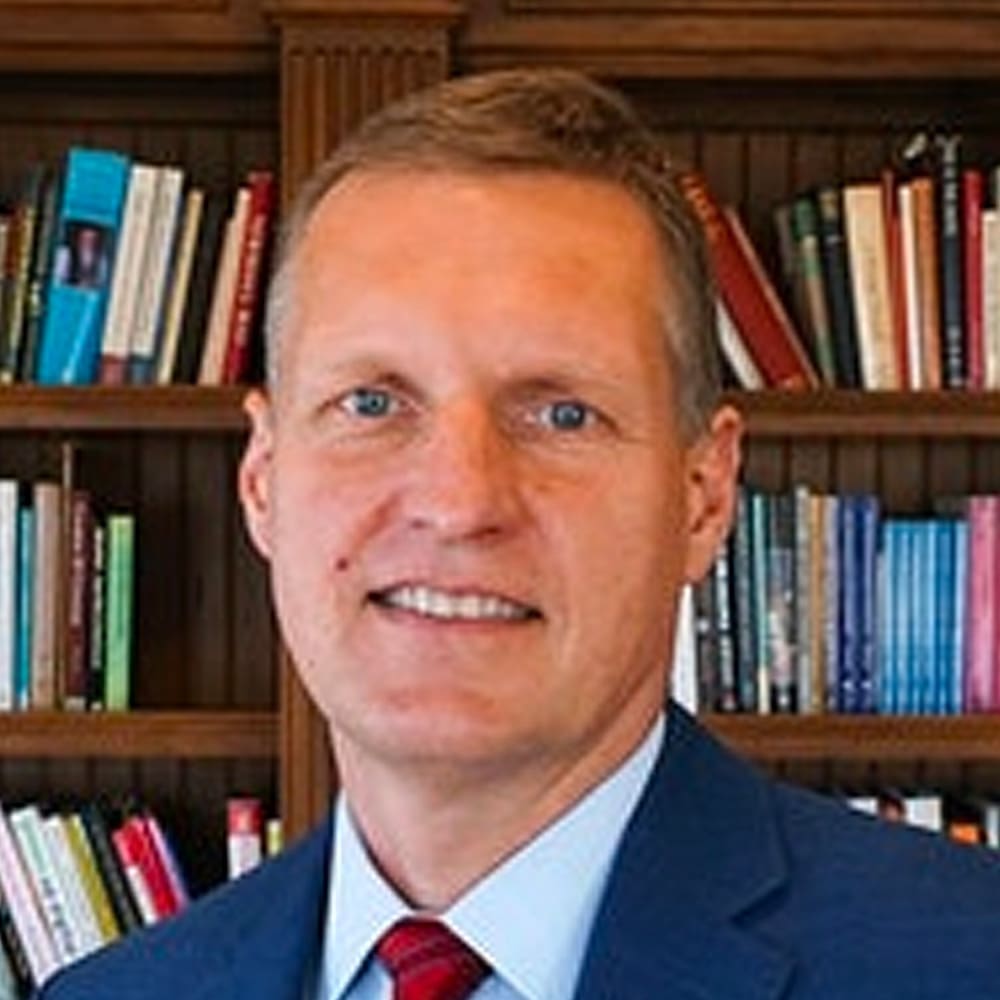
Michael Van Pelt is president and CEO of Cardus, the Canadian think tank that publishes Comment.

Romanita Hairston is CEO of the M.J. Murdock Charitable Trust in the Pacific Northwest and previously led global technical skilling at Microsoft and US programs at World Vision.

Kristine Braden is the former CEO of Citibank Europe, capping a career in global banking spent largely in Asia and Europe.
The Understory festival is a civic and spiritual gathering to rehumanize our common life in a time of cultural fragility. Love the podcast? Help others find it by reviewing it on your favourite podcast app. We also welcome your ideas and feedback. Email us at podcasts@comment.org. Thanks for your support.
The Russian roots of Silicon Valley’s vision for biological immortality.
SITE DESIGN AND DEVELOPMENT BY POLYMATH