


What a month on motorcycles taught me about connection.


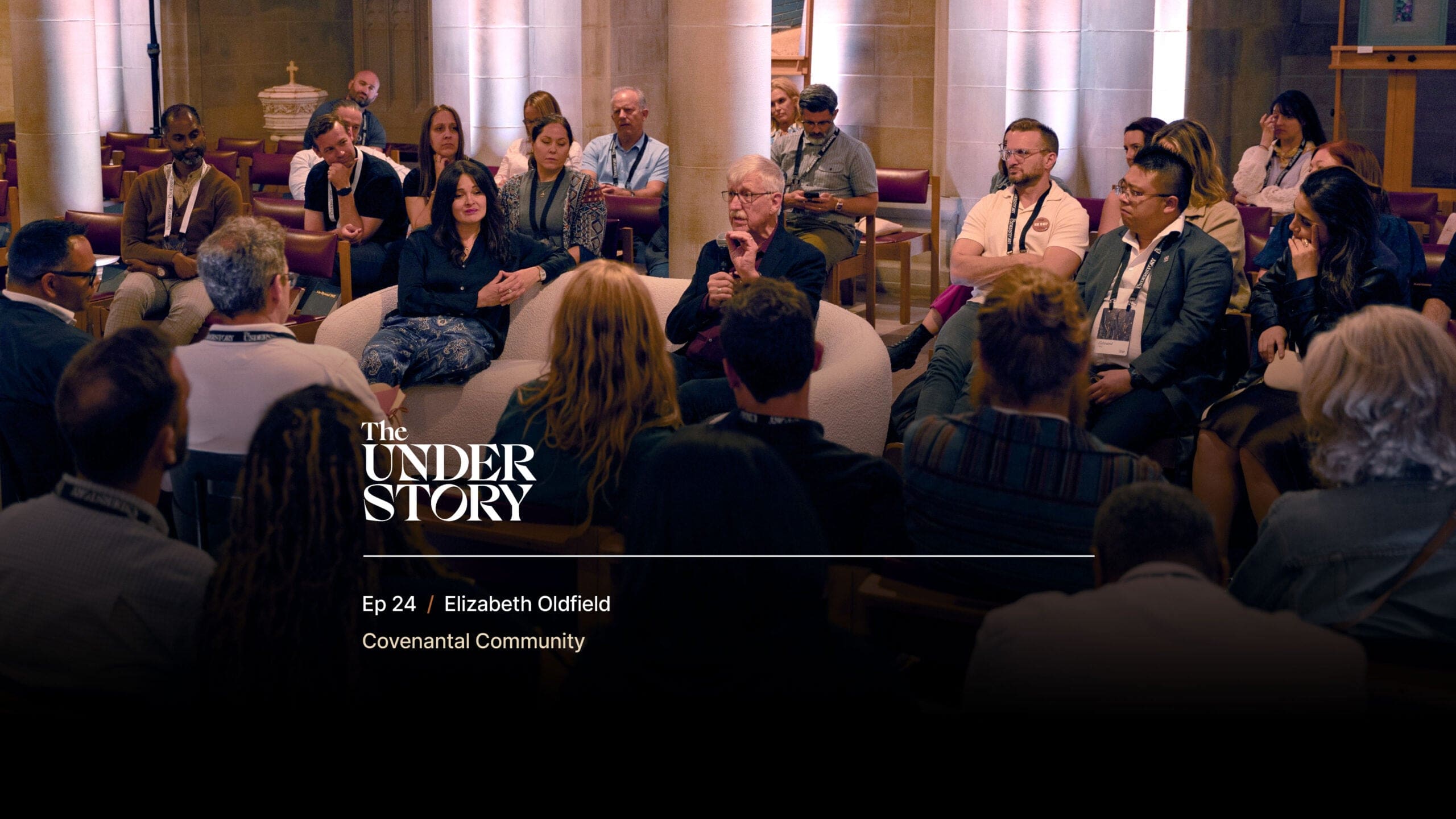
“Friendship,” says Elizabeth Oldfield, “is our theory of change.” For six years, she has shared a house in South London with others in an intentional community, which she says has taught her more about sin and grace than the rest of her Christian life combined. Oldfield is a British broadcaster, a former director of the think tank Theos, and host of the podcast The Sacred. She is also the author of Fully Alive: Tending to the Soul in Turbulent Times and a contributing editor at Comment.
In this conversation, she joins social entrepreneur and fellow British broadcaster Krish Kandiah and Lee Camp, creator and host of No Small Endeavor, for a conversation about covenantal community, the mess of life, and the beauty, goodness, and truth that lie beneath the rubble of a fractured Christian overstory. Oldfield reflects on the formative work of daily relationships, sloth as a habit of escaping the present moment, and the power of listening to someone long enough to love them. Together they discuss sin as relational fracture rather than a cudgel, the phone as a window we keep climbing out of, and the quiet radicalism of friendship.
Recorded late Friday night, May 29, 2026, in the Bethlehem Chapel at the Understory festival.
Tiffany Thompson: Hello, I’m Tiffany Thompson, the executive editor of Comment magazine and executive producer of the Understory festival. “Friendship,” says Elizabeth Oldfield, “is our theory of change.” For six years, she has shared a house in South London with others in an intentional community, which she says has taught her more about sin and more about grace than the rest of her Christian life combined. Elizabeth Oldfield is a British broadcaster, a former director of the think tank Theos, and host of The Sacred, a podcast we’re delighted to include in the Comment Podcast Network. She is also the author of Fully Alive: Tending to the Soul in Turbulent Times and a contributing editor at Comment magazine. Recorded in a late-night crypt session, Elizabeth joins social entrepreneur and fellow British broadcaster Krish Kandiah and creator and host of No Small Endeavor, Lee Camp. Their conversation is about covenantal community, the mess of life, and the beauty, goodness, and truth that lie beneath the rubble of a fractured Christian overstory. Elizabeth reflects on the formative work of daily relationships, sloth as a habit of escaping the present moment, and the power of listening to someone long enough to love them. Recorded in the Bethlehem Chapel at the Understory festival on Friday night, May 29, we hope you enjoy this playful conversation.
Krish Kandiah: Now I want you to meet my co-host. Lee.
Lee Camp: Great to be with you, Krish, and I’m grateful to be here with you all tonight.
Krish Kandiah: Fantastic. Good to have you here. Thank you for joining us. Liz Oldfield is a broadcaster. She’s a podcaster. She’s written a best-selling book, Fully Alive, and she has started to live in community over the last few years. Liz, tell us how you come to live in community.
Elizabeth Oldfield: Wow, just a small one.
I think a mixture of running a policy think tank and realizing that almost all our problems would be better if we could bear to be together. Any big wicked problem you think of is exacerbated by our inability to share stuff and space. Partly restless Enneagram 7 in need of adventure. And partly a sense that if I was going to be a Christian, of all unlikely things, I wanted it to really mean something. I wanted to grow, right? I wanted my life to become a little bit more luminous. And it felt like other people are almost always the answer.
Lee Camp: That’s well put. What have you learned most about yourself from that experience?
Elizabeth Oldfield: Oh, community is where your illusions about yourself go to die. It’s a really, really real — friendship abrades your ego. Your friends don’t see you — or see me — in the hour after I’ve just woken up, before I’ve had three cups of tea, right? The things I like about myself least and generally manage to hide are not hideable in our household.
And that — David Zahl, I don’t know if he’s still here, talked about a low anthropology — the realism of the doctrine of sin, to be honest, is what you learn in community. But it is held. And you sort of think that what you’re going to see is other people’s sin, and you do see that, and you can — focus on that, I can focus on that. But what you really come to see is that when we are unmasked, known and seen as we are, in all of the mess and selfishness and pettiness, grumpiness, and still people don’t run away, where we are covenanted together sufficiently that we can bring that mess and the container will hold it, it is, I think, a little icon of the love of God. And I have grown up — I have been discipled more thoroughly in six years living in community than in the entire rest of my life as a Christian.
Krish Kandiah: That’s interesting. You talked about sin, and your best-selling book, Fully Alive —
Elizabeth Oldfield: I love the way you’re trying to manifest this into being for me. Thank you.
Krish Kandiah: Fully Alive is about the seven deadly sins. Were you surprised it had the audience it did? Because it seems like it’s not just churchy people that have engaged with it.
Elizabeth Oldfield: No, and it’s not written for Christians. It would be far too sweary for you, Lee, I’m afraid. Far too frank about sex. Don’t read it.
Yeah, so my particular interest — this is actually — it’s really unusual for me to be at a Christian conference, even one as kind of hospitable and open as this and with people who would call themselves all kinds of different things. My main interest is being in conversations where people are seeking to understand what a good life is and what a human is. And often being the lone person of faith or the lone Christian who can translate, who can be trustworthy, who can be actually listening, right? And seeking to be of some use in those spaces. And so the book is trying to say, look, I know, I know, I know the rubble, right? I know what you see when someone says Christianity. I know what you hear when someone says the church, and I get it. I bear the scars too, right?
It still surprises me to find myself in this tradition, and under the rubble is such extraordinary treasure and beauty and, like, centuries-honed wisdom that even if you don’t know what you think about the metaphysics, and you cannot bear Christians — and nor can I some days, including myself — there is still goodness here. And so the project of the book and my wider work is trying to do that translation work, that open-handed offering.
When I started it, I didn’t expect, therefore, to frame it around sin, because sin is not — my agent, who is not religious at all and is hilariously plainspoken — it’s like, “What the F? What is this book proposal that you’ve sent me?” I was like, “I know, I know.” But I think the heart of this understanding is kind of what I was saying about community: if we don’t start with what’s stopping us moving towards each other, if we don’t start with what’s corrupting the image of the human in us, if we don’t start with what’s driving us apart, we don’t get — psychologically realistic. Francis Spufford calls it the human propensity to F things up — and really trying hard, I don’t want to be sweary. If we don’t look that in the face, then there’s no way of moving towards these longings that we have.
And so actually — it’s been remarkable to me how many people in — you know, Oliver Burkeman was talking about it on The Ezra Klein Show — the spaces that there is a remarkable receptivity to talk about sin, as long as you’re really clear that what you’re talking about is not a cosh to beat people with. It’s these habits of relational fracture, these turning — Luther called it homo incurvatus in se, humanity turned in on itself. And I think we can all recognize that in ourselves, right? We know life is in relationship, and we resist it.
Lee Camp: That’s a beautiful way to describe a doctrine of sin.
What favorite small thing did you learn in writing about the seven deadly sins that was new to you, that you keep ruminating on or thinking about, that’s been helpful to you?
Elizabeth Oldfield: So the sin that’s often translated sloth, the original word is acedia. And it’s much more capacious than sloth. It’s not really laziness. My translation is distraction, is inattention, is the desire to escape our lives. And I think it’s Evagrius Ponticus that says, “The man with acedia has always got his eyes on the window.” And that phrase comes round and round to me.
We are carrying these windows in our pockets. And all of these snackish, addictive habits of workaholism or porn or just generally frittering away our lives are all us escaping out of the window of the present moment. And it is only in the present moment — it’s, you know, it’s only in — Christian was saying earlier, when we look hard enough and lightly enough at the world, the world looks back, and that is the site of soul. And so the tendency in me and others to be constantly climbing out the window rather than accepting the gift of the moment with the attention that it is due is, I think, our moment’s besetting sin.
Lee Camp: Yeah, that’s beautiful. Rebecca DeYoung, who also wrote a book on the seven deadly sins, at Calvin — I remember she taught me, in an interview we did with her, the way she put that about sloth was that we tend to think, because we are so consumed with notions of productivity, we think about sloth as a lack of productivity. And she said, no, actually, being hyper-focused on productivity can be a form of sloth, because sloth is about a failure to give right attention to what is rightfully loved. And I thought, oh, that just changes so much. And so it’s a beautiful, a complementary way of describing that.
Krish Kandiah: Okay, last question before we bring our next guest on. You have a podcast called The Sacred, and you’ve interviewed some really — people, often people that you might not share the same political views with. We’re going to be hearing from Monica a little bit later on about having those difficult conversations. But tell us a little bit about the thinking behind The Sacred and maybe some things you’ve learned from talking to people that you don’t necessarily agree with.
Elizabeth Oldfield: So this grew out of a sense that the thing we need in our time is to move towards each other, and how difficult that is — how difficult it is to tolerate the discomfort of being around someone different from us and someone who disagrees with us. That — social scientists call it homophily. I call it people-like-me syndrome. We are just relentlessly — we relentlessly prefer people that remind us of ourselves, to the point of, like, the same height. There’s all these studies, right? If you see someone with the same glasses, you’re like, they’re lovely, let’s be friends. We just feel slightly less safe when we’re not effectively looking into our own reflection. And that is weaponized against us so powerfully.
And I think the antidote — you know, I was talking about friendship earlier, and I’m always aware when you talk about friendship being a theory of change that people hear something soft, they hear something peripheral, they hear something unimportant, and I think that’s absolute nonsense. And I feel like the same thing happens with listening. That when you listen deeply to someone without trying to argue with them, without trying to make yourself look smart, without trying to tell them that they’re wrong or get them to do something that you want them to do, but you just listen, seeking to understand, it’s like the antidote to the people-like-me poison.
And honestly, I basically fall in love with every single guest. Because if you listen to someone for an hour, trying to understand why they are like they are and how they’ve become who they become — I mean, it’s almost dangerous. I feel very warm feelings towards people that other people think are monsters. I’m like, is this seeing them as you see them, God? Or is this being manipulated? I don’t really know. But I have learned that something so simple can transform your heart reliably and radically over time.
Krish Kandiah: Well done. Well done. Thank you, Liz. Good to have you here.
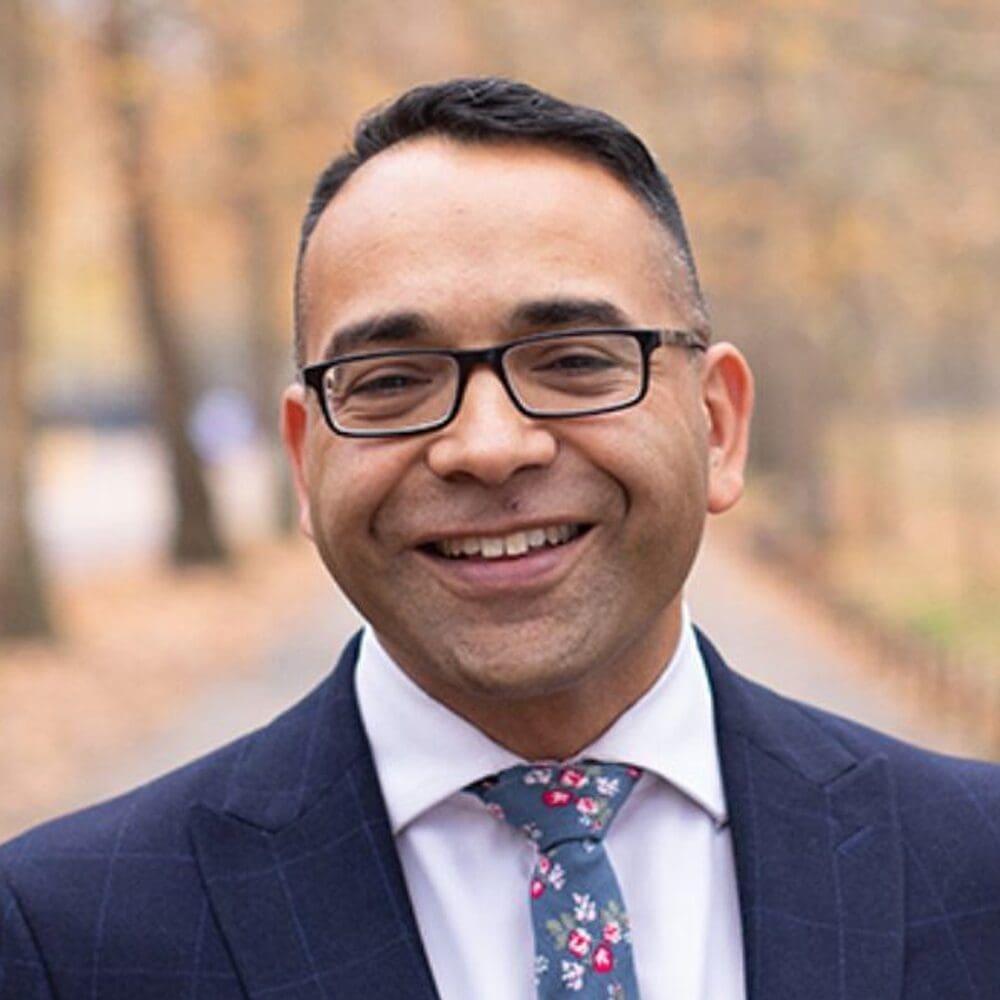
Krish Kandiah is a British social entrepreneur, broadcaster, and author who directs the Sanctuary Foundation; his books include the award-winning Paradoxology.
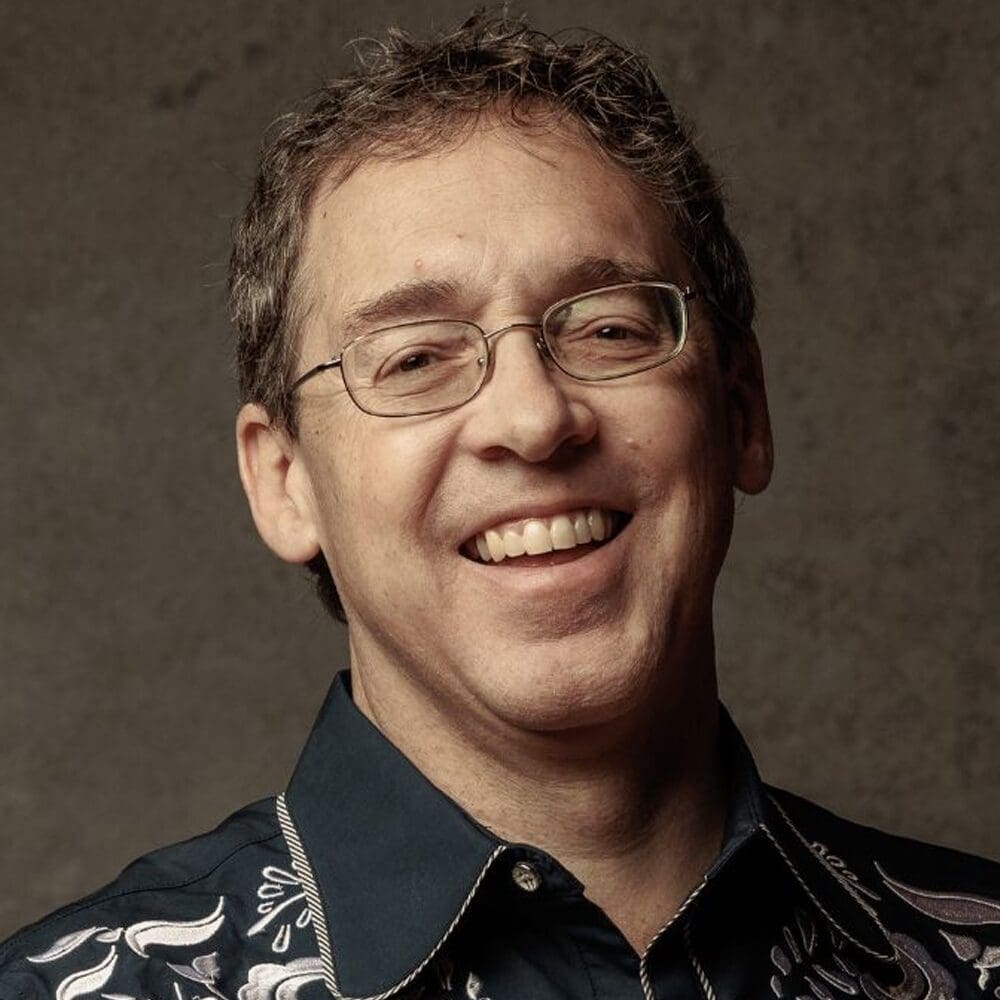
Lee C. Camp is the creator and host of No Small Endeavor, a public radio show and podcast about what it means to live a good life, and a former professor of theology and ethics at Lipscomb University in Nashville; his books include Mere Discipleship and Scandalous Witness.

Elizabeth Oldfield is a British broadcaster, host of the podcast The Sacred, former director of the think tank Theos, author of Fully Alive: Tending to the Soul in Turbulent Times, and a contributing editor at Comment.
The Understory festival is a civic and spiritual gathering to rehumanize our common life in a time of cultural fragility. Love the podcast? Help others find it by reviewing it on your favourite podcast app. We also welcome your ideas and feedback. Email us at podcasts@comment.org. Thanks for your support.
What a month on motorcycles taught me about connection.
SITE DESIGN AND DEVELOPMENT BY POLYMATH