


R
This kind of love sometimes feels like the opposite of falling in love romantically. When you fall in love, no matter your well-intended selflessness, you fall in love with yourself a little bit too, with how you want to be seen. You find a person who sees the part of you that you secretly love—perhaps a submerged, subterranean part that you thought no one recognized. You come to know yourself as your lover’s ideal beloved. You’ve fallen for this idealized version of yourself along with the person who ostensibly sees her.
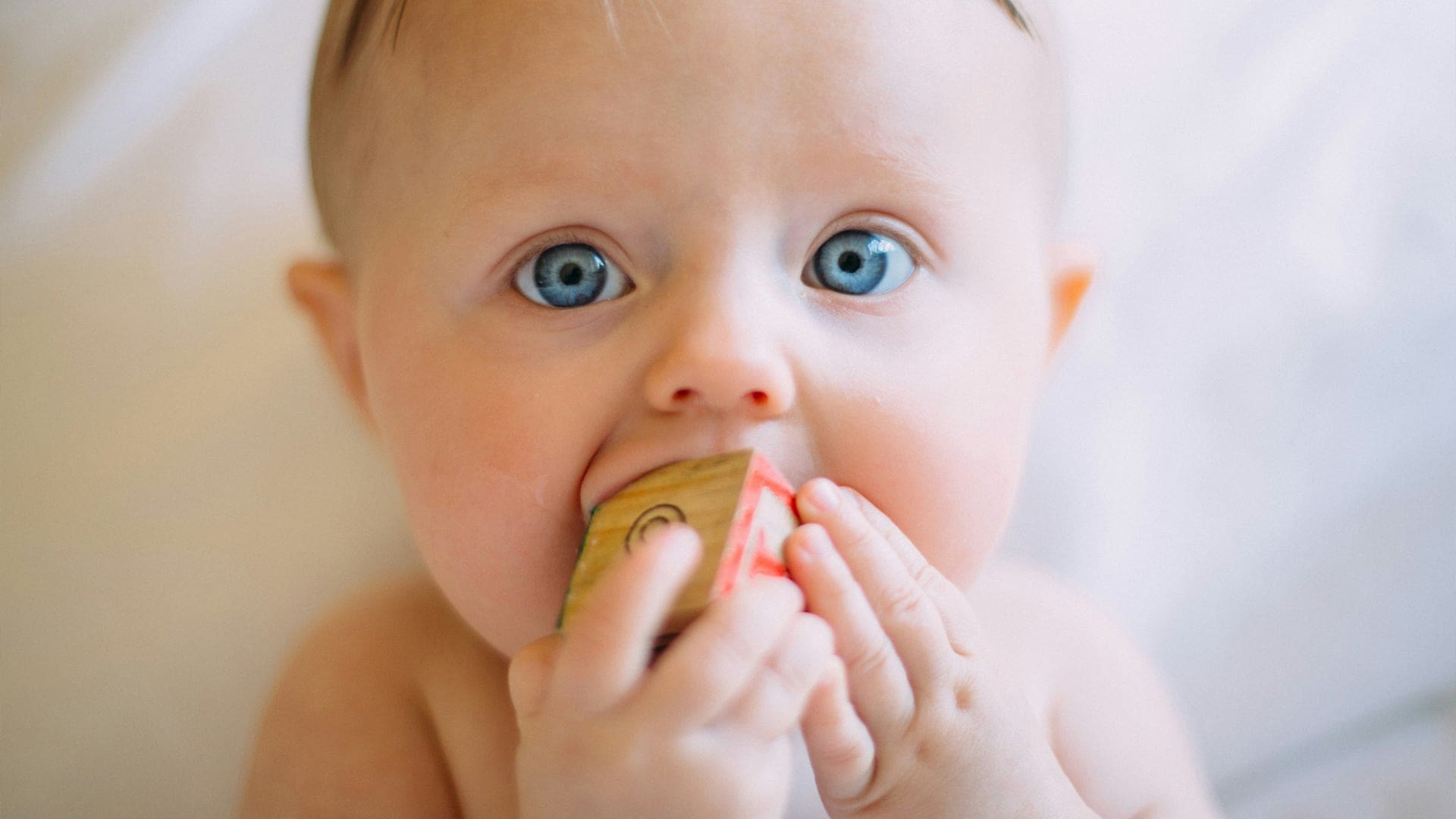
But having a baby—having a baby is different. There’s no way baby Henry is in love with a more perfect version of me. And because I seem to be aware of this in some primal way, I’m not fashioning myself in the image of his perfect mother. His needs are frank, and I satisfy them with little imaginary effort. I seem to have been offered the gift, in my baby Henry, of an unselfconscious love. I’ve been inspired well outside the usual boundaries of my identity; just a few months into new motherhood, I began waking up in the night with verses of poetry about the perfect lines of his eyes.
Nevertheless, a successful attempt to conjure certain existent pieces of myself, when I need to, is often untimely. At his first whimper, any line of thought evaporates. When I have a meticulously planned-for, two-hour writing period some afternoon, I may be too exhausted to do anything but placidly scroll photos of my little babe. He’s given me the immense gift of fragments of life outside of myself.
I’ve felt something come over me recently, though, and I’m afraid that I might infect baby Henry. I’m worried that the world will infect him with it too. It’s something he doesn’t recognize yet, but I’m worried about that inevitable time when he will. This infection I fear, in the long hours of the night between his feeds, is his dulling. I’m currently being dulled. With every streamlined AI answer to any question, produced whether I want it or not, I feel my resistance slipping. At first, I refused to look at such things and fastidiously scrolled down to do my own research, as elusive as that attempt is. But now I’m a little addicted to it. It’s easy. It’s fast and it’s handy.
These little emerging moments of “the handy” keep popping up in my life. Sitting at the library as baby Henry and I enter the thirty-ninth minute of bashing miniature trains onto tracks, sure, I will surreptitiously assuage my boredom with a little condemnatory doomscrolling, grazing at the latest tradwife slop my algorithm dumps into the trough of twenty-nine-year-old married women with babies.
Partaking in these little algorithmic snacks, I get righteously judgmental. But then something strange happens. My judgment yields to pacification. I feel myself drawn to anger, and then it dulls. When I pause to reflect, it occurs to me that this little habit is training me out of reactions altogether. Moral reflexes are fleeting; slop is eternal. Each surge fades—be it anger, envy, or judgment—as instantaneously as the next flashy feature emerges. Just scroll on and forget about the latest AI-generated video of missiles being mechanically signed by Donald Trump’s autopen. Forget about it with this next AI video of a newborn baby getting up and walking out of the hospital, generated somewhere in China, apparently.
Baby Henry and I are on opposing trajectories: He’s learning to love the contours of a leaf, the shape of my chin, the fantasy of a multicoloured dragon in a storybook. I’m on the job to destroy such fantasies. With every consent to the handy, in the face of which I seem increasingly pervious, I model to him a spirit fragmented, an attention splayed. AI technocrats are making sure of it: another data centre roll-out, another infinite soul chased down to be thrown into the Charybdis of unreality.
An increasingly rare and lucky son of a gun, baby Henry gets to go to the local library, a mere eight-minute walk from our house, at least every other day, for playtime and story time—two words he knows in his core by now. Most days, he revels in the endless entertainment of toddlers flexing their slightly longer limbs, jumping and dashing. But sometimes there are toddlers who are cornered away, clutching a tablet—sometimes for hours. Baby Henry is always confused by them. Why are they not jumping and dashing? his innocent face asks as he sits, at least for now, unable to walk, let alone jump or dash.
Another scene: While on an airplane, baby Henry catapults his little body in front of the gaze of an unflinching young man to his left. This man does not look up once from his screen to pacify my attention-seeking boy over the course of a three-hour flight (despite his demonstrated ability to multitask, evinced by his simultaneously watching TV and scrolling Elon Musk’s X feed). This is much to baby Henry’s dismay, as he has been trying to practice his new aptitude for high-fives. Addictive technology reshapes our lives not in one loud, inevitable bang but in many soft whimpers.
As much as I delight in my boy’s free, vivifying spirit, I fear its conquest by the world—and I fear that I am the most proximate mediator of that destruction.
Our salvation from our dulling, I suppose, will be in the baby Henrys of the world: the lifegiving, unselfconscious, unflaggingly inspired attention they give to the things and people around them. When baby Henry shrieks for joy, so do I, entering with zest into this primal mirroring state because I find it revivifying when the odds are increasingly against me. I join him in slapping the bathwater’s surface with our uniquely controllable fingers. I linger with him as he rests on my chest, cherishing the final times that his growing limbs nestle against my small body. He summons my distracted attention toward a game of peek-a-boo as I cajole him toward bedtime.
You know how, when you fall in love, your beloved’s face becomes everything and everywhere? That part of falling in love is the same when falling in love with a baby. My world has become saturated with baby Henrys. I see my little boy everywhere and in everything. I see him in other babies at the library reading circle. I see him when I see pictures of the remnants of an apartment across the world, struck by a missile. On the Fourth of July, when my baby Henry falls asleep to the sound of fireworks, I wonder whether the baby who lives in that ruined apartment falls asleep to the sound of bombs. Every joy and pain hits me more harshly because my boy is now there. I cannot think the world without thinking my boy. The world is infinitely brighter and darker.
Baby Henry has given me the gift of the real. As much as I delight in my boy’s free, vivifying spirit, I fear its conquest by the world—and I fear that I am the most proximate mediator of that destruction. I fear my dwindling ability to demonstrate to him a life animated, a soul easily quickened. But baby Henry has been given to me simply as a gift. He offers animating water to me in droves when I let him, and I drink it up. Hopefully I’ll harbour a few drops, so that when he grows up and becomes a little too interested in the toddler with the flashy tablet, or feels tempted by the sway of whatever pharmakon he sets his eyes on—with all its pleasure and poison—I’ll have a few dashes of his spirit saved up to mirror it right back to him.
The mystic and philosopher Simone Weil writes, “To say that the world is not worth anything, that this life is of no value, and to give evil as the proof is absurd, for if these things are worthless, what does evil take from us?” Tale as old as time: The imaginative, illusory world is inviting itself into our lives under the unprecedented, corporately funded, algorithmically insatiable form of AI and other addictive technologies. When we focus on our baby Henrys, we may recall the real. “Otherwise,” Weil concludes, “life is nothing but a more or less evil dream.”

