


What a month on motorcycles taught me about connection.



During spiritually dry and difficult seasons, prayer can feel emaciated, empty, or even like an echo in the abyss. Pete James, longtime pastor of Vienna Presbyterian Church, suggests that old prayers can bring new life to the supplicant. Drawing on church history, sacramental theology, and liturgical studies, he developed a daily prayer project called Prayers from the Cloud.
In this episode, he joins his longtime friend Mark Labberton to explore the meaning of prayer and its role in Christian practice; why contemporary prayers often seem lacking; how prayer mediates God’s presence without overwhelming us; the relationship between prayer and activism; and why P. T. Forsyth called “Thy will be done” the prayer behind all prayers.
During the conversation, James reads prayers by Irenaeus of Lyons, Anne Steele, P. T. Forsyth, and Thomas Merton.
Mark Labberton: Welcome to Conversing. Today we have the opportunity to explore one of the most important invitations of the whole Bible, which is simply to live a life of prayer. At minimum, prayer is simply an ongoing conversation with God about the full range and scope of our lives. It’s both a cornerstone and still yet a mystery. We need a good guide, and one of the guides that could teach us a lot—and will teach us a lot today—about prayer is the Reverend Dr. Pete James. Pete served as the pastor of Vienna Presbyterian Church in Vienna, Virginia, for forty-two years—an incredibly long period of time. During this ministry, he did all kinds of things together with his congregation, including planting three new churches in the DC area. He is a member of the Gordon-Conwell board of trustees and teaches as adjunct faculty at the seminary. Peter and I have been part of a pastors’ covenant group that’s existed for over forty years. The reason we’re asking Pete James to join us today is because he has been, over the last several years, a person who has posted Prayers from the Cloud, he calls it. It’s a daily post that you can receive as a kind of newsletter that includes brief reflections on some person in Christian history and one of their prayers. He’s now about to publish the second volume of those. And it’s because of this offering of prayers that he’s been giving us that I was eager to have him as our guest. It’s a privilege to do so today. Reverend Dr. Pete James, what a gift it is to have you on Conversing.
Pete James: Thank you, Mark.
Mark Labberton: You know, Pete, we’ve known each other for decades, and our friendship has gone deep and wide in many different ways over the course of these years. But one of the things that I’ve always admired about you is that you’ve served the congregation of the Vienna Presbyterian Church for forty-two years, which was just astounding. You’re now retired. But you have—you’ve also entered, in many different ways, a rich new season of your life. It’s marked partly by the passing of your beloved wife, Chris, and the adjustments that you’ve needed to make. But it’s also been an invitation, I sense, into a deeper life with God, and into a life with God in a new season, because you’re no longer working in formal ministry in the same way that you were for forty-two years. And the Spirit of God just seems to me to be freshly moving in your life. So take us into a bit of your story. When did prayer ever first become even part of your awareness and practice? And give us some highs and maybe lows of your prayer life over these many decades.
Pete James: Well, my life with prayer really began in earnest about ten years into ministry. And I had somehow imagined, as I was starting ministry, that I would be about doing something for God, building something for God, kind of leaping tall buildings in a single bound for God. But the thought of being with God didn’t interest me enough to do anything about it. And you can see where this is going, if it’s all doing and not enough being with God. And you can only go on so long before you feel like a fake, and hypocrisy rises up in you. So about ten years in the ministry, I hit the wall. I really ran out of gas. In fact, I can remember where I was, what I was doing—in a congregational meeting. And something inside of me said, I have to make a change, or I’m not going to be able to make it in this work.
So I did several things. I began to read the Bible for things other than sermon material. And I said, “I really want to get serious about incorporating prayer into my life.” And so I was open to suggestions, and someone said, “Well, why don’t you pray the Psalms? And why don’t you insert yourself into that psalm and pray that psalm for that day?” So I started with Psalm 1, and I began to pray the Psalms. And as I began this practice, it began to dawn on me that the psalmist prays about everything. And I only prayed about nice things. My prayers were too sanitized. But the psalmist not only thanks God for blessing, but they bring to God everything—grief over loss and anguish over betrayal and vengeful feelings about enemies. I mean, you name it. And so the psalmist became my tutorial on bringing my whole self to God.
Now, that said, I must confess to you and listeners that prayer still doesn’t come easily to me. And I find I’m still a novice when it comes to prayer. And I’m helped by something Thomas Merton wrote—you know, who himself was a praying monk. And he said, “We’ll never be anything but beginners at prayer all our lives.” And so I’m well into this now, but it was really jump-started by “I have to make a change and incorporate prayer into my life.”
Mark Labberton: Yes. I’m wondering, then, given that ramp that you’ve just described, how does it eventually lead you into this project of Prayers from the Cloud? First describe what Prayers from the Cloud is, and then how you got into it.
Pete James: Well, Prayers from the Cloud is a collection of daily online prayers, and it became a book of prayers. So here’s the backdrop. So the writing that I imagined doing after I retired from full-time ministry went nowhere. All right? So I thought I’d write about the twentieth versus the twenty-first century—how distinctive the twenty-first century is, how dissimilar to the twentieth century, and its impact on the church. And yet that went nowhere. And yet the writing that I never envisioned occupies my time now. And since I never could have conceived it, I thought, God must be up to something here.
All right, so let me take you back four years. I was in email—you know this story—I was in email correspondence with a cousin living in LA with serious back surgery. And after her surgery, she was in recovery, and she was suspected of having COVID. So now she has nurses treating her in hazmat suits, and she’s in intense pain. Nobody can visit her. And so she writes me several emails, desperate, saying, “I’m all alone.” And so my pastoral proclivities go on high alert. And I say, you know, “You’re never alone.” And she’s a believer. And so I said, “Hey, how about I start sending you old prayers?” Because I just happened to be reading a book that was on my shelf. And—you remember, Mark, this was the time when we collected a library in the twentieth century—and I was dismantling my library when I retired. And I found this book called 2000 Years of Prayer, and I thought, I’ve never read this. And at that season in my life, I was more interested in devotional material than I was academic pursuit. So I kept the book, and I started thumbing through it, and I said, “Wow, these prayers are great.”
So I said to my cousin, “How about I start sending you prayers from this book?” And she accepted, so we started. So I sent maybe two weeks’ worth of prayers, and she got better. And I thought to myself, well, I’ll stop sending the prayers. She’s gotten better. She writes me and says, “Hey, can we keep this going?” And what am I going to say? So I said, “Yeah, sure, we’ll keep it going.” Well, I plough through all the prayers in the book, and now I’m at a loss. What do I do now? So this begins this deep dive. It’s kind of like a prayer dig into old prayers, and now I’m into people’s diaries and their journals and scouring sermons to find these old prayers.
So I start sending her prayers, and then she writes to me, “Hey, I don’t know who these people are. Who are these people?” So I don’t—not very interested in giving her a biography; you can find that on Wikipedia. So I said, “Well, how about I just send you a story about them, a little vignette, which will kind of be a window into them?” So now, one of the experiences I had—I can remember this very early on, and the prayers were beginning to rub off on me—but one of my impressions is some of these people had it bad, I mean, real bad, and yet they came forth with prayers that were deep and searching and prayerful and thankful. And I can remember commenting to my wife, “Shoot me if I ever complain again.”
Mark Labberton: Right. Yeah.
Pete James: So, you know, these prayers were for me. And I called it Prayers from the Cloud because in Hebrews 12, the author of the book of Hebrews begins, we’re surrounded by this cloud of witnesses. And I take the cloud of witnesses to be those who’ve gone before us, and they can teach us how to pray, and they do. And then these prayers begin to rub off on me.
Okay, so I’m several months into it, and I’m thinking to myself, I’m doing a lot of work for one person—I mean, she’s worth it, but this is a lot of labour. And so my wife, Chris—”If you’re sending it to your cousin, why don’t you send it to family and friends?” That’s how Mark Labberton gets the prayers. And to say—so, long story short, I collect 730 prayers, two years’ worth. And as I said, it attracted the notice of a publisher and became a book. So how to summarize this? I never could have conceived it. I mean, I’m not the most likely person to be writing on prayer. And it’s because I never could have conceived it that I suspect God’s up to something.
Mark Labberton: Peter, it’s a great expression of your willingness to trust God and to move into spaces that, in one sense, you wouldn’t have imagined spending time on. But I’ll have to say, as a friend from the outside of your life, it’s also felt to me completely congruent with who I see you to be. And in one particular dimension I want to underscore, because it’s not only a hunger and thirst for God, which marks your life, but I think it also is marked by an appreciation, greater than many, for the role of history and for the sense of timing and place and narrative and circumstances that go deep. And I’m just curious how that part of this has scratched an itch that you may have had about history. I know you just gave us the narrative of how this unfolded, but boy, does it feel like it lands in the solid terrain that I know as Pete James. Do you have any comment about that?
Pete James: Yes, sure. I grew up on a farm that was owned by my grandfather. I grew up with a sense of history about the land and about the place. And I studied church history when I was in seminary—always fascinated with where we’ve come from. But it really kicked into high gear when we went to the twenty-first century. And I guess I was becoming weary of all the preening we were doing about how enlightened and sophisticated, and particularly how technologically savvy, we were. And in the words of C. S. Lewis, you know, our chronological snobbery, he called it, is showing.
And so I guess what is really critical to me is, I don’t think it’s possible to judge our present age by our present circumstances. Our illusions of modernity are going to distort our objectivity. And I suspect we can only judge the present by the past. And that’s why we study history, to inform our present circumstances. And so I think our cloud of witnesses can teach us how to pray, because—I don’t know, Mark, what your experience is—mine is, so many of the modern prayers seem quaint, pedestrian, rather chummy, I’d say. And give me these old prayers because of their full-throttled prayer and praise, exalted language, their refreshing candour. And I can draft off these prayers. So I think we have something that our cloud of witnesses can teach us, and something that history can inform the present circumstances. That’s why I think history is so valuable.
Mark Labberton: Right. Right. Well, I know, as a regular reader of your postings daily, that they always feel grounding to me. They take me back to a place, in a time, in a circumstance, a location, a challenge, a profound, overwhelming need that really helps me to hold my own life in light of this prayer that comes from a different place and time and circumstance, in a way that I just find really, really enriching. So I guess before we get into some examples of people that you’ve focused on, I’m curious to know what you’d say is your understanding of prayer, or what I could call your theology of prayer. Is there an overarching pattern that you see? Or are there theologies of prayer, as I would assume and have experienced, where people that are offering their prayers in different times and ways seem to make similar but also different assumptions about God and about God’s way of moving in the world and what prayer actually is? Just give us some observations about that theology of prayer that’s undergirding this effort.
Pete James: Oh, that’s a good question. I’d have to begin with a confession that prayer remains mysterious to me. I mean, I can’t say for certain how it works, or how it doesn’t work sometimes. Now, to be fair about it, I don’t understand how anti-lock braking works in cars. Right? I still drive my car. Right? So I go on praying, even though I don’t entirely understand it.
And I suspect, as a carryover from my childhood that I imagine coming into my adulthood, that the primary purpose of prayer is to get things from God. And Oswald Chambers writes in his devotional that prayer is not simply getting things from God; it’s getting into communion with God. So in his words, we’re praying not so much to get things from God, but to get God. So I think prayer is God’s way of communicating with us without overwhelming us. I mean, we’re talking here. And sometimes I wonder, why doesn’t God talk to me the way Mark and I are talking now? Why don’t you give me more feedback? But then, if that were to happen—all right, so it’s the middle of the night, and Jesus comes by my bedside and starts talking to me—I might freak out. So I suspect God communicates with us in a way without overwhelming us, in a way that we can manage.
So regarding a theology—your question about theology—prayer mediates God’s presence in a way that doesn’t overwhelm us. But then there’s something else, more going on here. Not only does it mediate God’s presence, but also there’s a divine power to root out deeply entrenched sin patterns and destructive habits in my life. Let’s say I have a problem with anger. This is not just hypothetical, all right? How do I throttle back on anger and keep it in check? And you and I know the limits of willpower. I need a power outside of myself to bridle this unruly passion. And I love what Thomas Aquinas said. He said the only way to drive out a bad passion is by a stronger good passion. So in answer to your question, maybe said more simply, prayer mediates God’s presence and mediates God’s power in ways that don’t entirely overwhelm us. Right?
Mark Labberton: It’s a beautiful picture, and it’s a very important complement to a more pragmatic, functional, transactional view of prayer. It’s much more about the relationship and about the communion of God as Spirit and our own hearts and minds and spirits as well.
One of the things that had to be true for you over the forty-two years that you served in a Presbyterian church was the way that you saw, in your own life, prayer develop as a language that takes new forms. You say it was after ten years of ministry that, in a way, you began to take some leaps forward, some steps forward, in understanding this. But ministry also throws up not only lots of opportunities to pray but lots of challenges to pray, because it’s both the significance of other people’s lives and the burdens that they’re carrying. But it’s also the circumstances of the era, the age that we live in, and the problems of evil and the persistent and often hidden problems of our own blindness and prejudices and inability to really see reality clearly. So—and then you have, as a pastor, also, of course, this thing called your own personal life, which sometimes seems to disappear for some pastors. But we know each other well, and we understand that we are very human, fallible human beings, and in our own lives there are challenges and struggles that prayer creates opportunity for, but also the very opportunities can sometimes hamper the prayer. So in a minute, as we go to some examples that I want you to share—how has ministry, and how has your own life, thrown up hurdles to actually developing as a prayerful person?
Pete James: Well, like all people, I go through struggle. I mean, I’m doing a second volume of these prayers in book form. And I titled the preface—it’s a working title now—”Prayer Is Easy, Prayer Is Hard.” And it’s easy for me when my back is against the wall and I have nowhere else to turn. And instinctively, I cry out, “Save me, help me.” And when my wife was so seriously ill: “Please, God, intervene here.” And so in that way, prayer is easy.
Where it’s hard for me—and I think it’s hard for all of us. I mean, look at the monastics. They go through this dry season in prayer; mind wanders. And then you have the vexing problem of what to do with unanswered prayer. And so what’s really helped me a great deal? I’m thinking right now of Karl Barth—I think it was Karl Barth—someone asked him, you know, how is it that you’ve changed in your theology? And he said, “I’ve gradually become attentive to the Bible.” And one of the things—if you’re really attentive to the Bible, you see there are lots of ways to pray. And there are fixed hours of prayer. And there’s—you know, I don’t think there’s any record in the Bible of people closing their eyes and folding their hands. And I already talked about Psalms. Calvin called the Psalms an anatomy of all things related to the soul. So I think the Scriptures teach breadth. And I think we’re just so used to corporate prayer on Sunday morning.
Now, that’s informed the hard times in my life. It was easier to pray when I was in crisis. It’s a little harder for me to maintain the discipline of prayer when I’m not in crisis. And that takes the harder work of regular practices. And if I have a contribution here, I want the church to recover—this ancient practice is absolutely foundational.
Interesting to me, the one question that the disciples ask Jesus is, “Lord, teach us how to pray.” They don’t ask, “Teach us how to preach,” “Teach us how to lead worship”—”Teach us how to pray.” And so what does he do? He doesn’t give them a lecture on prayer; he gives them a prayer. And then we have this glorious—what is it?—fifty-eight-word prayer that somehow encapsulates God’s name to be honoured, God’s will to be done, and God’s kingdom to come through us. And then daily bread and forgiveness and deliverance from evil. So it’s an amazing prayer.
Mark Labberton: I wonder, as we go further in the conversation and get into some of the examples that you’ve lifted up, I wonder if we can return to the Lord’s Prayer as we maybe use it to look back at the examples you give us, and think about how the two things feed off of each other, or how the prayers that you’re sharing feed off of the Lord’s Prayer in particular. So take us—take us just some examples. Feel free to offer the prayers or to share their narratives, however you want to invite us into this space with you. It gives us a sense of the people and then their prayer.
Pete James: Well, it’s laid out in book form: on the left side is a description of the praying person, and the right side is the prayer itself. So I picked out one from—it’s about a 1,900-year-old prayer. And I’m going to—think about this. This is Irenaeus of Lyons. And we believe that he was introduced to Christ through Polycarp, who is an early church martyr, and Polycarp is said to be brought along in the faith by the Apostle John. So here we have John the Apostle, who influences Polycarp, who thereby teaches Irenaeus of Lyons.
So in that second century, the heresy—can we use that word today?—heresy was Gnosticism, which believed that Jesus Christ is divine, but if he’s divine, he can’t be human. That’s always been the struggle of the church: how to hold Jesus’s divinity and humanity together. And so the Gnostics believed that if Jesus is divine, if he’s not really human, he didn’t die on the cross. He didn’t die to save us from our sins. You could see how off-kilter the church could go with this. And so we have Irenaeus to thank for lifting up the biblical witness that Jesus Christ is both fully divine and fully human. And because he’s divine, he can save us from sin. And because he’s human, he can identify with our weakness.
Right, that’s the background. When you know the background, these prayers tend to come alive. All right, this is his simple prayer. I will tell you that his word “perfect” means you and me—those of us in our older years, okay? All right, here’s the prayer:
Give maturity to beginners, O Father. Give intelligence to the little ones. Give aid to those who are running their course. Give sorrow to the negligent. Give fervour of spirit to the lukewarm. Give to the perfect a good consummation, for the sake of Jesus Christ our Lord. Amen.
All right, so that’s an early church prayer. Let’s go into the middle history of the church—so much here—but I thought of—well, she’s become one of my favourites—Anne Steele. By the way, I picked out people that I thought would be less well known. I could have picked out John Wesley or Martin Luther, John Calvin, but I don’t think as many of our listeners know Anne Steele. She’s an eighteenth-century poet and hymn writer, foremost hymn writer in Baptist circles.
Well, in her youth, she wrote poems as prayers, and her father, who was a pastor, asked Anne if he could use her poems and set them to music for worship on a Sunday morning. And he thought the music was dreadfully boring and plodding. And so she said, “Okay, Dad, that’s fine, you can use my poem, but you’re not gonna use my name.” And so she used a pseudonym, Theodosia, meaning “gift of God.” And the reason she used a pseudonym is she said, “I don’t wanna be lifted up in pride.” Now, who says that today?
Mark Labberton: Right, right.
Pete James: And all right, well, one of the things about Anne Steele is that she was afflicted with chronic malaria all her life. And so one of the things that you’re gonna see in this poem—by the way, it’s been converted to a hymn by her and her dad. And it was lost to us, except Keith and Kristyn Getty are singing it today in a modern rendition. And the title of it is called “Dear Refuge of My Weary Soul,” which is the first line of the poem. Now, this is a seven-stanza poem, but it’s wonderful because it does two things. It expresses candour about pain and suffering. At the same time, it offers thanksgiving to God for life itself. All right, here it is:
Dear Refuge of my weary soul, on thee, when sorrows rise, on thee, when waves of trouble roll, my fainting hope relies.
To thee I tell each rising grief, for thou alone canst heal; thy word can bring a sweet relief for every pain I feel.
But oh, when gloomy doubts prevail, I fear to call thee mine; the springs of comfort seem to fail, and all my hopes decline.
Yet, gracious God, where shall I flee? Thou art my only trust, and still my soul would cleave to thee, though prostrate in the dust.
Hast thou not bid me seek thy face, and shall I seek in vain? And can the ear of sovereign grace be deaf when I complain?
No, still the ear of sovereign grace attends the mourner’s prayer. O may I ever find access to breathe my sorrows there.
Thy mercy seat is open still; here let my soul retreat, with humble hope attend thy will, and wait beneath thy feet.
You love the candour?
Mark Labberton: Wow.
Pete James: And the thanksgiving.
Mark Labberton: Yeah. It’s an echo of the Psalms, isn’t it?
Pete James: Yeah.
Mark Labberton: Wow.
Pete James: So, do we have time for one more?
Mark Labberton: Sure. That’s what it means.
Pete James: So, another one. This is now twentieth century. So we’ve gone from early to mid to now twentieth-century prayer. And this is probably also not someone who’s well known: Peter Taylor Forsyth. And he was an early twentieth-century Protestant pastor, and very distinctive, by the way, in wearing a bright red bow tie and preaching. And he was steeped in this German liberal theology, which was sweeping across Europe and into America. And he became disenchanted with it because, he said, it failed to account for the seriousness of sin and the centrality of the cross. And so he makes the shift from German liberal theology to what we might call a theological orthodoxy in the early twentieth century.
All right, so he’s now giving the prestigious Yale lectures in 1907. And he says—I gotta bring this in—he says, “The church of the twentieth century”—this would be the early twentieth century—”suffers from three great afflictions: triviality, uncertainty, and complacency.” From triviality, which means you treat the faith more as a hobby than a way of life; from uncertainty, which compromises core convictions about the cross and the authority of Scripture; and complacency that results in self-satisfaction. All right. Now, does that sound like the twentieth century?
Mark Labberton: Right. Right. Or the twenty-first century.
Pete James: Right. So, all right, well, one of the books he writes is called The Soul of Prayer. So it’s entirely on prayer. I’m fascinated by how many of these people wrote devotional materials on prayer. Do people do this anymore? And so one of the prayers he writes is a prayer for “Thy will be done.” And he says in his book The Soul of Prayer, the prayer behind all prayer is “Thy will be done.” So this is his prayer:
My prayer is for your will to be done. You created this desire in me. It is yours before it is mine. Perfect your will in me. Let your will be done both in my petitions and in your perfecting of it. We shall come one day to gratefully know that your great refusals were sometimes the true answers to our truest prayers.
I gotta read that last line again:
We shall come one day to gratefully know your great refusals were sometimes the true answers to our truest prayers.
I mean, I think we give up on prayer too soon. And I think sometimes God has to wait to ripen something in us. You know, I’m living in an area that’s surrounded by farms, and I talk to the farmers, and the farmers have to wait for the crops to grow. I think God has to wait until we’re ready, sometimes, to receive the truest answer to our prayers.
Mark Labberton: Yeah. As you’ve had this very, very rich experience of doing this and turning these prayers into your first book and soon your second book, what thoughts do you have about going back for a moment to the Lord’s Prayer? What thoughts do you have about how the Lord’s Prayer emerges or is submerged—if “Thy will be done” is the most bedrock backdrop for any prayers, then where does the Lord’s Prayer fit in? It feels like it really does, but I’m just struck by what your observations might be.
Pete James: Well, I just mentioned P. T. Forsyth, and he said in The Soul of Prayer that “Thy will be done” may not be your first prayer, but it will be your ultimate prayer. You have to sort of move along the continuum to get to that point of surrender. And I think that’s what repeating the Lord’s Prayer does. It solidifies surrender. You know, it’s interesting to me that the Lord’s Prayer was such a teaching tool in the early church. I mean, you take Cyprian, Origen, Tertullian—they all taught on the Lord’s Prayer. And for reasons we’ve already cited, it’s so condensed in what God cares about and what matters to us, in the manner of so few words. And it’s all about letting go. And there are a lot of people for whom letting go, particularly in the second half of life, is so arduous. And we all need to let go. And that’s what the Lord’s Prayer directs us to do.
Mark Labberton: As you did the first book of prayers, you probably had some expectation of how they might land. Why a second volume? Is it simply that there’s more, or is it something additional to the kind of work that you think the first volume did?
Pete James: Well, the second volume will be similar to the first volume in that there’ll be a hundred prayers. And the format will be similar, with the description on the left side and the prayer on the right side. So all of that’s the same. It’s going to look similar. And probably the only difference is that in the first volume, it was by chronology, from oldest prayer—I start with Polycarp in the first century, and I end up with, I think the last one is Henri Nouwen in the twentieth century—whereas in this second volume, I’m going to do it by theme. So the first one is affliction, and the last one is zeal. I mean, everything—it’s not an A to Z, but it does stretch out by theme.
And I am just struck by how much richness there is in church history. We’ve got to get this word out about these people that we have forgotten. And here the church is, at this place in the twenty-first century, and we might be tempted to throw off theological cargo. I have this imagination that we’re going down a river, and there are a lot of shoals on the river, and we’re thinking we might need to lighten our load to go through the stream. Maybe we need to go deeper, actually. And the early church, and the church through history, can teach us how to go deeper. And so I just think these stories of—you know, Anne Steele’s in the second volume, and P. T. Forsyth is in the second volume. These are people that can teach us how to pray.
Mark Labberton: So, so many of these prayers—and I think over time so much of prayer really is about our utter dependency, and therefore it touches on some of the hardest challenges of prayer. I’m wondering if you could just share maybe an example, without disclosing things that don’t need to be said, of some of the most prayerfully challenging things for you to pray about when you were in pastoral ministry.
Pete James: Well, I was in Washington, DC, and it’s a political town, a military town. And so one—one’s relationship to activism is—and I kind of had the attitude, well, prayer sometimes seems passive, but it’s not. And for instance, today’s—I send out these prayers online, and today’s post is Reinhold and Richard Niebuhr. Richard wrote an article, and he said, “We must do nothing.” This is 1932. He had this radical belief in God’s sovereignty. Christians were debating about how active they become in political affairs. And so he writes his article in 1932—with grace, we ought to do nothing, trusting of God’s sovereignty. And Reinhold comes along, his brother, and he writes a rebuttal, right? And it’s—I think the title is “Must We Do Nothing?” And it’s a call to activism, that the church must actively resist evil. And right there—so I lined up this prayer by Reinhold, and it’s like, show us what we can do, and then show us the limits of what we can do, and what only you can do. And so for me, prayer is pushed out to life, and these two demonstrated in their own family.
Mark Labberton: It’s such an amazing combination of those two, and these two pieces, as you say, that have stood as flags in different ways for the rest of the twentieth century, and are less commonly referred to today, but are still paradigmatic in the way that they frame and name the challenges that we face between our own human utter dependency and our own necessary human action. It’s a really quite extraordinary combination.
Pete James: Yeah, ’cause it’s really not passive. I mean, it’s really active engagement—God.
Mark Labberton: Right.
Pete James: God’s presence, God’s power in us.
Mark Labberton: Right.
Pete James: To move us forward, move the church on. Really critical in this twenty-first century we not misstep, and prayer can save us. That’s what I’m saying.
Mark Labberton: It’s really two forms of activism.
Pete James: Yeah. That’s right.
Mark Labberton: Yeah, yeah, yeah. Pete, I’m wondering—when Chris died, which was just a few, a couple of years ago, her cancer took her very swiftly, and it was hardly like we barely observed that she had the diagnosis before she was gone. It was really such a tough season for you, for all of us who loved her so much, your family. I’m curious, what happened for you as her disease was moving swiftly, and in her passing? How did prayer figure into, and is still figuring into, your sense of life with her, with her dying, and then without her?
Pete James: Well, from diagnosis to death was only a matter of two weeks. And so the day before she died, I was seeing her pass. And I thought I better line out a service for her, because I had decided with my family that we would conduct a service to honour her life. And so I lined out the service, and the first hymn I picked was “Holy, Holy, Holy,” hymn by Reginald Heber, missionary to India. And we would have lost this hymn had his wife not found it in his papers and brought it forward. And so I picked that hymn to start the service. And so the next morning she passes, she dies. And I called a funeral home. I’m waiting for them to come and take her corpse. And I worked ahead on Prayers from the Cloud, that daily online, and I thought to myself, I wonder—I can’t remember what’s today’s prayer. And so I’m sitting there, her body before me, waiting—this surreal moment.
Mark Labberton: Surreal.
Pete James: And so I opened the prayer, Prayers from the Cloud, and it’s “Holy, Holy, Holy.” “Early in the morning my song shall rise to thee.” And I was grateful that her life is with God, and pain is over, death is past. So for me, that last few weeks, I was stunned with how these prayers spoke to my circumstances, particularly in that one.
Mark Labberton: Right, absolutely. Pete, this has been so rich. I wonder if you could just close our conversation with offering one more final reading, and let that be the prayer that closes us. We invite any listeners who are praying people to enter into this as you share with us.
Pete James: Well, one that I think about holds a special place in my life. And I came across it in a season where I needed God’s direction for my life, with a set of circumstances going on in the church and a lot of consternation and squabble, tension. And Thomas Merton—I mentioned him earlier—what’s fascinating about Thomas Merton is he grew up agnostic, and he lived a wild and reckless life. So much so that after his conversion, he was rejected as a Franciscan monk because he fathered a child out of wedlock, as we would have said back in the day. So he eventually joins this strict order of Trappist monks in rural Kentucky. And it’s kind of a fascinating person to be this mystic, and yet he writes sixty books or so, which troubles his monastic superiors. All right. Anyways, this prayer that just came at the right time in my life—here’s the prayer:
My Lord God, I have no idea where I’m going. I do not see the road ahead of me. I cannot know for certain where it will lead. Nor do I really know myself. And the fact that I think I’m following your will does not mean I’m actually doing so. Yet I believe that the desire to please you does, in fact, please you. And I hope that I have this desire in all that I’m doing. I hope that I will never do anything apart from this desire. And I know that if I do this, you will lead me by the right road, though I may know nothing about it. Therefore I will trust you always, though I may seem to be lost and in the shadow of death. I will not fear, for you are ever with me, and you will never leave me to face my perils alone. In Jesus’s name, amen.
Mark Labberton: Amen. Pete, you’re giving me and many who tune into your posts daily and the books that you’re producing—you’re giving us a great gift that is an invitation to intimacy with God in every season and chapter, an experience of highs and lows in life. And I just want to thank you so much for your friendship, but also for what you continue to teach me about prayer. And certainly today’s conversation has been yet another example. So thank you very, very much for being here.
Pete James: Thank you, Mark, for having me.

Mark Labberton hosts the Conversing podcast and is the Clifford L. Penner Presidential Chair Emeritus and Professor Emeritus of Preaching at Fuller Seminary.
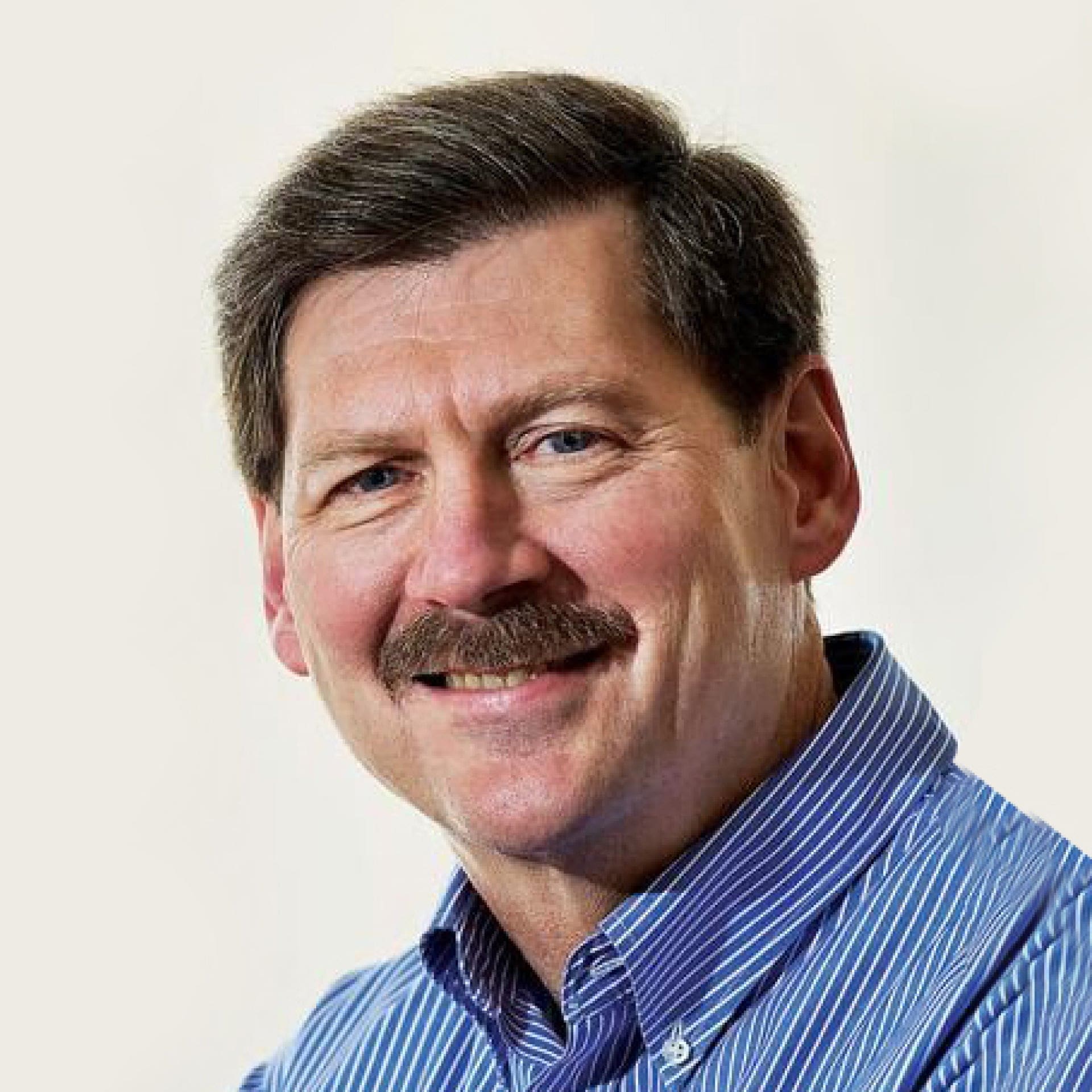
Pete James served as pastor of Vienna Presbyterian Church in Virginia for forty-two years and now serves Gordon-Conwell Theological Seminary as a trustee, adjunct professor of practical theology, and pastor-in-residence; he is the author of Prayers from the Cloud: 100 Prayers through the Ages (Eerdmans).
Love the show? Help others find it by reviewing it on your favourite podcast app. We also welcome your ideas and feedback. Email us at conversing@comment.org. Thanks for your support.
What a month on motorcycles taught me about connection.
SITE DESIGN AND DEVELOPMENT BY POLYMATH