


What a month on motorcycles taught me about connection.


What makes democracy work, Eric Liu argues, is not the laws or the Constitution but the habits of heart and mind. Eric is the co-founder and CEO of Citizen University, a former White House speechwriter, and a prolific author whose most recent book, Live Like a Citizen, is a spiritual guide to creating hope and healing in American civic life.
The son of Chinese immigrants, Eric was raised outside any faith tradition, but, as he tells it, is profoundly wired for belief and belonging. Eric opens this session referring to Alexis de Tocqueville’s habits of heart and mind, recounting Tocqueville’s account of America’s founding moral imagination.
Eric then posits questions around how to describe the moral vision of our present moment. What habits of heart and mind are most alive today? The conversation that unfolds explores human dignity in an age of AI; the habit of valuing people for their usefulness; the civic role of voluntary associations, unions, churches, and neighbourhoods; economic inequality and concentrated agency; and whether democracy and civil religion can be sustained without a transcendent source.
This session on moral imagination and civic character was led by Eric Liu in the Bethlehem Chapel on the final morning of the Understory festival.
Tiffany Thompson: Hello, I’m Tiffany Thompson, the executive editor of Comment magazine and executive producer of our 2026 Understory festival. This episode of The Understory podcast presents an interactive session led by Eric Liu. Eric is the co-founder and CEO of Citizen University, a former White House speechwriter, and a prolific author whose most recent book, Live Like a Citizen, is a spiritual guide to creating hope and healing in American civic life. The son of Chinese immigrants, Eric was raised outside any faith tradition, but, as he tells it, is profoundly wired for belief and belonging.
Eric opens this session referring to Alexis de Tocqueville’s habits of heart and mind, and recounting de Tocqueville’s contribution to America’s founding moral imagination. Eric then posits questions around how to describe the moral vision of our present moment. What habits of heart and mind are most alive today? The conversation that unfolds explores human dignity in an age of AI; the habit of valuing people for their usefulness; the civic role of voluntary associations, unions, churches, and neighborhoods; economic inequality and concentrated agency; and whether democracy and civil religion can be sustained without a transcendent source.
We hope you enjoy this exploration of moral imagination and civic character, led by Eric Liu in the Bethlehem Chapel on the final morning of the Understory festival.
Eric Liu: Good morning, everybody. My name is Eric Liu. I am the founder and CEO of an organization, a nonprofit called Citizen University. We’re based in Seattle. I’m based in Seattle, but our work is all around the United States. And our work is about trying to cultivate a capacity for civic power and civic character. Our conception of citizenship is that you have to have both to live like a citizen. You have to understand how to move things in the world and get things done. And you’ve got to couple that with a grounding in values, ethics, a moral core. And so that conception of citizenship is broad and capacious. It is not about United States passport holding, documentation, status.
And part of why I was invited to facilitate what will be a conversation in the round—I will be weaving and stitching, and I’m gonna open here with some framing thoughts, but then we are going to be inviting each other into conversation and reflection on not only our stated topic here today, which I’ll elaborate on in a moment, but in response to each other, even as we are sharing what’s on our heart and our minds.
Two things that I wanna say at the outset, both about my approach to this topic today of moral imagination, and about the opportunity that I think we have. When Anne asked me to help facilitate this session, it was partly because she knew that we’d be coming right out of hearing Dr. Dates preach, and that would be one kind of firing of our moral imagination. And then, as always must happen after things get fired like that, we must ask ourselves, well, how, after the fire, do we actually sustain and construct? And what are the habits of heart and mind that enable us to sustain?
That phrase, habits of heart and mind, is not mine. It belongs to Alexis de Tocqueville, who came to the young United States about two hundred years ago from France and wrote, ultimately, his classic two-volume book, Democracy in America. And one of the fundamental things that he named in this book, which connects to the deep undercurrents and overstory that we are living through here at Understory, was that what made democracy in America work—and I would extend this, given our provenance here today, to North America—what makes democracy in North America and the world now work is not the laws or the Constitution or the formal institutions. What makes it work was what he called in French the mœurs: the values, the norms, the habits of heart and mind.
In his case, he spoke of habits of association and joining, which were rampant, which were contagious in the United States. He couldn’t turn around without forming a club, joining an association. We live in a time right now where that feels as ancient as Rome and as ruined as Rome. He spoke of habits of heart and mind about a sense of immediate willingness to find pathways to solidarity across difference—urban, rural, poor, rich, what have you. Now, let us be real. He was speaking about democracy in America in what was a young white male republic. And so there was a common ground from which a group of people might find some forms of solidarity. But nonetheless, those habits of heart and mind of solidarity are also corroded and eroded in our own time.
He spoke of habits of heart and mind fundamentally, though, of moral imagination—that even in 1830, a country not five decades old was still trying to imagine itself into being. And there was one level of it, which was, people weren’t thinking very much in a high-toned, high-concept way about this. They were making a buck. They were trying to make it as yeoman farmers, as small tradesmen, as small businesspeople. They were settling, exploring, so on and so forth. They were just living in that way.
And yet, part of what Tocqueville named as a habit of heart and mind was an ability and a willingness to imagine even this young, ambitious, sprawling, white male republic—to imagine what it could be and become. And not in a sense of empire, but rather in the sense of moral ambition. That the claims that were made, that may have been self-evident 250 years ago—for us now, that all of us are created equal, that we are endowed by our Creator with certain rights that we would deem inalienable, among them life, liberty, and the pursuit of happiness—that these may have been self-evident, although that itself one could have contested, because they weren’t self-evident until Jefferson and others declared them so. But they certainly were not self-executing. But once you name those high credo values, then the charge becomes, well, how shall we imagine them into being? How shall we live together in a way that actually enables those words to be animated?
Now, the second thing I want to say by way of introduction is that you know a bit about who I am. I mentioned that I run this organization, Citizen University, and Anne asked me to help facilitate this conversation knowing precisely— In fact, I think part of the attraction was not just the civic work that I do, but that I was not raised in a faith tradition. I’m the son of immigrants from China who themselves were not religious. I have felt welcomed entirely. It need not even be said.
And what I would say is that I am profoundly wired for belief and belonging. And all my life, I have found ways, sought ways, to activate and transmit that wiring, that kind of inborn yearning for belief, in different ways. And so in a spiritual dimension, I’ve created what you might think of as an all-American hybrid, with a little bit from the Ignatian tradition, a little bit from the Confucian tradition, a little bit from Judaism, a little bit from Zen Buddhism. And that’s the amalgam of my spiritual approach to the world.
But a deeper way in which I have actually expressed and transmuted this wiring for belief and belonging is to direct it toward what I think of as American civic religion. And that term also is not mine. That term belongs to a great figure from several decades ago—many of you are familiar with Robert Bellah, a sociologist and historian, well known for co-authoring a book called Habits of the Heart. Again, another echo of Tocqueville. Robert Bellah wrote a famous essay in the mid-’60s saying that, yes, the United States at that time particularly had a strong— was, in a sense that he did not mean in a politicized way, but at a foundational level, a Christian nation, in the sense that so many of our civic and moral arguments are conducted through the language, in the frame, within the context of a Christian notion of what it means to be human and what it means to live up to a godly notion that all of us are created equal and are seen as equal in the eyes of God.
And what Bellah spoke of in this essay was the ways in which, in the United States, this civic religion has emerged alongside religion religion, in which we have, in different ways, civically— for the bicentennial on Thursday night, and then on Saturday night, I went to Chinese school and played the poet Li Bai, the drunken Chinese poet. That was an all-American combo.
But even in second grade, in 1976, I knew our country was troubled. I knew enough to know all of the kind of reverberations. I wasn’t watching the daily news, but I could feel that. And so it was ever so. And that too is what the Christian tradition has taught so many of you, and faith traditions more broadly have taught so many of you. It was ever so. And even under the American sun, there’s not a whole lot that’s new under the sun.
But in this 250th year, part of what Bellah was speaking about was—we are recognizing more sharply in a year like this the ways in which we sacralize the Declaration, the ways in which we elevate the Constitution, the ways in which we give ritual meaning and resonant meaning to claims like “We the People.”
I’m the son of Chinese immigrants. There is no set of promises and creedal ideals that animates life in China. Which is, to put it another way, there is no perpetual disappointment in China that they have failed to live up to a creed. We are perpetually disappointed with ourselves and with each other. It’s 250 years, man. Why can we still not get “all men are created equal”? That is both a burden and a blessing, to be so challenged all the time and to be challenging each other all the time.
And that is a practice of civic religion—not in a way that is dogmatic, “Here’s the one way to be,” but rather in a way that is recognizing that to take those words, “We the People,” “all of us created equal,” is actually to invite each other into a perpetual, never-ending contest and argument. God, are we lucky to get to do that? [laughter] Again, in the countries of our forebears, they generally don’t get to do that or don’t have a habit of doing that.
And so what sometimes looks like awful, fragmentary, centrifugal polarization is— yes, there’s trouble right now in the body politic, but it is also just an extreme version of what is a healthy functioning of the American body politic. We are meant perpetually— America is an argument. America is an argument. And so the point of American civic life, and even spiritual life, should not be to smush down arguments or force a consensus. But it should simply be to have less stupid arguments.
We are always going to be contesting how we value and weigh pluribus versus unum. Do we celebrate our diversity, or do we emphasize our unity? We are always going to be grappling with the tensions between liberty and equality. Are you free to do whatever you want, even if that starts limiting my opportunities and making it impossible for me to achieve civic and social equality? We are always going to be arguing and in tension about the fundamental argument that’s baked into the Constitution, about how much credence do we give to the nation and to national government versus how much sense of belonging and particularity and place and pride we attach to the local. That’s a baked-in American tension.
And so for us to exercise moral imagination, whether in the United States, in Canada, or anywhere else in the world right now—I’m speaking from an American tradition, but these ideas are resonant everywhere right now—what it means to make sense of the creedal promises we have inherited and what we choose to do with them.
And so the way that we’re going to spend the balance of this hour is really for us to be in conversation with each other. I think the framing of the title of this session was “Forming a Moral Imagination under the Overstory,” which I think is interesting. The whole metaphor of the understory that we heard from Anne from minute one of this gathering was the way in which, in a sense, we are a counterculture here. That the dominant culture is one of hyperindividualism, market obsession, valuations of people as objects and commodities. A dominant culture of— we are meant to be manipulated into division, that we are meant to be seeing each other in instrumental, transactional ways. And that we in the understory, as David Brooks was saying, you know, we are that small number of people who have been seeking a better way to live. And we have been finding it in the relational. We have been finding it in the local. We have been finding it in ways that turn moral precepts into calls to not just action, but calls to commitment. We are the understory in this way.
But I think that’s comfortable for a while to say, we, the few, the proud, we’re like fighting against the big dominant culture. But at a certain point, we can’t just be fighting against that dominant culture. At a certain point, we are now called, if we want this understory in fact to grow and thrive and be the center of the next moral ecosystem of our societies—we’ve got to be able to articulate together what we are for.
I’ve been struck, as someone who was not raised in a Christian tradition, how much woven throughout the last couple, three days is this emphasis on— well, not sure how to put it— on quiet, on a need to do what we’re doing right here, which is just to sit and be with one another, and to find in that quiet a capacity for discernment that most Americans and most of modern Western life afford us anymore. But we’ve got to do something with that quiet other than treat it as a respite from the noise. It’s in the quiet that we get to, together, compose the elements of an affirmative moral imagination that can draw on words from creeds, if you like. It can be about justice and equal protection of the laws and so on and so forth. But it can equally draw from the language of Scripture.
And so I say all this to open up our framing here. And so as you are moved—and we already have a hand over here—say your name, and hopefully we’ll get to know each other and remember each other’s names.
Alec Ryrie: My name is Alec Ryrie. I’m a church historian from England. When we look back, I think, at the last, what, 250 years, it seems like the great moral project has been this project of moving from a world where people were primarily defined by family, by status, by inheritance, by class, by ethnicity or nationality, by race, by gender, and saying, “We see human beings as being on an equal footing.” And, I mean, God knows that struggle has not yet been won, but an enormous amount of progress has been made.
But I think we are kind of now at a point where we can see— I mean, yes, that’s fantastic, but it’s not enough. And where we’ve come to, or are working towards, is, if to kind of butcher Dr. King, a world in which people are judged not by the color of their skin, but by the contents of their résumé. We judge people by their usefulness.
I mean, I think of the way that the kind of moral vision of socialism in the nineteenth century was the idea of a workers’ state, which was a real moral breakthrough—the idea that working people should have the same value as everybody else. But it led to the idea of a state which almost defined human beings as workers, to the point where the Soviet Union refused to host the Paralympic Games in 1980, because it said there were no disabled people in the Soviet Union. And as they defined people, that was almost true, because if you weren’t a worker, you didn’t count fully as human.
Now, we don’t say that, but we do still have this tendency to define people by their usefulness, by what value can be extracted from them rather than by what value they have. So it seems to me that one of the points we’re at—and it may be that whatever AI is going to do to the world of work is going to help to accelerate this—is that we’re going to need to recognize that what makes a person useful is not what makes a person valuable.
Eric Liu: So, wow— there are several powerful things that Alec said, which I want to segue to. Can’t remember specifically who said this, but the phrase that stuck in my mind was “beloved before useful.” And that stuck with me, just to complicate this thought, because what it made me do in thinking about our moral— both imagination, and you’re speaking a bit of moral ambition, right? Let’s not just kind of be content with, “Hey, we’ve been doing good on equality”—like, you’re going for more.
I have long in my civic life, and as the son of Chinese immigrants, valorized a certain version of usefulness. And I want to unpack this, because I think it’s important for our understanding of moral ambition here. So I’m an alum of Yale College. At the Harkness Tower in the middle of campus is carved a quote from one of our alumni, Nathan Hale, from the class of 1773, whose most famous quote is “I regret that I had but one life to give for my country,” which he said when he was captured by the British as a spy in the Revolutionary War and executed, right? So, thanks a lot, man. You know, but he— so that’s his most famous quote, but a second quote, which he wrote in the letter in which he accepted this ultimately fatal spy mission, is what’s carved at the base of Harkness Tower. And the quote is, “I wish to be useful.”
And when I hear that quote, that quote always was like a bell for me—like, literally, it was under the bell tower, but it was like a gong for me. There is a form of usefulness that need not be about résumé. And maybe the word itself is now too loaded, so that we just need a different word, because use is too connected to use value and market valuations of use. But I think the heart of what you’re pushing us to do here is to be ambitious about what we think this moral imagination is. And however you want to name this—in Nathan Hale terms, Tocqueville terms, Dorothy Day terms, whatever you want to put this—you can see the through line to the way that Jesus lived. And you can see the through line to the way in which that is a magnetic call to people to be more morally ambitious, to be greater than they are in the way that we live together. And I appreciate already this kind of connecting of dots. Tell us your name and— yeah, please.
Nick Spencer: Thank you very much. My name is Nick Spencer. I work for a Christian think tank based in London. I’ve greatly enjoyed this whole experience and this conversation. I wanted to introduce a perspective from over the pond, and particularly picking up the phrase moral imagination. It probably won’t have escaped you over here that we have certain problems in the UK. But that can sometimes eclipse what works.
I’ll tell you a short story of a man who’s no longer young. He’s in his early fifties. I wrote an article about him. He had a stroke when he was seventeen months old, incurred certain brain damage, subsequently developed epilepsy. He’s not able to work and will never be able to work. But he does live in sheltered accommodation, which is paid for and supplied and staffed and equipped by the local authority. Now, the young man happens to be my brother. So I have a great involvement with him. I have a great involvement with the local authority, who are trying to place him in places of usefulness. He volunteers in the community. He’s a very keen artist.
And when I wrote this article for the think tank for which I work, I made the point that all my readers were paying for this. They’ve never met my brother in their life. They’re never going to. But through the system of taxation and redistribution and social care that we have in the United Kingdom—which is creaking, which is under a lot of stress—we are seeing examples, innumerable examples, of powerful, material solidarity that makes the country in which I live, and indeed many countries which I know, deeply humanizing.
My slight concern is that, just pushing back on the understory/overstory metaphor, we forget that. There is a great deal of wrong with America, with the UK, with Western Europe, but there’s a great deal of right about it. And I think we do ourselves an enormous disservice if the first thing we do isn’t to affirm what is good. Now, we can then explore why it’s good. And particularly in the case of Western Europe, there was the confluence of a deep sense that if you live in a Christian country, you should have a Christian political ethic, and then the profound solidarity that was formed by the First and Second World Wars that allowed those systems to come into place. And both of those—the recollection of that wartime solidarity and the Christian inheritance that we have—are fading. And that is eroding the ground on which that solidarity is built.
So I’m not saying there aren’t genuine and serious issues here, but I do think the first port of call, and it’s a profoundly Christian one, is to find, as it were, where Christ already is, and affirm that, and then say, in the light of that, how we’re going to fortify, protect, build, secure, and renew—but always do so in the light of what is already good.
Eric Liu: Thank you. And tell me your first name again?
Nick Spencer: Nick.
Eric Liu: Nick. What Nick is saying here, it’s profoundly important, both in terms of affirming what is working and naming it. And one of the things that— and when you name not only the solidarity-forging experiences of the two world wars, but particularly the aftermath of the Second World War, right? There is an ethos that is falling apart now, because the generation that built it is disappearing from the earth, that you could briefly summarize as “We’re all better off when we’re all better off.” Now, that sounds to some ears like a naive, childlike, overexposed generosity that drains you. But what it is, actually, is the Marshall Plan. What it is is NATO. What it is is a system and a web of commitments that enable us to recognize that none of us is alone.
And there is a civic version of that, and there is a Christian version of that. But fundamentally, when we speak of Christian humanism, the challenge and the opportunity is, how do you fuse those things in a way that reminds us not only that things are working here, but also, to the extent that things are decaying, to remember what the thing is that we’re aiming for when we try to kind of regenerate out of decay, right?
So, Ray, you know, you’ve helped— well, tell us who you are for those who don’t know, but I can say you’ve helped make possible this convening and this gathering, and I’m curious the ways in which these questions of moral imagination have been reverberating with you.
Ray Pennings: Well, thank you very much. My name is Ray Pennings, so I’m the co-founder of Cardus, which publishes Comment. I’m a Canadian, so it’s been very interesting, actually, in these few days to listen to a conversation that, while it’s had some global voices along the way, has had a very American accent. And as Canadians, we hear the American accent—you may think it’s the other way around, but that’s— that’s— I’m going to insist on that.
Just three very quick points. We started very much— what does it mean to be human, and what is being born, have been sort of a theme throughout. And it strikes me, the imago Dei—we’re made in the image of God. And we often think of that in the context of dignity, and by all means, I’m not minimizing any of that. That’s essential. I think it’s also important, especially from a Christian perspective, to reflect on the fact that God is a triune God, three persons in relationship with each other, and being image bearers of God, we are created for relationship. So there is a sense in which the expression of my full humanity cannot take place simply in the expression of my individual liberty. There is a sense in which being in community, being in multiple communities, not just the political community—
I love the American Constitution. “We affirm these truths to be self-evident.” Part of that means that if they’re self-evident, you didn’t invent them. They belong to not just Americans. They come from somewhere else; you are giving a particular expression to them. That all men—not just Americans. All of us have these.
And we live in communities. Now, we live in political communities. I belong to the political community of Canada, to which I am very loyal, which actually has in its history a resistance of— you know, the reason we formed in 1867 is there were certain things that were happening south of the border that we didn’t want any part of. And so we very self-consciously chose to— you know, we were a bunch of French Catholics and English Protestants fighting each other for centuries, and when the threat came in the 1860s that we were going to become part of the United States, we decided that we liked each other. Well, we hated each other a little less than we hated the idea.
So the Canadian Constitution, frankly, is a peace treaty, and we don’t have a grandiose statement like life, liberty, and the pursuit of happiness. We have peace, order, and good government—bureaucracy, structure, but pluralism. Written into the Constitution—sections 92 and 93 of the Canadian Constitution—is that we’ll respect— the English Protestants’ promise to respect French Catholics’ right to educate their children in Catholic education, and the inverse. There is a pluralism built inherently into our structure. And I would say that’s a pluralism not just in terms of belief and the diversity and the expression of freedom; that’s also a diversity of roles. It’s not just the political.
And I think— I’m not going to put myself in Tocqueville’s thing as a visitor to America observing your democracy, but I would observe that the heart of your democracy, in terms of culture preceding politics, that is created not through our political institutions. In many ways, they’re usually the last to figure out what’s going on. It is actually through the voluntary associations, and the multiples of them, and the organizations that are reflected around here in this room.
So I would say that—seeing that not just as sort of unfortunate consequences, “We’re arguing to sort things out,” but actually as an expression of our divinely created relational sociability—that’s part of the expression of the fulfillment of these rights that have been revealed. And so I think, you know, thinking of pluralism, and the way, you know, pluralism— let us not kill each other. That’s the starting point. Let’s not kill each other. But pluralism is a more ambitious notion of how shall we live together.
Eric Liu: And the pluralism you speak of, you call to mind— John Inazu, I think, is his name, wrote a book called Confident Pluralism. Yeah, that is more than just coexistence, but is also that kind of, how will we create together? And I love your initial statement that, in thinking about the tripartite dimensions of a Christian identity, that, you know, we are inherently in relationship. And so a pluralism is not just me with— us with each other in this room, but it’s each of us with our own— with the different dimensions of our spiritual and civic identities within ourselves.
But I think the naming of that— we’re already here, we’re getting some elements here, right? We’re speaking of an ambition toward justice. We’re speaking of a commitment to mutuality. We’re speaking about pluralism here. We’re recognizing the ways in which this cannot simply be recognition of the deaths and the griefs, but what gives life? So, please.
Dhananjay Jagannathan: My name is Dhananjay Jagannathan. I think that we need to think about moral imagination a little bit more analytically. I’m an academic philosopher; of course, that’s my move. [laughter] Moral imagination is closely related to the virtue of hope. You have to see a horizon beyond what you see here, and you have to have a transcendent value in which you place your trust. And your wonderful introduction, Eric, focused on the way that the American ideal, the American nation, has functioned in that way—not merely as an ethnos or a tribe, a mere nation, but also as an ideal—and how that has generated hope.
I don’t see very much hope around me. You might say it didn’t seem very hopeful fifty years ago either. I would reject that. I think that people, especially younger people, are less hopeful right now because they don’t see a stable life course in terms of relationship formation, in terms of work, meaningful work. Even if it’s high-paying work, it’s often not meaningful. I know a lot of people in New York City who are paid a lot of money who are trapped by despair, because their lives are governed by logics of consumption and market relationships that drain the human spirit.
And so I think one thing we can do concretely is offer a vision of hope that might be, for some of us, in a more theological register, might focus on our faith commitments, but, I think, more broadly, focuses on the hope of communities, political hope, and that can be, I think, spoken of in an ecumenical register that includes other people who want to say, “Living for myself, or even just for my family, is not enough.” Living just for my local community is not enough, although those are the places where I’m grounded and where I find immediate relation and opportunities for direct service.
And that connects to thinking of political life not just as a forum for competition and for the occasional vote, but as a place where we meet each other face-to-face without knowing what the other person is already going to say to us. And that means putting our energy into—for me, trade unionism; I’m a member of a union—putting energy into my church; I’m on the board of my church—putting energy into my neighborhood, where I live around a lot of other people who don’t share my values. I live in a very heavily Jewish neighborhood on the Upper West Side. And what I found really beautiful about living there is the liturgical rhythm of that neighborhood. It’s not the rhythm of my liturgical life, but the way that I see families on Friday evenings and Saturday mornings, and finding a way to participate in that and cherish that as a symbol of a great faith and a great tradition and a great trust.
And so I think there are these ways of living not just for yourself, but it means giving certain things up. It means, first and foremost, giving up the damn pocket screens that really draw us away from each other, from relation, from face-to-face, and resisting, I think, certain forms of ease that modern life provides that are the enemy of genuine community. And that is going to require a call for certain kinds of sacrifice. I think hope and sacrifice have to be married in that vision. That’s my concrete proposal for the moral imagination we need.
Eric Liu: I love it. I love that you named at the very end there the tie to sacrifice. Because someone—again, I can’t remember who, maybe this was in a dinner conversation—was making the distinction between cheap hope and earned hope. You’re speaking of an earned hope. I think in American commercial life, and maybe to a certain extent religious life, there’s a lot of cheap hope. Everything happening is meant to happen. Everything happens for a reason. There’s a cliché level. But you’re talking about an earned hope, earned through sacrifice. No one wants to hear about sacrifice right now, particularly people who are burdened in the ways that we’re talking about, in communities who aren’t using our ten-dollar words but are living the same kind of pain and yearnings. And so I really appreciate that sharpening. Okay, Ernest.
Ernest Lang: Hi, I’m Ernest. I also serve on the board at Cardus. I’m a Canadian. As somebody noted, I live in Vancouver. So in Vancouver, I’m almost a majority, as being of Chinese descent. Here, I’m sort of reminded that that isn’t the case in many other parts of North America. I’m an immigrant who came from a pretty humble sort of socioeconomic background, originally born in Singapore—but not the Singapore of the Crazy Rich Asians era, but Singapore of the 1970s. We moved here in the 1970s, when per capita income in Singapore, median per capita income, was about one quarter of Canadian per capita income. So it’s different— different time.
We came to Canada for a similar reason that many people come to the United States, which was, Canada was seen as the land of milk and honey, a land of great promise. And one thing I’ve noticed about both the Canadian Dream and particularly the American Dream, so to speak, is— and Eric spoke about the creedal nature of your country—the focus often is the promise that people can build a good life. And our focus tends to be on— what attracts immigrants is the blessings of a Christian-ish society. I hesitate to call it a Christian country—a Christian-ish society.
And when I think about what we seek in terms of Christian pluralism or secularism, Christian humanism or even secular humanism, they’re good things: community, peace, order, a sense of relationship, solidarity, et cetera, et cetera. But the moment we focus on those things— I don’t think in the long run they’re enough on their own to sustain us, in the sense that I live in a community, I have people I love, but from time to time, I will treat them abysmally, because I’m a sinful, broken human being. And that— and depending on the kind of societies that we have, it doesn’t take much for our pluralistic ideals to resort— to revert to highly polarized division and conflict, because of the human heart.
So I think the real focus is more than— and it needs to be something much more transcendent than things like community and serving others. And I imagine most of us heard the preaching from Dr. Dates, and what I was struck with is the real solution to the ills of the human heart, which are the foundation of all of our ills, is Jesus. Because Jesus was so— he offered the ultimate big tent in terms of identity. He broke down every single category that we as human beings, who are sort of innately tribal, tend to create constantly. And he put forward a vision of living where he truly loved his enemies and prayed for those who persecuted him, and we are called to do that as Christians.
I was at an interesting conversation about Christian humanism, and a question came up about what would humanism with other faith traditions look like. And it occurred to me, without a sense of grace and the mandate to love your enemies, living with that type of love, I actually don’t think any other form of humanism can be sustained in the long run.
Eric Liu: Thank you, Ernest. Well— and before we pass the mic to Matt, and I believe— I wanna name one thing that was inherent in what you said, and something that several of you have named here, which—it occurs to me that in this crypt conversation, we’ve come closer than I have felt through the prior few days, in both small and large conversations, to naming the word justice. I’ve not heard the word justice a lot, actually, the last couple of days.
The fear, the anxiety, the pressures that people feel that are leading us to have to be in the understory here are pressures driven in part by the material realities of grinding inequality in the West, and the concentration of wealth, opportunity, voice, and agency. That word agency comes up a lot. Well, why is it that people don’t feel agency? Because agency itself is getting concentrated in fewer and fewer hands. We all— we can be making nice incomes and have nice résumés, but we feel we have less agency in the world, right?
And you were putting your finger on that in just speaking about the community. You were rooted in Vancouver, and you’re not a crazy rich Asian, but you are a person who’s trying to make a— who’s trying to hold a close-knit community together in a time where all these kinds of economic and social fabrics are being pulled apart. So I just want to name that, because you all have come closer to that than many other conversations I have experienced here, and we can’t get real about this kind of moral imagination that is fused with sacrifice if we don’t name that baseline reality.
Matt Duncan: I just wanted to pitch this out there as a proposal. I love coming to gatherings like this. I’m a part of the— I work with— my name is Matt Duncan. I work with Hill House Christian Study Center, and I’m part of the study center movement. And I love gathering with my peers, my colleagues, because we have a value for the arts. And I don’t find that in most churches, and I haven’t my whole Christian life. But it is a secret sauce, because when you value the arts and you value beauty, you’re then creating space for this big tent, which allows us to come together and speak.
So, for example, twenty-five years ago, I traveled around the country showing a short film, and I could show it in bars, I could show it in libraries, I could show it in churches, and it would bring all these different people together. And I would just have them write down whatever their thoughts were before the film. And after the film was over—thirty-minute film—I’d have them write what their thoughts were. And they would go from not being on the same page, whatever the thoughts were, to, thirty minutes later, exactly being on the same page, and we could just come to a healthy dialogue about something.
So there is a lack of value for the arts in general—art for art’s sake, beauty for beauty’s sake—in our communities, faith communities in particular. And that is a great— if we can invest in that, that will open up some doors for some healthy dialogue.
Eric Liu: Thank you so much, Matt. And that is such a powerful how in addition to the what here.
Matthew Kaemingk: So Jeffrey Stout is a political philosopher, secular pragmatist, and in 2004 he wrote this book, Democracy and Tradition, in which he asked himself at the very end of the book, “How will democracy be renewed? What streams will refresh it?” he asked rhetorically. And being an optimist about America—one might say a romantic, a naive optimist about America—he said Americans will replenish and refresh themselves, that we will renew ourselves simply by practicing American democracy.
Now, this was back in 2004, and I don’t think that kind of optimism would resonate today—that America can solve all of its problems just by being America, that America can replenish itself, that its wells can refresh itself. Now, we use this phrase, America, “one nation under God,” often beating our chests with pride, but many people actually see that phrase for what it is, which is actually a scary thing to say. We are under God. That’s a scary thing to confess.
And it seems to me that in order for American democracy to be renewed, it’s going to be— it’s going to need deeper wells that it doesn’t own, that it did not create. And it’s going to need to be refreshed from the outside, the transcendent. And for me as a Christian, it’s got to be Jesus Christ. I completely agree with my colleague from Canada that pluralism cannot sustain itself. Democracy cannot sustain itself. It depends upon something deeper. And that is what I would have to say about where a moral imagination has to come from. It can’t come from some kind of vague civic spirituality. It has to come from deeply rooted religious traditions who care about these things. I have a friend who’s a Muslim, and he said, “I wish America was a more Christian nation.” Not a less. He said, “I’m tired of these hollowed-out Christians. We need deeper Christianity.”
Eric Liu: Thank you so much. What a note for us to close this part of our conversation—by which I mean the Understory is itself a part of a larger conversation, and it’s been such a gift to share with each other and push each other and be awakened together.
And I’ll just close with a quote that connects to what Matthew said, and it’s a quote that is not about Jesus, but I invite you to kind of connect it to what you’re speaking about in terms of these deeper wells. The American political scientist Samuel Huntington, in the book called The Promise of Disharmony—the final sentences of that book are, “America is not a lie. It is a disappointment. But it can only be a disappointment because it is also a hope.”
And I think how we lay that, perhaps above or beside these deeper wells of moral ambition that so many of you are feeling must be filled and refilled by your faith, your Christian faith, is, I think, the opportunity for us as spiritual beings, as citizens, as Americans, and as humans. And I’m so grateful to have had the opportunity to share in some of this learning together. Thank you all.
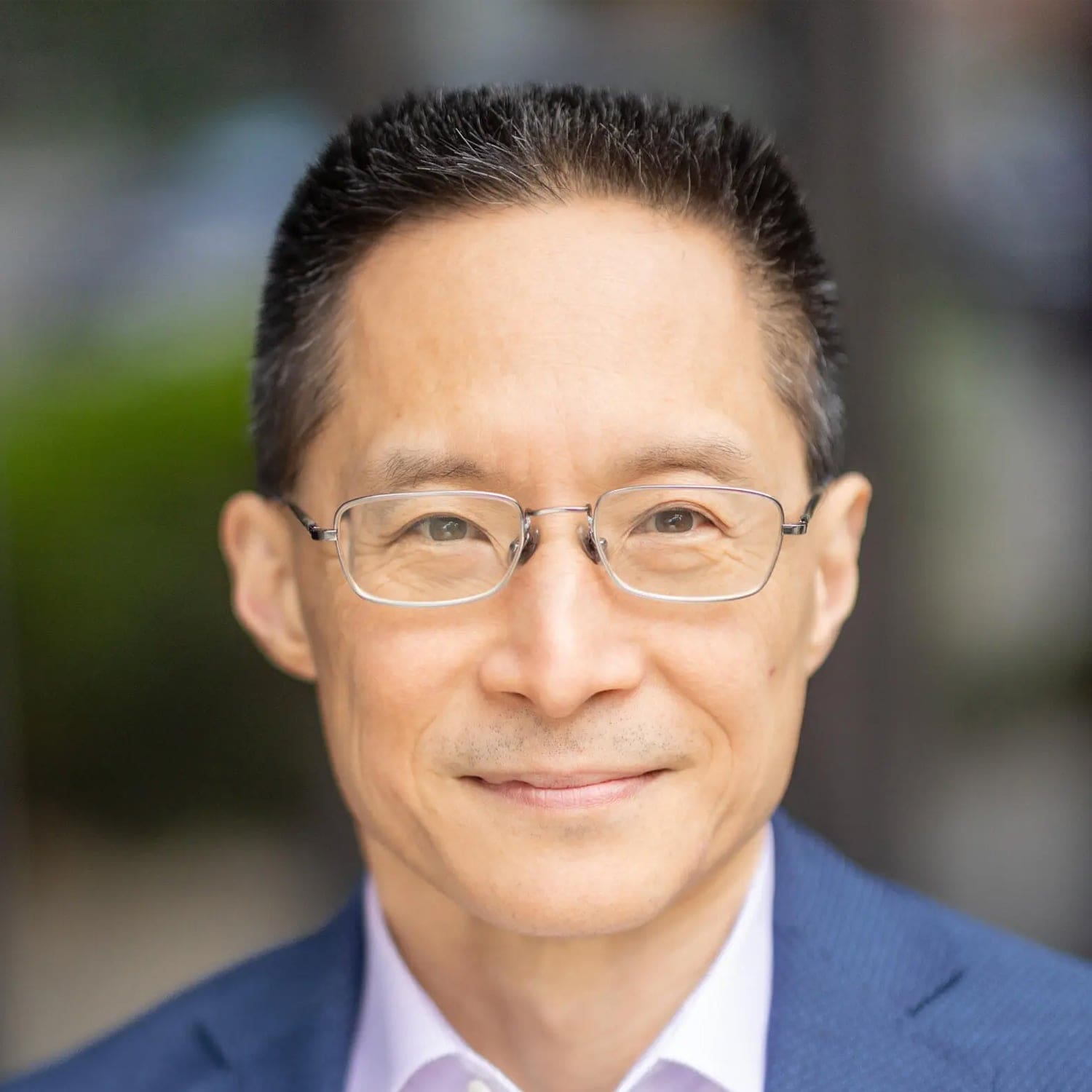
Eric Liu is the co-founder and CEO of Citizen University, a former speechwriter and deputy domestic policy adviser to President Bill Clinton, and the author of Live Like a Citizen: 8 Ways to Change Your Mindset and Our Country (2026).
The Understory festival is a civic and spiritual gathering to rehumanize our common life in a time of cultural fragility. Love the podcast? Help others find it by reviewing it on your favourite podcast app. We also welcome your ideas and feedback. Email us at podcasts@comment.org. Thanks for your support.
What a month on motorcycles taught me about connection.
SITE DESIGN AND DEVELOPMENT BY POLYMATH