


A
At the Berlin Exposition in 1896, they called it Kinderbrutanstalt, or “child hatchery”: live infants on public display in newly invented incubator technology from France, a neat row of glass boxes pumping out vital heat for tiny humans. Any walker looking for spectacle and education could observe these small children presented as an experiment in public science, showing off the incubator as a sign of promise for personal and civic health. Martin Couney, a French-trained physician, convinced a local doctor from Berlin’s Charité hospital to loan him six babies for the show. The infants were fragile, deemed unlikely to survive, and therefore an acceptable humanitarian risk. But in the end, all six infants made it. The show was visited by more than a hundred thousand visitors in two months’ time. Riding a wave of international interest, Couney came to the United States at the turn of the century and oversaw the installation of displays at fairs and exhibitions, including many summers on the boardwalk at Coney Island. “Expositions are the timekeepers of progress,” said President William McKinley in a 1901 speech. “They record the world’s advancement.” To see the exhibition array was to learn, and not least about the future of reproduction. Historian Jeffrey Baker places the incubator at an inflection point in design for human bodies, yielding so much in its wake that his book’s title captures: The Machine in the Nursery.
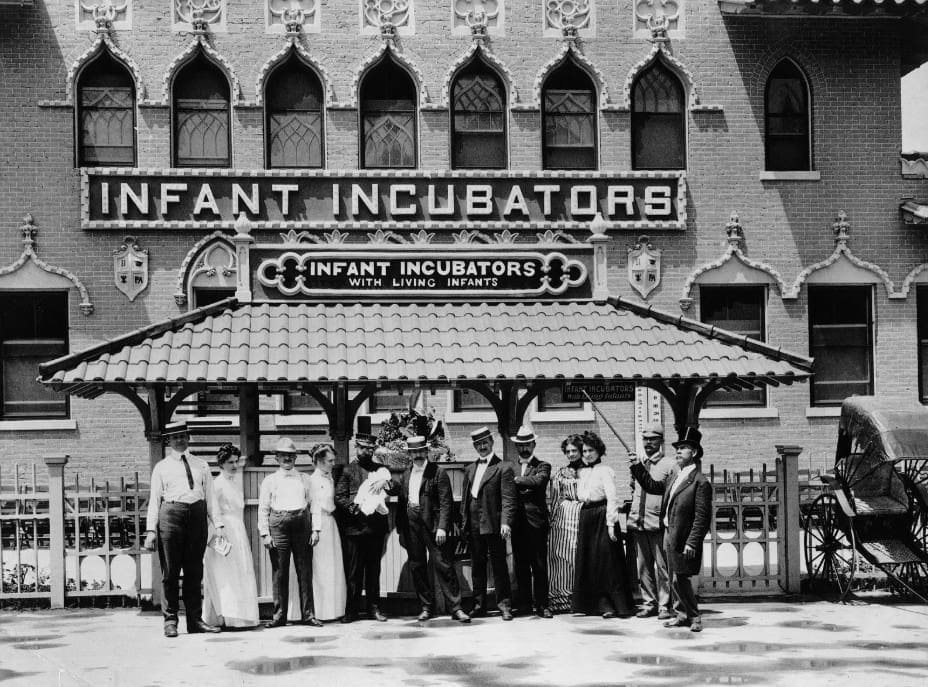
There were lower-tech models debated in Europe—clever assemblages of hot water bottles and the like—but the sensation among American audiences was tellingly organized around the Lion incubator, so named for its inventor, Alexandre Lion, and featuring forced-air ventilation and mechanically regulated heat. The general sentiment in the American press was celebratory, broadcasting confidence about what would surely become a leap forward in human advancement made possible by technology. The Lion’s engineering made a more free-standing device that aimed to “transcend the shortcomings” of the hospital environment, especially where strong nursing care wasn’t available, writes Baker.
There were vocal critics, of course. The Lancet in Britain was scandalized by the proximity of infants shown at the 1898 Barnum & Bailey show in London’s Olympia to the “obnoxious odour” of nearby leopards in cages and the generally objectionable idea of serious science kept next to merry-go-rounds, peep shows, clowns, and other entertainments. The New York Society for the Prevention of Cruelty to Children mounted an unsuccessful bid to stop Couney’s displays. The questions were obvious to many: What good ethics should be brought to bear, for both the children and the requisite wet nurses who needed to attend them? And the wider international conversation brought new scrutiny to newborn life altogether. The very concept of prematurity was created in this period, in part a response to the technology itself—distinguishing between otherwise healthy infants in early temporary distress from those with more serious conditions. And there were questions that echo all troubled social histories of technology: When does good design augment the primacy of people—in this case the mother—and when does professionalized medical care and designed technology step in, even threaten to take over?
Despite the widespread publicity and initial uptake in American hospitals, the incubator was not the transformative success that many expected. Its adoption, funding structures, and mortality metrics were as mixed as the shifting specialties of obstetrics and pediatrics (as distinct from midwifery) in this period. What “began with a fiery explosion of new ideas” was “quickly extinguished as promise gave way to reality,” writes Baker. A complex series of changes in clinical care, hospitalization, and technology had to come together before incubators could be re-introduced after 1920 as part of the earliest NICUs.
Warming up premature babies with the aid of technology—as a public health matter plus live advertisement along the seaside boardwalk—is exactly the kind of strange example in the history of design for humans that helps us clearly see design’s intervention in our lives and its domesticated legacy all around us. The incubator’s origin story as both science and spectacle is the kind of oddball account that I’ve come to expect in everyday product design, one that upends all lazy categories about the march of progress, and one I like to tell my eager design students whose eyes are trained on the future. A designed product, a building, a streetscape say so much, I tell them. All material culture is an instantiation of ideas. But it’s easier to see ideas-in-things with a knowing, irony-laden look at the past. Putting babies on display in incubators, especially because they were ones unlikely to survive, now strikes us as abhorrent. We feel confident in seeing its errors and therefore reassured by our good judgment. It’s much harder to see what’s unfolding right in front of us. When do artifacts and environments extend and nurture our humanness, and when do they sequester goods away, offering a functional substitution for traits and interactions that are essential and worth preserving? Sometimes designed tools and environments make life more fully human, and sometimes the anti-human makes an appearance—slowly and in the mixed inheritance of innovation, or suddenly and without our consent.
When do artifacts and environments extend and nurture our humanness, and when do they sequester goods away, offering a functional substitution for traits and interactions that are essential and worth preserving?
If we’re looking for good design, design worth imitating, it’s tempting to think we should start from a more clear-eyed and coherent set of top-down ideas or capacious systems thinking. Map all the variables, get to the root issues, and let the design ideas proceed from sturdy principles that are replicable and scalable. Technology and design critics often point to a faulty “anthropology” of personhood that sits at the root of anti-human design. In this way of thinking, an excessively mechanistic mental model of the combined body-mind-soul is behind all the ugliness, planned disposability, and technological overreach in the built environment. And it sure looks this way sometimes: cheap cookie-cutter materials, shoddy joinery, an unrelenting “greige” in the corporate halls and apartment lobbies of our cities and towns, the appification of every restaurant, and all of it grimly matched by the homogenous, infantilized consumer shops that fill both “redeveloped” city centres and the nihilistic sprawl stretching from their outskirts. Modernity, with its machines-and-markets logic, cranks out persons as Homo economicus; its ethos shows up in the planned obsolescence of our everyday things and in our soulless buildings, little more than extruded spreadsheets. Surely, then, the cure is to recover and clarify a better philosophical anthropology, and thereafter to spread its design implications widely? Ideas beg for a coherent and consistent through line, the thinking goes, one that would give rise to a more human-centred built world. Fix the mental model, and good design will surely follow.
But this is not how humans tend to behave or think. Coherently held anthropologies are elusive at best. Sociologist John Evans shows this empirically, via surveys and interviews aggregated in his book What Is a Human? What the Answers Mean for Human Rights. The overwhelming majority of the public holds a patchwork of ideas about how we think about ourselves, about what the human creature is and is for—and not for lack of philosophical sophistication. Life just generally doesn’t seem to demand the kind of rigour that holds up a set of syllogisms for careful examination. We are too embedded in the textures of life’s decisions inside its many designed settings: in the maternity wards and soup kitchens and kindergartens and clinics and hospice houses in which our lives unfold, as stories in real time. What a human is, for most of us, comes from a pastiche anthropology generated by some broad principles that may be, in Evans’s taxonomy, theological or biological in origin—recognizably, philosophically formal—but then blended together in response to the narrative turns in our emergent, embodied lives. We make use of abstract theoretical underpinnings for our situations on a need-to-decide basis: in early life among the newest generation of incubators in the NICU, say, or at life’s end among the ventilators and feeding tubes, and inside all our many human quandaries and artifacts in between. Humans have stark and urgent material needs, and they’re right in front of us. Why should most people examine and scrub each situation down to its philosophical foundations, looking for consistent rules?
The ideas do matter. A strong design education should have philosophical and historical training at its non-negotiable core. But instead of a linear model where we assume that ideas always manifest themselves downstream in tangible design, we might take seriously that the causality runs both ways—that design with a demonstrated commitment to sacred humanness is itself a form of argument. Both neuroscience and environmental psychology show that our behaviour is shaped in part by our designed surroundings. So we might set out to start with design—with a come-and-see invitation to the designed spaces and places where humans thrive. We might put forth a more sturdy anthropology by example, an irresistibly beautiful and consistent life ethic—an ethic that comes alive in the attentive structural details and material choices of our spaces and in the activities they envelop—rather than waiting around for a proper rationale to always lead the way. We might build the kinds of settings that signal the strong worth of the people inside them.
Let’s stay with infant care for a moment, and at the scale of the box. The incubator is a creation of modernity and big medicine, but another designed structure predates it by a long shot and endures in contemporary design: the “don’t abandon your baby” box for rescuing infants when desperate parents can’t care for them.

In the twelfth century, when dozens of drowned infants lined the bottom of the Tiber River, the church took action, ordering safe deposit places to be built into foundling hospitals. The foundling wheel is an architectural invention—a revolving-door structure built into the sides of charitable hospitals where parents could safely and anonymously place infants, turning a Lazy Susan–style wheel accessed from outside the building walls and knowing that the child would be received by the warmth and care of the nuns on the inside. One of the oldest structures is still visible at the Santo Spirito hospital in Rome.
You can see the foundling wheel’s long tail of influence—a kind of loose, dotted-line design heritage—in its contemporary counterparts. As with so many charitable structures eventually subsumed under welfare–state management in the United States, the baby box now is built into the sides of fire stations, with a “no questions asked” proviso and high-tech warming features. In some parts of the world, rescue services are still run by charitable organizations: Door of Hope in Johannesburg has received nearly two thousand babies in its quarter century of operation. Their “door” is also a small hatch built into the side of a building structure, but their services extend beyond infancy to young children—facilitating adoptions, family reunification, and early childhood services.
Another kind of box design helps families get strong material starts in their own homes: The Finnish baby box, recently replicated in New York City, gives parents a box full of supplies like diapers and onesies. A small bundle of caregiving equipment for the smallest humans, given in a spirit of collective responsibility.
It can be hard to fully appreciate this kind of design for the astonishing, radical statement in its provision: that the babies of strangers carry the kind of dignity that is tantamount to those of close kin and tribe. It’s an idea that had to be invented, that goes against the self-preserving optimization of communities adapted for fitness. This kind of dignity makes claims on a collective, perhaps a polity. “Design for dignity” is easy to affirm at the high level of uncontroversial principles, but in practice it too often takes on the straightforward structure of unidirectional charity, as though dignity were a good or service extended from those who somehow “have” it to those who somehow lack it. A sharper term from theologian Helmut Thielicke might get us closer to what’s true: Dignity is not a possession to be more fairly meted out but a universally contingent relational force—a bracing state of human dependency on divine sustenance, a vitality on which each human life hangs every second. Thielicke called this an “alien dignity”: the shape of a reality utterly not of our own making. Our task is first to recognize it before wielding it—to recognize it in ourselves as in others, and perhaps to recognize its force in the designed DNA of the inherited built world, a form of material argumentation that so easily goes to sleep in our imagination. You don’t need to have a maximalist theory of the state—either for or against—to see the sense of possibility on offer.
The baby box in its variant forms shows up at an acute moment of care for the smallest humans and makes a radical claim for dignity. What about design across the lifespan? At the scale of architecture, the squares and rectangles get bigger and the models more various.
Dignity is not a possession to be more fairly meted out but a universally contingent relational force—a bracing state of human dependency on divine sustenance, a vitality on which each human life hangs every second.
Founded in 1993, Rural Studio is an architecture practice that builds residential and civic buildings in Hale County, encompassing a collection of small towns in western Alabama. Its focus on this bounded, identifiable region is its formative commitment: not big splashy international projects, not big-city signature works. Instead, the studio runs on long–time relationships, investing in community-led design for what’s called vernacular architecture: single-family houses, a fire station, a community centre—the buildings that hold our everyday lives. Rural Studio operates in a part of the country with very little wealth; anticipating the cleverest use of materials and blueprints for projects like their Front Porch Initiative is key to the model. Supported by donations and grants and run in partnership with Auburn University, the studio always trains students as part of its practice. Its small-scale projects tackle measurable goods like energy efficiency, but also conviviality: a wheelchair access ramp where needed, a red door painted by request.
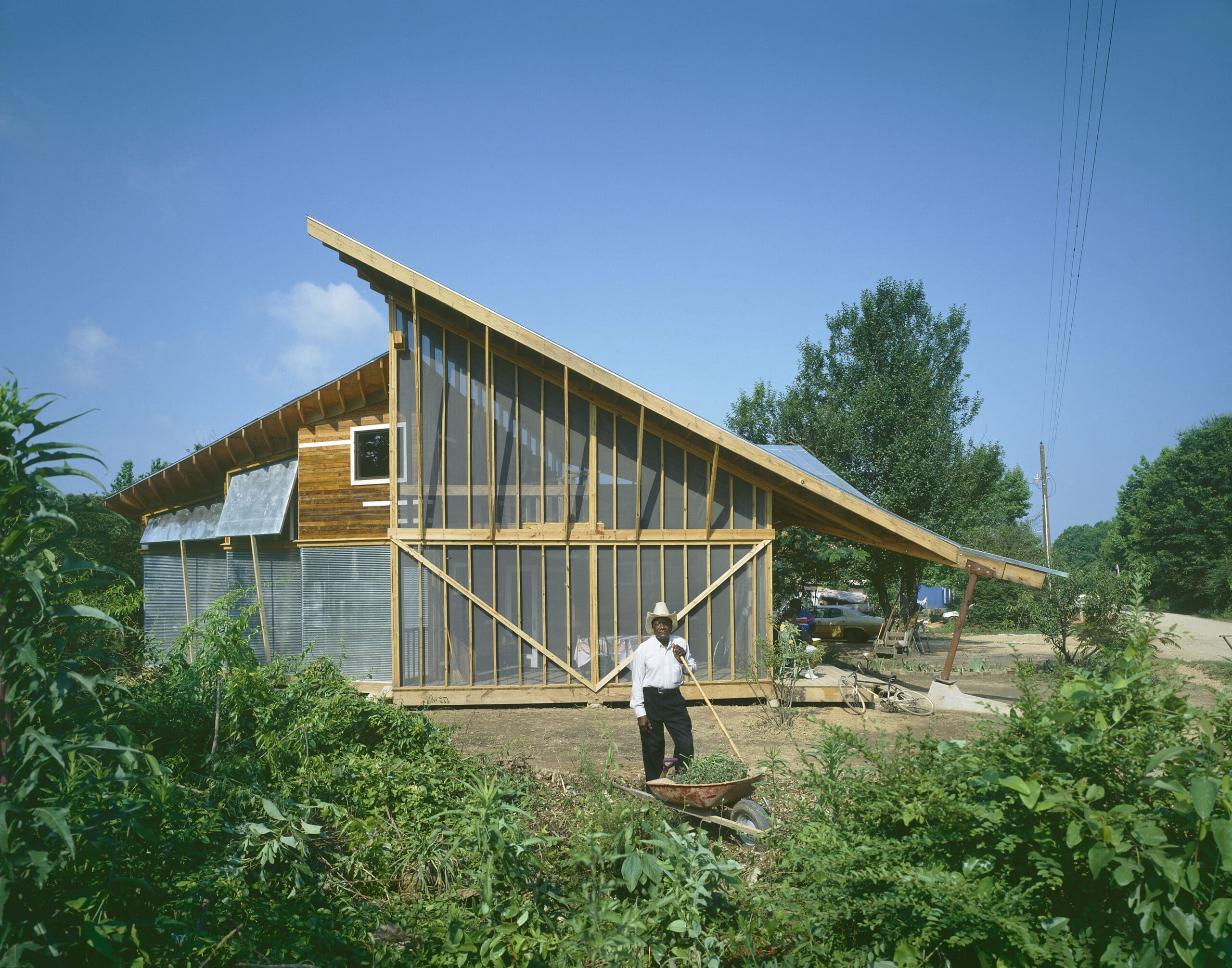
Rural Studio is widely admired, too little imitated. But it’s not so far outside the mainstream of architecture to be venerated (and ignored) as a unicorn. This kind of self-limiting regionalism and devotion to everyday buildings embodies the spirit of one of the most famous architecture books of all time: A Pattern Language, published in the 1970s and a perennial strong seller, especially among non-architects. The book is the result of research directed by Christopher Alexander and his team of architecture researchers at UC Berkeley, undertaken as a decade-long quest to understand what enduring features organize the global built world in ways that support human flourishing. The book and its companion text, The Timeless Way of Building, make a strong-headed theoretical case for what counts as good design, and the formal recommendations are built as much on social science data and traffic wonkery as on history and philosophy. A Pattern Language is the bestseller of the pair, likely because it’s eminently practical: a reference text that’s meant to be perused and suggestive, a guide if you’re in the midst of problem-solving in a remodel project. A Pattern Language locates the most common features of dwellings and civic spaces that unite the world’s architecture across the globe, among rich and poor, and the team elevates those features into formal ideas, into patterns that should shape architecture practices to come. Patterns are not prescriptive style guides or blueprints. But they’re also not toothless high-level principles. Patterns are more elegant and generative: strong sets of relationships, formal proportions, directional principles. The book is a compendium of high contrasts; it offers a sweeping social vision of human goods instantiated in the built environment, but it is generous with practical suggestions, using back-of-the-napkin casual drawings to illustrate its points, many of them scratched and scribbled like the early form of an idea. The text carries ambition in its ideas and provisionality in its illustrations—the encouragement to think between local constraints and reliable, lasting forms.

A Pattern Language makes a strong case for the spirit behind Rural Studio in its insistence on decentralized local structures of attention and design-build ownership (“Independent Regions,” pattern 1, and “Community of 7000,” pattern 12). It makes an unapologetic argument for delimited region and even neighbourhood as the best human-scale units for self-governance and cooperation, recommending strong structures no larger than five to ten thousand people for effective local decision-making. Rural Studio takes this seriously, sending the student architects in the program to live full-time in the small Hale County town of Newbern, immersed in the community where their ideas will come to life alongside residents. And even the smallest houses Rural Studio builds feature attention to formal design concerns of the traditionally architectural kind: prioritizing front porches not as extras but as necessity (“Entrance Transition,” pattern 112).
The Rural Studio model is scalable in the largest sense. The studio is a living-working prototype and provocation for architecture practices everywhere—not as a multinational organization but as a human-scale commitment to localities, plural. It’s an invitation to look closely at what’s near to hand.

De Hogeweyk, in Weesp, the Netherlands, is a dementia-care residence for older adults. But it’s not designed in the logic of the clinic, with long hallways of patient rooms organized around a central nursing-station hub. Instead, it’s a micro-village, with the simulacrum of mixed zoning that marks the small-scale neighbourhood structures of most pre-modern towns. Behind its secure sets of doors is a nursing home built in the pattern of the live-work neighbourhood, with housing built next to a working grocery store, gym, hair salon, theatre, pub, and formal restaurant. The designs follow many of the patterns recommended by Alexander and company, all in the name of good lives for older adults with an incurable condition: “Shopping Street,” pattern 32; “Activity Nodes,” pattern 30.
De Hogeweyk was remodelled a couple of decades ago, and its inchoate design principles were named by its board of directors as “favourable surroundings”—at first glance, a benign priority, easy to affirm. But that principle set up an imaginative commitment to even small details that preserve continuity with familiar everyday life, right down to the substantial side-by-side tandem bicycles for residents, maintaining an essential feature of Dutch infrastructure. What’s favoured lines up with the patterns available in the Netherlands and in many towns across the globe; the patterns also offer reassurance for navigation through space and therefore a more assured, contiguous reality. The directors report a significantly lower reliance on psychotropic medications in the years since the remodel, suggesting design as a companion of medical treatment. Its most attentive structural provision is the restaurant on its campus, which is open to both residents and the public from outside. In this flexible space, older adults are included in “public” in a way that’s exceedingly rare. Usually, chronic memory care takes people fully out of common life. De Hogeweyk helps shore up Alexander’s broad social pattern that’s hard to come by in the contemporary city: 40, “Old People Everywhere.”

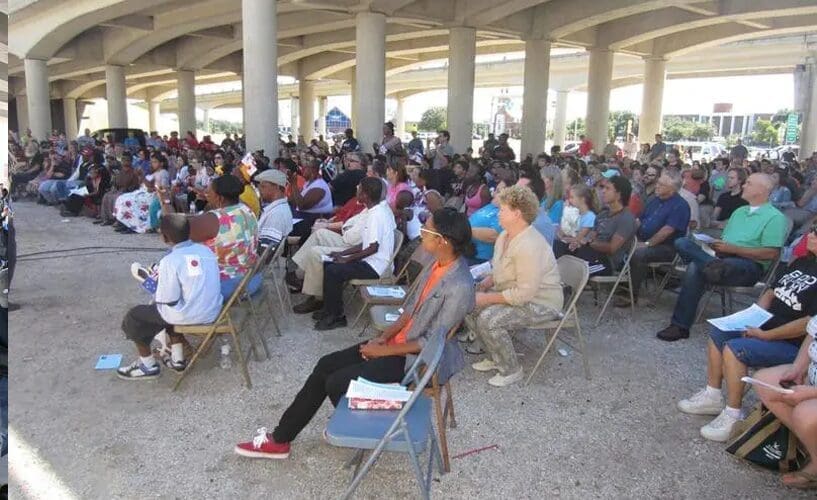
Image: Jimmy Dorrell
Most architecture is built, but some is found—like the Church Under the Bridge in Waco, Texas. On Sunday mornings, underneath the enormous concrete bridge that takes Interstate 35 over South 4th Street, a congregation gathers in an open-air shelter created by the bridge’s underbelly. Its arching supports and columns simulate an ancient solemn temple, stately and scuffed with time. Except it’s made of infrastructure—an engineered behemoth for carrying the cars whizzing by overhead. On 4th Street below, a monumental plaza spreads out that, in temperate Texas weather, makes a room.
This makeshift shelter had already been making room for decades as an informal sleeping space for unhoused city dwellers. In the 1990s, after a small group of local churchgoers built some fledgling relationships with men living there, a formal outdoor church slowly grew. More than a quarter century later, it now welcomes all comers—no doors mark an entrance or exit—with Sunday worship and services throughout the week for substance-use support, mental-health challenges, and other material needs. A Pattern Language calls for dedicated “Sacred Sites” (pattern 24) that make clear what’s “Holy Ground” (pattern 66); perhaps Church Under the Bridge is unique in its mixing these typologies with more recognizable but surprising city-centre patterns, such as 98, “Circulation Realms,” and 101, “Building Thoroughfare.”
A Pattern Language is beloved by non-architects and widely read in computer science circles; its wiki-style cross-reference structure was formative for internet architecture. But it’s rarely taught in architecture schools in the twenty-first century. When I ask educator colleagues in design why this might be, they shrug and say that it’s simply out of fashion. Academic trends always come and go. I suspect that the project’s untamed, home-grown universalism is what’s objectionable—objectionable in a way that’s hard to pin down. It steers clear of stylistic hierarchies, but it suggests that the world is charged with patterns—with external goods that are recognizable forms, accessible and shared, and to which the architect or designer might submit her pursuits. Like Alexander (who decried a simplistic “claustrophobic conservatism”) and many design professionals, I don’t think the patterns indicate straightforward architectural answers—“objective beauty exists, and it is therefore Doric columns”—but I’m persuaded by the robust dynamic realism of the books’ project, which does embody a spirited conservationist commitment. The most exalted ideals are held in the modest structures of our lives: patterns that invite us to see, understand, replicate, and make new buildings that nurture life. A Pattern Language offers a role for designers in recognizing the long-lasting qualities of desirable built environments, made for human creatures who can’t be shunted around as machines.
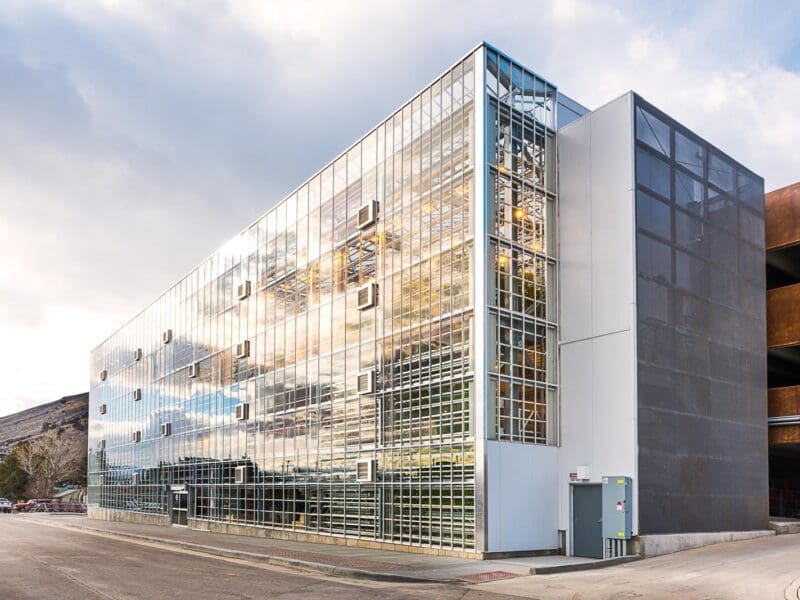

But if patterns aren’t style guides, what kind of designer do they call for? In 1979, British designer and Royal College of Art professor Bruce Archer wrote an essay on design education in the inaugural issue of the Design Studies journal, arguing for design as a distinctive area of learning alongside the sciences and humanities. Design is devoted to “modeling,” to “making and doing,” to the “collected body of practical knowledge based upon sensibility, invention, validation, and implementation.” It’s not surprising to see a design educator argue for the foundationalism of his chosen domain; in the 1970s, many designers were eager to distance themselves from the patronage history of architecture and from industrial design as merely adjacent to engineering, employed for mass manufacturing alone. What is surprising is that Archer invokes the classical virtues as the orienting compass for the designer’s know-how in a decidedly anti-traditional era:
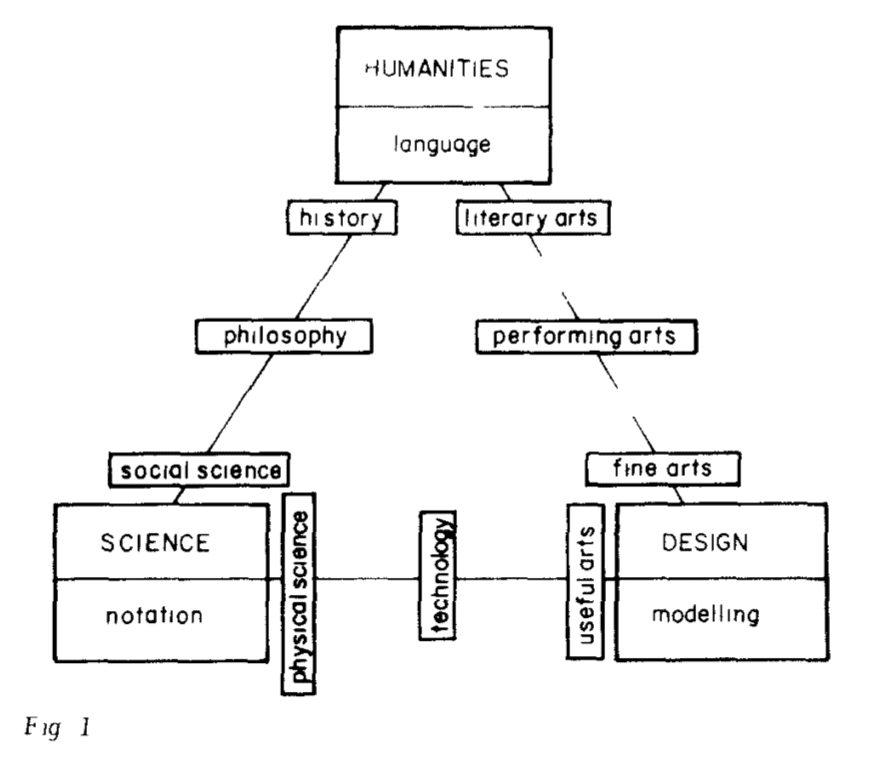
Designers will surely recognize these virtues, likely divorced from their classical origins but alive in the typical studio conversation or urban–planning meeting: Where do our ideas fail to be comprehensive, and where do they overstep, failing to leave well enough alone? How much detailed (and maybe expensive) investment will a municipality take on to build not just cheap climbing structures for children but public green spaces designed for whole families, with shade structures and wildlife, benches and tables with easy sightlines for caregivers? Who are the youngest and oldest humans around, and what are their needs for flourishing?
The jobs have changed, but the virtues are constant: knowing what is practicable and good, what is comprehensive, and what is enough in equal measure.
It’s hard to imagine a more apt compass than these virtues for the designer. It’s even harder to imagine them easily sequestered under a tidy political program. Most challenging of all is to take seriously a virtues-organized picture of the human person and designer. The classical virtues are aspirational if held at arm’s length, as a benign set of guidelines, but when understood in a substantive virtue ethics tradition, these goods demand so much because they exist outside human construction. They are the form of the capital-g Good; humans come to recognize and participate in them rather than start from their personal priorities. Could it be that in making and doing, designers take part in this way? Not as auteurs and lone geniuses who invent, but as those who locate their activities in a noble and ennobling civic tradition? Archer proposes that instead of the familiar three R’s for the backbone of an education—reading, writing, and ’rithmetic—a replete education would always include (1) reading and writing, (2) reckoning and figuring, and (3) wrighting and wroughting. Think of wheelwrights, shipwrights, and cartwrights, forming a lineage for today’s architects and designers, masons and builders. The jobs have changed, but the virtues are constant: knowing what is practicable and good, what is comprehensive, and what is enough in equal measure. It’s something like the spirit of subsidiarity in Catholic social teaching. What is the right-sized form of the thing being built, and the right-sized social structure to initiate and maintain it? The city hall, the public plaza, the open door and table for hospitality?

In architecture as in social life, the 1970s are superficially known for thinkers seeking to throw off the past—buildings free from traditional ornamentation and people free from constraints. But Archer’s and Alexander’s ideas were ascendant in the countercultural era of the late 1960s and early ’70s. Each proposes a domain of design that is critical of the era’s extant practices and values—but also, in the remedies they suggest, richly informed by traditions of the past. Their counterpart in economics E.F. Schumacher shared this hybridity of commitments: his 1973 book Small Is Beautiful ends with a call to the reader to take up the classical virtues and enduring Christian wisdom as the antidote to an idolatry of rationalized, top-down wealth and power. Like technology critic Ivan Illich, these thinkers combine a strong sense of orthodoxy inside the bite of critique; they pay close attention to the local textures in human habitats and to the solidity of moral realism and commonly held goods. They are neither back-to-the-land romantics nor reactionaries; each is uncategorizable. What would it look like for design to recover some tradition in this mixed heritage of old and new? Design for humans—dignity-shaped design—would not be so easily left to clever “design thinking” processes, hackable for better commodities alone. Design might rediscover its intellectual heritage—recognize its patterns, put forward its renewed affirmations—in convivial material arguments made by the built world itself.