





Who best holds the legacy of the great writer and farmer?




What are the lessons of 9/11? What does it mean to “never forget”? Join Matt and Shadi as they reflect on the fact that Muslims and Christians remember 9/11 and its aftermath quite differently. Together, Matt and Shadi share their personal stories from that day, reflect on how 9/11 continues to impact their careers, and acknowledge the key role 9/11 played in bringing them together.
Matthew Kaemingk: Welcome back, everybody. We are recording this episode here at the twenty-fifth anniversary of 9/11. And 9/11, obviously a critically important event in American history, but also in—Shadi and I’s history, and in our own development in politics and religion and pluralism. And so we wanted to step back and do a bit of a retrospective on this particular event.
Right now, things are very live. The new Muslim mayor of New York City is presiding over the memorial services in New York with a great deal of controversy around what that means for New York City to have a Muslim mayor and for him to be present. I know that both Giuliani and George Pataki have asked him not to come. That Muslim presence is hurtful to them. The questions from twenty-five years ago are still very much alive in terms of issues of religious freedom and tolerance. Terror and trauma are still very much alive in American public life.
In the days and weeks and months following 9/11, my own evangelical community went through a range of emotions and actions—trauma and tragedy and suffering. Churches across America were mourning and processing their pain. Others were engaged in anger and recrimination. Jerry Falwell and Pat Robertson, pastors within the conservative right, blamed secularism and homosexuality as the reason for 9/11 in America.
Meanwhile, the Muslim community was subjected to surveillance, hate crimes. At one point, I know that a man was killed and mosques were attacked. In the aftermath, the Patriot Act came in. So it really was a very intense time for Muslims and for evangelicals. And our communities experienced this moment very differently.
But before we jump into all those things, Shadi, I thought that we should really start with our own personal experience of that day and the weeks and months following that. We were both college students, both studying politics in different universities. We didn’t know each other. But yeah, Shadi, why don’t you take us back to the fall of 2001?
Shadi Hamid: Yeah, thanks, Matt. So I was a freshman in college. So 9/11 happened about two weeks into my freshman year. And I was in D.C. at Georgetown University. So we could see the smoke from the Pentagon from the top of our dorm building. So it felt very proximate.
I don’t remember exactly where I was when I heard the news or processed it, because I think there was a bit of a lag time between knowing that something had happened to the towers and then realizing that it was an attack, or specifically a terrorist attack.
But looking back, it was the formative moment of my life, for better or worse. Sometimes I think for—well, I mean, obviously for worse in terms of the country and the world—it propelled me onto a particular trajectory. And that’s a trajectory that leads me to be on this podcast now. In other words, I wouldn’t be on this podcast talking to you, Matt. I wouldn’t be who I am today if it wasn’t for 9/11. It’s really that fundamental to me, which is a kind of a crazy thing to think. That because of something you had no control over, because of this outwardly imposing event being sort of—you know, well, it was imposed on all of us by bin Laden and the hijackers. And because of that, so many of our lives changed.
And it’s kind of an interesting exercise to think about what one’s life might have looked like if not for those events. And I think that I probably would have been a normal person with a normal job. And I wouldn’t have been a writer. I wouldn’t have been a political scientist. And I wouldn’t have devoted my career to understanding the Middle East and to understanding the role of religion in public life. Because if that’s—I mean, that’s a through line. 9/11 leads directly, but also in some ways indirectly, to my current fascination with the question of religion and what role can it play and what role should it play.
Matthew Kaemingk: Yeah. I mean, just to interrupt you and all, I want to get back to your college life there—that’s coming. But honestly, you and I wouldn’t be friends. You and I probably wouldn’t be friends without 9/11. And I mean that in a number of different ways.
But one of them is that, you know, you’re growing up in this, you know, East Coast academic, more progressive community. You would never have a need to be friends with an evangelical. You could go your entire life not talking to evangelicals and being perfectly fine with that. And similarly for me, in my little evangelical subculture, I could go my life without ever being friends with a Muslim. Certainly being from Seattle, Muslims are thin on the ground out there.
Shadi Hamid: Yeah, right.
Matthew Kaemingk: With 9/11 and sort of this, you know, the rise of the clash of civilizations dialogue, there was this urgent need either to separate and double down on these differences or to actually engage across these differences. And so, yeah, I think that’s an important point—that, you know, you and I would not know each other and we probably would feel no need to engage across these differences. But I think you and I were sort of inspired by these tragedies and difficulties to say, okay, we’re going to have to make ourselves uncomfortable and talk to some people.
Shadi Hamid: Well, for me, um, before I would, you know—’cause I didn’t start talking to evangelicals until the mid-2010s. Before that, I was interested in talking to Islamists. That was the kind of direct post-9/11 result. Because, you know, I asked myself, why did 9/11 happen? One of the answers to that was, hey, there’s some people in the Middle East who quote-unquote hate us, or at the very least are angry at us as Americans. And I’m not just talking about the people who committed 9/11. I think there was a broader anti-American sentiment in the Middle East at that time, and it continues to this day. I guess that’s been constant.
And I wanted to understand, where does this anti-American sentiment come from? And one of the reasons is that the U.S. has supported dictatorships for the better part of the last eight decades in the Middle East. So then I was confused about that. I was like, wait, why do we support dictatorships if we’re a country that claims to stand for democracy? And then the answer to that was, well, we as Americans are afraid of who might come to power through free elections in the Middle East, and we don’t like the idea of democracy in the Middle East because of its potential results.
So that was intriguing for me. Who are these people who would come to power through free elections, and why were we so afraid of them? And that led me to my study of Islamist parties, like the Muslim Brotherhood in Egypt and Jordan. My PhD dissertation was about the Brotherhood in Egypt and Jordan. That’s kind of how my career trajectory unfolded. There were these kinds of burning questions that were animating me. And I wanted to understand where these sentiments were coming from.
Matthew Kaemingk: So Shadi, you fell into being a political scientist there, but I want to push you on sort of the Muslim identity question. So you’re a freshman in college. How are you thinking about your Muslim identity on September 10th? Where is, you know, nineteen-year-old Shadi in terms of your Muslim identity?
Shadi Hamid: Well, it wasn’t—I think I was an American who happened to be Muslim. It wasn’t necessarily like the focal point of things. It became the focal point after 9/11. That’s what 9/11 changed in some sense. It made us into—whether we liked it or not, we became more Muslim, because that’s the way that the rest of society looked at us. We were being objectified. We were seen as potential problems to be solved.
And I think on September 10th, yeah, I was unsure about my identity. I was kind of working through that in college. It was the first time I was living away from home. And I wasn’t sure the kind of Muslim that I wanted to be. And there were different possibilities open to me. But 9/11 actually pushed me to actually hold on to my religious faith more. I actually became more religious after 9/11, and more intense in some ways, because I wanted to feel a sense of belonging. The world was so chaotic.
And I think for us as American Muslims, 9/11 was a double tragedy. Of course, it was a tragedy as Americans, but it was also a tragedy as Muslims, because we had to make sense of the fact that there were these people who claimed to be Muslims and they were committing this horrific act in our name. So that had to be untangled. I mean, how is it that they could use Islam to justify killing civilians? And so I think in that sense, there was a dual aspect that we had to kind of like work through as Muslims.
And in that kind of chaotic moment, I wanted to firm my identity. I wanted to feel like I had a community that could back me up. Islam—you know, anti-Muslim sentiment was becoming a problem. So the natural thing is, when there’s more anti-Muslim sentiment, there’s two reactions you can have. You can move away from your Muslim identity and try to blend in with the rest of society, or you can kind of hold stronger to your Muslim identity. And for me, I held stronger.
Matthew Kaemingk: So is it fair to say that it was difficult to be a casual Muslim after 9/11?
Shadi Hamid: For me, it was, at least. I didn’t see how I could be just someone who happened to be Muslim, because people were paying attention to us and objectifying us and saying that we were one thing or another, that we were potentially dangerous and that we as Muslims had to become moderate. There was that whole obsession post-9/11 with, hey, let’s be good. We have to become good Muslims. We have to show that we’re moderate. We have to prove that we’re moderate. We have to go out of our way to condemn every terrorist attack.
And I think a lot of us have moved away from that. Right now, I don’t condemn terrorist attacks when they happen, because it should go without saying that I condemn terrorism. Of course, if a terrorist attack happens, as an American Muslim, I’m not going to like that. I’m going to be against that like any American would be. So the fact that we—just because we were Muslim, the kind of microscope was on us to show that we were against those terrorist acts, when that should have just gone without saying. And I think that was a very—that was psychologically unhealthy, this demand that was being put on us, that we had to show, we had to prove that we were fully and truly American, instead of that being the default.
Matthew Kaemingk: So for me on that Tuesday morning—so I was out on September 11th, I was out on the West Coast and I was a junior. So I’m a couple of years older than you, Shadi. I was a junior in political science, and it was very early in the morning Pacific time when the attacks happened. And I was living in a house with a number of other college students. And my roommate woke me up, I think at like six in the morning or something. And his dad had called him, and we ran over to the TV, and the towers were still standing at the time. And, you know, originally they thought it was a small Cessna plane. And I remember watching the towers fall and calls from family and friends. Yeah. It was quite incredible to watch on TV.
And I remember the very next day I was taking an international relations course, and my professor, you know, he opened up this political science course that day and he took our textbook for international relations and he, like, sort of very visibly threw it in the garbage. He said the whole game is going to change because of this moment. And for him, he studied—he was studying political science when the Berlin Wall fell. And he said, you know, when I was a student, you know, the Berlin Wall fell. And this is what my professor did, because at the end of the Cold War, international relations changed again.
And so at that particular time, you know, you and I were both studying political science. The study of politics was very focused on public policy as a sort of secular scientific discipline. And religion was largely kept out of political science as a discipline. And political scientists were, we might say, religiously illiterate in many ways.
And so for me, as a young Christian, I had to wrestle with a lot of questions about faith and politics following 9/11. You know, how do I think about the ethics of war, the ethics of preemptive strikes? So we had a lot of debates about the Afghan and Iraq war when I was in college and—oh, that’s actually, I was a sophomore. No, no, no. You know, a lot of debates about preemptive strikes, about terrorism. We had big debates about torture and whether or not that was okay. And as Christians, what do we think about torture and just war?
And of course, you know, in the immediate aftermath, there was a lot of discussions in Christian communities just about tragedy and trauma and insecurity. Like, where do you find your security from? Because it was a time of tremendous fear, just constant. Do you remember, like, the terror alert system where they would have different colours for, like, you know, today the terror alert is orange, so you should be this afraid? And I don’t know how really how you quantify fear, but like your fear levels were supposed to go up and down. You know, we had the anthrax scare. We had snipers and all kinds of—you know, it was a wild fall of fear.
I also recall a tremendous time of national unity for the first couple of months—really like the first six months after 9/11—like the Yankees game and George Bush throwing the first pitch and so many other things, just like this tremendous unity.
And I also recall very vividly, you know, a few days after 9/11, George W. Bush visiting a mosque and giving a speech and proclaiming that Islam is peace. And it really is—to watch that speech again, and we’ll put that speech in the show notes—to watch that speech now, coming from a Republican politician, is really quite striking. There you have George W. Bush, an evangelical Christian, making this clear distinction between Islamic terrorism and Muslim Americans. Really a distinction that is not made too often by Republicans today. And I mean, that’s a whole conversation. It’s a whole podcast episode on its own, sort of what has happened to the Republican Party in the last twenty-five years on Islam. But I do want to encourage our listeners to go back and watch that speech and just kind of ponder what has happened.
Shadi Hamid: Yeah, I think this is really worth highlighting, that the neocons were terribly wrong about the Iraq war, and that turned out to be a disaster. But the one thing they got right was going out of their way to make these distinctions between what happened on 9/11 and then the overwhelming majority of Muslims. I don’t love the language of “Islam is peace.” I think that’s a little bit too simplistic. And what does it really even mean? I mean, but I did appreciate at the time that George W. Bush—and in retrospect, I think George W. Bush was, in my view, fundamentally a good moral man who did awful things. And I think that complicates his legacy a little bit. Does that make it any better that he was, quote-unquote, a good man, a good Christian, if what he wrought turned out to be so destructive in terms of the Iraq War?
But I do think intentions matter. And I think that Bush’s intentions and his desire to speak well of Muslims and to see American Muslims as part of the fabric of the country, and also to talk about the fact that Arabs and Muslims deserve democracy just like any other people, culture, or religion—I mean, that would come a little bit later on when Bush was really focusing on democracy promotion. But I really appreciated that. He did seem to genuinely have this deeper respect for Islam and Muslims, and that’s nowhere to be seen in today’s Republican Party. It really is a completely different world that we’re living in in that respect.
Matthew Kaemingk: I just wanted to ask you about the growth of the backlash against Islam in the year after. There was a thousand—some people say a thousand percent surge in anti-Muslim hate crimes following this. Hate crimes targeting Muslims, Arab Americans, South Asians, including Sikhs, who are a completely different religion. But because they have turbans, people would imagine them to be Muslims and would attack them as well.
Mosques faced arson, vandalism, and death threats. You had the passage of the Patriot Act, which enabled federal agents to conduct surveillance and wiretaps and seize financial records for Muslim organizations. You had mass interrogations. You had, quote-unquote, voluntary interviews of five thousand young Muslim men by the Department of Justice. You had a special registration program where Muslim immigrants from twenty-five different Muslim countries were brought in, fingerprinted, photographed, and interrogated. You had seizures of major Islamic charities. You had widespread racial profiling in the airports. Flying while Muslim was a thing—all going on for like a year.
And I’m just wondering if you might reflect on that time and those conversations that were happening in the Muslim American community about what do we do in response to all of this?
Shadi Hamid: Well, in that sense, I think a lot of us as American Muslims experienced the post-9/11 period differently than a lot of other people. I mean, you mentioned that it was a unique time of national unity. I didn’t really feel like that national unity was necessarily the greatest thing, because I think that dissent was not really tolerated. And I think that’s part of what paved the way for the Iraq war—that there was this desire for revenge, that we had to punish someone or something abroad. So there was this kind of like martial, militaristic aspect to it.
And at that time, I was turning to the left. I was, you know, reading people like Noam Chomsky and becoming very skeptical of kind of American master narratives. And so I think for a lot of us, we wished that there was more dissent, because more dissent might have actually helped prevent the Iraq War, prevent the Patriot Act, the civil rights abuses. If I recall, the Patriot Act passed in the Senate on a vote of like 98 to 1 or something like that. So this was a time when questioning the Bush administration’s war on terror was a risky thing to do.
And I think that one through line in our work, Matthew, that I think both of us really feel strongly about, is that we’re both skeptical of consensus and unity. And I think for me, that started after 9/11. I saw the dangers of having this national consensus around, we have to wage this war on terror, and we do so by restricting civil liberties. And the fact that so many Americans were comfortable making that tradeoff—I think that’s what made it in part a dark time, you know, from my perspective.
That radicalized me—not in the sense of radical Islam and that sort of thing, but radicalized me in becoming more of a kind of like a pseudo-socialist leftist activist who was going out to protests. And that was a really big part of my own political and intellectual formation, was being part of the left at this very crucial moment in American history. When you looked around and you watched the news, there was like one view that was being expressed. We didn’t really have alternatives like Twitter and social media where you would hear contrasting views about how to respond to 9/11.
Could I ask you, Matt, from your standpoint, what were your views about Muslims at this time? Because I imagine in evangelical circles, it was probably pretty common to hear anti-Muslim sentiments being expressed. And maybe just being an evangelical might naturally dispose you to being a little bit skeptical of Muslims from the get-go. I mean, we know today that white evangelicals are still the most anti-Muslim group in America. I don’t know how much you were affected by some of that discourse, or how much you feel comfortable kind of, you know—I think it’s okay to say that, hey, maybe you didn’t have like the best perception of Muslims at an early age or whatever.
Matthew Kaemingk: Right. So twenty-five years ago, I think there are some important differences and important shifts when we think about how evangelicals view Muslims. It’s not the same today as it was twenty-five years ago.
So you’ve got to remember that American evangelicalism was very shaped during the Cold War. And our enemy during the Cold War was not Muslims. It was communists. And so evangelicals weren’t really paying a lot of attention to Muslims in the 1970s, ’80s, and ’90s. I think for many evangelicals in America, they thought of Muslims as foreign, strange. I think for me personally, I thought of Muslims as kind of exotic, and just very distant—more like cartoon characters than real people. You know, just sort of, I would see Muslims on CNN, but I wasn’t living next to them. I wasn’t friends with them, or I didn’t have fights with them.
I think in my own evangelical community, Muslims really wouldn’t come up in topics of conversation before 9/11, beyond missions and missionary engagements. So evangelicals had something called the 10/40 window. Have you ever heard of that term?
Shadi Hamid: No.
Matthew Kaemingk: So the 10/40 window is this sort of North Africa, Middle East, Central Asia. It’s this window where Christianity is not, basically. And the desire was to focus missionary efforts on that particular window. And so our prayer as evangelicals was, God, would you—would you send us, would you give us access to this particular window for missions, to share the gospel with Muslims in these areas?
And in later years I would kind of laugh a little bit about this, because when we were young, all we wanted was access to Muslims so that we could share the gospel and we could talk about Jesus. And the funny thing is, in many ways, we got our wish. Muslims moved into Europe and the United States, and Muslims live next to us now. And we as evangelicals are not happy about this. We’re angry. So the prayer was always, please let us talk to Muslims. And now we don’t want to talk to Muslims.
Shadi Hamid: That’s so interesting. So I’m not to say that’s necessarily a positive view of Muslims, like wanting to convert them, but at least it demonstrates a kind of curiosity and an openness and wanting to interact with them at some level.
Matthew Kaemingk: So I mean, I’ll give you an example of this right after college. I participated in an evangelical service trip to go to a refugee camp. The whole goal was to serve these Muslim refugees. So after the Iraq War—this is like in 2003, so yeah, summer of 2003—you have all of these refugees from Iraq and Afghanistan who are trying to get into Europe. And they’re being captured at the border of Eastern Europe, and they’re being put in these different UN refugee camps.
And so this evangelical ministry I learned about—I was like twenty-one years old—said, hey, we are serving Muslim refugees. We’re helping teach them English and just befriending them. And of course, we also want to share the gospel with them. So come. And so I travelled to Eastern Hungary on the borders of the European Union, and I spent the whole summer in this refugee camp.
And it was there that I learned, you know, Muslims are not cartoon characters. They’re real people with families and stories and, you know, deep traumas from Afghanistan and Iraq. And things were changed. But it was that evangelical impulse to go near Muslims, not to run away from them, which I think is an important—that’s an important aspect.
And so, you know, what has changed for evangelicals is, for many of them, they don’t have that sort of gospel longing to draw near to Muslims. Rather than seeing the encounter as an opportunity to love and, you know, learn how to love, they see it as primarily a danger, something to be feared, something to be conquered. So the Samuel Huntington’s clash of civilizations, that is the primary imagination for evangelicals today. That in the past, it was more of a missional thing, which, you know, as you said, it has drawbacks and dangers, but I think certainly you would rather evangelicals want to share the love of Jesus with you than, you know, deport you and bomb you, right?
Shadi Hamid: Yes, that’s fair to say, yeah. I mean, do you remember when you made your first Muslim friend, or like at least had more in-depth—I guess it was during this trip probably, but can you say a little bit about what being in friendship with Muslims showed you? I mean, beyond the obvious that Muslims are complicated and distinctive, and we’re all individuals who have different stories. I mean, is there something that surprised you the more you got to know Muslims that maybe you weren’t expecting?
Matthew Kaemingk: That’s a good question. So there was this seventeen-year-old kid from Afghanistan. I think I was twenty-one at the time, and we became friends. His mother had been killed by the Taliban. And he had made his way and was in the refugee camp. And we spent almost every day together. I was working on his English with him. And just an incredible kid. He was there with his sister and his father. They had climbed—they had been on boats and on trucks, and they had actually climbed underneath a train to try to get into Germany. They were holding onto the underside of a train when they had been—I think they had been stopped trying to get into Austria, actually, and then been put in this camp.
And yeah, we spent the whole summer together eating, drinking, yeah, smoking together. It was good. It was a good time.
And I think that—yeah, for me as a political science major, you know, I just loved watching CNN and watching. I think at that time I thought of politics mostly as a game and a debate. It’s sort of like a contest of ideas and ideologies. And I think for me, you know, getting to know him, I think I learned the very simple thing that politics is not a game. It’s bloody, and it involves tears and sweat and real people and real families.
And that greatly complicated politics for me, and it greatly complicated Christian-Muslim relations for me. And it wasn’t so simple as, I need to tell this kid about Jesus. There was much more that needed to be done than just evangelism. Now, I still try and tell people about Jesus, just like I try and tell you about Jesus, Shadi. But our relationship is about so much more than just that. And I think of my work as today is about so much more than that.
So yeah, I need—I credit him. Yeah. In fact, years later, I met him again. And he made his way into the Netherlands, actually. And he finished a university degree in architecture. And he’s now flourishing in the Netherlands.
Shadi Hamid: Yeah, that’s fascinating. You know, I think what you were saying about how before 9/11, Muslims seemed foreign and exotic, and then they became, you know, something more real and present after 9/11 is really interesting, because I experienced that in a little bit of a different way in high school, where I was picked on, but it wasn’t so much because I was Muslim. But there was one kid—I still remember his name, actually, I still remember him—and he would occasionally call me a terrorist.
Looking back, he was kind of ahead of his time. Like, for him to have enough political awareness to know that, you know, Muslims have some tie-in to terrorist acts in the Middle East—that wasn’t at that time like a very, like, well-covered or prominent thing for a high schooler to be aware of. So I just kind of look back in this funny way that, whoa, he was calling me a terrorist before 9/11. What was that about?
But that just reminds me that before 9/11, we weren’t seen in that way. We weren’t seen as security threats. We changed as a result of the fact that society changed and how it viewed us.
And you talk about CNN and, you know, one thing that I remember—and it’s not just post-9/11, but also during Trump’s first candidacy for president, where he was talking about the Muslim ban. And I have these memories of watching the TV and seeing people talk about us in this kind of disembodied way, that we were being talked about, that we were being objectified. And to hear people talk about your whole group and make broad generalizations about your whole group—it’s a very odd thing to experience. I don’t know how many other groups really experience it in the same way.
But to be constantly talked about as either we’re terrorists, or in a more positive sense, we’re Muslims who could also fight terrorism. There was this kind of push after 9/11 to kind of identify the so-called good moderate Muslims who would then be the bulwark against terrorism. And those were the two ways that we were represented in the media: that either Muslims were the bad guys who were doing terrorism, or we were the good guys fighting terrorism. And that was problematic in its own way, because, like, Muslims shouldn’t be seen just through the lens of whether we’re a security threat or whether we’re like the opposite of that. Like, Muslims can just be normal and have nothing to do with all of those political questions.
And I think it was only more recently, in the last few years, that Muslims were able to break out of that kind of typecasting. And now, a Muslim can just be a Muslim without all this added baggage of having to say, oh, well, this is how we view terrorist attacks, or this is how we view 9/11. You can have Muslims who work on health care policy or tax policy or antitrust policy, as Lina Khan is one of the most prominent Muslims in America now, and she works primarily on those kinds of economic issues.
Matthew Kaemingk: But I—and here I want to turn the conversation, Shadi—because in a way, yes, there has been tremendous progress. And yet I look at what’s happening with Mamdani in New York right now, and I feel like, oh, man, have we made progress? You know, Mamdani, the first Muslim mayor, George Pataki, the state governor, and Rudy Giuliani has said that it offends him that Mamdani is going to the memorial and the commemoration, and that he shouldn’t go, and that it is this tremendous tragedy that we have a Muslim mayor in New York City—rather than saying, oh, my goodness, what an incredible triumph of American democracy, that American democracy can handle religious diversity, whereas Afghanistan could not.
And so I wanted to pivot just to get your thoughts on these discussions around Mamdani. You’re sitting there in New York. You’re in Manhattan right now.
Shadi Hamid: That’s right.
Matthew Kaemingk: What is your sense and your reflection on what’s going on in Manhattan right now?
Shadi Hamid: So this is what makes it hard to read the present moment. I think in some ways it’s the best of times for Muslims, and in other ways, the worst of times. And the fact that those two realities can coexist simultaneously is fascinating. I mean, there’s certainly a tension there.
I think you see this backlash against our public presence precisely because we’re publicly present. It took a Muslim mayor to provoke these crazy reactions from people like Rudy Giuliani, who are acting—I mean, obviously, it’s just remarkably anti-Muslim to treat Zohran Mamdani in this way, that there’s something offensive just by virtue of him being Muslim and him wanting to be present at a 9/11 memorial. I mean, it’s remarkable that we’re having these kinds of conversations. So there is a backlash that is currently underway.
But at the same time, it is an incredible thing that there is a Muslim mayor. And the fact—if you had told me right after 9/11 that twenty-five years later, the mayor of America’s largest city, potentially, some people might say, most important city—well, I guess D.C. is the most important city, but folks can debate that. But the fact that this is one of the most important cities in Western civilization today, and it’s led by a Muslim man. I mean, like, who would have dreamed of that? And it’s also worth noting that one of the other major cities of Western civilization, London, is also led by a Muslim mayor.
I still, like, part of me can’t even believe that this is true. And that’s why I think Zohran winning was such a breakthrough moment, because it was like we finally made it. And this is someone who doesn’t primarily talk about—he’s obviously very Muslim and outwardly so, but most of what he talks about has nothing to do with him being Muslim or Islam. He actually talks about affordability and economic issues and bread-and-butter concerns 80 percent of the time.
That’s really refreshing, that someone who’s Muslim doesn’t always have to be actively Muslim. We don’t always have to be conscious of being Muslim. And there’s something liberating about just being people who happen to be Muslim. And I have this own tension in my own kind of self-identity, where sometimes I feel like I’m a writer who happens to be Muslim. Sometimes I feel like a Muslim who happens to be a writer, and I kind of toggle between those different identities. But I don’t like the idea of anyone assuming that something about me just because I’m Muslim. I kind of rankle at that.
Matthew Kaemingk: Well, I don’t want to over-psychoanalyze you, but I think part of it is that pressure cooker of post-9/11 reality where people were talking—they were defining Muslims rather than listening to Muslims. And so when someone says, oh, this is Shadi, he’s a Muslim writer, I think immediately for you, you’re thinking, let me tell you what that means, because I’m not sure you know what it means to be a Muslim writer. Or, let me define that.
Shadi Hamid: Yeah, yeah.
Matthew Kaemingk: I mean, I felt a very different experience. But I’ve got to say that back then, CNN would say, and now for an evangelical opinion on the news, and they would turn to Jerry Falwell for an opinion. And I would get so frustrated, because I would just say, no, Jerry Falwell is a terrible representation of what evangelicals believe. And it seemed to me that CNN loved—like, absolutely loved—to make evangelicals look crazy by inviting Jerry Falwell on to speak, rather than some, you know, the more moderate evangelicals that they could have invited on. That there was this sort of classic caricature in media of religious communities, whether they be Muslims or evangelicals, that you sort of—you create this religious boogeyman.
Shadi Hamid: And I think the irony is that even though we don’t like the idea of having to represent our particular faiths, we found ourselves in a sort of position where we do have to do that sometimes, maybe somewhat uncomfortably. As much as I rankle at the idea that I am representative, or that I can speak on behalf of Muslims, it’s hard to avoid that. I mean, at some level, if you’re writing about religion, if you’re writing about American Muslims and you’re doing so publicly, you can’t really avoid playing a certain kind of role. But I think it’s always a role that involves a kind of tension.
Maybe it’s different for you, because I started off studying religion more as an observer, rather than being someone who was a theologian, and writing or speaking about religion about, like, oh, this is what Islam says about X, Y, or Z. Where I think that you as an evangelical theologian do have to kind of speak to, here’s what Christian theology says about any number of different issues.
And now we’re writing—you know, we have a new book out, obviously, where we draw on both of our respective faiths to kind of talk about what Islam and Christianity have to say about pluralism and how they can help us even become better pluralists. So as much as I’ve felt uncomfortable with a certain kind of role, there is something interesting about the fact that twenty-five years later, I find myself speaking about Islam in this way to a broader audience. Maybe it was inevitable that it would come to this.
Matthew Kaemingk: Well, we’re coming to the end of our time, and I think the last thing I wanted to talk about is memory. Every year on 9/11, you hear the phrase, “never forget,” or “we will never forget 9/11.” And that phrase, “never forget,” means different things to different people in the United States. Like, what does it mean to remember 9/11?
And I think that whenever we experience a trauma or a tragedy, whether it be sort of personal in our personal lives or in our big national political history, it matters not simply that you remember it, but that you remember it well. And that you sort of honour what happened with a good memory, in terms of what happened.
And if we remember this moment and its aftermath well, you know, it seems to me we can respond to tragedy better, because there were a number of ways in which Americans responded to 9/11 that were not productive, that were actually deeply harmful. And we’ve talked about some of those things today.
And it seems to me that the work you and I are trying to do with this podcast, with this new initiative on faith and democracy at Georgetown, we are trying to remember 9/11 well. Not as sort of like, remember what those terrorists did to us, but remember what America is supposed to be. And remember what these values of freedom and tolerance and pluralism look like and need to be embodied. And so what does it mean for the Muslim community to remember 9/11 well?
Shadi Hamid: Well, look, the question of memory is, I think, a fascinating one, because there is a new generation of Americans who don’t have a memory of 9/11. It’s been striking for me to encounter people—it could even just be socially, like, you know, at a party or some kind of social gathering where you have like a wide array of ages, and then you’re talking to someone who turns out to be, you know, in their twenties, and 9/11 just doesn’t register for them. They don’t really—I mean, obviously, I mean, they don’t know how to speak about it. They don’t know how to remember it. I think for them, it’s the start of this kind of saga of American intervention abroad that ended up being disastrous. So, you know, in that sense, it casts a long shadow over American leadership and America’s involvement in global affairs.
I also saw something interesting on Twitter where someone was making the point that we don’t really have great culture around 9/11. There aren’t great 9/11 movies or 9/11 novels. In some ways, I don’t want to say it’s been memory-holed, but we don’t—through cultural production, we haven’t really found ways to remember it well or to honour the memory of it in a compelling way. I think it’s very hard to write. I mean, think about like the novelistic form. I think it’s hard to write about 9/11 in a way that’s compelling from kind of a fictional standpoint. And there aren’t really great, great novels that I can think of that do it well.
I will say there’s something to be said about learning from terrorism that is still very important to this day. And it’s also really important in the context of October 7th. Because what do terrorists—what do terrorists aim to do? They aim to—they want to get the target country or the target population to overreact. They want to provoke in a way that leads to a massive overreaction. And that’s what happened after 9/11. It’s also what happened after October 7th, which is another defining moment in our kind of political consciousness, in a way that kind of rivals 9/11 in a lot of ways. I mean, if you talk to Muslims now about what their defining moment is, I think a lot of them will say that October 7th represents a kind of a fundamental break between before and after. Obviously, it’s more recent in the kind of historical memory.
But I think that that’s one thing that we have to really, I think, take to heart, is let’s not let the terrorists win. The terrorists win when they get us to do terrible things in reaction to terrorism. If we lose ourselves in responding to a terrorist attack by becoming just as brutal as they are, then we fundamentally lost something. And I think that was—we fell right into that trap as Americans, with our very militaristic response to 9/11. And I think the Israelis did something similar, in some ways much worse, after October 7th.
We have to remember that we stand for something that is fundamentally opposed to what terrorists or extremists stand for. And what is that? As you said, Matt, it’s freedom, democracy, tolerance, the open society, a society that prizes diversity instead of seeing diversity as a threat. Pluralism is good. That’s what we say as Americans. What terrorists say—or whether it’s Muslim extremists, Christian or Jewish extremists—they think that pluralism is something to be fought. It’s something that makes us weak, where I think you and I would say that pluralism and diversity is precisely what makes America great.
Matthew Kaemingk: Yeah. And I mean, you know, you’ll forgive a little bit of Christianity here. Uh, I think for me, you know, as a Christian thinking about the words of scripture, not to be transformed by fear, but by hope and love. And I think, as I think about remembering 9/11 well, it is that: don’t be transformed by your enemies. Um, don’t let them turn you into them, but be transformed by hope, faith, and love. I mean, that is the Christian message, is to be transformed into the image of Christ.
And as far as Christian reflection goes on 9/11, it is that need for repentance, that many of us were transformed by our fear. We were transformed by our trauma. We were transformed by our rage and our anger, um, and made some really poor decisions out of that. Um, rather, you know, seeing Muslim immigration—which is what I’m thinking about and working on—seeing Muslim immigration not as a problem to be solved, but as a profound opportunity to learn again what this scandalous call to Christian love should look like. So I think for me, as a Christian, that’s what remembering 9/11 means.
Yeah. And as we close up, I guess I’ll just—I’ll let you close this up with, how would you like the Muslim community to remember it? Well, yeah. How would you like the Muslim community to—because you think about this next generation of Muslims who don’t know this story, who didn’t experience it? I mean, what kind of memories or lessons should they take about, you know, what does it mean to be a Muslim in America?
Shadi Hamid: Well, I think twenty-five years later, there’s just so much to be grateful for as American Muslims. I mean, compared to that dark post-9/11 period, where it really felt difficult to be a Muslim and that our identity was under threat, that we didn’t fully belong as Americans. And I think what we’ve shown in the interim period is we have become—and we have, you know, we have in some sense always been, you know, fully American.
And to see Muslims asserting themselves in public life in a way that would have seemed impossible after 9/11, I think that shows—and it sort of confirms something that I felt and that I’ve said this on the podcast and elsewhere—I do think America is the best place in the world to be Muslim, for all of its faults. And I think that this is a time to reiterate that message and to be grateful for what we have as American Muslims, that we can be fully American and fully Muslim and not have to choose between those two identities. That can’t be said for a lot of other parts of the world—Muslims in Europe, for example, where there is pressure to choose between a national identity and being fully outwardly religious.
And I think it’s partly up to us. Yeah. America is our project. And we as American Muslims have, you know, part ownership over that, along with our fellow American citizens. But we’re becoming a really—a more important part of the American story, because we’re becoming more involved in public life and politics in a way that we weren’t before. And I would just urge my fellow American Muslims to kind of continue making America what we believe it is and what it still can be.
And I think that’s worth remembering on this anniversary, that it can be—I think there’s a danger of seeing 9/11 in a very negative or defensive way, or kind of using it to settle old scores, or to kind of bring up again the specter of terrorism in a way that I think isn’t particularly helpful. The better way to think about it is, America has really struggled post-9/11 over these last twenty-five years, but that in some ways we’re stronger now than we were before—in some ways, not in all ways. And that the American story, I think, is not to be trite here, but is one of progress. And American Muslims are part of that story of progress, and helping America fulfil its ideals.
Matthew Kaemingk: Yeah. And I mean, I think beyond that—and I think that’s a great note to sort of close out this conversation as we were coming to the end of our time—is that America is a struggle itself. The nation itself is a contested notion that continues. And consensus and unity is not to be found, either in trauma or in triumph. And that American Muslims need to be a part of this American project and are making tremendous contributions in that way.
And so, dear listeners, as we come to the end of our time, I think that is our commendation to all of you, is to remember this moment well, so that we can step forward in the future with a pluralistic democracy that—you know, we are not all going to be holding hands and singing together. This is a contested project, the American project. And we honour those who died by remaining engaged in this democratic project, as difficult as it is.
And so we thank you yet again for joining us for this commemorative conversation about 9/11. And we look forward to hearing your reflections and your memories of that time and your thoughts on how to remember it well. So until next time, we’ll see you.
Shadi Hamid: See you next time.
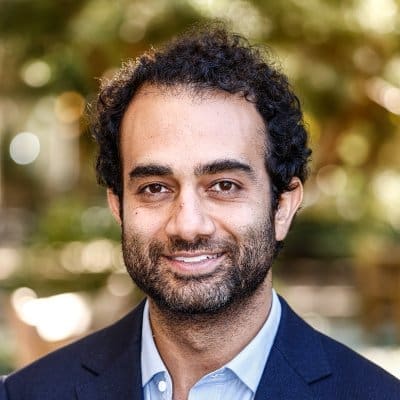
Shadi Hamid is a columnist at The Washington Post and Senior Fellow at the Alwaleed Center for Muslim-Christian Understanding at the Edmund A. Walsh School of Foreign Service at Georgetown University.
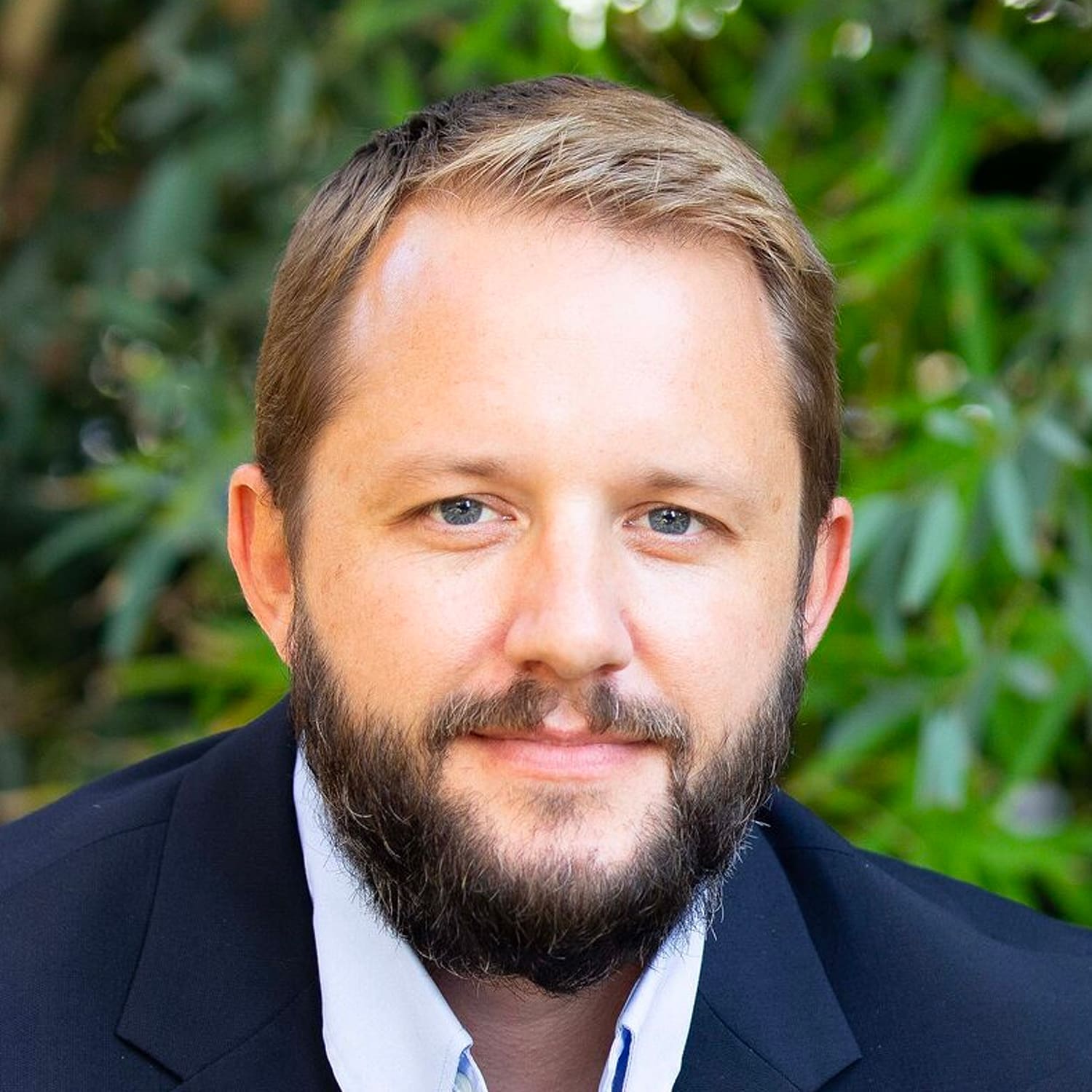
Matthew Kaemingk is Professor of Public Theology at Theological University Utrecht and Senior Fellow at the Center for Public Justice. He also co-directs the Templeton Pluralism Fellowship.
Love the show? Help others find it by reviewing it on your favourite podcast app. We also welcome your ideas and feedback. Email us at zealots@comment.org. Thanks for your support.
Who best holds the legacy of the great writer and farmer?
SITE DESIGN AND DEVELOPMENT BY POLYMATH