


Is resistance futile?



Modern medicine has spent a century training its practitioners to see patients as machines with broken parts—what physician Brewer Eberly has called “the great unsouling of the patient.” Physician-assisted dying is spreading across the West, palliative care remains underfunded, and many elders spend their final days alienated from community. We have lost the language for suffering, the patience for dying, and too often the nerve to say that death is not the final word.
Rebecca Vachon, director of health research at Cardus, opens in conversation with Dr. Leonie Herx, a palliative-medicine specialist who describes palliative care as whole-person medicine that attends to patients’ lives all the way to the hour of their deaths. The circle then widens. Design researcher Sara Hendren, who studies disability and the built world, turns the conversation on a single word: choice. J.S. Park, a chaplain for eleven years at a Level 1 trauma center, describes asking patients what would dignify their dying, and urges them to discuss it early with their families. Louis Kim, a former technology executive now pursuing a second career in palliative care, asks what artificial intelligence will force us to say about being human. And Dr. Lydia Dugdale, a physician and ethicist who has revived the medieval concept of ars moriendi, the art of dying well, reminds us that to die well, we must first live well.
Recorded in the Resurrection Chapel on the second afternoon of the 2026 Understory festival.
Tiffany Thompson: Hi, I’m Tiffany Thompson, Comment‘s executive editor and producer of the Understory festival.
Modern medicine has spent a century training its practitioners to see patients as a machine with broken parts—what physician Brewer Eberly has called “the great unsouling of the patient.” Following the early bioethicist Paul Ramsey, clinicians are constantly challenged to remember to treat the patient as person. Physician-assisted dying is spreading across the West. Palliative care goes underfunded, and so many elders spend their final moments alienated from community, deprived of connection. We have lost the language for suffering. We have lost the patience for dying. And too often, we have lost the nerve to say that death does not have the final word.
This episode of The Understory opens as Rebecca Vachon, director of Cardus’s health research, converses with Dr. Leonie Herx, a palliative medicine specialist who insists that palliative care is whole-person, detective-work medicine, caring for patients’ lives all the way to the hour of their deaths. Then the circle widens. Sara Hendren, a design researcher who studies disability and the built world, turns the conversation on a single word: choice. J.S. Park has been a hospital chaplain for eleven years at a Level 1 trauma center. He attends every death, every trauma, every code blue. He meets people on the very worst day of their lives. He asks them what would dignify their dying, and he keeps their answers. ChapStick for cracked lips. My own utensils from home. Let my dog say goodbye so he knows I’m gone. Finally, Dr. Lydia Dugdale, a physician and ethicist who has revived the medieval ars moriendi, the art of dying well, reminds us that to die well, one must first live well.
Recorded quite intentionally in the Resurrection Chapel on the festival’s second afternoon, this episode of The Understory podcast is entitled “Assistance in Dying, Assistance in Living.”
Rebecca Vachon: Good afternoon, everyone. Thank you so much for joining us this afternoon in this beautiful space. I happened to be in one of the prayer services held in one of the other chapels this morning, the St. Joseph of Arimathea Chapel, and I was reflecting on the fact that, of course, each of these locations is so intentionally chosen by Anne and the team. We are not today in the Bethlehem Chapel, where we’re reflecting on the birth of Christ. We’re not today in the St. Joseph of Arimathea Chapel, where we have this beautiful mural that depicts the preparation of Christ’s body for the tomb. We are here in the Resurrection Chapel. And as we discuss this topic of assistance in living, assistance in dying, I hope that we are able to remember that we are also called towards the transcendent, towards eternal life, and that the sufferings that we do encounter in this life are not the end of the story.
So my name is Rebecca Vachon. I have the pleasure in this first half of the session of being joined by my friend and colleague, Dr. Leonie Herx. This first half, we’re going to be exploring Leonie’s vocation as someone who works in palliative care, journeying alongside those who are experiencing serious illness and approaching the end of life. And then in the second half, I’m going to turn things over to Sara and a panel who are going to explore these questions further.
So to situate myself, my background is in public policy and research, and I work as the health program director for Cardus. Cardus is a research institute, a think tank. I’m based in Ottawa, Ontario, Canada. And Cardus also publishes Comment. The work that I do is much more focused on the research, the policy, the data, the statistics, and we’re not doing any of that today. It’s quite refreshing to—a little more upstream of the things that are happening in the policy, the legislation, and actually think about what is going on in the culture. What is the deeper questions that drive us towards these policy outcomes? I’m very grateful to converse with Leonie on this topic.
Dr. Leonie Herx is one of the Cardus senior fellows for the health program. And as I mentioned, she works in palliative care as a specialist, including in pediatric palliative care. And although she is very rich in credentials, expertise, and experience, I am not going to go through and list all of those.
So, Leonie, I’d like to start by asking you about your vocation as a palliative care physician. And I say vocation deliberately because I think to anyone who knows you, it is not just a job. It is also advocacy. It is also passion and compassion. But also, when I think of a little girl growing up and thinking about, “I want to be a doctor,” typically they’re thinking, “I want to cure people. I want to fix a broken leg. I’m going to do really cool neurosurgery.” Not too many people are thinking, “How do I support someone as they potentially approach the end of their life?” How did you find this vocation? And tell us a little more about palliative care and the process.
Leonie Herx: Sure. Thanks so much for being here today, and I look forward to our conversations later.
So I think God planted a little seed inside my heart when I was a young child. I grew up in a very poor family, and it was a very dysfunctional family, but I had this great love for elderly people. And I started—maybe to escape my family home, I’m not sure how it started—but I started visiting with my elderly neighbor and playing cards with her. And I was just a young girl. And she was kind of alone and abandoned by her family, although she had a family who lived in the same town, but they didn’t visit her. And so she just brought—she got so much joy out of this young girl coming and playing cards with her, and she taught me how to play piano. And we had a beautiful friendship for a few years before we moved away. And I remember through that journey just how much I grew. People say you’re giving life to help this elderly person, but it was actually me that was being transformed.
I felt, like, good about myself, and I wanted to do more of that. So when we moved to the new town, I started volunteering—I was only eleven by this point—at a nursing home. And the nursing home staff said, “We need someone to feed this woman in the dementia ward because nobody’s able to manage,” which is kind of strange to have an eleven-year-old do that. But anyway, this woman had very severe dementia and was one of—her expressions of her disease was that she would yell and swear at everybody. And so it was hard to have volunteers. And her own husband lived in the long-term care center and wouldn’t go visit her. So when I started spending time with her, he would walk by—like, he would do a pass-by kind of down the middle of the hall, and she and I would be over here. And he would just kind of nod and keep going. And I remember I ended up visiting with her for many years, just being so struck by her abandonment. And although she had this severe dementia, she was still worthy of being loved.
And so I’ve always had this, like, inclination to love and care for people who are most frail and marginalized. And that work very quickly translated—in high school, I started loving biology, and so I went to university to do biology, and I started volunteering in pastoral care in the hospital. So this is, like, my undergrad degree. And during my pastoral care work, you get to talk with people about their fears, right? Because when someone’s hospitalized, it’s usually some sort of health crisis. Nobody wants to be in the hospital just for fun, right? They either don’t have somewhere to go, which is also a social crisis, or they have a medical crisis. And so as a pastoral care worker, I was praying with people and reading scripture to them—and I’m Catholic, so bringing them Holy Communion if they’re a Catholic. And I just had this encounter with being able to delve into a person’s deepest fears and suffering, and that we actually needed to accompany people in this because people don’t know how to come alongside that.
And so as I got into med school—I did this MD-PhD program—I continued to do pastoral care while I was actually in medical school. And just, I think it was just an epiphany one day during Mass: I saw myself caring for people who were dying. So it truly was a gift from God that he asked me to do this. I don’t think anyone would, like, intentionally choose the path that I was put on. And I was led to do both adult and pediatric palliative care. So I’ve done both of those for twenty years as a specialist. And I founded the Royal College specialty discipline in Canada. So very academic rigor around, like, advancing palliative care.
But what really has always stayed with me is that our role in accompanying people at the worst times of their life—whether it’s a health crisis causing, like, a new diagnosis, or if it’s because they’re facing a rapidly deteriorating health or functional condition—that people have this yearning to think about what is the meaning of life. It’s a natural inclination that comes out of people when they’re facing the possibility of their own death, even if it’s a condition they might recover from. People have a lot of death anxiety and start thinking, even if they have a faith, “Is there a heaven? How am I going to be remembered? I’m not ready to die yet.” It’s an opportunity to really do medicine at a whole-person level.
Rebecca Vachon: And I think that brings us to the question about what palliative care is and why. Because I think there’s a lot of misunderstandings. I think even when I started in the work that I was doing, people are sort of responsive, just based on what we learn in the culture and basic practice and our experience maybe with a grandparent or a loved one receiving it, is this is—this is for the last days, the very last days. And we’ve tried everything, and it doesn’t work, and now we can do comfort care. But that’s not at all what it is or what you do. So maybe if you could elucidate that, just in case someone else like me was in the dark.
Leonie Herx: Of course, yeah. And I do think palliative care has been very misunderstood. And there is—I just realized again today, talking to some of the other panelists—that there is a little bit of a language differentiation between Canada and the US.
Really, palliative care is holistic, person- and family-centered care that is focused on helping someone live as well as possible while facing a serious illness. So it can be an illness that’s curative—and I see many patients who have curative cancer, for example—or it may be a condition that eventually leads to their death. It’s across all the elements—which is why I love it so much—about what makes us human. So not only our physical aspects of manifestations of illness, but our psychosocial challenges, our past histories of trauma, our spiritual and existential angst.
And I think what really is key is that when we’re experiencing suffering, all of that is mixed together. And so we have to be great detectives in palliative care to really unpack, like, what is happening when a person is suffering? Because they may actually say, “I’m in pain,” and it often gets interpreted as physical pain, but it’s most often not. It’s most often anxiety, existential suffering, worried about if they’ll be remembered, worrying about leaving a family member behind. It’s often all of those other psychosocial, spiritual aspects. And you can’t actually get control of a person’s suffering or physical pain until you delve in and help them reorient and find hope and meaning again. And so that’s why it takes that whole-person care, which I think, you know, was really founded by Cicely Saunders, which maybe we could talk about a little bit too, if you want.
Rebecca Vachon: Well, I think one of the things that we often engage with in the Canadian context has been the seismic shift that we’ve seen in 2016 with the legalization of euthanasia and assisted suicide. And I’m resisting here the innate policy researcher urge to start describing legal frameworks and statistics. But I think an important note is that in the United States, when there are some of the states that have legalized assisted suicide, you’re speaking about a clinician providing usually a prescription to a lethal substance that the patient must take themselves. In Canada, although that is an option that is available, 99.9 percent of all cases are euthanasia, or clinician-administered death, in the hospital or home or a medical setting.
So this is also the situation where, unlike the US, where it’s a six-month terminal prognosis, in Canada you do not need any kind of terminal prognosis, and you can qualify based on living with a disability or chronic condition, or, next year, you can qualify based on having a mental illness as a sole underlying condition. So a very different sort of policy framework that we’re living with in the Canadian context, and that has had—I think not just in terms of the palliative care world, but culturally speaking—how do you see the introduction of euthanasia and assisted suicide as disrupting or shifting what it means for us to encounter someone’s suffering, encounter someone’s fears, when they’re in that space of, “I’ve received a new diagnosis,” or, “There’s this new situation that I’m grappling with”? How do we journey alongside those in that situation?
Leonie Herx: Yeah, so it has completely changed medicine, actually, in Canada—not just palliative care, although it’s had profound impacts on palliative care. And, you know, in palliative care we know that, as we’ve just discussed, when you’re faced with a health crisis or change in your condition, it’s very normal to have a period of time where you maybe lose hope, you might be in despair, you’re isolated in hospital. And so it’s a normal grief response as well, to coming to terms with your own death, to have this anguish and think about wanting to die. It’s been part of humanity since we’ve been created. It’s a normal response.
And so talking about wanting to die—it’s not the same thing as wanting a lethal injection to immediately end your life. But in Canada now, any expression of a desire to die is understood culturally as “this person wants MAID,” which is what euthanasia is. And I’m going to say euthanasia because that’s, as Rebecca said, 99.9 percent of cases—of the 100,000-plus cases of people who’ve been killed with euthanasia—is with a clinician injection. And so you can be admitted to hospital and be even maybe a little confused, a little delirious, and you may say, “I can’t go on like this”—and I have my own patients that this has happened to—and the attending team—even in the emergency room, this happens—says, “I’ve got to call the euthanasia team,” because there’s this expectation that if someone says they want to die, then you have to put them on the path to euthanasia as an option. And so it’s very quickly taken away our ability to sometimes even see a patient.
So I’ll give an example. I was called by a cardiologist to see this woman who’s in her fifties, like my age, brand-new diagnosis of heart failure—could have been something completely reversible. I know Lydia’s an internist—could have been, like, a viral myocarditis, something like—she had no previous history of any issue. She came in very short of breath, so feeling kind of breathless, which is scary, right? When you can’t breathe very well, you kind of panic. She also had a past history of depression. So she said, like, “I can’t live like this.” And so the cardiologist felt obligated to call the euthanasia team, because that’s the culture that’s arisen out of this rapid normalization that this is part of health care.
Then she felt really badly that she had called the euthanasia team and called me urgently and said, like, “I haven’t done any investigations. I don’t know—like, she could have something completely reversible. She’s so short of breath. Could you just come and talk to her about how you can use medications to control her breathing so she can feel better? And then we can talk to her about doing what kinds of tests we need to do,” right? Like an echocardiogram, for example. So I went down very quickly, like within an hour, because my colleague was very worried. And she said, “I felt like I had to call the MAID team.” So I got down there, and the husband blocked me in the door and said, “She’s too tired. She doesn’t want to talk to anyone. She’s just spent a lot of time talking to doctors. Can you—” What’s your role? I explained. He said, “Can you come back tomorrow?” This is in the afternoon.
I went back the next morning, and she was already dead. She had received euthanasia the afternoon shortly after I left, because—and the reason—the chart, because I was consulted, I was able to read the chart—was that she had a major depressive disorder, a previous history of suicidal ideation and depression. But there was no requirement to treat her medical condition, which in this case was depression. But because she had symptoms of heart failure and was refusing investigations and treatment for this new medical condition, her death was considered foreseeable, which in Canada means there’s no waiting period for euthanasia. And so she was able, with an untreated depression—one should wonder about capacity, of course—but untreated symptoms from a potentially reversible medical condition, be killed on the same day of coming to hospital.
And that’s just an example of how this has totally disrupted the fabric of medical care, not just palliative care, which is, like, now no one wants to talk about their suffering because they think you’re trying to convince them out of getting euthanasia. So if I come as a palliative care doctor and want to talk to people about what’s happening with them, why they’re feeling scared and anxious and thinking they might be better off dead, there’s this sense from family members sometimes, and sometimes from the person themselves, that you’re actually there to prevent them from getting euthanasia, as opposed to, like, “I care so much about you, and we are here to serve you and accompany you and help you find hope and meaning”—which we know in most cases, when people have this existential angst, the desire to die goes away in about two weeks. So we have pretty good research that shows, with good support, it goes away in about two weeks. But now we don’t even have a day sometimes, like I just described. So there’s a lot of people in Canada who are getting euthanasia with untreated medical symptoms, conditions, and no access to other services like palliative care.
Rebecca Vachon: Before we turn things over to our friends across the room, I wanted to move towards something a little more hopeful, maybe, and drawing on the theme for these breakout sessions of “How then should we build?” What does it mean to learn something from the approach of palliative care—even from the way in which euthanasia has been ravaging families and patients’ lives in Canada? And how do we learn from that about what it means to be human, what it means to be vulnerable and dependent, and to move forward in building something—something community space, something based in love?
And because I think that the fears that you mentioned, those are fears that come up even in the Christian communities, even within our own hearts. Thinking about building, we have such a firm foundation in understanding ourselves and one another as made in the image and likeness of God, right? We have that foundation of: we all have dignity and worth, and our lives mean something, and our lives are intended not to just end but to continue on. And yet there’s still so much fear. And I think any time I have encountered suffering, I see those fears in my own life. I see how I can think about someone else’s experience and think, “Well, I don’t know if I could do that. I don’t know if I could go through what that person’s going through. I don’t know if I could go through what I’m going through. And if I can’t do that now, how am I supposed to contend with whatever changes are coming?”
One of our friends in Canada, fellow Albertan Dr. Heidi Janz, uses this phrase, “temporarily able-bodied,” as a means of reminding us that even though sometimes we think, “Oh, we’ve achieved adulthood, we are somehow now these independent, autonomous, lots of physical prowess,” all of that kind of thing—it’s so temporal. An accident, an illness, a chronic condition, even just the stage of life that we’re at, from when we’re born to our bodies as we age—all of that is going to introduce to us moments of change and reckoning with: What is my dignity when my cognition changes? What is my dignity when my capacities change?
And so how do you, both personally and professionally, help us navigate, help us journey—not only your patients, but then all of us—as we contend with these hidden fears about who we are and our capacity to be loved, even in moments of dependence? What lessons have you learned about how we can journey alongside one another and also journey with ourselves through these fears into something greater?
Leonie Herx: Yeah, I think it’s one of those things that they were talking about this morning, about this, like, individualistic autonomy-rights approach, where people think that they live in isolation, and when you can no longer do things for yourself—whether you need help cognitively or physically—you’re somehow a burden, right? Like, there’s this sense in this utilitarianism that you are—and therefore no longer worthy of being loved and no longer worthy of being alive. And we see that legislatively in Canada: the fact that disability itself has been made a condition for a doctor-assisted death is inherently saying these lives are not worth living. And it’s shifted the culture so much that now it’s being offered, right, and suggested, and other people aren’t getting the standard of care when they’re disabled. So it’s made disabled people very scared to go to the hospital, because there’s so much pressure around dying.
So I think, like, first of all, education. Like, we have to really talk about what it means to be human, and we have to educate within our—like, we can’t just rely on the health care profession, right? In our communities, we have to talk about what we need to thrive as human beings and this acknowledged dependence—that we all need each other in order to reach our true potential. And that’s the same even when someone’s dying. Growth and healing can happen even when you’re physically diminishing. And talking about the gift that you give to someone else by allowing yourself to be cared for by someone else. Like, we’re really good at caregiving for other people, but we’re not so good in our society at receiving care. It somehow means that we are unworthy and a burden.
And in fact, on the flight here to come to this conference, I was sitting next to an Ismaili Muslim, and he’s asking me what I was coming to Washington for, what you’re talking about. And he’s like, “Oh yeah, I’ve already told my family. When I get—if I get a little bit demented, I want MAID. I want to have that. I don’t want to be a burden to other people.” Instead of thinking about, like, how we continue to give even when we’re diminishing, and that building virtue and flourishing is a gift we’re then giving to someone else when they become—in that caregiver role.
And so talking about our responsibility for one another and taking that on in our families and in our friendships and in our workplaces, so that we become this—a term I call “compassionate communities,” which is part of the palliative care movement, where we have this social responsibility for one another, right? And we do that. I mean, that’s a very Christian principle, but it’s like we need to bear each other’s burdens. We’re not burdens. We bear each other’s burdens. And that’s actually our responsibility and loving service, to bring Christ to each other.
And so now I’m in this weird place where my day-to-day work is violence. It’s people wanting to kill themselves or people wanting to kill their children. And so I’m kind of trying to pray through, like, how do I actually—like, I continue to serve and try to love these people, but I still have to accompany them. But how do you do that without even, like, condoning something that’s wrong? Like, so I’m still learning, so maybe you have something to teach me today. But I think praying for those people regardless is really a way that I certainly manage some of that type of despair that is just so apparent. And it’s, like, the culture we’re in in Canada—and I hope it doesn’t become this way in the US—is one that fosters despair and depravity by offering death as if it’s care, right? So it’s very, very crazy.
Rebecca Vachon: I think the aspect you mentioned about the community is so important. And there’s this concept in Catholic social teaching—but I think it maybe isn’t the same word in other Christian traditions—but that of solidarity, of this recognition that we are not these independent units, that we are in relationship and we need to journey one together in a really radical way.
I was trying to explore these concepts in an essay I wrote for the spring issue of Comment this year, and one of the biblical images that has been really present in my life has been the image in the Gospels of the friends of the paralyzed man. He could not get to Jesus, and they took the roof off. We’re talking about building, but I guess that’s a little deconstructing, but anyway. And what does it mean for one another that we’re taking the roof off and bringing them to Jesus, and recognizing that in some moments we are the paralyzed man, and we need our community to recognize our value and our worth even when we are incapable of doing so—and in turn, being willing to offer that to one another?
So on that note, I’m going to turn things over to Sara, who’s going to introduce our panel for the second half.
Sara Hendren: I’m Sara Hendren, and I’m glad to be here with Louis Kim, Joon Park, and Dr. Lydia Dugdale. Each of them, in their roles, has a kind of entry point to thinking about these same ideas. So I just want to ask each of them to tell a little bit who they are biographically, and then also what is top of mind to each of you, given what you’ve just heard from Rebecca and Leonie, and given what you’re kind of contending with day to day. Let’s start with you, Louis.
Louis Kim: Hi. I’ll do a quick introduction, and then I’ll respond to your question, and maybe with some short prompts to leave time, and then we can come back if people want to follow up.
So my name is Louis Kim. I retired after twenty-seven years as a vice president at Hewlett-Packard. And that was after several years of discernment, somewhat precipitated by meeting Dr. Dugdale. I’m currently enrolled at Duke Divinity School in the master of divinity program. I’ve got two more years, and I’m considering chaplaincy. I say “considering” because the more I meet chaplains, the more it’s kind of daunting. I’m also on the editorial board of Comment, written some essays. My favorite one is on tragedy—check it out. I’ve also been back and forth to Rome. I’m Catholic, and I’ve had some involvement in and around the Vatican on AI stuff.
So two quick responses to kind of what I’ve heard from Leonie. One is this issue on AI. As AI gets better and faster—and it will, far beyond our imagination—it presses the question of what is human, particularly in extremis, you know, at the end of life, in terms of what kinds of care, but also accompaniment. Maybe there’s not a chaplain within hundreds of miles. Would you allow a robot to go talk to a semiconscious relative?
The second theme—and then I’ll pass it on to Joon—is the issue of accompaniment and kind of why I sort of made this pivot. There’s a little bit of a story there, but my father was a Catholic priest. He got ordained after my mom died, and he died in a car accident. It was quite sudden. But my sister and I ended up standing by his open casket for four hours during what’s called the rosary. It was kind of the evening before the funeral. For four hours, we listened to a thousand condolences of all types. And it really formed kind of how I thought about accompaniment on the other side. And so it just made me think about, again, you know, when someone is dying or in an extreme situation, what does it mean to accompany that person as a human being?
J.S. Park: Hi, I’m Joon, hospital chaplain. Online I go by J.S. By the way, I’m happy to see Louis here. I was just telling him there’s very rarely, like, an Asian male as part of a speaker or panel. I think at this festival there’s, like, three of us, which is like a rare solar-lunar eclipse. That’s pretty awesome.
Louis Kim: Two Koreans.
J.S. Park: Two Koreans, even, which is fantastic. And I met Mako at the hotel—the great Makoto Fujimura, the artist. Yeah. So I am a hospital chaplain. Yeah, yeah.
Louis Kim: Not Korean, so it doesn’t count.
J.S. Park: Also counts, yeah. Pan-Asian, East Asian.
Yeah, I work as a hospital chaplain for almost eleven years now. I work at a Level 1 trauma center, which you may have seen depicted on The Pitt, which is very accurately depicted. And also in the main hospital, which is a thousand-plus beds and does have palliative suites as well. And even as Dr. Leonie was talking—so much of what she said was so challenging. That story you shared is so meaningful.
I attend every single death and code blue and trauma in the hospital. Resuscitations, traumas—we get car accident, fire, fall, drowning, stroke. I meet people on the very worst day of their lives. And when I hear a patient tell me—if they’re awake and alert—when they tell me, “I don’t think I can make it. I don’t think I can survive this diagnosis. I don’t think I’ll be okay,” I think of what Dr. Atul Gawande said—who wrote Being Mortal, on palliative care. He said that the option for euthanasia, or what may be called assisted suicide, physician-attended death, is an option that’s only given or offered because of the failure of the system itself to not provide provision. And when I hear a patient say that, it’s because there’s not something that’s necessarily being offered to this patient that will alleviate what they are going through.
So on one hand, I understand what they’re saying. I validate their death anxiety, their fear. And there are cases where I do wonder, would physician-attended death be something that would be helpful for this person? But on the other hand, I keep going back to what Dr. Gawande said, that not all the options are available to this person.
I remember having a patient who said, “You know, after—I’m just wasting away,” and after what they told me, “There’s no meaningful life that I could live.” And when I asked him, “What’s giving you strength right now?” he said, “There’s absolutely nothing I could think of.” I said, “What is there that, when you get to leave, or if you were discharged, where would you be able to go back to?” He said, “I have no home. I’ve outlived everybody in my life. I got no family, no next of kin, nothing.” And again, I think of—he talked with social work. He talked with psych. He talked with me, the chaplain. He tried to get all the resources that he could. For him, he truly felt like there was no meaningful life for him out there. He had no community. There were no people to come in to provide for him, to be with him, to accompany him.
And for me, at least, I can validate those very real fears and anxieties about “there is no meaningful life that I could possibly live.” And to Dr. Leonie’s point about the community coming together, he had no church. He had no people. And so that isn’t just a failure of health care. That’s also a failure of the entire system at every level. Was there no church? Was there really no resources for him? Was there no housing for him?
And so while I can’t say that the option for euthanasia, that’s something we should automatically go back to—especially how I’m hearing how it’s done in Canada—as a person and as a presence and in my role as a chaplain, I can at the very least understand where his feelings are coming from, and to meet him there and to address that failure relationally and systemically. Like, how can we do this better? How can we have this person actually go into a community where he feels safe and he feels solidarity? And where are communities—especially church communities, clergy—where are we dropping the ball on that?
And these patients who say, “I want to give up”—I want to tell them, “Don’t.” But then when they tell me, “What am I going to be living for?” those are question marks. So I wish I had a real answer for that. But at the same time, I just sit in the sorrow and the grief of it. And I validate where this person’s at. And I hear the desperation in it. And as a chaplain, all I can do is do my best to tap into every resource available that we have. And sometimes we find something, but not every story like that has a happily ever after. So I can say that I understand the feelings around it. And I’m also hoping to advocate for and push for: How can we, at every level, systemically do better?
Lydia Dugdale: Thanks, Joon. I’m Lydia Dugdale. I’m a primary care doctor—some people would call that a GP—in New York City. As a primary care doctor, I’d say about 90 percent of my patients are older—definitely older than sixty, most of them older than seventy. And so while I’m not trained in palliative care or in geriatrics, I pretty much do 90 percent of my time geriatric medicine. And that necessarily lends itself to conversations for the preparation for death.
What I realized very early in my training—and also on the hospital side—is that we are very, very good at masking the dying process with the use of technology. In fact, we’re very good at dragging out the dying process. And I use that language intentionally, because there’s a way in which the same intervention could prolong life, and also the same intervention could delay death. And part of the way you make that determination depends on the whole picture that the physician understands, but the family might not.
And so early on, I thought, “This is terrible.” We are—you know, doctors will use this language of torturing patients to death. Why is no one talking to people about mortality? Why is it that people are eighty-five years old and coming to the hospital thinking they’re never going to die? What kind of society have we created where there is an illusion of immortality that is going to come? “The cure for my mortality is just around the corner. If I can just hang on. If Grandma can just hang on.” And, you know, behind closed doors, the doctors will sit there and say, “Oh, this is terrible. She’s—you know, I can’t believe this. Like, why does the family want to keep going?” And yet nobody was talking to the family. No one was accompanying the family through this process.
And so I started asking my colleagues about it—I’m just a medical student and a young doctor—and they would say things like, “I don’t know why you want to talk to your patients about death. I myself am so afraid of dying, I do whatever I can not to tell my patients that they’re dying.” Or they would say, “That’s the role of palliative care. We’re surgeons. We’re oncologists. We’re about saving life. We’re not about dealing with the death stuff.” And palliative care has been a wonderful gift to medicine, but many, many clinicians have abdicated their responsibility for addressing issues of dying and have just said, “Call the specialists when we want the specialists involved.”
Anyway, I was very troubled about this. I pondered it for years and then came across, some many years ago now, a medieval handbook on the preparation for death that became a whole genre of literature that was very popular in the West for more than five hundred years. And that genre was called the ars moriendi, which is Latin for “the art of dying.” And it started—the very first handbook is anonymous, but we think it’s related to a person very involved in the upper echelons of the Western church. Now, this is 1400s. This is before the Reformation, the Protestant-Catholic split. So undoubtedly—the earliest text derives from the Western church. However, with the Protestant Reformation, the secularization of society, even within Judaism, there have been versions of this art of dying, this handbook on preparing for death, that have circulated widely. Every version you can imagine—different languages, different cultural adaptations.
I’ll just say briefly, former president of Harvard University Drew Faust is an excellent Civil War historian. And she has a gorgeous book called This Republic of Suffering. And she describes in that book how the Civil War changed the way we think about death in the United States. So much to say—if you’re at all interested, just go buy the book. But one of the things she talks about in that book is that by the time of the US Civil War, whether you were from the North or the South, whether you were religious or not, the idea that you would think about your death and prepare for it was part of what it meant to be brought up well.
The closest thing I think we get to that today is estate planning. And that’s only for people who kind of come from families that have it together, which does not describe mine at all. So I don’t even know about estate planning—so what do I know? But we don’t have a routine practice that says, if you want to die well, you have to live well. And that requires a certain amount of forethought.
And so I set out on this mission and have written various things, including, most recently—now published six years ago—a book called The Lost Art of Dying. And in that book, I sort of talk about what I just said, and then think through, well, what would it mean to die well? And I wanted to write a book for my patients. I live and practice in New York City. It’s a very secular place. I wanted to write a book that wouldn’t be explicitly religious but would also point to questions of ultimacy and get them thinking. And so I make the case that there are many things you need to die well. Relationships in order is one. But also these big questions, right? This is something we must think about before we are in the ICU, on life support, comatose, unable to engage. And so that’s the case I build in the book. But this is really—so this sort of work has occupied me for the last fifteen-plus years.
I just want to say one more brief response, if I may. For also, I’d say, the last fifteen, sixteen years, I have worked on the issue of physician-assisted suicide. I’m a physician. I’m also a medical ethicist. And I think about all of the moral questions in medicine all the time. I have had many, many, many patients ask me to help them die. I have had families ask me to help them hasten the death of their loved ones by withholding treatments or sabotaging treatment plans. I have had patients whose children have sabotaged their treatments so that Mom would die because she’s been a burden—even though I have always lived and practiced in a state where physician-assisted suicide has been illegal.
I fought legislation in New York, but just in February of this year, we had our final approval by the governor, and New York will begin physician-assisted suicide August 5, just this summer. And as an ethicist and a policymaker in a large health system, I am part of the team now that has been tasked with writing the policy to help our patients kill themselves ethically, which is quite a paradox. But I’ve followed the Canadian experiment very closely, and it’s been helpful, I think, to sound alarms. But I don’t foresee a happy future on this question in New York anytime soon. But we can be hopeful.
Sara Hendren: I want to just pick up on something that Dr. Leonie mentioned, which is that there are these kind of pernicious workflows that start to proceed from and change the fabric of medicine, and you said it’s under the language and the idea of care. I mean, it’s sincerely meant, but it is masking, it’s hiding, you know, a kind of more troubling—to say the least—logic underneath that.
I want to point to another similar situation, which is that in the way that we—those of us in the room here who are not involved in this—we experience the public bioethics of this issue as an issue of choices. And so whenever I have casual conversations with people about end of life, usually the only good that we can reach for, that we would say is definitely the best we can offer each other, is choices. And choices, of course, are good. We want choices in medicine. We want enfranchised patients to be collaborating with health care, of course. But choices seem to be a kind of necessary but maybe insufficient framework for thinking about how our lives end and how to die well.
So I wonder if you all can talk to us about the notion of choice—how it’s spoken about, maybe, among the patients that you interact with; maybe how and whether AI and technology has put some pressure on that in a way, or not. But where does your mind go? Because I find this a real sticking point in casual conversations about people going through very difficult things, right? Thinking about the end of life. And we reach for choice as kind of the only good that we can celebrate. And Leonie, if you want to weigh in on this too, I’m happy to run this down there.
Lydia Dugdale: So I think it’s worth saying—and Leonie, I’m kind of tracking you here—that oftentimes when patients make a decision to hasten their death, it’s a constrained choice. So is it really a free choice, or is it something that is chosen because of constraints? And so it—I can’t even remember where this came up now, but you think about folks with disabilities who don’t have access to the services that they need, or you think about people who can’t afford health care. Or you think about loneliness, right? Something like 3,400 Canadians—one of the reasons they gave for MAID in 2024, for euthanasia—loneliness. And so when you are cut off from community, you’re poor, you don’t know what to do—is that a choice, right? Is that a choice, or are you constrained by circumstances? But you’re the expert.
Leonie Herx: No, no, I totally agree with you. I think there’s a lot of discussion in Canada to say, like, is this actually an informed choice when you don’t actually have access to resources to help you live well, or even live, basically, for some people with disabilities, right?
The other thing that comes up around choice is this question of autonomy. And is this really just about you as an ultra-individual? But what about the impacts of those choices on the other people, right? And so the families, the health care professionals, the communities who then have to live after this person has taken their life through assisted suicide or euthanasia—there’s actually a ripple effect on that whole community. And I don’t think we’ve begun to unpack yet the level of trauma that is happening in Canada around this.
And I think we’re going to see even health care professionals who are not necessarily in favor of it, but they feel that they can’t speak up because there may be professional repercussions and professional marginalization. You don’t get into leadership positions if you make a stand. And you can get—made against you by the college if you’re not, like, actively facilitating suicide. If you don’t want to provide it, you have to make sure they get it. And so we have this culture of fear in health care professionals, and doctors just put their head down, and they don’t say anything. And then they themselves are participating in things they don’t agree with. And I have to imagine that soon enough we’re going to see a lot of repercussions of this effect, because we are relational beings, right? So this concept—and maybe you guys can talk about it as experts—relational autonomy: that we don’t just exist as islands.
Louis Kim: I’ll just add a comment from a theological-commitment perspective, maybe also historical. It’s hard to appreciate the waters that we swim in and how in the last, let’s say, two hundred years or so, there’s clearly a movement away towards individual autonomy that is the highest good. So it’s nothing that you all don’t know, but I think this is where theological commitments are important, and what your starting point is. Clearly we are in an era of choice as king.
J.S. Park: Yeah, one of my roles as a chaplain, in thinking about choices, is assisting patients with a document called advance directives. Some of you may have done them already or know about them. But in that document—in Florida, we have two documents in that document, one called a health care surrogate and the other called a living will. And a living will is about expression of your wishes, essentially about life support, and if you would like to continue all measures, or if you would like to continue on some, depending on your condition.
So two things about that as far as choices go. But for one, like, the document itself—and at least as far as Western definitions of medical autonomy—we tell the patient, “You can make all these choices by yourself and not have your family here. You decide this. This is all on you.” And some people definitely go for that, and we’re respecting the law as far as the law is written. But there are some patients—particularly patients of color, like people of color—who will say, “No, I would rather wait till my family is here before I sign this document.” And we’ll tell them, because our training says to, “Well, you are allowed to sign this by yourself,” because there are times, there may be situations, where there’s some coercion happening or a family kind of talking over the patient. But some patients very, very adamantly, strongly insist—like, essentially saying, “My family is me, and I’m my family. We decide these things together.”
And so I think the definition of autonomy has become very narrow and constricted as far as making choices, because there are going to be some people, some cultures, some communities where my decision is a choir of voices in which I am woven with all of the people who have been with me through my life and through my suffering. I’m not just self-made, but I’m we-made. I went back to the chaplain department with this because I said, “This document is very, very constricted in the Westernized academic medical definition of what autonomy is. We got to make some situations.” I think, Dr. Leonie, you were kind of alluding to it, about kind of the collective communal responsibility and decision-making together.
And then as far as, like, the patient themselves then making choices—Dr. Lydia, I mean, you were talking about, like, the dying process, you know. I think dignifying that process and talking about it as early as possible is important—even bringing up advance directives, even getting that education. But in the living will, there’s a space there—and I’ve shared this before—but it’ll say, like, what measures are okay to remove if there’s no probability of recovery, if you lack capacity, et cetera, vegetative state. And at the bottom, there’s a blank space that says “other instructions.”
And I’ll ask my patient, like, “Are there any specific things that you would like that you believe would help dignify this part of your life?” And over ten years, I’ve gotten all kinds of things, like, “Please put ChapStick on my lips as I die.” “Bring all my utensils from home, you know, so I can eat food with my utensils.” I got one that said, “Let my dog say goodbye to me so that they know that I’m gone.” And the reason why that one patient wanted ChapStick on her lips was, she said, “As I saw my mom dying, the thing she kept saying was, ‘I’m so thirsty.’ And her lips were so cracked. And I don’t want to go out that way.”
The power of choice and autonomy—there’s that collective choice, and then there’s also that individual choice too, that voice that is: “How I would like my dying to be dignified.” And I always tell the patient, “Please talk with your family, with your community, with your people about this, about what you would want. Because there may be a time when you won’t be able to have this voiced. But have those conversations early, and have them a lot.”
Lydia Dugdale: Can I just jump in on one more thing? That was gorgeous. I’m going to corrupt it now. There’s a tiny bit. But I think it’s also worth putting on the table, with the MAID conversation, the idea of suicide contagion. And so at Oxford University, there’s a bioethicist who has been studying what happens with conventional suicide in jurisdictions that have legalized physician-assisted suicide or euthanasia. And what he’s found—his name is David Albert Jones—what he’s found is that in every jurisdiction, in Europe and in the United States and in Canada, where assisted suicide or euthanasia has increased—you would think, now people don’t need to buy a gun and kill themselves. They can have the doctor do it, right? Well, actually, it’s the opposite. Because the idea of taking one’s life has become so normalized, in every jurisdiction where suicide or euthanasia goes up, there is a concomitant in—
So we say we want to prevent suicide, and then we enact legislation that drives up not only doctor-aided suicide but also conventional suicide. And then, going back to the question of autonomy, is that autonomy? If suicide contagion is a real problem, then what sort of autonomy do people have who are saying, “Maybe I want to die,” and they’re dead in four hours?
Audience Member: This is going to be difficult, because I agree with so much of the heart of what you’re saying. I am Canadian, and I would only say that in order for us to have a respectful, nuanced conversation, that we have to be careful about how broadly we generalize. And I do have experience with this, and I would say that—I agree with the spirit of your concern and your passion for palliative care and the importance of teaching that, and the importance of teaching and practicing good death language and death understanding. If I had never heard about what’s happening in Canada, I would come away with a very different impression than my experience as a Canadian.
So I would say that it is an important part of understanding how we engage in the conversation, that the push for MAID did not come from the broad Canadian population. It came from the disabled community—and it’s contentious in the disabled community—but it came from within the disabled community, saying, “I want this right.” And so making—I think that’s a really important distinction for us to be able to understand: that this didn’t emerge as an encouragement for everybody to kill themselves. It emerged out of—the people who were able to advance the narrative were advancing a narrative that was—to their needs and their expectations. So we’re not all shooting each other up.
Lydia Dugdale: I mean, Sara, do you want to—so Sara works on disability. I was wondering if you would want to—I know MAID isn’t necessarily your thing, but—
Sara Hendren: No, and neither is the disability scene in Canada. But I do know what you are describing, which is just a kind of bodily-autonomy logic in disability, right—of self-determination and so on. But it is contentious in the disability community because, of course, there are plenty of voices within the disability community that would say—there’s a group called Not Dead Yet, you know—that would say, right, “I refuse to actually accept an economic, you know, metric of human worth.”
In my mind, it is indicative of a kind of confusion about the bedrock question of dignity itself, you know. And indeed, the kind of—this is where I think theological commitments make all the difference, which is to say, if life is a gift to one, and then if one’s life might be made a gift, then it is the invitation also to make one’s dying well a gift. But this is, of course, profoundly counterintuitive to a modernist idea of self-determination. And self-determination, of course, is a hard-won fight within the disability community. We have in living memory very few choices, right, for people with disabilities. So it is tremendously thorny philosophical territory.
I agree. And I find myself really quite at odds with what has been a home community for me. I have an adult son with Down syndrome and a couple of autistic nieces and think a lot about this in the future. But it is, I think, an incoherent bedrock philosophical confusion—where our dignity comes from and what self-determination is for, right? So—not going to solve it here today, I can tell you that. Who else has a question? Yeah.
Rebecca Vachon: I want to express my appreciation. I hope—I agree that the drive for MAID came from a sincere place, and that it came from a place of expressing pain and a desire for something to change. I think that as Christians, one of the most challenging things we confront is: What is our response to suffering? And when I look at the policy world, one of the things that I have to think about is how does this play out in the broader culture and in the lives of those who may experience vulnerability in different ways.
And there was a senator in Canada who was speaking about this issue in the Senate and said something that really moved me, because she spoke about, “I think I would want to receive assisted death in situations of, for instance, dementia.” And she said, “But the reason why I cannot support this policy is because I have so much resources and support and family. And if I would make that choice, it would look very different than how other people in that situation might make that choice, because they lack that community, those resources, all of the socioeconomic and relational capital to understand what options are out there.”
And so I think that it gets really to the heart, on that individual level, of how do we love one another in the midst of our suffering? But then also, at a collective community level, what are those implications of those choices, and how do we best love one another as a common good?
Audience Member: I just want to express my appreciation for the conversation at all. I think that—I’ve said often that all pathological fear will breed a pathological fetish, always, in every case. And I think that Western society has a pathological fear of death. So the logical outcome will be a pathological fetishization of death. I think that—a question. I’m doing the thing that I hate, where there’s supposed to be a question, but I’m just going to wax poetic for a minute.
I’m an artist. I’m not a medical professional in any way, but I’ve been fascinated with death for a long time—even as a kid. And I’ve always been fascinated with the Christ character. I think that, growing up in the American church, we really want to be with Christ at the resurrection, but none of us want to be with Christ on the cross. The gospel is as much a book about how to live as it is a book about how to die. So I think there is something to be said for—I hope we have a lot more conversations like this in the West.
I think that what is fighting to be born, in some cases, is death. Some of our institutions and our systems are fighting to stay alive, but they should actually be put to rest well. And institutions should probably be asking themselves, how do we die well? To beat the Understory analogy to death: one of the beautiful things about the understory is how it facilitates and utilizes decay. That’s the function of the understory on the forest floor—to feed the rest of the ecosystem from that decay. But that can’t happen unless we allow ourselves to find wonder in the cycle of death. And again, it’s always so counterintuitive to me. If we’re a people that believe that death is not the end, why are we so apt to run away from it at every turn?
So, Joon, I just want to say thank you for your posture. I think so much of our modern conversation about this is for or against, but Christ is a model of with at every turn. With is so hard. And it’s easy for me as an artist to say this, because I live in the question. With provides very few answers. So I understand why the medical field can’t do the with thing.
But my question is, after I’ve done all that: How can we breathe sort of a new life into death in our—pick it, at any scale, at an institutional scale, at a familial scale, at a communal scale—how do we breathe new life into the conversation around death, such that we don’t end up in this sort of fetishization—just this extreme fetishization, which it feels like, honestly, feels kind of like it’s just the Western world. We keep saying US, Canada, Europe, and I’m like, well, no shit. But I don’t know if it is just the Western world or not. But how do we sort of do the different thing?
Leonie Herx: Can I jump in? Well, it’s actually one of the core things that we need to do within our communities: to actually talk about dying and death. Because it’s been, over the past sixty years, you know, our seniors have moved into long-term care centers, and we don’t have the multigenerational homes overall—like, some of our different cultures do it better. But I think we have to actually talk about what normal dying and death looks like and talk about how it’s a transformative time of life.
So, you know, I’ve had the privilege to accompany thousands of patients through their death, of all ages, including children. And I’ve not had one experience where there wasn’t transformation and growth and healing that happens to somebody in that community as part of that dying experience. And so actually, there is flourishing that happens, and there’s some things about the end of life that are uniquely accessible when facing the possibility of your death. And it can be deep social relationships, a connectedness to transcendence. It can be interior healing of past traumas in your life, right? Even if you can’t reconcile with that person anymore, there’s growth and healing and virtue that can still develop. And so we actually need to talk about the goods of dying and take responsibility for that as a community, and normalizing talking about it. And as you were talking, Joon—and actually, but explain the good parts of it too, right? And most people don’t need a palliative care specialist to die well. You need good planning and care and support and basic symptom management.
Lydia Dugdale: But I—am I still on? Okay. Sometimes I say to people, “Let’s do a thought experiment. Who do you want at your deathbed when you’re dying?” And then the next question is, “And what is the state of those relationships now?” And that, again, just underscores—I think the work of dying well is really the work of living well. And a guy said to me once, “Look, I know who I want at my deathbed, but frankly, I can’t stand the guy right now. So can I just wait to work on the relationship until I’m dying, until I’m in the hospital?” But that’s exactly the point: we don’t know how many—all of our days are numbered, and we don’t know that number. So then the work of dying well really is the work of living well.
So it’s having these conversations. And I don’t think you need to get sort of obsessive. There’s a whole death café movement, which you might want to check out as an artist, but it is a little weird. In my view, I think it’s a little weird—and I like talking about death. But there’s a little bit of a morbid fixation, and then there’s also a strong MAID component of it as well. My point is that the conversations about death should be fairly routine.
I grew up in a household where we just talked about death routinely, because that was the example—my grandfather, prisoner of war, bomber pilot shot down, all that stuff. He set that example because he had faced death so many times that when he got out of the war, it was like, “This is just part of it, kids. We’re talking about this stuff.” I think it could be scheduled. It could be put into a routine in the church. It used to be a common topic from the pulpit. And coming out of World War I and the influenza pandemic of 1918 to 1920, we moved into the Roaring Twenties, and the church stopped talking about death. Everyone wanted to get on with living well. No one wanted to die well. So apart from, you know, Ash Wednesday and Good Friday, when do you talk about death in church? Never. But could clergy bring it back in?
I often encourage health care professionals in their community groups—whether that is church or the Lions Club or, you know, something else—have an end-of-life workshop. There’s no reason why we can’t. This is what we do professionally. Why can’t we help our community, your neighborhood association, whatever it is, your apartment building? Why can’t you help people start thinking about this stuff? Bring it into the conversation.
J.S. Park: Can you tell me your name again?
Audience Member: Obi.
J.S. Park: Obi? All right, I’m definitely checking out your art, because I like everything you have to say.
Yeah, I can tell you, culturally and personally—like, in Korean culture, we do something called jesa, which means “death day.” We commemorate death days just like we celebrate birthdays. So we sit down every year. It’s kind of a mandatory, but—it’s, like, our filial piety to commemorate our matriarchs and our patriarchs. And we sit down with a timeline and lift them up and remember everything they did. And even though I didn’t get to meet my late grandmother and grandfather on my in-laws’ side, like, every year I feel like I kind of get to meet them. And even this last time we had the Chuseok service, I asked my dad-in-law, I was like, “What did your dad laugh like? What did it sound like?” And he did his dad’s laugh, and everybody at the table just, like, pointing at him, like, “You nailed it! That was it!” You know?
But I read a book called From Here to Eternity by a funeral director, Caitlin Doughty, and she talks about death engagements around the world. She traveled the world looking at different ways in which we engage death, and what she discovered was every culture abroad, of the global majority, has a specific type of death engagement. You got, like, Viking funeral pyres. You have Día de los Muertos in the Mexican culture. Korea has jesa. You have the Toraja people in Indonesia that exhume their matriarchs and patriarchs every summer and sit them up at a table and have tea with them, with their mummified bodies.
Unfortunately, in the West—and even as I’m saying that, you might feel like, “Oh no,” right? Unfortunately, in the West, the dead body has become a symbol of horror movies and something very macabre and something kind of gross and detestable. But when you think about what we do with a body: we take our dead, we bury them in a segregated lot six feet underground after filling them with chemicals, and we sell all their stuff in a garage sale. And then we tell people, “Your grief—you got to move on and turn the page and let go and get the movie montage. Once you take the shower, go back to spin class, and you get a couple of casseroles, you’re good.” And that’s it. The West is the only place that really does that. Like, even in the old Wild West, they would take photos of their dead all dressed up—but, like, the very first, you know, photography, that took, like, ten minutes to take one picture. But all these rituals have been forgotten. And I think some of that—touching back to our motherland, to our heritage, to where we’re from—we do need to tap into some of that and reclaim some of that language to build grief literacy and grief fluency.
I would also say, personally, like, I also get why we don’t engage with death, because death is scary. Like, approaching the abyss of the irretrievable, like mortality creeping into the window—that’s a scary idea. Like, to be able to—it’s—yeah. I’ve been at so many deathbeds that I can say, like, in a year in chaplaincy, I started developing this very intense death anxiety. I was seeing so many people dying and so many people suffering, and then I started dreaming about my patients every night. So if I saw, let’s say, twenty patients a week, and I dream about them all the time, that’s 1,040 patients a year I’m dreaming about. And the dreams—I would see them awake and alive, and I would see their wounds healing up.
And then this other thing started happening where I would see people—like, I’d be having dinner with them, and then I would just imagine them in the morgue, dead. Or I’d pull up at a light, I’d look at a car full of people, and then I would imagine them rolled over, all in the morgue. And then, like, I started getting obsessed with time. Like, I would start seeing seconds pass, and I’d be like, “Oh, that’s another second gone, another second gone.” I got obsessive-compulsive about time. And then I started hearing my patients who died, like, in the back seat. I would hear them, like, around the corner in the hall at home, like, at three in the morning. I would check my wife in the middle of the night to see if she was still breathing. And thank God she never woke up to see me doing this.
But the thing that happened was, as I got more and more familiar with death—I don’t want to say my death anxiety has completely abated, but some of that helped me to definitely be present in the moment, and thinking about living my life backwards, meaning: from my deathbed, how will I think of this moment? And appreciating the texture in everything—the colors, even the smells in this room, the way that it looks—sitting with people and really being there and always thinking, “This might be the last time. This might be the last time.” Because youth doesn’t guarantee a long life. And I’ve seen all the ways that people can die, and it can happen at any moment. And so I think that death anxiety gave way to a little bit of life appreciation.
And I think all of us, we may wait until death strikes us personally in our family, but there are ways—like Dr. Lydia was saying—in which we can get involved, whether with volunteering, or whether with caring for our elderly, or caring for those who have illness or are injured, to get involved in ways that not just expose us to death, but caring for people who need us, where we can put our hands and our hearts in. And in that way, when we care for them, we’re caring for ourselves too. So all that exposure—it was a lot. It was just like a fire hose. But then I would say, after a couple of years, I’m able to be in a spot where I can say seeing so much death has really, really, truly brought me alive. And that’s something that I can appreciate.
Lydia Dugdale: Maybe just one more book recommendation to tickle the imagination. There’s a book that I recommend every time I speak, called Accompany Them with Singing, by Thomas Long. And it is a survey of essentially all the different Christian denominational death practices, rituals surrounding death—how people would be presented in the church—not presented: carried, ushered. And it really—for me, it really, because I grew up in kind of a traditionless tradition, it really helped expand my imagination for what good dying, and then death, could look like and has looked like in my own tradition. So all the different Christian denominations. The book is called Accompany Them with Singing, by Thomas Long.
Audience Member: I recently—I’m going to ask for some practical advice, actually. I recently had the difficult privilege of accompanying my dad while he basically spent six months on his deathbed. And to Leonie—what Leonie was saying earlier—actually, there was quite a lot of flourishing and thriving and beautiful relationship-building in that. But I was the only person in my family who was prepared to do that, and I really struggled with how in the world do I talk to the rest of my family about this special time? How can I help them see the potential for real connection and, like, development of something eternal here?
And I wondered if you guys have any language for how to talk to people who really, really struggle to even just accept the possibility that somebody might not recover. And I’m not a doctor, so I’m asking that from the perspective of, like, a random lay person who’s losing a loved one, and others in the room just are not even able to face it. Is there an entry point that could help those conversations?
J.S. Park: Yeah, I can speak on it real quickly. You know, first, I just want to lift up your dad and the care that you offer. And it sounds like—and maybe you didn’t say this, but I’m hearing, at least—that maybe more people could have stepped in and stepped up.
Audience Member: Yeah. My husband was with me, but it was actually quite isolating within the family.
J.S. Park: Yeah. And I hear loneliness, being alone. And there’s a thing that happens when I enter a room. Every time the room is crowded, there’s something called asynchronous grief, where people are in different phases and stages of grief. That’s something to name. And I remember a couple times hearing family members saying, “I can’t come see my family because they look too much like the person who’s dying.” And other people saying, “I can’t even stand to look in the mirror because I look so much like my mom or my dad.” And that’s a hard thing to really process through.
And on one hand, I want to validate where they’re at and be like, “Take the time you need. Give the space you need.” And then on the other hand, it’s like, “They also need you.” And the thing that stinks about asynchronous grief is the people that you want the closest are also grieving, so they have the least amount of resources to give one another. And then in asynchronous grief, there’s some judgment that happens as well, because there’s one person who’s screaming, shouting, rolling on the floor, punching the wall, and another person who’s in cognitive fog, numb, no tears, and they may judge each other.
And at least part of my role as a chaplain is to name all the different grief that’s happening. And even if briefly, try to get people together—whether I offer last rites or a prayer of blessing, or I ask for a reflection of this person’s life. I may ask, like, “Well, what were they like? You know, can you tell me?” And everybody shares a story. Even if it’s briefly, there’s some unity, or some grief that becomes synchronized. And even if they all kind of disperse after that, at least it happened for that one moment. And sometimes it doesn’t.
And I just want to say my heart definitely goes out to you, because you deserved more and you deserved better. And I want to have grace for those people who didn’t step in, though I wish that they had. But I do want to at least name that and say the people that you want to count on, who you would—they won’t always. I’ve seen it over and over. I’ve seen a patient—spouse become significant other, become friend, become neighbor, become nobody, and gone and ghosted. And yeah, and I wonder what her story is, you know? So I hope that you do get all the gentleness that you need in this season, that people eventually come back around and come to grips with seeing you, especially your family. And if it’s not family, maybe chosen family who can step in.
Audience Member: Just a quick response—just, it’s for all of us. I’m in my eighties now. I have my eighty-fifth birthday coming up later this year. I’m going to be talking with my children about the inevitable. You mean death. No euphemisms. Thank you.
Practicing what Lydia talked about, though—as in, all of us, at whatever age, we should be thinking about that and talking with our family members and loved ones about whether we want them around the bedside, which I hope we do, and making sure that we keep short lists in terms of grievances, and asking for forgiveness, and offering. So we need to talk about it ourselves with our loved ones at every age, really, but especially maybe those of us that are advanced.
Louis Kim: Yeah, maybe just—maybe more of a personal reflection on AI, because it touches upon the discussions we’ve had about what is human. And I think that question is going to get harder. I’ve now been to, I don’t know, seven or eight AI ethics–theology conferences. And there is a common theme that I think approaches a trope or a cliché, which is: AI is not human. Okay, fine. Or: AI can’t replicate human relationships. Well, human relationships in reality aren’t that great either. And one example I said is, next time we have a break in this conference and you’re milling around, how often do you find someone who’s looking over your shoulder for the more important person to talk to?
The reason this is important is it’s inevitable that AI will get more effective, more cost-effective, more friendly, more sycophantic. It’s going to get worse. And each one of us has to really investigate, deep down, what does it mean to be human? And it’s going to be irrational, ineffable, theological. And the relevance it has to this conversation is, these are extreme situations where you may not have the luxury of a chaplain in a remote town to visit your relative. And so you can commission a robot chaplain. Do you want that? I talked to a priest yesterday. He said, “No, I’d rather die in tragedy alone than have a robot chaplain.” So I just bring this up because, as you go to these conferences—and I heard some of it today—you know, it’s just kind of—it’s easy to say, “Hey, it’s not human.” Fine. What does that mean? Well, what is human?

Rebecca Vachon is the program director for health at Cardus, where she leads research on palliative care and end-of-life policy. She holds a PhD in public administration from the University of Ottawa.
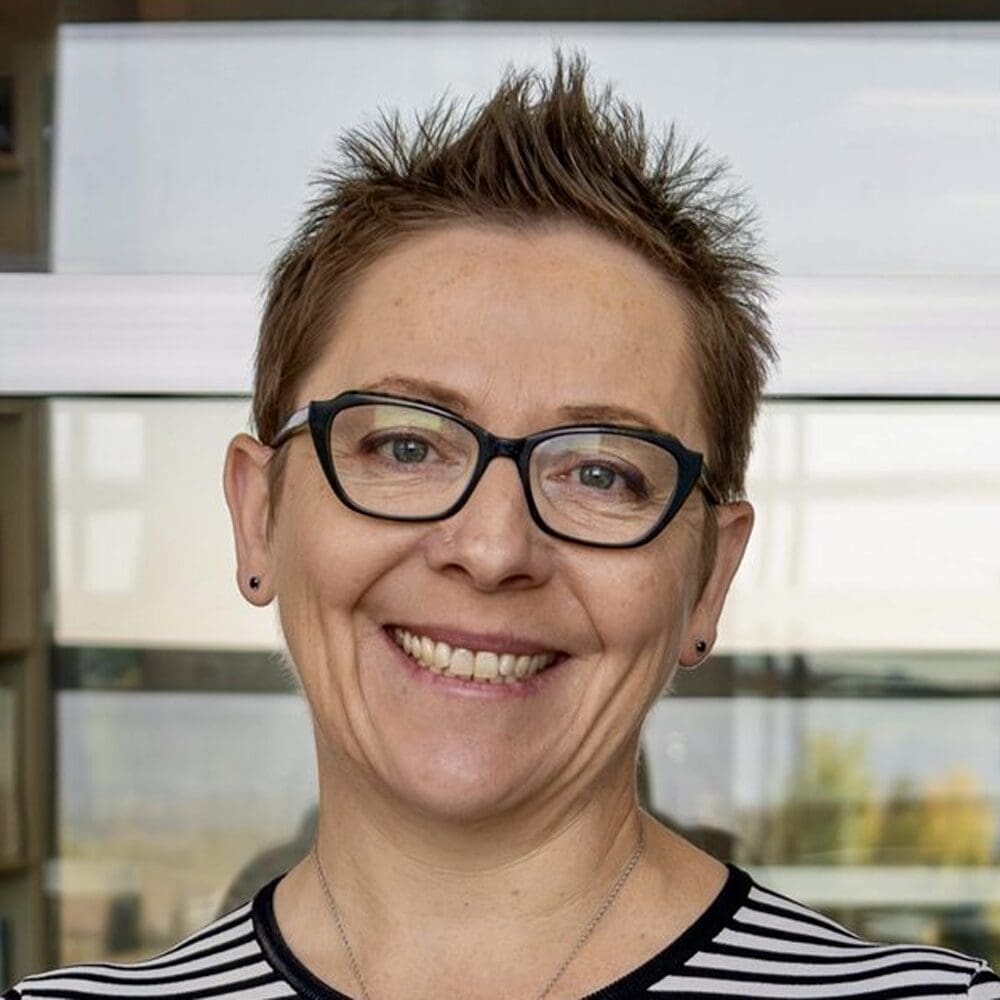
Dr. Leonie Herx is a palliative medicine specialist in Alberta, a clinical professor in the Cumming School of Medicine at the University of Calgary, and a Cardus senior fellow. She has practiced adult and pediatric palliative care for twenty years.
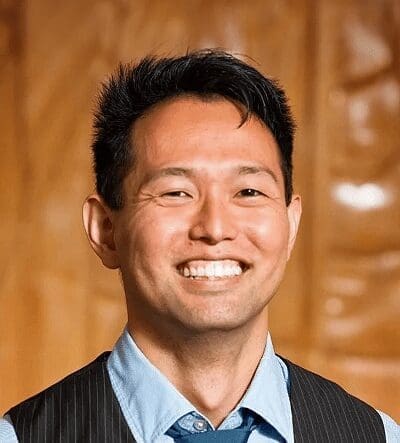
J.S. Park is a board-certified chaplain at a Level 1 trauma center, where he attends every death, trauma, and code blue. He is the author of As Long as You Need: Permission to Grieve and The Voices We Carry.
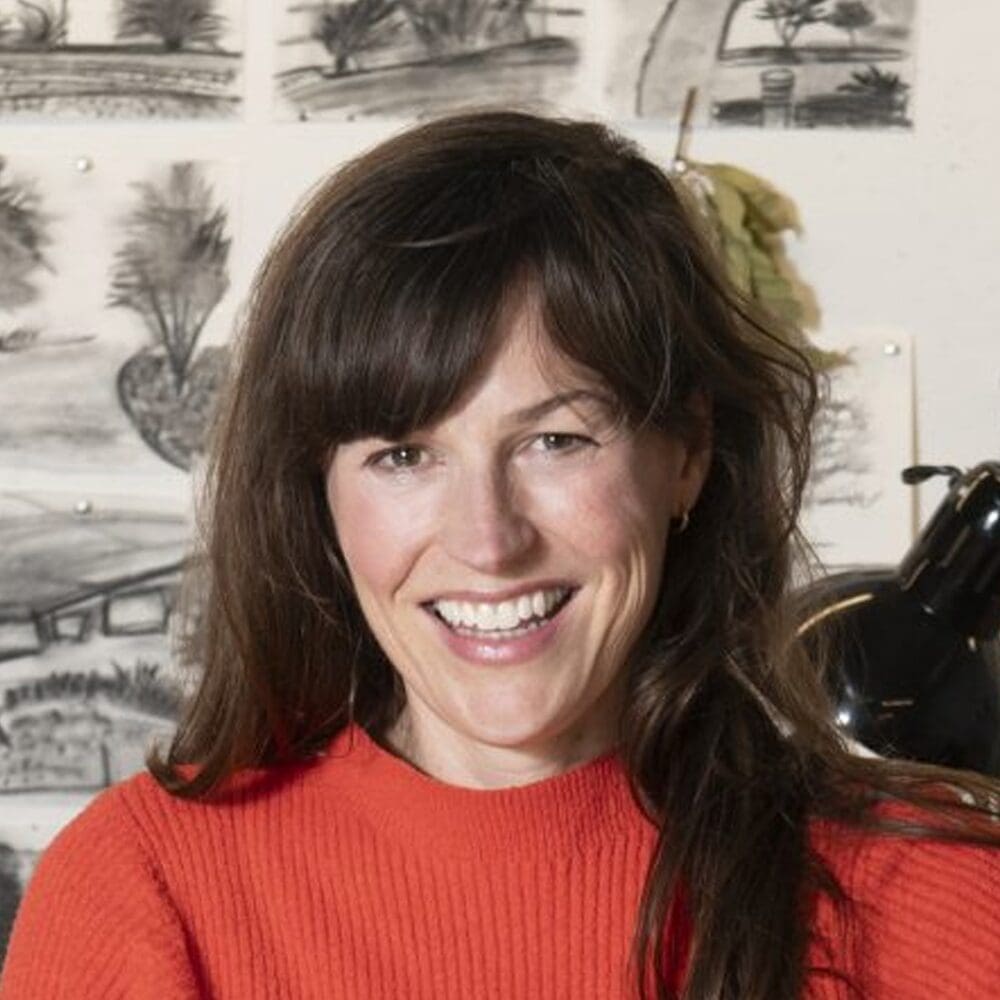
Sara Hendren is an artist, design researcher, and professor at Northeastern University. Her book What Can a Body Do? How We Meet the Built World was named one of NPR’s best books of 2020.

Louis Kim retired after twenty-seven years as a vice president at Hewlett-Packard. He is now pursuing a master of divinity at Duke Divinity School and considering chaplaincy. He serves as a Comment contributing editor.
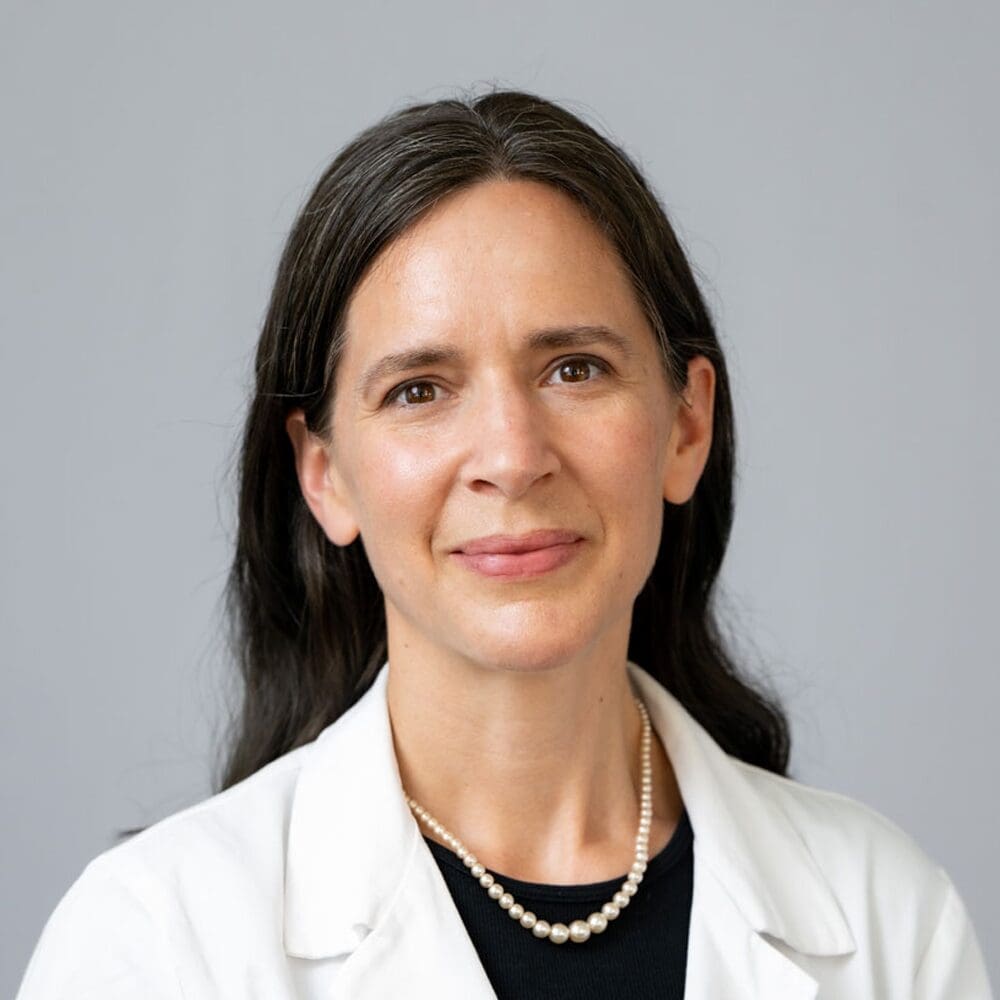
Dr. Lydia Dugdale is the Dorothy L. and Daniel H. Silberberg Professor of Medicine and director of the Center for Clinical Medical Ethics at Columbia University. A practicing internist in New York City, she is the author of The Lost Art of Dying: Reviving Forgotten Wisdom.
The Understory festival is a civic and spiritual gathering to rehumanize our common life in a time of cultural fragility. Love the podcast? Help others find it by reviewing it on your favourite podcast app. We also welcome your ideas and feedback. Email us at podcasts@comment.org. Thanks for your support.