





Why politics is better off if damnation is religion’s job.




Matt and Shadi’s initiative, The Faith and Future of Democracy Initiative, is now housed at the Alwaleed Center for Muslim-Christian Understanding at Georgetown University. The two sat down with the center director and Georgetown faculty member Nader Hashemi to discuss the current state of affairs in Iran. An expert on Iranian global politics, Hashemi brings his expertise, perspective, and commitment to pluralism into this conversation. This includes questions about democracy, global relations, and more. Join us as we engage with issues of global politics, religion, and the future of global democracy.
Shadi Hamid: Hello, everyone. We have a very special guest with us today, Nader Hashemi. He’s the director of the Alwaleed Center for Muslim-Christian Understanding at Georgetown University. That also happens to be the centre that Matt and I are based at now, where we’re co-directing something called the Faith and Future of Democracy Initiative. Nader is also an associate professor of Middle East and Islamic politics at the School of Foreign Service at Georgetown. He’s author or editor of several books. One that’s worth highlighting for our purposes is called Islam, Secularism, and Liberal Democracy: Toward a Democratic Theory for Muslim Societies, which was published by Oxford University Press. And we’ll get into some of those issues around Islam and liberal democracy, hopefully, in this conversation.
Nader has also done a lot of work on Iran in particular, and has a recent piece in Foreign Affairs that looks at the state of the Iran war up until this moment, and what is the potential for democratic reform in that country in the coming months and years. So maybe that’s a good place to start us off. I think that a lot of Americans have probably tuned out a little bit about the Iran war, and it seems like it never completely ends, and the status of it is sort of unresolved.
So maybe just as a primer to get people oriented: Where would you say we’re at right now in terms of America’s involvement in Iran? What is the state of the regime there after several months of war and also ceasefire? And it seems to kind of alternate, you know, on a somewhat regular basis.
Nader Hashemi: Thanks for the invitation. It’s great to be in conversation with you and Matthew, and it’s great to be hosting you here at our centre as senior fellows.
With respect to Iran and where we are right now, I think we’re in a holding pattern that will probably look the same if we were to have this conversation six months down the road or longer. In other words, it’s a standoff between the United States and Iran over control over the Strait of Hormuz. Diplomacy has been pushed to the back burner. And I suspect what we’re seeing right now between the United States and Iran—periodic escalation, then de-escalation, and then a repeat of that pattern—will likely take place for the foreseeable future, barring some sort of dramatic incident that perhaps, you know, pushes things in a different direction.
You know, I was just reading, you know, the news last week, and, you know, there’s talk by senior American officials that we might have to, you know, periodically strike Iran. They’re using phrases that are very familiar to people who follow the Israel-Palestine conflict. American officials are talking about “mowing the lawn” periodically, which means attacking Iran and then withdrawing. Iran doesn’t have the ability to match American firepower, but it does have the ability to create disruption in the global economy by keeping the Strait of Hormuz closed and then by attacking the oil infrastructure of America’s allies in the region.
So I don’t see this conflict ending anytime soon. Something to watch for is what happens after the congressional elections—we’ll be in a different moment.
Donald Trump has clearly, I think, failed in his stated objectives to weaken the Islamic Republic. And that speaks to your second question, Shadi. I think the Islamic Republic of Iran, the senior elites who are in power, are in a much stronger position now than they were six months ago when the war began. Nationalism has kicked in in Iran. There’s a general sense that the regime, which at one time was perhaps quite vulnerable in the early days of the war—when not just the supreme leader, who had been in power for roughly 38 years, was assassinated, but several layers of the senior military and political elite in Iran were assassinated one by one over a two- or three-week period. And in any other context, that probably would have led to regime collapse. The regime weathered the storm. It’s invoking nationalism. And I think it’s solidified its position for now internally. So I don’t see any dramatic changes happening.
What is happening, I think, and it’s important to point out, is this blockade—the economic blockade that the United States has imposed on Iran over this standoff is now starting to—a heavy economic toll on the average Iranian citizen, who really doesn’t have a voice, doesn’t have representation, and they’re paying the biggest price in this war. But the Islamic Republic, because it’s an authoritarian regime, can pass off the pain and the suffering onto its population. The ruling elites, I think, will be immunized from this crisis and from the deteriorating economic conditions that are taking over Iran. And I don’t see any change happening in the near future.
Shadi Hamid: Before the war started, it seemed like the Iranian regime might be on its last legs. It was using brutal repression against very large-scale protests that were taking place across the country. Thousands of protesters were killed in a very vicious counterreaction by the regime. And what was your sense of where things stood at that point? Because it seemed like this was the most brutal the regime had been towards its own citizens for many years. And the danger is, when you kill a lot of your own citizens, that’s an easy way to lose legitimacy, especially if you’re killing people at such a mass scale. I mean, what was your sense of how bad of a state the regime was in at that point?
Nader Hashemi: I think it was probably the weakest moment for the Islamic Republic in its 47-year history. As you alluded to in your question, Shadi, authoritarian regimes engage in a cost-benefit analysis in terms of how much repression they want to use or have to use, fearing a public backlash and the generation of a popular uprising. That’s been the pattern of the Islamic Republic of Iran. It’s been the pattern of many other authoritarian regimes that have lasted a long time.
The protests that you mentioned that took place in late December, early January were the largest protests that the Islamic Republic had faced in its 47-year history. Every single province, every single city registered protests. The regime, fearing it was losing control, had to engage in this type of brutal repression. We don’t know the exact figures. Human rights organizations that are credible have said 7,000. The UN fact-finding mission on Iran is going to release a report fairly soon that will probably have a more accurate figure. But I think it’s safe to say thousands, perhaps tens of thousands, of people were certainly killed and/or injured.
And the regime did it because it felt power was slipping out of its hands because of the dire economic situation, primarily, but also because of, you know, a crisis of legitimacy that had taken over the Islamic Republic after 47 years, particularly among young people and the urban middle class.
But as a result of this war—and this is the big irony here—those events in early January have largely been pushed aside. People haven’t forgotten them. But now this war—the economic impact, and also a series of events that have extracted a heavy toll on Iranian civilians. Recall on the first day of the war, the United States hit a school in Minab in southern Iran that killed about 120 schoolgirls along with their teachers. A total of over 175 people were killed. And then just recently, last week, the New York Times investigation reported an attack in southern Iran, in the province of Hormozgan, that hit a wedding party that killed five people, injured 70.
So these types of events, on top of the other sort of events that have characterized the war, where Iran’s cultural heritage sites have been killed—have been attacked—universities, you know, sports complexes, that has changed the public mood over the course of this war. And the regime, of course, have exploited this to basically bolster its internal crisis of legitimacy, to present itself as a defender of external aggression on the country, pointing to these rising atrocities that have taken place in the context of this war. I checked the figures recently. 3,500 civilians have been killed, according to the United Nations, from February 28 to roughly the middle of June. That number has gone up since then.
Public perceptions of the state of politics in Iran have been affected dramatically by this war. This war is a transformative moment. We’re still in the middle of it. It’s going to affect how people think about the regime they live under, how they think about the West, the United States. And in many ways, because the people prosecuting this war were probably two of the most unsavoury political leaders on the planet—Donald Trump and Benjamin Netanyahu—it was very tough to get excited about their claims that they were supporting the Iranian people, and that’s why they were launching this war. I mean, these are things that we were hearing in the early days of the war. But that’s very difficult to square with the rising civilian casualty toll and the attack on Iran’s infrastructure that have ruined the economy, made it much worse than it already was.
And then, of course, related to that is the revelation that the plan, also drawn up by the Israeli Mossad and supported by the Trump administration, was to topple the regime and replace it with Iran’s former hardline president Mahmoud Ahmadinejad, who would be then a sort of a Venezuela-type figure, similar to Delcy Rodríguez, who would do America’s bidding, and they would strike some sort of oil deal similar to what we saw in Venezuela. So that doesn’t win a lot of hearts and minds, you know, from an Iranian perspective. And that’s where we are.
Matthew Kaemingk: Thank you so much. That’s extremely helpful. So we’ve been talking about this past year, but I wonder if we might take a bigger view and look over the past century of Iran’s history and various efforts for democratic reform, high points and low points. And if you could talk us through those major high points and low points within Iranian history, and what that might tell us about the future of what democratic reform in Iran should look like.
Nader Hashemi: That’s a great question. I’m actually teaching this topic tomorrow, because I’m teaching a new course on Iranian politics and foreign policy, so this is a good dry run for my lecture tomorrow.
I situate Iran’s sort of political trajectory in the context of the political history of many countries in the Global South, in the Middle East, in Asia, that have—in the modern period, you know, 19th century, 20th century—their political trajectory has been deeply shaped and affected by the role of great powers intervening in the affairs of different countries around the world for reasons of empire, for reasons of expanding their own global stature, but always to the detriment of local populations and peoples. You know, this is the story of the Global South in the 19th and 20th century, broadly speaking. And so Iran’s story very much fits that pattern.
So if you look at what was happening in Iran in the mid- to late 19th century, you started to see increasing Western penetration and attempt to sort of subjugate Iran for control over its national resources, for power projection, for reasons that could advance the business interests of some of the ruling elites—that were the main global powers that were shaping Iran’s internal economic and political development in a very negative way—were Britain and Russia. You know, Russia is a country very close to Iran—at least the Soviet Union was a bordering country. Russia has a long history of intervention.
And you had at the time, you know, Iran, like many countries in the developing world, was a very sort of weak, traditional, impoverished part of the Global South that didn’t have a strong sense of nationalism that had taken over, and a corrupt monarchy that was sort of the dominant political player. The role of religious clerics was very important in terms of shaping societal attitudes. And you started to see events where these big Western powers were effectively imposing their will on Iran in ways that the Iranian government at the time could not really resist.
And so we have these series of events that have taken place. I can go through the history and the details, but the big event that sort of shaped Iran’s political trajectory—and it was one of the early moments of democracy in the Middle East, in the Islamic world—was Iran’s Constitutional Revolution that began in 1905. It lasted to 1911, and it was actually a rare sort of—and rare indigenous sort of moment that brought together different segments of society to establish a written constitution, to put constraints on the monarchy, and to have popular representation in parliament, because it was viewed at the time that this king that was in power was so monumentally corrupt that it was leading the entire society to misery and mayhem. And so this was a moment of great hope. There’s a lot of great books that have been written on this.
And for people who know the history, two Americans actually played a very important role during this period in Iran. One was a young Christian, you know, activist from Princeton. He was—I forget which denomination he was from, but he was a student at Princeton, and he went to Iran to preach, and he became caught up in this revolution. And he died, actually, on the side of the constitutional forces in one of the major battles in the city of Tabriz. And his name was Howard Baskerville. And there’s actually a really recent great book that has been published by Reza Aslan that tells his story, is how this young American Christian sort of student from Princeton ends up going to Iran, fighting for the constitutional forces, and very much sort of representing and identifying with the democratic aspirations of Iranians.
The other person who played a role in this moment in Iranian history is a man by the name of Morgan Shuster, who was an American lawyer, an economist, and a bureaucrat, who’s invited by the Iranian revolutionary forces to set up a new sort of administrative bureaucracy to manage Iran’s finances. That hadn’t existed before. Before, it was just a corrupt king with no accounting, no sort of accountability. And he is invited by these revolutionary democratic forces to come to Iran. And he’s trying to sort of, you know, set up a modern bureaucracy, focusing on the question of managing Iran’s finances. And he’s quickly run out of town because the British don’t like what he’s doing, because he’s establishing some sort of accountability. Britain was strongly supporting the corrupt monarchy at the time. They didn’t like what was happening from a democratic perspective. They effectively force Morgan Shuster to flee.
And he writes a great book with a fascinating title that still has a powerful bearing on contemporary Iranian politics. And the title of his book was called The Strangling of Persia. You can get this book in any good bookstore or library. And he basically tells the story of how Iran’s democratic moment, its first democratic moment of the 20th century, was effectively thwarted by the role of Britain and Russia at the time—troops in Iran to crush the democratic revolution there.
And there’s one sort of fascinating moment that sort of embodies this, where Russia, being a much more powerful country, sends troops into the city of Tehran and surrounds the parliament building where the representatives are actually meeting, and starts firing on the building while the parliament is in session, and the representatives have to flee under Russian, you know, tank fire for their lives. So that’s sort of embodying sort of the story of how this revolution effectively came to an end. So that’s sort of the one moment—the first moment of Iran’s democracy. There are many others.
Matthew Kaemingk: This squares with the article that you wrote in Foreign Affairs, just about how democratic movements within a nation can be thwarted by outside interference. And I wonder if I might try to provoke you and Shadi into a conversation here about American intervention for the sake of democracy, because Shadi, as you know, is a big fan of American power and a big fan of democracy as well. And I wonder if the two of you might—well, let’s start with Shadi.
Shadi, as you think about outside intervention for the sake of democratic movements in the Middle East—and you’ve written a lot about the Arab Spring—how do you tend to think about American engagements for the sake of democracy in the Middle East? And then I’m curious to get Nader’s response, and how you would like—you know, I mean, really, what would you like America to do when it comes to Iran? And of course, there’s always the option of America just stays out, right? But yeah, so Shadi, why don’t you start off with some basic principles on American greatness in the Middle East?
Shadi Hamid: Well, maybe I would just—I would qualify your comment, Matt, a little bit. And I don’t know if I call myself a big fan of American power. I certainly believe that American power can be used for good. That’s something that I would like us to do more of. Now, what does it mean to use American power for good? I don’t believe that democracy can be imposed through military force. But I do believe that America’s cultural and economic and political power can be used to pressure regimes to open up their political systems.
Now, the problem with Iran is that it’s not an ally. So we don’t really have leverage with it in the way that we do with countries like Egypt or Jordan, for example. So in that sense, our menu of options is quite a bit more limited because of that lack of a relationship with the Iranian leadership.
You know, I think that there’s things that you can say rhetorically about encouraging Iranians to kind of stand up to the regime and all of that. But the danger there is, if you call on Iranians to rise up, but you’re not really willing to do anything more than that to support them, then you have the risk of them just being gunned down by the regime in larger numbers. So I think there’s also a risk to using rhetoric just for the heck of it. If there isn’t a vision for how to bring about a better end state—I think we’re very limited in the case of Iran. I actually don’t have a lot of good ideas on what we can do there, but I’d be very interested to hear from Nader about what he thinks about America’s capabilities there.
Nader Hashemi: When this topic comes up, I always invoke a rule of thumb that has to do with the whole question of supporting democracy in other parts of the world, whether that’s Iran or somewhere else. And I always say the first thing we need to do is exercise some humility and don’t presuppose that we know the answers or the best strategy. We should always, as a first step, defer to what people on the ground who are fighting for democracy, and who have organic connections to their own society and a credible track record, both in words and in deeds—ask them, how can we best help you in your struggle for democracy?
See, unfortunately, because we’re the United States and we’re a preeminent power, although a declining one, there’s always an assumption that, well, we can pursue this policy or that policy without any sort of serious conversation with the people who we’re trying to help.
Now, in the context of Iran, this issue was really pretty black and white until relatively recently, where most Iranian democratic forces were saying that, look, you know, any sort of American military pressure, engagement, threat of war, economic sanctions undermines the internal struggle for democracy. So as I mentioned briefly in my Foreign Affairs piece, there was this moment in 2015 when the JCPOA, the Iran nuclear agreement, was signed between the two countries. And across the political spectrum in Iran, democratic and human rights voices and groups celebrated that document. And they celebrated the document not because they had really strong views about nuclear weapons, which was the concern of the West. They felt it was a huge step forward because it removed the threat of war over Iran, would create better international conditions and then internal domestic conditions for the struggle for democracy. It would open up Iran to the world. It was a rare moment where these tensions between the two countries had finally started to sort of move in a different direction. And so I think those are sort of basic building blocks in terms of how I think about this topic.
Now, the picture among Iranian democrats is a bit more blurred, and it’s much more contentious. But generally speaking, as I argue in my Foreign Affairs piece, it’s very difficult to think about democracy promotion when people are starving, when they’re facing crippling sanctions, when they’re struggling on a day-to-day basis to put food on their table, and then bombs are falling on their head. Those are not conditions that are conducive to democracy promotion. In fact, those are conditions that support authoritarianism and autocracy in Iran.
Whenever there’s a war, the more hawkish forces play up national security arguments. They shift the focus of conversation to external threats. In a moment when there is a resolution of these external crises and this external problem that Iran has been facing, particularly in its relationship with the United States, that I think starts to shift the internal conditions and focus internal politics in Iran over questions of political accountability, corruption. Why is there a lack of freedom? Why are we so—where’s the money gone that’s been spent on, you know, our nuclear program and supporting these militias? And why are these ruling elites living these fabulous lifestyles where people are suffering?
That’s what you want to have, I think, fundamentally. And it’s fundamentally—I keep arguing—it’s with Iranians to figure out the way forward. There’s not much we can do unless they openly and collectively sort of advocate for our intervention. But that’s the broad framework that I sort of situate this conversation in.
Matthew Kaemingk: One other important aspect here that I want to make sure that we talk about is just Shia Islam. And, you know, this is a podcast that focuses on the nexus between theology and politics. And, you know, given that Shadi is a Sunni, we have a lot of Sunni conversations about politics and democracy and Islamic conceptions of power. I’m wondering if you could give us a little window into a distinctively Shia perspective on power, on the voice of people, on the role of clerics.
And maybe one way of phrasing this is, within Shia Islam, what are the resources for democracy? And what are the resources for authoritarianism? What does that theological conversation look like within Shia Islam about whether Shia—should it go democratic? Should it go more authoritarian?
Nader Hashemi: So just so your listeners are clear, when we talk about Shia Muslims, we’re talking about roughly 15 percent of the global Muslim population. There’s several countries that have a Shia majority—Iran being the biggest one, Iraq, Bahrain, Azerbaijan—and then there’s smaller Shia populations that play influential roles in their politics, Lebanon being one of them.
So when we talk about Shia resources for thinking about democracy and thinking about politics, it’s also important to realize that the Shia Muslim theological, political, or philosophical conversation on these questions is not monolithic. There are contending voices. There are more democratic interpretations. There are more autocratic interpretations.
One way to think about this is to think about the comparison and contrast between two major Shia theologians and political leaders and religious leaders in our world today: Iran’s supreme leader, who was assassinated in early February, and who embodied sort of the official worldview of the Islamic Republic of Iran and was the inheritor of the legacy of the founder of the Islamic Republic of Iran, Ayatollah Khomeini, who had a particular interpretation of Shia Islam and its understanding of politics. And in neighbouring Iraq, you have Ali Sistani, who’s the preeminent Shia cleric, who has immense religious [authority] and has a very different understanding of the relationship between religion and politics and the role that clerics can play and should play in politics.
In the case of Iraq, Ali Sistani—he has taken a position that clerics should not be directly involved in the running of governmental affairs, that they can be a moral voice, they can comment on religious politics like other religious leaders in other traditions and religious traditions do, they can be a moral guide, but they don’t necessarily have to—even should—assume political power.
In the case of neighbouring Iran, the official doctrine of the Islamic Republic has a very different view. They actually, based on a theory that Ayatollah Khomeini developed, believe that a just political order requires the leadership of religious clerics to guide society in a way that allows for some public input, but fundamentally bestows ultimate political authority and gives veto power on religious clerics. And it’s not just all religious clerics. If you read Khomeini’s thesis closely, it’s a certain subcategory of religious clerics who are politicized, who have an understanding of international relations, who have an understanding of anti-colonial Third World revolutionary struggle, and understand how to confront empire and imperialism. That class of clerics have a—according to the rulers of the Islamic Republic—have a unique and important role in guiding society. And so I can get into the ideas of this more, if you want.
Matthew Kaemingk: Okay, so let’s dig into Sistani and his argument. What would his argument be for a separation between the clerics and the state? Theologically, what would his religious argument be for—yeah, a bigger separation between clerics and the state?
Nader Hashemi: I think he would believe in a view that is very, I think, accessible to a broad American audience: that sovereignty should be grounded in the population of a community, and they should be the ultimate body or representative group that determines political outcomes. And that no subgroup, whether it be the military or clerics or, you know, some member of a ruling elite, should have any constitutionally privileged authority to guide politics in any particular direction.
So I think Sistani’s sort of political philosophy would be very much rooted in this idea of majority rule. I think he’s sort of weak on the whole restrictions that we have in liberal democracy, where majoritarian rule has to be limited by a certain Bill of Rights, or in the case of Canada, the Charter of Rights and Freedoms, that puts strong limits on the ability of a majority to do whatever they want. But I think fundamentally, he would be someone who I would categorize in a broadly democratic reading of Islam.
Matthew Kaemingk: But how would he do that? Would he appeal to the Quran or to a hadith? To God’s nature in some way? Like, why should the people have power, should have sovereignty? What would the Muslim argument for that be, for him?
Nader Hashemi: Well, the argument would be that, look, in a modern context, this is a form of government that promotes the maximum amount of justice, and it puts constrictions on political tyranny, and it would be the best way of arriving at a situation where Muslims can live their lives without the fear of state intrusion and repression.
In fact, these debates actually emerged in the context of Shia Muslim clerics in the early 20th century, in the context of the Constitutional Revolution that I was speaking about earlier. One of the interesting debates at the time was precisely this debate between different groups of clerics arguing over whether a democratic constitution could be justified within the framework of Shia Islam.
One group of clerics argued that, yes, absolutely, it was a good thing to have restrictions on the monarchy and on the state, because the state was repressive, the state was tyrannical, and the state could impose its will, preventing Muslims from having the freedom to exercise their religiosity and be good Muslims. So in that sense, from that perspective, they argued a constitution that put restrictions on state authority, particularly the monarchy at the time, was a positive development, a step forward.
There was another group of clerics who said, absolutely not. This whole idea of, you know, constitutional written rule is an alien imposition that has been imported from the West. And we just need sort of a broad, sort of more traditional understanding of Islam, where Islamic law and religious clerics who interpret Islamic law should have, you know, ultimate authority in shaping political outcomes.
People who study the Iranian Revolution of 1979 actually go back to this earlier period of the 20th century, in the context of the Iranian Constitutional Revolution, to identify these early debates between and among Shia clerics and religious figures as prefiguring what was to happen after the 1979 revolution. Because a very similar debate took place in Iran in the lead-up to the revolution and in the immediate aftermath.
But in that context, the power and the charisma of Ayatollah Khomeini was so overwhelming, and he had such popular grassroots support, that he was able to effectively win the public argument. And when there was a vote that was cast in 1979 in terms of what type of government people wanted, and then when there was a constitutional assembly that was formed and that was supported by a popular vote to write a constitution, it was that more cleric-centred understanding of Islam and politics that won out, and is now in place right now in Iran, as it’s lasted for the last 47 years.
Shadi Hamid: Isn’t it fair to say that Ayatollah Khomeini’s vision of clerical rule is quite a radical innovation, in that traditionally Shias had been more quietist when it came to political power? First of all, they lived as minorities under Sunni rule for most of the premodern period. But also, you know, as I understand it, because the Twelfth Imam went into occultation. So, I mean, Shias believe that there is a lineage of imams from the House of the Prophet that are divinely inspired in some sense, but that the last in the line of imams was no longer with us, so to speak. And that led to a kind of sense that until the Imam returns, there had to be a lot of modesty and humility about the exercise of political power. Would that be a fair description of the kind of traditional premodern—
Nader Hashemi: Shadi, you know your Shia political theory very well. Absolutely. The view—just to summarize what you’ve just said—for much of Islamic history, focusing on Shia religious clerics, was that politics was the realm of corruption. Politics was the realm where you just needed to avoid, and you needed to simply try and survive this world, hoping that you would get justice, and hoping that Shia Muslims would get justice at the end of time, when the world comes to an end and the Mahdi would return to the planet and would provide a new era of justice and tranquility.
What happens along the way is that Ayatollah Khomeini produces, as you rightly point out, Shadi, an innovation, a unique interpretation that was a minority view within the realm of the senior religious clerics, that basically politicized Shia Islam and reinterpreted it, that made the argument that we don’t have to wait until the end of time to get justice. We can get that here and now, and we have not just a responsibility but a moral obligation to fight against political tyranny, to seize political power, and to try and effect political change.
The question then becomes, why did Khomeini say this? Why was he so different? I think what’s so different was the changing times. Khomeini is very much a product of his own era. He was a product of the rising penetration of great powers into Iranian politics. He develops this thesis of a politicized understanding of Islam, where he believes clerics should be ultimately in power, in the context of political authoritarianism in Iran that was supported by the West, that takes shape and goes in a very negative direction in the aftermath of a 1953 CIA coup that stopped Iran’s democratic experiment in the mid-1950s and imposed a pro-American dictator.
Khomeini develops this thesis when he’s in exile, when he’s kicked out of Iran by the Shah. And he revisits, sort of reinterprets Shia political history in this much more politicized direction. And of course, when he did it, it was a minority voice, but it got public reception and it got a following because the social, political, and international circumstances—this new politicized interpretation of Islam that was rooted in claims of justice and claims of self-determination resonated in a population of Iranians that were humiliated by the West, by the Western intervention in Iran, and viewed it as an alternative to Western-backed authoritarian politics in Iran that was shaping the destiny of this country from 1953 until 1979.
So I think that’s, I think, the real important background development. Why is Khomeini so different? And then why did his message have such resonance at this time? It’s because—you know, it’s because of what was happening in the region. The Israel-Palestine conflict is a big part of this. America’s preeminent rise as a global power, and then the dominant power in the Middle East, is a big part of this.
And also this—you know, I think a point that I try to tell my students—I think students, American students, don’t appreciate how this theme of self-determination, independence, and dignity is a powerful theme that has shaped the politics of, largely, broadly speaking, the Global South, but also countries in the Middle East. There’s a sense that, you know, many people in the region, even up until today, feel that they don’t have control over their destiny. These Western-backed dictators have imposed their rule on societies, and people are still struggling for their voice. And they feel that a big part of the absence of their ability to exercise their self-determination is because of the role of Western powers. Now, that’s a broad view, and we can critique it, but that’s a deeply felt position. And it was a powerful theme that led to the Iranian Revolution in 1979.
Shadi Hamid: Do you think the Islamic Republic of Iran, you know, as a kind of revolutionary experiment starting in 1979—do you think that there’s a counterfactual history in which it could have been successful and inspirational? Or was there something at its very foundation that made it doomed from the start?
I mean, if you look at the constitution of the Islamic Republic, it’s this very kind of interesting, innovative mix of Islamic and democratic principles. There’s really nothing quite like it. So in that sense, it’s a very creative document. And I should also note that there’s the infamous interview that Khomeini did with Oriana Fallaci in the New York Times in 1979, where Khomeini actually says that the biggest sin in Islam is dictatorship. So he was also very attuned to the risks of dictatorship. But there’s the irony, of course, that he himself became a dictator, even though he said that dictatorship was the biggest sin. I’d also just be interested to maybe understand, how did someone who seems to have been attuned to the dangers of dictatorship become a dictator himself?
Nader Hashemi: Look, it’s not difficult to figure out. And I think one has to have a sense of how revolutions emerge—the emancipatory claims that many revolutionaries have before they win a revolution and assume power, and then what happens after you consolidate power.
So, you know, when people look back on what Khomeini was saying in the lead-up to the revolution, they point to a lot of these statements that you just referenced, Shadi, where he was critical of dictatorship. He was announcing these emancipatory claims. He was saying even the Communist Party will have the right to sort of freedom of movement, to participation in politics. But of course, after the Islamic Republic is victorious, and the Islamist sort of revolutionaries who were loyal to Khomeini seize and consolidate power, things change. Like other revolutions before Iran, they don’t live up to their stated democratic principles or their emancipatory claims. They start to consolidate power. They start to justify political repression.
And so when I look at what happened in Iran, I don’t see that story very different in terms of the broad sweep of history. You know, one could sort of make very similar sort of arguments in the context of the Cuban Revolution, the Russian Revolution, etc.
In terms of your earlier question, I think the table was already set in 1979 in favour of authoritarian politics when the regime was toppled on February 11, 1979. In other words, the forces that rallied around Ayatollah Khomeini and the Islamists who had commanded the street, who had popular support, they were predisposed to an authoritarian populist style of Islamist politics. And the forces that were able to constrain them, that had serious democratic credentials, were very weak and didn’t have the popular mobilizing potential.
I really trace the problem of this back to 1953, because if we were following what was happening in Iran for much of Iran’s 20th century, right up until 1953 and afterwards, politics in Iran was overwhelmingly shaped by secular political forces, by democratic nationalism, by different formations of the left, some which were democratic, some which weren’t. The role of religious politics in Iran doesn’t become a serious factor until the end of the 20th century, as we approach the 1979 revolution. By that time, Khomeini had a certain charisma, a certain popularity, and a network of supporters that he could mobilize that simply could not be matched by any other political formation in Iran.
The last point I would mention is that after the Islamists consolidate power in Iran and crush all opposition, eventually, as the decades go past and Iran moves into the second and third decade of its revolutionary period, you start to see—the supporters of Ayatollah Khomeini—democratic Islamic reform arguments, movements, and politicians that emerge that are very much challenging the Islamic Republic from within the Islamic Republic, using democratic arguments from an Islamic framework that are challenging the received ideological position of the Islamic Republic of Iran.
One figure that’s right noteworthy here is one of the most senior clerics of the revolution, who was actually the designated successor for Khomeini—who should have been Khomeini’s successor—was a senior ayatollah by the name of Ali Montazeri. And Ali Montazeri was a founding figure of the Islamic Republic, but he undergoes his own democratic transition and starts to criticize authoritarian repression in Iran, and then is sort of sidelined, put under house arrest, but keeps speaking out and keeps criticizing, and comes to a point where he says, you know what, I was one of the theoreticians of the rule of the clerics in Iran. I made a mistake. We now have to think about this entire equation from a more democratic perspective, because this experience that we have is leading us to greater repression, injustice, corruption.
And so you started to have those debates happening within Iran. It didn’t produce a democratic outcome because the state repressed it. And then external intervention, the role of Iran’s foreign policy in the region, the nuclear program sort of cast a shadow over Iranian politics that I think suffocated those internal debates—that I believe, if they were allowed to play out, and had the JCPOA, the nuclear agreement, stayed its course, eventually would have created better conditions that would have helped. But I think those are some of the tensions that I saw playing inside Iran.
Matthew Kaemingk: Okay, I want to jump in here with an evangelical curveball for you. You know, my fellow evangelicals in America, we don’t think of Iran too often. But when we do, one of the things we think about is the persecuted church within Iran. And we have taken in several refugee Christians from Persia and Iran. I’ve had a number of students who’ve studied Christian theology with me who were Christians within Iran. And so there are many evangelicals in America who are worried about our Christian brothers and sisters in Iran. And they are also supporting Donald Trump and his bombing of Iran.
I wonder what you would say to them about the effectiveness of bombing Iran and the protection of Christians. How would you respond to evangelicals who are supportive of Donald Trump and worried about the church in Iran? How would you respond to that?
Nader Hashemi: I would say that, look, I’m a nobody in this conversation. Why don’t you talk to Christians in Iran and ask them what they think about this war? Is this war—are these economic sanctions, is this policy of regime change cooked up by Trump and Netanyahu helping Christians in Iran, or is it hurting them? Listen to what they have to say. I defer to their judgment.
I think most of them would probably be very critical of what’s happening, because I don’t think when you have the broader society, including Christians who are living there, suffering from war conditions and suffering from a catastrophic economic collapse—not to mention external bombing that have killed 3,500 Iranians. I don’t know how many of those have been Christians. I wouldn’t be surprised if some of them have been Christians. I don’t think that type of policy, you know, helps Christians.
The other sort of related point that I would make: when we talk about minority rights in the Middle East, it’s very difficult to seriously have a conversation about minority rights in a majoritarian context unless you bring in the plight and the condition of the majority population. These two things go together because they have to coexist. If you’re focusing on the plight of a minority population—which is perfectly reasonable—what often happens in the case of the Middle East is there’s a lot of focus on a minority Christian population at the expense of the majority society that they’re living in. And often in these cases, it’s the majority society that these Christian populations are living under who have no representation, who have no voice, who have no stake in the existing political system. These things have to be sort of thought about as things that go together if there’s going to be a future Christian population in the case of Iran.
The other last point that I would mention is that there’s a very big Iranian Christian Armenian population that is very well integrated in Iran. They serve in the army, they have representation in the parliament. It’s not a free parliament, but at least they have token representation. And they tend to be very Iranian, very proud of their, you know, Christian Iranian identity. That’s a part of the Christian community there as well. And I would encourage your evangelical, you know, friends and colleagues to speak to some of those Armenian Christians to figure out, you know, what this war means for them, and whether this Donald Trump’s policy is helping Christians in Iran or hurting them.
Shadi Hamid: In this last portion of the conversation, I want to look a little bit forward and think about what a future Iran might actually look like. Nader, you’ve written a lot about liberalism and democracy, and to what extent that can be accommodated by an Islamic worldview, or whether or not there’s tensions there.
I think, unfortunately, because Iranians have experienced religious government, they’ve been pushed away from religion, and many of them have become secularized in the process. That’s not all Iranians, but certainly a large chunk of, let’s say, the middle to upper-middle-class portion of the population. And I think this is one of the great dangers of religious government: that if the government is repressive, then you associate religion with bad things, with being repressed.
So if Iran is going to have a democratic future, do you think it’s going to look quite secular? Or do you think that there will still be some kind of religious inspiration there that is playing some role? And should there be some role for religion in politics in a future Iran? Or do you think that experience of religious government means, hey, it’s just better to kind of start from scratch and just have a secular approach and try to have as much separation between religion and politics as possible?
Nader Hashemi: Yeah, those are great questions. As a result of the experience of religion and power over the last 47 years, as you’ve just pointed out, Shadi, there is a growing disenchantment with religion and a rising sort of—I would argue—secular militancy that I see among a lot of Iranians today, particularly young people, including members of my family. And I come from a fairly religious family, who reflect on their own experience living under the Islamic Republic.
And for many of these people, this is the only, you know, system that they’ve ever known, and then they make broad generalizations about religion and the relationship between religion and politics: What we’ve seen in Iran has been so catastrophic, we want nothing to do with religion. The less of it, the better. And this also then feeds into a lot of sort of really crazy diaspora Iranian politics, where some Iranians have, you know, looked to, you know, Netanyahu and Trump as sort of saviours.
But in terms of the future of Iran, I think regardless of how things evolve over the coming years and decades, Iran is part of the Islamic world, whether Iranians want to admit it or not—one aspect of Iranian national identity, that religion is one component of it. I think ultimately, when it comes to establishing a representative government that is truly democratic, the question of the role of religion in politics would have to be negotiated and bargained over in terms of a future political compromise.
And I think most Iranians today, I think, would look to the example that we have here in the United States, where you have a clear and very robust separation of religion and state, but not religion and politics, as sort of a model that I think works very well for societies that have a broad religious identity but also want to be solidly democratic. You can’t repress people’s sort of, you know, political persuasions and their identity in the public sphere. People have the right in a democratic society to organize in ways that reflect their own interests, whether it’s religious or not. Nothing wrong with that.
It becomes a problem, as we’ve seen in Iran, when religion and politics are—and religion and state are—so closely intertwined that they are legally bound together, as we see in the case of the Islamic Republic of Iran. And then that produces, you know, the type of authoritarian politics that we’re witnessing right now. So I think these are things that I think most Iranians ultimately would agree on if they’re given a voice. But, you know, they’re living under an authoritarian regime. And this war, I think, has strengthened that regime. So these debates, I think, have been pushed back, I would argue, for at least another generation.
Shadi Hamid: Well, couldn’t bargaining over a new constitution be very contentious in this regard? Because I think back to the Arab Spring, in countries like Egypt and Tunisia, where they were trying to come up with a new constitution, Islamist parties and secular parties had profound disagreements on what to say about religion in the new constitution. Could you imagine similar tensions happening in the Iranian case? Because you would still have a religious portion of the population that was maybe sympathetic to clerical rule. Even if it’s a small minority—let’s say 15 to 20 percent—they could still be quite active and organized, and they would want the constitution to say something explicit about religion. How do you think the constitutional process would ideally be negotiated in that kind of circumstance?
Nader Hashemi: No one knows. Questions of religion and politics are always contentious because they speak about people’s core identities. I see no problem whatsoever for religious-based parties to participate in politics, but on the condition that they respect sort of the norms and rules of democracy—that you can’t have a situation or a constitutional document that allows a religious group to have veto power over the deliberations of parliament. You can have governments that are elected, they have religious policies. They’ll be subject to checks and balances. So yes, it would be contentious.
I think what’s different in the Iran case is that Iran now has an experience with religion and politics that’s going to shape popular attitudes. And so what you see right now in Iran is many of those people who are passionate supporters of the Islamic Republic of Iran, and who are very religious, and who in many ways still are religious, are now openly saying we need a separation of religion and state. And this is now, I think, broadly the view that, if there was ever a free and fair vote, that would win, I think, in a popular referendum.
But yes, there are people who have different views. And so these issues can’t be easily resolved. There will be a lot of argument and debate. But I think it’s a much easier debate to have now in Iran, having lived under 47 years of clerical rule. And I think, you know, public opinion on this issue of religion and state is actually in a much more healthier position than it was 47 years ago. And so that’s why I’m a bit more optimistic about, you know, these things being negotiated and not being really bones of contention that would break down a political process in a post-revolutionary moment, as we saw in the case of the Arab Spring, where things got really contentious and almost did break down.
Shadi Hamid: Well, an optimistic note is a good note upon which to end. So I just want to thank you, Nader, for joining us and giving us this kind of comprehensive primer on Iran. We’ve covered a lot of ground, from the war to the founding of the Islamic Republic to the future of Iran and what it might look like in the years and decades to come. So really appreciate you being here with us, Nader.
Nader Hashemi: Thanks for the opportunity. Great to be in collaboration with both of you going forward with your connection with our centre. And perhaps we can do this again later on.
Shadi Hamid: Yeah, absolutely.
Matthew Kaemingk: Yes. And thank you for that hospitality. We’re really excited to be at Georgetown University, with a team of incredible scholars and great programs going on. And it’s been a wonderful place for us. So thank you for that hospitality, sir.
Nader Hashemi: You’re welcome.
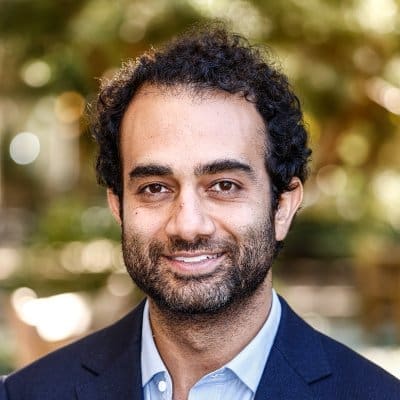
Shadi Hamid is a columnist at The Washington Post and Senior Fellow at the Alwaleed Center for Muslim-Christian Understanding at the Edmund A. Walsh School of Foreign Service at Georgetown University.
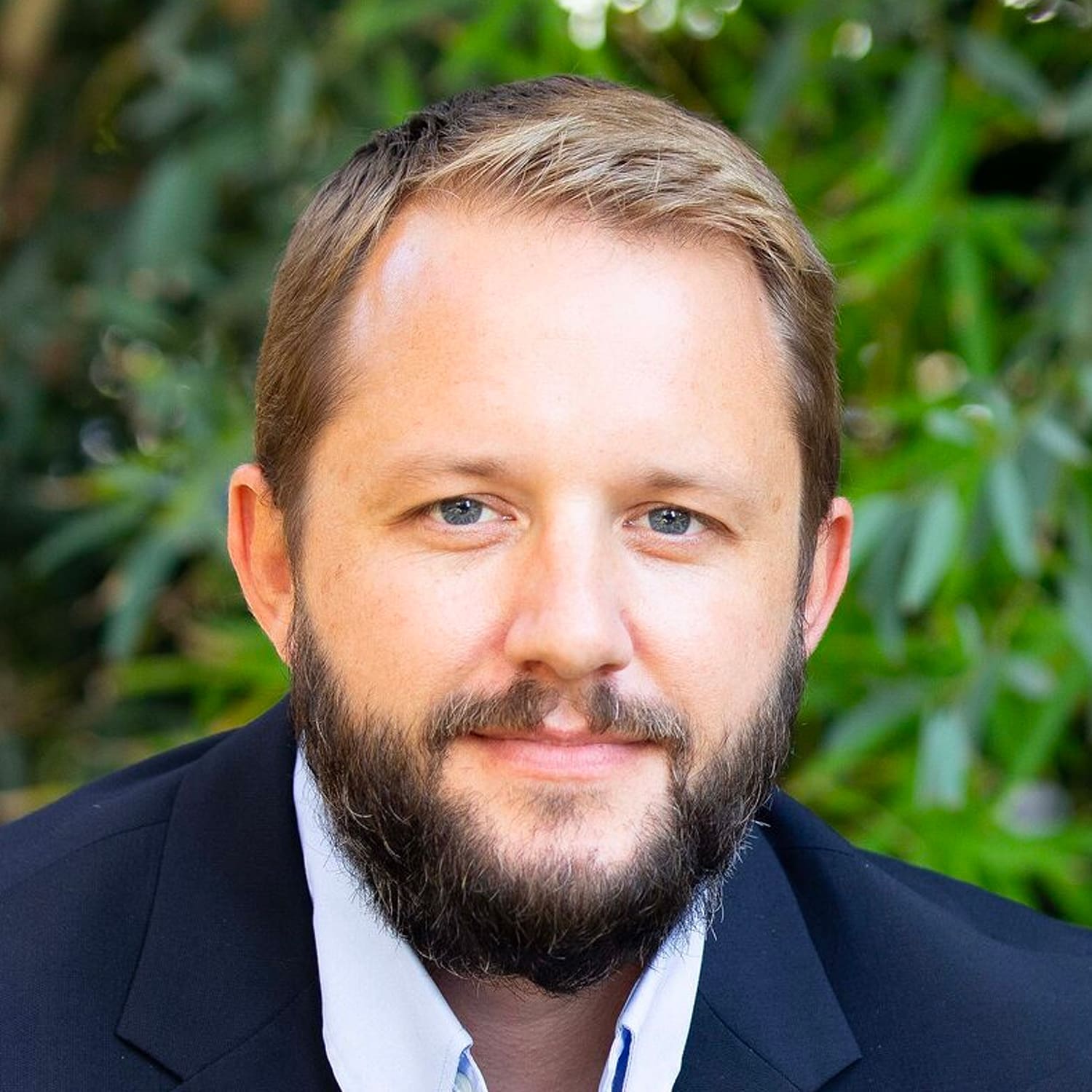
Matthew Kaemingk is Professor of Public Theology at Theological University Utrecht and Senior Fellow at the Center for Public Justice. He also co-directs the Templeton Pluralism Fellowship.
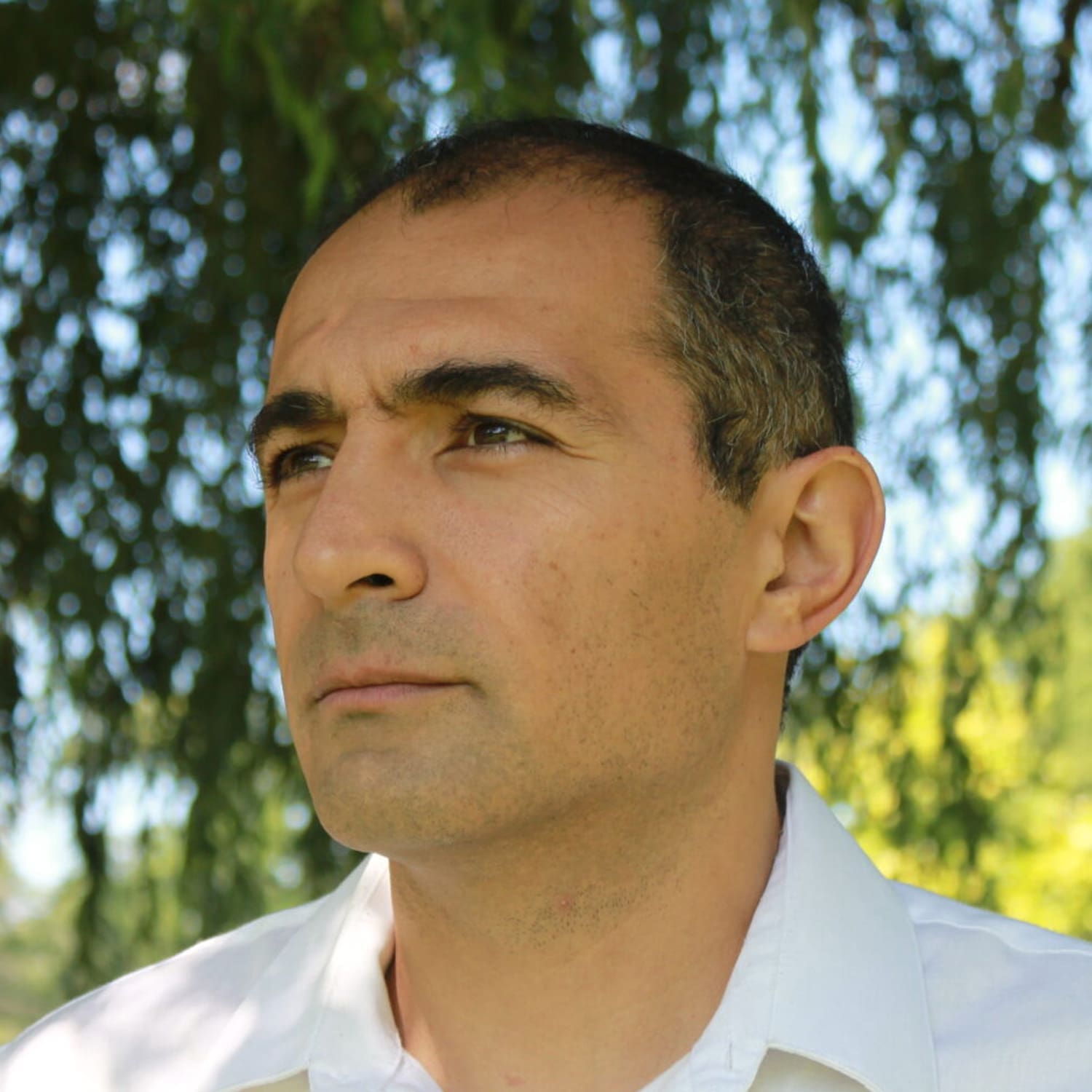
Nader Hashemi is director of the Alwaleed Center for Muslim-Christian Understanding and associate professor of Middle East and Islamic politics at Georgetown University’s Edmund A. Walsh School of Foreign Service.
Love the show? Help others find it by reviewing it on your favourite podcast app. We also welcome your ideas and feedback. Email us at zealots@comment.org. Thanks for your support.
Why politics is better off if damnation is religion’s job.
SITE DESIGN AND DEVELOPMENT BY POLYMATH