


The Russian roots of Silicon Valley’s vision for biological immortality.



Political scientists once theorized that roughly every 30 years, a major election shuffles each party’s constituencies. But Andra Gillespie, a political scientist at Emory University, disagrees. Groups tend to shift slowly over time, she says—not as a sea change or red/blue wave in one dramatic election. When it comes to the 2026 midterm elections in America, she offers a patient and unsentimental perspective: we are still hyper-partisan, and party realignment takes years, even decades.
In this conversation with Mark Labberton, Gillespie comments on voter turnout research, racial authenticity in black politics, realignment and the 2026 midterms, and Christian nationalism and the gospel of grace.
Mark Labberton: Welcome to Conversing. On the day that this episode plays, it’s Election Day, midterm elections 2026 in the United States. It seems appropriate to invite a political scientist, a person who thinks about the politics of America — and particularly in her case, does it through the lens of race, in part — to invite Dr. Andra Gillespie, associate professor of political science, who teaches both in political science and in sociology at Emory University. She’s a double graduate of Yale University. She has produced and written a number of books, including a co-authored textbook entitled Introduction to African American Politics. She’s a person who thinks broadly and deeply about the American political scene, and I consider it a great joy and honour to have her today on Conversing. Dr. Gillespie, welcome to Conversing. I’m so glad that we get to have you as a guest today.
Andra Gillespie: Thank you for having me.
Mark Labberton: You know, you have a very wonderful position that I’ve described a bit in the introduction, but I’d love for you to just jump into some part of your narrative that explains maybe the golden thread that has woven its way through your story that brings you now to the point that you’re in this position at Emory University.
Andra Gillespie: I would say that it is the fact that I have questions. And so people sometimes ask me — as somebody with a PhD, not just how did you get one, but also they kind of use me as a sounding board to figure out whether or not they should get one. And what I would tell people: a big test of whether or not you should pursue a life of the mind is whether or not you have questions.
And so a big turning point for me was my final year of graduate school. I actually was not living in New Haven, Connecticut, where I had gone to graduate school, but I had decamped to Washington, DC, to work for a political pollster. And it was a very, very important year. It was a very formative year in my life. And probably one of the most important things that ever happened to me was a conversation I had with the managing partner of my firm. I just mentioned to him one day, “Hey, we have all of this data. I wonder if we can do this other stuff with it that goes above and beyond what we provide to clients.” And my managing partner said, “That is an interesting question, but it’s not relevant.” And that was the moment where it clicked that I have questions. And if I have questions, then I should be an academic.
And so though I had made a detour out of the academy to take this political consulting job that I thought was going to end up being the thing that I did, right, I very quickly figured out, oh, no, no, no, I need to go back. And I was grateful that I had the ability to be able to go back. But for people who, you know, might be considering graduate school, don’t focus on the cachet of having a PhD or being able to call yourself doctor. Focus on whether or not you have deep, burning questions that require intense study. And if you have those questions, then academia might be for you. But if not — like, you just can’t come up with anything else to do, or you just want people to call you doctor — then this might not be the career path for you.
Mark Labberton: Right, right. That is a magnificent illustration, because in many ways, the difference between so many organizations — especially ones that are non-academic, mission-driven, outcome-oriented organizations — they really do all discipline their work around a very small list of questions that they’re going to do their best to try to get their mind around. But then when you ask questions like you did that suddenly break beyond that parameter, and they say, “Actually, that’s not relevant to us” — to somebody who’s an inborn academic, or just people with serious questions, whether you’re academic or not, the questions are as important as any of the outcomes would ever be. So that’s a tremendous story. And I think it reveals a lot about how you’re wired, but also about the enterprises that a person can get engaged in and why you might go one direction or another.
Andra Gillespie: Yeah. And to be sure, there are non-academic applications of the work that academics do. And there are some industries that do welcome people who have questions and big ideas and want the opportunity to explore them. But especially if you’re thinking about starting a PhD program, knowing that that’s going to take you five to seven years in the United States, usually, to finish — don’t go into it if you don’t have deep, burning questions. Because otherwise you will flounder, and you’re going to get bored very, very quickly.
Mark Labberton: Exactly. Yes. So tell us a bit about how you decided to go into political science, because that itself — the choice of a particular discipline, a kind of container for your questions in a certain way — is part of your story. And then, interestingly, you’re not only an associate professor of political science, but also grad faculty in sociology. So give us a bit of that story, too. And then I want to jump into your work.
Andra Gillespie: Sure. I chose political science for a number of reasons. The questions that I have kind of filled those buckets a little bit better than other disciplines, but it wasn’t immediately clear that that was the direction in which I was going. I credit my parents with giving me an interest in the social sciences, because they made me watch the news every day. So I got very, very interested in current events. And in school, my favourite subject was social studies. And so that was kind of encompassing, at the K through 12 level, history and civics and things. I think God had me on a path towards the social sciences. I went to a magnet high school for government and international studies. It was pretty clear that this was my jam.
In high school, though, I wasn’t thinking about academia. I didn’t know very many people who, you know, were professors. I certainly didn’t know at the time any political scientists when I started college. So I thought I was going to be a lawyer. Right? Because that’s what most people do. If you think you’re going to major in political science, you think you’re pre-law.
And I went to office hours for one of my professors. It was actually an African American history class. And he asked me what my career aspirations were. And I told him I wanted to be a lawyer and practise international law. I wouldn’t have had the language to access this, because she wasn’t in this position at the time, but I think I imagined myself as being something like what Amal Clooney is today. And so I was like, “Yeah, I’m gonna be a lawyer.” And my professor says, “I have three and a half years to turn you into an academic.”
And so he started, you know, to give me RA assignments, and I wanted to do some RA work in political science as well. And so I ended up working for the chair of my department, who is still a mentor to me today. And through both of their tutelage and their giving me assignments, they gave me a glimpse into what my life could be like as an academic and the types of opportunities that I could have. My history teacher sent me on a summer study program for a few weeks in Germany. My political science professor put me into a pipeline program for underrepresented students to try to attract you to applying to graduate programs. And there I met friends and colleagues that I still have to this day. And we’ve been supportive of each other through the — you know, through the school application process and through graduate school, through the tenure track.
So it’s really interesting and neat to be able to have walked with people. And then you think about the colleagues who you get to know in graduate school, who become your professional colleagues in the discipline as you get older. So you still see people at conferences, and you’re still engaging with people and their work. And it took me a long time to figure this out in graduate school, but the papers and the books that we write are merely parts of conversations with each other. And so we’re always thinking about: somebody has this idea. What do I think is good about this idea? What do I think they’re wrong about? Right? And then figuring out whether or not you can do some additional research and be able to either confirm what they did and say, “OK, I agree with you,” or say, “Here’s where I think you’re wrong. And sort of here’s my contribution to the conversation. Talk with me about this.”
And so, you know, it’s a privilege to be a part of the conversations, because they actually also do extend to personal relationships, especially in my race and politics classes. You know, I’m amazed by the fact that when I put my syllabi together, I can then also tell my students, “Oh, yeah, I know a lot of these people.” And for those who passed on, I knew them. And you could think about the other types of sidebar conversations, or a little bit of the background that actually informed the context in which they were writing certain pieces. And, you know, even when you disagree with people, there’s a relationship that undergirds it. That’s actually also really, really important.
Mark Labberton: So I’m just imagining you growing up watching the evening news, as I’m imagining it, and thinking of your parents’ careful intentionality around: think carefully about what’s happening in the world, and be at least educated to some degree by the evening news that’s giving you a bigger picture of reality than the local story or the immediate circumstances of your own growing-up years. So when you say that the question asking was really part of the golden thread, what were the burning questions, and how did those early questions compare to the questions you’re carrying now?
Andra Gillespie: So when I applied to graduate school, I said that I was interested in understanding the political dynamics not just between Blacks and whites, but also between Blacks and other racial and ethnic minority groups — so Latinos and Asian Americans. I still am interested in that question, but that actually has not been sort of the path that I’ve taken research-wise.
When I was in graduate school, the professors who I went to Yale to study with ended up getting jobs in other places. And so they left pretty early in my career. And it was early enough that I didn’t have to follow them to their respective universities. It also just meant that I ended up getting a different advisor. And my advisor was Don Green, who’s now at Columbia University. He, at the time, was on the forefront of bringing back the field experiment as sort of a legitimate method of inquiry in political science. And he was applying field experiments to the study of voter turnout.
So he and another one of my advisors, Alan Gerber, did this great study in New Haven in 1998, where they took the list of registered voters, and they randomly assigned out voters in town to either get a phone call reminding them to vote, to get pieces of mail — and they varied the number of pieces of mail that you could get, reminding you to show up to vote — or to have an army of graduate students go knock on your door and ask you to vote. And what they ended up finding was that the people who got the personal visits from students had the highest voter turnout rates after the fact. So the random assignment makes sure that demographically all of these groups are the same. The only thing that should be different is the type of intervention. And so the conclusion of that study, which we now pretty much take as axiomatic today, is the most direct and most personal form of contact is actually going to do the best job of improving one’s likelihood of turning out to vote.
So I knew that if I was going to be working with Don, that I was going to be doing some variation of this study. So I was like, “Well, I’m interested in questions of race and politics. Let me see if I can replicate this in African American spaces.” And so it just so happens that in the fall of 2001, I was preparing to do my dissertation prospectus. So I was putting my proposal together. And it just so happens that at the end of September, Yale Law School hosted a speech by one of their recent alumni who was coming back to give a speech. He was a councilman in Newark, New Jersey, named Cory Booker.
And so afterwards, he was really nice, and there was a receiving line. And so as we’re going up, I’m like, OK, what am I going to say to this guy so that I don’t look stupid? And I walked up to him and said, “Did you know that canvassing can increase voter turnout by 9 percent?” He’s like, “Really? I’m getting ready to run for mayor.” And he gave me his card. And so I reached out to his office and was able to set up an experiment in Newark in 2002.
Now, I didn’t get the same findings that Don got in his study, in part because the area that I was assigned had been canvassed a lot by the time I got there. So my impact was actually pretty marginal. But while I was there, I was observing the dynamics of the 2002 election between Booker, who was a first-term councilman at the time, and then Sharpe James, who was a four-term mayoral incumbent who had been on city council prior to that. And the dynamic was interesting. This is a nonpartisan election. Both of the two major candidates were Democrats. They’re both African American. Newark at the time was a majority African American city. You would think that they would have a lot in common, other than the fact that one was thirty-two and turned thirty-three over the course of the campaign, and the other one was sixty-six.
But it was very acrimonious. And so I’m watching this dynamic kind of go back and forth. I’m watching dirty tricks. So if you’ve ever seen the documentary Street Fight, which I highly recommend — I’ve been in rooms where people are like, “You made that up. They didn’t paint over, like, street signs.” Yes, they did. I saw them with my own eyes, and I’m watching this happen. And I realized that there is this discussion that’s going on about racial authenticity in the campaign. And I’m watching how Booker and his team are responding to it.
They lose narrowly, giving Sharpe James a run for his money and, you know, probably convincing him that he seriously shouldn’t run again for office in 2006. There were a lot of other factors that were at play. But the racial dynamic of that election was something that was really interesting to me. So I wrote a conference paper for the next year’s conference season and put it aside. I needed to finish my dissertation on voter turnout. And I still continue to spend a lot of time in Newark. So I’ve started looking at other things like voter registration and voter turnout. So I would still come to Newark pretty regularly.
I leave, go to DC for a year. And then in 2005, I get my job at Emory. So I moved there. Now that I’m armed with an expense account, I’m like, “You know what? I think I should probably publish something about 2002.” Right? Because I need to publish in order to keep my job. And, “Hey, there’s another election coming up. So I think I’m going to go observe the 2006 election.” And this time I knew I wasn’t there to test voter turnout. I was there to look at the racial dynamics of the campaign. And so my methodology was more intentional. It was explicitly ethnographic this time. So as part of my, you know, method, I took field notes every time, you know, for everything that I did while I was in Newark. And by the end of that campaign, I realized I had a hundred tight, single-spaced pages of field notes. And so I was like, “Hmm, I think I have a book here.”
And for academics, it’s typical that when you get a professor job that you take your dissertation, you turn it into a book. I was like, “I have a dissertation of null findings that probably is not going to work out.” And I also had a bad experience trying to replicate an experiment in an Atlanta suburb. So I was just like, “OK, so I don’t think I’m going to do that. I think I’m going to write this book about racial dynamics between older and younger Black politicians” — particularly Black politicians who use racially transcendent rhetoric in order to appeal to a multiracial coalition of voters.
And so the reason why this was interesting was we expect that this happens when you’re running in places where there are a lot of people who aren’t African American. But what does it mean to do this when you’re in a city that’s majority Black? So that was what was really interesting. As a result of that, that ended up becoming my first solo-authored book, called The New Black Politician: Cory Booker, Newark, and Post-Racial America. So, I mean, it was, you know, it was an honour and privilege, like, hanging out there sort of before I knew what I was doing, and then the four years where I didn’t know that I was going to be writing this book about Newark. And so it covers the failed 2002 campaign, his successful 2006 campaign, and then his first term as mayor of Newark.
Mark Labberton: Wow. That’s quite an amazing trajectory. Got it. So here we are, 2026. On the day that this episode of Conversing is going to be posted, it will be the midterm Election Day. And so much has happened, particularly racially, during the second Trump term, but also over the last ten to fifteen years. It has been a roiling time for a whole bunch of different reasons. So I would love for you to just give us kind of an overview and then take us to Georgia — for those who are in Georgia or not as well acquainted with Georgia, give us an understanding of what’s happening there. And then we’ll pan back out to the nation at large and some other places I’d love for you to observe, make comments about.
Andra Gillespie: Sure. So oftentimes when we’re looking at voting behaviour, there are narratives that develop in the media that are often a reflection of long-term trends that people have discovered. So, for instance, in 2016, when people observed that non-college-educated white people voted Republican, they acted like this was a new thing. It actually wasn’t. And it fit this old-fashioned discussion of realignments among voters in ways that actually highlight sort of how that theory was wrong.
So once upon a time, political scientists did believe that every thirty years or so, there would be this major election that would jumble the demographic constituent cores of the major parties, and that they would last for a generation. Then there would be this other big election, and stuff would change. Actually, what we know now is that groups tend to shift slowly over time. And so the shift that people realized amongst non-college-educated white voters in 2016 had actually been part of a long sort of shift away from the Democratic Party to the Republican Party.
And I would say that in 2024, it wasn’t so much that there are shifts. There possibly are shifts that are underway in terms of Black and Latino voting behaviour away from the Democratic Party towards the Republican Party, in differing degrees. So African Americans are still the most loyal Democratic voting bloc in the United States. And Latinos were Democratic, but they weren’t that Democratic. And people are looking at data points between 2020 and 2024, or maybe looking at ’16, ’20, and ’24, and declaring that a realignment has happened. It takes years for a realignment to manifest. Honestly, I need another fifteen, twenty years’ worth of data before we actually know that these shifts are happening.
But one of the things that I think a lot of people discovered in 2024 was that there’s a gender gap in the Black community. So Black women and Black men are both heavily Democratic, but they don’t vote Democratic at the same rates. And so, yes, there was a small, incremental shift in support towards Donald Trump. It could be, right, more people identifying with the Republican Party. It’s probably more likely that it was a function of voter turnout. Donald Trump did a better job of getting low-propensity Republican voters, some of whom were Black, out. And if low-propensity Democratic voters stayed home, and a lot of them were Black, then that’s going to adjust the numbers a little bit. And so I think we have to kind of keep some of those things in mind as we’re looking at 2026. I think people were declaring realignments based on two or three data points. And, like, we have to be really cautious about being premature in some of our pronouncements.
But as we look towards 2026, there are some conventional wisdoms that have been borne out over long periods of time. It’s customary for the president’s party to lose seats in congressional races. You know, this could reflect a desire for checks and balances. You know, it also sometimes reflects the president’s performance. And so if people don’t like what the president’s administration has done, they take it out on their party in the midterm elections.
And so if we look at sort of what conventional wisdom says — if we look at the president’s current poll numbers, which are not good; if we look at public opinion surveys where people are just asked generically, “Do you plan on voting for the Democratic or the Republican candidate in your congressional district?” — the generic ballot numbers suggest that Democrats have the advantage here. And that is predicted to translate into, you know, into victories for Democrats. And so the predictions in terms of the number of seat swings that we are looking at does suggest that, especially given how narrow the margin is in the House of Representatives, Democrats will win enough seats that they should be able to take control of the House of Representatives, which means the next Congress will operate under conditions of divided government, which will create different opportunities for gridlock than the ones that we’ve experienced so far. What it also would guarantee is that Democrats in leadership positions will probably exercise more oversight capacity over the Trump administration than the Republicans in power have done so far.
Now, what’s motivating some of this dissatisfaction? We’ve seen President Trump’s job approval ratings tank, not just overall, but also on specific issues, and in particular, issues that he had advantages on in 2024. So if we look at how people view his handling of the economy, there are lots of people who are very dissatisfied with what they’re seeing. That’s, of course, being driven by inflation. And, you know, if we think about, like, the source of that inflation, it’s no longer the COVID-era inflation that people are worried about. They’re worried about the inflation that’s been tied to tariffs, or that’s been tied to geopolitical issues like the war in Iran. So, right.
And if we look at sort of who’s concerned about these issues, these are issues that are concerning to people across the spectrum. So it’s not just Black people are concerned about these issues. Right? Everybody is concerned about these issues. But if we think about the ways that people of colour, particularly Black and brown people, are socioeconomically more likely to be disadvantaged — more likely to have lower incomes, more likely to have less net worth and wealth — when prices go up, that’s going to hit you acutely, because you have less of a buffer to be able to offset or to compensate for that. So, you know, the concerns are real.
And, you know, by Wednesday morning, we might be having discussions about who did what wrong in the sort of Monday-morning quarterbacking: “Here’s what people should have done differently to have expected different outcomes.” But of course, these are all going to happen at the state level and at the congressional district level. So there are some, you know, seats where people may be safe because their districts have been drawn in a way to make them safe. And then there are also individual races that are also going to be important. And so the individual candidates themselves — even if the fundamentals of their district or state might privilege a victory, if they have made particular missteps, those could be disqualifying for some people, even if they are the right party for that particular area or not. So, you know, there are lots of moving parts here.
Mark Labberton: Wow. It’s very helpful to have that overview. I’m curious — take us now into your own state where you reside. You live in Atlanta. Georgia is a swing state in a bunch of different ways. There’s a highly contested Senate race. There’s all kinds of things that are going on. Give us your view of what’s happening in your state, and really your district, even.
Andra Gillespie: So again, candidates matter. Context matters in this case. So our top-ticket race is a Senate race between Senator Jon Ossoff and Congressman Mike Collins. This race is interesting. Jon Ossoff and Raphael Warnock, who is the pastor of Ebenezer Baptist Church — Martin Luther King’s church — won elections and runoffs in 2021. So on January 5, there was a runoff in Georgia. They were running against incumbent senators David Perdue and Kelly Loeffler. And Ossoff and Warnock pulled off an upset victory, in part because Donald Trump got up at a rally on January 4 and told people that their vote was rigged and it didn’t count. It basically implied it wasn’t worth voting. And it turned out Republicans didn’t show up to vote. And so Democrats were able to pull out the upset victory by having a really ingenious voter mobilization plan.
So they looked at how close the election was, and they were running two different races. Warnock was running in a special election where there were about eighteen people running. And so the top two vote getters were going to move on to a runoff election. And then Ossoff was running a traditional Senate race against the incumbent senator. He came in second place on the first ballot, but there was a third-party candidate who dragged both of them below 50 percent. And in Georgia, if you don’t win with an outright majority, you have to go to a runoff election. So both of them end up in a runoff election.
And there was a long period of time between the general and the runoff election. It allowed Democrats to register people who turned eighteen in November, but after Election Day, who would be eligible to vote that January. And then they also looked at low-propensity voters. They looked at those people who were registered to vote but who hadn’t cast a ballot in November, and said, “Do you see how close this was? If you actually show up to vote, we could win this.” And so they got enough of those people to come to vote. President Trump depresses voter turnout by making some intemperate comments. And then Georgia ends up with two Democratic senators the year that, you know, for the first time since Bill Clinton, Georgia votes Democratic in a presidential election.
So, you know, it was certainly something that was remarkable. But I think most people kind of thought that that was an aberration. It was an outlier. And so people were like, “OK, Ossoff gets his six years, and then, right, he’s going to get booted out by — by, you know, whatever, whoever the Republican nominee is.” Well, a couple of things have changed since then. So one, Georgia has continued to become more diverse, which has made it more competitive for Democrats, even though Democrats still are the numerically disadvantaged group in the state. And I should note that that demographic change has been going on for all of this century in the state of Georgia.
But, you know, Ossoff took advantage of the fact that he was an incumbent, and he did his job, and he did it well. So he has become very well known for solid constituent services, for being responsive to people regardless of their partisan affiliation. He has garnered national attention for being able to land soundbite punches against President Trump in ways that have gotten him attention that other candidates who might have other aspirations would covet in the future. So there are all of these things that Ossoff has done particularly well.
And he’s running against an opponent who is weak. So Mike Collins is under investigation for corruption in the House of Representatives. He has some affiliations between his son-in-law and some of his former staffers with white supremacy. So there are people who get on podcasts and post things that make them look like they’re aligned with Nazis and white supremacists and other types of folks that could be viewed as problematic. This has become a race where Ossoff has taken his advantages and run with them, and then he has exploited the weaknesses of his candidate to put himself in a pretty strong position, so that most people assume that he is going to win reelection. Is he going to win by massive margins? Probably not, but he’ll probably win by respectable margins, at least for a place in the Deep South where you wouldn’t expect that to happen.
So we also have a governor’s race. So our governor, Brian Kemp, is term-limited. And so we have an open-seat contest there. And so the Democratic nominee is Keisha Lance Bottoms. She is the former mayor of Atlanta. If she is elected, she would be the first Black woman elected governor of a US state, ever. Her opponent is Rick Jackson. A year ago, I had no idea who Rick Jackson was. One day I had television on, and all of a sudden these ads start coming up, and I’m like, “Who is this guy?”
So Rick Jackson is a billionaire businessman. He’s mostly known for a healthcare staffing agency, but he does have interests in other fields. He ran a very kind of MAGA-fied primary campaign in order to appeal to the MAGA base in Georgia. But then he’s kind of pivoted back to his life story. And he has a very interesting story. He was born into poverty in Georgia. He was in the foster care system. He had to drop out of college because he couldn’t afford it. So he started a number of ventures, hustles, and then ended up landing into this business where he’s done incredibly well for himself. And so I think he’s trying to run on the idea of “I’m a businessman, so I know how to manage things, and I know how to get things done.”
And even though he was running sort of hard-line ads about immigration and even transgender surgery during the primary election, he’s tried to kind of walk that back a little bit in the general election. He’s been selective about his appearances with Donald Trump. He did show up with Donald Trump last week, in part because there were concerns about Republican turnout in the state. But he’s really tried to hitch his wagon not to Donald Trump and the MAGA wing of the party, but to Brian Kemp and the more kind of establishment, Chamber of Commerce wing of the Republican Party, which is still viable in Georgia, perhaps unlike in some other places. And so this race is statistically tied. You know, nobody has been ahead by a significant margin in any of the polls. Like, you know, we can’t predict who is going to win. It’s really going to come down to turnout.
And I think the big question between those two races is: there are people who have problems with the ethical challenges of Mike Collins. Do they hold their nose and vote for Collins because they’re Republican and he’s Republican? Do they abstain from voting in the Senate race and then just vote Republican down the ticket? Or are we going to see people who vote for Jon Ossoff for Senate and then vote — continue to vote Republican down the ticket, starting with Rick Jackson? That’s going to be very interesting.
And similarly, right, there’s usually attrition as you go down the ballot. So you get fewer people participating in elections, because everybody knew about the first two, but they didn’t know about these other races that you’re voting for. So Democrats have tried to run a unity ticket, where they’re encouraging people to vote up and down the ballot. And for the Democrats, like, will that work? And will that be enough for them to not just win, perhaps, you know, the gubernatorial and the Senate races, but also other races that are important, like the Public Service Commission, which sets utility rates, or the secretary of state race?
You know, in particular, Brad Raffensperger tried to run for governor unsuccessfully. And so, you know, though he was famous for certifying the 2020 — helping to, you know, move the process toward certifying the 2020 election results for Joe Biden, he’s not going to be in that position going forward. And so who is his replacement? So there are some really important races down ballot that, you know, don’t get a lot of attention, but people should be paying attention to.
Mark Labberton: Now, I do know and grant completely your point about the fact that we don’t and can’t really judge trends except with a lot more data than we ever have, really, at hand. But when you think about the significance of the midterms and the significance of the 2028 election, what is your sense of how much there is a deep kind of potential reset, and how much is it — midterms are always reactionary. So what you’ve described is what, as you said, is classically the way that this will go. It would seem like it is classically going to go that way, perhaps.
But in terms of the deep reset — because I’m a person who believes that America needs a reset on all kinds of fronts, including our political conversation and action — I’m just wondering, do you see the emergence of a recognizable set of circumstances that you would go out on a limb and begin to say, “I wonder if the reset is going to be like this or like that”? Or does it just seem very temporary, very short-term, very reactionary to Trump, for example, in this case, but not really a deep reset? Because the Democrats need a reset every bit as much as the Republicans need a reset.
Andra Gillespie: That’s an interesting question. And I think it’s a tough question. And I think also you want to have hope, but you also want to be realistic about what you’re seeing. You don’t want to be so blinded by your hope that you can’t actually properly discern what’s happening in front of you at any given time.
And so there are elements where people are trying to appeal to people’s common decency. You know, if Amy Acton becomes governor of Ohio, it may be because of that, because the ad that Vivek Ramaswamy deployed against her was deplorable on so many levels. And from a tactical standpoint — vet the mother first to know that she hasn’t talked to her kid in almost fifty years, so she can’t speak to her character at all. I’m surprised nobody — like, I haven’t heard anybody say that. I’ve heard people have gone to the main point, which was that was a horrible ad and sort of beyond the pale, you know, in terms of its lack of appropriateness. But just from a basic tactical thing, I was like, her story was going to fall apart the moment people understood that the two of them haven’t spoken in forever.
So in some instances, I think appeals to decency and kindness. But that doesn’t necessarily mean that the fever has broken yet. Right? We’re still hyper-partisan, and there’s still incentives for people to be hyper-partisan. And there are people who are incentivized to not play nicely because they have been — you know, because they’re going to win safe districts. So they don’t have to come across the aisle, because our parties, relative to where they might have been in the 1960s, are weak. And so you don’t necessarily get the same type of punishment from the DNC or the RNC, or from your party leaders in your chambers, for grandstanding or for deviating from them. It may take a few cycles of successive people challenging folks in primaries in order to overcome this.
And then I think, you know, we are looking at President Trump basically, you know, being term-limited out of office after the 2028 election. And I think the question is, well, what does the Republican Party look like after Trump? And so even if Trump isn’t there — some of the allure around Trump is his outsized personality, which is being really hard to replicate. And I think people like Vivek Ramaswamy are learning the hard way that just because Trump can get away with certain things doesn’t mean that you can necessarily get away with that. But there are some ideas that animated MAGA that are going to outlive Trump’s tenure in office. And so I think it’s a question of: can we have a reasonable policy debate about those issues, in a way where people can talk and understand where other people are coming from and figure out where to respectfully disagree, even if you’re going to run against them on those ideas? And I’m not sure that we’re there just yet. So I’m braced for there to still be some more bumps in the road, and I’m still braced for us to have not quite hit rock bottom yet.
Mark Labberton: Right, right, right. Yeah, there are so many insidious things in both parties that are — that are absolutely needing scrutiny and care and wisdom and a kind of truth-telling and honesty and a recovery of integrity and a refusal to always choose power instead of wisdom. So I’m curious, as a person of faith who lives and thinks and breathes so many of these things all the time, how does your own Christian faith speak for you into these circumstances? How does it inform how you hold chaotic political power?
Andra Gillespie: It’s been funny — in the last few years, when I do my regular Bible reading and I get to the major and minor prophets, I read them very, very differently now. Right? Because you see the corruption that they were speaking to, and you recognize it in your own time. And it is sobering to watch and to read that.
You know, I think the other things that this teaches me is — you know, we’re in a moment where Christian nationalism, white Christian nationalism, is a very, very real thing. And you see this — I see it as a power grab. This is people who are trying to reclaim power, seize power. And then they want to do it with sort of the imprimatur of Jesus around it. But this isn’t about Jesus. This is about their own self-aggrandizement. And very few people are saying that in a way that, like, is actually going to point out — either for people who may have had a real encounter with Jesus Christ, who maybe have just fallen off the way, that, “Hey, this isn’t the way to do this” — versus also pointing out people who are false prophets, and who are basically, like, adopting some of the language and maybe even some of the Western cultural mores of Christianity, but actually had no intention of ever following this.
And so, you know, it’s — you know, the challenge is figuring out how to speak to that moment and how to speak to folks in a way that that message actually gets through. But then it’s also sort of important for us who feel really strongly about this to model that type of behaviour, and to not actually figure out how we’re going to, you know, vanquish our enemies and take power and dominion over everything, because it’s not ours. The whole point of our faith and walk with God is that we actually serve a higher kingdom. And so while we live here on earth and should be involved, my goal is not to sort of aggrandize power, because all power is God’s, ultimately.
Mark Labberton: Right, right. You know, the ferocity of Christian nationalism and its many forms — actually, there’s not a single thing that’s Christian nationalism. As you know, there’s lots of different manifestations of this, and some are sort of innocuous and have mostly to do with something that would just be genuine patriotism, but it gets caught up in the Christian nationalism debate. Then there are, on the other end of the spectrum, there are people who are the virulent Christian nationalists, who are doing what you’re saying — namely, using Christian language, wrapping Christian language around a quest for power and identity and white supremacy and many, many other things that are connected to that.
So when you talked a moment ago about, you know, is the firestorm over or not — one of the firestorms that’s definitely not over is Christian nationalism, and certainly the long-term trajectory of Christian nationalism throughout American history, as well as in this particular era. It just morphs slightly. It kind of somehow survives, like a really tough weed that just won’t go away and can’t really be put out of business.
So I guess I’m interested to know — this is, I think, a Christian burden. How do Christians, in your mind, properly hold these long-rooted toxicities that exist in every society? And our society happens to have this one particular ugly, and I would even describe it as evil, root. How does a Christian hold to the faithfulness of God — not to try to, quote, make us a, quote, Christian nation of another kind, but to live in a pluralist culture with a set of priorities and values that are formed out of the authentic gospel that is not about nationalism?
Andra Gillespie: I mean, I think that there are a couple of things. One, I think that people are uncomfortable with pluralism in general, because I think that there is a perception that I understand, but I think is still wrong nevertheless, that pluralism means that you tolerate things that you think are unbiblical. No, it’s not. It’s that I just can’t force you to do stuff. So, right? And that it’s going to be up to God to show you and ultimately to punish you, if that’s what you have coming to you as a result of that. Growing up, my mom always talked about how you couldn’t be the Holy Spirit for other people. And so, like, you can’t convict people. Right? Like, that’s not — we’re not God. We can’t do that.
And I think there’s some people who take very seriously, right, the idea from Scripture that righteousness exalts a nation, but sin is a reproach to any people. So, right, you have to call out sin. And I think, yes, you have to call out sin. On the other hand, you can’t legislate people’s hearts in the way that you want to in order to achieve an expected end. And when you try, it backfires. So one, it will actually inhibit the working of God, the Holy Spirit, to actually reach people and give you grace. And by grace, I’m just talking about that indwelling of God that actually makes that change that we’re all aspiring to real, because we can’t do it in and of ourselves.
And in some ways, it’s actually reifying this idea of, like, justification by works. And what we know, especially for — and we’ve seen so many examples of this, too many, actually — of people trying to justify themselves by works, by outward works, when behind closed doors there’s all kinds of foolishness going on, all kinds of sin, so much abuse. People are being hurt. And at the end of the day — because it was you tried to do it yourself, as opposed to letting God transform you — at the end of the day, not only did the actions and behaviours didn’t change, you made it worse reputationally, because people can point out your hypocrisy, because they can see it from a mile away.
And I think that that is what concerns me so much about so much of what we’re doing today politically and culturally. You’re trying to get people to conform to a particular way that behind closed doors you can’t even live up to. And it’s pointing away from the gospel of grace — that Christ died for us and sought to indwell us, to actually make us the people that he wanted us to be in the first place, because we are incapable of doing that ourselves. That’s the point of the law: to say, you can have all of the rules you want in the world, but you’re never going to follow all of them, because our sinful nature is going to rebel against that. But God has provided a different way. And I think we’re turning away from that. And I think we do that at the risk of our witness. And that should be first and foremost in our minds, like, when we’re thinking about how we demonstrate to people that Christ is the answer.
Mark Labberton: Right, right, right. I’m working a lot around the language of credible witness and thinking about the significance of what it means when a person — as it says at the end of Matthew 7, that having preached the Sermon on the Mount, people were astounded at his teaching, for he taught them as one who had authority, and not as the scribes. And one of the things that is so powerful about that is that in Matthew’s language there, there’s this use of authority, which is about this combination of both what Jesus says and what Jesus does, all being one thing — a kind of credibility to the very core.
And I just long for the church to be a church that evidences more frequently that combination. You and I both know that there are many, many individual saints all around the world and throughout history who have absolutely been those kinds of credible — and are being those kinds of credible witnesses, absolutely astoundingly so. Institutionally, it’s always been a more questionable thing, and that’s, I think, also true throughout Christian history. It’s hard for an institution to be as credible as a living human being that is an embodiment of the reality of God’s love and grace in the way that you’ve just described. I’m just curious about your response to that.
Andra Gillespie: I think the thing that I think about is sometimes some of the people who are the loudest, flashiest voices are the biggest offenders here. And sometimes there are ways that — and I’m not trying to judge people, but there are ways that you can discern, right? If there is slippage in some other aspect of their life that’s usually kind of apparent in public, then that also might be a clue about whether or not they are walking in God’s authority, or whether or not they’re seeking to walk in their own strength. And I think we all have to guard our hearts, because we could all get comfortable and complacent and arrogant and end up doing the exact same thing. Like, we’re no different from anybody else. But I think also, when you kind of see it blatantly happening in front of you, you have to make decisions about whether or not you’re going to follow this person or align with them — and even if they are putting themselves up for public service, whether or not these are people that you actually want to vote for.
Mark Labberton: So here we are, Election Day, midterms 2026. And if you were to close our conversation with hope, what would that hope be?
Andra Gillespie: I think as Christians, we always have hope in Christ, despite everything that’s going on. And despite the rebellion that we see in the world today on all sides, we know Christ is in control. And my responsibility is to not look to circumstances, to not look to people around me for my comfort and my hope, because if I did, I would just despair — but to remember that Christ is calling me to abide in him. Christ is calling me to look to him. Christ is calling me — with all of the talents and resources that he’s given me, he’s still calling me to be dependent and reliant on him. And these moments are moments where, you know, I hope we have more opportunity to be like, “God, we need you more than anything else right now, because there is no way this makes sense, or that we can get through it, without your help.”
Mark Labberton: Amen. Dr. Gillespie, thank you so much for making time for this conversation today. It’s been a great gift. And maybe we’ll have a chance, as a follow-up, to talk about what actually did happen on this day. You’ve given us a great gift, and I’m thankful for you and for your work. Thank you very, very much.
Andra Gillespie: Thanks for having me.

Mark Labberton hosts the Conversing podcast and is the Clifford L. Penner Presidential Chair Emeritus and Professor Emeritus of Preaching at Fuller Seminary.
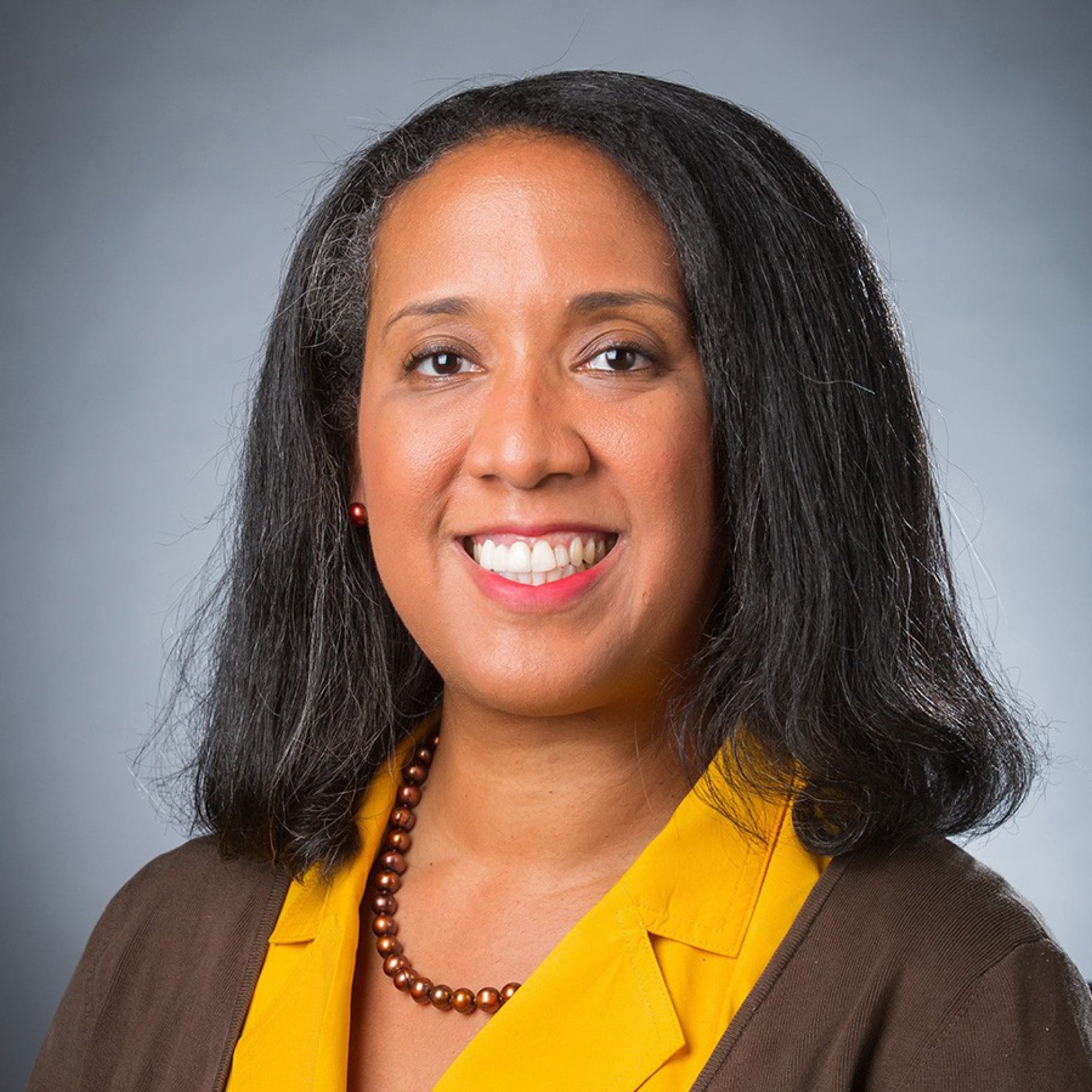
Andra Gillespie is associate professor of political science at Emory University, where she directs the James Weldon Johnson Institute, and the author of The New Black Politician: Cory Booker, Newark, and Post-Racial America.
Love the show? Help others find it by reviewing it on your favourite podcast app. We also welcome your ideas and feedback. Email us at conversing@comment.org. Thanks for your support.
The Russian roots of Silicon Valley’s vision for biological immortality.
SITE DESIGN AND DEVELOPMENT BY POLYMATH