


In Praise of Lev Gillet (1893–1980).



Join us as we talk with journalist and author Bonnie Kristian about her new book, In Defense of Evangelicalism. Kristian illuminates the societal trends toward the “monstering” of evangelicalism and argues for fair treatment of her faith community. Matt and Shadi press her on voting trends, the evangelical pro-life stance, evangelical views of Islam, and more.
Matthew Kaemingk: Well, welcome back, everybody. Our guest today is Bonnie Kristian. She’s a journalist and an author and fellow at Defense Priorities. She previously spent years writing and editing at The Week and has written extensively for Reason and the Daily Beast. Her work has also been widely published in outlets including the New York Times, USA Today, CNN, NBC, and Politico. She’s written her third book now, which we want to talk about today, In Defense of Evangelicalism: A Response to Its Cultured Despisers.
Well, first off, Bonnie, thank you so much for being here. It’s wonderful to have you. We’re looking forward to this conversation. As an evangelical, it’s nice to be defended, so thanks off the top for that. But I read a section of your book earlier today on the monstering of evangelicalism, and it seems to me that maybe that was part of the motivation for you writing this book. But I’m wondering if you could give us a little bit of the background story of the inspiration for this and what you mean by the monstering.
Bonnie Kristian: Yeah, the monstering of evangelicalism in our time. So, yeah, I would say the background story operates kind of at two levels. One level is sort of the level of the public discourse in which that monstering happens. And I think that anyone who’s paid attention to politics—especially discussion of religion and politics—over the last decade especially, but even more so if you are, like I am, old enough to remember the George W. Bush years, you’re familiar with at least some of what I’m talking about: the way that evangelicalism is discussed in American public life as a danger, often; that evangelicals are discussed as people who are, you know, perhaps not quite suited to participate in American democracy. You know, at the extreme example, there are conversations in which we’re described as, like, a cancer in America. Our faith is sort of openly denigrated. But there’s also, you know, more moderate versions where we’re presented as, you know, just kind of, like, the worst voting bloc—people who profess a faith, but really it’s a political tribe and a gathering of people designed basically to benefit ourselves. People who are, you know, perhaps bigoted, tied to outdated beliefs, trying to oppress and control others.
And this is where sort of the public and political aspect connects to the personal, which is that, you know, someone who has grown up in evangelicalism—I attended evangelical schools, I work at an evangelical magazine, which sort of gives me something of a bird’s-eye view of this big movement—those descriptions, as much as—and I’m sure we’ll come to this in great detail—as much as I very often differ from my fellow evangelicals on politics, and on serious matters of politics, those descriptions just do not comport with what I, and I think millions, tens of millions of evangelicals in America see in our churches every Sunday.
And so, you know, when my editor first talked to me and I was talking about this book early last year, early 2025, I had a lot of trepidation about writing it, because as a journalist who is, you know, in this space, I am deeply aware of how these conversations go and what people think of us. You know, I didn’t come to this out of sort of a naivete about where the discourse has gone. You know, I was deeply aware that there was such a great chance of sounding, you know, not like I was presenting a defence, but like I was being defensive of, perhaps, you know, against charges that we ought to heed. And so I was really thinking this through last spring.
And then—and I tell the story in the book—I was reading, for a thing at my church, a book by a theologian named J. I. Packer. And this is not a very old book. It’s from the last decade. So it’s not like he was writing from another era or unaware of how evangelicalism is discussed. And I was reading the book, and I was like—you know, again and again, he would say, like, “Well, of course I think X because I’m an evangelical,” or, you know, “Well, as an evangelical, I say Y.” And I was reading the book, and I was noticing this reaction in myself of, like, Why is he so happy about this? Where are his qualifications? Like, why is he not explaining—you know, making sure readers know that he understands what’s so problematic about saying this, about claiming this evangelical identity? And then I had to sort of notice—I noticed the reaction in myself. And I was like, Why do I think this? You know, it’s not a mystery that I’m an evangelical. No one’s confused about this. Why am I having this response?
And, you know, something that I drill home again and again in the book is that I am not arguing that evangelicalism is perfect or that it should be above critique or that it does not need reform. But I am arguing that it is good, and that I know that it is good, and that that is something that I’ve examined not just from personal experience, but with original reporting and with qualitative and quantitative research. And, you know, there’s—I was reading recently, there’s a verse in Romans that says, “Do not let what you know is good be spoken of as evil.” And so that was kind of the conclusion that I came to: that I feel this dissonance between this thing that I know is good and the way I see it discussed in public. And I know that I’m not alone in that, that other evangelicals are feeling the same dissonance and don’t know what to do about it. And so I wanted to address that for them, and thus wrote this defence.
Shadi Hamid: So give us your pitch. Why is evangelicalism good?
Bonnie Kristian: I think it’s a tradition with a lot of goods worth preserving. It’s a branch, an orthodox branch of Christianity with distinctives that are beneficial to the rest of the church and to the world. Those distinctives have historically and to this day involved a high culture of enthusiasm. Evangelicals are excited about Jesus. They are excited about their churches. They are excited to be there. I am not naturally given to this distinctive. I am not naturally a very enthusiastic person. And so I tend to observe that a tiny bit from the outside, but it’s something that, even though it’s not my inclination at a personality level, I appreciate and admire and I think is a good thing. And I think that there is a great sincerity in that enthusiasm. There is a real love of Jesus. There is a real desire to obey him and obey Scripture and serve our neighbours and help our communities. And these things inevitably, you know, as Christianity itself would say, do not always work out, right? Because we are sinful people. You know, evangelicalism is a movement of tens of millions of sinners. And that’s evident every day and in every congregation. But that enthusiasm and sincerity and desire to know the truth and to live into it to the benefit of others is real, and it’s good.
Matthew Kaemingk: So just—I mean, just to press in on that, you know, you talked about how evangelicalism has been described as a cancer to this country. So it’s the bodily disease metaphor. And your argument is, no, that sort of on the whole, it is a good thing. Could you get more specific for us and what you think—you know, for Shadi, for example, who’s not an evangelical, very much so—what is the public good of evangelicalism for America, in your view? For those who are on the outside, why should they be thankful that they have evangelical neighbours?
Bonnie Kristian: I mean, I think that that on-the-inside-versus-outside distinction is important here, right? Obviously, as a Christian, a big part of the reason I think it’s good is because I believe that it’s true, right? So I don’t want to set that aside. But turning to the question of those on the outside—I get into this more in the book, but we have research that shows that when people leave evangelicalism, they become worse. This is particularly well studied in regards to white Southern conservatives, who are, in many cases, who we’re really talking about in these national conversations about evangelicalism.
There’s the—the major sources of research that I cite are The Great Dechurching, which is a book with which I’m sure you all are familiar. It’s based on a large-scale survey asking people all kinds of questions about themselves and their beliefs and the way they seek to live, both before and after they leave churches. They look at other branches of the church as well, but specifically looking at evangelicals, there’s like a twenty-point gap when you ask people if they sincerely try to do things like avoiding racial discrimination; tangibly helping people in poverty, people who are immigrants, people who are refugees; avoiding, you know, lying and stealing and greed.
Now, as I write in the book, what people tell us they try to do does not actually prove anything about what they do, right? This is a problem with all polling, and that applies here as well. But I think the mere fact that when people leave the church, they are less likely to even aspire to that, to even say, “I know this is a good thing,” but they are by a significant margin more willing to say, like, “I don’t know, racial discrimination, that seems okay”—that’s a big difference, and that matters.
The other research I cite on this is from a historian named Daniel K. Williams, who is great and certainly not shy about criticizing evangelicalism himself. And, you know, he similarly finds—and has written powerfully about—that when Southern white conservatives leave the evangelical church, they retain, you know, sort of the moralism for others, but they do not so much apply it to themselves, and they lose the ties to community life that produce, you know, sort of charitable activities, benevolence, a desire to care for the people next to them.
And so, to me, this evidence suggests that evangelicalism does not find us as blank slates. Our faith does not come to us as people without a culture, people without other influences. We’re all influenced by a great deal of things. And so I think it’s easy, particularly looking at the Bible Belt, to suppose, like, well, everything we’re seeing here is about evangelicalism. In fact, no, there’s a lot of other things going on in the mix, and the evidence strongly suggests that evangelicalism serves as a point of restraint on evils and encouragement towards common goods.
And one last concrete example on this: back in the—it was around 2008, like right around the transition from Bush to Obama, when we were much more focused and talking about torture than we do today—there was, I forget if it was one poll with two questions or a pair of polls at the same time. These polls came out that evangelicals were the religious demographic most likely to support torture. And I remember reading this at the time and being like, Come on, man, like, can we not be these people? But the second poll or the second question, whichever it was, found that when you reframed the question in terms of the golden rule, support among evangelicals dropped substantially. It was like a different part of the brain turned on and was like, Oh yeah, actually, we do need to be thinking in these terms. And this does—like, it made a difference for how they thought about it.
And, you know, ideally, would you have to reframe it like that? Would you have to so directly call their attention to the faith that they profess? No. But, you know, if we were that ideal, we wouldn’t have needed to be saved by Christ anyway. So I think that we can acknowledge the lack of ideal there and also acknowledge evangelicalism is making a real difference for the better.
Shadi Hamid: So let’s address the elephant in the room. If evangelicalism is so good, or at least relatively good, and if evangelicals themselves are on—if they’re on balance good people, why do they support such awful things? And here we have to address Donald Trump. If it wasn’t for white evangelicals, Donald Trump would not have been elected, and our democracy would be significantly stronger and more healthy and, in my view, less cruel, including cruelty towards recent immigrants and so forth. Obviously, you try your best. You offer a very robust defence, a retort to this in the book, and that’s why I appreciate the book. But I don’t know, I felt like I wasn’t entirely convinced. You did your best shot, but I think at the end of the day, the metrics are pretty bad. And I guess we can kind of unpack—yes, evangelicals prioritize the family unit. They don’t want trans—they feel like trans rights has gone too far. Abortion is key. So that’s why they vote for Donald Trump. I mean, there are reasons for them, and those reasons may be legitimate. But at the end of the day, the outcome is bad.
Bonnie Kristian: Yeah.
Matthew Kaemingk: Yeah. So maybe, like, a handhold there would be sort of the common retort: 81 percent of evangelicals supported Donald Trump. So how can a movement be good and do that?
Bonnie Kristian: Let me start with the 81 percent number and then pivot to a broader answer. Because you guys have read the book, you know that I have a page or two in there—it’s not a very long section—talking about there are ways that we can, and I would say should, nuance the 81 number. There are ways in which that single statistic alone is kind of misleading. I’m not going to rehearse all of those, though. You know, I do think they’re worthwhile, and hopefully people will buy the book and read them. But I think even when you go through that, as I say in the book, you are left with still a very large portion of this demographic of particularly white evangelicals who are voting for Donald Trump.
So what I would say—and I know you guys have heard this, but I’m interested in talking about it—as I say in the book, I think that there are absolutely evangelical voters who voted for Trump because, you know, they’re actually—they like him. They actually like the policies. They’re not put off by the behaviour that exists. My view—and I haven’t found any polling that would, like, so neatly prove this, but my view, my educated opinion—is that for most of them, what we’re dealing with is not that enthusiasm, not that kind of, like, grotesque Christian nationalist behaviour that you see on X and online, and something much more mundane that goes like this. There’s three parts.
Number one, they believe they have a duty to vote. This is not unique to evangelicals. Many Americans believe this. Your civics teacher tells you this, right? Common, common perspective. So you have a duty to vote.
Number two, they understand how our constitutional system works. They understand that a third-party candidate, an independent candidate, cannot win the presidency. Ross Perot couldn’t do it. No one can do it. You know, you’re lucky even to get someone in Congress without a major party ticket. And even then, it is usually the case you’re dealing with someone like Bernie Sanders, who is, for all intents and purposes, working with one party. So they have to vote. They have to pick a major party candidate.
Number three, yes, they are pro-life. Now, it is true—and many people will say, you know, if you go and talk to evangelicals in the run-up to election day and you say, “What’s your most important issue for this election?” they’re not going to say abortion most of the time. They’re going to say immigration, the economy, national security, all the kinds of things that people always say. That is absolutely the case.
What I would argue is that abortion for evangelicals functions a lot like climate change policy for many folks on the left, which is to say, if you are on the left and you are very serious about climate change, if you come across a candidate whom you generally like—you know, you think they’ve got some good stuff going on; you know, you’re not necessarily on board with everything, but you could see yourself voting for this person—and then you find out, oh, he does not believe that human-caused climate change exists. He has no climate policy. He has no plans to address this crisis. He’s going to let, you know, the low-lying islands be flooded and destroy those communities. He is perfectly cool with: everybody drives, you know, a giant truck that gets three miles to the gallon. He’s going to let the old people in Europe roast in their un-air-conditioned apartments and just die. You’re going to say, This is a person I just cannot support, right? Like, the other stuff is good. I like that. But this is just a nonstarter for me, even if the other—more imminent concerns around abortion, or excuse me, around immigration or the economy or what have you—even if he’s good on those points, it’s just not going to work out.
This is how abortion works for many, many evangelicals. It is not necessarily top of mind. It is absolutely a hurdle that any candidate they will support must clear, because it is a matter of life and death, in the same way that climate policy, insofar as someone believes it is connected to averting perhaps mass human extinction, or certainly severe suffering, especially for vulnerable people, is a baseline issue for many folks on the left.
So you have to vote. It has to be for a major party candidate, and they have to be pro-life. In every presidential election this century, that means you are voting for a Republican. It doesn’t matter who it is, because of where the Democratic Party is moving on abortion. We all know they have gone from “safe, legal, and rare” to Kamala Harris visiting an abortion clinic. There’s just no scenario in which these folks are going to vote for a Democrat.
Now, this is not how I vote. I don’t think I have a duty to vote when both candidates are absolutely ethically intolerable to me. But most people don’t think that way. So if we can talk to the civics teachers of America, maybe in twenty years we have a different conversation. And in all sincerity, I’m interested to know what you think. What would you advise those people who have those three baseline convictions? Again, if we can persuade them not to vote, sure. But I don’t think that that’s how most Americans work. It’s not how people on the left work.
Matthew Kaemingk: Shadi, I think that was a question for you.
Bonnie Kristian: I just wanted—I thought a pause would be appropriate there. Sorry, that got to be a little bit of an onslaught.
Shadi Hamid: I like that. I like that. Look, you know, I’m sympathetic to what you’re laying out there, Bonnie. I guess I would say I’d prefer evangelicals not—I mean, I think, but for the reasons you say, you know, some people feel a duty to actually cast their vote affirmatively for one person or another. I do think that if someone—if there’s a candidate that’s ethically unacceptable, even if they’re the lesser of two evils, you might be better served to not vote for them and just kind of stay home. That would be my preference, but I understand.
Bonnie Kristian: I mean, I agree, but I don’t think you’re going to sell folks on that in this country.
Shadi Hamid: Yeah, I won’t be able to sell folks.
Bonnie Kristian: So then what should they do? Like, if they’re going to vote, and they’re pro-life, and they believe it is about literally murdering babies, and they want to vote for a candidate who can actually win, like, what do they do?
Shadi Hamid: Look, it’s hard for me to truly identify with this, because I don’t believe abortion is tantamount to murdering a human being. I also question whether or not evangelicals truly believe that. If they really thought it was tantamount to murder, then that would probably justify taking up arms. If there was mass killing of hundreds of thousands of human beings, we would think that would cross a line and that the regime that was responsible for that would be beyond—you know, you’d have to take action in some way. So I just—I want to push back a little bit and say, I think that people use it as a rhetorical claim, that they will say that it feels like murder to them. I don’t think that’s true.
Bonnie Kristian: I mean, do you support the US military intervening in every country on earth that’s doing genocide on its own people, that’s killing some ethnic minority? It is very often the case that we say this group of people is killing a lot of people, and yet it is not something that I can intervene to stop. That’s a very normal position. And in fact, I think evangelicals are rightly—
Matthew Kaemingk: Yeah, I think that’s a pretty sharp one for Shadi to deal with, because he’s, you know, talked about genocide in Palestine.
Bonnie Kristian: The fact that a grave evil is happening does not mean it’s your personal responsibility to stop it. And you are free to condemn that grave evil in unsparing terms without having to go personally intervene and do violence yourself.
Shadi Hamid: Okay, but let’s say the US government was actually rounding up American citizens, putting them in concentration camps, and killing them. I think it’s different if we’re talking about noncitizens abroad. Whether we like it or not, most Americans don’t view noncitizens in the same way they view their own fellow Americans.
Bonnie Kristian: True, but this is based on a claim of basic humanity. It’s not about citizenship. I understand that it is a real ask for people who are not pro-life in the way that evangelicals are to understand that the real belief is that these are babies, but that is the belief. And, you know, just as I think about, like—there is other suffering of children in this country, right? It is not my personal—like, there are people who are abusing their kids. It is not—I can condemn that and not have the obligation to go commit violence against those people to stop it. The fact that evangelicals are not taking up arms against abortion providers—and, you know, every now and then, back in, like, the ’90s especially, someone would—the fact that we are not taking up arms against abortion providers does not offer any indication that there is not a sincere and deeply held—and, again, life-or-death—moral conviction here.
Shadi Hamid: Fair enough, yeah.
Matthew Kaemingk: I think it’s probably important for us not to move any further without just talking about the difficulties of defining who an evangelical is. And I thought you did really important work in the book talking about those difficulties, and specifically the problem of self-identification that is often used in polling, and specifically in that famous number, 81 percent. I’m wondering if you could talk about, one, what is an evangelical, but also, two, what are the problems with the self-identification use of allowing anyone to claim to be an evangelical?
Bonnie Kristian: Yeah. Let me start out with the definition and then come back to self-ID. I’m writing a note, but if I forget it, remind me.
Matthew Kaemingk: Okay.
Bonnie Kristian: So how to define evangelicalism is, like, notoriously conflicted. This is something that in the academic literature right now is very hotly debated, particularly because there’s this long-standing definition called the Bebbington quadrilateral, that I’ll come back to in a moment, that has sort of been the standard since the 1980s. This is the sort of thing that most—this is my sense, not like a statistical number—but I think most scholars of the movement have pretty much accepted for, like, four decades, or if not wholly accepted, it’s what they worked against, you know. And in recent years, it’s been more seriously challenged, with a younger generation of scholars arguing that it’s not sufficiently sociological, that it’s more focused, like, just on belief in the head.
So I would explain evangelicalism—and this is, like, half a chapter in the book, so this is, like, necessarily insufficient, and if you find it insufficient, I probably do too—I would just define evangelicalism as creedally orthodox Protestant Christians who have a shared history and culture that dates to the First Great Awakening, these big revivals that swept through the United States and the United Kingdom a few hundred years ago. It is that culture of enthusiasm, among other details. And then it’s characterized by the emphases in this Bebbington quadrilateral, named for a scholar named David Bebbington. And those four emphases are individual conversion, social activism, the authority of the Bible—the high view of that authority—and attention to the cross.
The claim is not that other types of Christians don’t believe in that stuff. They do. It’s just a matter of emphasis. And so, for example, if you go to a Catholic Mass, they’re going to emphasize receiving the Eucharist, the Lord’s Supper, in a way that evangelicals typically don’t. We also do practise that, though, right? If you go to a Pentecostal church, they’re going to emphasize speaking in tongues in a way that most evangelicals do not. So these are not things that are unique to evangelicals, but they are things that we emphasize in a way that other Christians don’t necessarily.
The other important thing to know—and this will tell you where I land in some of the scholarly debate—is that I would say, and Bebbington himself would say when I spoke to him for the book, that these four emphases are not just about thoughts that we have in our heads. They’re very much about how we behave and belong among one another. Scholars of religion look at belief, behaviour, and belonging, and I would say these emphases are about all three. So, I mean, activism is an obvious example. If you say you’re into activism and you never go do anything, you’re not actually out serving your community, that doesn’t mean anything. But even with the other ones as well, you know, to say, for instance, that you have a high view of Scripture, that entails that you are actually reading it—and, in evangelicalism, reading it together and studying it and talking about what it means and trying to obey it. So I think this is a more robust understanding that is also sociological, not just theological.
And that these characteristics—the shared culture, the shared history—you know, obviously we do have, you know, a consumer culture and a politics, things that are typical of us. That’s true. But I would—and those things should be studied and are important—but I would point us to these characteristics as sort of the consistent thread through centuries past, in America today, also around the world today—because most evangelicals today are not American, but it’s the American ones that we are arguing about.
Turning to the question of self-ID: so, this is really, really common in political polling. And when you see, especially, like, an exit poll, when you see someone say, like, X percent of evangelicals voted for so-and-so, almost always that’s going to be from an up-down, yes-or-no question: Are you an evangelical? They’re going to ask, often, just to anyone, not even just to people who have already identified as Christians. And, you know, it’s obvious why pollsters do it that way, right? It is replicable. It is quick. It is something anyone can do. You don’t have to be a Christian to do it. You don’t have to be getting in the weeds on all the stuff I just talked about. So, like, it’s a defensible approach. And many of the polls—not all, but many of the polls—even that I use in my book use self-ID. You have to work with that to get any data here.
However, I would say there’s problems with self-ID in two directions. One is that there are people who are squarely evangelical by any measure who do not know it. And I tell this story in the book. My mom is one of them. When I told my mom that I was writing this book, she was very congratulatory. She made me repeat the title, like, three times. And then she had just one question, which is, “What’s an evangelical?” And I was shocked. I was like, “You know, we are—you are—you have been for four decades.” She has spent decades being in evangelical churches every time the doors are open. She is evangelical enough that, like, she was really eager for me to apply to Wheaton College, which is, like, the quote-unquote evangelical Harvard, historically. And she must have—I know she’s heard the term over the years, but she has never clocked it as, like, This is what I am. This is—I’m who people are talking about when they talk about this.
And, you know, the historian Thomas Kidd says that this is actually—I would say, probably, this is starting to shift now; I think it’s less common than it used to be—but that this has historically been quite common: that evangelical is a label used by journalists and academics, whereas the Christian in the pews is probably more likely to say, “Well, you know, I’m a Baptist,” or “I’m a Lutheran,” or even just “I’m a Christian.” My mom likes to say that she’s a Bible thumper, and I’m never sure if that’s a joke or not. I think it’s not.
Then the other direction, the other problem with self-ID, is that people now—and, Shadi, you’ve written about this, because I talked about it in the book—people now will claim it when they do not fit any other definition of evangelicalism. You know, people who do not go to church, people who do not—they’re not even Christians. They don’t believe in the divinity of Christ, let alone having, like, the Bebbington emphases, right? And this is something that—some of them are irreligious; some of them are members of other religions—they’re Buddhists, they’re Hindu, what have you. And this is something that we have seen in the polls for several years now.
And it’s been presented—you know, Shadi, you’ve written about this—the political scientist Ryan Burge, whose work is, like, great—I love Ryan—but he’s written about this in the New York Times, arguing that, you know, this is the proof. This is, like, you know, the kill shot that evangelicalism is about politics; it’s about tribalism now. The problem that I see in that is, number one, those poll results—it’s very often tied to Trump—those poll results predate Trump. They go back to at least 2012, possibly older. So this is a pre-Trump phenomenon, and it was in very similar numbers back then.
Number two, it is true, and I argue in the book, evangelicalism does not have a hard boundary. We cannot, you know, so easily and indisputably say someone is or isn’t evangelical the way we can do that with, for instance, membership in the Roman Catholic Church. It’s not a membership organization. But it is a movement with a knowable history and theology and culture. And someone who does not believe in Christ and never goes to church is not an evangelical. It doesn’t matter that they self-ID in. They simply aren’t. It’s not an empty bucket into which you can put absolutely anything you want. And so I realize that there is an air of elitism to this, but those are low-information voters. And what they are telling us—the fact that they tell us that they’re evangelical—that is important. That is meaningful. That tells us stuff. But it does not tell us anything about evangelicalism, which is a religious tradition.
Shadi Hamid: So I want to ask you about one of the constituent elements of the definition, which is evangelizing, the desire to convert others. You don’t really—I was surprised that you didn’t really address this much in the book. It’s brief. I think one issue that perhaps some of us have with evangelicals is precisely their desire to—
Bonnie Kristian: We’re annoying.
Shadi Hamid: No, but I mean, I think it’s a little bit deeper than that, though, because the desire to proselytize sometimes arises out of a belief that those who are not saved—those who are not, those who do not accept Jesus Christ as their Lord and Saviour—are then damned, that they may be punished with hell or something quite bad. And that this is a mainstream view among evangelicals, that there is only one way to be saved. Evangelicalism is not salvifically inclusive in that regard. And I think for non-Christians, that’s a major concern that we have, that many evangelicals think that we’re damned and that we’ll probably go to hell. And there’s also the question of whether that belief might lead them to be discriminatory towards us. If they don’t believe that we’re worthy of salvation, maybe they won’t believe that we’re worthy of equal citizenship.
Bonnie Kristian: So I would say a few things here. One is that the belief that—let me take a different start. One is that there are different evangelical perspectives on this. I’m sure you’ve seen there’s an argument going on about this on X as we’re recording this week. Megan Basham of the Daily Wire, who is never not in a controversy, is in a controversy with various other parties about, you know, is it possible for people who are not self-identified as Christians to be saved?
There actually are evangelical inclusivists—people who are not—they’re not universalists. They’re not saying everyone is automatically saved. They’re not even necessarily very optimistic that people out, you know, who do not understand themselves to be Christians may be saved, but they do think that it is possible. You know, famously, C. S. Lewis, a Christian author whom most evangelicals adore as our permanent pope, he was seemingly of this perspective, from how he wrote one of the Chronicles of Narnia stories. And the idea there is basically, like, you know, you may not know the name of Jesus, and yet still, if the orientation of your heart is right toward God, you may be saved by his work. So it’s still an exclusive claim, in that salvation only happens through Christ, but it’s not necessarily through explicit personal knowledge of Christ, right? And I would say I lean towards that perspective.
Now, that’s with that caveat. The more exclusivist position, which says, you know, you do have to have explicit knowledge and availing yourself of Christ’s offer of salvation—that is not a uniquely evangelical position. That is the standard Christian position. Like, the inclusivist view, which, as I said, to which I’m inclined—that is the minority perspective. The exclusivist view is the standard Christian perspective for two thousand years, since—before evangelicalism was a twinkle in John Wesley’s eye. That is what the Catholic Church believes. That is what the Eastern Orthodox Church believes. That is what—going back into the very early days of the church, the ruling was, there is no salvation outside the church. That is not an evangelical thing. So it is a strong claim. It is a claim which—I understand exactly why people who are not Christians would object to it. It’s not an evangelical-specific claim.
Now, our mainline Christians believe this. And in fact, if you are a member of the mainline Presbyterian denomination, PC(USA), known to be so progressive, in theory, at least, what you believe is not only are those who do not believe in Christ going to be condemned to hell; what you believe is that God picked and chose, before anyone was born, who was going to hell no matter what they do. And these are mainliners. These are progressive Christians. So, as you can tell, I’m not Reformed.
So that’s not specifically evangelical. I will say, though, you’re right: we are more likely to try to do something about it. And that goes back to that culture of enthusiasm. Evangelicals are all in. Like—and, again, now, I’m not a good example here, because I don’t have that culture of enthusiasm in my own personal heart. I feel quite nervous about the prospect of trying to evangelize someone face to face. Maybe because I’m a writer, I feel much more confident doing it in text. But, like, the idea of—the way some, especially boomer, evangelicals would do, where they’re, like, in the gas station, they’re going to chat up this clerk for the salvation of his soul—not in a million years would you find me doing that. Like, I’m—oh, I’m getting nervous thinking about it. But I mean, again, this is a standard Christian belief. Evangelicals are really sincere about it, really enthusiastic about it, and they sincerely want to try to save your soul.
Now, the two more things on this. One, you know, I said we’re annoying. In an increasingly secular and pluralistic society, it is true that many evangelicals, and I would say especially older generations, do not understand how this is landing with people. I think, in particular, there is a pattern of—I have heard from Jewish people of evangelicals targeting Jewish people for evangelism, often because there is, you know, something in their dress and their attire that indicates pretty clearly this person is not already a Christian. And so it’s like, Yes, that’s a good person to talk to, right? Because they’re probably not already a member of a different church across town. And I think that this happens—for some people who are visibly, because of their religious attire, visibly not Christian, it happens at a frequency that probably feels like harassment, right? And so I want to acknowledge that. I think we have not sufficient—many of us have not sufficiently adapted to that reality.
Shadi Hamid: One thing I would just push back on is—the Catholic Church, as I understand it, has affirmed—this is a little bit different than salvation—but that Muslims and Christians do share basically the same God. I think mainline Protestants are much more likely to say that Muslims and Christians believe in the same one God. With evangelicals, that is rare, I would—and, you know, there was a whole controversy, I believe, at Wheaton many years ago, where there was a professor who affirmed that Christians and Muslims believe in the same God, and she was ousted. So what do you think about that—the fact that evangelicals are less likely to see Muslims as believing in the same God?
And maybe I can just use that to get into something else I wanted to ask you. White evangelicals are, according to most of the polling we have, the most anti-Muslim group in America. If you meet a white evangelical, they’re probably going to have a negative view of Muslims or Islam. And I don’t know if that’s incidental to evangelicalism or if it’s actually baked in in some sense, for some of the reasons that we’ve mentioned.
Bonnie Kristian: Okay, sorry, a few things. The question of, is it the same God? Let me start there. I am not Catholic, so I can’t speak confidently to what their stance on that is. But let’s say for the sake of argument that that’s true—it sounds vaguely right to me. I guess I would ask you, if it’s not about salvation, right—the affirmation that the Catholic Church is making, and I don’t believe it is—even if they’re saying it’s the same God, so in the Catholic perspective, then, Muslims still have not availed themselves of Christ’s offer of salvation. That would not make a difference to their eternal fate. What does it accomplish, practically speaking, to say it’s the same God?
Shadi Hamid: Well, I think that—so, for example, evangelicals will often say that they share the same God with Jews, but they don’t believe that Jews are saved. So it’s something specific to Muslims, for complex reasons, where Muslims are excluded from this, you know, sharing this kind of divine source. So I don’t think it—and I think that just makes it harder. If you view things that way, it means that you’re less likely to view Muslims as equal citizens. If you’re like, They worship a different God, we don’t even share that, then you’re probably going to look at them more negatively. I would guess that’s one of the reasons that white evangelicals score pretty badly when it comes to tolerance of Muslims.
Matthew Kaemingk: Yeah. But, I mean, Shadi, think about what you’re asking, though. You wouldn’t say the same about Hindus, that Hindus worship the same God as Muslims, and yet you’re still capable of treating them as equal American citizens. So the request that someone must say we all worship the same God in order to be a good citizen of democracy is too high of a theological bar to ask of anyone, because you yourself would not—you would not accept that. You would not say that you worship the same God as the Hindus or the Buddhists. And yet you’re perfectly capable of being a good citizen and respecting Hindus, even though you have deep theological disagreements with them, don’t you?
Shadi Hamid: Yes.
Matthew Kaemingk: I mean, is that a fair thing to ask of evangelicals? I think that’s a fair demand on us—not to say it’s the same God, but to be respectful of our fellow citizens, regardless of religion.
Bonnie Kristian: Shadi, I would say that, from the evangelicals’ perspective, what you’re identifying there—the distinction between how we speak about the God that Jewish people worship and that Muslims worship—the distinction, it’s not a special exclusion of Muslims; it’s a special exception for Jews. It’s saying we have a shared Scripture. We believe that Jesus was Jewish. You know, the great bulk of—large portions of the New Testament are devoted to this question of how does this new faith in Christ relate to Judaism and relate to the Jewish people. That is—it’s a distinct relationship there that is different not just from Islam, but from every other religion. Obviously, I see the connection of, like, well, but these are three Abrahamic monotheistic faiths. But from our perspective, that distinction is about Judaism. It’s not about Islam.
To the question of—and you’d raised this before—of the worthiness of the fellow citizens, and then this polling that you’re mentioning of evangelicals thinking ill of Muslims: I mean, I would be inclined to say certainly probably some of that is connectable to their evangelicalism. I would also be inclined to say some of it is connectable to other aspects of white evangelical culture, of American culture, of, in many cases, again, Southern culture. I think that it’s not attributable to that one thing, to just evangelicalism. I don’t think that’s the sole difference there. There are other demographic patterns, right, that are going to tend to map onto these religious splits.
But the other thing is—I would say, as Matthew is saying—I think I know the type of polling you’re talking about. It’s, like, sort of, you have a favourable or unfavourable attitude, right?
Shadi Hamid: Yeah.
Bonnie Kristian: I think evangelicals tend to—this is speculative—I would say that I think we are more likely to say unfavourable toward other faiths, because for evangelicals, faith is so all-absorbing. Like, the way that we talk about it—and this is not always something we live into perfectly, by any stretch—but what we aspire to is your faith is the main thing in your life. It is what you are orienting everything around. It is, like, this central grounding truth and, you know, from our perspective, a personal relationship with God. And so, yes, I do think that there—insofar as something is distinctly evangelical here, I think, looking out at other faiths, we are perhaps more likely to express disfavour, not, I would hope, out of any animosity towards the individuals in those faiths, but because it’s, like, this core foundational thing: we believe you’re incorrect. Now, that wouldn’t account, I’m granting, for differences, you know, of ratings of other faiths, right? That does not explain you have a more favourable view of this one versus this other one. And so I don’t want to rely on that explanation too much.
And so after that, the only other thing I would say: as Matthew was saying, I think it’s absolutely fair to demand that evangelicals behave ourselves in democracy and act with courtesy and respect toward our neighbours of any faith. But that’s a different ask that doesn’t even necessarily require approval—that, you know, we can be respectful and courteous toward people whose beliefs we don’t approve of.
Matthew Kaemingk: So, Bonnie, I’d like to get us to the subtitle of your book, which I just really love—you know, the sort of head nod to Friedrich Schleiermacher. The subtitle, for our listeners, is—you know, In Defense of Evangelicalism: A Response to Its Cultured Despisers. And, you know, sort of famously, Schleiermacher is speaking to the sort of high-class, high-culture Germans in the nineteenth century who were critical of Christianity. They appreciated some of the finer things of German Christian culture, but they really thought the beliefs were silly. And there is sort of a cultural aspect to the—or even a class aspect of a sort of high-class East Coast, you know, sort of left-wing, coastal elites, you know, criticizing these simple evangelicals. It’s always non-college-educated. You know, it’s always that little thing is added in there. And so I wonder if you might talk just a little bit about the cultured despisers and what you see going on there in terms of these sort of mainstream critiques of evangelicalism.
Bonnie Kristian: Yeah. I mean, the first thing that I would note is that in the book, I’m using that phrase to refer to kind of a broad environment of discussion. And in the book, when I engage specific people, there are some people I’m engaging who I think—you know, I disagree with their conclusions, but I don’t think the tone they’re taking is despising, right? And so I tried to be careful to distinguish that in the book. But speaking broadly, I think both elements of that phrase are crucial here, right? “Cultured” is getting—it’s not a bad thing to be cultured. I would love to be called cultured. But it’s getting at that class dynamic, that sense of kind of, you know, looking down at people from a position of polite society, of, you know, being someone who can publish in the New York Times, of being someone who is very well educated and perhaps has a certain distance from the community under consideration. As it, you know—as it happens today, evangelicals are quite average in America in terms of education and income. But there is sort of this long-standing—there’s a history of evangelicals being less well educated, being poor, being, you know, the kind of people you can speak about as white trash. And I think that that remains in the mix in some of these conversations.
And then the second piece is “despising.” I think I’ve already said my contention is not that evangelicalism should be exempt from critique. It shouldn’t be. But there is an enormous difference between critique with affection and proximity and for the sake of reform—because you think there is something good there that needs perhaps to be kind of dusted off and polished up before it’s handed on to the next generation—and critique without any of that, critique that comes in a tone of disdain or disgust or derision. And I do think it is the case that many of these criticisms come in that tone of disdain. You know, you particularly see this in accusations that we have—a common pattern is that we’ve, like, traded the gospel, or traded the Jesus of the Gospels, you know, for something else, for something more self-serving, something more debased and corrupt.
It’s been a little bit strange, in the reaction to the book, to get pushback on that phrase, “cultured despisers.” Look, evangelicals do tend toward a persecution complex. This is a critique in which I gladly share. We are not persecuted in America. We’re not even close to persecuted in America. And we are sometimes too easy to reach for that kind of language. But we are subject to really intense and, I think, often unjustified or disproportionate—or criticism that could be applied far more broadly and is applied only to us. And it does often, I think, come in that tone of derision. And so I thought it was important to name that dynamic, to be frank about it—and not, you know—I really tried, and I hope this is clear in the book, not to speculate about people’s motives in saying what they’re saying; to deal really squarely with what they say, with their actual words, and not, like, the person I made up in my head to fight, right? But I do think that there is this class dynamic and this derision dynamic.
Matthew Kaemingk: So we just concluded an episode on 9/11 and remembering 9/11. And for me as an evangelical and for Shadi as a Muslim, we have very different memories of 9/11 and the months and years afterwards. And what was interesting in that conversation was Shadi was talking about the sort of rampant anti-Muslim discussions that happened after 9/11—the question, Why do they hate us? The discussions of, Is Islam compatible with Western civilization? Is it capable of democracy? Is it a religion that is inherently violent and antidemocratic? And I want to be careful about comparing Islam and evangelicalism, and yet I cannot help but think about the ways that Muslims were framed after 9/11 and the ways that evangelicals were framed after 2016. There’s a specific sort of modern secular framework that is applied to religion as inherently backwards, inherently antidemocratic. The way Shadi and I talk about it in our book is religion is a problem to be solved. And it’s almost like a public policy problem to be solved—like, how do we liberate these close-minded people from their backward ways?
And I’m curious for both you and Shadi to comment on this, as far as, do you see anything about the way your coreligionist here is being framed as—I mean, the one thing we haven’t talked about in this conversation is just secularism and how it functions as its own distinct thing that frames religion, public religion in particular, as a problem. And both Islam and evangelicalism are publicly oriented, right? And so, yeah, I don’t know—Shadi, do you have any initial thoughts on that?
Shadi Hamid: I think you’re right that there is this sort of secular disdain for public religion. And I think evangelicalism and Islam are both very public religions that are unashamed and unabashed and very comfortable being outward. And I think that just rubs secular people the wrong way. And I think this is actually one reason that, pre–October 7, Muslims and evangelicals seem to be making common cause on the local level when it came to certain debates around what was being taught in school districts and so forth. That ended, and now I think the relationship is as tense and antagonistic as it’s ever been. And that’s a whole different story of why October 7 kind of brought out more of that antagonism. You know, we haven’t really touched on it, but, yes, evangelicals do tend to be more pro-Israel than the average American.
But, yeah, I do think that people—there is this kind of Rawlsian liberal perspective that you can be as religious as you want as long as you keep it relatively private. And that’s just not—and then, Bonnie, you speak very, I think, eloquently about this in the book, that you can’t really ask an evangelical to privatize their religion or to not bring their full self into politics. That’s just an unfair and unreasonable ask. And I think that’s also asked of Muslims: that we can be Muslim, but then when we enter the public sphere, we have to edit our Muslimness.
Bonnie Kristian: Yeah, I mean, obviously I’m not coming to this as a Muslim, but what you’re saying sounds right to me. It’s roughly what I’ve observed as well. I mean, it’s interesting to think back—if I recall correctly, like, before September 11, Muslims were becoming a Republican voting bloc. And obviously that didn’t shake out after that.
You know, I think I’m hesitant to compare too closely, right? Because there are differences here, especially numerically. There are so many more evangelicals in America. It’s different because of that. Having those greater numbers does make a difference, such that, you know, I think many people—not everyone, but I think many people—feel some hesitation speaking ill in public of people in quite small, like, religions that are—you know, obviously, globally, the proportions are different, but religions that in the United States have quite small numbers—because it feels like punching down, and it feels like, you know, it’s not persecution, but it’s, you know, you’re going after the little guy. Whereas for evangelicals, there are a lot more of us, and that does make that feel different. So I, yeah, I want to be careful not to distinguish—and obviously, we haven’t spent the last twenty-five years now invading evangelical-majority countries, right? Big differences.
I do think the point about the secular public square, though, is true. And I think that I would say, you know, about Muslim Americans and politicians exactly as I would say of evangelicals, that, you know, as a matter of prudence, probably we would be wise—especially if we are, like, actual politicians, people formally participating in politics—probably we would be wise to make an attempt to translate our religiously informed politics into something a little bit more neutral, a little bit more broadly appealing and intelligible. And certainly we have to speak in nonsectarian language when we’re writing law. But thinking—stepping back from writing law to just engaging in politics or just talking about things—then, yeah, I mean, again, prudence is one thing, but you can’t actually require people to stop speaking this way. And nor do I think—you know, it’s very fair to say, like, “Well, you made that argument in sectarian terms, and I’m not a Christian,” or “I’m not a Muslim, so, you know, that doesn’t do anything for me. Like, I’m not persuaded. I’m not doing your thing.” But that’s very different than saying you can’t—you can’t talk in those terms, or your talking in those terms is a threat.
Matthew Kaemingk: The other very tenuous connection I want to make here is the phenomenon of ex-evangelicals and ex-Muslims who write a book about their Muslim past or about their evangelical past. And there often seems to be a familiar arc of: I was in darkness, and I was controlled, and I was liberated, and I saw the light from this backwards religion of Islam or this backwards religion of evangelicalism. And, yeah, Bonnie, can you talk just a little bit about the ex-evangelical discourse and how you see that, or how you engage that in the book?
Bonnie Kristian: Yeah, that’s an interesting connection. I actually just saw part of a talk by Ayaan Hirsi Ali, who, of course, wrote an ex-Muslim book and was widely celebrated for it. And the person who had introduced the talk made a comment after about, you know, “Not being a Muslim, I don’t actually know if her account of what she left behind is typical, so, like, take it with a grain of salt.” And I think that that was an appropriate caveat to give for those of us who are watching. I often don’t find a similar caveat in these exvangelical books. Maybe it’s happening and I just haven’t heard it.
But, yeah, there’s many, many of these books, and I looked at a number of them when I was preparing to write my book, thinking perhaps I needed to engage some of these. Ultimately, what I found—I didn’t really end up engaging them, because I found that the arguments they tended to make were typically, like, a more popular-level or just less rigorous version of the arguments from, you know, especially historians and sociologists and, you know, people more deliberately making arguments in the public square that I ended up engaging. So that’s why I didn’t end up writing about them a great deal.
But there’s many of them. And I mean, look, at the individual level, I’m not [surprised] or scandalized by any of the bad things that these people report, right? Again, this is a movement of tens of millions of sinners. There are bad churches out there. There are unhealthy communities. There are people who have really and truly suffered in evangelical contexts. In the aggregate, though, I think the demand for these books, and the fact that there are so many people eager to buy them, so many publishers eager to publish them, does tell us something about how evangelicalism is understood—that there is, you know, this whole network of folks celebrating, like, Here’s another account of someone who had a real bad time in evangelicalism, and let’s all talk about it. I think that we can offer critique, and we can take seriously individual accounts of harm—and not, you know—not that we can’t draw larger patterns, but my contention is that the pattern here is not purely, Oh, there’s so many stories that they’re just bubbling to the top organically, right? Publishers are making decisions about something for which they know that there is a market because of how evangelicalism has been monstered in our public life.
Matthew Kaemingk: Shadi, how about you? How much have you gotten into ex-Muslim literature or listened to ex-Muslims talk about Islam? And how does it strike you when you listen to those who have left the faith talk about it?
Shadi Hamid: I mean, I really don’t like ex-Muslim accounts, for some of the reasons you both have alluded to. They tend to be just very negative. And I think there’s a danger of generalizing based on one’s own individual experience. Like, if you’ve had a very bad experience with Muslims, then the temptation might be to say that this is something about Islam writ large. And I think it’s that jump that makes me uncomfortable. And I wish people were more modest about their claims in that regard. Similar to what you’re saying, Bonnie—if, like, someone had a bad evangelical upbringing, that doesn’t mean all evangelicalism is bad. It means that you were the product of a particular situation, which may or may not be representative of the broader faith.
So when I hear someone like Ayaan Hirsi Ali talking about how awful her Muslim upbringing was, I can’t really relate to it. It’s not my experience of Islam. And I know many Muslim women who would say that that’s not their experience of Islam, and they would say that for them, Islam was quite affirming for them as women. We actually just recorded an episode with an Islamic feminist who would make precisely this argument. So, yeah, so I think we have to be careful about not putting these people out in front as being the voice. Like, if you want to understand evangelicalism, you have to talk to evangelicals. If you want to understand Islam, don’t talk to ex-Muslims; talk to actual Muslims. And I think that goes for any kind of movement, ideology, religious tradition: the people who are best positioned to speak about it are those who are within that tradition.
Bonnie Kristian: Yes, 100 percent.
Matthew Kaemingk: On that note, Bonnie, I have one last question for you. I know we’re coming to the end of our time. It’s actually a request for some advice. So Shadi and I have just published a book that’s coming out next month, and it’s on how faith can actually help democratic life. Religion is often seen as the enemy or as a danger to democracy, and we are trying to commend both Christian wisdom and Islamic wisdom as actually helpful for how we engage deep differences. And it’s an uphill battle, right? I mean, there are a million books out there about how religion endangers democracy. I’m wondering if you could offer us just a little bit of advice on how to commend the good of religion when there are so many out there that are commending the evils of it. Because I think what I really appreciate about your book is you are very careful in how you are—you’re very clear that you’re not romanticizing religion, that you’re not naive about its evils, and you’re not interested in sort of papering over things. But I am curious about your own advice for Shadi and I as we think about, you know, commending faith in the public square when there are so many cultured despisers of faith who are so aware of its dark side.
Bonnie Kristian: Yeah, I think I’d say four things. That’s probably too many, but I’m going to do it anyway. One is what you’ve already named. I think most important, like, for people in our position, is the honesty and the willingness to admit faults and flaws on our side. I think so many of these conversations are poisoned by both parties refusing to see—like, to admit, you know, Okay, yeah, we flubbed that one. Like, that was not what it should have been. I think that’s number one.
Number two—I think two and three: speaking to Americans more broadly who have that skepticism of the value of faith in the public square, and especially in the democratic public square, I’d point to two things from our history. One is the history of the Know-Nothings. And they have been brought up a lot in connection to Donald Trump and the new populists, and they’re on the anti-immigrant sentiment front, right? Obviously, historical connection there. But the connection that I would want to make is that the Know-Nothings were specifically very anti-Catholic. Their argument was that if push came to shove, Catholics in America would betray America to obey the pope—that their religion was too central for them; they could not be true Americans. And, you know, this continued up until basically JFK. Like, this was the argument about why he shouldn’t be president as a Catholic, because Catholics had this loyalty to something other than America.
And there is a—you know, there’s a sense in which, as evangelicals, certainly we talk about, like, you have to be most loyal to Jesus. Like, there are many—there are many Christians, evangelicals and others, and I would count myself among them—like, I’m not willing to say the Pledge of Allegiance, because I’m not willing to pledge myself to America. That doesn’t mean that I can’t participate in American society peacefully. I’m also a pacifist, for the record. It doesn’t mean I can’t participate in American society. It doesn’t mean that I don’t enormously value our Constitution and, like, consider it— And so, you know, we rightly look back and say the Know-Nothings were wrong. They were wrong about the Catholics. They were wrong that they could not be full American citizens. And we can apply that—that same generosity and understanding and, like, embrace—to people of other religions as well.
The third thing—you guys probably know that, I think it was a 2006 speech that Barack Obama did on this subject, the subject of religion operating in democracy. And he pointed back to more recent history—not to give a warning, like I am with the Know-Nothings, but to talk about—it’s a great speech—to talk about, you know, many of the people who have accomplished really important steps towards justice and freedom and equality in American history have done so drawing on wells of religious wisdom, and particularly Christian wisdom. He’s pointing to people like MLK. I think those figures tend to be sort of—their religiosity is not foregrounded in modern secular accounts, but they sure foregrounded it. And I think we need to remember that and remember what we appreciate about that and understand that. And just as bringing religion into the public square had real and important benefits then, it can as well today, provided we’re doing it all with care and with charity for our neighbours who think otherwise.
And then, fourth and finally, one time I was speaking at a college, and I did the little dinner with the honours students that they have you do frequently afterwards. And there was a student there, and he was from, like, the Northwoods of Minnesota, and he had not—he was very taken with the idea that I was writing about religion and politics together and that I did not seem to be a crazy person. I remember talking—like, he had grown up in a completely secular family. This was the first conversation of this kind that he’d had. And I remember talking to him and being like, “Yeah, I mean, look, like, Christians tend to talk about—especially evangelicals tend to talk about their faith when they talk about their politics. They, in fact, tend to really struggle to not talk about them together. And it makes sense if you think about it, because, like, what are the only two places in their lives that the average person—not someone like us, who gets paid to think about this stuff—the average person is going to think about justice? They’re going to think about it in church, and they’re going to think about it in politics.” And so those vocabularies naturally bleed together. Those concepts naturally bleed together.
And, again, as we’ve discussed already, you know, there are reasons of prudence why you might not always speak in explicitly religious terms in public. But when religious people do speak in explicitly religious terms in their political lives, generally that is a sign that they are really trying to take it seriously, and they are really trying to bring, you know, ethics of what is good and what is just to bear, as best they understand them. And that may be a flawed understanding. It may be an incomplete understanding. If we’re talking about someone of another faith, we might think it’s a totally wrong understanding. But it is a sign of good intention and sincerity and attempt to do their best by American democracy.
Matthew Kaemingk: Amen. Well, Bonnie, thank you so much. That’s a wonderful spot to end. We really appreciate you for taking the time. We appreciate you for this book. And we wish you well as you bring it out into public space this fall.
Bonnie Kristian: Thank you guys so much. I really appreciate it.
Shadi Hamid: Thank you, Bonnie.
Bonnie Kristian: Absolutely.
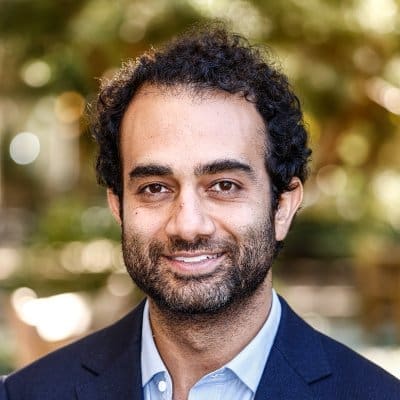
Shadi Hamid is a columnist at The Washington Post and Senior Fellow at the Alwaleed Center for Muslim-Christian Understanding at the Edmund A. Walsh School of Foreign Service at Georgetown University.
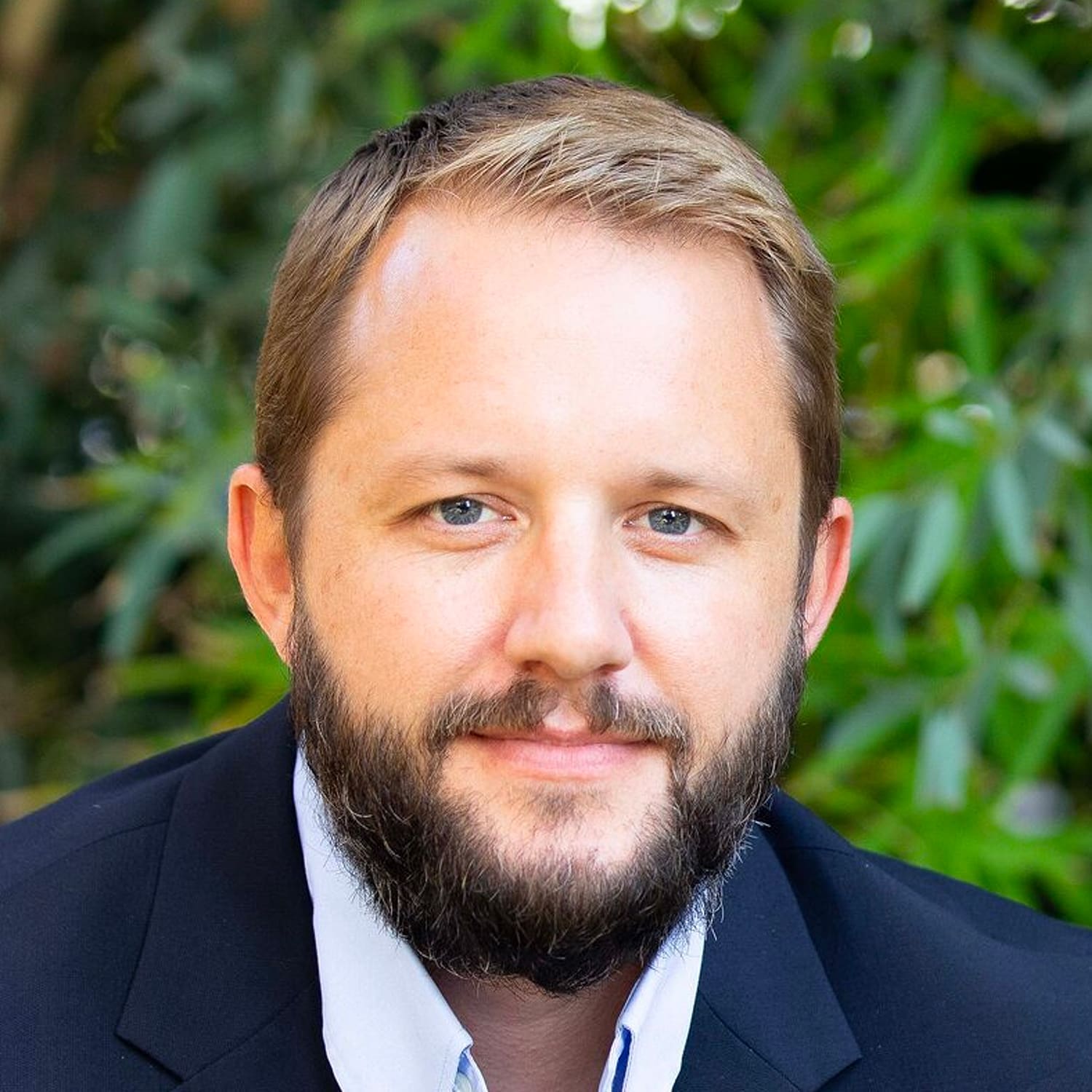
Matthew Kaemingk is Professor of Public Theology at Theological University Utrecht and Senior Fellow at the Center for Public Justice. He also co-directs the Templeton Pluralism Fellowship.

Bonnie Kristian is a journalist, a fellow at Defense Priorities, former deputy editor of Christianity Today, and the author of In Defense of Evangelicalism: A Response to Its Cultured Despisers.
Love the show? Help others find it by reviewing it on your favourite podcast app. We also welcome your ideas and feedback. Email us at zealots@comment.org. Thanks for your support.
In Praise of Lev Gillet (1893–1980).
SITE DESIGN AND DEVELOPMENT BY POLYMATH