





Bearing ridicule well points to the wisdom of the cross.




The immigration crisis on US borders reveals a deeper crisis of humanity—another example of democracy at a turning point. What should be the Christian response to the current immigration crisis? How can the individuals and small communities take effective action? And who are the real people most affected by immigration policy in the United States?
In this episode, Mark Labberton welcomes theologian, pastor, and activist Alexia Salvatierra. She shares stories from the front lines of immigration justice.
Mark Labberton:
Dr. Alexia Salvatierra is a remarkable person and will be our guest today on Conversing. Alexia and I have known one another for many years before she joined the faculty and after she joined the faculty at Fuller Theological Seminary. She currently serves as the academic dean for Centro Latino, where she’s the founding developer and coordinator of a program that provides a professional certificate in the church’s response to the immigration crisis. She has written many books and articles. She’s a person who has been an activist to the core of her faith and life, and she comes to us today to simply talk to us about the conversation that’s going on around the nation and really around the world regarding immigration. This is a critical moment and I can’t think of a better guest. Alexia, thank you so much for joining us today on Conversing.
Alexia Salvatierra:
Thank you.
Mark Labberton:
We’ve had you on before talking about some of the same issues that we’re going to discuss today, which are really American immigration issues. I think it’s fair to say that in an ideal world, of course, there would be a meta resolution to the questions of immigration, and we’re going to come to some of the issues that need to be grappled with. But I want to start really on the ground. You are a person who is a pastor, a theologian, a professor, an activist, a community organizer, a person of many, many parts. And for me at least, you are one of those people who stands right into the vortex of what’s going on. And I wonder if you could just start by giving us maybe two or three stories of people who’s lives are facing in this moment of national immigration crisis, the insight that you’d like to share with us about their own experience.
Alexia Salvatierra:
Sure. The story that comes to me first has a little background to it, that there is a pastor, an Assemblies of God pastor that we were able to help as a coalition of immigrant and non-immigrant evangelical churches a few years ago because his situation was that he had come to this country as a teenager fleeing a human rights crisis in Guatemala, and he had worked in the fields and he had been deported three times during his adolescence to Mexico because he told them he was Mexican. He was terrified of being sent back to Guatemala. He didn’t know there was such a thing as political asylum that he could apply for. At 20 years of age, he accepted Christ as Lord and Savior, and he ended up marrying a young woman, a citizen who’s a leader in the congregation, and they have a couple of children.
He started a small business in the building trades, which grew very quickly, but then he decided that he was called to go to seminary and he became an Assemblies of God pastor and a church planter, planted a thriving church in Los Angeles. And then his wife decided that he was really tired of being undocumented and his wife applied for him, which you can do as an American citizen, right, spouse, you can apply for your spouse. But what they ran head-on into was that if you have a deportation order, which he had three deportation orders from his adolescence, that you have to go back to your, excuse me, you can’t look at any of your qualifying cases, that he actually had three potential qualifying cases, what we call qualifying cases usually fit into the categories of what we call blood, sweat and tears.
Blood is family relationships. So his wife, there was a qualifying case that his wife could apply for him. He had a sweat case, legitimate pastor in the Assemblies of God. And he also had a tears case that he came originally as an asylum seeker, as a potential refugee. So he had all three of those potential cases with of course the family case being the absolute strongest. But because of the deportation orders, those deportation orders would have to be removed by the same judge who gave them before any of his qualifying cases could be looked at. That’s what we mean by a broken system. There’s all these little wrinkles in the system that don’t work. And an immigration judge once said to me that to remove a deportation order can take a decade and cost a million dollars. So they entered into that process. At the time, under President Obama, we had something called deferred deportation.
And deferred deportation meant that if you were in a situation like this pastor and you hadn’t committed any crimes and you could support your family, that you could basically fight your case and you could come every year and check in and show that that was still true about your life, and then you could keep fighting for another year. But in the first administration of President Trump, they took deferred deportation away, and except from the dreamers who all have deferred deportation. That’s a gray area that we can talk about later, but they took deferred deportation away. And when this pastor went in for his check-in, he was put into detention at a deportation facility called Adelanto, and we mounted a national campaign in and through the Assemblies of God that went all the way up to the top authority in the Assemblies of God internationally who actually went to the White House.
And so we mounted this huge national campaign and we were able to get him out. Well, not only do we not have deferred deportation again, we had it during, I know we don’t have it again, but we aggressively don’t have it, that one of the executive orders precisely says that there’s no more prioritization of deportation, which is where deferred deportation comes from, that we consider some people a public threat to society, and we consider other people a contributor. And the people who are contributors who are in this system where they’re fighting their way through this crazy immigration system that is ineffective, illogical, and inhumane, that they are in a different category than people who would be a public threat to society. And the new executive orders take away that category.
They say that every single person who crossed the border without authorization, actually including people who crossed the border to ask for asylum and have had temporary protective status, that all of them are uniformly considered criminals at the same level. No prioritization. So this pastor was in terror because he’s still fighting his case. He was at absolute terror, and thanks be to God, he got a date a week before the new administration entered, so he was able to go through the process and get another year.
Mark Labberton:
Amazing.
Alexia Salvatierra:
But we don’t know what’s going to happen by next year.
Mark Labberton:
But it’s just another year.
Alexia Salvatierra:
So that’s one case that I hold in my mind and heart.
Mark Labberton:
So in the context of that, let’s just talk about that and then we’ll have you move on to a couple other stories. When you think about just accompanying such a person, obviously the very way you’ve told the story and the very, very exceptional mounting of this national campaign, and even having the highest person in the Assembly of God structure speak about your case in the context of the White House, rescuing him and then this incredible conversion of dates. But we both know and you know far more painfully and personally than I do, how truly exceptional that kind of a case is. And thanks be to God, as you said. I mean, I’m grateful to hear that story, but wow, it also puts a spotlight on how extreme the steps have to be in order to somehow create a moment of opportunity for safekeeping and pursuing-
Alexia Salvatierra:
I’ve known pastors in a similar situation who have been deported.
Mark Labberton:
Right. Well, one of the first contexts in which you and I met was in a context of a pastor who had been detained and where the case was being mounted to try to get him out. That story, which now dates back probably 15 plus years, do you know which case I’m referring to? And do you know what that person is doing?
Alexia Salvatierra:
I do remember it, but no, I don’t know if that have an update on it.
Mark Labberton:
Yeah, yeah, I just was curious.
Alexia Salvatierra:
No, that’s right. You came in when we called you, I was very, at the time, I was very honored that you came in as the president of Fuller, but we didn’t need you at that moment.
Mark Labberton:
Well, I was grateful I could do that. Tell us about another case.
Alexia Salvatierra:
Right. I wanted to talk about a case that’s been in the news recently, and then I want to talk about the larger implications of that case being in the news, what’s happened as a result. So of course, many people are undocumented, are not easy to find because they live in the shadows and ICE doesn’t necessarily know where they’re living or who they are. The person that I’m thinking about is a strong Christian, and as a result, he went into the system. So he had come to this country crossing a border when he was an adolescent 20 years ago and had been deported, but had come back with his wife and family when things got really bad in his home country, and is somebody who is in an asylum process.
So that means that he wears an ankle bracelet all the time and he’s working full-time, but he’s working full-time with his ankle bracelet and he’s going into a series of court dates. When you’ve applied for asylum, you don’t get to even come in the country unless you have what’s called the legitimate fear, and that’s determined by the border patrol. So it’s not easy to get that. So you have to have an legitimate fear of persecution in your own country. But then you go through this very intensive vetting process, which is of course what we want. People want to make sure that if we’re going to grant refugee status, that we have all the evidence that that person in fact would be in danger if they were sent back. So he was going through that process, he was doing the right thing.
He didn’t try to slip across the border in the dead of night. He entered into the process, he had an ankle bracelet, he was working, he was supporting his family, and he was at church on Sunday morning. He’s a faithful leader in the church in Atlanta in a non-denominational church. And I knew where he was because of his ankle bracelet, which meant that they could have picked him up at any time, but they chose to come the church and to try to enter into the church service when the pastor was preaching to pick him up at that moment. So because his ankle bracelet buzzed, he knew that they were there and he chose to sacrifice himself to come out and be picked up to not disturb the church service, but they would have walked into the church service.
So that’s quite a story. The reason why they were coming to pick him up was because even though he was in the asylum process, which meant they already knew that he had had that earlier violation, but because of the violation 20 years ago, that was their reason for picking up. They said he was a criminal because he had entered without authorization 20 years before when he was a teenager.
Mark Labberton:
And because all categories except-
Alexia Salvatierra:
And all categories are now equal.
Mark Labberton:
… criminal have been eliminated.
Alexia Salvatierra:
He’s equal to a drug dealer, a coyote, a gangster, and this man is a faithful Christian. So the reason why I wanted to share that particular story is because we at Centro Latino are in constant contact with a large network of our students and our graduates, and we are in partnership with AETH, which is the Hispanic Theological Education Association nationally, and the Latino Christian National Network, which is a network of denominational leaders to offer a monthly webinar that gives updates on what’s going on with immigration to any pastor anywhere, any pastoral leader in the country who wants to come on in Spanish. We do it every month, and we have a conversation at the end. We have people give testimonies and we pray for them. And so we know in that way exactly what’s going on with people. Well, what we know is that that arrest has provoked intense fear.
So all over the country, people are not coming to church, and that means they’re not getting spiritual care. But it also means most Latino churches are very evangelical, are very missional. It means that they’re not bringing their family and friends to come to know Jesus as Lord and Savior, right? Because they’re terrified to go to church. So a suit was publicly announced today that is a suit to restore what’s called sensitive locations, which would say that ICE agents were not supposed to go into a church unless there was somebody who was a dangerous felon. And then of course, they always could. That was never taken away. But the respect for religious liberty was a policy that has been, again, with executive orders, intentionally removed. And so the lawsuit is to bring that back in the name of religious liberty. But I wanted to share, so that’s just a little story of people not going to church. It actually goes farther than that.
I was just talking to a graduate of Fuller who’s a Christian psychologist, and she works with mothers of children with special needs, and often the children are citizens, but the mothers are not. And so all of her appointments last week were canceled because she works in Texas in a Spanish-speaking community, and she started calling, what’s going on? People are scared to come. They don’t want to bring, their children need this service, they need this service, but they’re scared to come. And one of the women that she talked to said, “Can we do a power of attorney so you can take my child if they take me? Because I don’t want him going into the foster care system. He’s a special needs child, and that will destroy him. And he’s a citizen. I don’t want to take him to Mexico. He’s a US citizen. So can you sign the paper so you will take him?” And of course, she can’t. She can’t take all these children, right?
She has two little children of her own, but that’s just the level of desperation of this mother. And some churches, of course, like I said, we’re in touch with this wide network of Latino churches, both directly as Centro Latino and then through this monthly event that we’re doing. But there are churches who are saying, “How can we? Is there a way legally? Help us, help us to take the children. We’ll take the children so that they don’t go into the foster care system and disappear.” When I say and disappear, they’re not supposed to disappear, but a number of children did disappear when there was the family separation policy by the Trump administration earlier, and we’re still trying to get some of those children back reunited with their parents.
So they’re saying, “We don’t want those children to disappear into the system, and therefore is there any way that we as a church can plan to adopt them?” And so we are connecting them with social workers and trying to figure out if that’s possible. But the church also wants to do it quietly so that the church, again, doesn’t become a target, and there’s no way to do that.
Mark Labberton:
In this appeal for the restitution of certain zones that are considered inviolate, churches are one. Does that also include an appeal for schools to be one of those again?
Alexia Salvatierra:
Yes. Hospitals, schools, and churches.
Mark Labberton:
And schools and churches. Yeah.
Alexia Salvatierra:
And courts.
Mark Labberton:
And courts, right? Yes.
Alexia Salvatierra:
Now in Texas, courts have not been considered in the sensitive locations. And we’ve had a situation where someone was on her way to court who was a domestic violence victim, and ICE picked her up when she got there. And this was before this administration. This administration actually is wanting to take what Texas does national, that’s several lawyers I know have talked about it in that way. But the so-called sanctuary, the municipal sanctuary laws basically have to do with police not enforcing immigration so that people who are victims will go to the police and will be able to testify in the courts, that the first law of its kind was not called a sanctuary law.
It was under Daryl Gates. So it was in the 1960s, it’s Special Order 40 in Los Angeles was the first one in the country. Daryl Gates was not a liberal in any way, shape or form. He just wanted to be able to do good policing, and you couldn’t do good policing if you had a population that was too scared to come forward and testify. But cities that have municipal sanctuary laws or counties right now are threatened with suit by the new administration.
Mark Labberton:
Now, we have to place this in a context of acknowledging that all around the world, immigration is a crisis. I don’t think there’s-
Alexia Salvatierra:
Yes. That’s right. It’s a global crisis. So the question of refugees, for example, typically since 1980 when the Refugee Act, we’ve actually been responding to refugees since 1951, since the Universal Declaration of Human Rights by the UN, which we were instrumental as United States in gathering people together for that and instituting that. But in 1980, we had an official Refugee Act, and since 1980, we’ve taken 60 to a hundred thousand people a year, which given our size, given that there’s a lot of empty land of the United States, was a very reasonable number. All the countries who sign the Universal Declaration of Human Rights have to take refugees. Refugees are people who specifically would face undue violent persecution, they face violent persecution in their home country, and if you return them, it’s called refoulement, which means that you’re sending someone back to die. And there is a right in human rights philosophy, there’s a right of non-refoulement, that you don’t send somebody back to die.
And so everybody signed this around the world. There were a couple countries that didn’t sign it, but almost everybody, North Korea didn’t sign it. We don’t want to be in the same category with them, but around the world, people signed this and said that we would take a certain percentage of the people who are running for their lives. And so for most of the history since 1980s, between 60,000 and a hundred thousand, and under the first Trump administration, it went down to around 18,000. But right now, he stopped it completely, that there is no refugee program. And in fact, funding to take care of people who are refugees, who have been awarded refugee status, who have come, most of them from a refugee camp who are in the United States, who are in a process of immigrant integration, so they’re in a process of their rent is partially subsidized.
We’re helping them to learn the language, we’re helping them to get jobs, that those people, that funding for those people has stopped cold. And so the organizations that are trying to help those people now have no money to help them pay their rent. So not only are all refugee programs stopped, but current refugees are not getting the support that they need. And the refugee, the organizations who are, most of them who are Christian organizations that do this work don’t know what to do because they have these whole structures that care for people well, that have been a public partnership with the government since 1980. And then they’re also being maligned that Elon Musk said that Lutheran Social Services was a money laundering machine. So Bishop Stephen Bouman, who is an old friend of mine, has been involved with Lutheran Social Services for 40 years, it’s been around for a hundred years.
But he wrote a long blog in Facebook describing, which he never does, but he wrote a long piece and not blog, but he wrote a long post in Facebook describing what Lutheran Social Services does, how it cares first and foremost for poor people in this country, for children and the elderly and the disabled and has been forever, and also cares for refugees as part of what they do. And so all their funding is frozen. So he said, now it’s gotten personal to call this a money laundering machine. And so I shared that post on Facebook and I had a friend who is supportive of the current administration say, “Oh, that’s fake news. They would never do that to a Christian organization.” But it’s not fake news. I work with these organizations all the time. It’s the truth.
Mark Labberton:
There’s so much about this moment in American life, which is just breathtaking. Every day, it’s filled with unexpected, large and bold and courageous and questionable actions. Some people in the country, of course, as you know, are thrilled that these things are happening and others are not. And among the thrilled are the people who of course voted for Donald Trump with a very large percentage of those being white evangelicals. And the difficulty that that raises for me is many, and I do hear, and I want to underscore this, I do hear the way that many in the church have been deaf to the cries of people who simply feel unheard, unseen, undervalued, and in that sense, excluded and demoted. That’s a complicated thing to unwrap. And it has all kinds of economic and regional and racial and gendered themes that are all tied into that description.
But in other words, I do think that the administration was elected on the grounds of things in America need to change. What seems to be happening in most regions of the actions so far has been actions that are so bold and so unilateral and so comprehensive and un-nuanced in any way, even the word nuance is of course a problem to the current administration. So the questions then of how to come to anything beyond this season of mass deportation, which is going to go on for a while because it will take a while to try to achieve the president’s goals and it will be brutal in the way that we’ve already been seeing. And it will continue to be brutal. It’ll be brutal just even in the initial act, and it will certainly be brutal and the long-term impact of people and families and so much else that’s, at least the American economy, it’s going to be brutal against the American economy.
Alexia Salvatierra:
Yes. I mean, I wonder, that’s been a constant confusion for me that there’s no question that we need immigrant labor. That during the pandemic, when all the borders in the world were closed, most countries had problems with their need for immigrant labor. We depend on immigrant labor.
And in fact, in the bipartisan legislative proposal of 2013, which passed the Senate and would have passed the house, had it been brought to the floor, it had enough votes, there was a line about using a computer program, which is what Canada does, for estimating our labor needs and then giving visas accordingly. So smart, but it didn’t pass, and that’s not what we have. We have something very different. We have flat caps. So we have a flat cap of 5,000 visas for all unskilled labor, including, excuse me, it went up to 10,000. It’s 10,000 visas for all unskilled labor including all farm labor. And the problem with that is we’ve imported about 70 to 80% of our farm labor since almost the beginning of this country. Slavery was a giant program to import farm labor. We’ve always needed immigrant labor. And in the pandemic, we had real labor shortages because we couldn’t bring people in.
It’s one of the reasons actually why the Biden administration let a few more people in than had been coming in, partly human rights crises, but partly we needed the labor. And so now if the Trump administration is successful at deporting 10 million people, many of whom have been here over 20 years, 30 years, where will we find the labor that we need? And if we don’t find the labor and companies need that labor, they will pay much more, and to get people to do it, and then we will have raging inflation. And how come people can’t see that? I don’t understand.
Mark Labberton:
So let’s try to break this down in some pieces. I’d love to hear your reflections on this. So immigration is a global crisis. We know that even people who come as immigrants through our southern border itself don’t all come from Mexico and South America, Central and South America.
Alexia Salvatierra:
Oh no, not at all. They come from all over the world.
Mark Labberton:
Yeah, they come from all over the world. But let’s just try to narrow the field by saying-
Alexia Salvatierra:
In fact, I heard someone say that President Trump had offered white South Africans the opportunity to come as refugees to the United States, which I don’t know how he could offered that since the program has stopped. But-
Mark Labberton:
But he seems to think he’s free to make whatever exceptions he wants.
Alexia Salvatierra:
So yes, there are all kinds of people that need refuge. There are quite a few undocumented Irish people who need refuge, who need labor, who want to offer their labor. There’s quite a few undocumented Irish people in Boston, but we haven’t seen any raids in Boston looking for them.
Mark Labberton:
So the mass deportation that’s going on is not a response really to any kind of long-term concern. It’s just a short-term fix to try to reverse the numbers in this chaotic way that is unfolding. But let’s just talk about the needs of the people who are coming. And in particular, let’s zero in on the political needs. The people who come really as you were saying, as refugees, who come really even as asylum seekers. If you just thought about for a moment, the immigrant population that’s just asylum seekers and formal refugees, how many people come into the United States or are wanting to come into the United States right now under that kind of particular status?
Alexia Salvatierra:
It’s hard to fix that number because what typically happens when you have a human rights crisis, whether it’s Syria or Venezuela, and by the way, Venezuela is a leftist regime. So remember when people were fleeing Cuba and we were so eager to accept them, or the Soviet Union? Venezuela is actually that situation. Venezuela and Nicaragua are that situation. But when you have a human rights crisis and a country empties out, which is what’s been happening with Venezuela, the vast majority of the people in that country go to the adjoining countries.
So Costa Rica is a 5 million person country, and they’ve taken 2 million refugees into Costa Rica. So just to give you a comparison with our limit of a hundred thousand a year. So they go in, they go to Colombia from Venezuela, they go, but then the next step is to go somewhere on their continent. So that means that they come towards us. So people in Syria, for example, went to Turkey, the vast majority, and then some of them went across to Europe because again, you go sort of the closest place that you can go, because most people who are refugees actually have the goal of going home.
They want to come home. And temporary protected status, which this new administration has ended, is a category that specifically has to do with failed states and places where the human rights crisis is universally understood to be unacceptable. It doesn’t last, I just want to say that it’s not a permanent situation. So there was a point in 2014 where people were pouring out of El Salvador around the control of organized crime and a quiet set of actions that Kamala Harris was actually responsible for that had to do with working with the government of El Salvador to get that situation under control and to provide economic incentives for people to leave the gangs by investing heavily in economic development, almost no one is coming from El Salvador. Almost no one. Because those kinds of crises, if they’re dealt with well, and countries are foreign trade, are foreign policy. Trade policies, other foreign policies can be instrumental in ending a crisis.
So part of what we’re also seeing right now is not only are we seeing this during these Draconian measures, but USAID is stopped. All funding is frozen all over the world. So what USAID, it was interesting. Marco Rubio was saying the other day that from now on, all foreign aid will be strategic. All foreign aid has always been strategic. It’s never not. What we do is we provide relief and development, partly it’s the right thing to do morally, it’s only about 1% of our budget, less than 1% of our national budget, but partly, but we’ve always provided it with an eye to security concerns.
That where does that help us, for example, reduce migration? Where does it help us to reduce refugee crises? Where does it, so all of USAID is stopped, so we’re going to see, that’s like stopping the fire hydrants and the hoses when you have a fire. That’s what it’s like. So we’re going to have these raging fires explode all over the world, and then we’re going to have migration because that’s what comes as a result. We also have a crisis around global warming, that we have global warming refugees for the first time in history. So we have more, the Latin American phrase, the phrase among migration scholars in Latin America is surplus people, which to me is such a chilling phrase as a Christian. Because as a Christian, I can’t believe that any human being is surplus. But these are people who basically, there’s no place for them anymore.
Their place is underwater or their place is burned up and there’s no place for them. And so they want to offer their labor and their contribution, and they have to go somewhere to do that because their place is gone. So as a world, we have to grapple with this. Now, I mentioned that crises are temporary and they’re very bad for a while, and then they’re not if you fix them. But the other thing is that people fleeing crisis have a pretty high rate of contributing to the society that they go to. Einstein, right? Now, of course, he’s not standard, but you have people with real gifts. We have people in Venezuela, the people who left first we’re all professionals because they were the particular targets of the regime. Anybody see Doctor Zhivago about Russia? They were the targets. And so they left. So those people are contributors, and how they get framed as gang members, of course there are Venezuelan gangs because there are gangs in every culture, in every society. But the current president of Venezuela loves gangs.
They don’t need to leave. They leave because they’re preying on people who are vulnerable and who, anyhow, all these things, good order. I am an absolute empathy and sympathy with people who believe that our immigration system needs to be in better order. Amen. It does. It’s a mess. It’s not effective. It’s not logical, it’s not humane, it doesn’t work. But we had a bipartisan legislative proposal in 2013, gang of eight, half Republicans, half Democrats, that would’ve largely fixed the problem. Or it wouldn’t have fixed it completely, but it was a huge set of steps in the right direction. It’s not impossible. There’s bipartisan agreement on how to fix it. There hasn’t been the political will to fix it for a lot of reasons, but fixing it is really different than blowing it up.
Mark Labberton:
Yes. And then there was also the bill that was making its way through Congress, again, a bipartisan bill on immigration that Trump advised the Republican delegates not to vote for.
Alexia Salvatierra:
Yes, that’s right.
Mark Labberton:
And so it was even more proximate than one year, referring to-
Alexia Salvatierra:
It was an agreement, it was a bipartisan agreement on the board, and it was really smart. I mean, this is not an impossible crisis to solve. There just has never been, and at that moment, there was a political will to solve it. The Republicans and Democrats were united. President Trump knew that solving it would not be good for his campaign. And so he instructed them not to. And afterwards, of course, all the Republicans said, “Oh, it wasn’t a good one.” But before that, they had been part of creating it, and it was a good one. Again, lots of people I know didn’t like that proposal. Lots of people on both sides didn’t like it. But compromises are like that. You don’t like them, but they advance the solution of the problem.
Mark Labberton:
Well, and I do think one of the things that’s very hard to maintain because the situation is so dire and in people’s lives and faces in such an intense way right now, but I’m hoping that for myself, and I hope others that there will be a capacity, I certainly know you will this, that you continue to work on genuine, on the hope of a genuine reform and not let all of the energy get drained off in thinking about the current president, which is yes, an ignition switch for a lot of what’s happening that feels particularly chaotic and exaggerates I think the problem, that is, intensifies the problem.
Alexia Salvatierra:
I do want to say, Mark, I’ve been working on these issues for 40, 45 years, a little more, almost 50 years, and I’ve worked with Republican administrations and Democratic administrations. Nobody is great on this issue, but everybody has been somebody, people we could work with, that people who are authorities and experts in the field were respected. People do understand what policies make a difference. They do have a lot of agreement. This is the only administration that I’ve ever dealt with that doesn’t understand the problem.
Mark Labberton:
So how do you, right in the vortex of this as you are every day, how do you keep your balance both mentally and emotionally, but also spiritually at a time which seems truly to be so dire and where the stakes are so high and where the injuries are so great? I know that a lot of people argue, well, yes, let’s have mercy, I suppose, toward people that are strangers, immigrants, others that come to our country. But how about having mercy for Americans? That’s often the way that this gets posed, and it’s a false dichotomy.
Alexia Salvatierra:
Sure, there’s a wideness in God’s mercy. Since when is anybody left out?
Mark Labberton:
Indeed.
Alexia Salvatierra:
Since when is there only enough mercy for some and not for all?
Mark Labberton:
Right, right. So what are the threads that you hold onto spiritually, psychologically, and emotionally as an advocate? What are you holding onto as you continue to walk down this road? Because I want to invite anyone who’s listening to this to really be asking ourselves, what role are we going to take ourselves in thoughtfully, compassionately responding to a really complicated time and place, but at a place where simply withdrawing and not engaging this is surely not a faithful Christian act?
Alexia Salvatierra:
And I want to say that a number, from my perspective, we have a number of believers in Congress who are acting out of fear right now and not out of faith. They’re not acting out of love, and we need to encourage them because they’re not going to change that unless they feel encouraged. So I think we really all have work to do on this issue. And I feel like I also want to say that on the ground, immigrant churches are taking the brunt of this and that they need our non-immigrant brothers and sisters to come alongside. So those are the two things I would say in terms of if you’re hearing this and you’re feeling convicted, those are two things that really need to be done. And in support of all of these things, like in support of world relief and all of the organizations have suddenly lost all their funding. World Vision and the PEPFAR, the AIDS, all the funding stopped for the AIDS medicine for children in Africa.
I mean, from one day to another, that means dying. We need to stand up prophetically. But apart from that, you can only do that if you are not in a state of outrage all the time. It just doesn’t help. Right? You’re drained, it drains you. So I was really formed, Mark, very powerfully in my life when I was a missionary in the Philippines from 1984 to 1987. So I was part of the pro-democracy the last years of the pro-democracy movement over against the dictatorship of Ferdinand Marcos, which was successful. Nonviolent revolution was successful. There was also a violent revolution. But the nonviolent revolution was actually successful in overturning the regime, and I was part of that. That was a formative experience for me.
Mark Labberton:
Very, I’m sure.
Alexia Salvatierra:
But part of what I learned in that experience, first of all, was that God is with us and maybe even more powerfully in difficult times. That it isn’t that God is only with us when we’re prosperous and safe, that our Jesus, we meet him in the hardest places with more power, and the light of the church can shine more brightly if people have courage and faith and love. So we draw as Christ draws people to Himself in those times through His church, if we really act as His body, if we really do what Jesus would do. But I also just, such spiritual giants, the people that I knew, I knew people that were disappeared and killed, and they were such spiritual giants. And I remember being on the front lines of one of the final demonstrations before we won, and they shot into the crowd. They shot into us and the clergy were in front, and there was a particular, he was actually a Catholic priest, but we were an ecumenical group.
Some of that stuff falls away at that moment. But he had brought the host with him. He had brought a little kit with him and they brought up the guns. They brought out the fire cannons, which they always did, and then they brought out the guns and we were watching. We couldn’t believe it. It was the first time that had happened, at least to me, certainly ever in my life. I was all of 28 years old, and he started to celebrate communion, and they waited because it was the Philippines. They waited until he was done before they started shooting. But him doing that allowed people to get away. And really, his face was shining, just shining. The peace and the love of the Holy Spirit just shining in Christ, shining in his face. I’ll never forget it. And we stayed there. I stayed there while he celebrated communion. Looking back, I don’t know how he did that, but of course, as soon as it stopped, they started shooting and we all were, it’s not like the movies. It’s chaos. It’s absolute chaos when something like that happens.
But really you learn in that kind of environment that you do have the strength, that you just have to lean in to God and you have the strength. And in fact, it’s the testimony to the reality of Jesus among us when you have that strength. So the election happened when I was in Costa Rica with a bunch of practitioners from World Vision and theologians, and at first they were very worried because everybody in the US gets a cold, Latin America, you get pneumonia. We have 7 million Venezuelans. How are we going to take another 500,000, which is the number we think of Venezuelans that are in the US at this point. How are we going to take 500,000 Venezuelans on top of the 7 million that we have? So a lot of real concern and fear. But when the election happened, people’s attitude towards me was very compassionate.
They were like, “In the US, you don’t know how to endure hard times, but we know. We’ve been through them, some of them courtesy of the United States, and we know. So don’t worry, God will be with you and we will be with you.” It was very touching, but it was certainly a good start to all of this. We had no idea how bad it would be. We didn’t think they were going to start going into churches. Nobody ever had. In all the years of these problems, nobody had ever violated the sanctity of worship service when they could, particularly when it was so intentional when he had an ankle bracelet and they could have picked him up at any time. This was an intentional violation of the sanctity of worship service that we could not have imagined that a president who said that he was an evangelical Christian would order that and do it.
We just couldn’t have imagined that in the United States. But I, when I was in Costa Rica, there was someone there from South Africa and he was telling the story of apartheid, both how it happened and then how it ended. And he said that everybody just kept saying over and over again to each other, “But it can’t happen here. This can’t happen here.” And I certainly have had a lot of those feelings recently, like when I came back from the Philippines, even though the revolution had won and we had a democracy, but the scars were so deep from living in that situation. And when I came back, I just kissed the ground. I was like, I’m back in the United States where we have a constitution where the rule of law, the most recent thing I read yesterday is that, and I don’t know what’s true, nobody knows what’s true anywhere in the news, but it said that they were ignoring the judge’s injunction to unfreeze the funding.
And we’re talking not just about the funding for refugees and immigrants, we’re talking about the funding for child care centers so that mothers can go to work, so that poor mothers can go to work and their children are at a head start. Single mothers can go to work and feed their families and not lose their jobs. That the judge ordered an injunction and they are violating it. And that just feels real familiar to me. I’ve been in a place where that kind of stuff happened all the time. And so I don’t want to be alarmist unnecessarily, but I just think we need to gird our loins because this feels much less like the US that I grew up trusting and believing in and loving.
Mark Labberton:
Right. And the irony is that there are many people across the spectrum who use those same words, but they point to different pieces of data or information or misinformation or perception, experience, whatever it might be, who also feel like this is not the America that they grew up in. And so there’s plenty of evidence that America is in a very, very precarious situation in a whole variety of ways. And while there’s underlying strengths in many contexts, absolutely, and ordinary citizens and ordinary people leading their ordinary lives are the bedrock of that strength and their capacity to-
Alexia Salvatierra:
And that account funding being frozen, that doesn’t just affect Democrats.
Mark Labberton:
No, no, no, no, of course not. Of course not. No, that’s my point. I mean, all of this affects, all of the circumstances exist, and then the policies that are being put in place or the reactions that are being made devastate in every direction. You’re right. I mean, that’s exactly the situation. But when I was asking you what you’ve held onto, the things that I culled from what you said were really significant importance of community, the really significant importance of a community, in your case, deeply grounded in Christian faith and confidence across ecumenical lines and not being boxed into our own small expression of whatever that Christian faith might be, that we’re not afraid even of our Christian neighbors, in order to be able to become less afraid of all other neighbors as well, that you talked about the importance of telling the truth.
You talked about the importance of trusting God’s faithfulness in the face of danger and really uncontrollable circumstances. Not that everyone is called to put themselves in harm’s way in that same way, but there are some who are called to be putting themselves in harm’s way, and not for their own sake of course, but for the sake of the still more vulnerable people who you’re actually speaking to. Those are at least some of the things that stood up in what you’ve said. Do you have other things that you would want to highlight?
Alexia Salvatierra:
Yeah, I think it’s important, Mark, actually thinking about, I wanted to say that Centro Latino, that a goodly percentage of our pastors voted for President Trump, I think not believing that this would happen, not knowing it would happen. I had a pastor that I deeply respect, one of my best students who said right after the election, we had class that week and I said, “Let’s pray for immigrants.” And he was very angry, and he said, “That’s all fake news. He’s only going to go after dangerous criminals. None of that is going to happen.” But then he said, “Who did you want me to vote for? A baby killer?” And I think abortion is an issue that matters to us as Christians. It’s not like one party is all right and the other party is all wrong. I would never say that, and I don’t want anybody to understand what I’m saying in that light.
We as Christians can’t be sold out to any party. We always have to stand with Christ who critiques all human institutions and supports all human institutions where they obey God and critiques somewhere they don’t. So when I’m deeply grieved, which I am, and this is the other part I wanted to say to you, which is I think that we do need to understand that grief. We need to learn how to grieve. In the Philippines, they would tease me that Americans were lightweight because so many of us had never learned how to grieve. Now, that’s not true of African-Americans, of course, and it’s not true of many of Appalachians either.
It’s not like we’ve never had people in this country who face ongoing constant grinding poverty and unfair limitations. We’ve always had that. But the bulk of the people in the United States, the majority have not had to grieve on this level, not had to grieve with this intensity, with this constancy. Our spiritual muscles are weak in terms of knowing how to grieve and keep going and trust God. Though he slay me, I will worship him. We don’t have that much of that capacity in United States, or the first half of the Serenity Prayer, had to accept the things, we’re really good at the second half of the Serenity prayer, how to change the things we get. We’re not so good at the first half.
How do we have peace in the midst of things we can’t change that are terrible? So I feel like we all need to learn this together. We need to not be divided by our political affiliations. There’s no perfect political place to stand, but we can all say, “Okay, maybe I voted for President Trump, but what’s going on now is not okay.” It’s like it’s okay to say that. And without saying, “Oh, you should have voted for Kamala Harris.” I said to my student, “I’m not telling you who you should have voted for. What I’m telling you is what we might need to be ready to do as Christians, to obey what the Lord says about loving as he loved.”
Mark Labberton:
Alexia, one of the gifts that you are to me and to many people that you touch, is that you are a gracious disruptor. And you are exactly a disruptor in the sense that Jesus was a disruptor who pricks consciences, raises categories of behavior and action that are not culturally intuitive, but are meant to become intuitive parts of what it means to be a follower of Jesus. And you do so into the context where the complexity is often very great, where the pain and the grief that you’ve been talking about is thick, and where there’s no assurances exactly of specific outcomes that are going to “make all things well”. That’s not really what we’re doing, and that’s not what this season is about.
It’s about really the kind of faithful courage that I hear you talking about and that you’ve displayed to me and to many others, and that many in the Latino church, in the Black church and the Asian church have also really beautifully demonstrated, and also in white congregations. But we are in a very fraught moment, and I just am so glad for your voice to be heard by the people who listen to this podcast and to certainly assure you that I am in solidarity with what you’re saying and longing for a kind of activism on the part of the church that leans now toward the raw reality of what is actually unfolding in our nation with as much wisdom and courage and faithfulness as God might provide. So thank you for being a guest again today.
Alexia Salvatierra:
You’re welcome, Mark. Thank you for inviting me. And the reason why I do come is because I do think it’s important in this age where it’s so difficult to find out what’s true, that I speak from experience, I speak from people I know intimately that I think, I don’t know if people can hear that. I hope they can. And I speak from 40, almost 45 years of experience with the system, so I can see the big picture. People talk about Obama’s chief deporter. He deported the most people of any other president before him, but he had a prioritization where he deported all, he focused on threats to public safety, violent criminals, felons. So that was almost everybody deported under Obama was, so I’ve seen the whole big, huge sweep.
So I’m not narrowly partisan in any sense, and I’m not some youngster coming into this with a bunch of ideas. I’m talking from long experience. So I hope your hearers can get that, and in that way, that obstacles can be removed from people stepping forward to help because we need you. I hope to encourage all of you that, encourage literally means to get more courage, to give courage, to get courage. And so I just would want everybody to stop being outraged and start being courageous.

Mark Labberton hosts the Conversing podcast and is the Clifford L. Penner Presidential Chair Emeritus and Professor Emeritus of Preaching at Fuller Seminary.
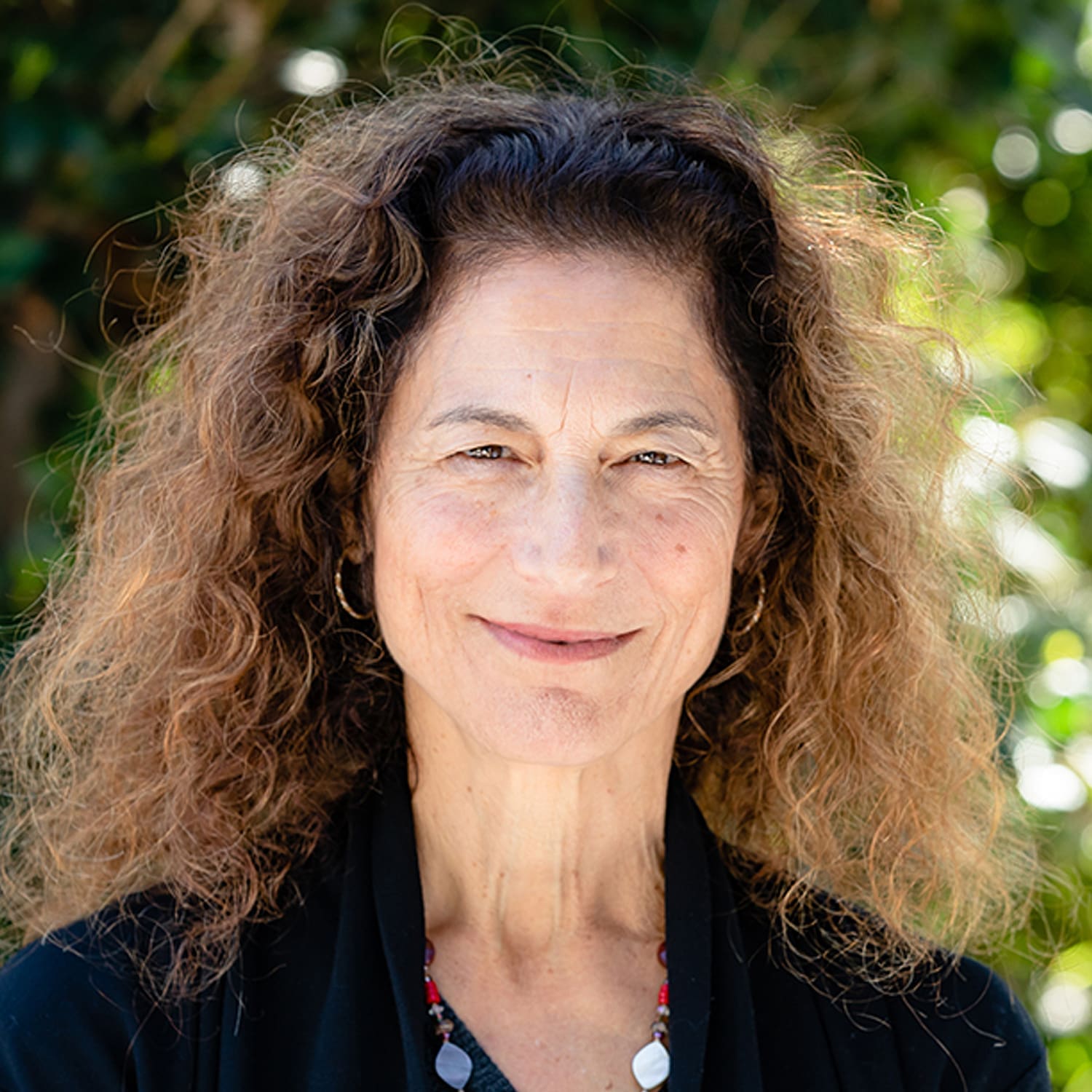
Rev. Dr. Alexia Salvatierra is the Academic Dean of the Centro Latino and the Assistant Professor of Integral Mission and Global Transformation at Fuller Theological Seminary.
Love the show? Help others find it by reviewing it on your favourite podcast app. We also welcome your ideas and feedback. Email us at conversing@comment.org. Thanks for your support.
Bearing ridicule well points to the wisdom of the cross.
SITE DESIGN AND DEVELOPMENT BY POLYMATH