


What a month on motorcycles taught me about connection.



What does it mean to live a life that feels like your own? Poet and writer David Gate joins Elizabeth Oldfield to explore creativity, faith, and what it means to live well. He reflects on how he found an audience for his poetry on Instagram, why he resists the pressure to turn himself into a personal brand, and what we might be losing in our pursuit of convenience.
Elizabeth Oldfield: Hello and welcome to The Sacred, a podcast from the think tank Theos, shared in partnership with Comment magazine. My name is Elizabeth Oldfield, and I have a complex relationship with social media. I’m really hoping that a lot of you do too. Perhaps you’re one of those extremely disciplined, wise, and calm people who have avoided it altogether. But most of us haven’t. And most of us consume some social media content. I think a lot of us are not entirely sure what effect it’s having on us, what effect it’s having on the world. And if you are not on these platforms, if you are one of those wise and restrained people, you might not know that poetry is one of the most popular forms of content on Instagram and parts of TikTok. And it’s one of the reasons I was really keen to talk to my guest today, David Gate. David is one of the leading lights of the sort of Instapoetry movement. We had a lovely conversation about his life before he was a poet, how it felt to suddenly have a huge platform for his work, and what it was like to live through the disaster of Hurricane Helene in North Carolina.
David Gate: Rather than going down the kind of doomy—the kind of Walking Dead apocalypse road, it was the exact opposite. Everyone came out of their homes and helped each other and gave what they needed.
In the second year, things started to take off a bit, and things started to go viral, and, you know, it was getting more followers, and then celebrities started sharing them. But I was never trying to be an influencer, and so I’m really glad it—you know, it was my words that really brought my audience. It made it very easy for me to kind of stay as a writer, ’cause writing is what I wanted to do, and that’s what I wanted to spend my life doing.
Elizabeth Oldfield: I hope you enjoy listening. There are some reflections from me at the end, as usual, but meanwhile, here’s David Gate.
David, without any preamble, I’m just going to ask you: what is sacred to you?
David Gate: This question really struck me as I hit my midlife. So when I turned forty, you know, I had a very typical re-evaluation of my life and what I want the second half of my life to be like. And so I really asked myself that question, like, what is most sacred to me? What—what do I value? What do I want to give my life to? What do I want to spend my time here doing? And so really it boiled down to, first of all, I think the kind of universal sacred practices of food, and drink, and music. I think, first of all, I was like, these are things that I think human beings have done and shared and made wonderful and beautiful, and I don’t know—there’s very little in life I enjoy more than good food and good drink and good people and music. And, you know, those things are all communal things, if they’re done properly.
And so that was when I boiled it down, it was like, “Okay, this is what I want to get to.” In terms of work and vocation, I then started to really think about what I wanted to do with my life, and not just fire off snarky comments online for the second half of my life, and wanted to build more and write more that actually expressed what I believed in and what I wanted to see in the world, and how I wanted the world to change, and the kind of world I wanted to leave my kids and future generations. And so, yeah, just all that existential midlife crisis stuff. And yeah, so that’s—okay, there are some values that really shone forth as well. Abolition, I think, is one of the things that I decided that I really wanted to work towards. Just liberatory practices, in religious and political contexts, social contexts. But for me that really comes in the context where I am in America. Abolition is kind of wide.
Elizabeth Oldfield: Could you say more? Because I do think there’ll be different associations with it, maybe, in the UK.
David Gate: So the abolitionist movement that I kind of—prisons. So totally re-evaluating how we deal with crime and criminals, and how we should move towards more restorative practices. It would also—and this is where it starts to get a little more utopian—is borders, and how we interact as nation-states, and what it means to cross a border, and the inherent violence that exists with borders. In order to have a border, you have to have violence. Like, there’s just no way of having a nation-state border without a measure of: you can’t come, and if you try and come, you will get punished. And so, yeah, I don’t have all the answers to all those things of, like, how—you know, I don’t imagine a utopian society. I just imagine one that inflicts less harm upon people.
Elizabeth Oldfield: Yeah. You said abolition and liberatory practices in the religious sense. Could you just drill down, like, why do you think those things matter to you so much? It sounds silly, because surely everyone’s against violence, but not everyone is an abolitionist in the same sense that you are.
David Gate: I don’t think most people are. No—most people are not abolitionists. Most people, you know, can see that we need militaries, and we need police that will do whatever violence is necessary to protect us. And so we need prisons to lock up all the terrible people. Most people are actually very comfortable with violence. It’s just about whose violence, and who gets to do it, and who gets to suffer it. So we don’t face that. Like, we don’t, as individuals, face the kind of violence that we accept in the systems we participate in.
But in terms of liberatory principles when it comes to religious, the spiritual practices, that really comes from Christian faith. So I grew up in a charismatic evangelical church and movement in north-west London, and I was taught very early on that the way of Jesus and Jesus’s teachings are everything, and that’s how we should live, and that’s how we should go about our lives. And I believed that and took that seriously, and that led me to really become frustrated and disappointed in how that was constantly compromised, I felt, within the movements that I was part of, in order to justify what we wanted to do and how we wanted to worship and what we wanted to prioritise, and the politics we wanted to have outside of that. And I always felt like, you know, the Sermon on the Mount should be driving our values. And so, yeah, so then that led me—first it led me to mysticism, so I kind of tried—
Elizabeth Oldfield: Mind if I pause you?
David Gate: Yes.
Elizabeth Oldfield: ‘Cause I know what charismatic evangelical is, but lots of people won’t. Lots of listeners are not familiar with any of the religious jargon.
David Gate: Okay.
Elizabeth Oldfield: What does it mean? Like, in practice, what would you experience in those settings?
David Gate: Okay, so while I was part of the Anglican Church—the Anglican Church is a very broad communion, which would have conservative, very liberal, very progressive—the entire political spectrum, you know—almost all forms of worship practice, very casual to very high church, you know, robes and smells and incense. And so within the scope of the Church of England and the Anglican Communion, I was on the very casual end of it. So very much, you know, wear whatever clothes you want, honestly—or, well, you have to dress modestly. It’s never said explicitly. I mean, it is if you’re on stage. Yes, so, you know, very casual, very coffee, very doughnut, very—very, you know, the music, which I was a part of—that’s really what I did. That was how I kind of served in those environments for the—you know, for twenty-odd years. The music tried to be as contemporary as possible: guitar, drums, keyboards, singers. And so that, I guess, is the more evangelical, low-church vibe.
The charismatic part of it is that I was engaged with, believed in, the work of the Holy Spirit and in the gifts of the Holy Spirit, and that the Holy Spirit moves and speaks today, and that we can practise the things that we read about in Scripture—particularly, that would be words of prophecy and speaking in tongues, singing in tongues, would be the two things that would define that. We didn’t really do much snake handling.
Elizabeth Oldfield: Yeah, I didn’t come from this world, and I remember walking into a festival called Soul Survivor, which we both know, and being like, “What on earth is happening?” And what I saw was people, like, babbling.
David Gate: I still pray in tongues to this day, and part of my brain is still like, what on earth are you doing?
Elizabeth Oldfield: And the prophecy thing is, people will pray for you and then come up to you and say, “I feel like God said—” It’s not just God speaking in the Bible. God is speaking now, with this particular—that there’s something you need to hear, something about your life. It’s usually sufficiently vague that it’s not too risky. Sometimes it’s not. Sometimes, you know, it feels like something’s dropped right in. But I just wanted to unpack that prophecy thing, because for those of us who have some familiarity, it can feel very normal, and for a lot of people it’s like, well, that sounds absolutely bonkers.
David Gate: It is absolutely bonkers, yeah. And that doesn’t mean it doesn’t have great worth and great beauty.
Elizabeth Oldfield: Yeah.
David Gate: Like, it can be very helpful practices, but it is bonkers. Like, it’s like that—I think we have to acknowledge that.
Elizabeth Oldfield: How did it form the man you are today, do you think, those practices? I guess, that world.
David Gate: It really gave me a very engaged spirituality. So it gave me a spirituality that wasn’t focused on theology. It gave me—you know, theology was very much a part of it, but it wasn’t focused on that. It also gave me a practice that was embodied. So it wasn’t just that I went to church and had these experiences; it’s that I would have them at home in my bedroom with candles and worship music and a Bible, and I would have these similar experiences myself. And so it really taught me to have an embodied spirituality, which I’m very grateful for. It’s really put me in good stead. That embodied—and also emotionally, there’s a lot of comfort with tears. There’s a lot of comfort with dancing for joy, in a manner that—
Elizabeth Oldfield: I think you and I both have been in and around—or maybe via social media—like the world of ideas, people who are taken seriously. I think we both had a long and complex journey with that bit of the church, but sometimes I want to be like, don’t be snobby about it.
David Gate: No. Because there’s wisdom in it.
Elizabeth Oldfield: Yeah.
David Gate: And there’s a reason why a lot of people are drawn to it, and a lot of people have life-changing experiences in those environments, because they are—especially when it’s communal as well, especially when you’re sharing these things together. Now, there’s a lot to be said of the downsides of that, and the dangers—the manipulation that particularly can occur in those environments is something to be very concerned about. But by and large, I think you miss out if you don’t have elements of emotionality, if you don’t have elements of embodied physical practice in your spiritual life. I think you miss out.
Elizabeth Oldfield: Yeah. So you were a professional worship leader for a while?
David Gate: I was a professional worship leader for a long time, yeah.
Elizabeth Oldfield: In London and then in Belfast, is that right?
David Gate: Yeah, so I started in Soul Survivor. Soul Survivor was a youth organisation—that kind of—I grew up near it, and so I got involved in it very early on, when I started writing songs as a teenager, and then started leading worship at their events and eventually their conferences, and then that opened up a lot of doors for me. I moved to Northern Ireland just after I got married in 2003, lived in Belfast and Carrickfergus for three years there.
Elizabeth Oldfield: You got married quite young, so—right?
David Gate: Yeah, twenty-two, which is just what you do when you’re in that world.
Elizabeth Oldfield: Yeah.
David Gate: And I found my experiences in Belfast to be incredibly enlightening for me, in terms of—particularly in terms of colonisation, and really viewing the British Empire from a different perspective to the one that I had grown up in, and didn’t understand. You know, there’s a lot we’re not taught in schools about—you know, I had no idea of the history of Ireland and the colonial history of Ireland. It was never talked about in—you know, I knew about the Troubles, but I would never know—that was something going on over there between them.
Elizabeth Oldfield: Yes, yes, yes, yeah. And occasionally, you know, the—we’d send in the troops.
David Gate: Yeah, and a Tory conference would get bombed, and all the trains would be closed down one day. And, yeah, it was at that time I really began to understand British colonialism and had my eyes opened in that environment. So I was there for three years. Though I wasn’t a worship leader there—I was doing guitar lessons and singing lessons and kind of making a living. My partner worked for a church as a children’s worker. And then I moved to Cheltenham, and I worked for Trinity Cheltenham for five years as a worship pastor there. Then I moved to Jacksonville, Florida.
Elizabeth Oldfield: Classic move from Cheltenham.
David Gate: In 2011.
Elizabeth Oldfield: Why on earth did you go to Jack—not to be offensive to Florida, but it’s just—it’s a bit left field.
David Gate: So I’d kind of got to the—I’d really kind of reached the natural end of my time in Cheltenham. I’d become very frustrated with how all I had to do was to give people the same experience every Sunday. And so that was it. It was like, that’s your job. You go and you create a certain experience of the Holy Spirit and worship. And I just had more leanings towards community, and I wanted to do more communal things, but I couldn’t really do that because of my role. I wasn’t—didn’t have, you know, freedom to do that. Also, creatively, I just found it a kind of stifling environment. I became frustrated with, really, the British class system and how that operates within the Church of England, and, you know, I didn’t come from a particular background. I went to state school, and, I think—a public school, or “public school.” You would not know my father. There’s no—the gates, or—yeah. Yeah.
I became frustrated with watching very, very, very mediocre upper-middle-class white men progress and get more opportunity and more power and more influence, and feeling like this is—and not just for me, you know. It wasn’t just that I felt stunted. I was like, everyone’s stunted in this environment. And so it’s just a stunted environment. Emotionally, it’s a stunted environment. Psychologically, it’s a stunted environment. Intellectually, creatively, incredibly stunted. And so I just found not just that church but the entire ecosystem to be very underdeveloped.
So I was just looking for a new opportunity, and then there’s a church in Jacksonville, Florida, that was planted from St Mary’s Bryanston Square in London, and St Mary’s was a church I was connected to. I led worship at some of their things, was good friends with John Peters, who leads that church. And so I was in connection. They were looking for a worship pastor. The previous worship pastors they had were British, and I knew them. They were friends of mine. And that door opened up, and we—we had three kids, and we were eight months pregnant with the fourth, and we were just like, let’s have an adventure and go for two, three years, and, you know, maybe five at most, and see how it goes. And so, yes, Jacksonville, Florida, is where I ended up, there for five years.
Elizabeth Oldfield: And at what point in this whole journey were you—are you writing poetry?
David Gate: So I wrote lyrics from—as a teenager. So I always had notebooks, and I was writing lyrics, writing ideas, always had things that never quite fit into, you know, the very narrow worship song. And so then I would write other songs, and I was always trying to find avenues for them. And then—and then as time went on, more and more of those things didn’t have an outlet. And so I would start to form them into other things. When blogging came along, I started, you know, I started blogging, and that took up some of the kind of writing space, and, you know, I was always just playing with different forms of writing, eventually doing sermons and devotionals and writing things like that.
It was really right about when I turned thirty and I moved to America, I started taking poetry a bit more seriously. But when I started writing poetry, like, I had in my mind that it had to be like the poetry I was taught at school, and it had to be basically early twentieth century. It had to be T. S. Eliot, it had to be Ezra Pound, it had to be Auden. And so, yeah, it had to be basically about war. And very, very serious, takes itself very seriously. And so that’s kind of what I tried to write. And, you know, I was very formalistic in how I started writing. I would write to iambic pentameter, I would write with very, you know, set, stringent rules. And I found that actually a very good schooling for writing poetry. You know, in any discipline, you really do need to learn all the rules before you break them.
Elizabeth Oldfield: It’s so annoying.
David Gate: Yeah. It’s like, you know, we think of, like, say, Picasso or Miles Davis as being these, like, you know, free-thinking people that broke all the rules. But Miles Davis was, you know—before he basically invented jazz trumpet, he was classically trained—before you can experiment. You know, I don’t want to be religious about it, but, yeah, the rules exist for reasons, usually, in an artistic space. And so I learned all those rules, poetry-wise, and then it wasn’t—and then I started to gravitate more to Mary Oliver, Wendell Berry, who sadly passed just a couple of days ago, and really found this kind of pastoral—in both senses of the word—poetry that felt both more achievable for me to write, more connected to the living world, more embodied spiritually. And so those two were the two that then got me writing in a different way.
Elizabeth Oldfield: And you left working for churches entirely? What was the reason?
David Gate: Okay, so in 2016, we decided we were going to leave Florida, and we were going to start our own house church, home group, home community, and moved to North Carolina, where we live now, in Asheville. And so we did that, and a few people came with us from Florida, and we met some people, and for eight years we did that, and we prayed and worshipped and ate together and didn’t do anything else. We had no other ambitions. We did not really care about growing. We felt we had something beautiful, and we would share that with people we meet, but we did not have any ambitions to own a building, have a staff, or anything like that. We just wanted to be a community that looked after one another. And we, you know, to belong to one another. And we did that for eight years. And it would still be going now if I could have found someone else to kind of take it on. Because we were organising it, we were hosting it. We were making sure it happened. And so that was 2024 when we stopped doing that.
Elizabeth Oldfield: Yeah. You weren’t interested in growing in numbers, but you have been very interested in growing plants and food. And why did that become such a central part of your life?
David Gate: I was radicalised, really, by the American food system, which is—I mean, it’s not dissimilar to the food system here. I mean, capitalism produces similar food systems everywhere, you know, just America’s America. So it’s hyper-capitalistic. And just the amount of plastic and the amount of chemicals and the amount of unnecessary additives, having bread that would last three months, having—it all felt very disconnected. And it was like, we’re paying more for a worse product that destroys the earth. It just felt insane to me.
And so in 2016 I read a Wendell Berry book, The Unsettling of America. And that really confirmed to me—like, my partner had always wanted to have chickens and do goats and grow vegetables. She’s just always been interested to do that. But that was really when I read that book, it was like, yeah, we need to do this, this is for ourselves, for the good of our own souls. We need to be more connected to our food and where it comes from, and do what we can in our own little family, environmentally. And so that’s kind of where that came from. Very eco-conscious, I think. Yeah.
Elizabeth Oldfield: The thing people always ask you about, because it’s unusual, is milling flour.
David Gate: So, so in 2020, I had stopped earning money from the community we were running. I had been doing sports writing. I had been working for this American sports website, writing about Liverpool Football Club, which is my team. And they were paying me, and so I got to February 2020, and—because that was around about the time that in America they started making gambling legal in a lot of the states, and so a lot of the websites then started carrying gambling ads. And the way it was structured, there were a lot of the websites that were referring to us that just wouldn’t do the gambling ads, or they couldn’t be shown in—something like, Google ads cannot be shown in certain states. So my income decreased massively, and so I decided it’s just not worth doing that anymore.
And so I decided I’m going to write a book, and so I sat down in February 2020 to write a book. I spent three weeks writing that book, and then COVID happened, and my kids were home for eighteen months, and so that book did not get written and did not get finished, and I pivoted. And then, when it got to, like, November 2020—long story short, when it got to November 2020, we’d run out of money. Like, we just had no money. And so I decided to take a job working on a different mill floor, a fibre mill, so taking rabbit angora wool, sheep wool, alpaca wool, and then turning it into yarn. And so there was an amazing business that was there, Echoview Fiber Mill. I’m very proud of the work we did and the fibre we made. And so I did that for a few years, but then the economy basically crashed that business, and it had to close.
And so then, after that experience of going to work every day and working with my hands every day and then leaving everything behind at the end of the day—no emails, like, zero emails, no Slack, no Zoom, no Zoom meetings, no drama—I found it a very creative time. That’s when I started writing the poetry that I started to post online. I was like, “I want a job where I’m just working with my hands. I do not want an email job. Even though I don’t want more money, I would rather just do something with my hands and go home.” The flour mill that was nearby to us was hiring, and so I applied and got the job as a miller and learned how to mill flour.
Elizabeth Oldfield: Yeah. And so this is just interestingly contrasted parts of your life. You’re a miller—you’re a miller, like something from a fairy tale—and you are beginning to post a poem a day, or a week—
David Gate: A week.
Elizabeth Oldfield: —on Instagram, from nothing, right? Didn’t have, like, a big online following, did you?
David Gate: No, no, I just had my friends here.
Elizabeth Oldfield: Yeah, before. You really took off. What was the experience of putting poems on the internet and then quite quickly realising they were massively resonating with people?
David Gate: Well, the first year it was kind of like a little bit of growth, and so I’m really glad that nothing went very viral in the first year, and so I just had enough encouragement to keep going, which meant I could really think about what I was doing and develop. And because it was also a new form—like, posting on Instagram is different to writing poetry, you know, that you submit to magazines, or poetry that you put in a poetry collection, because it’s in this scrolling environment, and the way I did it is it all fit onto one little square. And so there’s limitations: limitations to space, limitations to size, limitations to, like, what’s going to capture people’s interest as they’re scrolling along, what’s going to move them, what’s going to connect with them. And so all of that became a really good learning environment for me to try out this different way of writing poetry, with a lot of self-doubt and a lot of imposter syndrome.
But then in the second year things started to take off a bit, and things started to go viral, and, you know, it was getting more followers, and then celebrities started sharing them, and, you know, it’s just a whole different other thing. But I was never trying to be an influencer, and so I’m really glad it—you know, it was my words that really brought my audience. It made it very easy for me to kind of stay as a writer and to have that, because writing is what I wanted to do, and that’s what I wanted to spend my life doing, which I’ve now achieved. And yeah, it’s a, you know, dream come true.
Elizabeth Oldfield: Not nothing.
David Gate: No, it’s an amazing thing. There aren’t many people in this world who get to write poetry, you know, and that’s their sort of income, and they don’t have to lecture, they don’t have to do other things. And so I feel very, very fortunate. But yeah, so it was a whole other thing. But I’m glad it wasn’t—you know, I wasn’t an influencer, I wasn’t doing, like, video content, I wasn’t kind of being a talking head and then pivoting to writing, which, you know, a lot of people do now. I’m glad it was the writing that really brought people in.
Elizabeth Oldfield: Yeah. This podcast was started by really wanting to dig into the values of the people shaping our public conversations, the people who were kind of most influential in our common life. And we started nearly a decade ago, and maybe it was my prejudice, because I’d been working for a think tank and I’d been working for the BBC, but when it started it was really like, okay, politicians, journalists, like big cultural producers. And more and more over time—and this is partly having a younger team and realising what their common life is framed by, and what the world of ideas for people younger than us is shaped by—is people with the big online following. More and more I feel like, okay, those are the people I really need to understand, what their values are, because they are flowing out in such a powerful way. But we had a woman called Jade on the podcast who’s a big content creator, and we—the medium is the message thing, the way that it changes us. So I’d love to get you to read this poem of yours, “I Will Not Niche Myself,” and then say maybe something about it.
David Gate:
I Will Not Niche Myself
I will not niche myself because there is nothing more specific than the entirety of a person. I am not one thing. Even if that thing is good, even if that thing is excellent, even if that thing is my livelihood, even if that thing is my calling, even if everyone loves that thing, even if people need it. Instead, I will follow the muse wherever she roams. I’m going to write and paint and dance and scroll and sculpt. I am not your poet or your pastor or your prophet. I am a steward unto my spirit. I am a witness to my world.
Elizabeth Oldfield: Where did that come from?
David Gate: Oh, I had this phrase, “I am not—” you know, “I’m not your pastor,” something I had to say again and again and again.
Elizabeth Oldfield: You were leading a church.
David Gate: Working in—in an American context, because they call you pastor, right? And so when we started this house church, we really wanted this egalitarian, you know, non-hierarchical way of doing things. And it was basically impossible with folks that had come from the American church mindset, where they’re just trying to create a centralised saviour figure. And so I was just constantly saying, “I’m not your pastor, I’m not your pastor, I’m just David, your friend, and we should have that kind of relationship.” And so that is kind of where that came from.
And then really born out of—I had kind of decided to make this pivot from—I suppose, in terms of the perception of what I do, from doing more very church-orientated things to writing that was not church-orientated, from doing music to doing poetry—just lots of pivots. And yeah, I was actually very inspired by Beyoncé on that poem. You know, I’ve just been continually impressed in her career, but particularly the last, you know, three or four albums she’s done, where she will just totally pivot to something totally different and make no apologies for it. You know, maybe she can do that because she’s Beyoncé. But I think, you know, there’s something for all of us in that.
Elizabeth Oldfield: Yeah, because it is the classic advice, if you want to build a following—
David Gate: Yeah.
Elizabeth Oldfield: —and it’s the same for business, right? You need to just find a really narrow gap in the market, work out what people want, and then keep giving it to them. And it’s one of the reasons The Sacred really confuses YouTube, because every week is a completely different guest. I’m like, “Well, who the hell are we supposed to feed this one to? I don’t understand.” And it is quite—I love that poem because the refusal of that, the saying that every choice I make in these information environments, in these professional environments, will affect my soul.
David Gate: And I’m going to really—what it was, you could really—it describes the philosophy I had in doing this, which is I’m going to write about everything I want to write about. Like, I could just get a job being a writer. Like, I could just—you know, as you said, the easiest way to grow online is to find a niche. And I say that to people: like, if you want to grow online, find a niche. But if you want to have work that’s actually fulfilling, you have to teach your audience that you’re going to pivot, and that you’re going to take left turns, and you’re just going to follow what interests you. And so I think over an extended period of time, that creates an amazing amount of trust, because people see and engage with a real human, and we desire that. Like, we absolutely long to be connected to real human beings.
So one of the reasons why I—even now, I make it a point to be every so often a bit of a dick online. Like, because I’m not trying to be the nicest person online.
Elizabeth Oldfield: Yeah.
David Gate: Like, I’m not trying to be like the—the—you know, the jolly miller.
Elizabeth Oldfield: Yeah, yeah.
David Gate: That if you follow me, all you’re going to get is, like, happiness and positivity, and, you know, like, that to me, that’s not the full scope of a human being. So I allow myself—like, that I will—you know, now I choose who I piss off very carefully, but no, I’m totally fine with annoying people. Like, that, to me, that’s a human being. And so I think that’s some of it. I think that’s some of it.
I think also, our lives are all mixed together. So our politics and our religion and our faith and our social interactions and our culture, entertainment, music is all melded together in a big melting pot—a molten pot. And so it’s—as we are, we’re of multitudes, and we contain multitudes, and I kind of wanted to have that kind of presence online. And so maybe that—you know, there’s elements—maybe there’s people that tolerate my faith, but what they really are looking for is my politics. And there are people who tolerate my politics, but what they’re really interested in is, you know, the kind of faith that I project. So maybe that’s why I attract more people as well.
Elizabeth Oldfield: Yeah, multiple niches to it.
David Gate: Yes, multiple. That’s just—niche everything.
Elizabeth Oldfield: So I read the New York Times review of this book, and it fascinated me.
David Gate: Yeah.
Elizabeth Oldfield: It really relates to this thing that you were saying about the kind of symbol of poetry that we have in the cultural imagination—is this difficult, right? It’s difficult, and it’s probably dark, or it’s bad, right? That poetry, you either love it because you were just, like, an emo nerd kid at school, or you suffered through your English GCSE being like, “What, what does it mean? I don’t care, I am bored.” And that self-conscious difficulty is part of the identity of what poetry is in society. And it’s been fascinating to someone who dabbles in the shallow end of poetry, on the side at least, and always has done, watching it become this obscure form—the way Instagram has created this huge revival of it, and the argument about whether it’s actually the same thing or not.
Because the review basically said—what, about one paragraph of things like, “So the thing you need to know about this is he’s an Instagram poet,” as if this is like a completely different kind of poetry. And he said Instagram poetry “peddles in radical simplicity and therapeutic bromides,” and it’s easy to make fun of. It’s like, snooty elitist New York Times guy. And then, as the thing goes on, he’s like, “I have to admit, I quite enjoyed it. I quite liked it.” And he literally says—I think it’s a he—”I’m going to get teased for admitting that I quite enjoyed David Gate’s poetry.” Can you just say, like, what is going on with that? What is going on in the form, and in the Instagram form, and how do you kind of react to those?
David Gate: Well, I think poetry—music takes—sorry, poetry exists in a very similar cultural space to classical music, insomuch as it has this kind of cultural heritage. It is—it’s older, it has these roots, it has direct links to the classics, you know, which we’re seeing with the Odyssey movie now, and, you know, the criticism and praise that that’s getting. And so I think it has that weight behind it. And so I think a lot of people feel like it’s not good if it isn’t dark and heavy and difficult.
Elizabeth Oldfield: And those are, like, eight pages long and won’t fit in a square?
David Gate: Yeah, yes. And so almost, like, the point of it is the difficulty. Like, the point of it is to—its obscurity and its opaqueness, and it’s—you know, and so therefore, people are surprised when a small, simple thing suddenly breaks their heart. But as someone who comes from a lyrical tradition—like, that’s what lyrics are—I’m very used to that. And so the best poets today, really, most of them are hip-hop, I would say. You know, I would say the best poet right now is Kendrick Lamar. Like, he’s—he’s, you know, Pulitzer Prize–winning lyricist, and he’s doing incredibly layered and complex and present work.
But I think some of it’s the format too, so it’s Instagram itself, which is viewed as something frivolous, something just to do when you’re sitting on the toilet, something—yeah, it’s totally trivial. And a lot of the content is trivial, so that would make sense, but it’s also where we actually spend our time. And so we don’t spend our time in the newspapers, we don’t spend our time, by and large, reading the New Yorker, the Atlantic, where, you know, poetry would exist. So that’s just where people are. And so my thought was always, well, I would go where people are. And it’s very democratic. You can just put your work up. And if people like it, they will share it. And if people like it, it will move them. And, you know, it doesn’t have to have any other kind of cultural goal than to affect one person.
Elizabeth Oldfield: There’s a real, I think, difference in form, because lots of your poems are short and, like, a really simple, just quirkily written hymn to friendship.
David Gate: Yeah.
Elizabeth Oldfield: Or, like, the joy of being a fan of something, just, like, being a weirdo obsessive about something and not being ashamed of it. And those ones that have really, really travelled do tend to be—as far as I can see, maybe I’m wrong about this, you know, obviously you know your metrics much more than I do—the ones that are more earnest and more joyful. And then you’ve got this New York Times guy going, “I loved it most when he was being dark.” It was just like—to completely summarise him: “I don’t know how to take joyful earnestness seriously. So I’m going to say maybe he’s a real poet because he wrote this angry one. I can take him seriously.” You’ve obviously said that the full range of human emotion does involve rage. The toxic positivity is a horrible thing, and you do get that on Instagram. But why do we struggle to honour joy as a serious emotion?
David Gate: I think it’s about earnestness. I think the—really, for me, the real change for me creatively in my forties was to really embrace my own earnestness—was that I’ve always been this earnest, sensitive boy. And just to really embrace that and not try and be the coolest, cleverest person. And in embracing that, it—you know, I kind of brought the elements of me that are clever and are cool into it too. They just made for, like, a much more holistic, healthy—
Elizabeth Oldfield: It feels wholehearted.
David Gate: Yeah, it is wholehearted. And I really am trying to do that. And I think earnestness is viewed very suspiciously within critical circles. And so we do want a layer of separation between art and artist. We want to feel like we’re engaging—in the critical world, and the more intellectual end of things, is we want to feel like we’re engaging with something that not everyone can understand, because it makes us feel clever and makes us feel enlightened. And so when you write something that’s really good, that anyone can understand, people can devalue it a little bit, because it doesn’t make them feel clever.
Elizabeth Oldfield: Is that identity formation that’s operating, right? Our tastes are so built on: what do we want to project to the world? And there is—
David Gate: And how we want to feel about ourselves.
Elizabeth Oldfield: Yeah.
David Gate: So I want to feel clever. So it’s not just about the external. It’s about the internal too. Like, I want to feel clever and smart. And when I come across something that’s just very simple, a couple of lines, that moves me—
Elizabeth Oldfield: Yeah. Yeah. How did you feel about the review?
David Gate: Okay, so I was delighted to have a review.
Elizabeth Oldfield: I mean, yeah. In the New York Times, right? That is a big win.
David Gate: It’s a huge win. And especially because I was very aware that, like, I’m moving from the Instagram writer to the literary world. And so this was, you know, a legitimising thing to happen. So I was very pleased about it. There was some amazing quotes in there that I liked and could really use. The initial headline was also really good: Instagram poet that has a hint of darkness. I was like, I like that, it’s cool, that’s kind of cool. But, like, in the world that I exist in, and I have come out of—you know, certainly the kind of church worlds I’ve inhabited—is I don’t have a reputation for being positive. I have a reputation for being, you know, cynical and critical and, you know, saying a lot of difficult, harsh things very directly. And so, you know, it’s kind of, like, funny to me, like, oh, this—but this guy thinks I’m just, you know, really, really positive.
Elizabeth Oldfield: Yeah.
David Gate: I mean, part of me is, like, the way the book’s structured is very deliberate—there’s a lot of that more positive stuff in the front, and then it gets a little harder as it goes on, and I’m going to ease people in. So some of that’s just the way the book’s structured as well. Yeah, I was, yeah, very pleased to be in there.
Elizabeth Oldfield: Yeah. I want to talk about Hurricane Helene, because one of the key—the book’s called A Rebellion of Care, and it is a huge theme of your work, and it’s, again and again—I don’t know if you noticed, right at the beginning, the word you used was communal. Communal practices: food, drink, communal. “I want to be more involved in the community. I wanted to move towards other people.” And I think a lot of the disquiet so many of us feel about modernity and the way that we’re living is this individualism and atomisation. And the story that’s also often told when we think about scary apocalyptic futures and disasters is that when trouble hits, we will all just look after ourselves, we will hoard, we will reach for the guns, in the American case. But you’ve lived through a community devastation. Could you just tell us what happened, and what did you learn?
David Gate: So in September 2024, trillions of tons of water were dumped from Hurricane Helene on western North Carolina. And it had the effect that it broke dams. The main river, the French Broad River, rose twenty-five feet. And every creek and tiny little river in our area—of which there are many—flooded and caused devastation. We still don’t have an accurate number of lives lost. The official total is in the five hundreds, but we think if you expand it to the whole area, it’s more like a thousand people died. I had friends who had bodies wash up in their backyards. Their—our businesses gone, homes gone.
Now, my property was not particularly affected in terms of damage, but all the bridges around us were gone, so we were isolated for a period of time until they could be rebuilt. We lost power for a week or so; obviously we lost internet for that as well. We lost running water for twelve weeks, and we lost running drinking water for fourteen weeks. And so within all that—because people couldn’t get gas, petrol, to us, we—and we didn’t have access to that either. The only way in, for at least the first few weeks, was with helicopters. People are isolated—because everyone’s spread out on mountains and hills, and a lot of those people were isolated, couldn’t get their insulin and all sorts of things. So just a real massive environmental trauma event for our city and our area.
But what happened in that is, rather than going down the kind of doomy, prepper road, the kind of Walking Dead apocalypse road, it was the exact opposite. Everyone came out of their homes and helped each other and gave what they needed. Where I live—the particular area that I live—is very mixed politically.
Elizabeth Oldfield: So I was going to ask if that showed up.
David Gate: Yeah, so it was very mixed politically, but once you’re out on the street helping each other, it didn’t matter. So, you know, you have, like, my Trump neighbour who currently has a flag of Charlie Kirk in his backyard, but he came out with his chainsaw. And we needed him, with his chainsaw and his truck, to kind of clear the roads. And so—and then you needed us with our eggs and our, you know, flour and all the things we have.
Elizabeth Oldfield: Beautiful.
David Gate: Yeah.
Elizabeth Oldfield: Beautiful.
David Gate: Yeah.
Elizabeth Oldfield: To make—make scones out of.
David Gate: And so, yeah, like, it—there was just very much, like, the politics did not matter one iota in that—in that room. But what was fascinating to me is that the people that were most ready for this were the trans community, because the trans community had existed with all this mutual aid. So they are—certainly where we live, a lot of the trans community is anarchist and, you know, very leftist in politics, and so very anti-capitalist. And so they’re also up for mutual aid, looking after one another. And so they were ready to go with mutual aid funds to help anyone who needed it.
Elizabeth Oldfield: I think I know what you mean by that, but I don’t think—like, practically, what did it look like for there to be a mutual aid fund?
David Gate: Okay, so funds that are set up already, so people could donate online, and then that money would get to people who needed it in a very short space of time.
Elizabeth Oldfield: So it’s sort of the infrastructure of sharing.
David Gate: Yeah, infrastructure of sharing. And also within that, you know, it isn’t just money. Like, they would have—you know, they would help all sorts of practical needs as well. And they were ready to go, far more ready than the churches were. And so the local trans activists really kind of kept the city afloat for a week or two, until the kind of churches got their act together, and FEMA and the government finally got in, World Central Kitchen got there. But certainly in those initial weeks—you know, because so much of it is organisation as well—and so we’re just not organised, we’re very isolated. We’re organised—I mean, there’s genuine trauma. Every time a heavy rain comes in, you know, you can feel it, people are on edge and will stock up and so forth.
So there is the trauma event, but there’s also—we know that another way is possible. Like, we know for sure that we can live differently, and that we can live in a way that’s more connected, we can live in ways that value human dignity for the sheer sake of human dignity. And that can transcend politics and faith and race and religion. Like, it is possible. I just—you know, can we get to that point where we don’t need a crisis for it to happen? Or, as I would probably say, we are in a crisis. And so let’s—and these crises are only—you know, certainly environmentally, they’re only going to increase. We’re only going to get more and more environmental crises coming.
Elizabeth Oldfield: There’s something about helplessness, isn’t there? I think a lot at the moment about being capable, becoming someone who’s capable. Like, if a hurricane hits Peckham, am I going to be someone who’s organised and useful, or am I going to be someone who’s dead weight on everybody else? That’s a horrible phrase. Who is a burden on everyone else, right? And how—there’s something, like, very—it’s one of the things that I think the small-c conservatives sometimes get right, that there’s something very dignified about being capable. Like, emphasis on self-reliance I don’t like, because it’s very individualist, but, like, the dignity of having something to offer to your community.
David Gate: Yeah, oh, absolutely. But it’s to be offering to the community, not offering—not for the sake of your own status.
Elizabeth Oldfield: Yeah, exactly. Can you read me this one, “In the Name of Convenience”? Because I think a lot of the formation of our time that’s made us helpless is convenience.
David Gate:
In the Name of Convenience
We drive through the coffee shop, the pharmacy, and the bank because no conversation is convenient. We buy furniture from IKEA made of chipboard destined for a landfill because no creation is convenient. We buy new clothes instead of sewing up seams. We like our fashions fast because no craft is convenient. We make playlists and find podcasts to get our spiritual fixes because no church is convenient. We sacrifice so much for our convenience, yet everything remains almost impossible.
Elizabeth Oldfield: That last line’s really stayed with me. I want to finish by asking about faith, because, you know, we’re always trafficking in these mental models, these expected stories—the predictive processing in us. And I think the story that I projected onto you when I first encountered your work is a kind of well-trodden path, which has beauty and dignity, and I don’t mean to minimise it, but is: grow up in church, was disillusioned, left it all behind forever. But I get the impression that there’s something more complex going on in you. How would you name the place that you’re—you talked about being haunted by a man from Galilee?
David Gate: Yeah.
Elizabeth Oldfield: What place does it play in your life now?
David Gate: Oh, I don’t—deconstruction is the word that gets used a lot in the circles that I’m in. I don’t really think of myself as deconstructing. I think of it as composting. So I have all these things from my life that I’ve experienced, that I—things that I really like and I really treasured and I’m very fond of. And I have gained and learned other things along the way. I feel really good. Like, I grew up in Harrow in north London, and that was kind of the multicultural dream. You know, it’s like the school I went to was not predominantly white. It was certainly not predominantly Christian. I grew up around Hindus, Muslims, and Jews. We were actively taught at school, in religious class, that every—every road leads to God.
Elizabeth Oldfield: You know, quite a truth claim.
David Gate: Yeah, it is quite a truth claim, which I then actively rejected in my more evangelical years and have since become a lot more softened towards as a—as a concept. And so I have all this stuff that I brought with me from the—you know, multicultural Harrow, from Christian faith—evangelical, charismatic, Anglican—mystical practices that I really pursued in my twenties, liberation theology that I really pursued in my thirties, Black liberation, queer liberation theology. And all of that is compost. And so it all just exists there, and it lives and it dies and creates energy, creates heat, creates the bed of something new. And then new shoots spring up, and some of those shoots are very similar to some of the things that are in that compost, like very Christian, very multicultural, very—and some of those things feel new, and I don’t know how that seed got in there, but it did. And so, yeah, that’s kind of what it feels like. It feels like a composting rather than a deconstruction. So that’s probably how I would describe my faith.
I’m still, you know—as I say in the book, I’m still very haunted and inspired by the work and teaching of Jesus. That really means something to me. I’m very open to different ways of practising that. I really fight against the kind of idea that the way I inherited it as a child is the best way, which I think most people, unfortunately, in Christian circles kind of proceed with for their entire lives. And I think that’s incredibly sad. I think there’s so much out there to learn and grow. So that’s kind of where I’m at, I guess.
Elizabeth Oldfield: I’m gonna get you to read one final poem.
David Gate: Yeah.
Elizabeth Oldfield: “I Fear God.”
David Gate: I’ve never read this one publicly before.
I Fear God
I fear God in the way I fear beauty, in the way I fear vulnerability, in the way I fear getting what I want, in the way I fear being helpless, in the way I fear being loved unconditionally.
Elizabeth Oldfield: David Gate, thank you so much for taking the time to speak to me on The Sacred.
His very first answer about what is sacred to him—food and drink and music, the gathering around a table for meals with our friends—as the sort of definition of a good life, the definition of what we long for, really. And all the big stuff that we think will make an amazing, beautiful life, like great career success, or, like, an amazing and intense romantic relationship, or fame, or loads of money—all these things we’re sort of implicitly encouraged to aim towards. For a lot of us, the thing that David says is sacred, that I think many of us would agree with him, is actually really achievable. Just get around the table with some friends and eat some food and maybe play some music. It was a really lovely and important reminder.
David Gate: A lot of people do podcasts these days. It’s not expensive to buy a mic and sit in front of it and talk, but it’s a real treat to be with someone who knows how to navigate a conversation, knows how to bring out interesting ground. And so I really enjoyed it.
The world I want for my children is one where people’s needs are met. And to think of our society as one that wants to meet those needs, that is not obsessed with status and accumulation and individualism, but is really geared towards human flourishing.

Elizabeth Oldfield is the host of The Sacred podcast, former director of Theos, and the author of Fully Alive: Tending to the Soul in Turbulent Times.
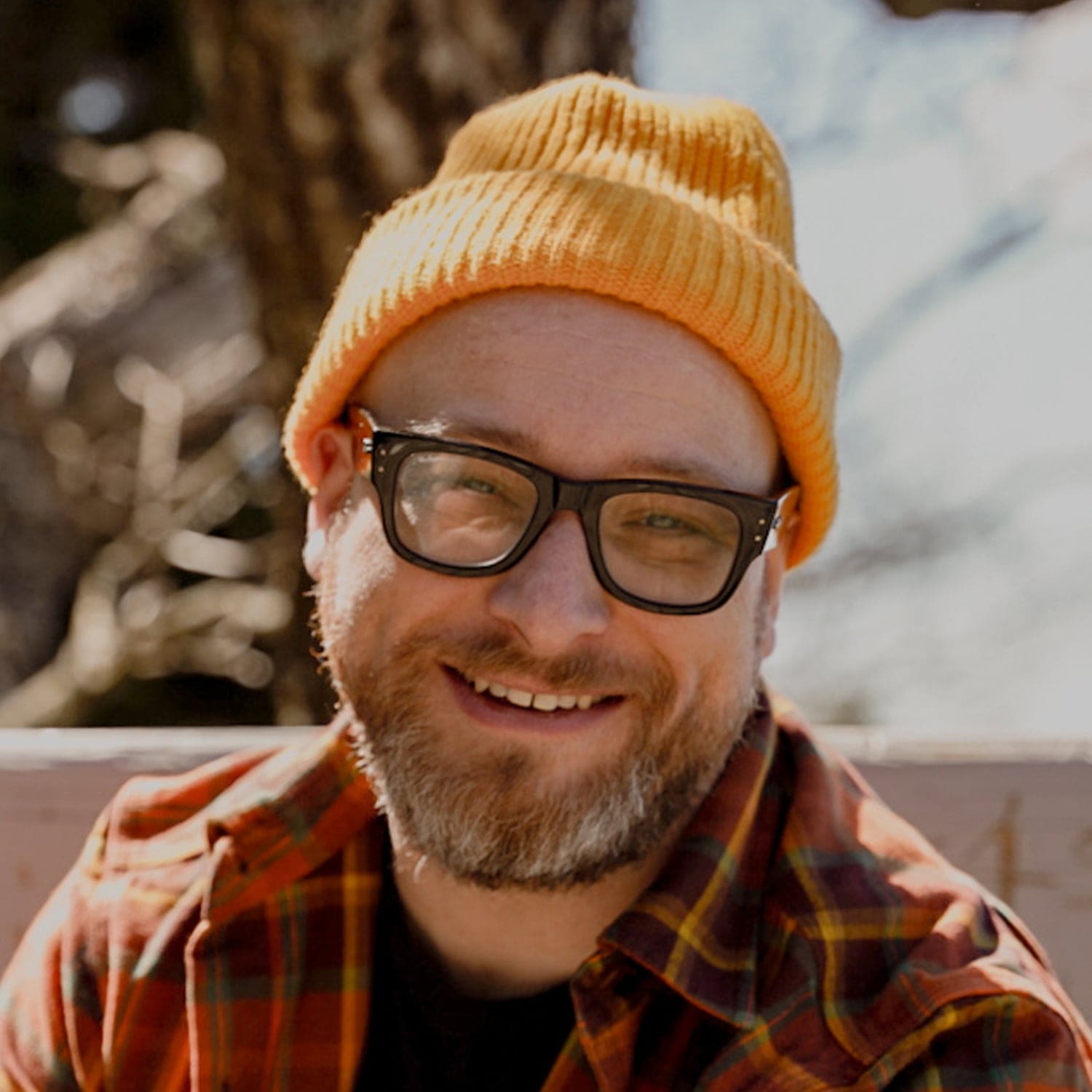
David Gate is a poet and writer whose work first found its audience on Instagram, the author of A Rebellion of Care: Poems and Essays (Convergent, 2025), and a miller and homesteader in Asheville, North Carolina.
Love the show? Help others find it by reviewing it on your favourite podcast app. We also welcome your ideas and feedback. Email us at podcasts@comment.org. Thanks for your support.
What a month on motorcycles taught me about connection.
SITE DESIGN AND DEVELOPMENT BY POLYMATH