


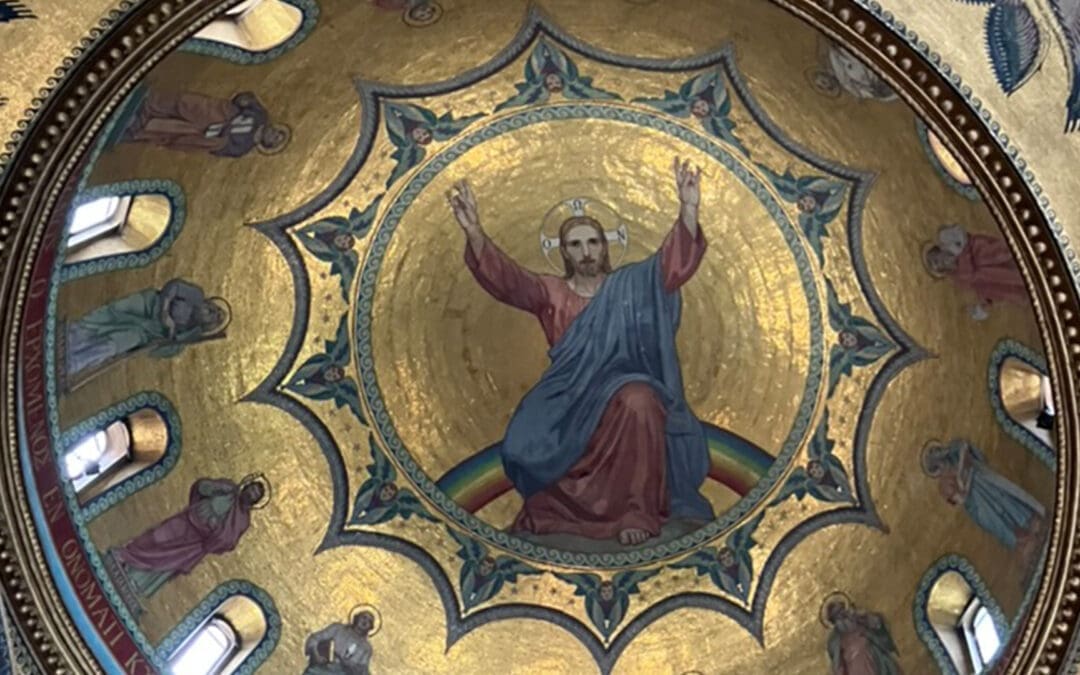
In Praise of Lev Gillet (1893–1980).


We measure a forest by the height of its trees, but its future takes root lower, in the understory. Colleges, churches, and schools are part of that soil: formative communities shaping the moral imagination of future leaders. Those who lead them are stewards, not mere administrators, and they steward under strain—fiscal pressure, threatened accreditation, political scrutiny, phone-shaped students, and a doubting public.
Shirley Hoogstra, president emerita of the Council for Christian Colleges & Universities (CCCU), handed four leaders a phrase from the Comment Manifesto. Robin Baker of George Fox University argues we face not a season of change but a change of age. Houghton University’s Shirley Mullen insists that institutions need constant tending. Aaron Winkle of Grand Rapids Christian Schools tells what a student named Max taught him about being loved. And bishop Claude Alexander turns the premise back: Those who form others must themselves be formed.
Recorded in the Virginia Mae Center on the Understory festival’s final morning.
Tiffany Thompson: I’m Tiffany Thompson, Comment’s executive editor and producer of the Understory Festival. We measure a forest by the height of its trees, but the future of a forest takes root somewhere lower, in the understory, in the soil that nobody looks at. Institutions like colleges and universities, churches and schools are part of that soil. They are not only where the fruit of knowledge is produced. They are formative communities, quietly integrating an ecosystem of relationships, loyalties, customs, habits, aspirations, and the moral imagination of the people who will lead future generations. Which means the men and women who lead them—presidents, provosts, pastors, superintendents—are not merely administrators. They are stewards.
And they are stewarding under immense strain: fiscal realities, threatened accreditation, political pressure, students arriving shaped by their phones, and a skeptical public that has lost confidence in what a university is for. The Comment Manifesto asks such leaders for the courage and the humility to be in the difficult room. So on the festival’s final morning at the Virginia Mae Center, Shirley Hoogstra, president emerita of the Council for Christian Colleges & Universities, put a phrase from the manifesto into the hands of four institutional leaders and asked each to speak from it.
Robin Baker, a historian who has led George Fox University for nearly two decades, argues that we are not living through a season of change, but an outright change of age, and that the leader’s job is to frame what comes next, not preserve what came before. Shirley Mullen, president emerita of Houghton University, insists institutions are foundational the way agriculture is foundational, not the way stone walls are. They need constant tending. Aaron Winkle, superintendent of Grand Rapids Christian Schools, tells of a school that chose forty years ago to welcome children of every ability and what a student named Max taught him about being loved simply because you are. Finally, Bishop Claude Alexander, who has led the Park Church in Charlotte for over thirty-five years, turns the premise back on the leaders themselves. If our institutions exist to form people, then those who run them must give themselves to being formed.
Thank you for listening to this episode of The Understory, “Renewal and the Academy: Reimagining Institutional Stewardship.”
Shirley Hoogstra: I’m Shirley Hoogstra. I’m the moderator of this panel. We’ve been calling this a panel about institutions. Little did we know when we said yes to this that the Understory conversation would have so much to say about the importance of institutions—the fact that institutions shelter, that institutions are foundational, that institutions are in trouble, that institutions need to be reimagined. So there has been a lot of suggestions for institutions.
I’m grateful for this panel because they said yes to being here to talk about the institutions they love. We have a broad representation today. And each panelist is going to do two things. They’re going to introduce themselves and situate themselves in their present context. And then they’ve been asked to prepare about five minutes’ worth of content around a phrase or an idea that has come out of the manifesto. And we want to honor the manifesto because that document is really the seedbed for what we’ve all been here today. And each one of them has a different way of interacting with the manifesto. So I’m going to turn this over to Robin and then to Shirley and then to Aaron and then to Claude.
Robin Baker: Thanks, Shirley, and thanks for being here. In some ways, hard to follow—such a great spiritual experience. One needs to rest in that for some time. But—Robin Baker, I am president of George Fox University, which is an institution just outside Portland, Oregon. We have just under 5,000 students in various programs. And I’ve been there twenty-eight years, so a long time. So in the Comment—or, the academy, it says this:
The academy is part of the understory. When we are at our best, we shape the soil from which future leadership and culture grows.
I think that’s true. And I think that’s why we’re part of the conversation. Just two points here really quickly.
Yesterday, the New York Times—you’ll love this. This is what they said about higher education:
The last few years have not been kind to American higher education. There are many academic problems: widespread artificial intelligence–enabled cheating, digitally [unclear] attention spans, rampant grade inflation, political tensions, collapse of public trust, the protests, encampments, counter-protests that were mishandled on college campuses, the Trump administration denying research funding, and now there’s the demographic cliff.
And that’s only to start with. So if you think of challenges facing higher education, there’s just so many at this point in time.
But I think the one that is connected here already by speakers, especially David Brooks, is the one I’d like you to pay attention to. His argument was, building off the work of Robert Putnam, that we live in an age of rapid change where cultural institutions—the ones we lead, like universities—were almost all formed in the late nineteenth century. And they were formed to respond to economic, cultural, and societal conditions that were present at that point in time. So leaning into the work of Putnam, Brooks argued, and he detailed the rise of the American university, social clubs, social gospels, settlement house movements, all kinds of different things that were formed in response to capitalism sort of running wild in the late nineteenth century and what historians refer to as the Gilded Age. And out of that, you’ll remember he said that it was the institutions that began to reform community, and politics followed. And the Progressive movement then, which came out of all of that, really reestablished the common contract for the United States that was to last for a much longer period in time. So Putnam’s argument is that all of those things fell apart and continue to do so as we move into this period.
So there’s a gentleman who writes—he’s a philosopher named Aaron Renn—and he put it this way. He said:
Institutions today are trying to solve twenty-first-century problems with late twentieth-century leadership assumptions. What twentieth-century leadership assumptions? Our models were built for a world of institutional stability, shared moral assumptions, and predictable change. That world no longer exists. We’re not living through a season of change, but a change of age, which requires reinvention rather than just strengthening.
It’s certainly true of the region of the country I’m in, the universities that were established there. There’s many—eight privates in the state of Oregon. Two have failed in the last ten years. Almost all of them founded out of a religious commitment and emphasis of people moving west in the late nineteenth century, and they were formed to educate those communities. Well, simply, those denominations have disappeared. Most of the institutions no longer have religious emphasis, and there’s a context which has radically shifted and changed in that regard.
I’m at a Christian place that is deeply committed to Christ and seeks to keep that in the Friends tradition. But even at Christian institutions, the core dimensions of faith no longer operate together. They are formed independently in our students. So in the past, Christian identity implied orthodox Christian belief. So it might go like this: Christian belief inspired Christian practice; Christian practice inspired church affiliation. So there was a sense of order that went with it, so that when we were speaking, we could expect certain things. So when you got up to speak today to students and faculty, you are no longer assuming a shared framework, even though that’s the institutional sort of perspective.
So for example, when our institution seeks to form students, which is the primary concern of this particular conference or experience, we have a very institutionalized framework to do that, and most of our institutions do. Students are formed through required courses. They’re formed through required chapel and affiliation with local churches. And so when we try to respond to all of the frustrations that are going on within the broader culture, we respond institutionally with forms that were much—characteristic of ages that were prior to this. So the system we now run no longer produces the desired result, would be the argument, because identity in our students is resulting from formation that is assembled through personal friendships, curated through social media, and negotiated with both peers and the internet world that they exist in.
Much like David Brooks suggested, we exist between an old institutional order and a new one that has yet to emerge. So the job of the university leader in that regard in the future is not just to keep alive the old model, but to frame a new one. So the student that we’re working with is looking for sort of leaders who can redefine, in a sense, meaning for this age. And I think as—I don’t have time to go into it, but there’s four sorts of areas that our students really experience that we have to speak into: identity formation, beliefs, practices, and belonging. And the last one is always discovered in some sense of community.
So David Brooks, he put it this way yesterday: “In the late nineteenth century, a small group of people chose to build differently.” So in a sense, that’s what universities have to do. So let me close with this and pass this on. This gentleman in the New York Times, he wrote this yesterday. He wrote all the nasty things. And then he said:
These reflections are a start, but they ignore a core problem at the root of so many campuses and social issues. It is not just that we lack civility and the capacity to respectfully disagree, but that many of us live as collections of strangers, each pursuing our own ends, and that our college education does almost nothing to develop the sense that what we do in our day-to-day lives resonates with people beyond ourselves.
So in some ways, that’s the challenge. How do we, running these kinds of institutions that are attempting to transform students—how do we reimagine them in ways that can both be financially sustainable, which is a whole different discussion, and can form students in really powerful ways? They went on, by the way, if you’re interested, to tell the story of Deep Springs College. So when you have a chance—we don’t have time today—read that particular piece. Because in some ways, what he’s arguing is, just like the monks coming out of the fall of the Roman Empire, you have these small groups that basically go out and they come up with innovative ways to accomplish the mission that no longer is being successful in the institutions that we currently lead. So it’s called Deep Springs College, if you might find it interesting.
Shirley Mullen: Thank you, Robin. I agree with everything you said, and you will probably figure out that both Robin and I were trained as historians. So that affects everything we do and how we think. And it is a great privilege to be here. My name is Shirley Mullen. I’m currently retired, but I was counting the other day. I spent, I think, forty-five years in higher education in connection with several institutions. I actually started in student life, but was a tenured faculty member, a provost, a president, a board within higher education. So I’ve seen this world from many, many angles. And I love the fact that David Brooks yesterday called out higher education as one of the very hopeful things for this moment.
I also resonated very deeply with Ross Douthat’s response. And they did have to work really hard to get an argument going yesterday. But when Ross Douthat emphasized that whatever higher education is going to be able to do in this moment, it’s going to have to be the product of intentionality, great deliberateness—it’s not going to happen easily or through some natural cycle of history.
And Shirley asked us, in making our comments, to pick out a phrase from the manifesto, and I chose one that is buried quite deeply within one of the points. It’s the idea that if we are going to help higher education be what it needs to be, we are going to have to have the courage and the humility to be in the difficult room. Nothing is uncontroversial about this moment, and even that notion of higher education—I mean, that is itself a very, very, very complicated world. Both Robin and I have been mostly within that world of faith-based higher education. But those challenges, Robin, that you’ve listed, some of them apply to all of higher education. Some are much more about the Ivy League. Some are much more about faith-based.
But the point I want to focus on today is that all of this good that can come out of higher education is right now only potential. And when we think about the importance of institutions, which, again, the manifesto emphasizes, they are foundational, but they are foundational in the way that agriculture is foundational, not the way that stone walls are foundational. And they require constant, constant tending and nurturing.
Stewardship of institutions—I want to note three words. That if we are going to be able to steward the institutions of higher education, collectively or individually, we’re going to have to—three words.
First of all, the why and not just the how of our institutions and of higher education. And right now, all of the pressure, almost all the pressure, is on the how. Whether it’s financial stability, whether it’s enrollment, whether it’s getting that latest government funding, the how is what boards know how to do best. Many board members who are responsible for the fiduciary, the faithfulness of the institution, think of faithfulness primarily in financial terms. They don’t even think often—and again, it’s not their fault. It’s not what they have been brought to the board to think about. They think about the how, not the why. But if we only succeed in this moment—sustaining the particular institutions of higher education, particularly those in the faith-based tradition—I would argue that we have failed to really steward the mission of faith-based higher education and, frankly, of higher education more generally to promote the common good, because we will simply be doing what every other institution in the country is doing, and we will not be attending to the why. So this takes constant, constant naming of that issue, constant encouragement to boards to pay attention to the why and not just the how. So that’s point number one in what it takes courage and humility to do.
The second word I’m going to use is alignment. And again, if you know me, and you know me as an historian, I don’t picture this in some authoritarian, rigid, fascist way. But that alignment of the heart that ensures that everyone within the institution is, in fact, committed to the mission of the institution. And I would suggest that [part] of the challenge of many of our most successful institutions of higher education is that the more successful you are, the greater likelihood that faculty, administrators will go to that institution as a background for their own individual career and not because of the mission of that institution.
Particularly at Westmont, where I spent twenty-three years, I had the privilege of coming in at the tail end of some of the people who had been there at the very beginning. And they had a passion for the mission of the institution that many of the later people did not. And again, I’m not faulting anyone. I’m talking about what naturally happens with the evolution of institutions. The more successful they are, the more people take them for granted. And then individuals come assuming the stability of that institution and assuming that they can kick against it and push against it and that it will hold. And what leaders today, with courage and humility, have to keep calling the community back to is that institutional mission must be tended by everyone. It is not a background to be taken for granted among the many amazing individuals who come with the idea that they’re going to carry a mission, but the mission itself must never be taken for granted.
And I’ll just say as an aside, this is hard, because if you’ve gone to an institution that you thought was thriving and amazing and very stable—and this is something that presidents feel very keenly, because people assume that the institution is there, you know, to be, you know, solid, stable, and of course, that the presidents are just kind of these figures who can be kicked against. I’m not whining. I’m saying the nature of the situation. And part of our job as presidents and leaders is to remind people graciously, kindly, that it’s everyone’s job to tend that core mission. And our own journey must align with that mission.
So, tending the why; the alignment of mission, never taking core assumptions for granted. And again, this ties to history, I think, too, because if you’re not historically minded—and again, I’m historically minded, so I can’t not be—but for those who are not, they don’t really think that much about what happened before they arrived on the scene. And often you end up in institutions with different layers of core assumptions. It’s the job of the leaders to bring back that alignment graciously, carefully, wisely, courageously, and humbly. So, tending to the why, alignment.
And then the last phrase, or the last word I will use, is translation. And again, this fits with everything that was said yesterday and that Robin said today. If you are in leadership within any institution, frankly—but we’re talking today about higher education—you must constantly be about the work of translating that mission into the real needs of that moment. I mean, even that word institution kind of has the weight of history. And we must not think that everybody else knows what we’re about. Unfortunately, today, because of the pressures on the how, and because of all of that fragmentation that Robin alluded to, very often the initial temptation of leaders is to go into the consumer route. So we will be what you want us to be. We will be whatever you will pay to send your students here. We will be whatever, whatever—you get the point—to partake of that consumerism. No, no. I’m talking about a translation that is much more complicated and difficult than simply catering to the consumers, whether those people be students or donors or whatever, or the general public, which right now doesn’t have much confidence in higher education. The work of translation: making the mission of the institution relevant to the actual needs of today.
One of the questions that I posed in my final days in a couple of situations when I was working is, what would faith-based higher education be if we were reinventing it today? Or actually, if we were inventing it today. Because, again, as you’ve already heard, most of our institutions were founded out of a very particular set of historical circumstances that’s almost entirely different from today. What would we invent today? Now, again, you can’t undo history. We are left with the weight, the burden, the gift of history. But—and I love history, but it is, again, a weight, a burden, a gift—we must translate the mission of our institution for today.
Great potential for higher education, great potential for faith-based higher education in particular, but it is a contingent potential on the courage and humility of the leaders to attend to the why, to attend to alignment of assumptions, and to attend to translation. If we can do that—have the courage to be in that difficult room—then we can do the work that God has charged us to steward in this time.
Aaron Winkle: Wow. Thank you, Shirley. I just want to begin by saying what a privilege and honor it is to be here with all of you, to be a part of this panel. Shirley Hoogstra has been a friend and a mentor of mine for a couple of decades. And Robin, Shirley, and Bishop Claude, just an honor to be here.
I currently serve as the superintendent of Grand Rapids Christian Schools that’s located in Grand Rapids, Michigan. We have 2,400 students, five campuses. I’m really grateful to be with a couple college presidents. If you’re in Christian day schools and you spend time with other heads of schools, other superintendents, you quickly realize the challenges that you face, and you can start to feel, wow, things are really hard for you. Then you spend time with college presidents and you think, oh, we got it easy. Families continue to send their children to school every day. Robin was telling me earlier that the number one cross-app that they have for young male students considering George Fox is not going to college. It’s just a different reality. So I’m just thrilled to be next to both of you. It makes me feel so much better about the work that I get to do every day. Thank you. Yes, just being here.
As I was preparing for today, I was thinking about the notion of a Christian imagination. And what came to my mind was Matthew 5, 6, and 7, Jesus’s Sermon on the Mount, that we heard just so again this morning, elements of it. And this phrase that we hear of: You’ve heard that it’s been said, “Do not commit adultery.” You’ve heard that it’s been said, “Do not commit murder.” And what we see in those first few references is that Jesus was calling people to take something that was familiar, that was in the law, and that was supposed to go deeper into their hearts and lives in ways that they hadn’t come to expect. But then near the end of Matthew chapter 5, I think it’s around verse 43, we read, You’ve heard that it’s been said, “Love your neighbor and hate your enemy.”
You see that they had taken something that was true in the law—love your neighbor—and had inserted something that had become so familiar and common to their ears. It’s kind of like walking on these cameras that you see in New York City, where someone will say, “Hey, tell me about your favorite Bible verse.” And someone will say, you know, “God helps those who help themselves.” Something that’s repeated so often that we come to believe that it’s true. And then we root it in a sacred text. And I’ve wondered what has become so familiar in our understanding of Christian institutions—in our case, Christian day schools—that it’s that kind of wisdom: “Love your neighbor and hate your enemies.”
And I think to your point, Shirley, your question, like if we were to reinvent or invent for the first time—and before I came to Grand Rapids Christian, I worked at a very small Christian school that was trying to do that. That’s a place called Living Stones Academy. And when I went there a decade ago, they had 140 students. And it started with just a sort of a kernel of an idea, which is, what if we were trying to reimagine Christian day schools today, informed by everything we had learned from the prior hundred years of Christian day schools in Grand Rapids? And so the fundamental proposition was, what if it was a place where children from all backgrounds and all abilities were welcomed and enfolded into this new learning community? And so the goal was to have a learning community that reflected the city, the part of the city that we were inhabiting—racially, economically, culturally. And it was something that has shaped and formed me in profound ways, because it was some sense of this retelling of “You’ve heard that it’s been said.”
We’ve come to imagine Christian institutions in a particular kind of way, and there’s much for us to be grateful for and to celebrate and to see God’s providence and see God’s goodness and grace in the midst of those things. And I think today what we’re being asked to do is to reimagine, to learn from the past and to celebrate the good, and while at the same time acknowledge there’s areas that we have gone astray.
And so I just want to share just briefly what that looks like at Grand Rapids Christian. We spent the last two years trying to understand our core identity. What is at the essence of who we are? And we’ve identified four missional commitments: deep faith in learning, removing financial barriers, investing in educators, and supporting each student. And I want to focus just for a couple minutes on this supporting each student, what that means in our context.
About forty years ago, there was a small group of leaders, community members at Grand Rapids who had seen that Christian day schools had begun to understand that if you were neurologically typical, that you’d be welcome and enfolded. But if you had a developmental disability of some kind, cognitive impairment, that you would need to go to a specialized school that would be separate. And there was a small group of people said, “I just don’t think, as I read the Gospels, I understand Jesus’s heart and life and ministry—I just can’t imagine that we would say, we take the most vulnerable among us and say, you’re going to need to go someplace else to learn.” And so they said, “Well, what if we did full inclusion? What if we welcome children who had cerebral palsy or Down syndrome or autism spectrum disorder and brought them into our classrooms and into our community?” And this was in the late ’70s, early ’80s. It was a bold move. It was reimagining something that had become familiar and trying to see with a fresh set of eyes and an expanded heart.
And that’s become part of the ethos of Grand Rapids Christian. We spend about 10 percent of our $30 million budget on student support and inclusion. And at the core of that is something that’s come through so strongly in the last few—the last day that we’ve been all together—of Christian humanism, of believing that every child is made in God’s image, created with inherent dignity and worth, full of possibility, pregnant with possibility and potential. And I think what I learned yesterday from Luke—he said that at times we reclaim a sense of our own humanity when we begin to see it in someone else. And when he said that, it just kind of stopped me in my tracks, because I’ve said to a number of people now, I would never go work at an institution that wasn’t fully committed to including students of all abilities. Not because it’s—but because I need it. I’ve come to understand more deeply, more profoundly, what it means to be loved by God, known and loved for who I am, not because of what I can produce in the world, but because before the foundations of the earth were laid, there was a God who knew me and loved me and said, “You matter.”
I just want to finish with a story. It was just over two and a half years or so ago, I was introduced as the next superintendent of Grand Rapids Christian. We were celebrating our hundredth year of the high school, so we had a large event downtown. We had alumni, staff. It was quite an undertaking. At the end of the night, there was a group of students who had been greeters for that event, and there was a junior approaching the end of his junior year, Max, who came up with a colleague of mine and wanted to meet me. And so he came over and said, “Hi, my name is Max.” I said, “Max, it’s really a privilege to meet you.”
What I didn’t know when I first met Max was, as a young child, Max was diagnosed with autism spectrum disorder. They weren’t sure where he was going to be able to go to school. And Grand Rapids Christian said, “Hey, this is a place we’d love for you to be here.” Max introduced himself, and he first—he wanted to know immediately, when was my birthday? And I said, “February 10.” And before he could—I told him not to tell me how old I was. He asked what year I was born. I said 1978, and he smiled.
I got to know Max quite well at the end of his junior year, and last May he graduated from our high school. The two February 10s since I met Max for the first time, in the evening, Max Damstra has sent me a text and said, “Happy birthday, Mr. Winkle.” This past year, because he graduated—he had said to me, “You know, when I graduate, then I’ll just be able to call you Aaron, right?” And I said, “Max, you can call me whatever you’re comfortable.” So this year it was “Happy birthday, Aaron.”
I want to conclude just by saying, I think as we do our very best, by the guidance of the Holy Spirit, to imagine what does it look like to be faithful today, informed by what we have learned of the past, with humility and courage, there is something more in front of us. I think it’s easy to look to the past, to the golden days—to do a disservice to a God who continues to make all things new, with hope, believing that there is something beyond what we have seen that is good and beautiful that we have been invited to be a part of pursuing. And it’s just a privilege to be a part of this panel as we all pursue that in each of our contexts.
Claude Alexander: So my name is Claude Alexander. I pastor the Park Church in Charlotte, North Carolina. I’ve served in that role for the past thirty-six years. They called me as a child. I’ve also had the opportunity to serve on the board of trustees for Gordon-Conwell for seventeen years and have been able to serve on the Council for Christian Colleges & Universities on its board as well.
I come to this looking at this—“We believe Christianity is perpetually on the move”—as a frame for the intersection of both the church and Christian higher education: that we are a part of a movement that will soon be celebrating two thousand years of existence. That’s a fitting frame in which to locate ourselves. Because when we understand from that perspective, what we face now is not new to us. It is something that we have seen before. And as was given to those who received the first trust, so it is given to us as well to steward faithfully.
And what you’ve heard must be clarity, courage, and commitment. Clarity about from whom the trust comes. For whom the trust is exercised. To whom the trust goes. Who will we ultimately have to give an account? Beyond the boards of trustees or directors, beyond the communities in which we live, there is an accountability before God that we all hold. And therefore, courage to live up to that stewardship. Boards fluctuate. Communities change. But God is the same yesterday, today, and forever. And therefore, the commitment, independent of challenges. We exist in a time of great challenge. But what we heard this morning is if we’re clear about our answer of who Jesus is, that gives us what we need to face them.
Shirley Hoogstra: I have a full heart after hearing each of you speak. And I want to follow up—and I’m going to start with you, Claude—something that Aaron said follows on what we know from history. Institutions either are going to thrive or restart, be made new, be refreshed, because the leadership has had intentional thinking or formation about it. And Aaron, you said that the reason that having an inclusive institution is because it’s shaping you as a leader.
Claude, I have been a student of yours. You have mentored so many leaders. It is one of your callings. That’s why I have watched you give so much of your time. And Shirley Mullen was my board chair at a particularly important time for me as a leader. And I have watched Robin over twenty-eight years lead over and over and over in investing in the next generation of leaders. So, Claude, what kind of leadership formation do institutions need in order to be able to be refreshed, renewed, to align all of those things?
Claude Alexander: Wow. So I think it’s important for leaders to know—me, I can just use myself as an example. If I have clarity around mission and vision that seeks to understand that we are a formative institution, that what we are called to is formation, then I must also realize that I have to give myself to being formed. Being formed within my leadership and being formed outside of my leadership. It is both-and. So there has to be the space given for that. There has to be the grace given for that. And where there is both space and grace, with intentionality and openness, the leaders are formed. Yeah.
I’ll give you an example. In the course of thirty-six years, I have seen teenagers, when I started, now have their own children. And in the space of walking that arc, there have been both joys and tragedies. Children committing suicide. Mothers dying, giving birth. You don’t walk with people through that without being shaped by it yourself. To the degree that we actually, in our leadership, walk with people through the journey—walking with the students, engaging with them, or faculty, for that matter—we are shaped too. We are formed as well.
Shirley Hoogstra: I’d like to know from Shirley and Robin, what was a moment, an episode, something that shaped your leadership, particularly meaningful for you?
Shirley Mullen: Thank you, Shirley. Wow, there’s so many things I might mention. I’m going to point to a feeling, as strange as that may sound. When you go from being a faculty member to a provost to a president, everybody else in the room tends to assume that you are moving from a position of less power to more power. And what shaped me as a leader, particularly in the presidency—I was in that role for fifteen years—what shaped me as a leader was the realization that as a president of an institution, even though everyone—students, faculty, staff, board members—could look at me and hold me responsible, I was not in charge of anything that was going to shape what happened on any particular day.
So the awareness of vulnerability in that role, coupled with the strangeness that everybody else assumed that you were in charge of everything. So, you know, people would come to you thinking [unclear]—you know, I want this or I need this or whatever, assuming that you could do something about it. So the realization of the sense that everyone else had about you and the way they held you accountable as if you had all that power, and yet simultaneously the vulnerability that was actually greater than any role I’ve ever been in in my life, which drove you then to an utter dependence on the cross, on God. And coming to terms and submitting to that vulnerability was the most important thing that then shaped my leadership in the presidency for fifteen years. And I would say from there on. And the other strange thing is you never talk about that. Yeah, because, I mean, it would be no good to say that to your community. No, I mean, you have to proceed taking into account their ideas, but with that knowledge of the vulnerability and the utter dependence on God. So that would be that moment.
Robin Baker: Yeah, that’s really thoughtful, and I certainly would agree. There’s been, in those many years, there’s been lots and lots of different things. I would say, along the lines that Claude was talking about, there’s a sense in which, in any leadership role, the ability to learn is just really important, especially in this time. You always have to ask, how can things be different? You also—like Shirley was talking about, people think you control the students in some fashion. And so the president just doesn’t. And so we’re the subject of things that happen all of the sudden that you have to find a way out of. And you feel—not responsible for it, but you hold the institution and its mission.
And so probably the one Shirley would remember anyway: almost seventeen years ago—eighteen—we had a terrible racial incident on our campus between Black and white students, and it became public. And so I’ll never forget, I did chapel as a result. And it’s the only time CBS, NBC, and ABC—[unclear] media—covered chapel at George Fox. And it’s a deeply painful memory. But one of the things that happened out of that was that the African American community in Portland really was angry, and they demanded a meeting with me. And so I held a public meeting at Vancouver Avenue First Baptist Church in downtown Portland. And for three hours, people lined up to express their frustration, not just with George Fox, but with evangelical Christianity, really. And there was simply no response that was adequate. So I simply had to listen. And it took years to recover from that. But I would say that more than anything else shaped my time at George Fox, if that makes sense.
Shirley Hoogstra: It’s that courage to hold a public meeting and that humility to know there was no answer that would suffice.
Robin Baker: Yeah, they were right. There was no answer.
Shirley Hoogstra: Yeah. No, that’s right. I’m going to ask one more question. I’m going to start with Aaron, and then I’m going to open it up for you all. Just the morning with our music and with Dr. Dates was so powerful, and I’m so glad they just took as much time as they needed, right? And so we’re going to go to 11:15. But if you want to—if you feel like, “I’ve got to get to my seat, I got one picked out,” feel free to, because we’re not quite sure if it’s going to start at 11:15 or 11:30. I’m glad I’m not organizing it, because people movement in this thing is a really tricky thing. But we’re going to go to 11:15 here. But feel free to move yourself if you need to move earlier.
Robin said that—the article you read said—the core problem is that we’re a collection of strangers. We’ve been talking here at the Understory about how friendship undergirds change. So, Aaron. Loneliness doesn’t start when they get to college, right? You see it in the youth group at church. You see it in the K–12 halls, right? So as institutions, how do we help people to embrace—what are the solutions to the stranger problem that we have today?
Aaron Winkle: I think the first thing that comes to my mind is how important habits and practices are. And I’ll give you just a couple of examples. We have five campuses. I start every other day on one of our five campuses greeting students at the front door. And I do that for a couple reasons. One is I really enjoy it, and it feeds my soul. And so it’s a habit that’s nurturing my own soul in the process. And also realizing that distrust is something that all institutions are facing. And I can’t tell you how much feedback I’ve received from parents, some of whom I never personally interact with, but they see from the car, as they come through the circle drive, me standing there greeting students. I happen to have a ten-year-old goldendoodle dog that comes with me everywhere. They think that’s pretty cool. But just finding ways of connecting with families and students, I think, are so important. And it changes for every context, but we have to acknowledge the distrust that exists. And we have to find ways to address that in our own context to rebuild it. Visibility, I think, is incredibly important. Regular communication is important.
I think another thing is around recognizing what’s contributing to a greater sense of isolation and loneliness. We all know these devices in our pockets are a part of that. We spent a year discussing it, studying it. This past year, we made the decision in June to go bell-to-bell, no cell phones available. And I was really struck—a week ago Tuesday, we had our high school graduation. We had 190 students graduate. A beloved Bible teacher delivered the commencement address. And near the end of his remarks, he said, “This is the class that restored hope for an old man.” And he said, “You put away your cell phones reluctantly. But then I walked the hallways and I had to walk around these conversations, to the chorus of conversation, the music of conversation in the hallways.” We needed more adults in the lunchroom because it became so noisy.
I think we need to recognize that there are forces around us. There’s choices that we make. Many of them require courage. Those decisions aren’t always popular. And yet I think part of leadership is recognizing our job is not to win a popularity contest. One of my favorite definitions of leadership is, you know, choosing who you want to disappoint. A corollary to it is disappointing people at a rate they can tolerate. I found both of those to be helpful. But it requires courage, because it’s not always popular, and yet the times that we live require reimagining and making decisions—some of them about our own habits and how they shape community and build trust, and others because of the significant barrier that technology and social media have become in forming relationships, lowering the sense of isolation, and just realizing, reclaiming our own humanity by having these connections with those around us in really beautiful ways.
Robin Baker: And Aaron, you made me think, you know, it’s one of the big differences between K through 12 and higher education is we don’t control them quite as much, right, in that sense, if you can think of it that way. So, like, we can’t really—maybe we could. Maybe I don’t have the courage. So, you know, to take cell phones away, for example.
So, you know, an approach at our institution—we have a lot of engineers. And so they have a voluntary program that almost draws the entire engineering community, about three hundred kids. They read a book once a term, and monthly they meet because they work through it, and they dialogue about that particular piece. So last year they did Felicia Wu Song’s book, Restless Devices. And so our approach in a similar fashion is—and that’s one of the things I was trying to get at, is like, you have to begin to think structurally about these issues, because the structures of society are changing our students. And we simply can’t operate as if it’s in the past. So she basically suggests that the students need to more openly understand what the devices are doing to them.
And so the—part of the exercises that we engaged in at the university was there was Sabbaths that they had to take. So they basically had to put their phone away by agreement on Sunday, and they couldn’t consult it until Monday morning. And then they journaled about it. So they invited me into this conversation. There were ten students at a table. And they shared what their experiences were like on Sunday. And it was amazing how the anxiety levels went up. They began to sweat. They wanted to reach out and find that device. And what the conversation enabled them to do was deeply understand they didn’t control the device. The device controlled them. And that helped change the conversation. I suppose those kinds of activities are the ones that institutions need to think deeply about as they engage students in a world that’s quite different than the world I grew up in.
Claude Alexander: Shirley, one of the things that has occurred to me as I’ve been listening is that when we talk about reimagination and imagination, they also—if you don’t have flexibility, just having imagination will only lead to frustration. Flexibility must accompany imagination. And so in any reimaginative process, you have to also assess, how flexible am I willing to be? Are we willing to be? And sometimes the president may be more flexible than the faculty, right? And so, you know, but if we are to be—if we are going to truly reimagine, if we are going to truly release imagination and innovation, there must be flexibility as well.
Shirley Mullen: So, Claude, I really appreciate you adding that word because, you know, I’m thinking of our reference to courage and humility. But courage, when operating in a certain way, can simply seem like, oh, somebody decided this has to be in this way. Courage can be very authoritarian, or it can take that form. And the kind of courage that’s coupled with humility must have the flexibility about how the end will actually be reached. So it’s like a step-by-step. So the courage and humility of leadership has to walk with the unfolding of where you want to go. So I really appreciate you adding that, because none of the people who work in institutions [want] leaders who are really authoritarian and call it courage. No, no, it’s courage, humility, and then the willingness to walk that thing through under the guidance of the Holy Spirit.
Shirley Hoogstra: Yeah. Yeah, that’s good. All right. Questions?
Audience Member: Thank you all. I’ve taught a lot in a liberal arts college. We’ve been talking at a meta level of Christian leadership. Robin, you just started leaving the meta level and started talking about, you know, more—I’m way more interested in evoking the theme of the conference, Christian humanism. What do you think a Christian humanist education looks like? What should it look like in our current time, as we need to reinvent and need to, you know, meet these concrete challenges of changing cultural structures? Can you talk a little bit more about that?
Robin Baker: When you only have five minutes, it’s tough to do some of those things. I think that part of the challenge is—I think all of our institutions could give examples of how we do those things. The last one was certainly true. I went to the panel yesterday with the faculty members. I’m not sure any of them are in the group today, but they talked about essentially what you’re asking, meaning—I can’t remember the literature professor from Wheaton that was in your group, but she talked about the ways in which she takes poetry and makes it real within the communities they’re in, and that she deepens the—she’ll have students that really aren’t interested in the poetry piece, but she has them perform it. She has them do all sorts. It was just fascinating, all the different ways in which she opened her class to the experience of poetry, which they began to see as beauty and as more influential in the work they do, to make your Christian humanism piece.
I think the challenge for administrators, though—so a lot of those things. The problem is that [a lot] of those things are very expensive to operate within the institutions. And our institutions are increasingly under financial strain. And so what you have to do is figure out what is the balance between those two needs of an institution and how it’s trying to work. At George Fox, we have a common core curriculum that seeks to do those kinds of things. We have an honors program that’s built on character and virtue. We have a common freshman-year experience where that’s the aim, is to focus on virtue as it is within a classical Christian kind of context. So we have a lot of those elements, but each of them is extremely expensive to run. And so what we have to do then is balance that with something else within the institution.
So I think one of the things historically is that the bottom line is we’re trying to educate students for democracy. A lot of times when we think of the ideal type, it was for the elite of the past, those who could afford it. Now we’re trying to create an education that is Christian humanist within affordability that makes it work over time.
Shirley Mullen: I wish we had more time, because this ties again with what Robin said, but I would guess we all believe passionately in Christian humanism, but that’s not what parents think they’re buying when they are coming to your institution. So it’s not just the expense; it’s the idea that it’s almost like what we’re really wanting to give people, you have to do in a stealth way. No, and seriously, I mean that, because it’s not just the expense, it’s that that’s not what people think they’re buying. Hardly any parent thinks they’re forking out whatever amount of money to buy a Christian humanist education, and yet that’s what we’ve given our life to and we’re passionate about. It gets back to that notion of translation. How do we meet people where they are and connect what they think they desire with what, in fact, we believe will meet their deepest needs?
And my final word is, that’s why, when you talk to students, hardly any freshmen can really be your best salespeople for the college. They have to be seniors. They have to tell what happened to them that they did not know they were asking for, and certainly their parents didn’t think they were paying for. So, still.
Audience Member: So, there’s two minutes, so my question’s going to end up as a challenge. Twenty years ago, my daughter’s—at church, every year, they would put in a photo, a Bible verse, and what this student’s going to do next year. Ninety-five percent twenty years ago were going to college. This past couple weeks ago, same flyer, 45 percent of the kids were going to college. The rest of them are going to go work. And when you look at that—and this is a socioeconomic area, southeast Wisconsin. They can afford to go and afford to get loans. The basis of what I’m seeing is—in sensing and talking with parents and kids—is about fear. What are the institutions going to do about this fear and addressing the fear of the next step for these kids? They’re afraid to go to college. They’re afraid for a variety of reasons, and the parents are afraid of their kids going to college for any number of reasons. So I think there’s an emotional and even spiritual thing that institutions are going to need to do. And so there’s no time to answer the question. But here’s the challenge for you folks, to say, how are we going to deal with fear?
Shirley Hoogstra: An excellent question. Let’s thank our panel.
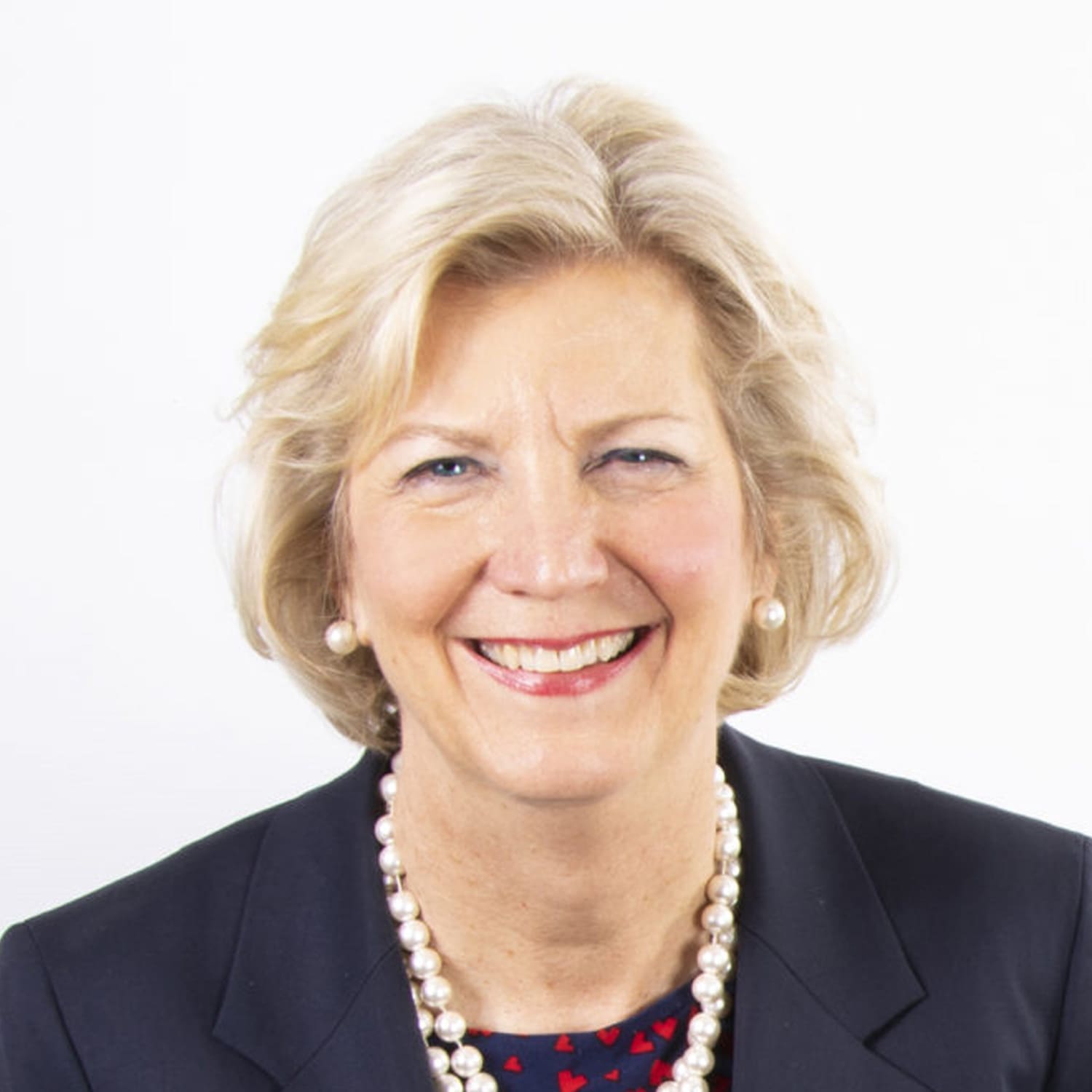
Shirley V. Hoogstra is president emerita of the Council for Christian Colleges & Universities, which she led from 2014 to 2024 as its first woman president.
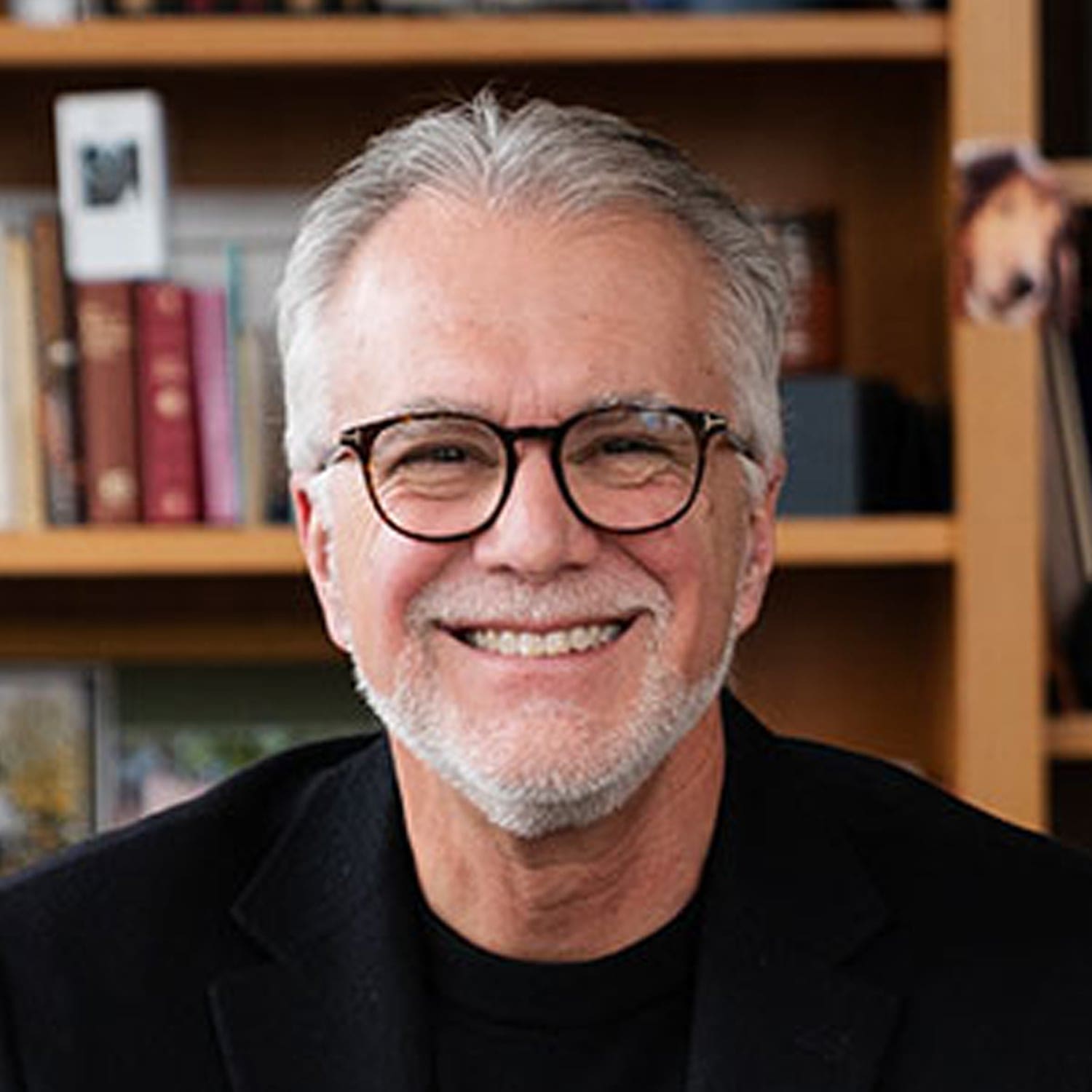
Robin E. Baker is president of George Fox University in Newberg, Oregon, which he has led since 2007 after eight years as its provost; he is a historian of the American Civil War and Reconstruction.
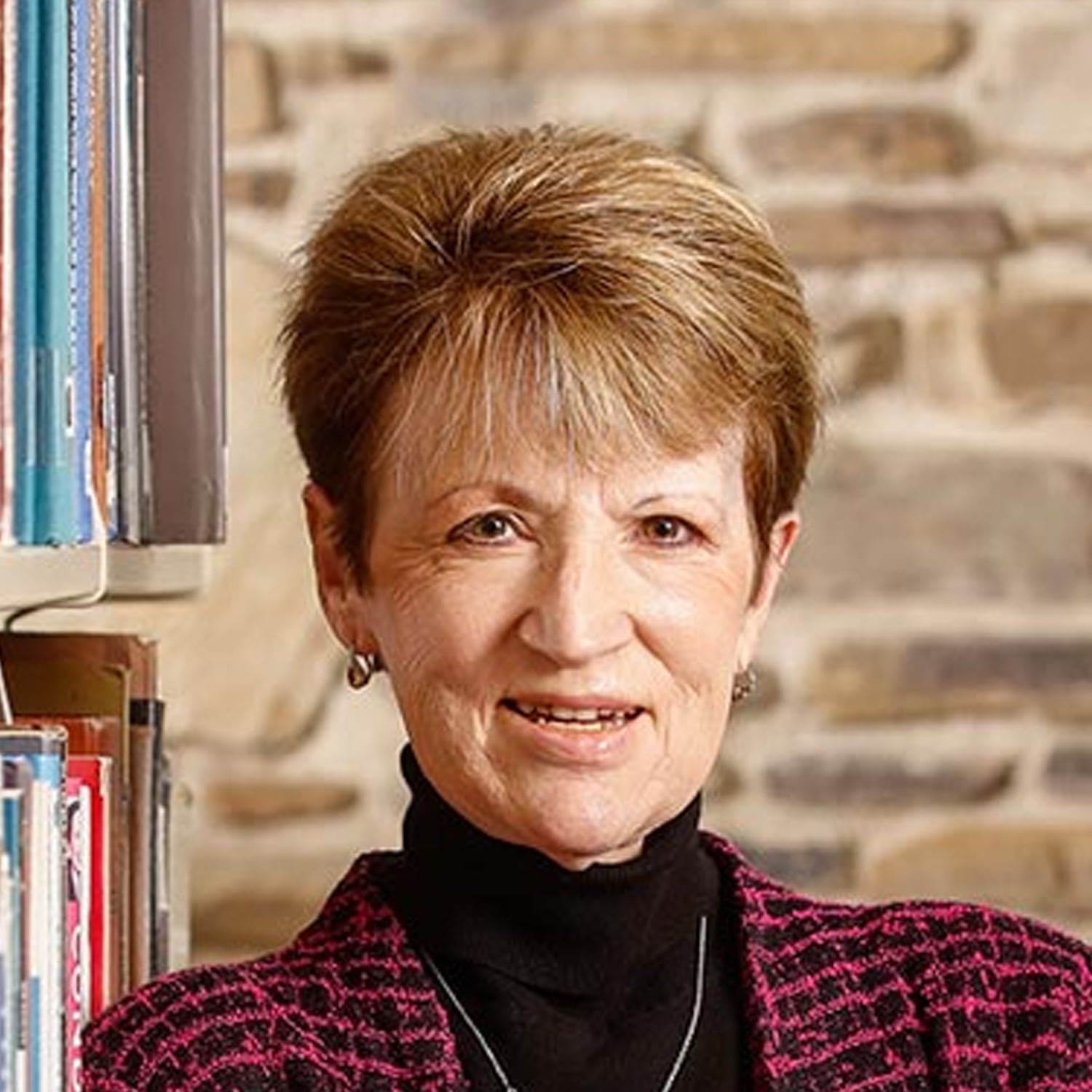
Shirley A. Mullen is president emerita of Houghton University, which she led from 2006 to 2021 after twenty-three years at Westmont College as a history professor and provost, and is coauthor of Claiming the Courageous Middle.
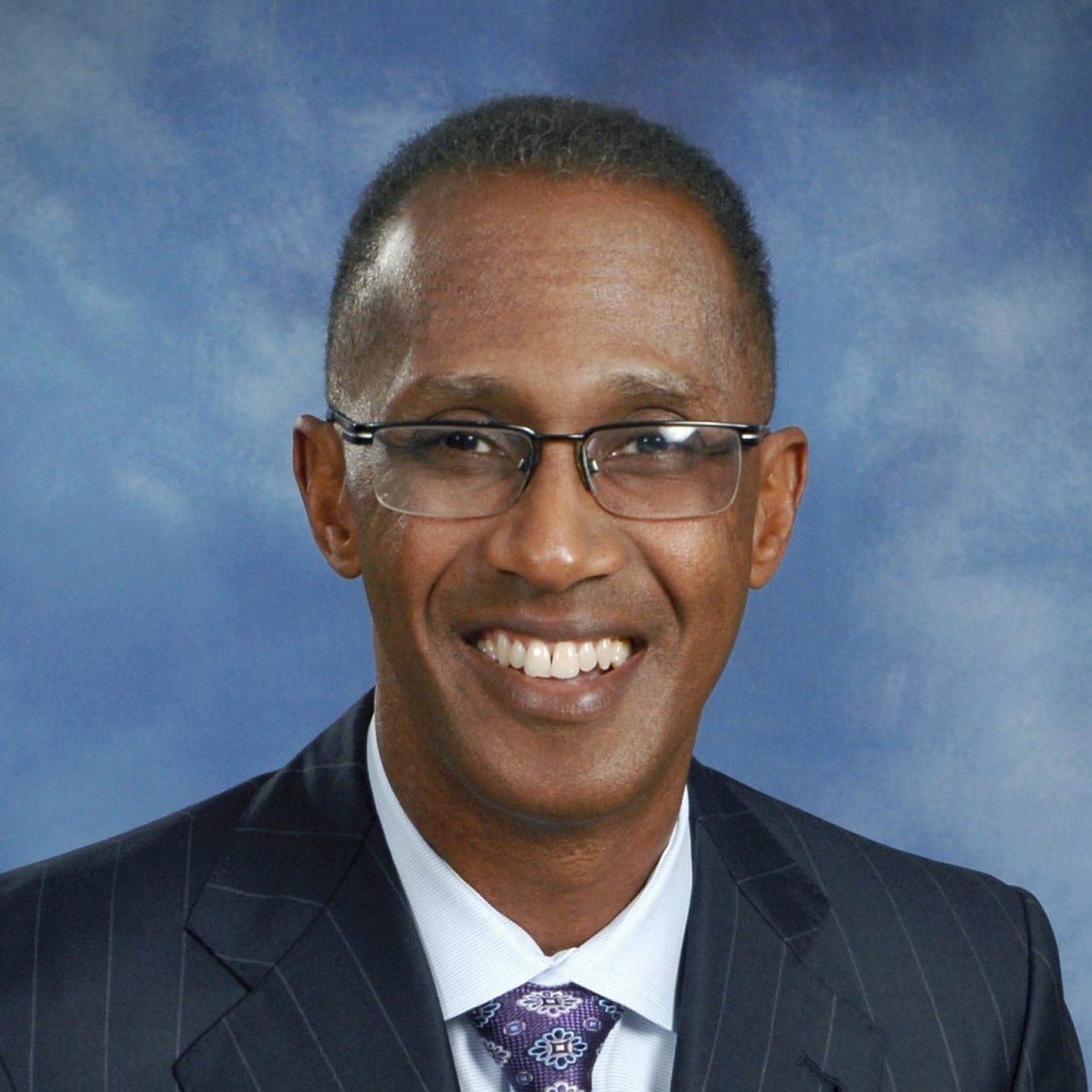
Claude R. Alexander Jr. is senior pastor of the Park Church in Charlotte, North Carolina, which he has led since 1990, and author of Necessary Christianity.
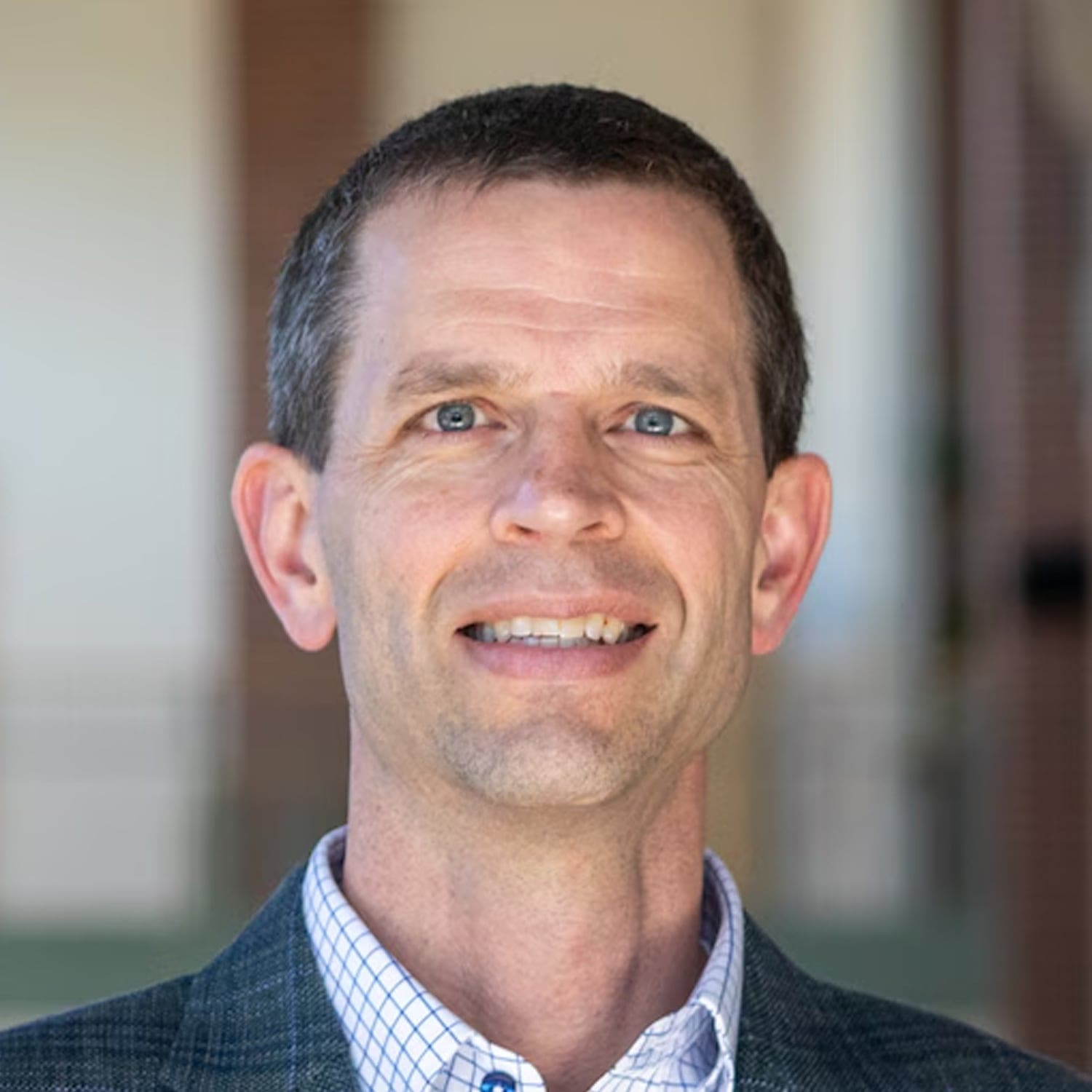
Aaron Winkle is superintendent of Grand Rapids Christian Schools in Michigan, and was previously head of school at Living Stones Academy and an associate chaplain at Calvin University.
The Understory festival is a civic and spiritual gathering to rehumanize our common life in a time of cultural fragility. Love the podcast? Help others find it by reviewing it on your favourite podcast app. We also welcome your ideas and feedback. Email us at podcasts@comment.org. Thanks for your support.
In Praise of Lev Gillet (1893–1980).
SITE DESIGN AND DEVELOPMENT BY POLYMATH