


A
A man climbs to the seventh floor on foot. The lift is not working; there has been no power in the district for three days. He has come for documents; downstairs, they told him he can still go up to his flat, if he is quick. He unlocks the door.
Beyond the threshold, one of the walls is gone. Where it once stood, there is the edge of the floor, and beyond it, the seventh story of air. A draught stirs the curtain still clinging to the rail. A table, a chair, the light switch on the surviving wall—everything indoors is suddenly out in the open.
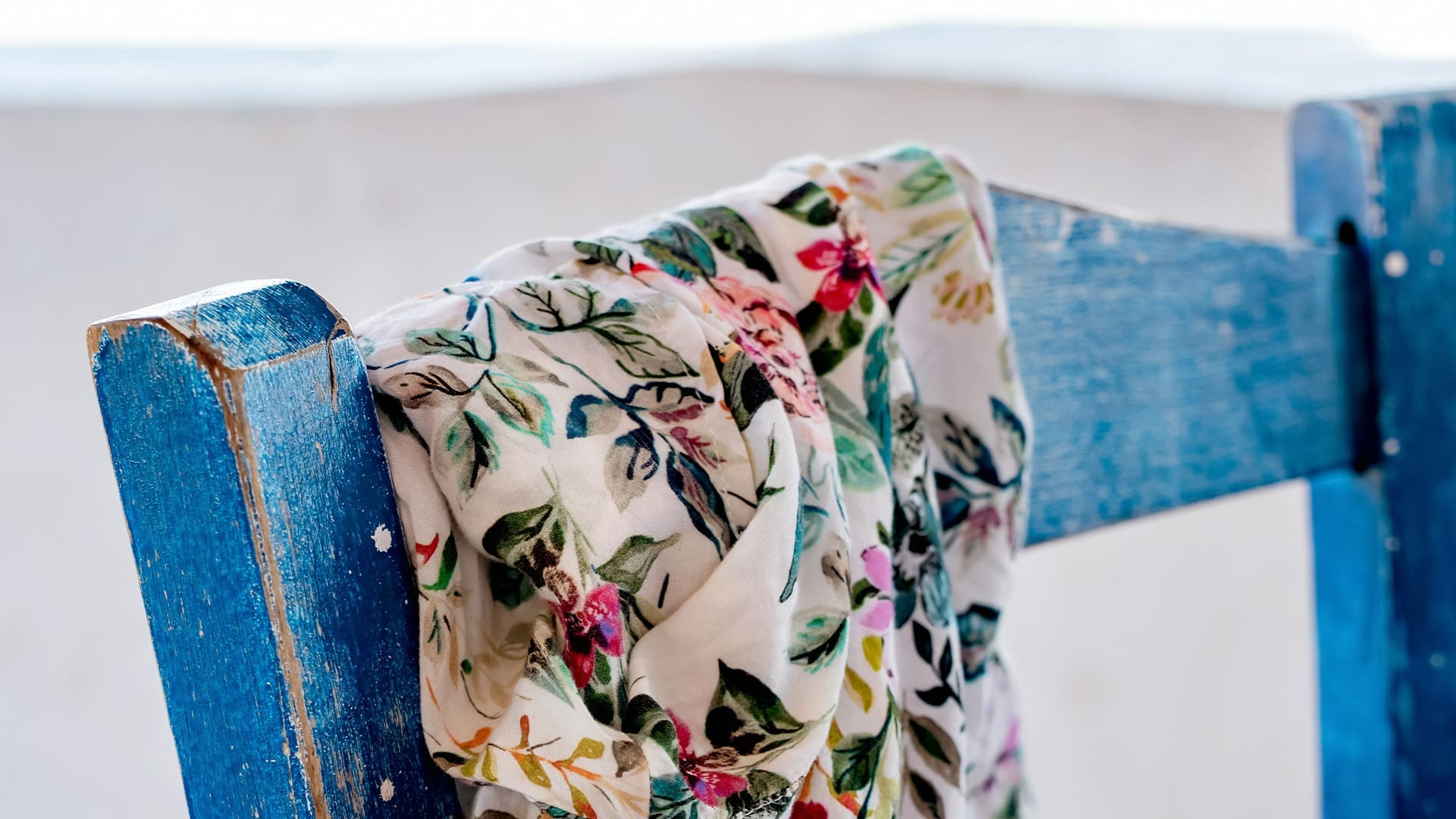
He reaches for the switch by habit. He clicks it. Nothing. And he goes still. He sees the room twice in a single moment: First, the ordinary table, the chair with a scarf over the back, as if whoever lives here is in the next room. Then he sees there is no wall, and that no one will live here anymore.
On the door frame, a child’s height is marked in pencil: lines with dates, the last of them this year. On the table, a half-drunk cup. The scarf was thrown down in haste, meant to be taken up again within the hour. Everything here says, “I’ll be back”—while the wall is already gone.
Everything falls apart, always: Houses settle, metal rusts, bodies grow old. Why does something in a person refuse to agree to this?
Thick darkness cannot be described from above; one enters it from below, into a basement in Ukraine, where for the third day twenty people breathe the same air. It smells of damp brick and the sour tang of tinned food. There is no light; the phone had long ago blinked its final percent and gone dark. Someone coughs; someone prays in a whisper. A child asks again and again when they will go home, and each time is told, “Soon.”
The only link with the world is the sound overhead. While it is far, one can talk; when it draws near, all fall silent together, counting the seconds between the whistle and the strike.
In the morning, the queue for water stands along the wall, because along the wall it is safer. They stand with heads bent, with canisters and empty bottles. Above their heads there is a droning. No one runs; there is nowhere to run to, and they are tired of it. They are only thinking, Let it not be here, let it not be mine.
The war did not bring a new reality into it; it merely laid bare the old one that had been hiding behind the surface.
Then a morning comes when the building opposite is already gone, and you stand and feel nothing. Nothing at all. And what frightens you is not the blast; what frightens you is this nothingness inside, because it means you have grown used to it. Yesterday you would have flinched. Today you only note it inwardly—That stairwell is gone—and go to put the kettle on, because the water is still running. On the stairs, a covered body has lain for the second day; people step over it, carrying water, because there is nowhere and no one to carry the body away.
It is tempting to think that there is normal life and there is catastrophe, and between them a chasm. The room without a wall was once full of quiet living: Someone woke there, set down a cup, tossed a scarf over a chair. But the war did not bring a new reality into it; it merely laid bare the old one that had been hiding behind the surface.
A soldier who calmly fires a rocket at a residential building, in the moment of firing, decides that on the far side of sight there is no one to whom he is bound. He does not err in his calculation, and he does not rage; to hate those he fires at would be to admit they are real. He simply does his work. On the far side is a room where a child’s height is marked in pencil on the door frame and a scarf hangs over the back of a chair. Someone threw it there in haste, going to the kitchen; did not have time to come back. For him, all of this is a square on a screen.
War itself becomes a home, and this is the most dangerous of homes, because outwardly it is flawless. It gives what quiet life did not give: a solid, unarguable meaning. Every day counts, and counts obviously: survive, repay, hold on. The small worries that ate at the peaceful years fall away before the face of the one thing, and a person for the first time in a long while feels gathered and whole. But that wholeness rests on a rift. It is not home.
You can see this in one who has come back from the front for a few days and does not know what to do with his hands. In the daytime it is bearable, but before dawn the body wakes at four, as it woke there, and lies listening to a silence that, for some reason, is more frightening than when under fire. At home, everything irritates him: the slow queue, the talk about prices, the wife who carefully asks how he is. There, every minute counted; here, not one of them counts. He is straining to go back and explains this by duty; the duty is real. But what returns him is not only that. It is also that he is whole only there.
A home of revenge holds only while the wound is open. That is why the soul is afraid of healing: To heal is to lose the only solid ground it knows. It has already come to need war to remain itself, and in this the enemy reaches it from within: Without him it is no longer whole. Resistance can be holy.
But a person who has already looked into the rift knows what is there, and does not want to go back. He builds himself a home on a flat, smooth, safe surface and settles into it on purpose. From the outside, this resembles health—the capacity to go on living—but inside, it lives by a constant effort not to turn the head toward where the rift once opened. So lives the one who in the first year did not leave the news and wept over every name, yet now scrolls through the feed as evenly as taking in a weather report. He himself notices this flatness, and holds to it, because otherwise he would have to go back into what cannot be borne a second time.
This would be the final victory of darkness: not the ruined home but the ruined capacity to see catastrophe. So long as we still flinch, the night has not won. But whether we shall flinch tomorrow, no one knows.
Down below, in a half-collapsed building, someone has set a potted plant on the windowsill and watered it from a mug. It is just this, small and without reason.
On the third floor, in a kitchen from which the wall has been blown, a woman is sweeping broken glass and plaster, with the usual even movements, as though outside the window there were not emptiness but a yard.
She does not raise her head. Steam rises from her mouth. The wall is gone, and the kitchen has been chilled through by November. Tell her that our very resistance to chaos bears witness to order, that if we know how to suffer from ruin, then we remember something whole, a memory that comes before personhood. Tell her that her dread proves the existence of home, that in the very incapacity to be reconciled there shines a memory of the whole—she will pause for a moment, then go on sweeping. Proof will not sweep away this glass. It will not put in windows. It will not bring back those who were taken. Before her, every word spoken weighs exactly as much as it weighs.
So long as we still flinch, the night has not won. But whether we shall flinch tomorrow, no one knows.
The room without a wall will not become less terrible because of any of the words written here. The scarf will not return to a neck. Pain is not explained, loss is not justified, and the one who stands over the ruin of his home will not get from these pages anything worth giving in exchange for what has been lost.
What changes is the capacity to hold the gaze: to stand before a ruin and not fall into it, but also not to turn away. This is not a place one can settle into. On either side of it, two options call.
The first is to fall into the darkness and make a homeland out of the rift. This is nihilism that has learned to console by turning despair into identity. Everything falls apart; therefore nothing was. Dread is the only truth, and the rest is comfort for the weak. Despair flatters: It makes one look honest, sober, grown-up among those who still believe. Whoever has fallen there irreversibly stops suffering in the real sense; he no longer remembers the whole, from whose tearing the pain came. He has traded pain for being right, and being right does not hurt. It warms with a cold warmth, as every false home does.
The second is to turn away, to say, “Everything will be all right,” not as something one must fight for but as a soothing that frees one from having to look. So do those who to every brush with death say, “Eternal memory,” soothing themselves and scrolling on, certain that they have already paid honour. This is in its own way honest in appearance; it is even called hope. But a hope that does not look at the ruin is only a refusal that has taken a beautiful name for itself.
The two shelters are opposites, and they do one and the same thing: shut the eyes.
What remains is harder—to hold together two things that the soul is always straining to separate, because together they hurt. Neither the rift nor the soothing gives shelter to the one who looks this way; he has only a direction of gaze. It is a refusal to say either “All is lost” or “All is well.”
There are days when this gaze does not come back. Not a crisis and not a dark hour: just a day in which a wall is only a wall, morning light is only physics, and the word “God” sounds precisely as it was accused of sounding: smooth wallpaper with which someone once covered emptiness. Not frightening, not empty; just smooth. You look at the same thing that yesterday weighed something, and you see only a thing. The more you try to bring the sight back, the smoother the surface.
On such days, you do not know whether these pages were about light or whether someone was just trying to talk the darkness away. There is no way to check. From inside such a day, when nothing is lit, the proof of light’s presence and the proof of its absence wear one face.
This suspicion cannot be lifted. It can only be lived through; and in the morning one chooses again how to look.
But night can be named night only from the memory of light. Perhaps this memory is a last stubbornness, beneath which there is no bottom. And perhaps it is not only we who remember light—something remembers us as well, and holds us at the moment when we no longer hold ourselves.
In the basement, the same one where they counted the seconds between the whistle and the strike, a child tugs at her mother’s sleeve and asks no longer, “When are we going home?” but, quietly, “Is our home still there?”
The mother does not know what to say and does not answer. She strokes her child’s head as she falls asleep. Above them, concrete. Above the concrete, winter. And above the winter, night.


