
S
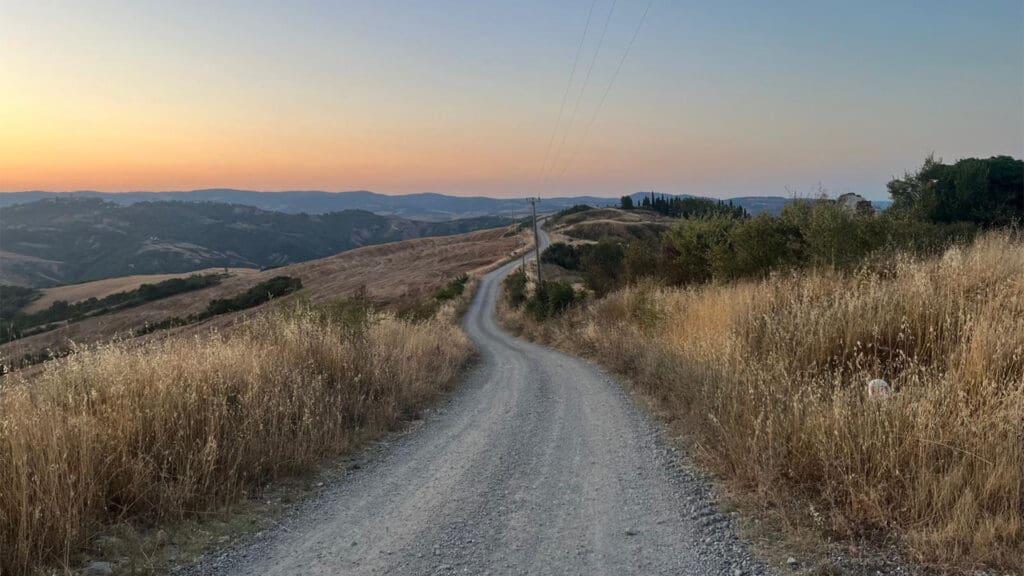
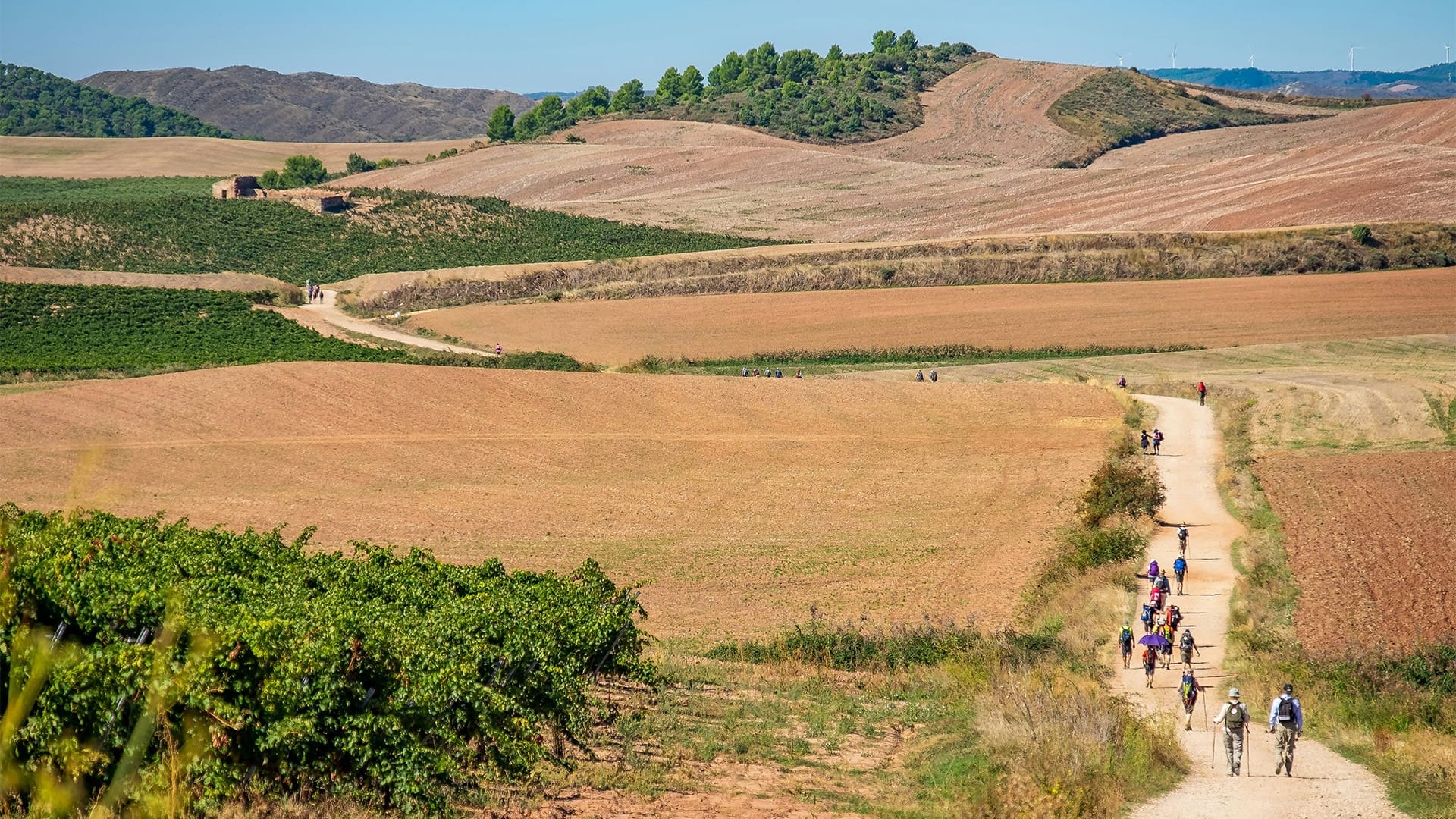
Sweaty, smelly, and wholly stripped of artifice, one day last June I found myself in the Galician cathedral of Santiago de Compostela, surrounded by pilgrims. Legs stiff and blisters throbbing, our small group of twenty or so souls had found space to cluster between two pillars just before the beginning of the Mass, in sight of the altar but not of much else other than the vast array of humanity around us. There were no chairs available, but after our six-day, seventy-five-mile walk on the way to this place—our pilgrimage on the Camino de Santiago—we were grateful even to rest ourselves on the cold stone floor.
It is hard to describe the thrill of worshipping together at the end of such a journey. Each of us pilgrims had been in some way both broken down and built up along the trail, and as an increasingly cohesive group of strangers we witnessed transformation in ourselves and each other along the “Way of St. James,” as it is called in English. Somewhat unusually for a pilgrimage tour group, we were not only of different ages, regions, and vocations but also of different religious backgrounds. About half of us were Catholic or Orthodox, of varying degrees of practice. Most of the other half were Protestant (of varying denominations), and a small handful were without a formal faith affiliation. And here we were now, at this Corpus Christi Mass, at the end of our surprising walk together.
What does it mean to go on pilgrimage with people who do not share some of your most essential beliefs? Fifteen miles per day is a long way to walk without leaning on each other, and somehow denominational differences matter less when you’re just trying to make it to the next fountain in which you can mutually soak your feet. Most of us shared assent to the Nicene Creed, and those who didn’t brought wisdom from other traditions that informed open and deeply personal conversations along the road. It was curious to find myself talking with Baptists not about infant baptism but instead about ideas for building intentional faith communities; with non-Christians about the role of original sin in human nature; and with Orthodox Christians about the importance of physicality in faith practices. In conversation and in relationship, along the way we were surprised to find bonds rapidly strengthening between us.
But there was pain in the building of these bonds as well. Toward the end of the Mass at the cathedral, for example, just after Communion, I turned around to find myself faced with a young Protestant with whom I had spent a great deal of time on the trail. With the bustle of communicants swirling around us as they approached one or another of the two dozen priests spread throughout the church, my friend, barred from receiving, said to me quite directly that he had never felt so excluded.
We talked the matter over at dinner afterward, uneasily. No amount of gentleness or goodwill can put off the point at which one must say, “But I do not share your beliefs about this,” or “I think you may be wrong about something truly essential.” And yet we found ourselves having to say these things to each other, leaning on our shared humility as sinners as our comfort.
In our own denominationally walled cities, we may feel that we and our children are somehow extra–safe. But experiences like mine on the Camino suggest otherwise—we need ecumenism, too, to strengthen faith.
When I was in graduate school, I developed a deep appreciation for ecumenical intellectual communities. The faculty and graduate students in my department were mostly (though not all) people of strong, consistent Christian faith, but they were by no means all of the same denomination. At a university guided by the Catholic intellectual tradition, our academic community within the department thrived on the iron-sharpens-iron relationships between Catholic, evangelical, Reformed, and secular thinkers who all took both faith and reason seriously. Not only my scholarship but also my faith was strengthened by these interactions with diverse believers as we directed ourselves toward the common goal of excellent, faithful teaching, writing, and research in our discipline. In friendship, I also learned a great deal from my fellow graduate students who were not Catholic, especially those who were parents and lived out beautiful examples of Christian family life and hospitality before me.
Yet, as at the cathedral in Spain, ecumenism in graduate school also brought pain. I remember a heartbreaking conversation with a Reformed friend there who, when encountering a Catholic prayer that she felt treated Mary as an object for worship, could not agree with me that Catholics did not worship her. There were also students who felt excluded or devalued at times by the implication that their faith traditions were insufficient; it is harder to be a non-Catholic in a Catholic setting than to be a Catholic there. I have had similar experiences myself as a Catholic in evangelical settings, for example, or among Latter-Day Saints—despite the overwhelming goodwill that I also experienced in those same settings.
In my current hometown in Virginia, my family lives in something of a Catholic bubble—it is decidedly not an ecumenical setting. Ours is a Benedict Option–style parish, with all the plusses and minuses that come with it. It is something of a flipped situation from the one I knew in my pre–graduate school years, during which I was always in the minority and everyone else seemed to believe differently from me. Nowadays, however, while we are grateful for the faith community surrounding us and we value the moral and faith protection it offers our kids, my husband and I have found the need to deliberately teach our children the value of ecumenism. It does not happen naturally here, so the gift of a strong denominational setting requires a different kind of balance than my own childhood setting did.
Talking with our kids about experiences like the Camino has been one way that we have met this need; introducing our children to dear non-Catholic friends and neighbours and showing them how much we value these people and how much we can learn from their faith has been another. We have also found our extended family, not all of whom are Catholic, very helpful in teaching our children about ecumenism. Having a religiously diverse extended family has provided many opportunities to teach our children how to respect and discuss differing beliefs in a context of familial trust and love.
As Christians become more embattled within the wider secularizing, progressive culture, it is tempting to pull back not just from these sorts of associations but also from ecumenism generally. In our own denominationally walled cities, we may feel that we and our children are somehow extra-safe. But experiences like mine on the Camino suggest otherwise—we need ecumenism, too, to strengthen faith.
Ecumenical experiences bring more than challenge, and more than pain. My young Protestant friend and I were both hurt by the reality that we could not share Communion at the end of our journey together—he by the exclusionary nature of Catholic communion, and I by my inability to bridge that gap with him completely. The sacraments are too important to allow much compromise on either side. Yet I am unsure that I would have made it to the cathedral without my fellow pilgrims. It was a pair of Orthodox friends who initiated the pilgrimage in the first place and invited me to help lead it. It was a Protestant schoolteacher who told me, when I felt like I couldn’t take one more step, how much it helped him in such times to sing Sunday school songs in his head. It was a whole table full of pilgrims—Catholic and Protestant—who said to me when I broke down in tears before the last day of walking on swollen, blistered feet, “We will walk with you.”
While the Camino de Santiago may be a historically Catholic path, it is walked for many reasons by around fifty thousand people each year—and that is only counting those who receive the official certificate of pilgrimage, not those who join the trail for a shorter walk than the required one hundred kilometres. Many of these people are not Catholic (or if they are, are not practicing). And probably about half of the congregation at the Mass I attended at the end of the Camino did not receive Communion.
On the Camino, we walked within the tradition of one faith, and yet the path leaped above our differences in astonishing ways. One fellow pilgrim described the experience as inspiring “a startling intimacy with strangers,” one that bridged all sorts of gaps not only through discourse but also through shared experience. It did not bridge every gap, but it showed us how much we Christians, especially, need each other.
We will walk with you, my fellow pilgrims said to me when I was falling. Christians believe that we are members of one body through our baptism, even when we suffer divisions. How can we hope to survive our anti-Christian world if we reject the opportunity to walk toward Christ together?