
I
In his final encyclical, Dilexit nos, Pope Francis called on philosophers to turn their attention to the heart. “The heart has been ignored in anthropology,” he wrote, “and the great philosophical tradition finds it a foreign notion, preferring other concepts such as reason, will or freedom.” When we lose sight of the heart, Francis warned, we lose the possibility of personal intimacy; we become strangers to ourselves. More than this, the eclipse of the heart lies at the root of many of our gravest global crises—poverty and inequality, war and the constant threat of war.
“If we devalue the heart,” Francis continued, “we also devalue what it means to speak from the heart, to act with the heart, to cultivate and heal the heart. If we fail to appreciate the specificity of the heart, we miss the messages that the mind alone cannot communicate; we miss out on the richness of our encounters with others; we miss out on poetry. We also lose track of history and our own past, since our real personal history is built with the heart. At the end of our lives, that alone will matter.”
But what is the heart?
The language itself is treacherous. Talk of the heart easily slides into sentimentality. “War comes from heartlessness” can sound squishy, a way of gesturing at moral feeling while sidestepping concrete causes and practical solutions.
Confusion surfaces closer to home as well. In ordinary speech, the heart is often pitted against the head, as though one must choose between them. “I followed my heart when I should have listened to my head,” or vice versa.
Francis resists this framing. In Dilexit nos he declines to offer a neat definition of the heart and seems deliberately cautious about doing so. “The very meaning of the term is imprecise and hard to situate within our human experience,” he notes. Perhaps this is because the heart resists being treated as a “‘clear and distinct idea,’ or because it entails the question of self-understanding, where the deepest part of us is also that which is least known.”
And yet Francis does not abandon the effort. He urges a shared task of retrieval, a patient inquiry into a neglected dimension of human nature. The heart, for him, cannot be reduced either to rational calculation nor to emotional response. It is something irreducible and essential, a third term without which both reason and feeling become distorted.
If the pope was right, our cultural amnesia about the heart is not incidental to our present disarray. In an age marked by political tension, mass loneliness, and the rapid infusion of artificial intelligence into every facet of our lives, it is urgent that we investigate Francis’s proposal. Clarifying what the heart is—and why its absence proves so destructive—may help us preserve what is best about our humanity in the face of dehumanizing words, judge more accurately what forms of technological developments are worthy, and help us see a more vibrant way forward as persons and as societies.
While Pope Francis does not precisely define the heart in his 2024 encyclical, he does give an impressionistic account. He describes it as “a coordinating centre that provides a backdrop of meaning and direction to all that a person experiences,” enabling a fuller grasp of reality. The heart, he suggests, is the “locus of sincerity, where deceit and disguise have no place. . . . It is the part of us that is neither appearance or illusion, but is instead authentic, real”—the inmost core of our person.
This echoes Francis’s earlier writings. In the 1990s, writing as Jorge Bergoglio, he composed the preface to the Italian–language edition of Luigi Giussani’s The Religious Sense, which develops the notion of the titular faculty in contrast to other forms of knowing. Each kind of study, Giussani argues, has a means of investigation adequate for the subject matter it addresses: Apodictic proofs are appropriate for mathematics and logic, and the scientific process is appropriate for physics and biology. The adequate method for questions of ultimate meaning, according to Giussani, belongs to the religious sense. This sort of knowledge is not arrived at by deduction, induction, or abstract investigation but by a kind of judgment that brings the whole person to bear—by an encounter with reality as it is lived, involving not only the reason but also experience, emotion, and intuition.
In his preface, Bergoglio explicitly recognizes Giussani’s account as consonant with his own understanding of the heart. “Existential certainty,” Bergoglio writes, emerges from a “multitude of experiences and signs.” It is not lodged in the head alone “but in the harmony of all the human faculties.” Such a way of knowing is not opposed to explicit reasoning processes but has an ampler notion of reason, which includes experience, judgment, and intuition. “The heart,” Bergoglio notes, “is the unity that gives harmony to all of being,” assessing reality based on the “totality of factors” encountered in that reality. The heart, in this sense, is the faculty of judgment that brings the whole person to bear.
It is helpful here to turn to an earlier theologian, John Henry Newman. In An Essay in Aid of a Grammar of Assent, first published in 1870, Newman argues that assent to the important truths in our lives is not generally the result of a single argument or proof but a product of the “illative” sense. “Illative” comes from the Latin for “bringing together,” and such a sense synthesizes disparate experiences, thoughts, feelings, and lines of reasoning, not deductively but implicitly as we go through ordinary life. Day to day, we do not operate by formal proofs but by a habit of mind that expresses the sum total of our experiences, reasonings, and judgments (qualified by our mood, bodily state, exterior circumstances, vices, and so on).
Conversion, Newman insists, follows this same pattern. Take authentic conversion to a new faith: Such a change is not generally wrought because of a perfect argument, and if it comes from mere passion, it will not last. It comes instead through the cumulative effect of certain experiences of love, beauty, conversation, reasoning, relationship, and stirrings of conscience.
Day to day, we do not operate by formal proofs but by a habit of mind that expresses the sum total of our experiences, reasonings, and judgments.
Giussani describes a similar dynamic. Knowledge of what matters most, he argues, arises through an open encounter with reality in the fullness of its factors. Consider the decision to marry. One does not arrive at such a commitment by assembling a chain of logical proofs. One arrives there through the lived experience of love; through shared history, counsel and encouragement from friends, a look exchanged, a word spoken, a judgment slowly clarified. Thought and feeling, observation and intuition, memory and hope—all of these come together, and commitment follows.
For this reason, Giussani insists that important decisions should be made with the help of a community. Others can help us perceive what we are missing, encourage us toward necessary risks, and correct distortions in our vision. Judgment of the heart, while personal, is never purely private.
Newman offers a further distinction that sharpens this account: that between “notional” and “real” assent. Notional assent involves recognizing the objective validity of a claim, while real assent involves experiencing that claim as concretely true. I might notionally acknowledge that it is better to be honest than dishonest in business dealings, but a real assent would also involve my feeling this to be true; it would involve my acting according to this truth. In other words, a real assent engages the whole person: the intellect, the feelings, and the will. It is an assent with the heart, where the wholeness of who we are meets the wholeness of reality.
For Pope Francis, then, the heart is what enables us to make such synthetic judgments with our whole person. It is the capacity by which we commit ourselves not on the basis of fluctuating feelings or isolated arguments but from a unified apprehension of what is true and worthy of our lives. Commitments formed in this way are not provisional or performative. They are made—quite literally—from the heart.
The heart must be distinguished, as noted at the outset, from both mere reasoning and mere passionate reaction. It includes and goes beyond both. A brief turn to classical philosophy can help clarify this point.
Plato famously described the human soul as composed of three parts: reason, appetite, and will. The appetite desires, the will chooses, and the reason deduces things. Yet Aristotle observed that not all truths are reached through the process of deduction. Some are simply seen.
Consider the way you behold someone you love, reflect on a cherished memory, or take in a sweeping mountain view. These are not acts of analysis but of perception—moments of seeing something whole. Aristotle called this capacity intelligence: the faculty by which we grasp reality directly, without breaking it down into conceptual parts.
Reason, in this light, is the power by which we arrive at conclusions through argument. Intelligence is the power by which we apprehend reality as it presents itself. A gaze of love or the experience of beauty is not irrational; it is a form of knowledge—immediate, integrative, and responsive to the fullness of what is before us.
The twentieth–century Thomist philosopher Jacques Maritain described this kind of knowing in terms of “connaturality.” Connatural knowledge arises when the knower and the known share a kind of affinity—when a truth resonates with one’s formed nature. One can master moral theory in abstract terms without being a good person, and one can be a good person while possessing little formal training in ethics. Knowing, in this sense, flows not only from instruction but from formation.
Imagine an old grandmother who is simple but wise. When she arrives at a moral conclusion, it is not through rigorous deduction but through a kind of synthetic judgment. She decides what to do based on a lifetime of knowledge gained through relationships, experiences, emotions, and processes of reasoning and dialogue. She holds all these in her understanding, and they have, to that extent, become part of her nature. When faced with a moral choice, certain options will resonate with her, and others will not.
This is the knowledge of connaturality—what I propose is the heart at work. The heart is our understanding in its fullest sense, not merely as a deductive process or a passionate response, but as the sum total of what we understand to be true, in line with the person we are. In this sense, the heart is who we are, and it operates by way of resonance, the synthetic judgment of the reality before us. The heart, the understanding, is the human person in interior unity. It brings together all the faculties of a person—experience, passion, reason, desire—and sees reality in its wholeness. To lose the heart is thus to lose the person.
In calling for attention to and revival of the idea of the heart, the pope invites us to see, act, and experience ourselves and others according to a greater unity, not neglecting any part of who we are. An emphasis on the heart is a rebuke of any kind of reductionism. Societies are unhealthy when the human person is reduced to a mere facet of himself.
This is true not only in theoretical discussion but in human relationships. Pope Francis illustrates this through Fyodor Dostoyevsky’s novel Demons, in which the “heartless” character Nikolai Stavrogin has reduced himself to a pleasure-seeking machine and others to tools for his own pleasure. Stavrogin cannot achieve real intimacy with anyone because he cannot see the wholeness of others or of himself; he embodies an atrophying of the unity of the soul in favour of the fracturing of personality. He is pure appetite; he has no heart.
On a mass scale, politicians who reduce people to numbers in statistical calculations similarly operate without a heart—as do leaders who send young people to their death in conquest or for ideological warfare. They fail to appreciate the wholeness of the persons involved, always reducing them in some way to something less than human. Those who neglect the poor suffer a similar deficiency. When we encounter an unhoused person on the street and only see their dirtiness or obnoxiousness, we are missing their wholeness and neglecting to bring our own whole self into their presence, setting up a wall instead of experiencing the pain or suffering we see. To see truly with the heart would be to witness the full dignity of the person—to feel oneself moved and then to act on that movement.
An emphasis on the heart is a rebuke of any kind of reductionism. Societies are unhealthy when the human person is reduced to a mere facet of himself.
In the early part of the Second World War, before the innovation of the death camp, the Einsatzgruppen, known in English as the Holocaust by Bullets, was marching through Eastern Europe. When orders came down, many in the military were shocked. They had not signed up to round up civilians—men, women, and children—and to execute them. Christopher Browning relates in Ordinary Men how an officer broke down in tears as he transmitted the new directives from on high. He allowed the men to refuse this order if they felt they could not carry it out. Some did refuse. Others obeyed but spent the night weeping or puking. Still others suffered nightmares, grave psychological distress, and severe illness.
The directive to kill came not just from some brutal ogres in the Party but, as Viktor Frankl notes, from scientists and professors. There was a cold logic to what was being done. Moral theorists had argued that the proper unit of moral consideration was the biological community rather than the individual. For the good of the whole, it was necessary to liquidate those who had a deleterious effect on the body at large—starting with the disabled and sick, who drained resources, threatened to spread disease, and allegedly carried dysfunctional genes. It extended to those who were “antisocial” or of an “inferior” ethnic stock.
In practice, the officers and men in the Einsatzgruppen were told that killing was the rational thing to do and that their qualms were signs of weakness. In order to help, the higher-ups plied the men with drugs and alcohol and anaesthetized them with movies at night. When reason had gone astray, the heart, I would suggest, struggled still. The integral interiority of the person looked on the innocent victim, bringing to bear the whole self and the experience of human life, and reacted so violently against the orders given that the men’s very bodies and minds gave way under the strain of the fracture that their actions were creating within them.
Reason and will had become detached from the heart. The person was broken. Thus, in a precise and non-rhetorical way, the people who created this system of organized murder were heartless. The captain who ordered the killing with tears in his eyes acted in accord with obedience, fear, or a sense of duty—but the weeping was from the heart.
In The Religious Sense, Giussani writes about the ways synthetic knowledge can be blocked. It is easy for the eyes of the heart to be blocked by rationalism, but sentimentalism can also cloud.
Knowing with the heart does not mean taking every passing passion as a sure guide to truth. We sometimes say “My heart is telling me” when we are really talking about our passions, fears, or anxieties. It is important to distinguish the heart, then—which is the seat of a synthetic, personal judgment—from sentiments or passions.
The faculties of a person can become unbalanced or out of proportion, so that passions overly influence reason, or analytical reason becomes disconnected from experience. Imagine a married couple who promised lifelong fidelity to each other. One of the spouses may lose the “spark” and no longer feel themselves excited by the relationship and may even find the other spouse annoying or distasteful. These may be taken as signals “from the heart” that the two ought not to be together. But these feelings can be influenced by a host of factors, including mood, stress, anxiety, lack of virtue, and passing conflict. The feeling of the moment may override the commitment of the will and the memory of the goodness that the beloved possesses. It may override the reason which says that commitments ought to be adhered to or that a greater good might come from endurance and reconciliation.
This is a state not of following the truth of the heart but of fracture. The heart is something more than moods, sentiments, or passions. The real judgment of the heart comes from a clear attention to the reality at hand, taking it in with all of our faculties and in its integral wholeness. To achieve this clarity of the heart is a work of virtue—and, as Pope Francis says, this is the virtue of wisdom. Discernment of the heart is not automatic. It requires formation, as other virtues do.
We cannot discuss the heart without giving the final word to love. Dilexit nos, after all, translates as “He loved us.” Whatever else the heart is in our language, it is the place from which love comes and where it is received. This is exactly right. Love is a gift of the whole person to the whole person. It is not only a reasoning process, a decision, a feeling, or a wish; it is all of these together in integral unity. Love is the communion of heart and heart. This is why Cardinal Newman took as his motto Cor ad Cor Loquitur, “Heart speaking to heart.”
Distinguishing the heart from the passions can also give us clarity about love. We often confuse appetitive desire, lustful attachment, or other bodily signals for love, but true love is the integrated response and commitment of the whole person. Understanding love this way can free us from sentimentality, confusion, and the reduction of other persons to something less than what they are.
What Pope Francis desires is that we remember the heart, our own and that of others, in all we do. If we are in business, we must remember the hearts of our employees; we must recollect that they are not reducible to their performance or profit generation. We must see their heart with the eyes of our own heart. If we are in government, we must take a similar account of people and act not only with our will or speculative intellect but with our whole selves. And if we serve in the church, the heart will help us to not be hobbled by our passions, including anger and fear, which would otherwise hamper our ministry.
The heart is not a private Catholic teaching but a constitutive part of understanding human nature. In this respect, an understanding of the heart is something accessible to all and with the potential to elevate every sphere of human activity.
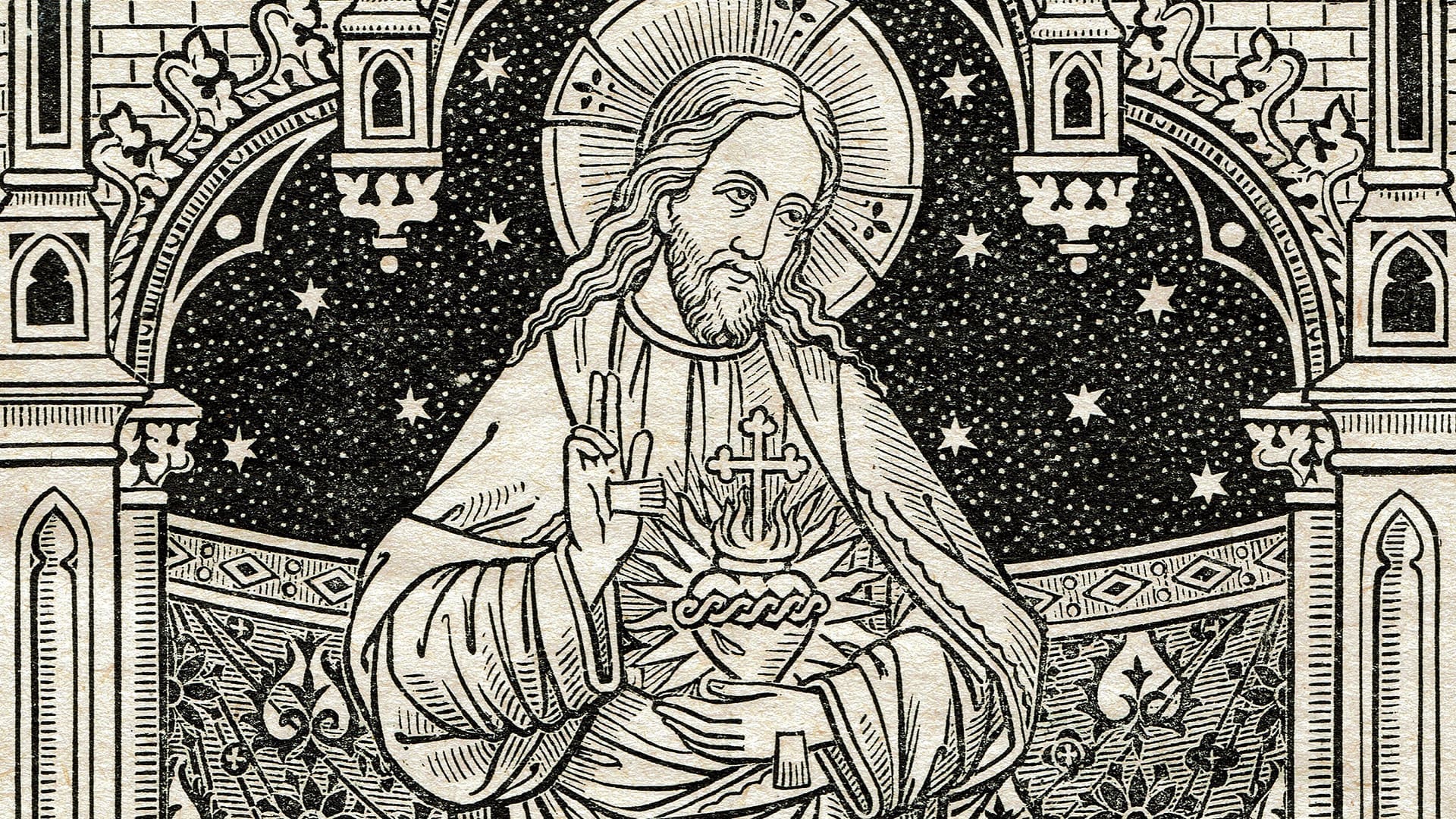
For Catholics especially, the pope points to the centrality of the idea of the Sacred Heart. This symbol, which is also a reality, tells us that above and before all else, we are unconditionally, totally beloved. Our love for others flows from the truth that we were first loved. As such, it is significant that the pope’s final major statement is so simple as to be heard on the lips of grandparents all over the world, speaking into little ones’ ears the words, “He loved us.”