


T
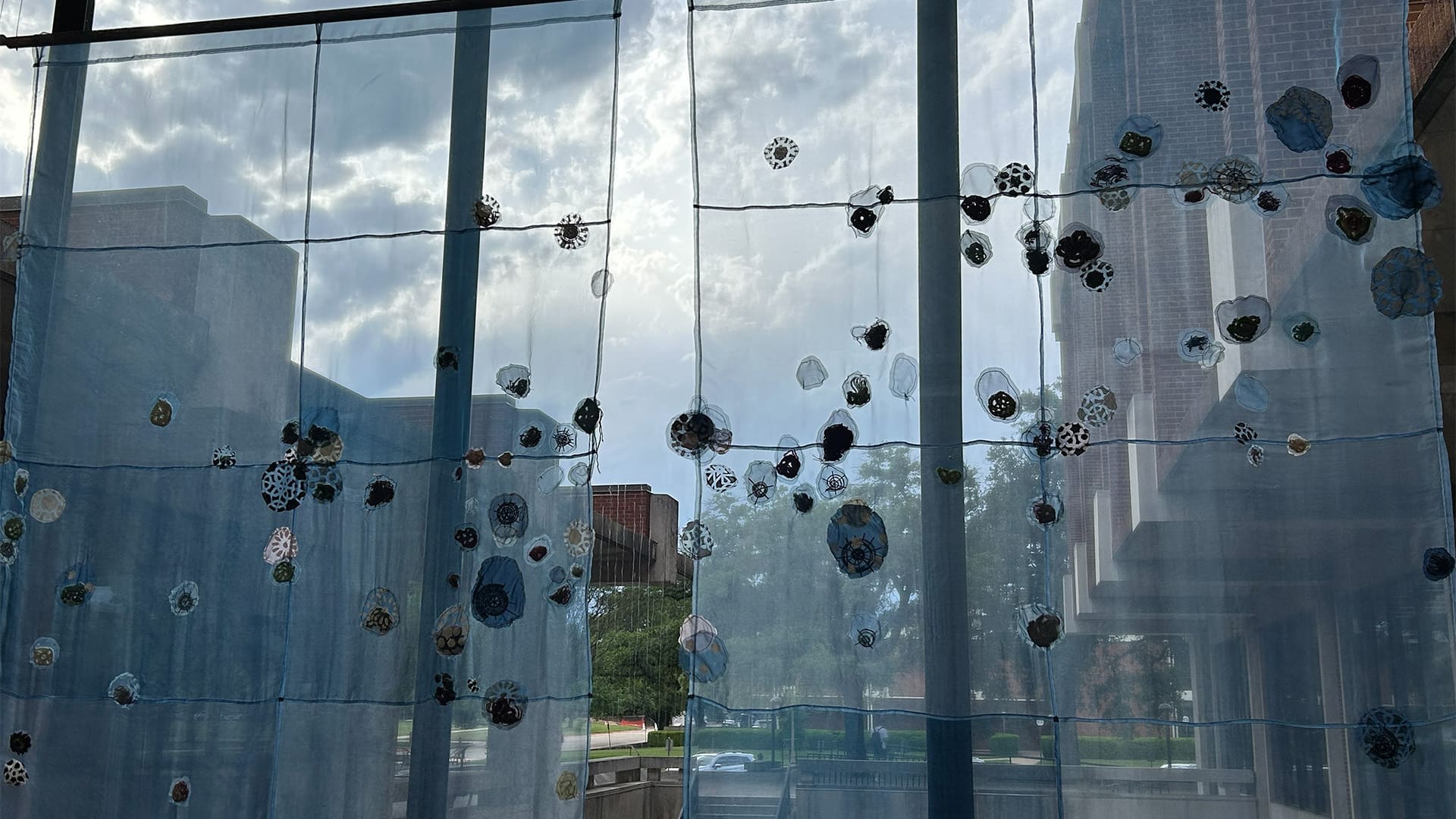
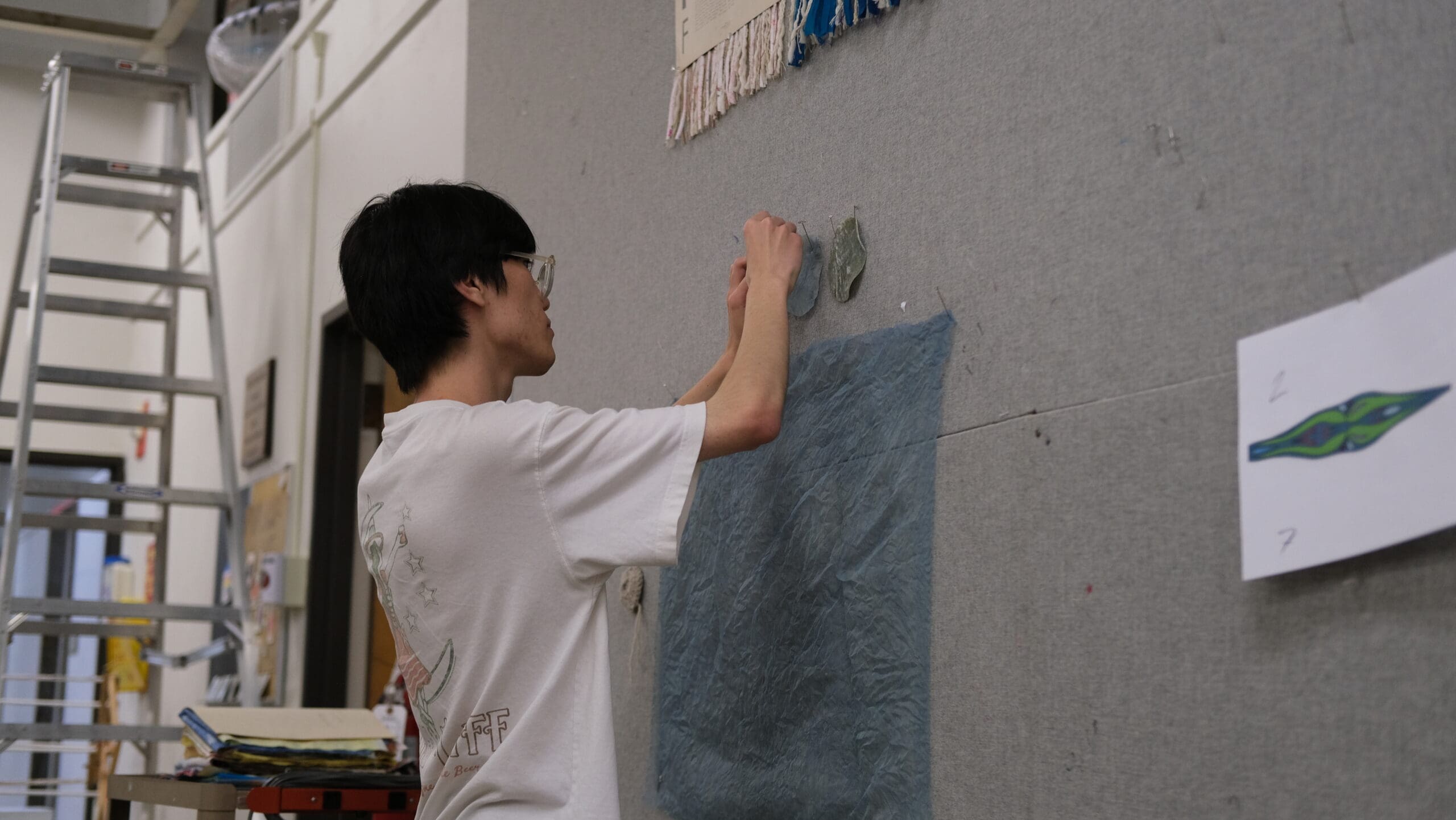
The average time it takes me to make a scatter plot is about one millisecond: a few keystrokes, a click, and then a neat constellation of dots blooms on my screen. But one Saturday afternoon last May, I spent nine solid hours constructing a scatter plot by hand, pinning hundreds of silk-gauze circles—each one a data point—to indigo-dyed panels until my shoulders burned. Accustomed to desk inertia and the warm glow of a computer screen, I felt the correlation in my aching arms by the end of the day.
Why bother? Why choose the deliberate, slow version of a task that software can complete instantly, especially when the point of a scatter plot is, in part, speed—a quick way to notice a pattern you might otherwise miss?
I have spent years teaching and working with data in a culture that often treats people as raw material: attention to be captured, behaviour to be nudged, lives to be managed at scale. Sometimes I’ve wondered whether I’ve ever touched a data set that didn’t carry harm somewhere in its pipeline. This handmade scatter plot project began as an attempt to answer a different question: What might it look like to work with data collected with empathy and embodied with care?
In design circles, a movement toward slower, smaller data is gaining traction. Data physicalization is the practice of translating data into tangible form: making numbers into objects you can hold, stitch, walk around, and inhabit. The field is growing, in part, because new tools make it easier: surface-design technology, digital fabrication, textile machinery. But I think something deeper is going on too: a hunger for forms of knowing that resist frictionless ways of learning and return us to attention, context, and one another.
In Fewer, Better Things, Glenn Adamson calls this “material intelligence”—the practiced ability to read the world with your hands, and to give it new form. As we accumulate more things, he argues, we outsource more of the knowledge required to make, mend, and understand them. Something parallel happens with data. Our movements and interactions can be tallied and reduced to zeros and ones, but the ease of that reduction can widen the distance between us and our fellow human beings. We become fluent in measurement, clumsy in meaning.
So I went looking for a new kind of data set, and for people willing to make a new representation of it with me. Through a referral from a good friend, I connected with psychologist Sarah Schnitker at Baylor University (where I teach), who introduced me to her post-doc Merve Balkaya-Ince. In partnership with the Institute for Family Studies, Merve had gathered survey data on virtue development in Muslim adolescents, and her three-wave study followed participants before, during, and after Ramadan. They self-assessed their virtue development and answered questions about belonging, compassion, and gratitude.

I was struck by how perceptive Merve’s questions were about the intricate interplay between family, identity, faith, and religious practice. Her evident care to represent not only the data but also her community infused the study with a meaning I don’t often encounter. And the response rate agreed: over 90 percent. If you’ve ever tried to persuade someone to take a survey, you know the cajoling required. In this case, participants loved it, and when Ramadan arrived the following year, many asked to take it again.
We often treat data like a resource: something to be harvested, refined, and converted into value as quickly as possible. The pace leaves little room to ask how the numbers were gathered, or what they cost. Merve’s study belonged to that rare category: data collection that inspired joy and pride in the participants, in this case Muslim-American youth who are so often missing from the virtue-development literature. It felt less like extraction than stewardship—data received as a gift and meant to be handled with care.
Much to my delight, Merve agreed to let me organize a data art project using her results. Merve is a Muslim, and trusting her data to three Christian artists and researchers required a foundation of trust. Soon we had a team. Sarah Schnitker connected me with Sarah Mosher and Tina Linville. Mosher, a costume designer, theatre arts professor, and environmental humanities scholar, brought a fierce imagination and a capacity for scale. Linville, a fibre artist and professor of studio art, brought technical mastery and a sustained attentiveness to the humans doing the making.
I had pictured the project as a private, data-redemption experiment. Mosher ended that illusion quickly. The three of us began designing something public: an installation large enough to hang in Baylor’s main library concourse.
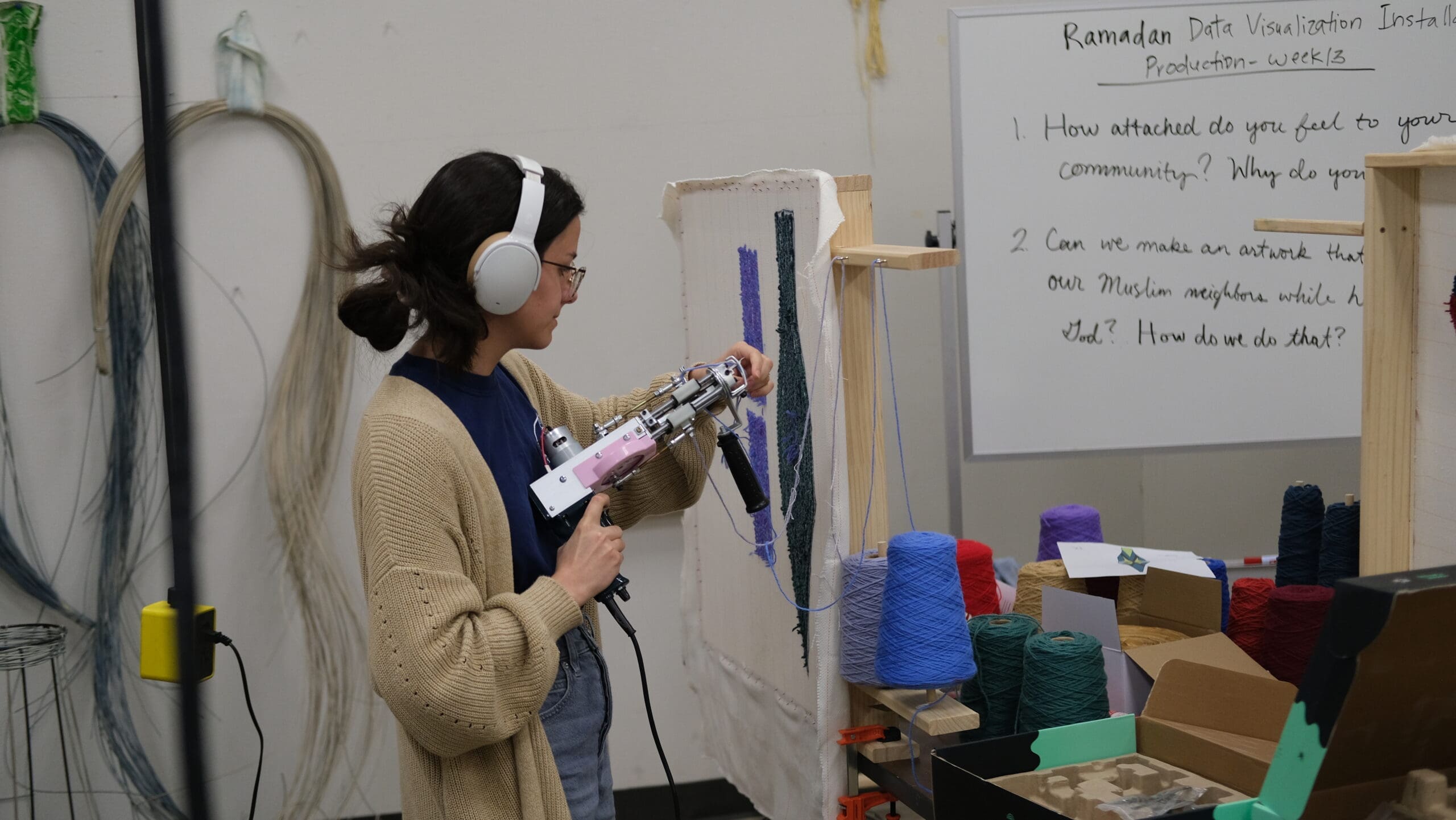

We met every couple of weeks, spreading sketches and charts across tables, asking the same question from different angles: Who is this for? We wanted to honour the lives behind the numbers, the community whose practices and prayers had made the data set possible. Colleagues introduced us to local imams and leaders in local interfaith groups in and around Waco. We took a field trip to the Dallas Museum of Art to look at the Islamic Art Exhibit, toured the North Dallas Mosque, foraged in a sustainable crafting shop. We watched a prayer service from the women’s room upstairs, an experience that proved profoundly moving to our design team, and fundamentally essential to understanding the measures on community and gratitude in the data. In the conversations that followed, many people met us with a generous caution: warm but guarded. Then we asked about gratitude during Ramadan, and the room shifted. The imam’s face lit up as he talked about iftar (the meal at sundown) and what it was like to gather throughout the nights of Ramadan with his community. Stories surfaced—about fasting and food, yes, but also about steadiness, care, and being held by a rhythm larger than one’s private life. These conversations didn’t just add “colour” to the data. They changed how we read the data.
The project’s materials soon began gathering their own meanings. Because Mosher’s class emphasized sustainable design, we chose natural fibres and natural dyes. Indigo became our anchor colour, then cochineal and a bright light green that comes from dyeing wool with Texas bluebonnets. One morning Tina posted a photo of the indigo cloth drying on her clothesline, stirring in the wind, and for a moment it felt like we could already see the installation’s future: a field of blue waiting to hold hundreds of small marks.
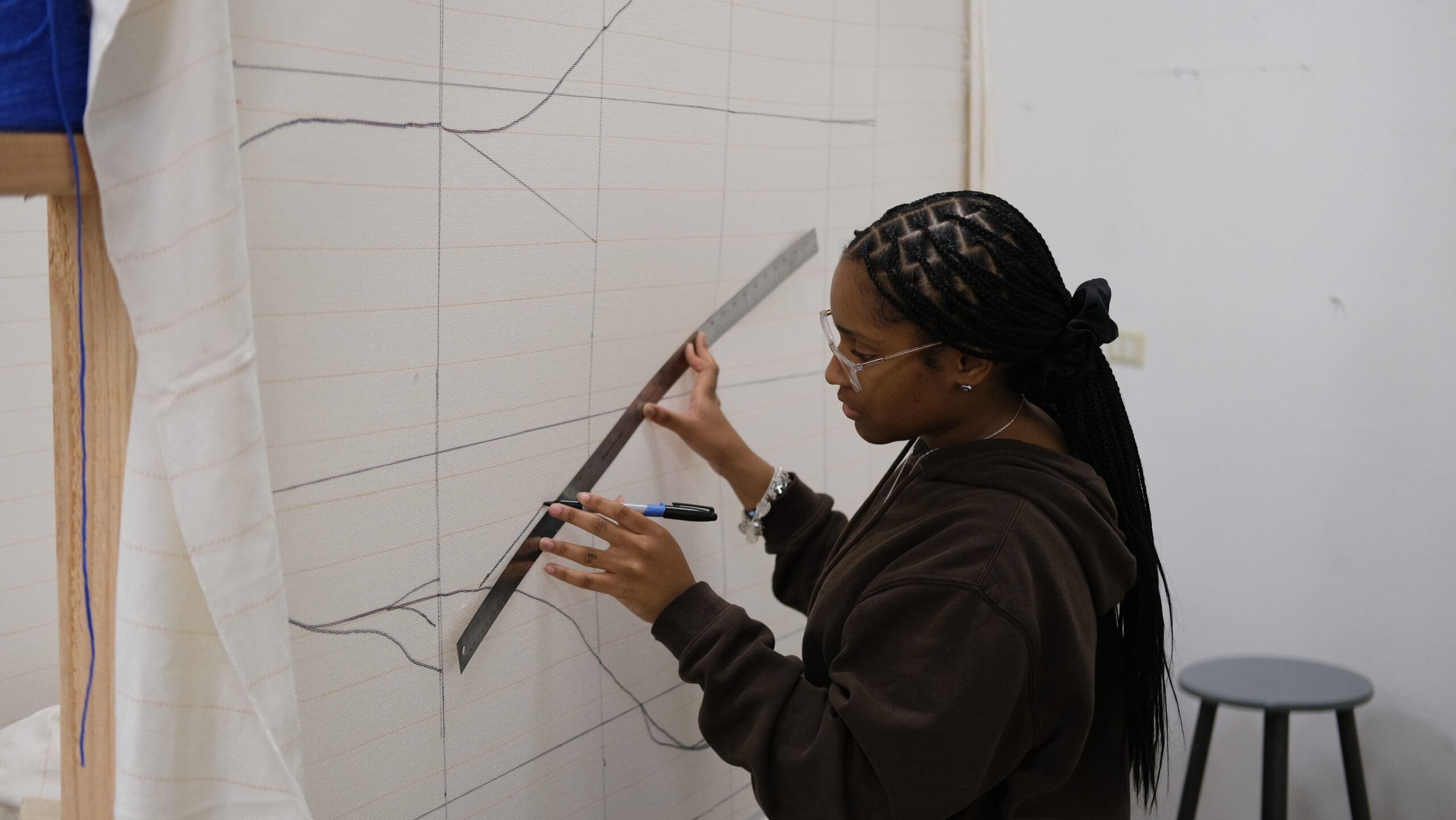
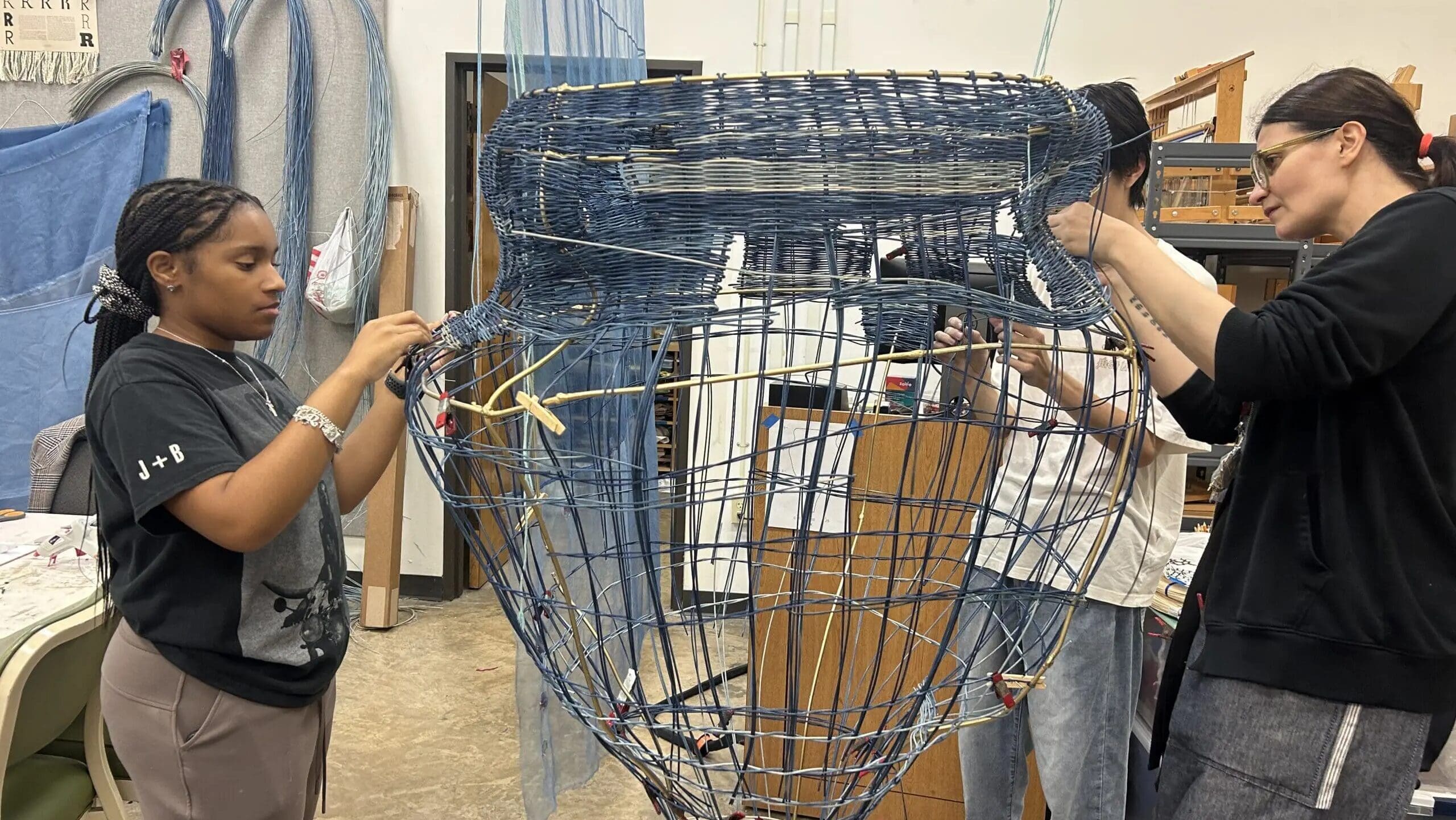
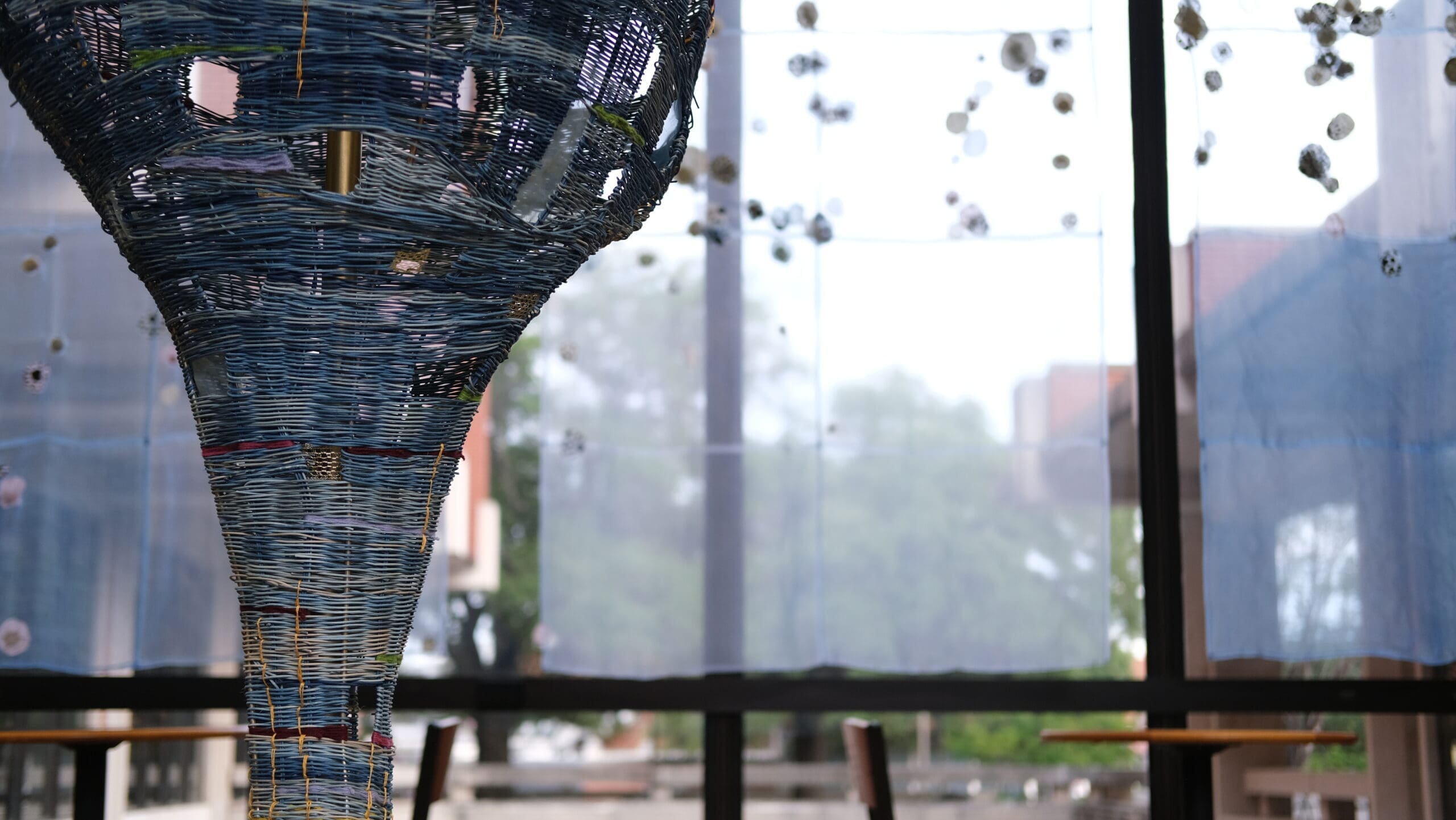
While the cloth dried, the student team made design decisions. They kept returning to an interplay between gratitude to community and gratitude to Allah (as the study defined it). As the resident data scientist, I created many iterations of charts showing the gratitude dimensions that could serve as a springboard for the fibre art. The design team ultimately converged on several forms: a histogram-shaped basket to show the distribution of gratitude to Allah, a tufted histogram-shaped rug to show gratitude to community, and two indigo panels to show participants’ gratitude trajectory before and after Ramadan. The point wasn’t to blur theological differences but to honour what the survey measured, and the lives behind those measures.
With the design set, we set about making the relevant pieces. We forged new trust between departments as the theatre students welded a light metal frame for the fibre students to support the tremendous basket. We consulted with the interfaith group on campus about what colours to screen-print on the silk-gauze circles.

As we entered the last few weeks, we needed more hands to complete the work. I called everyone I knew who could hold a needle and asked them to spend their Saturday sewing the silk-gauze circles onto panels. It was a last-minute ask during the frantic month of May, and I expected the majority to be busy.
Instead, everyone showed up—alumni of the art program, family friends from my hometown, people from churches across town. A group of my neighbours and friends strung beads in a windowless theatre room until past midnight, laughing and swapping stories. A group of kids threaded beads on a picnic blanket, guided by our theatre students. We licked the thread and sent it through needles, leaving bits of our blood behind on the panels. We unloaded the panels backstage and flew battens in to make space to pin the circles.
I have worked as a community organizer before, but never have I felt the tangible community support that showed up to sew the panels—an indigo-panel raising with the spirit of a barn raising. On a personal level it challenged my tendency toward a scarcity mindset—a hesitation to ask for help or a favour unless I have previously helped a friend. Gratitude increased the bar from reciprocity to abundance. I would bike home from the work and feel an almost tangible sense of community growing like a mycelium network throughout Waco.
On installation day, small kindnesses arrived like provisions: a cool drink for our team lead before she climbed an eighteen-foot ladder, coffee and baklava for the final push, bags of yarn carried home and returned transformed. People brought not only their hands but also their hidden competencies—I learned who could weld, who could bead, who knew how to make something sturdy and beautiful.

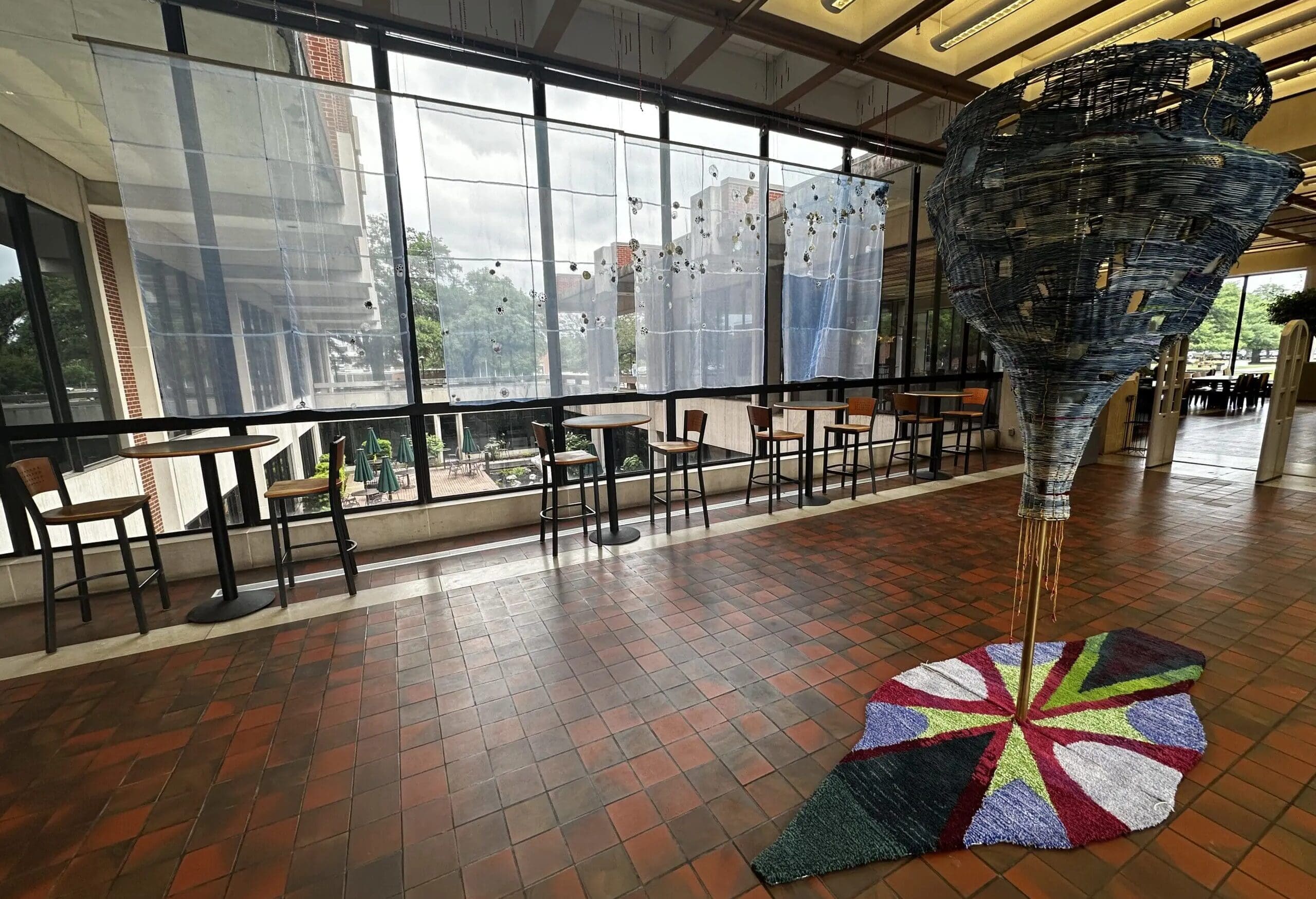
At a time when the pressure to outsource craft to machines feels onerous, the practice of embodied data analysis is transformative. No more 0.53-second scatter plots. Instead, we climbed ladders, threaded needles, and stretched our muscles to pin circles into their configurations. I thought about every individual I pinned to the panel. What happened to them over the course of Ramadan that increased or decreased their gratitude to community? To their God? We mapped colour to sense of belonging, and as we printed architectural motifs on the circles, I wondered about the gradients of belonging—how do we make it? how do we keep it?
The practice of embodied data immersed me not only in understanding the data but also in the prayers, concerns, and hopes of the participants who generated the data. A pattern can be seen in a millisecond; it can only be honoured at human speed. Making the work alongside friends, neighbours, colleagues, and students activated and enlarged my community. The slow, methodical attention of beading, knotting, sewing, and weaving ushered us into a space to consider the dimensions of our own gratitude—quietly, almost without noticing, until it was suddenly there.


