
F
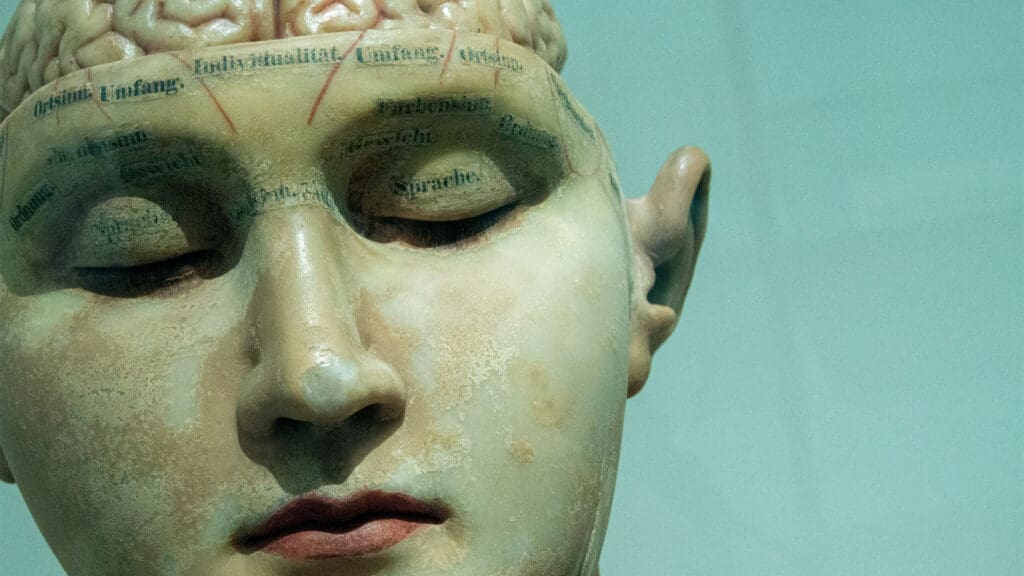
Few slogans have so powerfully shaped the modern imagination of freedom as “My body, my choice.”
Sounded in regard to abortion, the slogan frames pregnancy primarily as a matter of bodily control and individual decision. In discussions of sexuality and gender identity, the body becomes each person’s prerogative to define. During the pandemic, resistance to mandates returned again and again to the refrain that the state has no authority over an individual’s body. And at life’s edge, the logic appears in the conviction that if life is mine, I may choose to end it.
But whenever the language of self-ownership hardens into a claim of exclusive ownership, could it also leave us strangely alone and unfulfilled? A woman in crisis pregnancy may grapple with abstract autonomy, but she also longs for someone to walk with her. A young person unsure of their gender identity is searching not only for rights but for belonging. A patient in terminal pain chiefly desires not dominion but a bedside presence. Pandemic protests were never just about rules; they revealed deeper questions of fear, trust, and how we should live together under one roof.
All these situations show genuine human need. Yet each leans on a premise of autonomy that is ultimately too fragile to bear the weight placed on it. For to picture ourselves as the sole masters of our bodies is to neglect a plain truth: We are dependent creatures, woven into networks of need and responsibility. And the more loudly we insist, “My body is mine,” the more clearly and paradoxically our fragility and dependence come into view.
The Christian tradition tells us that what we cannot secure by autonomy we receive in fellowship. In this view, dignity rests not on the fiction of ownership but on the reality of stewardship. And when we see one another in this way, the body is no longer a boundary that isolates but a bond that joins.
For much of Western history, the concept of selfhood was understood as being embedded in webs of divine order, social obligation, and natural law. Then, in 1689, John Locke solidified a trend that had been coming together for decades, if not centuries: in his Second Treatise of Government he argued that every person possesses a natural right to self-ownership.
Locke’s vision that the body and all its labours are one’s own—and that by mixing labour with nature, one acquires rightful assets in the world—helped legitimize private property and the rights of a rising citizen class. Yet it also taught people to imagine even their own flesh in terms of possession. In Locke’s England, emerging legal and economic practices consequently treated labour power as alienable, something that could be contracted, leased, or sold for wages.
At the same time, Locke introduced a quiet tension that resists any absolute notion of self-ownership. Property theory describes ownership as a bundle of rights to use, exclude, and transfer, but when applied directly to human bodies, things start to go awry. Even in eras when the law treated people as chattel, contradictions persisted; agency could not be erased. People could not rightfully be transferred, waived, or abandoned like parcels of land.
Subsequent thinkers would inherit this tension and, over time, seek to resolve it in different ways. Thomas Hobbes and John Stuart Mill, though sharply divergent from Locke and from one another, nonetheless helped normalize the idea that individual rights begin with the primacy of the self. In a subtle but decisive shift, the self was no longer received as situated within moral and social order but increasingly asserted as sovereign.
American philosopher Robert Nozick carried Locke’s idea to its limit in Anarchy, State, and Utopia (1974), in which he treats self-ownership as virtually axiomatic, building a libertarian order on it. The state, he argues, should do little more than protect people from force and fraud. Above all, it must never violate the self-ownership from which all rights derive. For Nozick, “My body is mine” is not a rallying cry but the cornerstone of justice. But in making it so, the body becomes both morally inviolable and socially isolating, leaving little room for obligation, sacrifice, or shared vulnerability.
Bioethicist Peter Singer in Practical Ethics (1979) further presses the logic of self-ownership, effectively treating life as something that can be jettisoned under certain conditions. If existence is property, then ending it—or preventing it—becomes a simple act of disposal. In a different register, Judith Butler, in Bodies That Matter (1993), depicts the body as a page on which power inscribes its claims, shaped less by private choice than by social scripts.
Butler does not endorse self-ownership per se, but in her critique of sovereign agency, the body appears not as gift but as a site of inscription and regulation, remaining an object of management and control. In both Singer and Butler’s view, the body is never received as a gift; whether calculated or constructed, it remains subject to forms of mastery rather than communion.
The more loudly we insist, “My body is mine,” the more clearly and paradoxically our fragility and dependence come into view.
The brittle promise of autonomy is not confined to Western debates. In 2019, Korea’s Constitutional Court struck down the nation’s abortion ban, a law in place since the 1950s. The decision was hailed as a landmark expansion of rights and reverberated far beyond Korea, entering the global conversation about autonomy and justice. Protesters filled the streets with signs declaring bodily autonomy absolute—language strikingly familiar to Western ears—even as, behind the slogans, real women faced fear, loneliness, and the absence of support.
What began as philosophy has seeped into global systems of law, economy, and medicine, visible in the rise of wage labour during industrialization, the expansion of contract-based rights, and modern bioethics frameworks that construe consent as an exercise of personal ownership over the body. Even ordinary interactions echo it: a worker negotiating overtime, a tenant fighting eviction, a patient signing a consent form—all have been taught to imagine their own flesh and labour as items on a property record.
The tension and irony of self-possession are also present at an individual level. Each of us finds that we have far less control than we would like over the bodies we possess. No one can will their heart to stop or command their liver to grow anew. Neurons fire, the immune system rallies, and cells divide, whether we intend them to or not.
Young or old, we are now caught in a web of illusory possession and real defeat. Students are trained to treat their bodies as projects to be optimized, perfected, extracted—even as an underlying fragility causes a fatigue that no training can erase, anxiety that no cosmetic can conceal. An aging parent, meanwhile, experiences the body less as a possession than as a weight—aching joints, failing eyesight, the slow surrender of strength.
When the two sit across from each other at the dinner table, their words may clash, but their bodies tell a shared story. None of us can keep what we call our own. Autonomy is fleeting, but dependence is common ground.
Philosophy has trained us to speak in the language of possession, and we have found its words inadequate. But the Bible speaks a different tongue altogether—the language of stewardship, gift, and communion.
In Leviticus 25, the Jubilee law keeps the Israelites from permanent possession of land, reminding Israel that no one is an absolute owner: “The land shall not be sold in perpetuity, for the land is mine; for you are strangers and sojourners with me” (v. 23). It is a theological declaration that everything belongs to God, and human hands hold things only in trust as his stewards.
Stewardship, in Scripture, is not a diluted form of possession but a fundamentally different posture toward what is given. It names a form of agency that is never detached from dependence. What is entrusted may be used, cultivated, even risked—but never finally claimed. The land remains God’s, yet Israel is commanded to till it, tend it, and allow it to rest. To mistake stewardship for possession is not merely an ethical error; it is a theological one, collapsing gift into property and trust into control.
The pattern of stewardship recurs across the biblical witness. “The earth is the Lord’s, and everything in it” (Psalm 24:1), yet human beings are entrusted with dominion that is always accountable (Genesis 1:28). Jesus’s parable of the talents presumes not possession but trust: Servants are judged not for owning what is given, but for how faithfully they receive and return it (Matthew 25:14–30).
Importantly, Paul extends the logic of stewardship to the body, writing, “You are not your own, for you were bought with a price. So glorify God in your body” (1 Corinthians 6:19–20). Some in Corinth may have known bondage or manumission firsthand. Paul takes that reality and reframes it: The believer’s body now belongs to Christ, redeemed at infinite cost. This belonging is not ownership in the modern proprietary sense but a covenantal belonging defined by redemption and communion. Far from diminishing the body, this imagery elevates it. Flesh is not a disposable shell or a private possession. It is consecrated, made a vessel for God’s glory.
This reimagining of the body was not merely metaphorical for Paul and his contemporaries. For them, belonging to Christ took concrete, embodied form, so that one’s body was no longer a private domain but part of a shared life. Believers held their material goods in common so that “there was not a needy person among them” (Acts 4:34). They tended the sick during plagues, refused to abandon infants, and cared for vulnerable bodies—women, slaves, the disabled, the aged—as an act of faith. Paul’s words were lived before they were theorized. The body was not owned, optimized, or disposed of at will. It was received, offered, and bound to others in love.
In the church today, giftedness is rehearsed week by week at the table of the Lord. In the breaking of bread and the sharing of the cup, Christians confess that their bodies are joined to Christ’s body and to one another. We remember the one who chose not to say, “My body, my choice” but rather, “My body, broken for you.”
Around that table, the strong wait for the weak, the hungry are fed, and the lonely find a family. The Eucharist embodies the grammar of gift more vividly than any argument could.
In the body of Christ, bread passes from hand to hand, the cup is lifted, and in that simple exchange, the illusion of self-ownership dissolves. To taste the bread is to learn again, My life is not my own. To share the cup is to confess, Your life is a gift to me, as mine is to you.
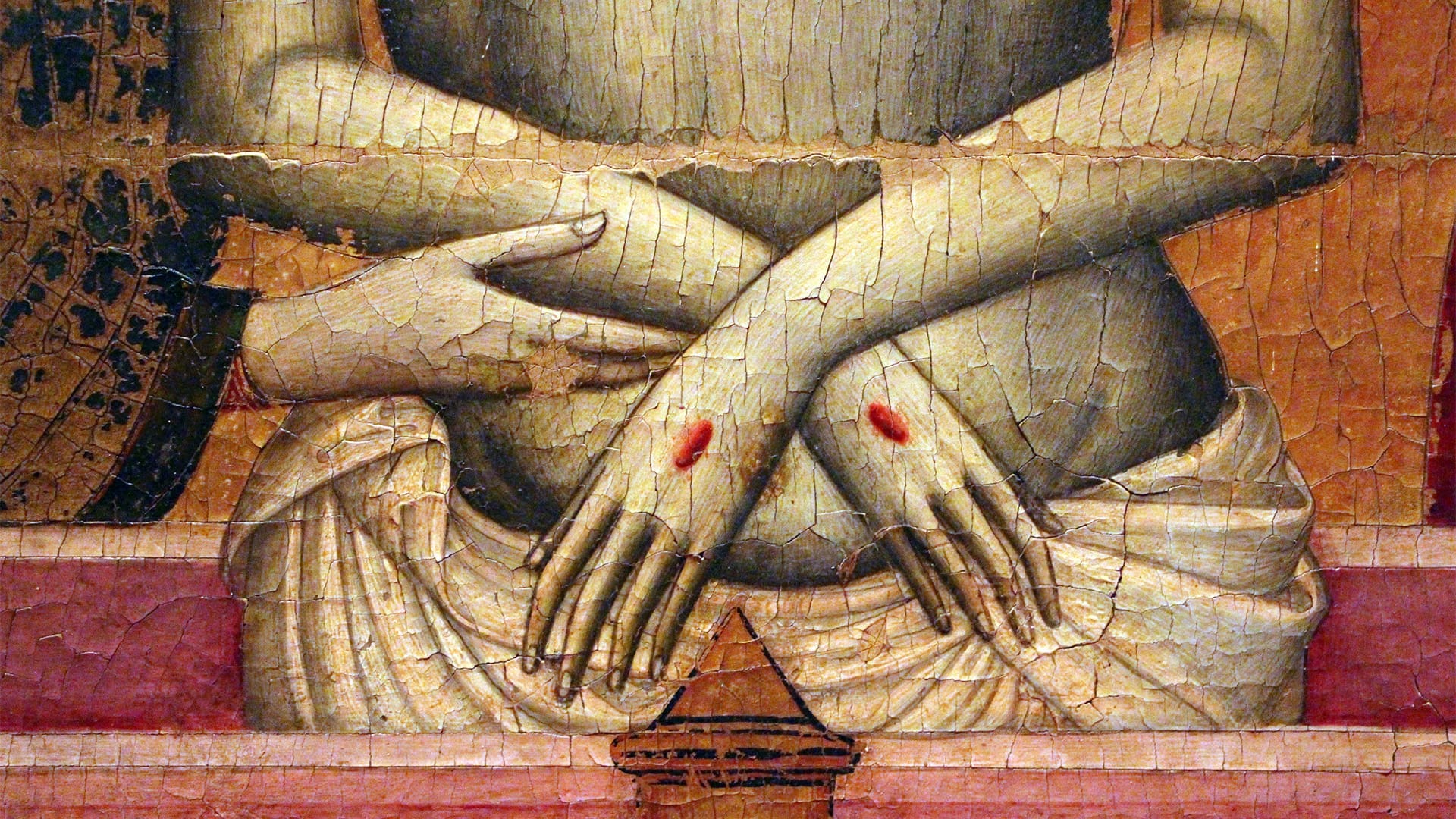
The Christ who feeds us here is the one who was raised, whose scarred hands broke bread even after death. The table of broken bread and poured-out wine thus points us to his risen body, which is both wounded and radiant, finite and transfigured, offering us the pledge that our own frail flesh will one day be made glorious too.
The table becomes the answer to our deepest fears of isolation, both in this life and in the next. Through it, we learn that what we cannot seize by possession is ours to hold in trust. What we once called ours alone is revealed, in the breaking and the sharing, to be grace both received and given.
The believer’s body now belongs to Christ, redeemed at infinite cost. This belonging is not ownership in the modern proprietary sense but a covenantal belonging defined by redemption and communion.
This vision can reshape our common life. In health care, treating the body as property makes patients into consumers and treatment into a commodity. But seeing the body as a gift makes medicine an act of trust and service, aimed not just at extending life but honouring its dignity.
A culture that prizes autonomy undervalues caregivers of the elderly and labels dependence as failure. But if bodies are gifts, then care for the vulnerable is no burden—it is a civic good to be recognized and shared. In public health, the paradigm of ownership narrows choices to personal preference, as if an individual’s vaccine decision could be made in a vacuum. But if bodies are entrusted gifts, policy must reckon with our shared vulnerability.
Solidarity, not mere rights-claiming, becomes the frame.
Modern culture tempts us into endless comparisons and polarities centred on our bodies—youth against age, health against frailty, beauty against plainness. But the vision of biblical stewardship and communion reshapes how we see others. If my body is a gift to cherish, so is my neighbour’s. The logic of autonomy collapses. Pride and despair, born of a possessive mindset, give way to respect and love.
During the pandemic, this became visible in unexpected ways. Nurses stayed for hours by bedsides when families could not enter. Neighbours left meals on doorsteps for the quarantined. Strangers wore masks not for themselves but for the vulnerable. In those small acts, the body was not treated like property but as a gift, something entrusted to one another for the sake of life together.
A son or daughter may feel torn between honouring an elderly parent’s needs and preserving their own independence. The modern script says, “My time is mine. My body is mine.” But in the act of feeding, washing, or simply sitting beside a frail parent, another truth emerges: Bodies are not solitary possessions but entangled gifts, bound across generations.
Self-ownership is ultimately little more than a crouch against intrusion. The more we insist “My body is mine,” the less control we find we have—over aging, illness, or the fragile processes that sustain us. But in the hush of a hospital room at night, there is no question of ownership when a friend sits quietly beside a patient in pain. In the very act of staying, of refusing to abandon, the friend bears witness that the body is a gift—fragile, limited, dependent, and worthy of presence and honour.
Ours is not a call to demand sacrifice from the vulnerable but to refuse the moral grammar that would leave them alone with their bodies. When the body is thus received as a gift, rivalry gives way to reverence. What once bred envy or despair becomes ground for gratitude, and the isolated self is drawn back into communion.