





Wayfaring with friends and brothers in search of the holy.




When a faith built to bless the nation gets quietly diverted into power, the most dangerous act left to the church may be refusing to whitewash the story and choosing instead to become a communion of genuinely unlike people.
On the eve of a national prayer rally rededicating America to God, Mark Labberton joined The Jim Wallis Podcast to ask whether Christians who invoke the nation’s name are following Jesus or drifting from him.
Together with Jim Wallis, Mark reflects on what it means to choose Christ alone, love the neighbour, and refuse a faith fused to national power. They discuss the evangel versus “evangelicalism,” the church as a communion of unlike people, worship in a black church, American exceptionalism as theological crisis, and racial gerrymandering after recent court rulings.
Mark Labberton: I’m so glad today that the episode for Conversing will be an episode that was recorded in a conversation I had recently with Jim Wallis on his podcast, which is called The Jim Wallis Podcast. You can see show notes for further details. Many of you who are listeners will know Jim’s name and his work, but for those who don’t, or just for a refresher for those who might, Jim is a writer, a teacher, a preacher, and a justice advocate who believes that the gospel of Jesus Christ must be emancipated from its cultural and political captivities. He is a New York Times bestselling author, a public theologian, and a commentator on ethics and public life. He’s also the inaugural holder of the chair in Faith and Justice and the founding director of the Georgetown University Center on Faith and Justice in Washington, D.C. In 2022, Washington Magazine named Wallace one of the 500 most influential people shaping policy in D.C.
To me, he’s a friend, an inspiration, an encourager, an interlocutor, a person whose life — as well as his work in production and writing and in advocacy — has been an inspiration and a challenge to me, as I think it probably has to many of you who are listening. I found my conversation with Jim rich, as usual, and full of the kind of inspiration and encouragement, as well as challenges that we all know we’re facing as a nation, as individuals, and as the church in the United States. I hope you really enjoy this episode.
This podcast is made possible through generous support from the George Family Foundation.
Jim Wallis: Welcome to The Jim Wallis Podcast. I’m Jim Wallis. Today on the podcast, we’re joined by Mark Labberton, pastor, theologian, and author of The Dangerous Act of Loving Your Neighbor. I love that title because loving our neighbour today is indeed a dangerous act. Mark has long called Christians to see clearly, to love concretely, and resist the temptation to let faith become comfortable — worse yet tribal, or detached from the sufferings of others. Mark was also a former president of Fuller Theological Seminary.
We’re recording this conversation on the eve of what’s called now the Rededicate 250, named as a national jubilee of prayer, praise, and thanksgiving, which is being presented as a public act of gratitude for America’s past and blessing for its future. So this makes this a timely moment to ask a deeper question. When Christians speak about blessing the nation, patriotism, power, and prayer, are we actually reflecting the teachings of Jesus, or are we drifting from them?
So that’s why I wanted to have you on, Mark, because your book insists that loving our neighbour is not sentimental, but dangerous, costly, and demanding. In a time of division and pressure, what would it mean for evangelical Christians — a tradition both of us are from — to choose Christ alone and let that allegiance shape how we respond to everything else, to the nation, to that administration, to the vulnerable among us. So I’m really pleased that you joined us today. Thank you for joining.
Mark Labberton: Jim, thanks. It’s great always to have an opportunity to talk with you. And as you say, the timing of this particular recording, it adds an additional layer. So we share together a great gratitude, as I’m sure is part of the spirit of tomorrow, in just thanking God for the blessings that have come to us, to people that we know and love, to the nation that we have been a part of from our birth onward. And all of that is certainly worth celebrating and giving thanks for. It’s just that it’s a far more complicated story than simply a story of blessings, especially when it comes to the church and its implications and really its responsibility in relationship to some of the great — and even evils — that have occurred in our nation. All of that is part of one picture.
So when I think about tomorrow, I anticipate it being full of a lot of genuine believers who care deeply about giving thanks to God for what have been the blessings of America. And at the same time, what I fear about tomorrow is the potential absence of a full narrative, and therefore a masking of the suffering that America has put upon other people, including American Christians who have participated in those and are even now participating in those things.
Jim Wallis: Well, Mark, you use the phrase “Christ alone,” which I think is so important. When working on your call to faithful resistance, what does it mean for Christians to say that Jesus — not any nation or party — is Lord?
Mark Labberton: Well, I think it’s embedded in Israel’s history — not using, of course, the name Christ, but that God alone is the centre of reality and that everything is defined uniquely, distinctly, and supremely by who God is. And I think now in New Testament terms, certainly from a Christian point of view, is to name Jesus Christ, who we believe is the fullest revelation of God incarnate in human life and flesh. And I think the singularity of that does get crowded by a sea of idols. That’s true throughout the Old Testament. Obviously, we see it as one of the main themes of the whole Bible — that in a certain way, it’s an anti-idolatry book. And at the core of it, it’s that God wants us to know the fullness of life, which doesn’t come from anyone or anything but God alone, and certainly not from the inherent nature of a nation or anything that is merely material or anything that is merely political or social or economic. It’s really in the ground of our whole being — namely, the God who made us, the God who loves us, the God who signs us with the signature of being made in God’s image. So I think that singularity — now incarnate in Jesus — is, in fact, why we use this language, don’t we?
And I think that’s the core of what “evangel” actually refers to. The evangel is the good news of Jesus Christ, who is the incarnation of this good news. That’s why nothing can be allowed to supplant it or to precede it or to rival it.
Jim Wallis: Well, the good news — the evangel — comes from the text that means a lot to both of us. I call this the Nazareth Manifesto, in which Jesus lays out his mission, his first gig, you might say, and he quotes Isaiah: “The Spirit of the Lord is upon me because he has anointed me to bring good news” — and the word there is “evangel” — which means any gospel that isn’t good news to the poor isn’t the gospel. Whatever.
And your book, The Dangerous Act of Loving Your Neighbour, argues that neighbour love is costly and disruptive. I know you went to Minneapolis — it’s a long way from where you live — and you were there with other Christians to love your neighbour. And so what makes loving our neighbour dangerous in a political moment like this?
Mark Labberton: In the argument of the book — which is really a pair, part of a pair of books, because the earlier book was called The Dangerous Act of Worship, Living God’s Call to Justice — which is about right-ordering power, which reflects and mirrors the power of God. And this is really about the second commandment, namely, how do we love our neighbour? And the danger of that is partly the most fundamental thing — namely, that we are not the centre of all things. The first danger of being called to love God and to worship God, and certainly the call to then love our neighbour, means that we’re not putting ourselves at the forefront of the things that matter most in the world. It’s not about me and mine at the centre. It’s dangerous to that kind of self-interest. It’s dangerous to an even more virulent version of that, as in narcissism. It’s dangerous toward a claim of elitism and classism that can put us in hierarchy over other people. All of those things are falsehoods in the context of the kingdom of God.
And so I think it’s all of that, and it does come down to really tangible things. I’m not going to put myself up as an exemplar of the greatest of neighbourly love. I would point readily to other people who I think have shown me a great deal along the way of what that actually really looks like. It’s partly why I think the body of Christ is meant to be so encompassing of people who are different from one another. In Ephesians 2, it seems to me that Paul’s giving us a vision of the church that’s a communion of unlike people. That’s an amazing thing.
Communion of unlike people. We know a lot about communion of like people. But a communion of unlike people is meant to be one of the hallmarks of the church. The fact that it isn’t often a hallmark of the church — it’s partly we could just say, well, it’s geography, it’s location, it’s history. Yes, all that’s true, but it’s also sociology and values and intentionality and boundary-creating and so forth. So I do think part of our Christian vocation, especially for seeking to make Christ first in our own lives and in our relationships, is to let this new sociology that I think we’re called to emerge as an expression of our discipleship. I can’t be a Christian alone, but I also can’t be a Christian that matures if I’m a Christian only with people who are like me. I need to be among Christians who are not like me and who, in the richness of that — what David Goatly, the new president of Fuller, calls “the vibrant variety of God’s people” — I need to be part of that whole vibrant variation or variety of who God’s people are.
And that’s where some of the greatest joy of the Christian life has been found for me — absolutely the most astounding joy — and some of the greatest challenges, because, of course, those differences aren’t always easy.
Jim Wallis: Vibrant variety of God’s people. That’s a powerful thing from David, now at Fuller. I was just on a call just today, and a number of Black church leaders and Black civil rights leaders are feeling very alone with the Supreme Court decisions on Louisiana, the Galvez decision, and also now Alabama, and the rapid, immediate racial gerrymandering of the whole South. And I think they’re looking — they said they’re looking — for white allies who will stand up and will speak out.
And I’ve said to other people, I’ll say it here: that you’re, in my view, a white evangelical leader who has made racism central to how you see discipleship. And so I think those of us who are white — and white evangelicals perhaps most of all — are being looked to now, and it says, are we going to stand in solidarity with our Black and brown brothers and sisters at a moment like this?
Mark Labberton: Right. Absolutely. I mean, I do think that there’s this sense that if the communion that God intends is a communion of unlike people, then I literally can’t be a meaningful part of the body of Christ if my discipleship is only my own racial tribe. And I’m not here meaning that everybody lives in the same ethnic racial distribution. That’s clearly not the case. And there are places where — usually not by accident — you have a homogeneity that was cultivated out of other instincts and values, often, I would argue, than the gospel itself. But leaving that to the side for a moment, what I think happens is that we have this incredible privilege of learning to love at close range with people who are not like ourselves.
And in that process, there come many, many moments where — am I going to believe my narrative, the one that is inherent in my own social background, my family, my neighbours, blah, blah, blah — is it going to be made up of that? Or is it going to be a sociology and a framework around the world that is being deeply formed by taking in and trusting the narrative of brothers and sisters in Christ whose racial experience has placed them in a different world than the world that I live in, where I can easily choose to be isolated? And I think that’s where the gospel, for me — I can just testify — has broken open so many different ways of understanding the human experience and the same parallel, even proximate social experience. But simply because I’m a tall, white, educated male, I walk in the world in a very different way than many, many, many people — and particularly people of colour and most especially people who are Black.
So I think because that was an early discovery in my discipleship, it has persisted with me throughout my time — since the time I became a Christian in college all the way to my ancient of days. It is this unbelievably lavish gift that the body of Christ invites us into — this much more vibrant variety of how to live in the world and know and trust in the world. And to think that I get to be deep, intimate friends as well as colleagues, as well as partners, as well as co-citizens with people whose lives are fundamentally, circumstantially, dramatically different from my own is something not only do I treasure, but it’s something that I see as being essential to my own development as a person who seriously wants to follow Jesus.
Jim Wallis: You know, a community of unlike people — that’s a powerful way to put the body of Christ. But that’s what in fact we are. And when you talk about this, you mentioned the word “joyous” before, and that’s my experience — growing up in Detroit in the very homogeneous white evangelical Plymouth Brethren world, I just found a real lack of real vibrant faith. And I found that — and you and I found that — in the Black churches. And it is joyous. It isn’t an obligation that we should or have to be diverse. It’s a joyous — for me — kind of a rediscovery of Christianity.
Mark Labberton: Well, I think that’s exactly right. I think of a time a few years ago where a close Black friend invited me to come to his and his wife’s 20th anniversary where they were going to reaffirm their wedding vows. And as I walked in, I had anticipated some of this, but it was even more than I could have imagined. As I walked in, I realized that it was being held in a Black church and everyone knew to come in African garb. And to celebrate this with just exquisite beauty and joy, right? And I saw a side of him in that full living technicolour of the vibrancy of the room. And not just that, but the vibrancy of how he and his wife relate to one another, how they hold the whole of life — let’s just say as a Presbyterian, I could clearly say this was not a Presbyterian gathering. It was not only a different denominational tradition, but much more deeply than that. It was a different human and cultural expression. And I just found myself completely caught up in it.
And afterwards I said, so if that’s you at a ten — like you’re fully expressing who you are in public, in community, with your family, with a circle of friends — how much of you gets to live in the ordinary world? And he said, well, on many days, half; on good days, maybe two thirds. And I thought, none of us probably lives out the fullness of our humanity every day — I’m not suggesting that. But it was like, wow, so here’s the surrounding culture that holds this exquisite beauty that really only got its fullest expression in that context, which I wouldn’t have wanted to miss for the world, right? It was just one of so many things.
And it’s not just at happy moments like that. It’s also in moments of pain and suffering and anguish that these things happen.
Jim Wallis: I often have had the feeling — at the beginning in Detroit, going to Black churches — it’s like, well, this is it. Somehow, this is what I’ve missed my whole life. This is it. And the feeling — and having been clearly told from our white church, “If you keep asking these kinds of questions about why it is that life is so different in Black and white Detroit, you’re really not welcome here” — and to take those innocent teenage white-boy questions to Black churches and to be welcomed just completely and patiently taught the answers to those questions. It was like something I’d never felt before.
And to this day, to this day, I find the welcome I felt from Black churches — way back when, Bill Pannell, who was on Fuller’s faculty, was in Detroit, a Black Plymouth Brethren. And I met Bill, and I just fell in love with his understanding of the gospel. And we stayed friends. I was at his funeral and gave a few words of love for him. So it’s like it transforms us in ways that just changes our lives and makes us feel like, this is it. This is really what it was supposed to be.
Mark Labberton: Well, if the call of God to love the Lord with all our heart, mind, soul, and strength and our neighbours as ourselves is a call to life — which is what I think it is — then the way into that broadening, deepening heart of God is to experiment, taste, and see that the Lord is good through the way that we’re given opportunity and privilege to be in communion, close relationships with people of all different kinds and places and spaces. And it extends and enlarges our mind. It extends and enlarges our heart and our compassion and our — I hope — our dedication and commitment to that kind of an experience, which we do believe is centred in the grace and gift of Jesus Christ.
I worship at a Black church every Sunday. And one of the reasons I do this is because I have such high regard for this congregation and its vibrant life in Oakland, and the way that it intersects with everything that’s on the table in Oakland — is on the table of this church. And you feel that incredible integration, that this is a church that leans into the messiness of some of the greatest social, medical, financial, economic, legal challenges in the city of Oakland. They are completely surrounding this church. But when you worship in it, it starts, of course, with incredible praise and gratitude and celebration and joy. And it names over time, in the course of the service, the expression of all of the ways in which this good news that we’re now celebrating needs to land in all of these places of great need. And the confidence to believe that the God that we’re naming, the God we’re worshipping in Jesus Christ, is the God who carries all that — and that we get to participate together with him.
So when I — you know — I live my little life now, post-Fuller, and I spend a lot of time alone: writing, doing podcasts, reading, talking and meeting with people. But when I get to go to church at this great congregation — Allen Temple Baptist Church in Oakland — I’m entering a world that I have been carrying with me, but that I want to be with again because I want to remember that this is actually part of the human experience. And if I took my little head-driven whiteness and just went to a white church that would emphasize a lot of that to the exclusion perhaps at times of this larger reality, not only would I be impoverished, but my sense of how to engage the world and to try to serve in the world would be greatly impoverished by that.
Jim Wallis: Going back to your books — I love that you wrote a book about loving God and then loving your neighbour. Another one of your books I want to raise here is a title that is more and more the big question: Still Evangelical? Ten insiders reconsider the political, social, and theological meaning. So I get asked that question a lot, even here at home by my wife. Still evangelical? Really? Really? Really? Get what evangelical means? And I kind of keep saying, yeah. I don’t want to concede that — I still want “evangel,” good news — but it’s hard to be still evangelical in a world like this when the perception of evangelical is something that is so contrary to what you and I believe.
Mark Labberton: Right. I mean, I think that’s where I — and I’m sure other people too — have tried to figure out any alternative words. One that is not particularly smooth, but that captures where I am at the moment, is I would say I want to be “evangel-centric.” That is, I want to be a person who lives a life and carries out a ministry which is centred in the evangel of Jesus Christ. I say, in shorthand: say yes to the evangel and say no to the “-icalisms.”
It’s the “-icalisms” of evangelicalism that carry together an embodiment of things that are good, but many, many things that are also really hugely problematic. And I want to be evangel-centric and not be caught up in the “-icalisms” of a history, of a pattern, a habit of sociology, again, that has often been diverted from the evangel into power — political, social, economic, racial power. Those are foreign bodies, foreign realities to the evangel itself.
Jim Wallis: When you say that, I want our listeners to hear that — evangel, but we’ve got to give up the “-icalisms.” The “-icalisms” are often the capital-E “Evangelical,” and the “-icalisms” are so discouraging and so painful and so bad. And so for people who want to give up the “-icalisms” of evangelical, that’s a powerful way to put that. I like that so much.
You know, I had the privilege at one stage early in my life to be the studies assistant to John Stott. And when John began his ministry, it was at a time where he was in the Church of England, and the high Anglican tradition and also the more progressive liberal tradition were present. But within that global Anglican communion, the presence of an evangelical witness that was evangel-centric — not evangelicalism-centric — was really defining. And I think working with him over the many years that I did, not just as his study assistant but in years that followed in all kinds of other ways, I just became aware that it really is possible to draw these distinctions and to say yes to the part that we want to truly commit ourselves to and to say no to the parts that we don’t.
And that comes down to personal behaviour. It comes down to honesty. One of his great examples to me was the frequency and courage of him going to a person who was an outspoken Christian leader in England — and these were a variety of different people at different times — and having really candid, straightforward conversations about the point of difference. And sometimes I was able to accompany him in those meetings where I was just like a fly on the wall. I’m just present in the room, but I was not in any way participating. But I was a witness to the way that he — with kindness, with generosity, but with unflinching honesty and gentleness — would name the problems that he saw in what was separating the two people, let’s say, or the movements that were represented in different ways.
And though I wouldn’t put myself in the category of John at all, I would say I learned a great deal from him about how to have conversations like that. We tend to start, especially these days, with a Twitter feed and a blast and a foghorn rather than actually honest conversation. Now, sometimes those conversations get rebuffed, especially right now in the culture that we’re living in. People don’t even want the engagement. I wish more Americans — more American evangelicals — knew more about John Stott.
Because my experience with John, when we were just starting at Sojourners a long time ago, he reached out and he said, come and talk. And I did when I was in London. And then he went around the world — John — and he went to the developing world, what’s called the third world. And instead of imposing an imperial British Christianity, he listened and listened and listened to a lot of mutual friends of ours who were Latin American evangelicals or Asian evangelicals or African evangelicals. And he learned from that.
And John Stott stood for the kind of faith that I believe in more than other names — famously, Billy Graham and people like that. John Stott was the one. If you mentioned John, I would love to talk to you probably this way. I’d love to talk to John about this thing, this Rededicate 250, this national event — where a public rededication of a nation risks blurring the line between Christian confession and civil religion. Where should that line be drawn? That’s something I think John Stott would have had a lot to say about.
So how do we draw that line between confessing Christ — Christian confession — and the civil religion which can tend to just elevate the nation or a party or even the president above everything else?
Mark Labberton: John Stott would have had some thoughts. Absolutely. I think he would find great kinship — though he was certainly a Protestant and not a Roman Catholic — I think he would feel great kinship with Pope Leo in many of the values and priorities that he’s been speaking about. John was a person who came from an upper-class English background and was not royal, but in my view was very blue-blood in the world that he was raised in. And then he met Christ as a teenager and it revolutionised his life.
And it did in parallel — this is partly why I was drawn to his writing and partly why I was drawn to the invitation later to become his study assistant — was to try to understand how a person that came from his background had been formed to become the kind of person who would do the revolutionary thing that he did in the writing of the Lausanne Covenant. Which was not just John’s work — John was the primary writer — but it was the work that actually heard the church in the Global South and incorporated its agonies and concerns in a way that had never happened in an evangelical statement before.
And so I think he would have a lot to say about a time like this. And I think part of what he was always very good at was calling people to a delineation between various things. There are things about what does it mean to be a personal disciple? What does it mean to allow the gospel to do the interior transformative work of character and mind and body? This is where the greatest dangers are, really. Getting close to Jesus is going to be disruptive to our lives and reordering. So it would be that. But then it has to be in a community. So then what kind of community is going to actually extend this gospel work most fully?
And then there’s the global church. So a lot of people would currently choose to say, “I believe I consider myself part of the global evangelical movement,” as opposed to saying, “I’m an evangelical.” They’ll say, “I’m part of the global evangelical church.” But then he would also delineate all of that from how does that then relate to the national church — as you have it in England — or to the state even more significantly.
And all of those require different kinds of reflections. What we have right now, in the mess that I think we’re in politically and theologically and ecclesially in the United States, is that all of that is like a great mosh pit where everything flows together and none of it has any clarity to it and all of it feels like it’s really being driven by a lot of underlying priorities and values, as opposed to the overtly named values — for which so much of the actions are in huge contradiction to the actual character of the gospel itself. John always brought theological clarity. So I’d love to hear John Stott bring theological clarity to American Christian nationalism.
Jim Wallis: Right, right, right. Amen. So what you and I have discovered — and John did in his, particularly his travelling around in the Global South — is how Jesus repeatedly centres the outsider, the wounded. And when Christians speak about America’s future, how do those priorities engage? And who do we pray for, and who do we support?
You know, just going back to John again as a reference point — it was so fascinating that he grew up on the wealthy side of a wealthy and highly impoverished neighbourhood. So part of the parish of All Souls Church was this wealthy, upper-class background. And then on the other side of the street, as it were, and in all the state housing projects that were built in that part of London, there was incredible poverty. And when he became — even before he became a Christian — he would regularly go and spend time with kids in the impoverished part of the parish because he just had an instinct, a native inborn instinct, to be sensitive to people who were much more vulnerable than his own life would have ever required of him or demanded. And then when he became a Christian, it became even more, of course, of a serious vocation. Like, I can’t grow up over here and pretend that the faith that I’m trying to live could in any way be separated from this other part of the same parish that I’m in.
The fact that he then later becomes the rector of All Souls, which is the church for that parish — and that held that range of people, especially in the early decades before London became so expensive and a lot of that got moved around through gentrification — but that was an imprint and a practice that he never gave up. I just think I’m using it as an example of saying, yeah, this is how it has to happen through action, right? It’s how does our faith actually show up? How does it get instantiated? Not just how does it get verbally witnessed to?
Yeah. And defending your country uncritically is something that’s just contrary to the gospel.
Mark Labberton: A further thing that happens to John is that in his college years, as he’s maturing in his faith, the war is on — the Second World War. His father has a very senior role in the medical service for British forces. And he’s living at home because the school’s been closed because of the war, etc. And he declares himself a pacifist — and for four years, living in his own family home with his father who had this senior role, John tried to live out what he at the time had come to believe was his posture through the war — that he was going to uphold this kind of pacifist view. His father stopped talking to him and didn’t talk to him for four years in the same house. And the brutality of that is a subject quite of its own. But the bottom line is that John tried always to live out the practicality and specifics of what he was doing, whether it was related to his personal life, his family life, or his relationship to the British government — and at that point, World War II itself, right?
Now, later in his life, he becomes a more moderate — very, very moderate — pacifist, with really a readiness to accept, in retrospect, the use of violence to stop something like Nazism, but always under the classic terms of just war theory, not through the wanton brutality of the military.
Anyway, I’m using all this as just further examples of how a real disciple is formed. And what I love about that and what I think I want to call people to now is that we’re in a period where there is so much talk about nationalism — which is a very broad term that could encompass so much, just like the term “evangelicalism” is a term that in fact covers so much — that we have to be careful about our words. Love of country is one thing. Worship of our country, or exceptionalism of our country, or the exceptionalism of leaders of our country — these are things which are completely foreign to the body of Christ and to the theology of the kingdom.
Jim Wallis: So American exceptionalism is really foreign to the kingdom of God, theologically.
Mark Labberton: Right, I would say it is, absolutely — as it would be of any nation.
Jim Wallis: Yeah, yeah. But when you’ve got movements in the faith community who are baptizing American exceptionalism and making a religion out of American exceptionalism, that’s not just a binary political problem, left and right. That’s a theological failure.
Mark Labberton: Right. It’s a theological crisis.
Jim Wallis: Yeah.
Mark Labberton: I mean, again — love of nation, honour of nation — these are not things that are inherently in conflict because they’re proportional. They’re appropriate, theologically appropriate. But as we both know, there’s an incredible tendency in our nation right now to completely blow out the other side of the barn and make it totalising and exclusive and absolutely superior. The goal is always to be superior. That’s a toxic idea in the language of the gospel.
In The Dangerous Act of Loving Your Neighbour, I talk about the fact that we often start by misperceiving a person or a group of people. We misname them — that is, we label them in ways that categorise them — and then we misact in a way that we believe is consistent with our misperceptions and our misnamings. So this happens across racial divides, gender lines, sexual orientation lines, et cetera, et cetera, et cetera. And to do that is needing to be redeemed by the gospel of Christ. How do I learn to perceive as God perceives both individuals, peoples, and nations? How do I appropriately name what they are — by therefore also naming what they aren’t?
And as we keep growing and maturing in that, the way that I would now want to name my nation, which is the United States of America, is very different than the way that I would have done it when I was a child or even a teenager or even a college student. And I think I have deeper love for the experiment and the best characters and intentions and possibilities of our nation. I have greater heartache and brokenness and complexity over the way that our nation’s history has been so brutal to people — especially the poor and people of colour and people in circumstances that are at the margins. That should be a warning sign to the body of Christ. Are we paying attention to what Christ would pay attention to if he were here?
And it goes back to how we misperceive — how we’ve been groomed into misperceiving, misnaming, and misacting, and thinking it’s all just normal. And the current political climate, the current political leaders who control the White House and the Congress, really want to erase that history. They want to rename it again. It’s renaming what I call America’s original sin, but they want to erase that history to make the nation look more perfect.
Jim Wallis: Right, right. And it’s crazy-making for many different reasons. But one of them is — not because there isn’t sometimes, for those who are offering a critique of the nation, a brutality that doesn’t really appreciate so many good things that are part of our nation and its history — but what is crazy-making about it is that if you are close to the poor and if you are close to people of colour and if you are close to people who are marginalised, you see the — really, in a way — the insidiousness of this kind of re-narrating, because it’s really subverting reality, or trying to subvert reality, by renaming it in a way that’s euphemistic, that’s literally whitewashing.
Fuller has become one of the most diverse seminaries in the country. And at Georgetown at the McCourt School of Public Policy, where I now teach and my chair is based — I was sitting there as a faculty member watching all these students. I was up close to them. And right there on the stage, they’re walking past. And I looked at all their faces and it was the most diverse class. I mean, white students were in a clear minority — Black, brown, Asian, international, all over the world — and I just watched them. It was almost cheerful just to watch them come. And there was a smile on their faces. I know a lot of them, and I don’t know others, but it was the most diverse crowd of people there. And it made me feel like, this is the way it’s supposed to be. So our commencement was yesterday.
I don’t think you spoke at Fuller’s commencement this year, but if you were speaking at Fuller’s commencement or the commencement of any other evangelical institution, what would you have said? What do you say? What would you want to say now?
Mark Labberton: Yeah, well, I have had that parallel experience at Fuller with a stage of people that come from all over the world — over 100 nations represented in most commencements — and just this extraordinary array. I think I would call us to our first citizenship, which is a citizenship in the kingdom of God and the reign of God’s love and mercy and justice in Christ. I would want to call us to a deeper sense of citizenship as participants and members of congregations and communities where we’re supposed to show up as the credible evidence of a gospel that is vibrant, alive, and present — not in headlines necessarily, but in authentic, validating instantiation of what a life in Christ actually looks like.
And then certainly a citizenship within whatever political, sociopolitical context people are in or going to be in. In Fuller’s case, in Georgetown’s case, people are going to land all over the world. What would it look like for them to land there? And in a context like Fuller, where the Christian faith can be made strongly evident — whereas in all the social, racial, and religious variation of a place like Georgetown, though a Roman Catholic school can own that, and then also needs to be respectful of course of different people of different religious traditions — but still, so many people of diverse religious faiths do share a common set of instincts about what it means to be a human being, what it means to show neighbour love, what it means to pursue justice, to seek well-being, right?
And certainly in a time like this in the United States, everyone is at ringside watching one of the most unbelievably problematic periods in American history unfold hourly in front of us. And the question — the perturbing thing about tomorrow, going back to the rally that you mentioned at the beginning — is that there will be probably a very large gathering of people in D.C. naming Christ, naming Jesus, but attaching it to something that is not Jesus and that is not the God that we worship, but that is the nation rather than the God that we worship. And in that, there will be lots of complicated and problematic messaging. And it’s our full-time job, it can feel, to try to parse that and then to live into it.
Jim Wallis: So maybe the last thing — ask me to help me wrestle with something that just came up on this call. I was around with all these diverse faith leaders on the call — heads of denominations and faith-based organisations, pastors with large followings. And we’re dealing with a Supreme Court decision that will end up with a third of Louisiana being Black, and it will end Black representation in Louisiana. They interrupted an election. Same in Alabama, Mississippi. It’s a return to Jim Crow, if not back to the Civil War.
And on the call, there was a pleading from Black church and Black leaders for white allies. They shouldn’t have to be left to be the ones to say how bad things are, and then we would just say, oh, we’re sorry, we can feel how you feel. But what do we — I mean, you and I have tried to live our lives as white allies to people of colour. In our case, particularly to the African-American churches. So you go every Sunday. What does it mean?
And I don’t know — we’re having a call in two weeks, a white allies call. I’ll probably invite you to be on the call. But what does it mean to be white allies now when a Black vote’s not being denied, it’s being diluted, so there’s no representation?
Mark Labberton: I had an interesting — for me, important — conversation with a Jewish man who’s a constitutional scholar who I admire greatly, who is an originalist and who is conservative in his views, but at the same time extremely socially sensitive. And I sometimes call out to him when I’m losing my mind, to try to understand how he would see a moment like this. So not long after the decision of the Supreme Court, I called him. And we’ve had a call and we’ve had several follow-up messages. And I think one of the things that he — this is how he would see it — is that there’s a confluence of these two things that are both going on. One is the partisan issues and just about greater party share and the closing out of party diversity. And the other is, of course, the issue of racial crisis that’s provoked by this decision.
Now, he, in his view, would want to give more credit to the weight of partisanship than of race. And I would probably do the opposite. I would tend to say, well, I think it is partisan — and clearly, with a wide swath of people who are wanting to maintain any kind of stronghold, for example, who are really wanting even more of a stronghold. So there is the partisanship per se. But why — as he has indicated in his case — do you believe that the racial factors and the racism that I think is so thickly participant in all of this, why do you give priority to partisanship rather than to racism as the underlying motivation of all this? Which he had expressed. And he gave reasons. This is a longer conversation, so I can’t really convey adequately all that was said. He made a lot of very interesting, statistically supportable observations.
So finally, at the end of this conversation, when he expressed that he believed that a lot of the ways that the gerrymandering is going is fundamentally partisan — whereas I would say the gerrymandering feels to me that it’s fundamentally racial, and also partisan, but I would put the emphasis on racial more than on partisan — we agreed to disagree. We simply heard one another’s opinions and had a good, warm-hearted conversation together.
But I will say that it just feels to me like we’re in the face of a real tragedy that’s unfolding in real time, which is a regressive moment, and which does undo decades and decades of transformation and presumes that something can happen when it is actually literally being undone. It’s being finished. It’s ending. That’s just brutal in parts of the country, especially in the South, but in many places.
And we as white Christians have to figure out how to step up. I was talking to a lot of white pastors of predominantly mainline white churches who care about it — allies. And we were talking about how it’s about speaking up in pulpits and naming this the way you just did, and to talk about our resources. And a lot of litigation is going to be necessary. And I talked to young students of mine who are also lawyers from Georgetown. They’re involved in litigation. One of them is a Black man who went to, of all places, Trinity Evangelical Divinity School, where I went a long time ago. He said, “I came after you were there, but they were still talking about all the trouble you made when you were there.” He’s now graduated from the McCourt School of Public Policy. He’s also a lawyer. And I met him and his daughter, and he’s throwing himself into litigation.
And so how do white allies stand up and speak up? White people who talk about race all the time — this is the moment to do that. You know? So that’s what I’m interested in.
Mark Labberton: It is the moment to do that. And I think partly it is what you do so superbly, Jim, which is a constant refrain of these concerns. I try to do it in the context of my own reach. And I certainly know other white allies who share in that. And you and I were recently part of a conversation of people who are trying to figure out ways of doing that more effectively. So I think that is now on the table, and I think it’s a long arc. This is one of those places where the moral arc of the universe bends toward justice — and it bends toward justice because God is the one who’s bending it toward justice, but also because the church needs to understand the issues of justice and to put its weight, individually and collectively, into that. And this is certainly one of those things that now feels like territory that we thought was to some degree won — not finished, but won — now has to be regained, and against what seems to be every bit as steep a climb as it was the first time.
Jim Wallis: Well, I could talk to you all day. I want to just thank you for this time. Thank you, my brother. Keep strong and keep writing those books, speaking out and teaching and speaking. We need you now more than ever.
Mark Labberton: Well, the same, of course, is true for you. And I do want to say, Jim, how much your example and the authentication of the gospel through you — to me — has been in my life. And I’m so grateful that now in our later years, our partnership and collaboration can continue on. So I’m super thankful for that. Thank you very, very much for being on the program today.
Jim Wallis: For more of The Jim Wallis Podcast, don’t forget to subscribe, rate, and review on your favourite podcast app. And follow me at faithandjustice.georgetown.edu — that’s faithandjustice.georgetown.edu — where you can find videos, subscribe to my newsletter, God’s Politics on Substack, and follow me on my social media channels. Once again, that’s faithandjustice.georgetown.edu. Blessings to you all, and I pray faith and justice for you and your loved ones.

Mark Labberton hosts the Conversing podcast and is the Clifford L. Penner Presidential Chair Emeritus and Professor Emeritus of Preaching at Fuller Seminary.
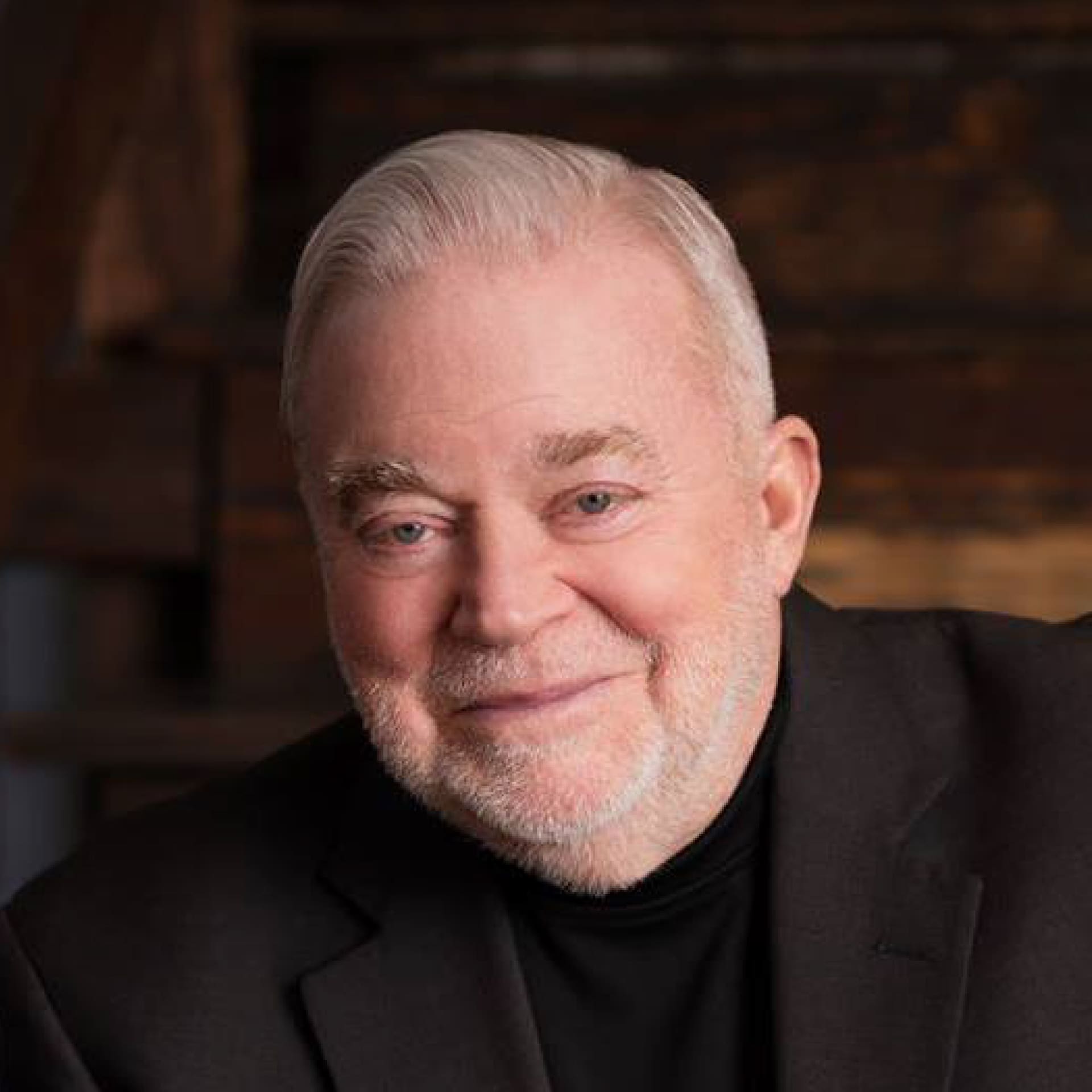
Jim Wallis is the founder of Sojourners, the inaugural holder of the Archbishop Desmond Tutu Chair in Faith and Justice at the McCourt School of Public Policy, and the founding director of the Georgetown University Center on Faith and Justice.
Love the show? Help others find it by reviewing it on your favourite podcast app. We also welcome your ideas and feedback. Email us at conversing@comment.org. Thanks for your support.
Wayfaring with friends and brothers in search of the holy.
SITE DESIGN AND DEVELOPMENT BY POLYMATH