Description
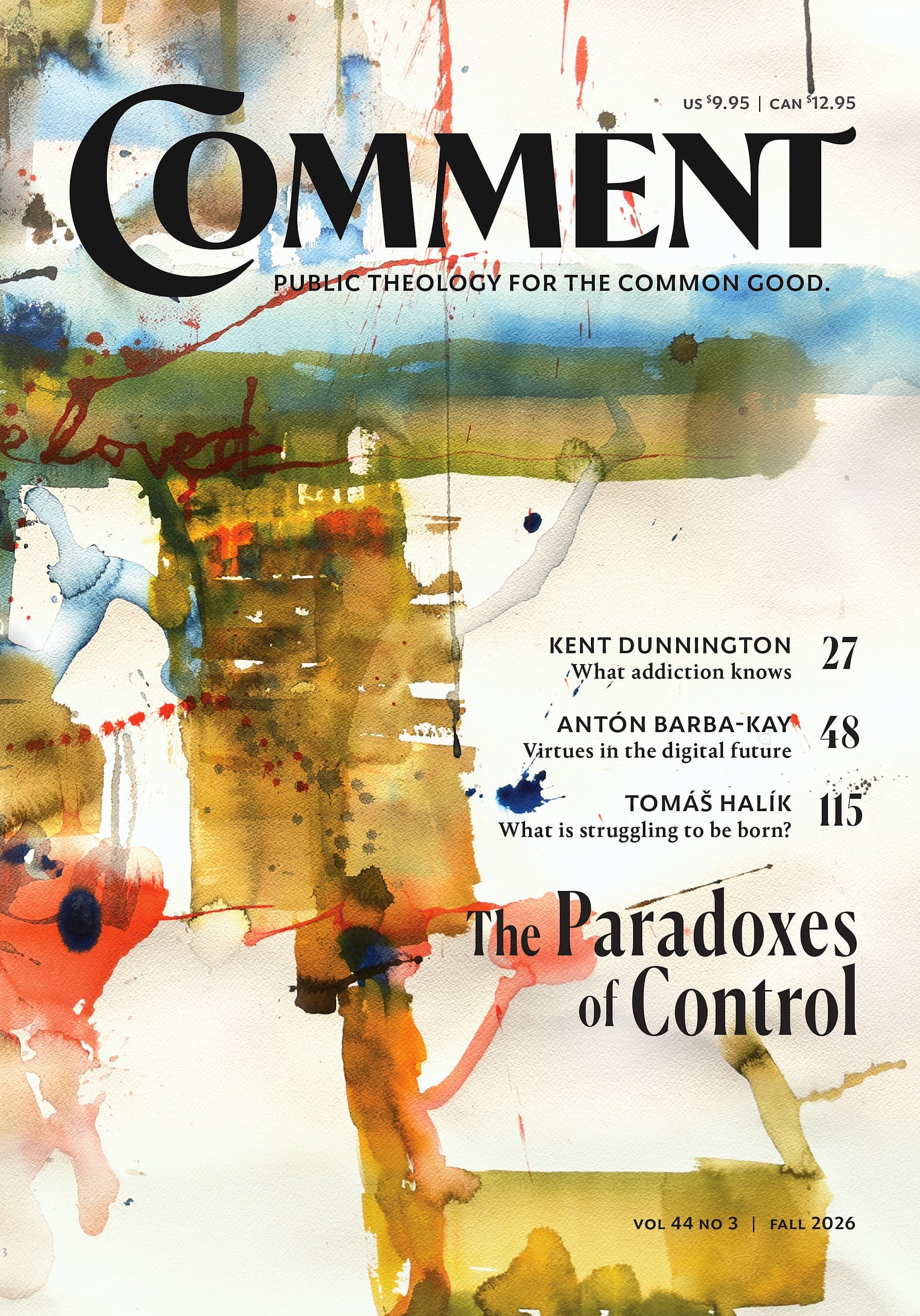
Purchase a single copy of our Fall 2026 issue. We have never held so much of the world in our hands. We can edit a genome, model a market, summon a car to the curb. And yet the more the world yields to us, the less we seem to be the authors of our own lives, and, paradoxically, the less alive the world begins to feel.
Hartmut Rosa, the German sociologist whose thought runs beneath much of this issue, has an account of how we arrived here. Modern life, he argues, is organized around a single seductive aspiration: to make the world ever more available to us, meaning visible, reachable, manageable, and useful. And wow, how tremendously we have succeeded! The trouble is that a world made wholly available no longer answers back on its own (uncontrollable) terms. Gradually, we find ourselves inert inside a glass bowl of our own making.
Control, it turns out, is not merely a tool we pick up and set down. It is a mode of relationship, and for a variety of reasons both understandable and troubling, it has quietly become our primary way of relating to nearly everything. What human beings long for is another mode altogether: the moments when the world is no longer merely before us but somehow with us, what Rosa calls resonance. Such moments arrive as a gift, borne on the currents of the very thing we work so hard to avoid: uncontrollability.
This issue is a sustained inquiry into that uneasy if intriguing paradox. Our writers search for a wiser way of being across varied terrain: in the crisis of agency hollowing out our institutions, in the ancient work of self-governance, in the formation of virtue amid a digital order steadily dissolving the contexts virtue requires, in the artist’s practiced willingness to be led by the work. Together, they ask what kind of life becomes possible once control reaches the end of its proper limit.