


I
I first read Wendell Berry in graduate school. A friend gifted me a book of his poems, and I relished them. Not because they revealed a new world, but because they dignified an old world I knew: that of farm, field, and forest, tended by family and friends skilled at the “art of the commonplace.”
The effect on me was profound. Berry’s words plowed a furrow in my soul, turning over parts of me that had lain fallow for years. I had thought (and sometimes been implicitly taught) that the intellectual life was separate from the agricultural life of my youth. That books, not the body, were the path to success. Berry upended that convention, as he did so many others across his long life.
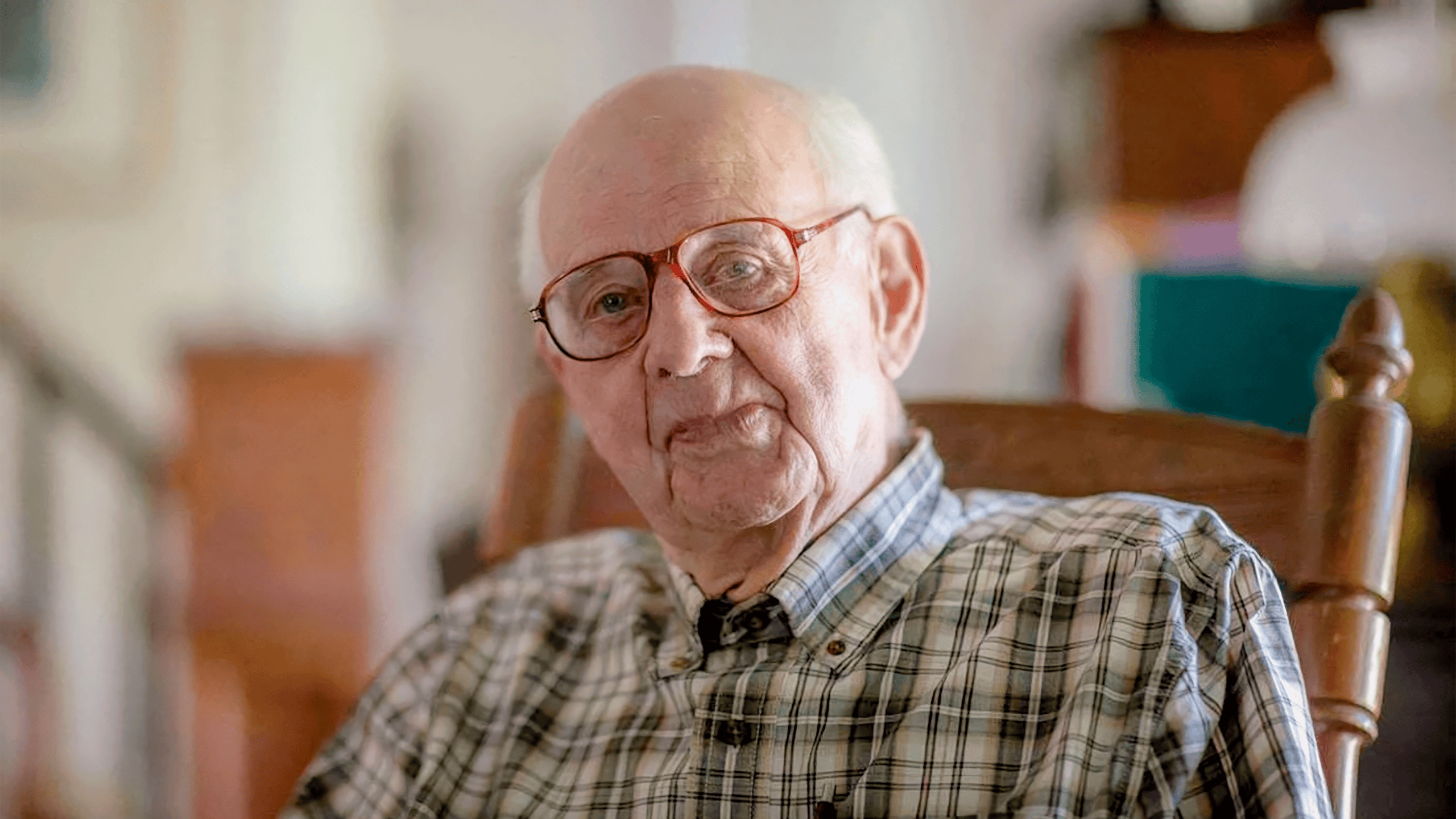
Berry was a writer who, on the verge of a literary breakthrough after a prestigious fellowship at Stanford, a successful first novel, and a teaching position at NYU, decided to leave New York City and return to rural Kentucky against prevailing cultural expectations and the strong advice of an esteemed mentor. Yet it was back in Port Royal, Kentucky, that he could write of and from his people and his place. Here was a poet who resisted any separation between body and mind. A scholar who applied his immense intellectual and creative energies not to win minor academic skirmishes but to harvest the wisdom of his people as he stewarded the “gift of good land” on his “native hill.” A farmer who was as interested in the “purpose of the university” as he was in the use of horses and mules, as comfortable talking about Shakespeare as a tobacco spear—who thought both had something valuable to teach us.
Ralph Waldo Emerson once said that “every work of genius” enables us to “recognize our own rejected thoughts” and then gives them “back to us with a certain alienated majesty.” That was Berry’s genius. He clothed my intellectual and moral formation on the farm with majesty, helping me see it as the fertile ground it had always been.
A farmer who was as interested in the “purpose of the university” as he was in the use of horses and mules, as comfortable talking about Shakespeare as a tobacco spear—who thought both had something valuable to teach us.
In 2012, as my grandfather was dying in Tennessee, Berry’s elegiac poems helped my family mourn his death while honouring the simple tobacco farmer he was. Like a protagonist in a Berry story, my grandfather’s greatest act of love was his steadfast presence alongside us in the fields, a man “untrained to comfort” who endured great difficulty to care for his family and friends, a “man born to farming” whose life still lives in ours, if, as Berry reminded us, we are faithful enough to remember.
In the months that followed the funeral, filled with grief and gratitude and yearning to join my life at Princeton with my formation on the farm, I devoured more of Berry’s books—poetry, essays, and novels. I saw people I knew in the humour of Burley Coulter and the memory of Old Jack. I felt spiritual companionship in the wanderings of Jayber Crow, who had learned to “live” life’s biggest questions. And I found intellectual inspiration in Berry’s prophetic essays on culture and agriculture, at once diagnosing the domination and destruction we were wreaking on our world while offering a subtle and sophisticated hope that could sustain the work needed to recover our wholeness and health.
In June 2012, with the encouragement of friends and teachers, I spent days crafting a letter to Berry, sharing my experience growing up on the farm and the influence his work had on my life. I also shared about my dissertation on hope and asked if I might interview him. I enclosed a copy of the eulogy I’d given for my grandfather.
Berry’s handwritten reply—in pencil—arrived only days later. “I like your letter and would be glad to talk with you,” he wrote, encouraging me to visit on a Sunday afternoon in the fall. I found his letter in my departmental mailbox on my birthday. It’s still one of the best presents I’ve received.
I spent weeks preparing for the interview, reading all I could, taking hundreds of pages of notes, and carefully crafting questions. I visited Tennessee before heading to Kentucky and carried a pecan pie that my grandmother had baked for him. I remember feeling nervous when I pulled up to his farmhouse in Port Royal, unsure what it would be like to meet a hero. Wendell and his wife Tanya welcomed me with the generosity and hospitality for which they have become legends.
Tanya worked in the garden and kitchen while Wendell and I sat at their kitchen table, talking hope and politics and swapping stories from the farm. I was most struck by how much Wendell loved to tell stories and how much we laughed. His laugh—filled with delight and mischief—was one of the most salient gifts of our visit. Those three hours at his kitchen table remain among the most meaningful of my life.
Over the years, Wendell’s wisdom has continued to form my life. On birthdays, I sometimes give friends one of his books, marking my favourite poems and essays. When friends marry, I quote a passage from “The Body and the Earth” on the meaning of fidelity. When I ran a marathon, I repeated a line from “The Wild Geese” during the hardest miles: “quiet in heart, and in eye / clear. What we need is here.”
On Easter, I try to “practice resurrection,” as I did one year with my brother Brooks, himself a faithful scholar and friend of Berry’s. As we walked through an old growth forest in the heart of Memphis, we paused to read his poems, joining our meditations on Wendell’s words with the hymns of “a timbered choir.”
Berry and I didn’t agree on every point—he would have been disappointed if we did. But through his life and work, he articulated and enacted a profound vision of hope that continues to shape my own. As I have written elsewhere, Berry’s hope is not the easy optimism that often passes for hope in our contemporary culture. Rather, it is a “difficult hope” that requires reckoning with reality even as we try to change it. Hope is a “virtue,” he told me, “not a feeling”: “It’s something that happens because you’ve worked for it.”
Berry was deeply committed to enacting this virtue and elevating exemplars of it—not just heroes from the past but “living examples” of ordinary citizens who embody a healthy and hopeful relationship to their place. “In my work,” he said, “I’ve always been trying to construct or lay out, map out the grounds of a legitimate, authentic hope. And if you can find one good example, then you’ve got the grounds for hope. If you can change yourself, if you can make certain requirements of yourself that you are then able to fulfill, you have a reason for hope.” Through his words and witness, Wendell Berry gave us a reason to hope.
In 2012, when we laid my grandfather in the earth, we read an excerpt from Berry’s poem “Rising” at his graveside. Now, as I remember a man who has been an intellectual grandfather to me and so many others, I return to his words, with deep and abiding thanks. May Wendell’s flesh continue to “rhyme its part in immortal song,” and may we “reach through ages with the seed.”
From “Rising”
by Wendell Berry
Any man’s death could end the story:
his mourners, having accompanied him
to the grave through all he knew,
turn back, leaving him complete.
But this is not the story of a life.
It is the story of lives, knit together,
overlapping in succession, rising
again from grave after grave.
For those who depart from it, bearing it
in their minds, the grave is a beginning.
It has weighted the earth with sudden
new gravity, the enrichment of pain.
There is a grave, too, in each
survivor. By it, the dead one lives.
He enters us, a broken blade,
sharp, clear as a lens or a mirror.
And he comes into us helpless, tender
as the newborn enter the world. Great
is the burden of our care. We must be true
to ourselves. How else will he know us?
Like a wound, grief receives him.
Like graves, we heal over, and yet keep
as part of ourselves the severe gift.
By grief, more inward than darkness,
the dead become the intelligence of life.
Where the tree falls the forest rises.
There is nowhere to stand but in absence,
no life but in the fateful light.
Ended a story is history;
it is in time, with time
lost. But if a man’s life
continue in another man,
then the flesh will rhyme
its part in immortal song.
By absence, he comes again.
There is a kinship of the fields
that gives to the living the breath
of the dead. The earth
opened in the spring, opens
in all springs. Nameless,
ancient, many-lived, we reach
through ages with the seed.


