





The Menu, The Bear, and a choice.




Underneath all the political polarization, rage-baiting, punditry, and aggression, there is a crisis of civic agency. American citizens feel politically disempowered and undermined. And the effect, over time, will be that we lose our ability to self-govern. What is needed is a path between belligerence and withdrawal.
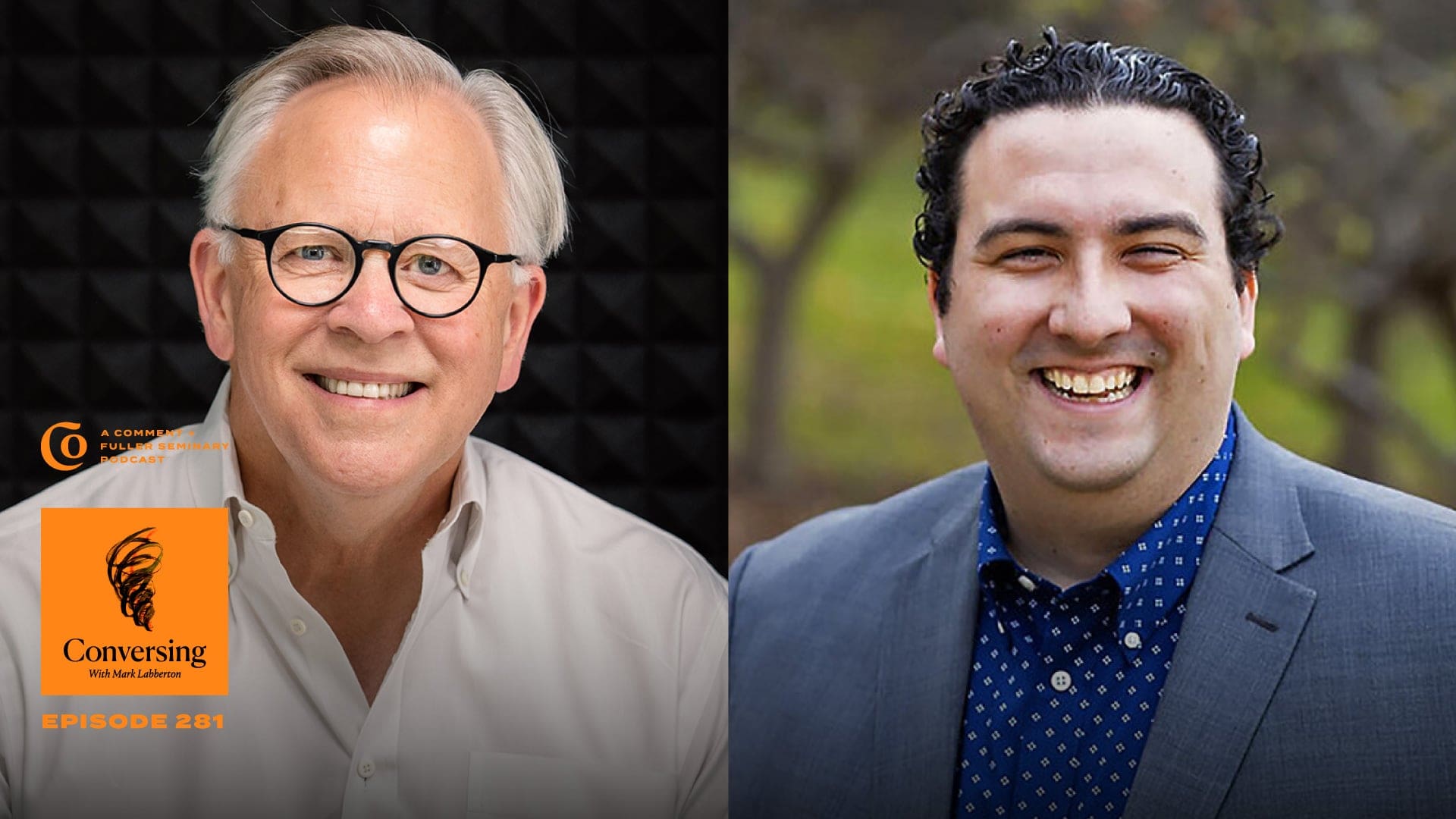
In this episode, Michael Wear (Center for Christianity and Public Life, author of The Spirit of Our Politics) joins Mark Labberton to discuss provocation and political effectiveness; the value of gentleness in public life; concrete signs of hope in local political action; the open horizon of the 2028 primaries; and what it would take to reset America’s political “agency quotient.”
Mark Labberton: I’m excited to welcome back today Michael Wear as our guest in Conversing. Michael is the founder, president, and CEO of the Center for Christianity and Public Life. It’s a nonpartisan, nonprofit institution based in Washington, DC, with the mission, as they put it, to contend for the credibility of Christian resources in public life and for the public good. It’s really been a deep season of Michael’s own work to engage in the spiritual and political realities of our nation’s life, and particularly of life in DC. And to that end, some of you will know that Michael is the author of the book The Spirit of Our Politics: Spiritual Formation and the Renovation of Public Life.
Michael Wear, what a great gift to have you again on Conversing.
Michael Wear: It’s so good to be back with you. Thanks, Mark.
Mark Labberton: You know, the work that you do, and that you and the organization you founded and are leading—the Center for Christianity and Public Life, based in Washington, DC—you and that organization are doing such important work, not least right now, when our national life continues to be roiling in political, social, economic—political things in every direction, at all times, in all directions. And it therefore makes me feel sometimes, when I think about having a conversation with you, that to dial into Michael Wear would be to dial into my man on the ground who is in DC, trying with others, through the lens of Christian faith, to consider what it is that is going on in our national life and in our political life in particular—but even more deeply than that, in the Christian reflection and action connected to those events.
So give us first just maybe a little update on the Center itself and your work since we were last in conversation. And then I want to jump right into some of the issues that we’re facing as a nation.
Michael Wear: Yeah, well, I so appreciate that. Center for Christianity and Public Life is going well. We’re about to hit four years in October. We hold our annual summit October 5 through 7 in Washington, DC, so it’ll be really wonderful to gather not just our community, but civic leaders, pastors, elected officials, journalists, others from across the country in DC for a few days. And folks could—tickets are still available. We’d love to have folks with us. You can learn more about the summit at ccpubliclife.org/summit.
And work is going well. You know, I didn’t quite understand—I understood the strategic and sort of missional value of connecting the thought work, the think tank work, the research, the public engagement with really intensive leadership development. I had some conception for that. What I’ve learned more and more of as I’ve sort of—as I’m now deeper into this work—is, frankly, like, the emotional value of it for me. Which is, I don’t think that I could—I view this as the next thirty years of my life, Lord willing. I don’t know that I’d make it five years if I either was just in the idea space and unable to be in close fellowship with civic leaders in various stages and sectors, from high school students to senior elected officials. And I don’t know that I’d just be able to sort of be doing the day-to-day counselling, discipleship, strategizing if I wasn’t also able to think about the structures and systems and ideas that will shape the world that we all are operating in.
And so I knew the strategic and missional value of combining those two things, but what’s ever more apparent to me these days is just how sustaining it is for me personally, that that is how we structured things. And so there’s a lot of work to do. We’re doing a lot of work these days on artificial intelligence, and thinking about the—obviously—the economic, defence implications, but particularly the social, moral, formational implications of AGI, and a number of other issues. But things are going well. I really appreciate you asking.
Mark Labberton: Well, I’m very glad to hear that. You and I both are good friends with Gary Haugen, and certainly he would say that the only reason the International Justice Mission has survived up to now—close to thirty years—has been the sheer joy of doing it in communion with other people who are sharing this deep burden. And it really literally cannot be done by an individual. It requires a community. And the way that you’ve fashioned CCPL is all part of that.
Maybe for the people who are less acquainted, just give people a sense of that texture. What is the organization of CCPL, and how does it figure into the issues of discipleship, for example, that you were referring to?
Michael Wear: Yeah, perfect. So the Center for Christianity and Public Life is a nonpartisan civic nonprofit based in DC, but operates nationally, with the mission to contend for the credibility of Christian resources in public life for the public good. And we advance that work through both Christian civic formation—so an ecosystem of programs, a public life fellowship program for established civic leaders, a high school program for aspiring Christian high school students who are interested in public service, a young professionals group, some other programs; we do a lot of work with pastors and congregations—and then what we call our public imagination work, which is the work of a think tank, public engagement work.
And our conviction was that those two streams of work are not just complementary, but mutually essential to one another. There’s a vibrancy, but also an accountability, when you combine those two streams and operate them alongside one another. And so that’s the experiment that we’ve been on for four years.
And we’re convinced that spiritual formation is central to civic renewal, that the kind of people we are has much to do with the kind of politics and public life that we’ll have. I’ve spent much of my life, as you know, Mark, thinking about systems and structures, and those are important. We’re not just a “change hearts” organization. But what we know is that, as Parker Palmer would say, our politics is made up of brokenhearted people, that our institutions are not sort of separate from the kind of people who make them up. And so we need to be attentive to both the heart and some of the norms, structures, systems, procedures, policies, practices that help to channel people’s affections in one direction or another. And that’s true in all areas of life. But, you know, we live in a representative democracy. And so, big surprise, the democracy is going to have something to do with the people who make it up.
Mark Labberton: Right, right. This is all deeply important to me for many reasons, but partly because of what we share around the conviction about Christian credibility, and Christian credibility being made up of many parts. I’m just—I’m curious, as you think about what you said about this credible public life, what are the values that you think are particularly striking to you today that are needed most to evidence that kind of credibility that you’re referring to?
Michael Wear: I think gentleness is profoundly underappreciated. I think that people are on guard for being taken advantage of, for being imposed upon, for being manipulated—
Mark Labberton: Used.
Michael Wear: For being used. And they know. They can feel in their body—like, you could actually see people’s bodies relax when they come to understand that you’re not there to impose on them, that you’re not there to simply—for your agenda for their life. And that is a—I think that’s, obviously, a Christian disposition, I think, in public life right now. At a time when people are feeling manipulated, feeling under pressure, feeling like they lack agency, gentleness could be a tremendous gift to our public life. So that might not be the most important thing, but that’s where my head and my attention is these days. And there are, of course, other things that we could talk about, but maybe I’ll stop there.
Mark Labberton: You know, I’m really struck by that. For starters, you don’t lead an organization called Wranglers for Jesus. That’s not what you’re doing. You’re not trying to rope and corral. You’re trying to actually understand, join, and collaborate even more deeply, ultimately to have communion with people that are both like us—like you or like me—like people that we are closer or less close to, or more close to.
I’m just—I am really struck by that. The other day I saw a conversation with a man who was a psychologist, developmental psychologist, talking about the nurturing of children. And one of the things that was so critical to me in watching this—with no little children in my life right now, but just being so aware of the clarity of his thought combined with the gentleness of his manner toward how you get a child to hear and understand you even when you’re correcting them, right? That whole sense of, how does the parent set the emotional tone for how you can have a really difficult question but have it in a quiet, more gentle way, than it being about volume and power and authority and threat and even potential danger, right? And how many people in the world have lived a world and a life in which that gentleness has either been present and well exemplified or, sadly, has really not been so.
Michael Wear: Well, so, in parenting and in politics, I think we could really—especially in the moment—delude ourselves into thinking that to get a reaction and to be effective are synonymous. Like, I can get a reaction from my five-year-old if I yell. I could get a reaction from my five-year-old if I make myself imposing. What I’ve discovered there, and what I’ve discovered in my sort of public engagement, is you’re often—so, a couple things.
One, there’s a depreciating rate of returns on that. And so the thing that got you a reaction the first time, after two times or three times or four times, it doesn’t quite work. And not only does it not work—and this is the second point—you realize that the aftermath of the reaction are all of these unintended consequences.
And I think that is a big part of what we’re experiencing in our politics right now, which is a real—the consequences of short-term thinking, the consequences of “what is most important is that we get through the next election” kind of thinking, and that kind of constant state of emergency, that kind of “we just need to do whatever we can to get people to do what we think we need them to do, and then we’ll maybe, if things work out”—you know, “this is just temporary, we just need the fever to break, and then we could get back to operating in a normal way. But these are not normal times.” You know, you get into all these kinds of rationalizations.
And I think what concerns me, both in parenting and in politics, is you end up being reactive for so long that you are just in a constant state of reaction. And you go, “What was I even doing here in the first place?” Like, you know, like, not to extend the metaphor too much, but, like, I didn’t have kids for this reason. Like, my relationship to them was not supposed to be this. My relationship to—I didn’t get into public service so that I could be involved in this weird game of antagonisms. But in order to—I told myself at the beginning, in order to get done the thing that I need to get done, that’s what I needed to do. In order for my child to grow up to be the person, you know, I need to really impose myself on them in this stage.
And you realize, oh, I’ve been in a state of reaction to the extent that I actually have been operating on a different mission. So not just my activity changed—the whole telos of what I was doing shifted, without me ever writing it down or acknowledging that to myself or others.
Mark Labberton: Yeah. Michael, that is just such a rich vein that you’re talking about, because certainly one easy phrase to use to describe the period that we’ve been in in American politics is continuous twenty-four-hour-a-day reactivity. And absolutely the sense that it is a firestorm that is being launched every day. And as a consequence, then, the desperateness of feeling like I have to try to catch up, if not ultimately beat, whatever it is that I’m reacting to.
But that is a different approach than an understanding that you see, for example—just to come back to the New Testament—we do not see Jesus in that reactivity mode. You could think of a thousand things that could have set him off, that would just cause him to explode in every possible direction, because there was so much injustice and so much suffering and so much that was wrong about the world into which he was born. And clearly the long view is in sight. Clearly the sense of a pacing that allows his incarnational ministry to focus on a woman at a well, or a particular person sitting in a tree. It’s a kind of approach that’s utterly different than a reactivity approach.
Michael Wear: And asking questions. Pausing. Seeming to change the topic. These are all ways of breaking the cycle of reaction. So when Jesus draws on the sand, there’s a theologian who says, you know, that was a moment of heightened potentiality for violence. And so, you know, it’s always, like, a fun thing to sort of speculate, you know, what is he drawing. But I’ve been really intrigued by this notion of, like, it doesn’t matter what he was—what he was drawing, what he was writing in the sand. The fact is—or a potential interpretation is—that it was a break in the escalating sort of violence of that moment.
That’s, you know, that’s really interesting. And then you start to ask questions like, well, what might it look like for me, in the conflict of my life, in the conflict of my days, to be able to act in such a way that I’m—cycles that I’m interrupting or intervening.
And this is the work of spiritual formation. You know, this is like Willard talks about, which is, spiritual formation is not about—is not about the practices themselves. It’s about what the practices enable you to do when you’re on the spot, for the thing that you could not anticipate, for the situation that you’re in that you did not plan for. What kind of person are you then? And, you know, I want to be the kind of person who, as provoked as I might be, is able to ask a good question instead, is able to look down and avert my gaze and write in the sand, or write in the ground, because that is what the situation calls for.
Mark Labberton: Right, right, right. It’s really an amazing thing to think how much our lives are potentially about the scripts that are being written for us by culture, or by certain leaders in culture, or influencers, so-called, who set us a script and said, this is how you should respond. And when you’re exposed to those—overexposed, which our social media and all of our media allows us to be, that is, continuously overexposed to overreactivity—it can become a built-in assumption, like a mechanism: if I’m not doing that, then I’m not doing anything.
And it is really a question of whether or not—where we’re paying attention, to whom and to what—that doesn’t then breed passivity. So, for example, you know, this kind of gentleness does not mean not engaging. It doesn’t mean not being in the vortex of the struggle. It doesn’t mean stepping away to a quiet, peaceable place necessarily. It’s about bringing a quiet, peaceable place to the middle of the conflict.
Michael Wear: Exactly right.
Mark Labberton: This has been one of the things I’ve admired so much about Pope Leo, because in so many cases he’s quite willing to step right into the vortex of the tension. But then he speaks out of this depth of tradition, and then personal appropriation of that tradition in his own being, which then allows him to speak out of a spirit of gentleness—using the word you’ve highlighted—in a way that subverts not just the actual long-term substance of the questions being debated, but the manner in which those things can even come to conversation to begin with. It’s an extraordinary combination.
Michael Wear: Well, I mean, what’s often so interesting about Pope Leo is, especially because he’s—although he recently pushed back against this term, but I’ll use it here—you know, first American pope, or because he has an American sort of background, he gets more questions that are flowing from the American political imagination than I think any pope has received. And it is just always so striking that, yes, he did spend time in America. Yes, the American political imagination is not foreign to him. And yet he answers a question and you realize, oh, this is not the dominant framework that he is operating in. And so he’s able to answer questions emanating from that framework in ways that completely bust through it and break its logic.
And that’s what every Christian ought to be able to do. I think one of the things that concerns me—especially when I talk about pastors, but for Christians generally—is when you get this sense that Christians think that they—Christian leaders think they’re making themselves more useful to our politics by putting on the logic of a politician, or of the pundits that they see. They think, like, that is—I am becoming more relevant, I am becoming more credible, to use our shared word—I am becoming more credible because I understand politics to be doing what the people I see on cable news seem to think politics to be doing. And that is not what Christians have to offer, at their best, to our politics. Christians have an alternative imagination that our politics desperately needs, and we’re actually robbing the public of that when we think that in order to be salient, we need to—
I once was at an event and a pastor came to me and said, “Michael, you know, I hadn’t really paid attention to politics for so long, but your book convicted me. And so you’ll be glad to know, if you looked on my computer right now, you’d see a tab that I always keep open of RealClearPolitics polling averages, and I refresh that three, four, five times a day. So I’m really—you’ve gotten me really involved in politics.” And you just go, that wasn’t the kind of involvement I was talking about. That’s not it. You’re missing it.
And so we need to be careful. But Pope Leo is just such a—I think—a powerful example. And there are others, of course. Like, I think one thing that’s important, one thing that I found important to emphasize lately, is I think we need to be clear that the representations that we so often see of Christianity publicly, they exist. We need to deal with them. We need to address them. But it is not a rarity in history for Christians to do exactly what we’re talking about doing. We’re not inventing something new. We’re not sort of asking for—you can find people like this in your church.
And I think something I’ve grown a bit weary of is the critique of things that need to be critiqued, but thinking that that critique needs to be accompanied by a sort of pessimism or a dour sort of approach to God’s people and to the church. And I just want to be really careful about speaking about—about how God is working through his people. And I don’t want to be more dour than reality calls for. I’d rather err on the side of being too positive about the church, and maybe being off in that direction, than being dour and actually coming to understand that the reality is so much better—which I think it is—than so much of the discourse we have today.
Mark Labberton: Michael, that is such a beautiful statement. I wonder, though, for people who are listening and who do feel—not because they’re temperamentally dour people, but because they find this a season in which dourness seems only too appropriate—encourage us even more. Give us some other voices. Give us some other things that, from your point of view, are really points of light, that are just genuinely evidences of a different way of being.
Michael Wear: Oh, there are so many. It’s so easy to talk about Gary Haugen here, but we won’t do that anymore on this podcast. But I think of my friends at Settled, which is a nonprofit in Minnesota that is working in housing and helping provide people homes. And just an incredible story there, where they had a model, they had a vision of church communities in really sacrificial—actually, I don’t know that they—I actually don’t want to impose that word on them—really comprehensive service and change of lifestyle.
The problem was, they lived in a state where—not for any antagonistic reasons, but the regulations, the zoning, would not allow for the kind of model that they wanted to set. And so instead of saying, well, you know, the law is the law, they advocated for years on a bipartisan basis, passed legislation through the Minnesota state legislature that was signed by the governor on a bipartisan basis, to change zoning regulations. Which, you know, it’s like—not going to fundraise a lot of money off of zoning regulations. That’s not an easy pathway to political mobilization. But it was vital for the sense of mission they felt God placed on their heart, and for the community that they were a part of. And now they’re actually doing the work. They’re building these communities. They’re serving people.
People often ask me, like, “And, Michael, like, after you left the White House, you must be so cynical. Like, you saw how the sausage was made, and there’s, like, all—” And surely I have stories that, if I chose to focus on them and them alone, you know, you could get a lot of mileage out of them. But I’ll tell you, when I left the White House, I left more optimistic, more inspired, more encouraged by what people, including Christians and Christian organizations, were doing across the country to serve those in need, to improve their communities, than when I got there. Like, I just got to—every day, it was dozens and dozens of stories of people: “Can you help me do this? Can I tell you this story about this recent success we had?”
And, like, so it’s very, like, difficult for me. Yes, I see all the bad—not all, but I see much of the unjust and the distortion that takes place. But I view that alongside the potentiality for Christians to follow Jesus with the whole of their lives. And that is so, so much more powerful than the distortions that we see that need to be rejected, that need to be called out, that need to be opposed. But they can be opposed with the good, not just with a reaction, not just with a mirror image of, well, you know, their tactics really seem to be working, and so if we want—we want things to change, we better, you know—it seems like their toolbox is really what’s necessary to get the job done. And I just wanted to say, it’s not. It’s not necessary. They’re doing damage to their own souls, not to mention the country.
Mark Labberton: Yeah. Yeah. Well, I just want to join you in that. You know, I had the privilege over the last couple of years to be involved in some of the work that the Lilly Endowment is doing. And one of the opportunities that that created was a chance to see and hear from literally hundreds and hundreds of churches and nonprofits that are doing all kinds of work. And I was stunned by my ignorance, in part because I was just so aware that there were so many more things happening—and still this was the tip of the iceberg—but there were so many more things happening than I would have been able to have named. And so many of the things I would have named would certainly appear in a lot of that, but plenty of things that I didn’t know anything about that has gone on faithfully for decades in some cases. It’s like, how can this be existing, and I’ve literally never even heard of it? And yet it is a remarkable expression of life in the middle of often extremely trying, challenging circumstances that are right in the vortex, doing and being what’s needed. It’s a remarkable picture.
Michael, one of the things that I think is happening is that I’m sensing, from the time that you wrote The Spirit of Our Politics to now, there continues to be, of course, an ongoing shifting and shaping and changing landscape of the spirit of our politics in the United States. And I see it from the West Coast. And I am increasingly aware, because I now infrequently travel to the East Coast, I’m so aware of the contrast in how people see things, and how the centrality of New York, the centrality of DC—these are things that obviously you can feel completely palpably from the West Coast, but I’m just saying the contrast is really striking to me.
So I know how I’m seeing it, but I’m just wondering, as you see it from—and I know that you’re centred in DC and you serve nationally—but how is the spirit of our politics changing, especially now as we’re coming so close to the midterm elections? What’s happening that’s kind of catching your attention?
Michael Wear: Yeah. So maybe a few things. I mentioned this already, but I think—and this may be wishful thinking—but I think that we have gone—we are in the midst of a decade in which it would be difficult to write a script of a course of events that would be more finely tuned to robbing average Americans from their sense of agency in their own lives, and certainly in politics and in the big forces that helped to shape their life, than the course of events that has taken place over the last decade.
So, contested elections with a lot of sort of clashing narratives even around the outcome of elections. A public health crisis in which some of the most basic human impulses that people might have were overridden by—rightly or wrongly—by the imposition of authority on them. There’s just nothing more human than wanting to be with a loved one in their presence, holding their hand as they’re dying, and yet events took course in such a way that people were prevented from doing that.
We have had a politics in which the stakes have been portrayed to be so high that people have been told what opinions they must have in order to achieve a certain outcome. This—not to get, like, overly—but within a span of nine months, it became a total violation to say anything negative about Joe Biden. And the same people who were saying, “You are putting our democracy at risk if you say anything negative about Joe Biden”—those very same people, nine months later, were saying, “If you don’t call for Joe Biden to be removed from the Democratic ticket, you are violating”—like, these kinds of— So, in politics.
And then, obviously, when you look at what’s happening in technology, where a handful of moguls are making at the same time both what sound to a lot of people like threats about what their technology is going to do, and utter confidence that they have the responsibility to carry that technology forward, with very little public intervention in any of it.
And so, like, oh, technology, politics, public health, the role of technology in our own personal lives. This is the unfolding of the social media dynamic where, again, talk about flip-flops within a span of years: it was a justice issue to get technology into public schools; now it’s a justice issue to get technology out.
And, you know, it’s just—that is a way of saying, I just think there are two directions. Either we continue down this crisis of both a real and perceived lack of agency, in such a way that the project of self-governance is made incoherent—or, and this is what I am pushing for, this is what I am hopeful about, I think the horizon is beginning to open. I think that Americans’ sense of possibility can expand once again, for the first time in, arguably, twenty years. And not that politics is the determinant of all of this, but just to add sort of a piece to the puzzle: for the first time in twenty years, in 2028, we’ll have—we should have—open primaries on both the Democratic and Republican side. So there won’t be a presumptive frontrunner incumbent in either party. That’s going to open up, potentially—if the American people demand it, and if our leaders are willing to offer it—an actual debate about the future of the country, rather than a series of sort of manipulative, sort of do-this-or-else kind of appeals.
And so that’s where I’m sensing a profound lack of agency. I think there are a lot of people who have said our politics is so toxic, our politics is so reactive, that the best thing I could do is withdraw. Like, my way of saying no to the reaction is to just not pay attention to any of it, or try not to pay attention to any of it. Or you have a smaller set, but because they’re engaged, they have outsized influence, who have said, well, this is just the way it is now. We could talk about, you know, maybe what used to be, but it’s really irrelevant whether what we had in the past was better or worse. This is what we have now. And if you’re going to be effective, not only do you need to play into the perceived norms of our political day, you need to actually double down on some of the worst impulses. And so I think that’s a lot of where we are.
And more practically speaking, we have midterms coming up. And I actually—we’ll see. We’re recording this just past Labor Day, traditionally campaign season. Post-Labor Day is the official start of the campaign. I’m sure things will ramp up. I am not hearing, at the same level that we’ve had in recent elections yet—and again, maybe this will change—I am not hearing now sort of sky-is-falling rhetoric just on the outcome of the election. Certainly there’s going to be a lot of attention on the midterms. Maybe it does ratchet up to sort of the existential. But I am not hearing— I think that there’s a political read going on that actually a constant—this existential state of politics actually makes it harder over time to get people to engage, when the thought was, well, how could—the higher you raise the stakes, the more people are going to be motivated to jump in. But I think the politicians are starting to understand that it might not be that simple.
Mark Labberton: Right. When the cacophony has been battering us for so many years now, the ability to speak into the cacophony and up the ante with even greater urgency is almost unbelievable. Even if you do feel, as I do—I will admit, and I know many other people do—the longing for considerable change, I’m just aware that it’s also the case that it is unhealthy and unsustainable to live with a framework that somehow puts everything on the line every single time you act or even speak, let alone when it comes to an election where the stakes are high.
I think what you’re saying, though, is a very interesting window. When you travel around the country and then you think about life inside DC, one of the most perplexing things has been the failure of Congress to exercise its authority over recent years. It’s been almost like we don’t have a Congress. So I’m curious, as you feel that inside DC, and as you hear people from around the country talk about Congress, what about that particular domain, and what do you see on the horizon that is catching your attention?
Michael Wear: Yeah. So I deeply, deeply appreciate the work of my friend Yuval Levin at AEI on just this topic. I just think we could use more people who appreciate Congress as an institution. Not to get into the history here, but this has been a long road of Congress, for political convenience, frankly, in most cases, offloading responsibility to the executive branch. And at various stages, this is something that’s been critiqued by both the left and the right. You know, like, on the right, the idea of the Chevron decision, and sort of administrative rules being sort of a way to legislate without legislating—that is traditionally a criticism of the right. It’s one that I share. And on the left, this sort of idea of a unitary executive, sort of an executive that just by the virtue of being the executive can justify almost any decision it has to make—that is a true problem.
You brought up East-West differences. Here’s one that’s really struck me. And the fact that it probably won’t strike you—like, the fact that it’ll make sense to you—is, like, illustrative of the point. I was in San Francisco with some of the folks from the frontier AI labs, along with a group of economists, public policy folks, theologians, philosophers. And I won’t go through the whole, but basically we were doing some scenario planning. And when we were reviewing the potential scenarios for how AI plays out, we were evaluating what we thought would be a better outcome. And what was striking to me is everyone was using the same language. And I thought, wow, we’re really in one accord here. Everyone’s worried about a sort of top-down imposition. People are worried about people not having a say. And this is good. I can’t believe we all agree.
And then, like, fifteen minutes into the conversation, it became clear that—to generalize here, but generally—the folks in tech, the economists, and some other sectors, when they talked about concerns about a top-down imposition, they were talking about a kind of political decision that would not let the technology play out as they would see it. And when the philosophers and theologians were talking about a top-down solution, they were talking about a technological imposition that didn’t have any democratic input.
Mark Labberton: That is so, so interesting.
Michael Wear: And I get it sort of philosophically, and it’s led me to think about—yeah, the framing, and exactly what we’re talking about here, because it is so interesting that the same sort of general impulse could be applied in such radically different ways, at least on sort of the first blush, the first instinct. To say, oh, it is—it is—and it is a matter of, like, do folks feel like they have the most agency?
And I think for a lot of folks, they feel like, well, I can’t see—I don’t have millions of dollars to influence politicians, and it seems like that’s what you need to get a politician’s ear. And I push back on that a little bit, but I think there are real problems with campaign finance reform and lobbying and all that. But I do have control over whether I want to start up my own AI business that follows my own values, or I can monitor what technology gets into my home. So that’s my area of agency.
And then there are other people who go, you know, my kindergartner is being handed an iPad. My second grader is being taught what it means to—you know, preliminary teaching about how to prompt AI. I don’t have much control when it comes to technology, but I at least can vote and write my member of Congress and show up at a town hall meeting, show up at the public school, at the school district meeting, saying, I don’t want this technology in my school, or I don’t want it that way. And so that question of agency, again, like, really profoundly shows up here.
If I could just say one more thing, Mark, which is: Congress’s dereliction of its responsibility isn’t just—to your point, into the discussion we’ve been having, or at least what I think we’re talking about here—it’s not just, oh, like, boo-hoo, like, an institution isn’t living into its full authority. It is one source of people’s lack of agency. Like, when the representative branch of government, the most representative, responsive branch of government, has said that it doesn’t—it’s going to forgo its oversight, that it’s going to forgo its responsibilities—that doesn’t just disempower the 435 members of the House, 436 members of the House, it disempowers and undermines the people who voted and put them there in the first place.
Mark Labberton: Exactly. And all of the unbelievable amount of energy that’s being given, for example, to the midterm elections, to elect people who may or may not do anything once they’re actually there.
Michael Wear: Right.
Mark Labberton: It’s really—yeah. I do think one of the interesting East-West comparisons that I think comes to mind in the way you were just drawing it is the West Coast, especially California—but the West Coast, and then you have to say, and really California is what you’re talking about, even though it is the whole West Coast—but there is a quality of, you know, more than 150 years of the West Coast being driven by robber barons. Now, that phrase attaches to a later period than 150 years ago, but the emergence of what ultimately leads into the gold rush, and then ultimately after the gold rush and around the gold rush leads into all kinds of industry development that was independent of the East Coast in that inspirational drive. It was like a—it was and is of a voracious quality of life in California. You feel that.
As a person who had to adopt California because I was raised in Washington State—like, the last thing I’d ever wanted to be would be a Californian. Like, that would be not what I would have grown up thinking I would have been. Yet I’ve spent, you know, over forty years now living in California. So it’s clearly a place that has become a deep part of my life, and in the San Francisco Bay Area, which has been the hub of the robber-baron qualities of California at its best and at its worst.
And I do think that it still contains that sense of agency, but it is increasingly an agency that is truly for the wealthiest, rather than the sense of agency that’s for the common person. So I have agency. I have way more agency than the average person has. And I still feel like I have no agency in the world. So I know that’s a fiction. I don’t actually believe I have no agency. That’s not what I’m saying. I’m just saying, I can feel, by comparison to the fact that the way the deck is stacked, that I really have almost no voice into almost anything. I’m overstating it, and it’s not rightly naming it, but it is tracking how it feels—that I have no real voice into a lot of things that matter deeply to me and to the place I live.
Michael Wear: I published a piece recently on just this topic, but it’s really, like, it’s really my poking my head up above the shoreline, you know, on this topic, and sort of inviting ideas, conversation, pushback, because I don’t have the answers yet. But what I do think strongly is there needs to be an agenda to reset what I’m calling the agency quotient in America. Like, this is not something that will just fix itself. And we’ve allowed this to atrophy to such an extent that it can’t just be a return to some better time. So it’s not just a matter of treating our institutions as we treated them ten years ago or twenty years ago or thirty years ago. There’s been so much atrophy that actually the system needs a sort of a jolt, a participatory jolt.
And so I think that there are some obvious places to look, but I am deeply solicitous of others’ ideas. But some of the places I look are something as seemingly small but, I think, imagination-stretching as what’s known as participatory budgeting. And at CCPL, we actually have a fellow right now, Matt Harder, who runs an organization called Civic Trust that is a participatory budgeting organization. They work with local, state governments: for some portion of the budget, those dollars are allocated by public votes. So, like, imagine the parks department telling their local town, “We have $40,000 to spend on community beautification efforts. We’re going to, in a collaborative process, put together a slate of ways to spend that money. And then, even though, like, yes, we’re elected, there are other decisions we make sort of representing you—this is a decision that, actually, our decision is to turn it back to you, and you can vote, and we’ll spend the money how you—” I think, like, the way that that reconfigures, or the way that people relate to their government, to their tax dollars, to their own community—that’s really powerful.
I think, obviously, we could talk about electoral and campaign finance reforms. I think, in some ways, the abundance sort of conversations are deeply related to questions of agency. And that opens up a sort of idea space where agency is implicated, frankly, in both directions. And so I am deeply solicitous. And it’s going to be, I think, a signature focus for the Center for Christianity and Public Life in the coming years and months, to think about and to act on and join with others to really tackle this question of civic agency.
Mark, I don’t know that it’s—I don’t know that solving the agency question solves the polarization question, but I feel so much more—I’m so much more firmly aware of how tied this question of agency is to the polarization and division we see, in ways that I just did not understand two or three years ago. And so if people care about conflict, if they care about division, if they care about sort of this toxic polarization, I’m increasingly convinced that this question of agency has to be a part of how we address that.
Mark Labberton: Right, right. And I will, as we come to the close of our conversation, say that one of the things that I think is so critical about what you’re doing, and resonates so deeply with me, is that there is this sense that Christian agency has itself been deliberately abandoned by alignments that actually surrender agency rather than actually embody agency. And the reason for that is because of how power that holds that surrender then unilaterally acts, as opposed to power that actually receives, let’s say, the alignment of some loyal follower—but then that person or group of people stays critically involved, self-reflectively critical and publicly critical, in that constructive sense of an ongoing accountability, as opposed to a surrender, “I will do whatever you say.” Which is then why the horrendous abandonment of Congress of their agency, when the whole purpose is that they have agency and have been empowered to actually exercise agency, and choose not to do that—it’s just, that is about something very profoundly problematic at the core of American life.
Michael Wear: Yeah. Checks and balances is just a longer way of saying agency. It’s right there. And we’re not seeing—right—a whole lot of checks or balances right now from Congress.
Mark Labberton: Yeah. Well, go Michael Wear, and go Center for Christianity and Public Life, because this work that you’re doing, and this long-term work that obviously it requires, is really, really continuing to be so important. So thank you again for the conversation. Thank you for the wisdom and insights that you’ve shared. I look forward to tracking and following as things continue to unfold. Thank you for your friendship, and thank you for your voice.
Michael Wear: Love and appreciate you. Thanks, Mark.

Mark Labberton hosts the Conversing podcast and is the Clifford L. Penner Presidential Chair Emeritus and Professor Emeritus of Preaching at Fuller Seminary.
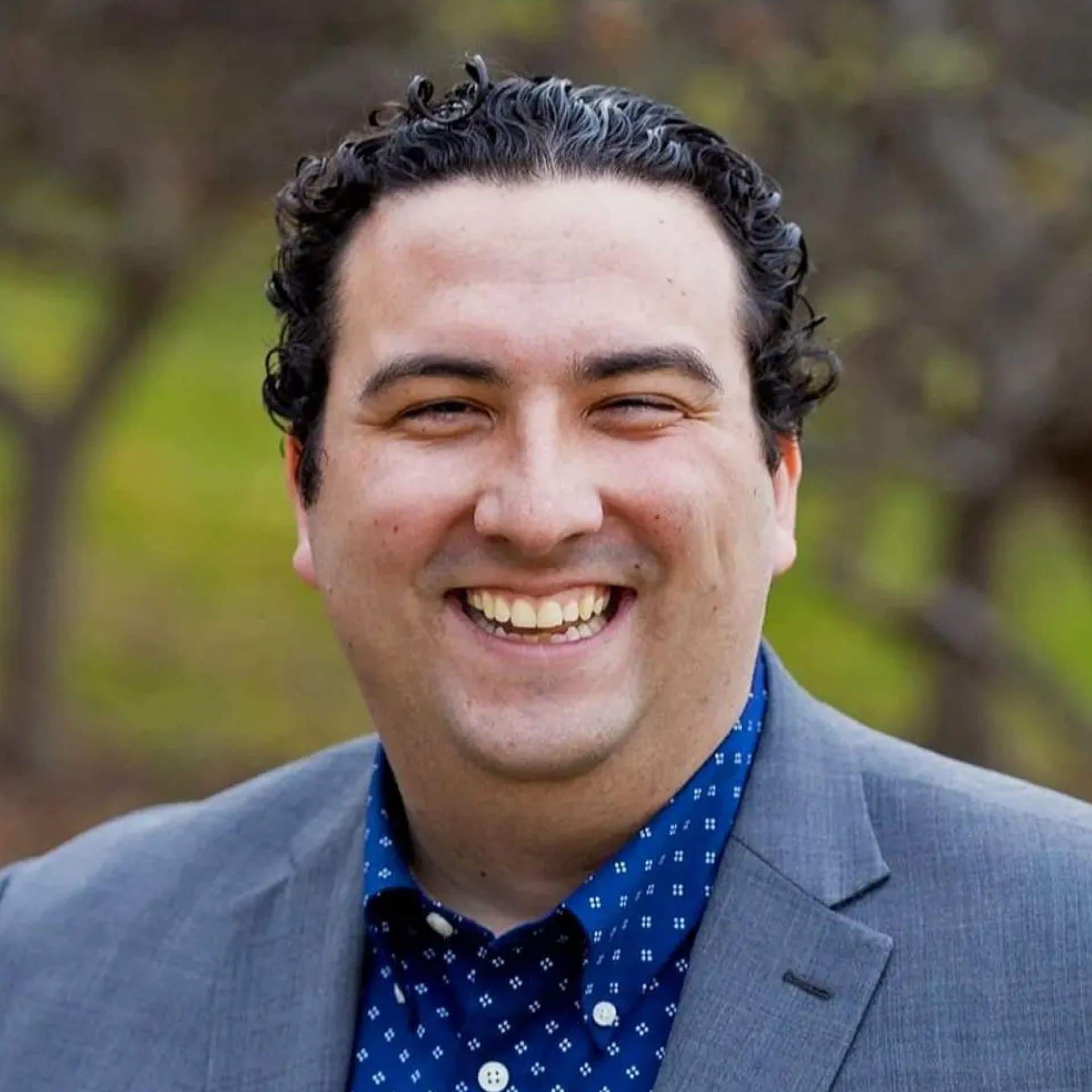
Michael Wear is the founder, president, and CEO of the Center for Christianity and Public Life, a nonpartisan Washington nonprofit that contends for the credibility of Christian resources in public life, for the public good.
Love the show? Help others find it by reviewing it on your favourite podcast app. We also welcome your ideas and feedback. Email us at conversing@comment.org. Thanks for your support.