


What to do when you are the source of the uncomfortable holiday dinner conversation.


When disagreement is conflated with danger, genuine conversations can feel frightening, and fear can lock us into the kind of certainty that stunts individual growth and collective thriving. In this episode, we’re featuring the insights of Mónica Guzmán on braving difficult conversations. Mónica is a journalist, an advisor and debate chair at Braver Angels, and host of the podcast A Braver Way. She is also the founder of Reclaim Curiosity and author of I Never Thought of It That Way: How to Have Fearlessly Curious Conversations in Dangerously Divided Times.
This session was recorded during a late-night conversation with British broadcaster Krish Kandiah and with Lee Camp, host of No Small Endeavor. The three thought leaders discuss how heat builds in conversations, how curiosity helped Mónica’s family connect across the political divide, and how the root of all evil is the distance between people.
Recorded in the Bethlehem Chapel at The Understory Festival on Friday night, May 29.
Tiffany Thompson: I’m Tiffany Thompson, the executive editor of Comment magazine and executive producer of The Understory Festival. When disagreement is conflated with danger, genuine conversations can feel frightening, and fear can lock us into the kind of certainty that stunts individual growth and collective thriving.
On this episode of The Understory, we’re featuring the insights of Mónica Guzmán. Mónica is a journalist, senior fellow for public practice at Braver Angels, and host of its podcast, A Braver Way. She is also the founder of Reclaim Curiosity and author of I Never Thought of It That Way: How to Have Fearlessly Curious Conversations in Dangerously Divided Times.
This session was recorded during a late-night conversation with British broadcaster Krish Kandiah and host of No Small Endeavor, Lee Camp. Together, the three thought leaders discuss how heat builds in conversations, how curiosity helped Mónica’s family connect across the political divide, and how the root of all evil is the distance between people.
Recorded in the Bethlehem Chapel at the Understory Festival on Friday night, May 29th, here is the ever-so-curious Mónica Guzmán.
Krish Kandiah: Welcome to the stage, Mónica Guzmán. Your TED Talk was described as one of the best ever by David Brooks, which I think is pretty impressive. And your book has been commended by an actor I grew up watching as a child, Alan Alda, who’s in M*A*S*H, Hawkeye. Tell us about this journey into—because you were a tech writer, and now you’re writing about how we have difficult conversations with people we might not normally get along with. Tell us about that.
Mónica Guzmán: Yeah, it’s a weird one. I was a very shy kid. I remember my mother, we were at a Burger King near my house, and I really wanted salt when I was a kid. And she said, oh, go check the salt things. They were out of salt. Well, you have to go to the register and ask for salt. I was like, what? Can you come with me to ask for salt? It’s like, you can ask for salt. I was terrified of people. I was terrified of strangers.
And what happened was I started kind of getting fascinated by the details of the world. We would be on road trips, and instead of just kind of letting myself get bored, I would start writing. And then I would get carsick, but I would keep writing because I just wanted to capture the details. And so even though my tummy hurt, I wanted to keep writing. And that led to internships in journalism. People became so fascinating. So somehow my fascination with people ended up going into kind of the showdown with my shyness and eventually defeated it. And I became the raging extrovert that people today know me for.
I learned through journalism how deeply important and deeply difficult it is for people to understand each other. I kept getting people wrong. My first A1 story in Foster’s Daily Democrat in Dover, New Hampshire, family-owned paper, I had six corrections, six errors. And it was somebody who had just opened her own business. And it was a small town, so I got to see the look on her face, the devastation, the power I had had, the responsibility to get her right, and I failed. And it made me so conscious of how easily we get each other wrong.
Fast forward. I’m a Mexican immigrant and came over with my parents when I was six or so. In the year 2000, we became citizens. They went right, I went left, and hilarity ensued. We would speak in Spanish at full volume in these restaurants where nobody understood what we were saying, so it just felt like we could.
And then the 2016 election came, and it tested our family, like it may have tested many of yours. And yet, somehow, somehow, it’s like we were able to mostly keep the heat to a simmer. We were able to talk about what was bothering us about the other person’s political choice. And I like to say that the heat in a conversation is good. The friction generated from different perspectives. The question is, are you cooking something or are you burning something? And it can be a fine line. You’re cooking up understanding or you’re burning your dignity, trust, relationship.
So I decided, because we seemed to be finding a path while so many others were not, that we needed to find out what was keeping us from seeing each other and figure out how to get it out of our way. So that’s been the mission ever since.
Krish Kandiah: It’s beautiful. You’re right. I think many of us do have members of our family, members of our churches that we’re struggling to relate to. We’re so divided. Without giving away the secrets of your book, could you give us a hint of some of the things we might try in our own lives to bridge some of those barriers?
Mónica Guzmán: Well, one thing to keep in mind, and it’s the inconvenient truth of our times, is that whoever is underrepresented in your life will be overrepresented in your imagination. So we make this mistake of thinking, well, if I don’t talk to them, whoever them is, then I don’t know them. But that’s not true. If you don’t talk to them, you leave intact the projections that inevitably have seeded themselves in your mind about them. The research shows that those are all misperceptions. It’s wacky. The gap between what we imagine and what is real about why people believe what they believe.
So one thing that is really powerful is instead of asking people, what do you think? What do you think? What do you think? If you want to have that conversation, ask them what their concerns are. What concerns you about immigration right now? What worries you about this or that topic? Because when you ask people what they worry about, you learn what they care about.
And here’s the secret. Then you have a conversation about values. And people think that we don’t share our values. That’s sort of how we talk about it. People tell me, I can’t talk to them. They don’t share my values. The research that’s been done on values, what I have extracted from it, is that we do share our values. We just rank them in a different order for different issues. So the value of self-determination on abortion and on vaccine hesitancy can bring you to two different political sides. I have control over my body. So it just depends.
So if you have a conversation about concerns, you then learn about people’s values, you see that there’s common ground. You realize that nobody hates security. Nobody hates the common good. Nobody actually thinks that way. We’re just fooled into those false binaries through memes dropped on social media all the dang time.
Lee Camp: I think of that narrative that you—of afraid to go ask for salt compared to the kind of work you’re doing now, which is a story of at least unfolding courage, among other things. How do you see the struggle with courage, cowardice, or recklessness, on the other hand, at play in your life still?
Mónica Guzmán: Courage, cowardice, and recklessness. I think the main thing is self-knowledge. So I wrote this book about how we stay curious about others. And what I’ve realized in the intervening years is that it’s so deeply important to begin by being curious about yourself.
I often say that the archvillain of curiosity is certainty, because if you think you know, you won’t think to ask. But the deepest, deepest, deepest barrier and villain truly is fear. You can’t wonder about something you think is out to get you, if something is that threat. And frankly, this is a physical thing. The trauma responses, fight, flight, freeze, fawn. You know, it’s not necessarily a question of willpower, of strength in the moment that you can become. Your body will tell you if you are scared. And once you are scared, you can’t be curious.
But then the question becomes, can you stay with the heat that has been generated in you? You couldn’t face that moment. You can’t face that moment again, that topic, that conversation with that person. That’s fine. But can you then reflect to yourself, what was happening with me? What am I afraid of? Because we know this to be true, that two people in a room having different ideas are not a danger to each other. They are not. So what does it mean? What does it take to go inside?
And I’ll tell you a story about this. A woman named Janice Dickinson in eastern Washington who I met, when her father was very elderly, she was the child who was tasked with going and taking care of him, I think once a month. And so she would drive from Washington State to Colorado to his house. And something awful would happen. She kept having to go to a hotel. And she wasn’t able to stay with her dad. The plan was always, I’ll stay with you as I’m taking care of you. And she couldn’t. And she used to think it was him. It’s his—I don’t know, he was just kind of mean and all that.
Anyway, she started to talk across the political divide because she was very worried. She was liberal. She was very worried about the state of our nation and Trump and Republicans and all this. And she realized something. Her dad always had Fox News on. And when she walked into his house and Fox News was on, she would hear everything. And it would just bring to her mind all this junk, this stuff that she just couldn’t believe any of that was any good. And so she began to speak irritably. And he would respond with irritability. And they would just amp each other up. They wouldn’t even be talking about what was on the TV. It didn’t matter.
The reason she realized this is because she joined Braver Angels, which is a nonprofit that gets people together across the divide. And she met somebody who was Republican and she was kind of shocked. And Sue Lani Madsen is her name, and told her about a regulation in eastern Washington, you know, about—it was real estate or something. But suddenly it made sense to Janice. And she said, oh, that’s actually not that bad.
She gets to know Sue Lani better. And then the most amazing thing happened. She showed up to her dad’s house again. She heard Fox News again. But this time she thought, well, some of those ideas are just different. I don’t like them, but they’re not necessarily evil. Her irritability went away and her relationship with her dad got better. And after that point, he only had about eight more months, I think. And she just told me tearfully, I was able to be with my dad. I was able to repair that relationship.
And it was because she was able to inquire, what’s going on with you? How are you interpreting what you’re hearing? Can you go inside instead of just externalize it? And it comes down—I think one of the deepest sort of spiritual lessons I’ve learned from all of this is that, to me, the root of all evil is distance between people. And you said it, we have such a hard time encountering each other and approaching each other, but we will leave our projections intact. We will leave our fears intact and we will lose opportunities for courage.
Krish Kandiah: Beautiful. So powerful. Thank you to all of our guests. Let’s have a round of applause for them.
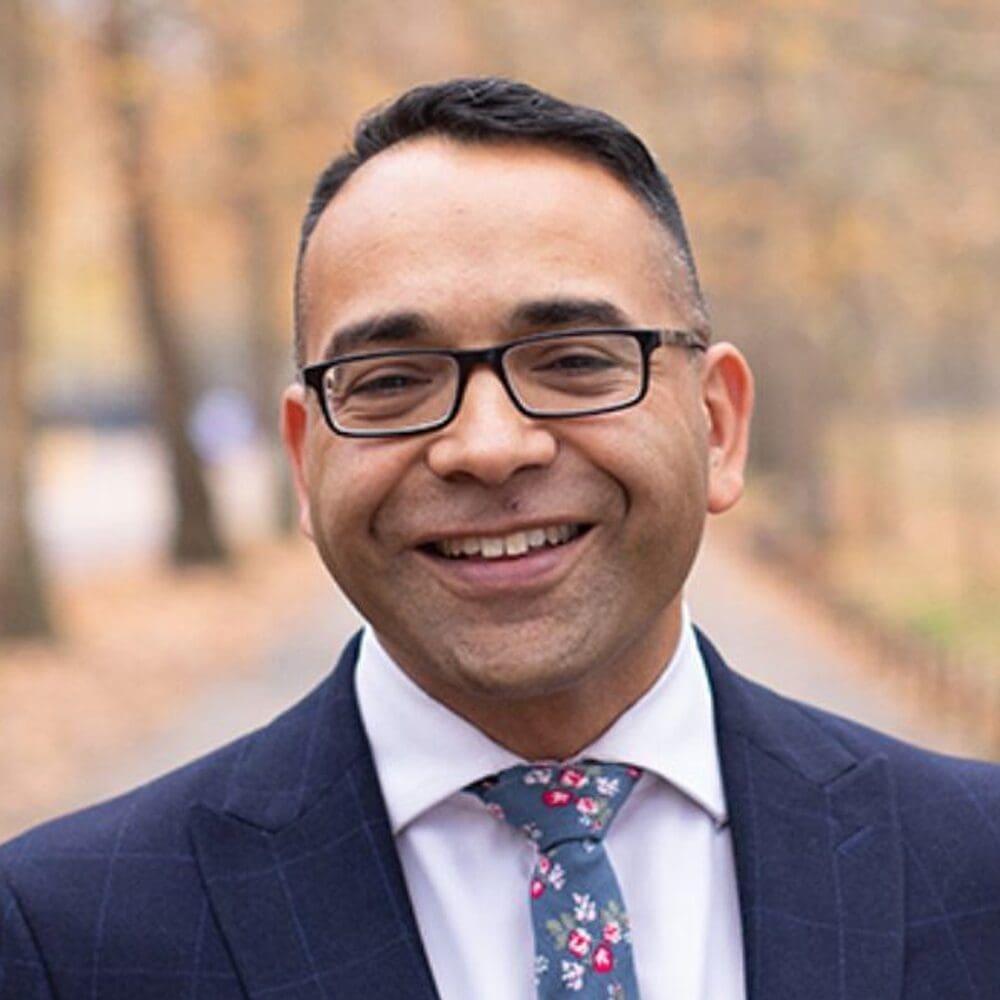
Krish Kandiah is a British social entrepreneur, broadcaster, and author who directs the Sanctuary Foundation; his books include the award-winning Paradoxology.
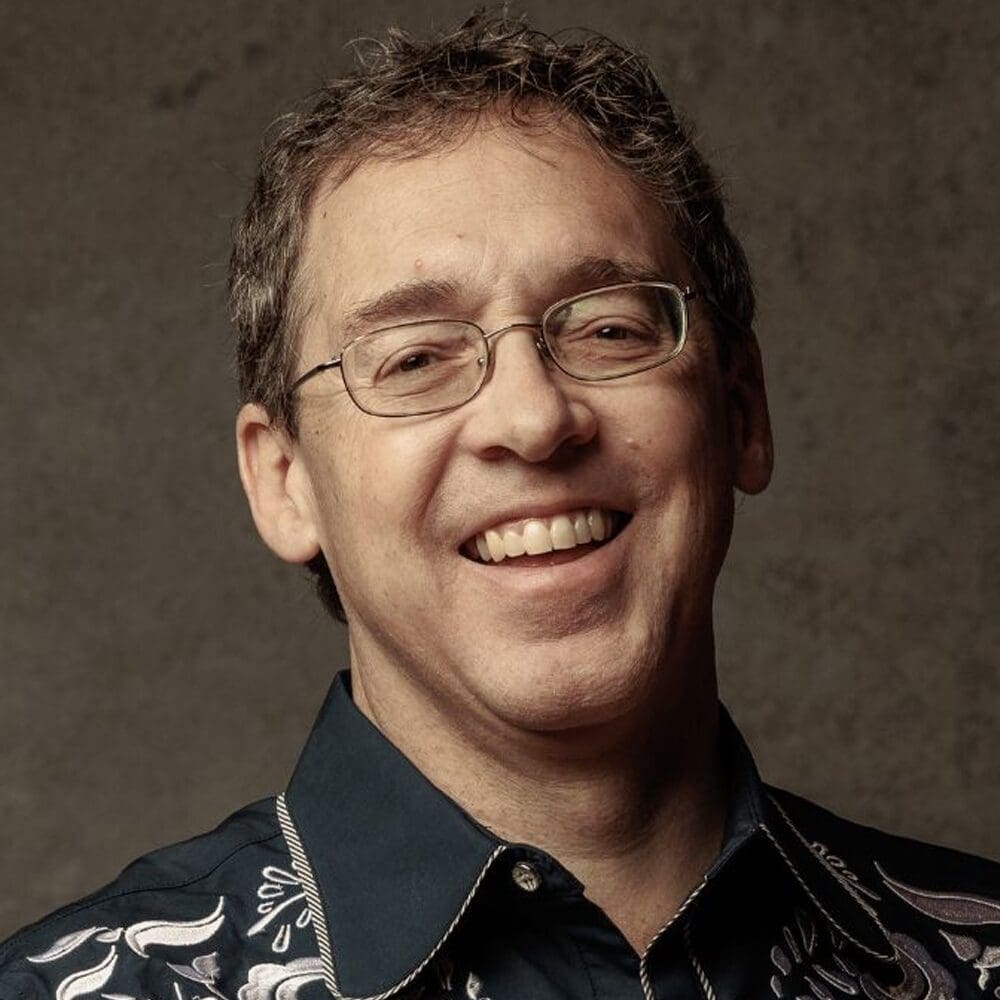
Lee C. Camp is the creator and host of No Small Endeavor, a public radio show and podcast about what it means to live a good life, and a former professor of theology and ethics at Lipscomb University in Nashville; his books include Mere Discipleship and Scandalous Witness.

Mónica Guzmán is a journalist, an advisor and debate chair at Braver Angels, founder of Reclaim Curiosity, host of the podcast A Braver Way, and author of I Never Thought of It That Way: How to Have Fearlessly Curious Conversations in Dangerously Divided Times.
The Understory festival is a civic and spiritual gathering to rehumanize our common life in a time of cultural fragility. Love the podcast? Help others find it by reviewing it on your favourite podcast app. We also welcome your ideas and feedback. Email us at podcasts@comment.org. Thanks for your support.
What to do when you are the source of the uncomfortable holiday dinner conversation.
SITE DESIGN AND DEVELOPMENT BY POLYMATH