





Who best holds the legacy of the great writer and farmer?




Conservationist and environmental advocate Ben Lowe discusses our ecological crisis, the role of Christian faith and spirituality, and how churches can respond with hope, action, and theological depth.
He joins Mark Labberton for a grounded conversation on the intersection of faith, climate change, and the church’s role in ecological justice. As Executive Director of A Rocha USA, Lowe brings over two decades of experience in environmental biology, ethics, and faith-based conservation to explore how Christians can engage meaningfully with environmental crises. They move from scientific clarity about climate urgency to the theological blind spots that have hindered the Christian response.
Together, they explore how churches across the U.S. and beyond are reclaiming creation care—not as a political issue, but as a form of discipleship and worship. With stories ranging from urban stream cleanups to coral reef restoration, Lowe emphasizes small, local, relational efforts that respond to God’s ongoing work in the world. At the heart of the conversation lies a call to moral will, theological clarity, and faithfulness in the face of ecological grief.
Mark Labberton:
It is an honour to me to welcome today as a guest on Conversing, Dr. Ben Lowe. Ben is the executive director of an organization that is a Christian environmental organization called A Rocha. There’s more in the show notes about that, and we’ll talk about A Rocha in the course of the interview. Ben comes to this role with a Bachelor of Science in Environmental Biology from Wheaton and a PhD from the University of Florida focused on the human, religious and ethical dimensions of environmental change in conservation. He’s a friend, he’s an inspiration, he’s an encouragement. Ben, what a gift to have you. Thank you for coming to be part of Conversing today.
Ben Lowe:
Thanks, Mark. It’s great to be with you.
Mark Labberton:
It was in 1970 that Earth Day was established and showing my ancient of day’s life, that means that I was a junior in high school when the world embraced this name as a way of trying to bring attention to the whole world about environmental issues. And here we are now, many years later, 55 years later, and there is a lot that has happened to our environment and there’s a lot that has been done to try to embrace the challenges that we’re facing environmentally. We have even more robust challenges given the political moment that we’re in the United States and in another places around the world.
You work for A Rocha, which we’re going to explore a little bit later, but I’d like you to start by just giving us your picture of where we are, the big picture of global environmental concerns. How would you describe it?
Ben Lowe:
Yeah, thanks, Mark. This answer could go on and on, of course-
Mark Labberton:
Yes, for hours.
Ben Lowe:
It’s a big, complex, diverse, beautiful planet, but I think the biblical way to describe it is the same today as it was back when it was first written, which is that this world is good, but it’s also groaning. And so how do we understand our place in a world that’s good and groaning? You referenced Earth Day over 50 years ago and in some ways you can look back and think, well, we’re worse off now than we were back then. What in the world is going on? But I’d offer a couple caveats to that. The first is that we don’t know where we would be were it not for Earth Day 50 years ago and all the efforts that have taken place in the meantime. We know that good environmental action and good conservation makes a difference. We know it works. So the question is not whether we know what to do, but whether we’re doing the right thing and we’re doing enough of it. And of course, in many ways many things have gotten worse since that time, but it’s never too late to take action and to get engaged.
Mark Labberton:
Right. It is really one of those things that is about as big as any concern that we could face. It’s obviously in the end the defining concern because our environment will ultimately tell us what life is going to be about and therefore the stakes are particularly high and the drama is huge, so huge that it’s really hard to even get our mind around it. I mean, I was reminded again this week in all the prominence that’s been given to the new telescope in Chile that is this telescope that allows us to see the universe in ways that are simply completely unmatched by any telescope that we’ve ever seen.
And it illuminates the universe, it illuminates the details of the universe at a level that we have never even been able to imagine. And I am always taken by that kind of development and excited by the promise that it holds simply by being able to see reality more and more clearly. But seeing the reality about our environment on this planet within that enormous cosmos seems still to be, not so much a subject of scientific debate, but a subject of popular debate. And there are still signs, and sadly often among Christians, of this tension between whether or not the environmental concerns that we have are truly human made, are largely humanly manufactured by the decisions that we’ve made about our environment, or whether it’s something that’s beyond our human narrative and really has more to do with some larger thing that’s happening in the cosmos or in our galaxy or something else. Let’s just jump into that particular thorny question, and I’d love to hear how you would talk about that.
Ben Lowe:
Yeah, sure. Well, in the last 20 years since I’ve been working on these issues, the science has gotten a lot more sophisticated and a lot clearer. 20 years ago, we already had a very general idea of what we were doing and the impacts that we were having on the planet, but in the last 20 years we’ve gotten so much better and scientists and science has gotten so much better at understanding the underlying drivers as well as being able to predict what is going to happen next and what we’ve seen on issues like global climate change or on issues like the global extinction and biodiversity loss crisis and other issues like pollution. What we’ve seen is the science has generally by and large been conservative. So we’re experiencing right now, we’re not talking about hypothetical issues anymore. We’re talking about issues that many, if not all of us are tangibly experiencing now even in places like the United States.
And so what we’re seeing is that the science has been on the more conservative end of predictions and things are moving faster, further and at a greater scale and magnitude than we were hoping to be experiencing right now, which means that we’re in a period of particular urgency when it comes to addressing the challenges that we’re experiencing and both adapting to the changes that we’re already on the hook for as well as working to slow and reduce the scale of change so that we can hopefully prevent more of the worse impacts from taking root down the line.
Mark Labberton:
Right. It really is a remarkable thing to see the way the science has grown and while you are a scientist that actually knows that in detail, I am a pure amateur, but an avid reader of material that describes what is going on and how and why this moment is so incredibly significant.
I think of two little anecdotes I would lift up and have you perhaps comment on. One is that as we have this conversation today, I think today is supposed to be the hottest day ever in New York City just as one small little data point. Another data point is the fact that in the last couple of years as I understand it, there has been a spike, an unexpected spike in ocean heat in particular, and the fact that part of what allows the stability that we do have in controlling the heat of the earth is really principally because of the gift of these oceans that actually literally contributes the cooling of the planet. But as the oceans get hotter, then the reality of the most threatening possibility that oceans could become heat generating rather than cooling is one way of putting it. And while we’re not at that level, we’ve had this spike in heat in oceans around the world and certainly in some parts in particular, and we’ve seen the evidence of polar ice caps and so many other things that are changing. I wonder if you could just drill in on, let’s talk for the moment about oceans and what we should know about oceans and the crisis that we see it there.
Ben Lowe:
Sure thing. You asked really good, but very big questions. And when I teach a sustainability course for Wheaton College, we will spend days digging into any one of these single questions.
Mark Labberton:
Yes. Of course. Of course.
Ben Lowe:
But you’re absolutely right, Mark. The oceans are a huge gift to human society, and they have been buffering and absorbing a lot of the heat and the carbon that we’ve been emitting as a species over these past decades. And so if it were not for the oceans, we would be experiencing much worse and much stronger impacts. And so what we do have to be aware of is the oceans are not limitless, as big as they are and as much of the world as they cover, we are seeing signs that the oceans are warming more than they can sustain. It’s impacting coral reefs around the world with bleaching events and other challenges that are impacting human societies because we depend on our coral reefs for fishing, for food, for livelihoods, so on and so forth.
I live in Florida and over the past couple years, you’re right that the sea surface temperatures in the Gulf were extraordinarily higher than normal, and that of course, supercharges the hurricanes. We’re starting to enter a new hurricane season and every year now we have these hurricanes that are huge in terms of their scale and the amount of water that they can suck up from these overheated oceans and then dump on the land is causing tremendous problems. And we see that affecting everything, including our homeowners insurance. So the insurance industry is really struggling in places like Florida and places perhaps where you live, where you deal with wildfires that have gotten much more intense and much more regularly intense than they had been before. And my homeowners insurance rates more than doubled in the last few years. We’re just getting all these signs coming from all of our systems that are warning us that we are on a completely unsustainable path.
Now of course, we’re talking a lot about the bad news, but the silver lining to us being the driver of so many of these problems is that we can also choose to be part of the solution. And that’s where I think groups like A Rocha but also Christians and churches have such an important role to play as the world gets darker and as despair, as anxiety, as fear, as scarcity mindsets take hold more and govern our societies, the church can really shine a light of hope, of love, of the good news that God promises for this world in the midst of all that.
Mark Labberton:
Right. So the question then becomes, it seems, we each have our own micro-contributions that any given person can actually contribute. You as a leader of a Christian environmental organization have a larger capacity of influence through the organization that you lead, and through the opportunities and networks that A Rocha is so ably fostering and strengthening. But when you put all of this up against this normity of what corporations and other entities, governments, industries of different kinds are contributing, help us calibrate this because I think part of where I sense the environmental conversation is even in a place like California, even in a place like Berkeley, California, there is a sense that people are freshly overwhelmed, as you say, for many different reasons right now about the state of the world. And it’s felt to me like even among people who I know are keenly attuned to what’s going on in the environment, there has been a sense of just being overwhelmed by the scale of what needs to be done and the relatively small impact that it seems can actually be made. So I’d love it if that analysis and way of describing it is wrong and that you can recalibrate us in a way that really understands and underscores hope and not despair or resignation.
Ben Lowe:
Yeah. Well, first of all, I don’t think it’s wrong. I think it’s very valid and I experience, we all experience that regularly, that sense of overwhelm at the scale and the severity of the challenges that we’re struggling with. But I would say, and we certainly get this from the Bible, from the teachings of Jesus and from the pictures we have of the kingdom of God, small does not mean insignificant.
And so I’ll just put that out there and we can come back to that. But I should say that we have the solutions we need to address the climate crisis to address ecological crises, the problem of pollutions, our technology, our policy level of sophistication in our policy is great enough that we actually can solve these problems. So the problem is not our technical ability, it’s our moral and political will that has been lacking and our coordination that has been lacking. So when you look at the trends in clean energy, for instance, and the sharply declining costs of producing clean energy and the sharply increasing rise in demand for clean energy, we see a clean energy transition and a decarbonization of the economy, a process that is already well underway that has momentum and that shows all signs of eventually being successful and effective and taking place.
We are in a great transition, but that transition is happening and it’s sort of unstoppable. Now the question is how quickly will it happen and will we be able to move it forward quickly enough to address some of the building impacts that we’re experiencing, or are we going to have more pain coming down the line because we’re too slow? So how quickly will it happen? And then who all is going to be left behind? Transitions always have winners and losers, so who all is going to be left behind in this clean energy transition? And that’s where I think Christians have a particular contribution that we can offer. We can bring the moral will to help shape the decisions that we have to make as societies and as individuals and households and churches, and every scale in between. We can help bring the moral will and clarity to help speed that transition along.
And then as Christians, as we’re instructed to do, we can also pay particular attention and care to those communities and those individuals who are being left behind in the transition. That’s everything from coal mining communities in Appalachia to others who work in the fossil fuel industry to all the different industries that support the way we’ve structured our lives so far. So there’s no question that we’re undergoing a huge transformation. The answer to this problem is not to go backwards, but it’s to go forward together and as well as we can do, and the church has always, well, religion and the church has often played a really key role in helping to navigate times of upheaval and uncertainty like we’re in.
Mark Labberton:
Right, right. So give us some examples of where you are working the hardest and where you’re seeing the most encouragement.
Ben Lowe:
Yeah, sure. So A Rocha is a network of Christian conservation organizations in about 25 countries around the world. We were started about 40 years ago, someone and you studied under John Stott was a huge backer of us as we got going and supported us throughout his life. And so the US is just one of those countries. And in each country we’re an independent organization, but we’re all connected very intentionally with one another.
So in the US, we have projects that we’re doing on the Indian River Lagoon, which is 150 mile long estuary in Florida. It’s one of the most biodiverse estuaries in the country, and we’re helping to work with local partners, universities, high schools, churches to conserve the lagoon. We’re also working in Austin, Texas, and we’re working with the city of Austin and some local communities to help restore and remove invasive species from endangered habitats, vulnerable habitats, as well as connecting. We have a lot of Spanish language programming in that part of the country that helps connect recent immigrants with the communities that they’re living in to help them get to know their new places and learn the names of species and just feel more at home there.
So all of those very local place-based, but concrete, tangible signs of what it means to love our place and love our neighbour, give me great encouragement and hope. The kind of cutting edge of what we’re moving into now though is our work with churches. And I’m really excited about that, because all the surveys keep finding that American Christians and particularly evangelicals tend to be the least environmentally concerned and engaged of all major religious communities, which is a tragedy because we have such rich, biblical and theological resources that we can offer not just for our own good, but for the good of our entire communities when it comes to thinking about this world and how we should care for it. And we’re totally neglecting that It’s been a blind spot.
However, research that I have been part of and that others, including Pew have published recently are showing that there is a shift happening with more and more Christians in churches becoming aware of the problems in God’s world and feeling a concern about what’s our role and how do we become part of the solutions. And so at A Rocha USA, what we’re really trying to do is come alongside and partner with the churches around the country that are reaching out to us.
Mark, when I started this work 20 years ago, we were going out trying to persuade people that there were problems in God’s world and that God’s people should care about them. Now we have more and more people coming to us so much that we’re growing, but we’re not growing fast enough and we have to turn some people away. So my encouragement, my excitement in this new season for us is just that A Rocha, we never see ourselves as taking the place or the role of the church, God’s primary agent in this world as the church God’s people. And instead of substituting for the church, A Rocha can come alongside and equip and support congregations all over the country who are eager to get involved in caring for God’s creation and loving their neighbours where they’re at. And that kind of solution, to me, feels much more scalable than anything we would be doing on our own.
Mark Labberton:
So if you come into a church, you’ve been invited to come and the churches, let’s just say for the sake of the conversation, I know some of your answer to this, but I’d love our listeners to hear. What happens if A Rocha shows up and the church is wide open and we’re simply wanting to hear and understand and then respond. What unfolds through A Rocha’s response?
Ben Lowe:
Great question. And not a straightforward answer because it depends. It really depends on the local context, who the church is made up of, what are the opportunities or callings the discerning. So it’s a very prayerful approach. So for instance, I just got back from Colorado where we launched a cohort of Vineyard USA churches. The Vineyard has partnered with us as their creation care partner to support Vineyard congregations that want to get more involved. And so we spend a day with leaders from a handful of these congregations and we walk them through a process of discerning what’s going on in their communities, what are the strengths? This is very familiar language, strengths, weaknesses, opportunities, threats, that they see before them, and what are the ways that God might be inviting them to participate in what God’s already doing?
And that’s a really key thing I’d love to mention, which is that we don’t see this work as of our own initiative. What we see ourselves doing is responding to what God is already doing. God deeply cares for this world that God has made and God is working to reconcile and restore all things us, but all of creation backed himself through his bloodshed on the cross Colossians chapter one. And so what we see is us participating in the grander mission and vision of what God is bringing to pass, which does help free us up, I think, from one of your earlier questions, how do you manage this overwhelm of the scale of the problems that we’re struggling with? We see this as being in God’s hands and us as playing a faithful role in responding to what God is doing. And so a lot of it is helping the churches discern that. Now, that was a pretty abstract answer.
Practically, what we’re seeing a lot of churches doing is maybe they want to conduct an energy audit of their facilities. And so we bring partners in to help them do that. Maybe they have a few acres of land and some even have more than that. And we’re working with a church on O’ahu in Hawaii that bought a defunct golf course to meet in the clubhouse facilities and now inherited over 200 acres of golf turf that we’re working together to help restore the native habitat and promote for sustainable food production and so on and so forth.
A lot of churches are converting their lawns not just to native vegetation that supports pollinators and wildlife, but also to growing food. And some of the churches we partner with, that food that they grow on their land goes right into their Meals on Wheels or food pantry programs and is used to help supplement the dietary needs of their surrounding communities. But it can vary widely. There are so many ways that we interact and intersect with the rest of creation and so many opportunities to bear God’s image in how we love and live in our local places.
Mark Labberton:
I think that we always live in this tension, don’t we? Between the one and the many. It’s always the singular and the whole and then everything in between. And the value of the one can never be overstated because in fact, I remember this time when I heard an interview with Mother Teresa on the BBC, when the BBC was a rather cynically interviewing her and said, “But Mother Teresa, don’t you feel like after all that you’ve done, it’s just a drop in the ocean?” And she said in a classic Mother Teresa-like way, “Well, some of us believe that the ocean is made up of drops.”
Ben Lowe:
Amen.
Mark Labberton:
So it was a response to the one, right? And clearly both as a Christian vocation and just simply as a human matter, I mean an acknowledgement that we are finite and limited and we are not omnipresent and not omniscient, but it doesn’t therefore mean that the one doesn’t matter. In fact, from a biblical point of view, the one always matters in a very profound way. And I appreciate your emphasis on that.
And then we live in a world more than this is part of the crisis that we live in a world where we can see the many in a way that we’ve never been able to see it. I mentioned a minute ago this new telescope in Chile, and it’s just an example of seeing literally the many of the billions of stars and galaxies that we can’t even really get our mind around, but are there. And so in a world where the one has always been under threat to the tyranny of the many, now we live in an era where the many is magnified many, many, many more times than we would ever have imagined. And it can feel like if you don’t work at super scale, then in fact it feels like we are in a greater moment psychologically, emotionally, and otherwise, of losing the needed emphasis on the singular, which could mean a community, not just an individual. It could mean a town, not just an area, it could mean a state. There is a sense of relative one and many that can be measured. The one can be measured in different ways.
And I think what I’ve seen through A Rocha’s work is really this scaling in a local and very particular way, let’s say, as you’ve just said, in a congregational moment where it may start literally with an energy audit, but ultimately it builds up to being much, much more than that if that’s really actually the intention and desire and not just letting it be the energy audit, which may do its own good, but which begs for more response than that. And that’s part of what I think A Rocha is trying to build up is the capacity for that kind of scaling networking that actually cumulatively around the world, across all the several dozen countries that you’re working in and in any given nation such as ours, even.
Ben Lowe:
Yeah. Well, I think on one hand, Mark, you’re absolutely right that we have to, if we want to be effective in turning these problems around, we have to consider the problem of scale. These are massive global problems. In some way we call them wicked problems. And by wicked we mean they just have defy any easy diagnosis and simple, straightforward solutions. So they’re very complex. On the other hand, if we let that complexity overwhelm us and lead us into despair and we don’t do anything, then it’s self-defeating right?
Mark Labberton:
Yes, yes.
Ben Lowe:
So this is why I’m so glad I get to do this work as a follower of Jesus because it is a faith building activity from beginning to end, and it’s a relationship building activity. I trust that the God who made this world, that the God who came down to be part of and to die and rise again from the dead for this world is that committed. When we think of how much are we worth to God and how much is this world worth to God, it’s worth God’s life and the God who gave his life for this world is going to see the rest of it to completion.
So on one hand, I hold that faith. At the same time though, I am trying to think about how can I be the best steward I can with the resources and the influence and the gifts that God has given me as a very finite individual.
Part of the challenge I think in all of this is that humans have often not respected our boundaries and the finitude that we’ve been created in, we’ve tried to be like God, that was the problem in Genesis one through three. It was a problem in the Tower of Babel, we’ve always aspired to something greater than we are. And this hubris has led to the problems that we’re seeing today where we have completely disrespected the systems and processes and boundaries God has made for this world to flourish. And we’re exceeding our footprint, our impacts on this world, and there are consequences to that. We see that example all through scripture.
So on an individual level, I think the question I ask myself is, what would a follower of Jesus do in this situation? What would someone who is a representative of God’s kingdom, inbreaking kingdom image bearer of the God who is love, how should I be living in this world while still trusting the fate of my life and the rest of this world and all of its species into the love and creator’s hands?
And so in that sense, it’s very empowering. And at the end of the day, what it comes down to is an act of worship. I think you’ve written extensively about this, where everything that we do to care for creation, although although the stewardship we offer is intended to benefit God’s creation, the offering itself is one that we direct to God as the creator.
Mark Labberton:
I just think what you’re saying is really quite revolutionary. I remember on the Sunday before 9/11, I was preaching at Berkeley, and it would be the following Tuesday that 9/11 would occur. And the sermon series that I was beginning that Sunday was from the first question of the Heidelberg Catechism, what is our only comfort in life and in death? And the opening phrase is that I belong not to myself, but to my faithful Jesus Christ. And then it goes on to explain what Jesus has done on our behalf. And I said at that time, and I would still say that the most radical thing to say in the world, especially in a culture like a Berkeley culture, a highly individualistically minded culture, is that I don’t belong to myself. That I actually am for something greater than myself, that I belong to the God who made me, that I belong in the best sense to community of faith, that I belong also as a citizen of the world.
And in all of those realms calls me beyond myself to this larger reality of what our lives are really meant to be. And I think what you’re underscoring is a recovery of that kind of fundamental biblical theological assumption. One of the tyrannies to that theology, especially in the 20th century in the West and in the United States, has been driven by really a kind of question around eschatology, as you’re aware. So obviously eschatology refers to end time issues and what the Bible says about how all of this is going to culminate. And there have been strains of very, very influential theological paradigms that have suggested, well, all of this world that we live in is as it were going to burn up and disappear. And therefore it doesn’t really matter if the environment is attended to because it’s all going to be destroyed.
That theology, which I consider to be really destructive for many different reasons, and I would say unfaithful to the biblical witness, the counter to that is that God is not planning to burn up the earth or the universe that God’s made, but instead bring it to its fulfilment. And in that fulfilment as Tom Wright and other people have argued, really comes a commitment even more to the significance of the earth and the matter of our bodies, the matter of the soil underneath our feet and the environment in which we live. But that means that we take then our larger sense of identity, which is the first part of what I was saying, and then we need to attach it to this longer sense of what the created world is really about. And it’s in that vortex, it seems to me, that there’s the power of saying this is a long work that we’re doing. It’s a long work because it is a necessary long work as part of a faithfulness to the created order that includes you and me and the people that we happen to personally know. But it also includes the environment, which is the very thing that we’re talking about in which we are to play a role in its healing and in its recreation and its renewal, its dominion, not its domination.
And all of those themes suggest to me really the depth of the theological change that’s needed in a lot of the streams of American Christianity, evangelical or otherwise, where a lot of that still exists, it seems to me in a very unfortunate place. So what A Rocha is also doing, I want to underscore, is really helping people to think more clearly theologically as well as environmentally. And I appreciate that about you, and I appreciate it about the work of A Rocha.
How do you find people responding to that side of your work?
Ben Lowe:
Yes, but I would say it’s not theological change so much as its theological reformation. This is orthodoxy, it’s orthodoxy as has been written and taught for generations. It’s become a more recent blind spot in a lot of our spaces. So what we’re trying to do is not create something new, but actually recover something that we’ve lost. And a big piece of what we’ve lost is our connection to our neighbours and our connection to the rest of creation. And that’s just a byproduct of how insulated our lives have become, especially when you’re thinking about living in the American suburbs, maybe in the rural areas, you still have more of a chance of connecting with creation, but in the suburbs and the urban areas, it can be really challenging. And how do we love something we do not care for, and how do we care for something that we do not know?
And so part of it is restoring our right relationship with the rest of creation with our human neighbours and with our God as the creator. You mentioned particular end time beliefs that can promote an attitude of apathy towards God’s creation. If Jesus is going to come back at any time and the world will be burned up when he does, then why care for it now? Well, first of all, I’d say that we have every reason still to care about the world, even if we think that it’s going to burn up at the end of time, that is a logical fallacy to say that we shouldn’t because we don’t treat anything else in life that way. We don’t treat our bodies that way, we don’t treat our children that way, our pets, our homes, our cars. We try to take care of them. We try to be good stewards of all of these things, even if they’re not going to last forever. So I would say we should at least be consistent in our beliefs there. So you can believe that the world is going to burn up and you can still be a hundred percent faithful in caring for it in the present with a life that God has given you.
That said, we did do a survey just a few years ago, and we found of American evangelicals, we actually found a plurality affirmed that the world is not going to be destroyed at the end, but going to be renewed. And then there was a large segment that wasn’t sure what was going to happen because let’s be honest, these are very complicated, tricky theological issues and a lot of us just get confused by them, and we just don’t know how to make our day-to-day decisions based on things that haven’t happened yet that we don’t have a lot of clarity around.
But I will say that it has been biblically Orthodox from the very beginning to care for God’s world. And the problem here is the reason Christians are at the bottom of the heap when it comes to our environmental attitudes, it’s not because we’re Christian, it’s because we’ve not been Christian enough. When we did that study on the end time beliefs and we compared it to other factors that could shape people’s attitudes towards creation, we found as numerous other studies have found testing other questions and factors along these similar veins, that it isn’t our theological beliefs that are driving our environmental attitudes, it’s primarily our political identity. So we see these issues first and foremost through our political lenses instead of through our theological biblical Christian lenses, and that is setting us off track, and it’s distracting us from being the people God called us to be Republican, Democrat, or other, right? It doesn’t matter. These issues transcend any particular political ideology or party. They’re moral issues, they’re faith issues, they’re spiritual issues. And for us, they’re an integral matter of our Christian discipleship and witness.
So I think you’re right, and I really appreciate you framing A Rocha is helping to bridge our faith commitments with a lot of these pressing contemporary challenges that we’re dealing with and hold those two things together faithfully as followers of Jesus in the world today.
Mark Labberton:
Well, I do think that the political moment is dominant as well as the, I would say, intertwined with that, the economics, which also stoke so many decisions that are related to environmental concerns. And that’s true whether we’re talking about fossil fuels or whether we’re talking about lots of other kinds of ways that American corporations and industry wants to develop in ways that may or may not be in service of for the goodness of creation itself. So I’m curious on that score without here wanting to jump into partisan territory particularly, I’m more interested really in how A Rocha tries to really help people to think through the impact of their politics when it comes to the environment, because that is, as you say, an enormously influential connection. And I’m just curious what you’re finding is helpful in people doing that work of thinking about their politics and thinking about the urgency of environmental change.
Ben Lowe:
Yeah, it’s very challenging. I mean, I experience it too, and I feel for all those who are trying to navigate these times with all the complexities of the issues and our economic systems and then our political parties and platforms and how they’re warring against one another constantly. What we try to do and what I think we found most effective is to take a step back. Politics is absolutely important, and these issues have political implications that are very serious, but at the end of the day, they are first and foremost, as I shared a little bit ago already, religious, spiritual, theological opportunities and invitations. And so we try to start there. We try to say, all right, what does God call us to do as his people, as his image bearers in the world today? And then we try to make it local and practical. What could that look like in our lives, in our congregations and in our communities?
How can we show God’s love in the places that God has placed us? Because these things get really messy, but the more local and the smaller you get, the easier it is to make some of these distinctions. And we think, okay, well, what we could do as a church, or let’s say the youth group is lots of energy. Let’s do a stream cleanup together. There’s a stream that runs nearby the church in our neighborhood. Let’s go and let’s work with the community to help clean up all the trash that has piled up over the last couple of years in this stream. And then we do that. And as we do that, we get to know our human neighbours and we get to know our other than human neighbours. We get to know the stream, we get to know the trees and the other creatures that we see in the stream.
And as we do that, we develop relationships and bonds and we care about them, and then we want to know what we can do to protect this stream. And then we start to think, well, what can we do to protect streams beyond this stream? And it kind of goes from there. So I would summarize that as saying, look, we’re all on a journey. We’re not going to get there tomorrow, but we’re not going to get there in anything in life tomorrow. Even in our faith, we understand faith as a lifelong journey of growing and learning to follow Jesus more faithfully. And so I would say this is just one integral piece of that journey where the key is to be facing God, facing the right direction and taking the next step, one step at a time that God is inviting us to, and then working with others to take that step, not just in our own lives, not just in our own households, but in our churches and communities.
And then as you take those steps, you kind of learn as you go. You don’t wait until you have all the answers in order to start doing something, you figure out what you do know and what you can do, and you start there and you work from there. And before you know it, you look back and you realize, oh gosh, how far I have come and how much I have changed for the better. The longer I’m in this work, the more I’m learning how to care for creation and help others do the same, which is our mission, the closer I grow to Christ too, and the more I find myself being conformed into what the Bible calls us to be as God’s people. And the same for those around me too. So it really is, it’s a intentional journey. It’s not always an easy journey, but it’s a really good and life-giving and sanctifying journey. So it’s very worthwhile in that sense.
Mark Labberton:
Well, I’m inspired, and I do think that the work that you’re doing has always been a great source of encouragement that you do, obviously not by yourself, but with many, many other people across the country and churches and congregations as well as around the world. And just recently at our house, we replanted all of our garden, and it’s really quite an amazing transformation. We have a very small garden, so this is not some large project really, but it is a transformative project in that it has utterly changed the way that I now look out the kitchen window and at the spaces where we sit and eat
Into an environment that now does not look at all like the environment that it was before. And just that small change has given me a better sense of life, a better sense of creation, a better sense of the place of natural beauty, a better sense of the importance of having a world that you can meditate on in your very specific, highly local, in your backyard, looking at a particular plant that was just recently planted and taking joy and renewal in commitment to nature, even through that one very specific small step. And that’s not a shock to me, but it has been a visceral thing.
And now when I come out in the morning and I look at this new space, it’s hugely renewing to my own sense of the world and the day that’s ahead. And I think many people live in contexts, as you say, in urban places where our spaces may be small and where our sense of environment might be really cramped. I wouldn’t describe our situation in those words, but I would say it’s very small and limited and really different than being able to see as I did as a kid growing up in the Northwest, where every day was framed by the Cascade Mountains and later the Olympics and later the Rockies, and later, as my life has grown and taken me to different places, the capaciousness and inspiration of nature is part of what I think encourages us. So take us, Ben, to a couple of places, for example, in your own life where when you’re in those settings and the significance of God’s world has really been breaking with fresh power or encouragement or humility.
Ben Lowe:
Sure. That’s a great question. I’ll start by where I grew up, which is Singapore and Malaysia, which if you know anything about Singapore, for those of your listeners who have visited, it’s a big city and there’s not a lot of more natural wild spaces left. There are some though. And even within the context of the world’s biggest, one of these global cities, I was able to, because my parents didn’t allow us to play video games, they kicked us out of the house when we had free time, which was a huge gift because then my brother and I ran around exploring all of these remnant rainforests. And when I visited my mom’s village in Malaysia for holidays, we would explore the mud flats during low tides as the fishermen were bringing in their catch, and we’d sort through the catch with them, and they’d give us the things that they couldn’t sell, and we’d make little ponds in the sand and try to keep them alive, and the ponds would cave in. And so we probably killed more than anything.
But those are hugely formative experiences for me. And they happen within a very urban context where there was a lot of issues with pollution and other things. So it doesn’t take… I mean, bless you for getting to grow up in the Pacific Northwest and in some of those great, beautiful places, but it can happen in even the smaller spaces as well. One place that I find very life-giving these days is every year I get to go teach for Wheaton College, and they have a environmental sustainability certificate program and the courses for that start out in their field station in the He Sapa, the Black Hills of South Dakota. So I’m coming back after having been there with these group of students for a couple of weeks. And that’s always such a life-giving time because it gives me a retreat from my day to day. It puts me in a new place surrounded by forest and all these creatures that I don’t get to see very often.
And what I’ve found it does for me, it does a couple of things, at least I’m sure it does much more that I don’t understand. But one thing it does for me is it takes me out of myself. It takes me out of myself and puts me in a world where there are more things that were created by God, not just by humans around me. And that helps me remember God. And that helps me as I look at the rocks and the trees and things that have existed long before I was on this earth. I remember, I think it brings that sense of humility and the proper scale for myself as I look up at the stars in the sky, which I didn’t see growing up in Singapore because of all of the light pollution, but I can see in the Black hills.
And so it helps me to remember that God is at the centre of this world, not me, not our species. And that following God is the path to life and renewal and flourishing for all of creation. The second thing it does for me is it helps remind me of all the good in this world that there is left to protect. I know we’ve lost so much. I grieve that I feel that a lot of… I do this work because I care about creation, but of course, a lot of the time I’m up front and close with a lot of the more painful losses that we’re seeing of degraded ecosystems and lost species and pollution and human and natural suffering. And so being able to step out into a national forest and breathe the air and smell the ponderosa pines and the sage and the juniper berries and everything else, and to listen to the creek flowing and the birds calling, it reminds me that although we’ve lost so much, and although we’ve done so much damage, there is still so much good in this world worth protecting.
Mark Labberton:
Ben, that’s a perfect way to conclude our conversation. Thank you for the work that you’re doing with A Rocha. I just want to say on behalf of all of us, and especially Christian people who are influenced by A Rocha’s ministry now and hopefully will be in the future, that the work that you’re doing is really, I would say, essential to our long-term survivability and to the thriving of the church as the church and human beings, as human beings, and the natural environment as the natural environment. And I consider it an honour to know you and a gift to me, and a great encouragement about somebody who is leaning in to one of the most important urgent crises of our day and doing it with the kind of hope and faithfulness that you display. So thank you very, very much for being here today.
Ben Lowe:
Well, thank you, Mark. It’s a gift and a privilege to get to do this work with God and one another, and I’m very grateful for you and all your support and encouragement of our efforts over the years.
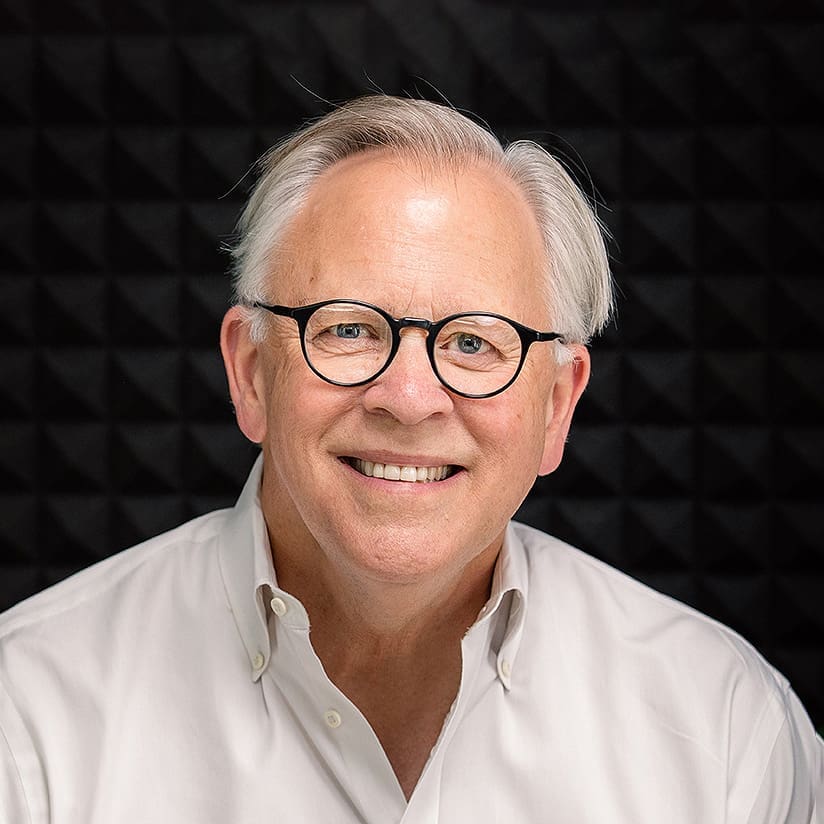
Mark Labberton hosts the Conversing podcast and is the Clifford L. Penner Presidential Chair Emeritus and Professor Emeritus of Preaching at Fuller Seminary.
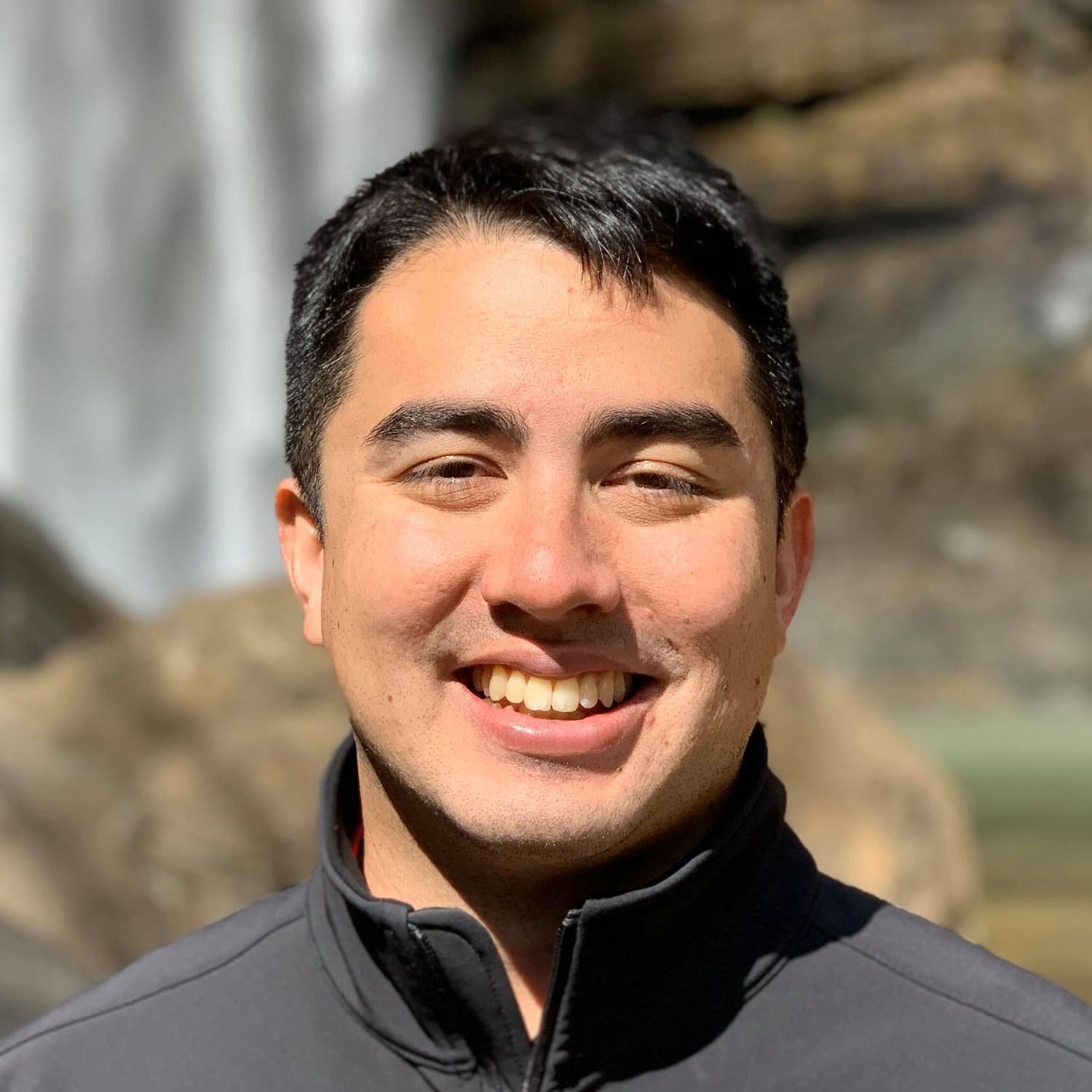
Rev. Dr. Ben Lowe is Executive Director of A Rocha USA, a Christian conservation organization engaged in ecological discipleship, community-based restoration, and climate advocacy across the U.S. and globally.
Love the show? Help others find it by reviewing it on your favourite podcast app. We also welcome your ideas and feedback. Email us at conversing@comment.org. Thanks for your support.
Who best holds the legacy of the great writer and farmer?
SITE DESIGN AND DEVELOPMENT BY POLYMATH