





The Menu, The Bear, and a choice.




In the previous episode, Matthew and Shadi sat down with self-described Christian nationalist William Wolfe and gave him substantial room to articulate his account of American history and his vision of Christianity, religious pluralism, and political power. Here, they reckon with what they heard. What happens to the case for Christian nationalism when some of its underlying claims about American history don’t hold up to the historical record?
Join Matt and Shadi as they explore the practical and theological arguments against Christian nationalism. What happens to religious minorities in a nation explicitly ordered toward Christianity? And, more fundamentally, what does Christian faith itself require of Christians in their treatment of political opponents, outsiders, and those with whom they profoundly disagree?
Matthew Kaemingk: Welcome back to another episode of Zealots at the Gate. Today’s topic is a Christian case against Christian nationalism. On our last episode, we spoke with William Wolfe, a strong Donald Trump supporter and a self-proclaimed Christian nationalist. And he provided us with his case, his argument for Christian nationalism. And we imagine that some of our listeners disagreed with him, as did Shadi and I on a number of really important points. But of course, Shadi, on this podcast, we want to give space for perspectives that we disagree with, sometimes really strongly. And so that’s what we did in the last episode. And yeah, how was that for you, Shadi?
Shadi Hamid: I found it fascinating because I hadn’t really heard a full-throated case for Christian nationalism laid out in that level of detail over the course of nearly an hour and a half. So I would highly recommend listeners and viewers to check that out if you haven’t already. It’s well worth your time. I think it’s an example of what we try to do here at Zealots at the Gate, which is have an encounter with deep difference.
Deep difference is real in real life, and it’s something we all have to deal with. And we should be exposed to ideas that we disagree with. And that’s the only way to understand those ideas. And even if we think ideas are negative or bad or whatever else, they should still be heard, because that’s what we do in a free marketplace of ideas. And then I think that we trust listeners and viewers to come to their own conclusions about what’s compelling to them when they hear, you know, different views across the spectrum.
And I should also say that this was my philosophy when I—I mean, my academic background is in studying Islamist movements, which one might say are the Muslim equivalent to Christian nationalists, although it’s obviously more complicated than that. I spent much of my early career spending time with Islamist leaders, leaders in groups like the Muslim Brotherhood, getting to know them on a personal level, really trying to understand what animated them and how they viewed the world, what shaped them. And I think that’s what you have to do as . . . or an interviewer, is to spend time with people you disagree with and to really try your best to understand them in their own terms. So that’s kind of how I see it.
Matthew Kaemingk: Yeah. Was any part of the conversation difficult for you, though? Because I know parts of it were a little difficult for me.
Shadi Hamid: Oh, for sure. I mean, there’s no doubt about that.
Matthew Kaemingk: Be honest. What was the rough one?
Shadi Hamid: I think that William Wolfe’s views on Islam were surprising to me. I hadn’t actually—I hadn’t heard, like—I mean, obviously I’m aware that certain views on Islam exist. And I see them on Twitter and other places. But to actually confront those ideas head-on in a conversation that I myself am a part of, me on the receiving end, I haven’t really done something like that before. So I was caught a little bit off guard. I just didn’t expect that level of—I think, you know, to put it—I don’t want to, like, I don’t want to misconstrue it. I want to be charitable here to the extent that I can.
I think that there are Christian nationalists who view Islam as a threat, and they see Islam as an authoritarian religion. They think that Muslims are inherently prone to extremism or violence, or can’t fully integrate into American society. And that’s what they actually believe. So in that sense, it’s uncomfortable for me to hear that being said about the group that I am part of.
But I think that’s partly what we’re dealing with here, that to be in—you know, I’ll be curious to hear your views, Matt—it seems that to be a Christian nationalist at some level means to have a kind of hierarchy of preferred religions or religious orientations. And I just don’t think that Islam figures very high on that hierarchy, to put it nicely. Like, we’re kind of lower.
But honestly, it’s not only Christian nationalists. I think that this is a widespread view on the right side of the political spectrum. You know, Donald Trump supporters are just people who might not even be MAGA, but voted for Donald Trump. Even ordinary Republicans, because I think the Republican Party has become pretty anti-Muslim in its orientation. That’s a whole conversation on its own. We do know that white evangelicals, according to polling, regularly come up as the most anti-Muslim group in America. And I mean, obviously, I wish that wasn’t the case. But I think we have to acknowledge that some of these views towards Islam are widespread.
And I think for a long time, I thought that, oh, you know, people are over it. Like, there was maybe a post-9/11 moment where people were obsessed with Islam as the kind of evil or as the enemy, and we define ourselves against Islam or radical Islam, and people would come up with different, you know, descriptions of Islam as the threat or enemy. But I think what I’ve realized in recent years, especially after October 7, is that I think Muslims and Islam, again, have become a threat to a lot of people in a way that maybe we wouldn’t have been five years ago, where we weren’t much in the political conversation. A lot of people seem to have moved on from the Middle East and from the Muslim question, but October 7 changed that.
So I know you want to talk about Christian nationalism in particular. Where would you like to start as we sort of explore this Christian case against Christian nationalism, given that William Wolfe gave us the—the argument in favour?
You know, I’m an outsider in all of this, and I’m sort of observing an intramural battle for Christianity’s soul. And obviously, I’m more inclined towards one side in that internal battle. But the fact of the matter is that there are a lot of evangelicals who are sympathetic to Christian nationalism. I mean, we can get—we should actually discuss what the definitions are, just so we’re clear on what you, Matt, think Christian nationalism is from your perspective.
But I think an outsider might wonder, how is it possible that you have this group, you have evangelicals in America, and they’re trying to faithfully interpret Christianity and scripture and, you know, the example of Jesus Christ and taking him as their Lord and Saviour. Yet, even though they start from that common ground, they diverge tremendously on what that means in practice.
And this is not a uniquely Christian thing. I think that if you put—even if you get five Islamists, putting even aside Muslims—obviously if you put five Muslims in a room, they’re going to disagree on a lot of things. But even if we take this term Islamist, which I would define as those who believe Islam or Islamic law should play a central role in public life. You take that group and you put them in the room, and they have disagreements among themselves about what it means to apply Islamic law. So this is not like a weird Christian thing where, oh, how come evangelicals don’t agree on what it means to be Christian?
But maybe we can start with that. Where do you think that divergence comes from, if you and Christian nationalists like William Wolfe start from the same scriptural foundation?
Matthew Kaemingk: That’s a great question. I think there’s a variety of different ways to answer that. One is just contextual. I think he’s living in the American South, in the Bible Belt, whereas I grew up in Seattle, right? And the American South has been dominated by white Protestant faith for centuries now, and it’s beginning to lose ground in the American South. And so he is a part of a cultural memory of white Protestant dominance for centuries of it. Whereas I grew up in Seattle as an evangelical, where no one is an evangelical. And so there is no past Christian greatness in Seattle. Seattle is the only city in America that’s never had a Christian revival. It’s the only major city that hasn’t had one. So part of it is my churches that I come from in Seattle don’t have that lost memory of dominance, whereas his does. So that’s sort of the geographical explanation for the difference between me and William and other Christian nationalists.
I think the other one is just in terms of what we think the role of the state is. And so I come from a conservative Calvinist background of someone like Abraham Kuyper, who views Christ as the Lord over the government, but Christians are not. And that’s a very critical—it’s a small distinction, but it’s a really critical one—is Christ is sovereign over all political rulers, but Christians are not. And for Christian nationalists, they don’t quite have that distinction between the power of God and the power of the church. And so that is a critical distinction.
But yeah, as far as our definitions go, right, I mean, just to be clear for our listeners: nationalism is this desire for—first of all, it comes from this sense of an imagined community. So that’s Benedict Anderson’s argument, that a nation is an imagined community. It’s not a real community, because a nation is too big to actually, like, know everyone in the nation. It comes from this desire for deep self-rule. There is within nationalism a desire to remove outsiders or those who don’t fit in, and a desire to remove outside powers that might be imposed upon the nation. And nationalism tends to be developed around a shared experience of liberation—so the American Revolution—or a shared experience of oppression that you emerged out of. And we find nationalism throughout human history. It’s not unique to America. It’s a deeply human impulse. And then the Christian version of Christian nationalism is simply bringing Christianity into that ideology.
Shadi Hamid: Well, let me push you on this distinction between Christ being sovereign and Christians being sovereign. Because one might say that if Christ is sovereign, wouldn’t it be up to Christians to try to implement those ideas in public life? If they’re the faithful interpreters of Christ as Christians, wouldn’t they want society to be more Christian or more Christlike? Why not take that step? If you can, if you have power, why not use it in the service of Christ and Christianity as you understand it? What would keep you from that?
Matthew Kaemingk: Yeah, well, what would keep you from that is an understanding of what the government is for. I was kind of pushing on that in our conversation with William Wolfe, which is, what is appropriate for the government? So for example, in Texas right now, there are conversations about having the Bible taught in public schools. And on the face of it, some Christian nationalists might be happy about this. But I think in the reality of it, how qualified are these teachers to teach the Bible in the exact way that you would want them to teach it? Same with enforcing laws of cursing or lying or lusting after another man’s wife. All of these have to do with the questions of what is appropriate for the government to be instituting, as opposed to your parents or as opposed to your friends.
So it requires that deeper question of what is the government for? And fundamental to the Christian faith, and I would argue in scripture, is that the government is for justice. The government is not for conversion. That’s not the task of the government. And throughout the Old Testament, the kings of Israel were judged on their ability to execute justice for the people. And one of the key indicators was, how are the widows, the orphans, the foreigners? That was how the kings were to be judged in Israel. They were not judged in terms of their ability to lead worship services. In fact, they were expressly forbidden from leading worship services. So there was this distinction between the task of the priest and the task of the king. And when the king started to behave like a priest, problems began.
Shadi Hamid: You brought up the Old Testament. From what I’ve been able to gather, Christian nationalists talk about the Old Testament more than I would have expected. That’s definitely something that’s been striking to me. And you’ll notice it if you—in our conversation with William Wolfe, that the Old Testament figures prominently in his vision. And it seems to me that there’s different levels of emphasis there. There are Christians who are more focused on one or the other, and then obviously it’s a continuum. And obviously for all Christians, both testaments matter, but it’s always a question of what you choose to emphasize and prioritize.
But then I think that you can look at certain messages like “love your enemy,” which is one that I think comes up with Christian nationalists who are suspicious of making that a central part of Christianity. Where I would say, from what I understand of Christianity as an outsider, the admonition to love your enemy is actually quite important, and it’s really an organizing principle. But that seems to me to be a major dividing line: how seriously do you take the idea of loving one’s enemies?
Matthew Kaemingk: Yeah. So, I mean, one misconception we need to get away from is the belief that the Old Testament is tough and mean, and the New Testament is gracious and merciful. Jesus has a lot of very hard commands, as does the Apostle Paul in the New Testament. And the Old Testament has a whole lot of mercy and grace and generosity.
It was, of course, quite telling that when I asked William about how the teachings of Jesus inform his Christian nationalism, he didn’t really have anything to say. He just pivoted back to the Old Testament. Or when I asked him about Paul’s fruits of the Spirit—gentleness, peace, humility, these sorts of things—I asked him, how do these play a role in your public voice? What does it look like to be gentle in public speech? It pivots back to the Old Testament.
So this is a classic problem for both conservative and liberal Christians in America, which is conflating the American church with Israel, or conflating the American church with the early church in ways that are inappropriate. So that’s a critical problem. And imagining that sort of the blessings that God speaks over ancient Israel somehow apply to the church now—it can get and has gotten both conservative and progressive churches in trouble.
Shadi Hamid: Okay. So we’ve talked a little bit about why Christians diverge on some of these questions. And you’re obviously not a fan of Christian nationalism, broadly speaking. But do you have anything—if you had to, do you have anything positive to say about maybe the yearning behind Christian nationalism? And when you speak to folks who come from this orientation, like, what do you think is going on there? And do you find something sympathetic there about how they seem to be searching and yearning for something? Maybe they’re going in the wrong direction in their search, but at least there’s something legitimate about that initial impetus.
Matthew Kaemingk: Yeah, absolutely. So I think that there are, for Christian nationalism, there are a number of longings at play that are deeply human and very understandable, and I have a lot of sympathy for it. So at the heart of nationalism is this human longing to have a clear, coherent community, a sense of belonging to that community, and a clear vision—to have a community that is united around this shared goal of greatness. You know, who wouldn’t want to be a part of a great community?
There’s also this longing to have sort of a united sense of values and a moral language that we can all share. To be a part of, you know, one united city that’s shining.
There’s also a desire for internal stability. So, you know, in an age of chaos and globalization and difference, it’s very understandable that people would want a nation to have this sort of sense of consensus. And even in sort of a polarized age, right, where there’s all these arguments constantly, you know, pluralism can be exhausting. And being with people who are just like you—right, you kind of feel your shoulders go down. You just kind of relax.
And but furthermore, like, I could go even more, which is, you know, so post-liberalism—this, you know, offers this critique of liberalism and cosmopolitanism that I think is quite strong, that modernity is very individualistic. It’s very shallow. It’s very kind of empty, morally empty. And there’s not enough to the liberal understanding of the human being to really sustain you. Our age is one of spiritual emptiness and loneliness and rootlessness. And I think within post-liberalism and Christian nationalism, there’s this longing for a deeper, richer soil to raise your children in.
So I empathize with all of that. I also empathize with the fact that, you know, cultural diversity can be exhausting. Having to navigate all these different cultures and all these different histories and stories, and it can be incredibly inefficient, right? All of the little things. I think I get that. I think I also get this sort of wanting to protect your particular culture or story from globalization and wanting to see it flourish. And yeah, so I think those are some of the things that I empathize with when it comes to nationalism of all sorts.
Shadi Hamid: Okay, now let’s delve a little bit into the critiques of nationalism and Christian nationalism specifically, maybe from both the practical and theological lens, because I think there’s different ways to approach it.
I mean, one is to say that trying to enforce a particular vision of Christianity is bound to cause problems in a diverse society, that we don’t live in a Christian state. We live in at least a somewhat secular state, where there’s some disestablishment of religion and where religious freedom is guaranteed as part of our founding documents. So I think there’s just a question of, maybe Christian nationalists are in the wrong country. It’s just very hard. You’re going against the grain of a certain part of American idealism and American ideals.
So I think there’s the challenge of, how do you actually take a Christian political program and apply it to a country where a lot of people aren’t Christian or are no longer Christian? And that goes back to the question of memory of the past, that America is a less Christian nation now than it was fifty years ago, just in terms of the number of adherents, weekly church attendance, all the different metrics that we’ve talked about in previous episodes. So it becomes very challenging to see how this works. The only way it seems to me that it would work is if it’s enforced on people who are sort of unwilling. And that creates a kind of disenchantment with religion if it’s being enforced on you.
Maybe that’s—anyway, that’s maybe one sort of—let’s start with the practical there, and like, how would this actually work, and does it risk pushing people away from Christianity if you try to implement it?
Matthew Kaemingk: Yeah, so Christian nationalism has a number of practical problems and theological problems that it has to deal with in terms of how you would actually apply it in the real world and what the consequences of it are.
But let’s start with the practical problems of nationalism, and there’s a bunch of them. The first is nationalism naturally increases the risk of war. And that is because it is at its heart—and can be quite—it increases enmity between nations quite naturally, which is sort of an irony of the Trump administration, which promised to be a peaceful one. But with the sort of strong rhetoric of nation against nation, it is actually quite natural for nationalistic leaders to engage in conflict.
Another very practical problem with nationalism is that it can be economically wasteful. So we see that in the tariff policies that are going on right now. It’s much more efficient to have certain countries make things for you than for you to make them yourself. It tends to slow things down.
Nationalism, obviously, it encourages what we could call groupthink. Nationalism requires people to cohere around one way of being and doing. So it doesn’t encourage debate. And so naturally you start to make bad decisions because you’re all cohering. There’s no sort of natural check and balance of diverse opinions.
Another practical problem with nationalism is it creates a rather boring culture. Part of what makes cultures dynamic is diversity and disagreement and the inflow of new ideas. Great cities like New York and Amsterdam and London and Singapore are places where different nations come together and clash and collaborate. And so innovation comes out of that kind of collaboration and contestation. And so nationalism tends to deaden those things.
I think in many ways, nationalists live in a dream world. You know, they’re not quite reckoning with profound diversity that’s all around them. That’s not going to go away anytime soon. How would you even get rid of all of the Muslims and Jews and atheists and Catholics? How would you even do that? And they often don’t really have a clear plan for how they would deal with the diversity that’s already in the nation. So you can build a wall on the border of Mexico. But there’s still millions and millions of Mexicans who are legally here, and they’re a part of your culture, you know?
I mean, another thing is just, America’s greatness comes from its dynamism and the fact that it’s not exactly the same as 1776 or 1950. It is its churning dynamism, its restless spirit that is at the heart of what it means to be America. So nationalists tend to pick a year in the past and want to freeze the nation in that particular moment. And that in itself is deeply un-American.
And then finally, as a conservative myself, nationalism actually creates a big government. You know, I’m a fan of small government. But when you’re trying to unify a nation around one culture, that actually demands a big government apparatus to force everyone to assimilate to one culture.
So yeah, I mean, those are just a few very practical issues. And we can talk about the theological ones.
Shadi Hamid: Yeah, well, maybe to get into the theological: if people are behaving in un-Christian ways, and there are un-Christian policies—let’s say on abortion, for example—shouldn’t there be some effort to, quote-unquote, legislate morality? If a Christian or a group of Christians has the ability through the democratic process to limit the practice of abortion, then presumably that would be a good thing from the perspective of evangelicals writ large. I mean, I think even you would say that, right? So the question is, where do you draw the line? Like, what are legitimate things for the government to legislate on, and what are things the government should stay out of?
Matthew Kaemingk: Yeah, and this was a missed opportunity for me to affirm William Wolfe and Christian nationalists, is that absolutely right: all law is the imposition of morality. So there’s no such thing as an amoral law. Every single law values something and is trying to protect it. And so, yes, there are instances in which I would want to impose my morality on the rest of the nation. Every political party does this. Democrats are famous for saying that budgets are moral documents, right?
And so the question is, which morals, right? And how many morals? And so abortion is a great example of a morality that I, as an evangelical Christian, would want to write into law. And that is because it is fundamentally about protecting life, which I consider to be the central job of the government. Whereas, you know, making laws against cursing is not what I would consider to be the job of the government. It is, you know, an immoral thing to curse at people. It’s impolite and it’s wrong. You shouldn’t do it. But it’s not central to the cause of justice, of what the state is for.
And fundamentally, what Christian nationalists lack is a clear line or a clear telos for what the state should seek. So one term that is sometimes used is the common good, that the state should pursue the common good. But I could say that essentially the common good is that all children play soccer, right? Therefore, the state needs to, you know, encourage and/or force people to play soccer. And what’s really critical is being able to articulate essentially what is the task of the state and how is it different from the family or the church. And when strong religious communities lack a sort of fence around what the state is responsible for and what it is not, religious forms of nationalism start to expand ever greater in their zealotry to impose scriptural law on those who disagree with them.
Shadi Hamid: So what are other examples of where the state might legislate morality? I mean, abortion, I guess, is an obvious one insofar as it’s protecting life. But, you know, I suppose people—still, reasonable people can disagree on what life is. But let’s just grant that for a moment. What are other—are there other examples where you would feel comfortable with the state playing a role? I’m just trying to think through.
Matthew Kaemingk: Once again, all law is morality. So it’s appropriate to throw murderers in jail and thieves in jail and those sorts of things. So all of these laws are an imposition of morality. And I would argue, well, once again, that Christian nationalists are correct in—like, that Western states, much of our laws emerge out of a Christian moral imagination. They don’t come from nowhere. Europe and the United States come out of a historic Christian moral imagination, and our laws reflect that. So, yeah, I think that’s absolutely right. And then the question is, okay, if our culture is no longer Christian, or if Christianity is an increasing moral minority, then what moral imaginations are going to shape the laws of the future?
And then I think, finally, there’s the question of prudence. So for some Christian jurists in the past, it’s important to ask, can the culture handle this or that law? So I think one example of this is Prohibition. There was a time when the United States tried to make alcohol illegal. And that might have been a moral law, but it was imprudent because it wasn’t workable. It created a whole black market for alcohol in the United States, and it created a lot of corruption and violence and a whole dark economy for alcohol. And so that’s a great example of a Christian desire for morality and asking the government to do that for you. But there was not wisdom or prudence in how it was done, and the state was not capable of imposing that morality without creating a lot of damage. If the culture, for example, no one wanted alcohol, it would have worked. But the culture could not handle that kind of a law. And I’m very glad, as a drinker of Scotch, I’m very glad that it’s gone.
Shadi Hamid: So we’ve talked about some of the practical impediments and difficulties. Let’s move a little bit more now into the theological case against this kind of vigorous application of Christianity in public life. What does that theological case look like?
Matthew Kaemingk: Yeah, and here I want to argue for something that might be surprising to listeners, especially those who consider me to be a liberal Christian or a woke Christian in any way. I actually want to make a conservative Christian argument against nationalism. And I think that, furthermore, I would like to argue that folks like William Wolfe and other Christian nationalists out there are actually being very liberal with the biblical text.
So first off, in my view, Christian nationalists tend to have a very weak understanding of human sin. So if you believe that human beings are sinful and that we are sort of blinded by our own sin, you should have a much more humble approach to politics and your view of your role within it, and a much more humble view of your political leaders. An understanding that your political movement could be corrupted, right? And a sort of caution about the powers of political corruption. But in a lot of our Christian nationalist brothers and sisters, there seems to be very little understanding that the movement has been or could be corrupted by sin.
Another is just by looking at how they treat biblical authority. So they tend to use scripture for their political ends rather than submitting to scripture. So you can see this. Nationalists will use parts of scripture when it helps their case for nationalism, and then they will ignore, or they’ll explain away, the parts of scripture that don’t help them make the case for nationalism. And in that way, it’s a very liberal use of scripture. So liberal Christians will use the parts of scripture that argue for the poor and the marginalized and for social justice. So they’ll use parts of the prophets. And then the nationalists will point at aspects of Israel and use those. And you’ll see them quite downplay the person and work of Jesus, the humility of Jesus, the gentleness of Jesus, the suffering and weakness. They don’t tend to like that. So it has a sort of cafeteria approach to the Bible. I don’t know if you have that with Muslims, but you sort of pick the parts that you like. And yeah, Jesus gets marginalized a lot. So when I ask, how do the teachings of Jesus inform your Christian nationalism? There’s not a lot to be said there.
And it’s actually quite relativistic, right? So you relativize the teachings of the Bible to really inform and enrich your particular understanding of nationalism. Liberal Christians one hundred years ago, they preached something called the social gospel, which is, we’re going to build the kingdom of heaven on earth with our poverty campaigns and our progressive agenda. And you get that same thing with Christian nationalism. We are going to build a Christian nation, a glorious and great Christian nation here on earth. So it’s a very sort of immanent kingdom of God—we are doing God’s work here and now—as opposed to a transcendent view of God that, no, God’s work is bigger than ours.
So what tends to happen is you turn God into a mascot for your cause, whether it be progressive or conservative. So the sort of greatness of God, the transcendence of God, the holiness of God is domesticated to serve your political goals. And that’s a key reason why I would argue that Christian nationalism is too liberal.
Shadi Hamid: But maybe Christian nationalists would respond and say that everyone who’s reading scripture is reading their own political preferences in scripture, that none of us are immune to that. We already have our political positions and prescriptions, and then we work backwards and find the things in scripture that justify and support the things we already believed anyway. And I think it’s very hard to escape that trap.
I mean, you’re a Christian pluralist. Naturally, you’re going to read the Bible and think that it lends itself towards pluralistic approaches to politics. I guess you would probably say that it’s the Bible itself that shaped you into being a pluralist in the first place. But I think it’s very hard to disentangle our own motivations from how we read the text. There’s no way to read the text objectively. It’s always mediated through our personal whims and desires and preferences.
Matthew Kaemingk: Yeah, that’s absolutely right. And of course, I would love to believe that the Bible made me a pluralist and that I come to it objectively, but that’s just not true. I think the difference, though, is that a true Christian is always trying to submit themselves to the text and trying to wrestle with the text, and pay attention when the text makes you feel uncomfortable. Right? A true Christian doesn’t run away from that discomfort. They hand themselves over to that discomfort, and they ask God humbly, you know, teach me. What do you have?
So a true Christian doesn’t turn the page looking for something that’s going to make them feel better. So yes, we all come to the Bible wanting it to affirm our political opinions. That is absolutely true. One hundred percent. Are you willing to stick with it when it doesn’t? Are you willing to wrestle with it? And are you willing to say, I don’t know what to do with this text. I genuinely don’t. And whether you’re a nationalist or a communist or a capitalist or whatever else, as a Christian, you have to say, I need to lay this ism down and ask, you know, how is scripture going to push me on this? And we all know political leaders who don’t have that kind of humility.
I mean, another issue I wanted to make sure to talk about was that Christian nationalists really do give themselves over to identity politics. And that’s something that makes them quite liberal, right? So core to identity politics is that my identity, my experience, is my central orienting tool for how I think about politics in life. And it’s critical that I value my identity and my experience, and that needs to drive my politics and my theology. And I expect the government to affirm my identity. And you can find, like, the woke trans agenda doing that. And you can find right-wing Christian nationalists doing that. And it’s a terrible way to read scripture, because so much of scripture doesn’t care about your identity, right? It wants to push you in really important ways.
And then, you know, the last thing that really connects liberal Christianity and Christian nationalism is a very high view of state power, that the government can accomplish these things, right? So for the progressive social gospel, for liberal Christians, there was this belief that, hey, if we get the government to institute education, health care, labour rights, social reform, you know, if we get all these, our progressive agenda, we will build the kingdom of God here in America. This was during the progressive era of the 1920s and so on.
Same thing with Christian nationalists, right? If we take the state, and if we enact our mass deportations, and if we assimilate all these minorities, and if we really establish Christian supremacy in the government, right, through state power, we can make America great again. So in this way, both sides have a very high view of what the government can actually accomplish. And for me, as a conservative Christian, I have a very low view of what the government can accomplish and what the government is competent to accomplish. And as a trained theologian, I don’t want the government leading America in theology, because I just don’t think they’re good at it. I don’t think that’s what they’re trained to do and be.
So those are just a few reasons why—I mean, I see a lot of parallels between Christian nationalism and liberal—I would argue that—that’s why I would argue that Christian nationalists are more liberal.
Shadi Hamid: Yeah, it’s a counterintuitive argument. I guess you’re positioning yourself as the true conservative here.
Matthew Kaemingk: That’s right, man. That’s right.
Shadi Hamid: Which then raises the question of—I mean, Matt, we’ve talked about this before, but I have to remind you that your side seems to be losing out in this intramural debate. Your arguments don’t seem to be as compelling to Christians who are on the right side of the political spectrum, Christians who consider themselves to be in the Republican Party. It seems like this MAGA-fied version of Christianity is now becoming the dominant one.
Matthew Kaemingk: That’s a long, long, kind way of calling me a loser, Shadi.
Shadi Hamid: But I mean, one might say—I actually don’t know if one might say—I was going to say, well, Jesus was a loser in a sense.
Matthew Kaemingk: That’s right. Good man! Look at you! So, I mean, honestly, that leads me to—I mean, I still got some more on my list here of theological problems for Christian nationalism, and one of them is the cross. Like, the cross is the centre of the Christian faith, and it is a submission to—it is a submission, an act of obedient loss. It is a rejection of worldly power. Christians believe that Jesus could have come down from the cross, that he could have defeated his enemies, and he didn’t. And so the lack of the cross in any Christian nationalist writing is a really big, big issue.
Another one is that there’s no space for prophetic critique of the nation, which is central to the people of Israel.
There’s also a caste system, right, where you’re creating a hierarchy of citizens where, Shadi, I know you felt in that conversation you are very much a second-class citizen in terms of what it means to be an American, right? And the caste system is—I mean, that’s from India. That’s from Hinduism. That’s not Christian. Like, Jesus expressly, you know, rejected a caste system. You know, another issue is it’s just—
Shadi Hamid: But I have to push you there. But I mean, of course—yeah, Jesus rejected the caste system, that’s not a part of Christianity. At the same time, one, I suppose, could argue that—I mean, at some fundamental level, if you’re a Christian, you think it’s better to be a Christian than to be other things. So there is a kind of—I think that you can kind of take that to lead to a place where you’re like, hey, there will be preferential treatment to Christians because Christianity is better and Christianity is more true. Of course, it’s a risk with all religions, but I just want to say that, I mean, naturally, religions are preferential towards their own members.
Matthew Kaemingk: So, Shadi, the last night that Jesus was with his disciples, he did something that none of the disciples wanted him to do and that none of them were expecting him to do. They were thinking he was going to take over and rise in power. And instead, that night he took off his robe and he took a bit of water and knelt down and washed their feet. Now, you know, Middle Eastern culture—this is not something that a great king would do. Like, muddy, disgusting feet. And he told his disciples that this is how he wanted them to be in the world. He wanted them to be humble servants. In no way did he want or imagine that they should consider themselves better than others. So it’s a complete overturning. It’s a complete upside down of the caste system, where Jesus kneels down and does that.
And then later that same night, they come to arrest him and they come with swords and spears. And the people who attack him, he reaches out his hand and he heals them. Once again, that’s an upside-down way. That’s not a normal human thing to do. It’s a rejection of caste, or a rejection of hierarchy. I mean, I just think that’s absolutely critical here.
Another thing we haven’t talked about yet is the terrible irony that Christian nationalism is trying to help the church through government power and trying to make things easier for the church. And the irony is that Christian nationalism actually hurts the church in a wide variety of ways. It kills its witness, its integrity. It creates more corruption within the life of the church, and it deadens its witness. So wherever the church is in power, you know, the witness and vibrancy of the church tends to deaden. Christian leaders tend to get lazy and corrupt. And that’s just a terrible irony. And it’s a really important thing for us to consider.
Okay, but—and let me ask, I mean, do you see that in Islam as well? Like, that you can have corruption when Islam is, like, totally dominant? Or no?
Shadi Hamid: Oh, yeah, certainly. I mean, that’s why we see, in the kind of contemporary context, the nations that are more theocratic-leaning, like Iran, for example, or even ones that aren’t particularly theocratic but you have religious parties in power, like Turkey, where there’s an Islamist party that’s been in power for now a couple decades, the AK Party under Erdoğan—that if people don’t like what the government is doing, then they start to feel a kind of discomfort with religion writ large, because the people in government are justifying what they’re doing on religious grounds. And so that pushes you away from religion. I think that’s a dynamic that we see in a lot of modern cases.
So the admonition there is to always, like, religious—I mean, religious parties should be careful about how much they want power, because on one level, they want to implement their ideas and they want there to be more Islam in public life. But on the other hand, if Islamists are in power, there is a risk they push other people away from Islam if they do bad.
Now, if you had an ideal situation where a religious party was helping the economy and everyone was relatively happy and things were going in a positive direction, then that would redound to religion’s benefit. But of course, that doesn’t last forever. At some point, a government is going to fail by definition. That’s why we have democracy, because when a party fails, the people should then have the ability to replace that party with a different one. And it’s very rare in a democracy for one party to always win, for precisely this reason. It’s actually—one of the few exceptions to the rule is Japan, where one party has been dominant for most of the post-World War II period. But that’s very rare.
Matthew Kaemingk: One other thing we haven’t talked about yet is just the racial element of all of this, which is nationalism longs for ethnic purity and racial dominance. And this is a critical problem for Christianity, because it began as a multiracial, multiethnic, cross-border—I mean, the message of Pentecost is, right after Jesus ascends, you have these people from all different nations praying and worshipping God. And this is seen as a fundamentally good and wonderful thing.
And Jesus himself, he famously goes to the well and meets with this Samaritan woman who is—she has a different race, a different gender, a different religion. And he sits down and talks with her, which is quite scandalous. And he reveals that he’s the Son of God. And this is quite a scandalous thing. So he is transcending racial, national boundaries in that.
And this is a pattern that disciples in the early church continue. They’re constantly transgressing the boundaries between Jew and Gentile, Greek and Roman. And the early church was quite confusing to the Romans, you know, why they would be so multiethnic in their worship. And so it is very difficult for Christian nationalists who want sort of racial unity and purity to square that with the multinational, multiethnic nature of the gospel. That’s just tough. That’s a tough one for them.
Shadi Hamid: One could argue that as a Christian, you might actually want there to be more immigration from Latin America, because Latin America is disproportionately Christian. So if you actually want America itself to become more Christian, the fact that you’re having these more faithful, more religiously observant folks coming from, you know, Mexico, Colombia, Brazil, wherever it happens to be—that they might actually help in that regard. That’s always seemed to be, you know, a certain tension there.
The other thing that I would say is a more broad comment that I’ve said in the case of Islam, that I don’t believe that Islam was designed for the modern nation-state. And I think that’s at the heart of so many problems we see in the Middle East today, is that Islam—the nation-state is a modern invention. And it’s not always going to mesh very well with ancient religions. There’s going to be a necessary tension there, and when you try to fuse the two together, bad things happen, precisely for this reason.
When Islam was revealed, there was no such thing as a powerful state. The state was limited in what it could do. The state could not surveil its citizens. It didn’t have records and bureaucracies. The bureaucratic state is something that’s relatively recent. So I think a lot of us are in this uncomfortable in-between space where we’re trying to take our religions and our religious ideals and we’re applying them to a structure that is not a great fit for it. So I just think that there isn’t necessarily a solution to that, unless one might say the solution is to be a pluralist. But we can save that for another time.
Matthew Kaemingk: We can save it for another time. I know we’re running out of time here, Shadi, but one quote that comes to mind for me when I think about Christian nationalism and my concern about it is this quote from William Ralph Inge, who says the church that is married to the spirit of the age, of this particular age, becomes a widow in the next. So when your church marries itself to this leader, to this political party, when it marries itself to this political moment and whatever the fad is, when the age shifts, you’re going to be all alone. You’re going to have crickets. And so you might have a shot in the arm of power, or of access to the palace, when you marry yourself to that. But you’ll be a widow in the next.
I have my mentor, Richard Mouw. He says it a different way. He says, you know, of pastors who connect themselves to Donald Trump, he said, when you dance with a bear, you’re going to dance as long as the bear wants to.
Not only is Christian nationalism bad for the church and corrupting to the church, it’s actually corrupting to our souls. It turns us inside out, because suddenly we as citizens have to become fervent and intense supporters of this political movement, of this ethnic identity, and of this political leader. So it gives us this sense of urgency that I can show no weakness. I can show no humility in the face of intense political debate. I have this sense of urgency that I have to win because God needs me to win. And so it actually changes the posture in which we engage in democratic life, and the way we treat our neighbours, because there is this political-religious urgency to dominance, because God is at stake in these political debates.
Shadi Hamid: Well, on that note, this has been—
Matthew Kaemingk: Yeah, this is a good conversation. And, you know, I’m glad that we had that conversation with William Wolfe. And like you, I trust our listeners to make their own decisions about these sorts of things. And Christian nationalism isn’t going away anytime soon. And we look forward to more engagement with these things.
You know, today has been a more deconstructive conversation of sort of the problems with Christian nationalism. And we should talk in the future about our more constructive response to it, because the questions are still out there. How do you develop unity in a nation that’s not coercive? How do you have a sort of common moral language in a democracy where there is no morality that’s shared? How do you create a sacred sense of patriotism that doesn’t turn into violent nationalism? Those are really important questions that I don’t think those on the political left have really answered. And that’s something we really do need to [wrestle] with in a serious way.
Shadi Hamid: Okay. Well, thanks so much, Matt, you know, for, you know, having this back and forth and engaging on this question. Really enjoyed it. And until next time.
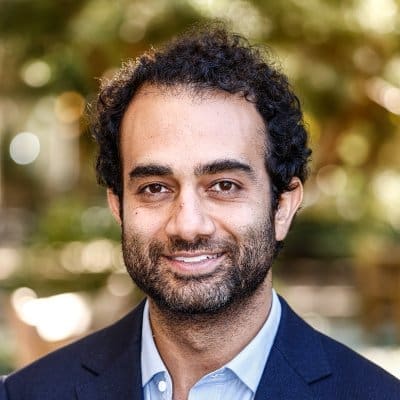
Shadi Hamid is a columnist at The Washington Post and Senior Fellow at the Alwaleed Center for Muslim-Christian Understanding at the Edmund A. Walsh School of Foreign Service at Georgetown University.

Matthew Kaemingk is Professor of Public Theology at Theological University Utrecht and Senior Fellow at the Center for Public Justice. He also co-directs the Templeton Pluralism Fellowship.
Love the show? Help others find it by reviewing it on your favourite podcast app. We also welcome your ideas and feedback. Email us at zealots@comment.org. Thanks for your support.