


Is resistance futile?





America’s first Muslim senator, competing ideas of what it means to run for office as a Christian, and shifting issues that compelled voting changes all came to the forefront last week. In this episode, Matt and Shadi come together to discuss the recent midterm elections, what role faith played in the actions of voters and candidates alike, and how the results reflect the current landscape. Together, they reflect on the democratic process, what it means to be a person of faith engaging in political action right now, and whether an election can tell us anything about the will of God.
Shadi Hamid: Okay, welcome, dear listeners. A lot has happened in recent days. There was a stunning repudiation of the Republican Party at the ballot box. I think we all knew that Democrats were going to win. But for them to win to this degree, including in deep-red states—the fact that states like Mississippi were in play, the fact that Democrats won the Senate seat in South Carolina—something seems to have really shifted this time around.
And I think on this podcast, Matt and I have often talked about the power of democracy and why we think democracy is pretty awesome. And regardless of where you come out on the actual results, democracy, I think, is about a process of self-correction. It’s about alternating power. It’s about not having one side win every time. So the fact that we could go from a sweeping Republican victory in the 2024 presidential election, where Democrats and progressives were despondent and demoralized, to today, where they hope again and they feel proud and they actually think that there is a path forward for themselves and their own party in a way that wouldn’t have seemed possible just a couple years prior—there’s just something powerful about that.
But there’s a lot to also say on the role that religion played in this election. Democrats, unusually for them, ran several high-profile candidates who were open about their faith—and not just Christians who were open and outward about their faith, but obviously, of course, Muslims, including Abdul El-Sayed in the Michigan Senate race, who is a practising, observant Muslim who is unapologetic about being Muslim. And there were a number of other Muslim candidates, but he’s probably the most prominent one. But there’s a lot to unpack there. And we can talk also about James Talarico’s win in Texas, another previously deep-red state, and also Reverend Adam Hamilton, a pastor and author who is very also open about his Christianity, winning in Kansas, of all places.
So this could be a harbinger of a new Democratic Party that is comfortable talking about faith, at least to some degree. We talked about this at greater length in our previous episode with Michael Wear, who was Obama’s former faith outreach director. So make sure to listen to that one if you missed it.
But Matt, you know, over to you. I actually don’t really have a great sense of how you felt and how you’re feeling, because you’re sort of hard to read politically. You are a conservative, but you’re not a Trump supporter. You don’t love the Republican Party. So you’re a bit of a wild card. But give us a little bit of an overview about some of the topics and issues that you are paying attention to. And then I would maybe want to push you a little bit on your own personal views.
Matthew Kaemingk: Yeah, so you and I haven’t actually talked to each other, so this is going to be kind of live, thinking out loud on the midterms. And I imagine there will be some points of agreement and disagreement, since I am historically a more conservative Christian, you’re a more progressive Muslim, and so we will have some differences of opinion. But largely, yeah, I think the midterms are a really fascinating example with lots of different questions and issues when it comes to religion and politics, and we’ll dive into those here in this episode.
But then there’s also really a larger question of exactly how important was religion in this. You could make the argument that the real issue at play here was the economy and the affordability crisis and the war in Iran and sort of what’s happening to health care costs and housing costs, and that religion was essentially window dressing. So that is also sort of something that’s on the table for us to kind of discuss.
But just to kind of set the table, as you mentioned, one of the big religious stories has been the rise of James Talarico and Abdul in terms of people of faith on the left engaging in ways that we haven’t seen in a while. And that’s a big thing that we’re going to need to tackle and explore. Another is, yeah, just kind of the rise of moral arguments on the left for more progressive policies like education, health care, economic equality—sort of integrating more moral and even religious language. You know, James Talarico, in his acceptance speech, talked about sort of the barefoot sage Jesus turning over the tables in the temple and fighting for equality. He sort of cast himself as Jesus, turning over the tables for the little guy, much like Jesus did two thousand years ago. So that’s just curious, right? The rise of religious argumentation on the left.
And then on the right, there’s a number of different things that we could discuss. One is just the real and measurable twenty-point drop in approval of Donald Trump amongst white evangelicals. So that’s significant. There’s also a massive gap for white evangelicals for Donald Trump just in terms of their enthusiasm. It’s not so much that they came out and started voting for Democrats, but that they largely stayed home, sort of throwing up their hands a bit at the political process. So that’s another thing that we can sort of dive into.
Yeah, I think that there was this fifty-day fast initiative amongst evangelical Christians on the right to have a prayer initiative to really mobilize churches and overcome political apathy. It didn’t seem to have worked. And sort of the rhetoric on the right of, hey, this is a battle of good and evil, the godly people versus the godless people, didn’t seem to work in the way that it used to. And so that’s interesting.
Another interesting thing is Latino evangelicals, particularly in Texas, have historically been just incredible swing voters. They went hard for Donald Trump in Texas in the last election, and in this election they went for the progressives. And so thinking about that, and perhaps the role that the immigration policies of the Trump administration—really lost them on those kinds of things. So as far as how we think about Latino and Asian voters as swing voters is an interesting thing, and the place that faith plays in their behaviour.
Another one is that the pope voted in an American election for the first time in history. So the pope weighed in. And he has been vocal about the behaviour of Donald Trump. So there’s an interesting sort of moral clash going on there, especially given that American Catholics continue to support Donald Trump in large numbers.
In my own state of Missouri, we had another abortion referendum come up, and it was tied to transgender surgeries for minors in kind of an interesting way, and that failed. And then, yeah, we have a lot of pastors running for office, not just on the right, but also on the left, as you mentioned. And it raises interesting questions about the Johnson Amendment and the ability of pastors to speak publicly on political issues.
Furthermore, there’s something I’d like to talk to you about in terms of the problematic language around Christian nationalism. You and I use the label “Christian nationalists,” but I think it’s important that we recognize its limits, because it’s often used in a very sloppy way. And what I mean by that is those on the left talk about conservative evangelicals who want to advance their moral vision on America. And now we see left-wing Christians wanting to advance their moral vision on America, but they will not be called Christian nationalists. And so there is a bit of a double standard going on when you say left-wing Christians can bring their moral vision to politics, and that’s perfectly acceptable, but right-wing Christians are not allowed to do so. They are imposing their moral vision, whereas left-wing Christians are welcome.
Shadi Hamid: Yeah, I mean, you make a really important point about how this time around politics seemed less existential. And we’ve often talked about politics becoming a holy war in the sense that every election is the most important election of our lifetimes. And I think what was interesting here is that you didn’t really see—there wasn’t that kind of good—as you said, the good-versus-evil framing, I think, was less effective and wasn’t, because there was so much focus on economic issues, on affordability, on the war in Iran. And those had more practical implications. So I think it’s a good thing that this election was very important, but also perhaps not as existential in its tenor.
I think one part of that is abortion has largely been depoliticized. And I think this is actually one of the Pyrrhic victories of the Republican Party. They got what they wanted through the Supreme Court decision that put abortion to the states—that abolishing Roe v. Wade meant there was no longer a federal standard and each state could sort of go its own way. And I think by doing that, abortion has—it’s just not as big of a national issue. It’s more now a state issue. So Republicans can’t lean on that in the same way, because they already sort of won. They got rid of Roe v. Wade, which was a longtime evangelical demand. And there’s now not really as much of a clear argument for why you need to vote for Republicans on the national level when it comes to abortion questions. And actually, Republican candidates didn’t really focus on being pro-life all that much. I mean, Mike Rogers in Michigan sort of soft-pedalled and tried to be more inclusive on the issue. And I think that Republicans sort of see that abortion isn’t the kind of winner that it may have been a few years ago with certain constituencies.
The other interesting thing, which is a more theological question, is what role did God play in this election? Because there was a really interesting tweet from Laura Loomer, who’s a kind of a crazy, like, far-right Trump supporter. I mean, she’s not Christian herself. She’s Jewish. But, you know, very much aligned with MAGA and a close adviser to Trump, has visited the White House, also very pro-Israel. And she said something like, “If God is in charge, how come he allowed Muslims and communists to take over the country?”
And that raises interesting questions to me as to what extent does God involve himself in elections. Do we see him as a sort of noninterventionist God who gives us all free will, and then we make choices, and then political outcomes are the net result of the choices of millions of Americans, and God sort of stays out of it? Or can we speak—can we speak of a plan that God has, and that even if we can’t see his plan or understand it while it’s happening, there is a kind of deeper wisdom and a sense of direction that God is—that God is playing some role in that? And I actually don’t—I actually don’t have, like, very strong opinions on this. I’m more in the kind of free-will camp of God lets us make decisions, and then what we do is what we do.
But I think that for people who lose elections and they think that God was on their side, but then it turns out—well, hey, well, if we’re not getting what we want, is God punishing us? Is he trying to send us a message?
And this is something that I think Muslims have often had to deal with in a more profound way, that we were—we were the stewards of one of the greatest civilizations, and obviously great caliphates and empires, up until the seventeenth century. Then you see a kind of stark decline. And for the last several hundred years, Muslims have been asking themselves, wait, if we keep losing, if we keep declining, if our countries are mired in civil war and civil conflict and dictatorship, has God forsaken us? Why is God allowing this to happen to us? Is he trying to send us a message? Is he punishing us? Is he testing us? And I think it’s a really challenging theological question of, you know, why does God allow bad things to happen, or what is known as theodicy. But I think it’s interesting to think about that in terms of elections.
Matthew Kaemingk: Yeah. And if Christians—if right-wing Christians lose so badly in an election, like, what does that mean for their own relationship with God? Similar issues with this. It’s sort of—the question is, can you read God’s intentions off of an election? And so every time an election happens, people try to make sense of it, right? And that’s not just religious people, but secular people too, right? They’re trying to understand, what are the people saying? What does this mean? How can we interpret these results? And religious people do the same, and they read God into it.
So a number of different things religious people or Christians will do is they’ll say, oh, you know, God saved us in this election. So if they’re happy with the election, right, they’ll say God saved us, or God blessed us, or God is with us. If they’re unhappy, they might say God is punishing us because we’ve been unfaithful or we haven’t fought hard enough. Or they might just cry out, like, God, what are you doing? Why have you done this? So you’ll have sort of cries of lament.
But yeah, I think for Christians, we would not say that God is absent or God just lets elections go. We do believe that God is active and moving and powerful. But as a theologian, I would caution my fellow Christians from reading too much God into this or that. And so that is sort of the fallacy of natural theology, which is you read God off of what you see in the world. Because what often happens is you just read yourself and what you want to be true, or how you want God to think about the election. So you project what you want onto God. And that is the primary danger.
Shadi Hamid: Early on, like after 9/11, it was said, oh, God is punishing us because of the gays, and that’s why—you know, that is why 9/11 happened, or whatever else. And I think that we shouldn’t ever fall into the trap of thinking or being certain that God is on our side or that we’re on God’s side. And I think this is really a case for intellectual humility—that we can think that we’re on God’s side, but we can’t be 100 percent sure. And to claim that we are is to sort of impose our own will on God. It almost seems blasphemous, especially on something like elections, where I would say there, like, there is no Islamic injunction to vote for the Democratic Party—that it’s not a sin to vote for the other side. And it’s hard for me to imagine a God who is, like, you know, keeping track of your votes, and if you vote for the wrong party, there’s, like—you know, that’s like a bad deed. I think we have to be very careful about thinking about elections in that way. I mean, I suppose you could say that God might favour participation in elections in a broad sense—that he wants—he wants his creation to be civically engaged. And that’s a broader argument that doesn’t really fall across partisan lines.
Another thing I wanted to raise, which we haven’t really touched on, is just how tense this election was when it came to how Islam was presented in the public arena, in really shocking ways, from Republican candidates and from Trump himself—like making fun of Abdul’s name, you know, the insinuations that Abdul was a jihadist, a terrorist, an extremist. But also, I think, a very interesting charge from my standpoint, as someone who has studied the Muslim Brotherhood for many years: how the Muslim Brotherhood became a major topic of the electoral conversation. And the accusation there was that Abdul had ties to the Muslim Brotherhood, and there were calls on him to denounce the Muslim Brotherhood.
And a lot of my early academic work—my first couple books were largely about the Muslim Brotherhood in different Middle Eastern contexts. And having done a lot of fieldwork on the Brotherhood in Egypt and Jordan, I felt, oh, wow, like, here people are paying attention to a topic that I really care about and have really thought about a lot. But then it’s distressing to see how a lot of people just really don’t know what they’re talking about.
But I think the Muslim Brotherhood charge—the Muslim Brotherhood, for those who don’t know, is the oldest Islamist organization in the Middle East. It was founded in 1928 in Egypt. And by “Islamist” here, the way that I often define it, an Islamist is someone who has the political aim, or organizes themselves politically with the aim, to have a larger role for Islam in public life, and more specifically to apply aspects of Islamic law in the political arena.
And, you know, it’s kind of funny that Abdul was sort of tagged with this, considering that he’s been very vocal in support of LGBTQ rights and even seems fine with trans athletes participating in women’s sports. So in some sense, Abdul was actually, like, pretty woke and pretty socially progressive on some of those cultural questions, even though he himself is observant, is a practising Muslim. And I think that the term “Islamist,” or the Muslim Brotherhood charge, has been used in a way to demonize practising Muslims—that if you’re a devout Muslim, it means that you harbour deep down this desire to impose sharia on America and to replace the Constitution, and these crazy claims that just—in, you know, in my view, but I also think empirically—don’t have much basis in reality, especially when we see just how socially progressive a lot of these Muslim candidates are. Zohran being another example. We talked about this.
Matthew Kaemingk: But I think the real tragedy there is that, essentially, no matter how progressive he was, he was still being accused of being an Islamist.
Shadi Hamid: So it didn’t matter.
Matthew Kaemingk: Exactly. He was incredibly liberal and progressive on all of these topics. He—in many ways, I would argue, he was downplaying his Islamic faith, or even, I would go so far as to say, he was compromising on his Islamic principles to try and fit in, and it still wasn’t enough. So that’s a real tragedy for Islam and American democracy, I would argue—that even in making these massive efforts to compromise his faith to fit in with American progressivism, he was still being charged with not being faithful enough.
And the whole thing also reminds us of an earlier time in American history where Catholics were not accepted as truly American and were seen as being loyal to a foreign religious political movement. Catholics were seen as—oh, they’re going to take a phone call from Rome. John F. Kennedy won’t truly be faithful to America; he’s going to be faithful to the pope. Similarly, Abdul won’t be truly faithful to Michigan; he’s going to be faithful to the Muslim Brotherhood. Even if Abdul or John F. Kennedy say, no, I’m going to be truly faithful to America, the assumption, once again, is you can have no other loyalties. And that’s a problem for all people of faith, right? Because ultimately—I’m never going to run for public office, but my loyalty is more to Jesus Christ than it is to America or the state of Missouri. So if I was going to be a senator for Missouri, my primary loyalty would not be to my state. It would be to Jesus.
Shadi Hamid: Yeah, you’re not going to be able to run with that.
Matthew Kaemingk: Yeah, but that’s ultimately what I think healthy democracy allows for—is that it allows people who would say, no, my primary loyalty is to God. I really want to serve my state. I believe I can do it well. But just so we’re clear, like, my primary loyalty is to God, and here are my positions on the issues. And so I think these issues of loyalty—I think for Christians who would attack Abdul for not being loyal enough to America, they’re not recognizing that that knife that they cut Abdul with could easily be turned around and cut them as well, because to be a serious Christian is to have, frankly, divided loyalties. So I would just encourage my Christian listeners to think about that before you say things like that about Abdul, because the same things have been said about Catholics, and they could also be said about you.
How do you feel, Shadi—I’ll put it pointedly to you—when I say I think Abdul compromised on his faith to fit in with progressives in a way that doesn’t do Islam any favours? What do you say to that?
Shadi Hamid: Well, it’s interesting—when you said the word “compromise,” I kind of—I’m like, huh, that seems strong. I think that he maybe downplayed the role that his faith plays in informing his positions on various topics. Whether we can say he compromised—I think his faith gets into questions of the heart, which I don’t think we have enough insight into.
There are positions that you can take Islamically where—for example, on the question of homosexuality and gay rights, it is a legitimate position, and it’s one that some American Muslim scholars have, you know, presented or even advocated for, including a former guest of the podcast, Jonathan Brown—that you can think that homosexual acts are Islamically prohibited, like from a legal perspective, you know, under Islamic law, but then separate that and say we’re living in a secular society, and it’s essentially, like, a private consideration that we individuals shouldn’t partake in these acts, but the state legislating against them is a separate question, where reasonable people can disagree.
So I think the consensus position in Islam is pretty clear. You know, homosexuality is prohibited—kind of standard position, whatever. But I think that the question of the role of the state is where it gets a little bit tricky. And then you can also make prudential arguments that the safety and welfare of American Muslims takes precedence, and one way we ensure our safety as a community is through this implicit bargain that we’ve made with the Democratic Party: that they defend our rights as Muslims and support us, and then, out of mutual respect and obligation, we defend the rights of the LGBT community, because they are a key constituency in the Democratic Party’s coalition. I mean, that’s not a theological argument, but it’s just an argument about prioritizing the welfare of one’s own community. So I think there’s different ways to take that.
And my guess would be if one of his kids turned out to be gay, I’m guessing he probably wouldn’t be thrilled about that. But I think that’s different than—so maybe there’s a kind of separation that’s going on between the private and the public, which I suppose one could argue is a kind of secular idea itself: that our private commitments are private and then we kind of dilute them in the public arena.
I mean, I’m sort of in the—in the more progressive camp here. I mean, the US is not an Islamic state, and it’s not clear to me why—I mean, I don’t think Muslims should do gay marriage themselves. Like, I mean, that’s—I mean, well, obviously, if you’re gay, I suppose you could make the argument that it’s better to be married and have it sort of formalized than to live in sin in the kind of extramarital situation. That’s, like, a whole other can of worms. But I guess, like, I’m someone who’s like, hey, America—like, Islamic law isn’t really relevant in the American context. And, you know, we want to be anyway.
Matthew Kaemingk: Yeah, I—it’s a tough one, though. I get that, but I think when I listen to Abdul, I don’t hear so much a bargain going on, and I don’t hear so much, well, I privately think this, but publicly this is what I’m going to do. I think I hear conviction that, hey, if—if a boy transitions to be a girl, he should be allowed to, you know, engage in these sports and be in the locker room. And, you know, that exchange that Abdul had with Ross Douthat, where—I mean, that’s not just a sort of laissez-faire. That is, no, boys can, you know, participate in girls’ sports and be in girls’ locker rooms. And that doesn’t feel like just kind of a bargain. That feels like some confidence.
Shadi Hamid: He did—he did sound like he really meant it. And I have to say, like, that was striking to me, where he’s talked about the—the sort of—the trans question in a variety of interviews. And I generally think that that’s a topic where Democrats are too left and too woke and they’re out of touch with where mainstream—so I just think from an electoral standpoint, putting aside the faith question, I think it would just be smart politics for Abdul to have a more moderate position on that question, because most Americans are actually, like, in the centre on this and don’t feel super comfortable with trans people going into locker rooms and that whole thing. So he could have said that.
Matthew Kaemingk: So, Shadi, I think for me, it’s—the issue is not homosexuality or transgender or anything like that. That’s—that’s not really, like, what I want to press you on here. What’s more interesting to me is the ways in which people of faith try to fit in. They feel a sense of, I have to fit in with this party platform. So I think we can find this on the political right and on the political left. And we can stop picking on Abdul for a little bit and maybe pick on Talarico, right? Who did, in my mind, something similar, of taking lots of different Bible verses and using them to support the progressive party platform. And of course, we know on the right all of the ways in which conservative evangelicals have tried to use the Bible to fit in with the Republican Party platform.
I think what all of this sort of builds to is the kind of religion and democracy relationship that I’m looking for is one in which people of faith, whether they are on the right or the left, have the freedom to be a little bit strange within their particular party—that Talarico and Abdul feel comfortable not fitting in completely with the progressive party platform, that the Democratic Party can be a big enough tent where Mamdani doesn’t have to be a socialist all the way through. He can have some Islamic strangeness about him. And so that’s why it’s a real shame to me that Abdul was criticized as a Muslim Brotherhood person, even though he did all the compromising he possibly could. He really didn’t have any, quote-unquote, Islamic positions in his politics. He was just a Democrat. And even, like, you listed, like, oh, he said his name and he used Arabic phrases. In many ways, to me—I’m getting a little aggressive now.
Shadi Hamid: No, I like it. This is good.
Matthew Kaemingk: In many ways, to me, Abdul seemed like an aesthetic Muslim, in that he looks Muslim, he sounds Muslim, he uses Muslim phrases, but he really didn’t bring—he didn’t force the Democrats to contend with Islamic theology or ethics in any sort of strange way. It’s not clear to me that he brought something uniquely Muslim to the Democratic Party. It looks to me more like he assimilated into the Democratic Party and he brought a kind of aesthetic Muslimness to it. And so I would love to see a bigger tent for the Democratic Party and the Republican Party where we can have some religious strangeness that goes beyond the aesthetic of little Islamic phrases. So I don’t know. What do you say to that?
Shadi Hamid: I love that analysis. As I’m listening, I’m trying to make sense of where I stand on this. It’s a good pushback. I guess the political scientist in me would just say, hey, he wants to win an election, and bringing up Islamic theology or the relevance of certain Islamic commitments would be unnecessarily distracting, and it would undermine support from the very constituencies he’s trying to court. So from—again, I’m not speaking theologically, I’m speaking practically—that winning elections in some sense requires compromising some of your pure ideological commitments.
I think that’s often a concern that religious people have when they run for office, and why some religious people decide not to run for office—because they feel that they would have to make unacceptable compromises and dilute aspects of their faith in order to win. On the other hand, diluting pure theology or diluting pure ideology in order to win is part of what makes democracy a good thing: that there are no full victories, there are only partial victories. And sometimes you don’t say exactly what you believe because you don’t want to piss people off. You want to persuade voters and sort of be a channel for voters, instead of necessarily, like, putting your views onto them and saying, hey, these are all the—you know, all the commitments I have; you have to have them too and agree with me.
But I like your idea of the big tent, and I’ve said this before. My hope is that the Democratic Party becomes more comfortable with socially conservative positions on some of these cultural flashpoints. We should be more accepting of pro-life candidates in the party. And I think that actually some of the—some of the Democratic candidates, and some in the red states, did—had more moderate positions on abortion, not to say they were fully pro-life, but they were more of the kind of Bill Clinton approach of abortion should be “safe, legal, and rare.” So I think there’s also, like, maybe a middle ground there that—but yeah, I would—having Muslims who can be stranger in the public arena and lean into their faith and talk about theology would be wonderful. I just don’t know if it’s good electoral strategy.
And Talarico, I think, is an interesting case, because he actually really seems to believe that Christianity equals progressive policy positions. That doesn’t seem like he’s compromising or diluting. He actually really seems to think that—yeah, I think there are people who think that Jesus was a socialist, that Jesus was sort of this moral inclusivist who was almost like a moral relativist in certain ways, and accepting other ways of life and other, let’s say, irreligious behaviours, and saying live and let live—when I think that we would say that Jesus was not, like, a total moral relativist on these questions and had strong positions on the way to conduct oneself morally in one’s own life. But Talarico seems to think otherwise.
Matthew Kaemingk: Yeah, I think on Talarico, there’s a number of things. Yeah, I think you’re right that, like, he genuinely believes these things. And so my quibble with him, it would probably be more biblical and theological—you know, when he claims that he can use Mary’s—like, he claims that the Virgin Mary consented to being the mother of Jesus, and therefore abortion’s okay. You know, kind of making those kinds of biblical jumps. It sounds like I have a more biblical and theological wrestling to do with Talarico on kind of things like that. I think, yeah.
My other concern with Talarico has to do with the sort of simplistic framing of, you know, we’re on the side of love and they are on the side of hate. I think while that can sound really friendly and joyful and cheerful with a smile, there is a kind of simplistic dualism and division that’s being done there.
Shadi Hamid: Yeah, I think that Christianity actually does lend itself quite well to left-wing or progressive politics. The only thing that’s surprising is that more left-wing people haven’t actually leaned into that in recent years, because I think that if you put loving one’s enemy and loving one’s neighbour at the centre of your faith—this kind of neighbourly love approach to Christianity—it actually works very well for the Democratic Party, in ways that are largely inoffensive. And it just seems like a major missed opportunity that Democrats haven’t, at least up until now. I mean, Obama did lean into this, but then I think after Obama, we see the Democratic Party becoming overly secularized and much more uncomfortable with this kind of moral language. But now we see it coming back. And I think the love aspects of Christianity are pretty front and central, and if you want to emphasize that, you can. And I think Talarico and Reverend Adam Hamilton have shown the way on that, in ways that may not seem theologically orthodox, but it seems that Christianity can lend itself to that particular reading.
Matthew Kaemingk: Yeah. So, I mean, this tradition that Talarico and other sort of members of the Christian left or progressive left—it really emerges a hundred years ago with a scholar named Walter Rauschenbusch and his Social Gospel. And a big part of this sort of nineteenth-century liberal Christianity—what it essentially did was it distilled certain values from Scripture, values like love, justice, equality, and it sort of distills those values down. And unfortunately, it sort of puts Scripture aside, and scriptural laws and prohibitions aside, and says, well, really what the Bible is about is love, justice, and equality, and we get to decide in our own day what love, justice, and equality looks like, with very little reference to the Scripture, the text, the laws, and things like that. And so that is the tension, right? Well, whose love? Which justice? Who gets to decide what equality is? And when you’ve sort of put the tenets of Scripture to the side, then you just kind of have a vague definition of love that basically the people in power get to decide.
And that kind of brings me to my last reflection on reading God into elections, and this is the danger of religious readings of democracy. As the phrase goes, “The voice of the people is the voice of God.” So you interpret what the people have said, and then you say, this is who God is or what God wants. So essentially, the election gets to define what true love is and what true justice is and what true equality is—that it is kind of, like, a dynamic and malleable thing. Well, you know, for orthodox Christianity, it’s not a malleable thing. It’s actually, like, we learn what love is in and through Scripture and in and through the person of Jesus. That’s where we find out what justice is, what equality looks like. That is our primary guide. It is not the election of the day that demonstrates the definition of love, justice, or equality. And so whenever we as Christians reflect on an election, we have to be very careful not to read too much into it. And that is my concern when it comes to progressive Christianity: it tends to read the world’s progress as God’s progress, and there’s not that critical space for Scripture to tell us things that we don’t like.
Shadi Hamid: And it brings to mind the famous progressive catchphrase—I mean, first used by a theologian, Martin Luther King Jr., and then popularized by Obama—”the arc of history is long and bends towards justice.” There is a kind of progressive teleology there: that there is this greater historical law that presumably God is behind, that progress might be uneven, but eventually things sort of work out in the end or go in the right direction. And this is what can be annoying about progressives. They’ll kind of call other people out and say, you’re on the wrong side of history—as if they’re deciding what history entails and what history’s direction is. It’s similar to how, you know, Christians will say things like God is on our side. They’re both making claims to this almost supernatural power that is beyond humans. And in that sense, this actually fits into arguments we make in our book, that progressives often use religious language in this sense, but they replace God with progress. Progress becomes the political idol.
But, you know, listening to you, Matt, there was two analogues in Islam that came to mind when you were talking about how this approach in Christianity of extracting principles from the text and then saying love, justice, equality—there has been a similar move in some Muslim circles to emphasize the—what’s called in Arabic the maqasid, or the objectives of Islamic law. In other words, the law itself is less relevant; what’s important is what the law serves. So if the goal is to have justice or equality or to protect the welfare of the community, that can take precedence over following the letter of the law.
Yes, I think that we have similar debates about how far that can be taken and whether it’s a good idea. I think there has been a lot of pressure on Muslims to kind of modernize their approach to Islamic law, and I think that’s why you do see Muslim scholars in the past century making these sorts of arguments that are more rational and reasonable.
I think the other interesting thing that you hear, even from certain Islamist figures like Rached Ghannouchi in Tunisia—Rached Ghannouchi famously argued after his party came to power in Tunisia during the Arab Spring—well, he actually argued this before, but the basic idea was that since the population is religiously conservative, because Muslims naturally inclined towards God, that in some sense whatever the people decide in elections is—he wouldn’t go so far as to say it was the voice of God, but almost putting an Islamic stamp on the will of the people as being the kind of central consideration in a democratic context, because the will of the people would almost naturally align with the will of God, because Muslims wouldn’t decide to go against God’s wishes—at least not a majority of them would.
And then there’s—you know, there’s a famous hadith of the Prophet that people draw on for this, where the Prophet says, “My community will not agree on an error.” And the idea there is—yeah, majority—like, there’s a wisdom of crowds, and Muslims by nature won’t go against what God has commanded of them. So it’s a kind of tautological argument that people can use to basically say, hey, this is what the people—this is what the people wanted. And it just happens to be that people—that Islamists make these arguments in religiously conservative societies, and they’re assuming that, hey, we’re probably going to do well in elections because people are religious and they’re going to want to vote for religious parties. So it’s also a self-serving argument.
Matthew Kaemingk: Yeah. All right. Last question, Shadi, for you: now that the Democrats have very strong majorities in the House and the Senate, we all know that the strong temptation is going to be to spend the next two years having hearings on the Trump administration, trying to hold them to account. We’ve talked about this a little bit in terms of our book—of how to stop this cycle of back and forth where every new Congress litigates the last one. What do you have to say about how Democrats can avoid that temptation of spending the next two years trying to put Republicans in jail, rather than producing productive legislation for America?
Shadi Hamid: You know, so Abdul said something interesting about this on MSNBC, where he said it’s not about retribution; it’s about enforcing the rule of law. But the question is, where does the rule of law end and retribution begin? And I think that question is often in the eye of the beholder. You know, there has been talk about Representative Thomas Massie putting forward impeachment proceedings in the House and that getting started almost right away. Interestingly, Thomas Massie is a Republican, but one of the few anti-Trump ones. And yeah, this temptation is strong. I mean, I don’t want to have a repeat of, like, six years ago or whatever that was, when all the impeachment stuff was going on in Trump’s first term—that it didn’t seem to actually move our politics forward. It didn’t seem to be popular among ordinary voters. Ordinary voters want to see results. They want to see the affordability crisis addressed. And I worry that the demonization of Donald Trump is a way to sort of not actually do the hard work of improving people’s lives, and it’s a way to kind of posture.
Matthew Kaemingk: So, in line with our book and our argument—I mean, how would you say our faith helps us move on, move beyond the retribution cycle? Like, how can the faith of Talarico and the faith of Abdul help them move forward on something like this, or give up the cycle of retribution?
Shadi Hamid: So myself, like, I don’t feel a strong desire for retribution. And one of the reasons is, I’m pretty confident that, you know, these people will get their just deserts in the next life. And this goes to the chapter in our book called “The Case for Hell,” where if you have confidence that there will be a final accounting, a final judgment, and that justice will be served, then there’s less pressure on us to impose our own conception of justice on the here and now. It relieves pressure and anxiety from our politics, and we can say, hey, you know what? God will—God will deal with that later on. He’ll—he’ll kind of put these people to task and ask them the tough questions and ask them to account for their own behaviour in this life. But you know what? We can wait for that. It doesn’t have to be now. And we can do the more important work on just trying to focus on improving people’s lives, stopping the war in Iran, the whole list of things that voters seem to be really animated about.
Even just describing this now, I feel sort of relaxed saying it. Hey, yeah. And this is where I think I would encourage religious listeners to reflect on this. When you do think about hell, when you do think about the next life, try to tie that to this sense of relief—that we don’t need definitive victories immediately. We can sort of suspend our immediate gratification, and we can wait for that and also just put that in God’s hands. You know, it’s not—it’s not for us to punish Donald Trump. That’s not really our role as mere mortals, or it shouldn’t be our primary role. And think about that and see if you can just feel less anxious about politics once you put that to the front of your own—you know, the front of your own mind.
Matthew Kaemingk: Well, Shadi, I think you have started writing your next column there at the Washington Post. I think that’s what we need. Resisting retribution for the Democrats. Well, friends, thank you very much for joining us on another episode of Zealots at the Gate. We wish you a great day. Also, just a little bit of rest from the political news cycle. It’s been a really wild few weeks with the midterms. As we say often on this podcast, religion, practised rightly, will put politics in its place. And politics should not be the most important thing in your life. So take a break from it all, friends. And until next time, we’ll see you.
Shadi Hamid: Amen.
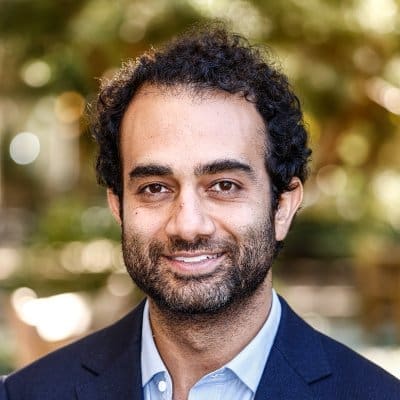
Shadi Hamid is a columnist at The Washington Post and Senior Fellow at the Alwaleed Center for Muslim-Christian Understanding at the Edmund A. Walsh School of Foreign Service at Georgetown University.
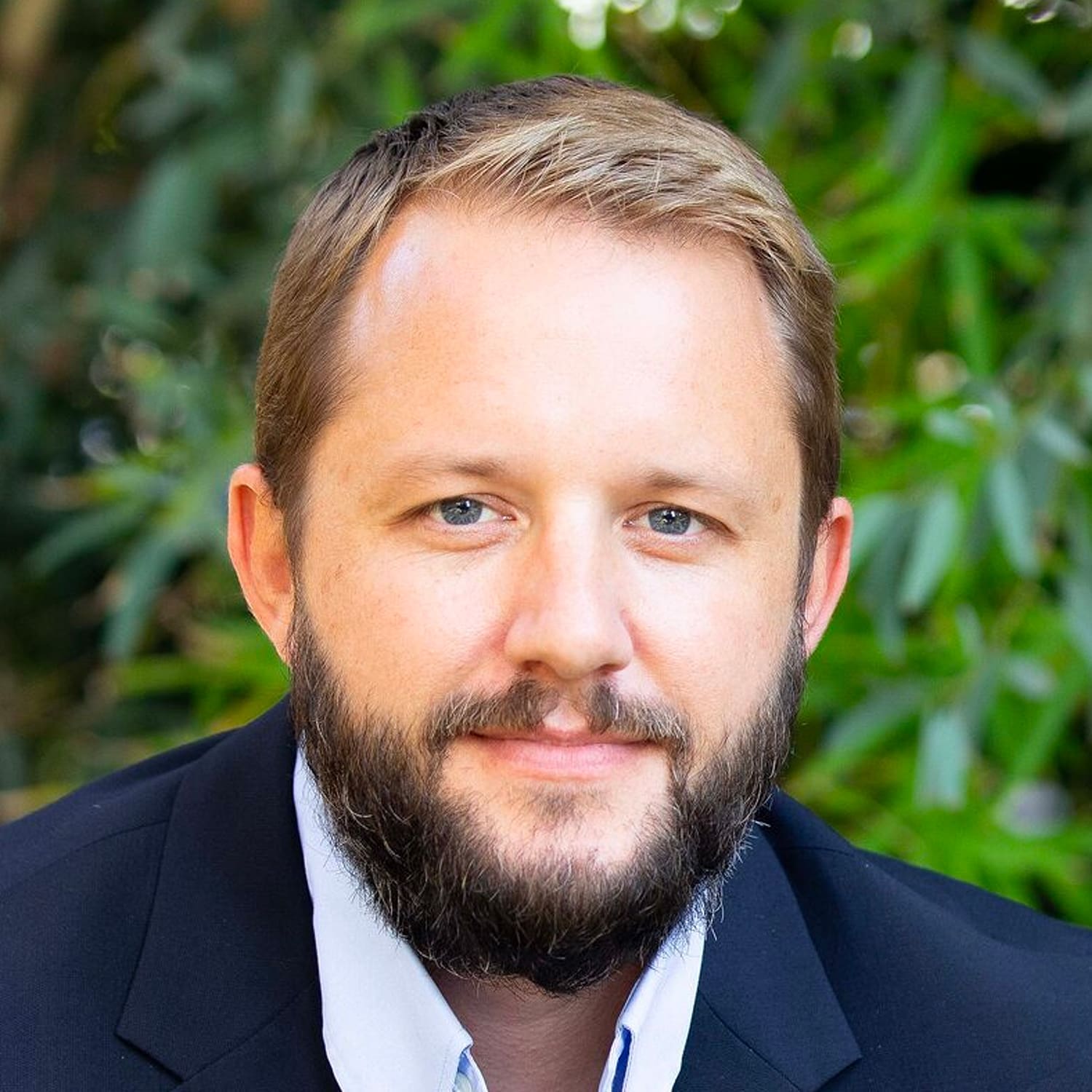
Matthew Kaemingk is Professor of Public Theology at Theological University Utrecht and Senior Fellow at the Center for Public Justice. He also co-directs the Templeton Pluralism Fellowship.
Love the show? Help others find it by reviewing it on your favourite podcast app. We also welcome your ideas and feedback. Email us at zealots@comment.org. Thanks for your support.