


M
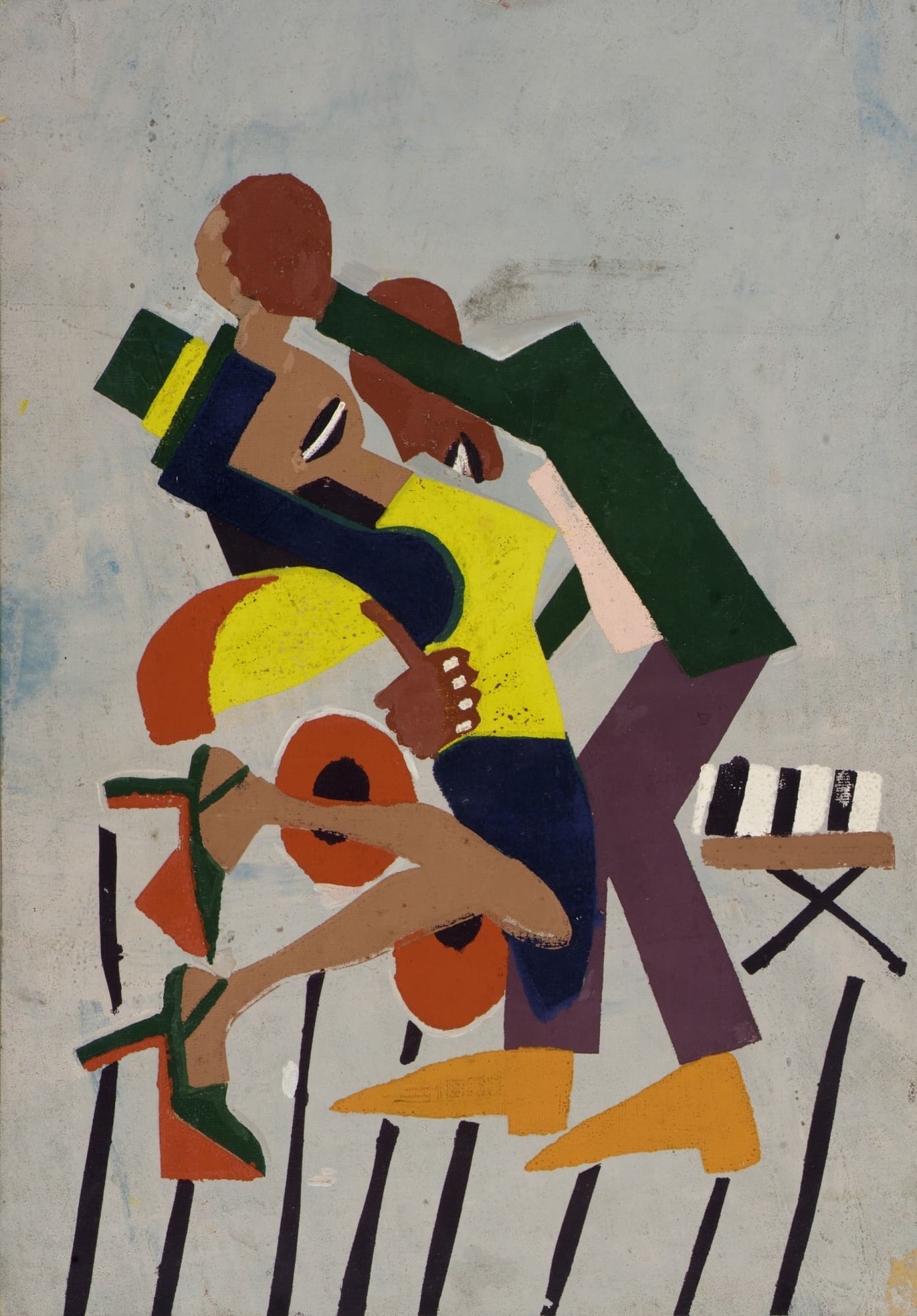
My thesis can be simply stated: There is today no more important writer for North American Christians to read than Albert Murray—a man who, as far as I know, had no religious belief whatsoever. But he held as his guiding principle an idea that Christians today cannot flourish without adopting “the blues idiom”—otherwise known as life in the briar patch.
1.
Albert Murray was born in 1916 in the tiny hamlet of Nokomis, Alabama, and was raised largely in Magazine Point, north of downtown Mobile. Magazine Point sits on the Mobile River, and is the southernmost portion of an area that has been known for more than a century as Africatown—a community founded largely by Africans who had been brought to America in 1860 on the schooner Clotilda, the final ship to bring enslaved people to this country. (The ship was scuttled in Mobile Bay after delivering its cargo; its wreck was discovered in 2018.) Magazine Point is where you can find Africatown’s cemetery, where the gravestones all face east, toward Africa. In 1927 the great black writer Zora Neale Hurston interviewed one of the last survivors of the Clotilda, Cudjo Lewis, who told her of his childhood in what is now Benin, his capture by pirates from Dahomey and passage across the Atlantic, and the founding of Africatown. As a boy in Magazine Point, Albert Murray knew Cudjo Lewis.
Murray eventually attended college at what was then called the Tuskegee Institute; there he met an upperclassman named Ralph Ellison, though they would not become friends until fifteen years later in New York City. Murray pursued graduate study at various universities, and later taught at Tuskegee, but found a stable career when he joined the Air Force in 1943. He remained in the Air Force—posted to Tuskegee, to Morocco, to Los Angeles, to Massachusetts—until retiring for health reasons in 1962 with the rank of major. By this point his friendship with Ellison had flourished, and is preserved in a remarkable collection of letters under the title Trading Twelves. Sadly for us, the correspondence ceased when, upon his retirement, Murray moved to Harlem, just a few blocks from Ellison. (Their friendship’s gain was literature’s loss.)
In their years of letter-writing, Ellison, thanks to Invisible Man (1952), was one of the best-known American novelists, while Murray, in his mid-forties, had published next to nothing. After his retirement from the Air Force, Murray began making up for lost time, writing for a wide range of periodicals. His first book, The Omni-Americans, appeared in 1970, when he was fifty-four, and several other books followed. He was a famously brilliant conversationalist, and became a mentor to many black artists and intellectuals, including a homesick young trumpet player from New Orleans named Wynton Marsalis. (Murray would become, with Marsalis and a few others, a founder of Jazz at Lincoln Center.) For half a century, from his apartment in Harlem, in essays and books and lectures and casual discussions, Murray elaborated an account of the world—one formed decades earlier, when he was still unpublished and Ralph Ellison alone knew his brilliance—that he smilingly called Cosmos Murray.
No white American is fully and only white; no black American is fully and wholly black. We have lived in one another’s company too long and too intimately, shaped by the same forces of nature and culture alike.
The creator of that intellectual universe died in 2013. (And let us pause for a moment to reflect that there was a living person in the Year of Our Lord 2013 who remembered Cudjo Lewis, a man born in Benin in the 1840s and then sold into slavery.) But Cosmos Murray lives on.
What are the key elements of Cosmos Murray? They are consistent from beginning to end. One element he articulates most straightforwardly in his first book, The Omni-Americans:
American culture, even in its most rigidly segregated precincts, is patently and irrevocably composite. It is, regardless of all the hysterical protestations of those who would have it otherwise, incontestably mulatto. Indeed, for all their traditional antagonisms and obvious differences, the so-called black and so-called white people of the United States resemble nobody else in the world so much as they resemble each other. And what is more, even their most extreme and violent polarities represents nothing so much as the natural history of pluralism in an open society.
No white American is fully and only white; no black American is fully and wholly black. We have lived in one another’s company too long and too intimately, shaped by the same forces of nature and culture alike.
Of course, black and white Americans have not experienced “the natural history of pluralism in an open society” in the same way. Yet even that difference, thinks Murray, hasn’t played out quite how one might expect:
It is all too true that Negroes . . . were slaves whose legal status was that of property. But it is also true—and as things have turned out, even more significant—that they were slaves who were living in the presence of more human freedom and individual opportunity than they or anybody else had ever seen before.
Why this matters so much for Murray we will soon see.
So the first element of Cosmos Murray is his claim that American culture is “incontestably mulatto.” The second is this: that the primary and central response of black Americans to the denial of their rights, the denial of their status as Americans, has been the development of what Murray calls “the blues idiom.” And the blues idiom holds the key to the importance of Cosmos Murray for me and my fellow Christians.
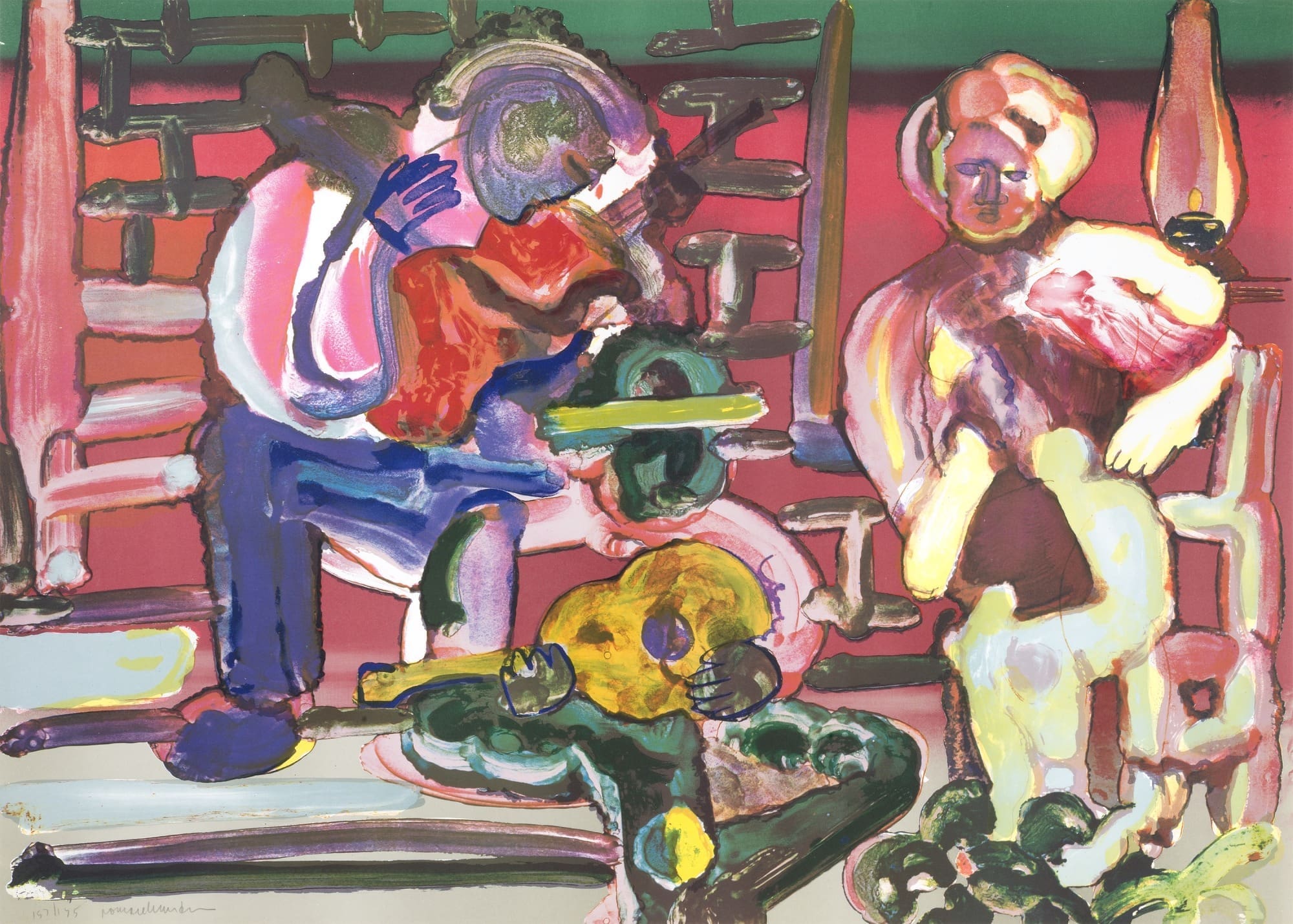
The blues idiom begins with the recognition that—Murray uses many variations on this phrase—“life itself is such a low-down dirty shame.” But it doesn’t end there. What matters is how one responds.
Here some historical context is needed. Several of the essays in The Omni-Americans were prompted by a series of alarmed and alarming reports on the condition of black communities and black families in America. The most famous of these was titled The Negro Family: The Case For National Action (1965) and was widely known as the Moynihan Report because it was written by Daniel Patrick Moynihan, then an assistant secretary of labor in President Lyndon Johnson’s administration. Murray was utterly scornful of such reports even as he grudgingly admitted that they may well have been produced by people with good intentions. The problem, for Murray, was not what such reports saw but what remained invisible to them. They told a simple story of immiseration: “Americans,” Murray wrote, “including most American social scientists, don’t mind one bit what unfounded conclusions you draw about U.S. Negroes, or how flimsy and questionable your statistics, or how wild your conjectures, so long as they reflect degradation.” What must be represented, in reports of this kind, is a weak and helpless black population—and the denigration of black people as helpless is an essential element of what Murray calls “the folklore of white supremacy.” That’s what these reports are: not science but folklore—“social science fiction.” Such folklore confirms white and black Americans alike in the view that to be a black American is nothing other than a low-down dirty shame. The problem with these reports is not that they are scientific but that they are “not scientific enough.” The situation requires a more “comprehensive” perspective, and that requires the insistence that “justice to U.S. Negroes . . . is best served by suggesting some of the affirmative implications of their history and culture.”
Again: for Murray the blues idiom may begin with a recognition of suffering, but it doesn’t end there. “Yes,” he would write some years later,
the ever so blue lyrics are indeed about problems, troubles, disappointment, defeat, loss, and unhappiness. But the music, with its locomotive beat and onomatopoeia, not only counterstates and counteracts the complaint that life itself is such a low-down dirty shame, it also goes on to transform the atmosphere (of the juke joint, honky-tonk, or even the rent party) from that of a purification ritual to a fertility ritual! A juke joint, honky-tonk, or any blues dive is a good time place, and I’ve never seen, heard, or heard of a blues musician who was not primarily interested in making the good times roll.
Long before Murray started writing for publication, he believed that the good times roll in response to suffering—that the suffering in a sense generates the good times. “What the customary blues-idiom dance movement reflects is a disposition to encounter obstacle after obstacle as a matter of course”—and something more than a matter of course. In “the blues tradition” we see “the candid acknowledgment and sober acceptance of adversity as an inescapable condition of human existence—and perhaps in consequence an affirmative disposition towards all obstacles, whether urban or rural, whether political or metaphysical.”
An affirmative disposition toward all obstacles—this is the blues idiom in a phrase. Resistance and affliction as the necessary engines of creativity.
For Murray throughout his life, the central figure from black folklore—the body of stories that collectively provide a counterstatement to “the folklore of white supremacy”—was the great trickster figure Br’er Rabbit. This is perhaps a little difficult for contemporary readers to accept, for we associate Br’er Rabbit with the writings of a white Southerner, Joel Chandler Harris, and with the transformation of Harris’s tales into Disney’s now-cancelled Song of the South (1946). We might now with good reason regret Harris’s presumption in speaking for the black people he knew; and the money he (not they) made from their stories; and the widespread belief that Uncle Remus was Harris’s creation. But it would be a mistake to neglect the stories themselves. For they were not created by Harris; they arose from stories he heard in black communities in his and their native Georgia. And someone of Albert Murray’s generation didn’t need to read Joel Chandler Harris to know the ways and wiles of Br’er Rabbit.
Indeed, Br’er Rabbit became something more than a role model for him. One could almost describe him as a totem animal. As Murray wrote in a book published when he was eighty-four,
In brief, how I felt about the socioeconomic and political circumstances in the Alabama in which I grew up during the 1920s and the 1930s added up to me thinking of myself as having to be as the ever nimble and ever resourceful mythological Alabama jackrabbit in the no less actual than mythological Alabama briarpatch.
The “nimble-or-nothing Alabama jackrabbit in the briarpatch, evoking tell-me-tale times around the fireplace in that shotgun-style quarters house on the outskirts of Mobile,” Murray remarked, thus noting the source of his knowledge, “was to become the idiomatic basis for my literary approach to American character, procedure, and heroic achievement.”
That he had long felt this way—and had lived the feeling—can be seen from something Ralph Ellison wrote to him in 1952:
But you, man; I’ve been hearing about you from all over. You have taken that low-down southern cullud jive of yours and spread it all over western civilization. I was talking with [the novelist Saul] Bellow and he told me about you in Paris. He was both amazed and amused over your ease of operation. And I said, “Who, him? Hell, man, the world is his briar patch.”
Briar patch?
In the most famous Uncle Remus story—one that appears in countless versions in cultures around the world, including one from the Apache involving their trickster hero, Coyote—the malicious Br’er Fox makes a doll out of tar (the “tar baby”) and places it in Br’er Rabbit’s path. Br’er Rabbit becomes offended when the creature doesn’t respond to his friendly greeting and lashes out at it, only to find himself stuck to it—and the more he struggles the more firmly stuck he becomes. Then, entangled and exhausted, he is at Br’er Fox’s mercy. And this is when he makes one final plea to his tormentor: Do anything to me, he says, but don’t throw me in that briar patch. Anything but that. Naturally, Br’er Fox, mean creature that he is and nemesis to the rabbit, tosses him right into the briar patch—which is just what enables the victim to detach himself from the tar baby. So Br’er Rabbit taunts Br’er Fox: This might be a place of pain to other animals, but I was born and bred in the briar patch!
Difficulty, resistance, even persecution—these are the spurs to creativity, and especially that form of creativity that we call improvisation.
Thus Murray’s commentary on the story, helpfully italicized: “What makes the Alabama jackrabbit so nimble, so resilient, so elegantly resourceful? The briarpatch!” Difficulty, resistance, even persecution—these are the spurs to creativity, and especially that form of creativity that we call improvisation. For someone who always spoke of the blues in quasi-religious terms, Murray was oddly dismissive of great bluesmen like Robert Johnson. But he had a reason. When he celebrated the blues, he always had in mind the great masters of jazz, especially Duke Ellington and Count Basie, who gave their instrumentalists the freedom to improvise over a blues structure. A technically accomplished, sophisticated, improvisatory art rooted in the music of the rural South and remaining always infectiously danceable—this, for Murray, is the blues idiom embodied in music.
2.
For white North American Christians who perceive themselves as marginalized, disparaged, despised, maybe even persecuted—well, a road map for that territory is all around us, in the experience of black Americans, especially as formulated by the great Albert Murray. And I think Murray would have been glad to see his work applied in this way: he thought, and said all the time, that the lessons of the blues idiom are universal human lessons. “When the Negro musician or dancer swings the blues, he is . . . making an affirmative and hence exemplary and heroic response to that which André Malraux describes as la condition humaine.” Further:
That last phrase is taken from “Literature as Equipment for Living,” an essay by literary and social critic Kenneth Burke, a vital influence on Murray. If literature equips us for living, so too does the blues. And the blues is necessary equipment—“survival technique”—for those situations in which life is clearly a low-down dirty shame. Which, many white Christians these days say, is exactly the life they’re living.
It is possible that by this point of my argument, some readers are asking why I am celebrating this religionless advocate of the blues tradition instead of calling us to the black church. And indeed if we want hope in a time of suffering, we could do much worse than begin with the great spirituals that Albert Murray, surely, would have known from his childhood:
I’m troubled
I’m troubled in mind
If Jesus don’t help me
I surely will die
Or:
And I know the Lord has made the way
I’ve hard trials each and ev’ry day
But I know the Lord has made the way
Or:
Trouble done bore me down
O Lord, O Lord, have mercy on me
Trouble done bore me down
Or:
The Lord will see us through
The Lord will see us through some day, some day
Oh, deep in my heart, I do believe
The Lord will see us through some day
Indeed, these are great treasures for the person of faith, especially when we add to them Martin Luther King Jr.’s eschatological hope for “the creation of the beloved community,” the network of reconciliation arising from the ashes of our broken social order. And because, like Dr. King, I look for this community to arise specifically from the resurrection of the Lord Jesus as the first fruit of the new creation, I do not think that Albert Murray’s message is sufficient: it relies wholly on human beings to make meaning for themselves. But I still think it’s a vital message for Christians—not finally, to be sure, but certainly instrumentally.
The tradition of the black church responds to the suffering of this life in a double way: first, by identification with the sufferings of the Lord, and second, by hope and trust that “we shall overcome some day.” Hard times are coming for Christians!—a warning I hear every day. Maybe not; maybe so. If not, well, in any case suffering is la condition humaine. And if so, we should count ourselves blessed to suffer for the Lord, and we should proclaim, with the ancient hymn “Pange Lingua,” that immolatus vicerit—the sacrificed one triumphs. Thus I waive the question, and ask one of my own: Whether we think we live in a time of distinctive trial or distinctive ease or something in between, What do we in the meantime? What do we do, as the poet W.H. Auden puts it, “for the time being”? What would it mean to “walk circumspectly, not as fools, but as wise, redeeming the time, because the days are evil” (Ephesians 5:15–16)?
Here is where Cosmos Murray comes to our aid. What it contributes is the idea of “an affirmative disposition towards all obstacles,” specifically because obstacles are occasions for improvisation—occasions for living with style, making artful living from the unpromising materials of pain. You can think yourself mistreated, think yourself the object of scorn, and become “the lamenting, protesting, perpetually pissed-off rebel”—the course taken by so many white Christians online—or you can strive to cultivate a “resilience that is geared to spontaneous exploration, experimentation, inventiveness, and perpetual readjustment.” If you take the latter course, then the world can become your briar patch too: Every way that you are thwarted, every obstacle that prevents you continuing in your old familiar habits, can become an occasion for “spontaneous exploration,” for doing old things in a new way—for, in short, living by faith rather than by your own sense of entitled comfort. And if you do that, then even in dark days you have a pretty fair chance of letting the good times roll.
3.
Lewis Hyde, Trickster Makes This World, 1998:
There is no way to suppress change . . . ; there is only a choice between a way of living that allows constant, if gradual, alterations and a way of living that combines great control and cataclysmic upheavals. Those who panic and bind the trickster choose the latter path. It would be better to learn to play with him, better especially to develop styles (cultural, spiritual, artistic) that allow some commerce with accident, and some acceptance of the changes contingency will always engender.
Albert Murray, in conversation with Wynton Marsalis, 1994:
And man prevails through his style, through his elegance, through his control of forces. Not through his power, but through his control. People who confuse art with attack forget that what art is mainly concerned about is . . . form, and adequate form, and the artist is the first to know when a form is no longer as serviceable as it was. You see? And that’s what innovation is about. He’s trying to keep that form going, and he finds it necessary to extend, elaborate it, and refine it; to adjust it to new situations. That’s what innovation is about. It’s not to get rid of something simply to be getting rid of it, or to turn something around. It’s to continue something that is indispensable.


