

S
Sometimes a name comes before definition. Over the last seven years of leading Comment, I have been given an uncommonly graced aperture onto a constellation of thought, disposition, and practice carried by those across a range of contexts and vocations. Street saints and renaissance intellectuals, institutional stewards and artists, Catholics, Protestants, and Orthodox, rabbis and skeptics, fathers and mothers, teachers and neighbours, all of whom have staked their lives on the fullness of the human person and on the conviction that they bear a responsibility to nurture a more generous and durable common life.
And yet that responsibility is under growing strain. Many describe feeling isolated, scattered across contexts whose day-to-day stresses (and charms) share little in common. The only language through which they can recognize one another is, too often, a flat negation: no to the reduction of persons to a function or faction; no to a vision of freedom so unmoored from the given that it cannot tell a child who he is or where he belongs; no to a project of civilizational rescue so blind to its own syncretisms that it has no room for humility, confession, or the stranger.
These are solid boundaries, guardrails for a discerning life. But wisdom rarely grows from refusal alone, nor is a people called forth by it. Beneath the condemnations so many of us are weary of pronouncing, something messier and raw appears to be stirring: a chastened, more curious openness to different ways of knowing, and a hunger to weave these ways into a moral imagination that is at once ancient and unfinished.
Thus Comment has dared to step off the page on which we have built our name, to wager that something is needed now that words alone cannot provide: a gathering, in the flesh, of these spiritually alert, long-game creative repairers of the breach. We are calling them together by way of a longing, not a thesis, and by the urgent need for what that longing is after: a better, truer story to live and to tell. We want to see whether the large yes so many of us are trying to live, in such a wide variety of contexts, might, once shared and tested in one another’s company, finally find its voice. Not a political voice, though I hope this rehearsal of a different way of being together might convict what has become so disordered in our public life. But a pre-political, Christian humanist witness: one that meets the encroaching darkness not by accepting its terms but by bearing a thicker, truer account of what it means to be human, and of the sacred demands and delights that follow.
Welcome to the Understory.
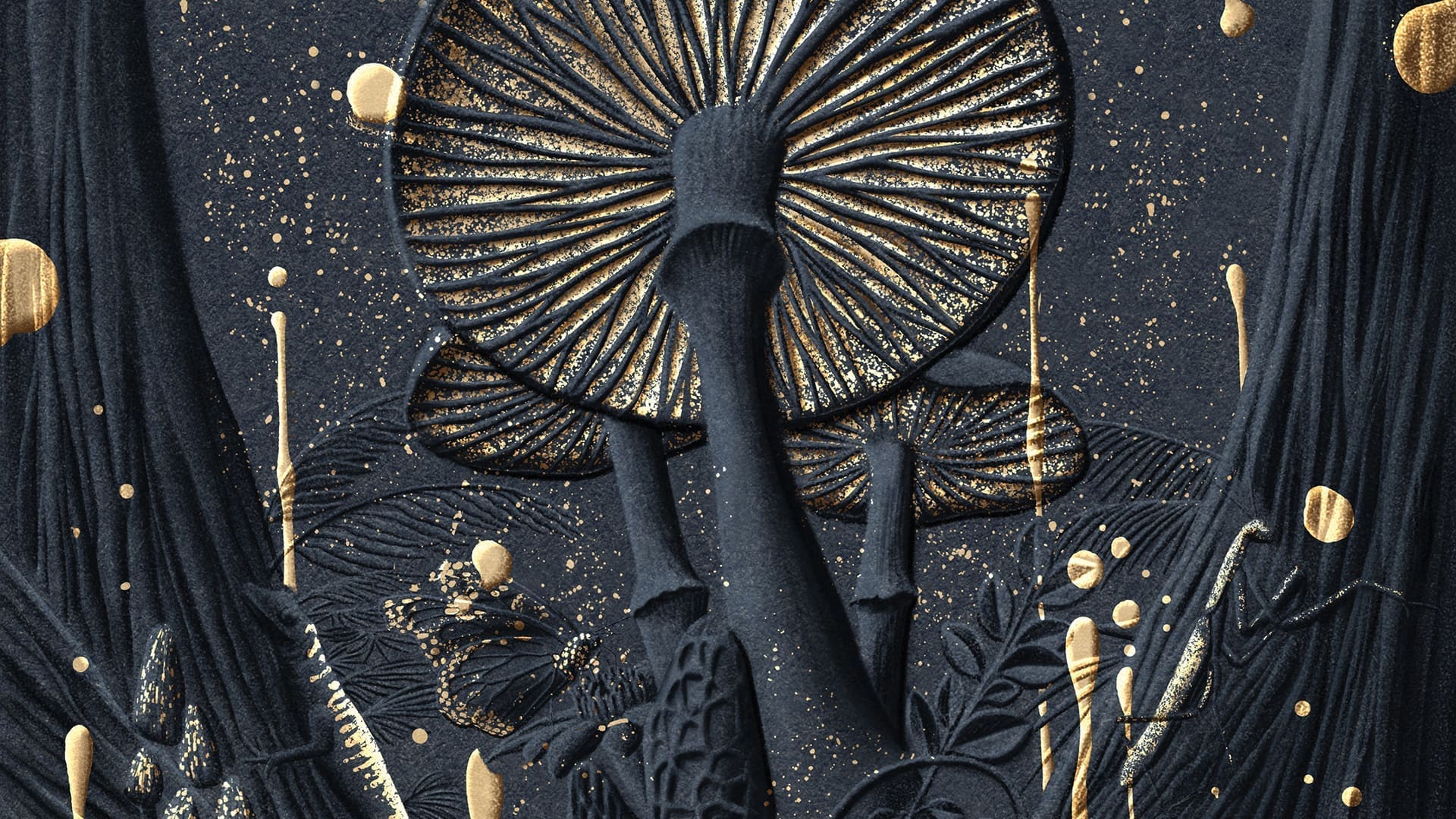
It is a blessedly unburdened word, “understory.” Layered between the canopy and the forest floor, it names the tangled, shade-tolerant life made up of saplings, fungi, ferns, and wildflowers. Receiving only a fraction of the sun—sometimes as little as 2 percent—it is here, in this hidden layer, that the forest’s future quietly takes root.
We tend to measure a forest by the height of its trees. But the understory operates by a different logic. Where the canopy’s primary drive is competition—trees racing upward, each one straining to overtop its neighbours and intercept as much light as it can—the understory practices coexistence under constraint. It holds soil in place, cycles nutrients, and shelters the seedlings that will one day become the next canopy. It modulates the forest’s microclimate, keeping the temperature stable. The understory is the forest’s nursery, its root network, and, crucially, its memory. Of every zone, it is the most biodiverse, the slowest to reveal itself, and the most vital to the health of the whole.
Attending to this created order, it’s hard not to see Comment’s vocation and the contours of the world we serve. Our readers tend to be those doing the painstaking, invisible needlework at the seams without which democracy unravels: film directors who find the impossible thread, policymakers who refuse the performed stalemate and serve the actual public, executives who listen closely to their staff and shift course with humility, pastors who suffer long and serve each bedside and estrangement, university vice presidents who carry the institution’s pain and deeper charism in their bones, the initiating weaver of households on a neighbourhood block. These are the people on whom self-governance actually depends, who hold complexity and moral conviction together when our culture prefers to reward simplification and capitulation. They have disciplined themselves to move toward the stranger, having learned that you cannot discover the fullness of truth without receiving the gift of those profoundly unlike you. Too rooted for the progressives and too honest for the traditionalists, when a hot zone has calcified into warring caricatures, they are the ones most likely to see more of the whole than either side is telling, and to break open a path.
Beneath the condemnations so many of us are weary of pronouncing, something messier and raw appears to be stirring.
And yet this world is increasingly vulnerable, in part because it has no public shape, and in part because it has not yet known how to write a story of its own. The old canopy that once structured our common life—institutions, norms, cultural frameworks, shared vocabularies—was flawed but sheltering. Now it is hollowing out, and into the clearing powerful narratives have rushed with disorienting speed, each offering what the understory by nature cannot: a totalizing diagnosis, a villain, a direction, and a uniform to wear. I think of these stories as invasive species—opportunistic, fast-spreading, growing from seeds that were always in the soil but held in check when the forest was healthy. The civilizational rescue of Christian nationalism. The cold rationalism that has no room for the soul. The narrative that reduces all of Christianity to a record of oppression. The anti-humanism that would transcend the human person altogether. Each spreads with the speed of a slogan, crowding out the slower, incarnate growth that can only travel the way the deepest truths have always travelled: through testimony and song, shared practices and the ordinary courage of people who address one another as moral agents rather than audiences to be mobilized.
But invasive species, for all their speed, are shallow-rooted. When the old trees fall, light floods the forest floor and creates a regeneration window into which the understory, suppressed for years, can surge. I think we may be in that kind of canopy gap right now. The question is whether the understory can withstand the invasive growth long enough to recognize itself, find its story, and muster the nerve to grow into the light.
This issue, and the gathering we are hosting in its name this May at the Washington National Cathedral, is an attempt to seed all three. Comment has been preparing this soil for some time, building a sequence of issues in recent years that have descended, one by one, toward the forest floor. We most recently confronted the anti-human, the dehumanizing currents coming at us from so many directions, laying bare the crisis to which the Understory is a response. We mourned the precarity of our institutions and tried to honour what their dying releases into the soil. We went searching for a remnant people, a holy dissidence threading through our prevailing paganisms, and for the discernment such a people would need if it were not to become just another faction. We wrestled with the volatile calculus of private and public, and what it would mean to bring an inherently hidden world into view. We studied Christ’s call to forgive, the future-creating power that no calculation of justice can replace. And all of this grew from an issue, in the fall of 2024, that surveyed the declensionist cries of our civilizational moment and dared, in the middle of that mood, to plant a hope-filled manifesto—a seed whose full flowering we could not then imagine, but whose firstfruit this festival hopes to be.
What follows in these pages is less an argument than an evocation: the searching spirit of a people who are linguistically starved and yet refuse to stop reaching for the Word. Our authors circle the mystery of the human person from angles the canopy’s loudest voices have stopped bothering to attempt. You may perceive an atmosphere of grief mixed with anticipation—what the early church fathers called compunctio, that holy pain of standing before something more beautiful than we can yet reach. Something is dying, and something is being born, and they may just be the same story. Welcome to the Understory.